All posts by Edward Lukes

“Uncle Vanya” at the Almeida Theatre

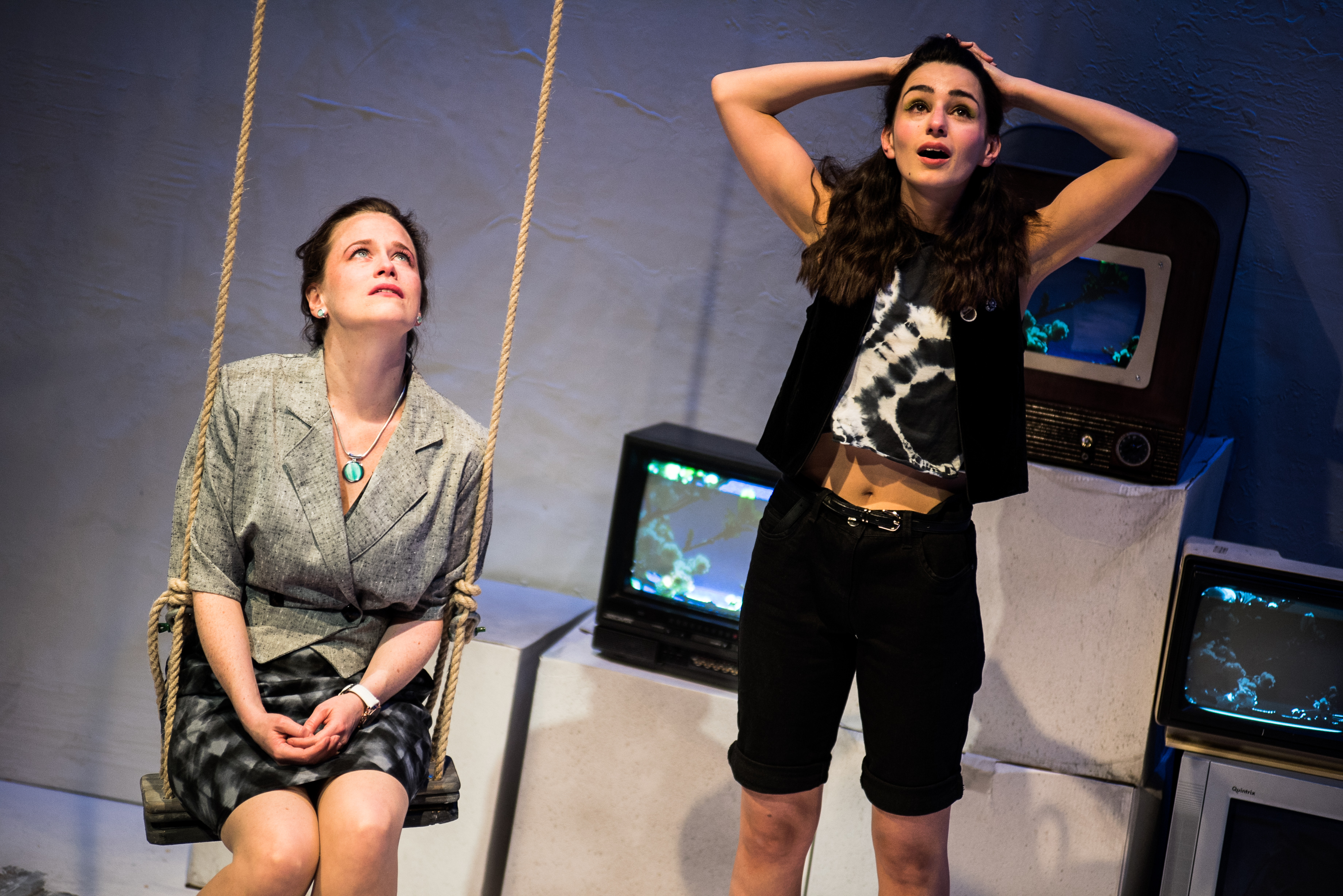
Following his triumphant Oresteia last year, director Robert Icke has created a similarly bold and fresh adaptation of Chekhov’s masterpiece. Contemporary in feel, especially its humour, Vanya is translated into John, wearing comfy slacks, while his brother-in-law Alexander, retiring to the country, could easily be an Islington academic. Alexander’s second wife Elena accompanies him and unrequited love leads to questions about the meaning of life.

Icke breaks up the action into bite-sized chunks. The short opening act establishes these “closed off eccentrics” – family and friends – living too intimately together. Tobias Menzies quickly captivates as the local doctor with a passion for ecology (more big themes here). John’s problems are clear: feeling his life has been just “notes in the margin”, he wittily woos Elena with his guitar, while his steely mother (Susan Wooldridge) looks on.

UNCLE VANYA 97 - JESSICA BROWN FINDLAY AND VANESSA KIRBY BY MANUEL HARLAN
Jessica Brown Findlay and Vanessa Kirby

During the second act we meet Alexander, depicted so skilfully by Hilton McRae that it’s easy to understand how John feels “conned” into working for him. It’s clear that John’s drunken singing to Iggy Pop’s Lust For Life isn’t going to make up for years of devotion. But the scene belongs to Alexander’s daughter Sonya (Jessica Brown Findlay) and Elena, a part that Vanessa Kirby gets an impressive amount of comedy from. The women’s relationship is acted with the naturalism Icke aims for: stopping and starting conversations that reveal their exhaustion with the “petty cruelty” of their lives and their desperate search for love.

The boredom Elena and Alexander have brought with them is a dangerous “contagion”, contrasted with the not-so-gainful employment that’s been occupying everyone until they arrived. It’s John who suffers most. His breakdown is dramatic, if not without comedy, and Paul Rhys’ stumbling, fumbling portrayal is profoundly moving.

Icke is always sure-footed. Using Hildegard Bechtler’s slowly rotating stage, we get a great view of this human goldfish bowl. Addresses to the audience make this Uncle Vanya unusually direct. For the finale, the search for ‘The Art of Living’, glibly proposed as the title of Alexander’s next book, is never going to be lightweight. The only solace on offer seems to be hard work – literally. Join the characters as they hum ‘Hi, Ho, Hi, Ho’ and get off to see this show. Just don’t expect to leave smiling.

Until 26 March 2016

www.almeida.co.uk

Photos by Manuel Harlan

“Mrs Henderson Presents” at the Noël Coward Theatre

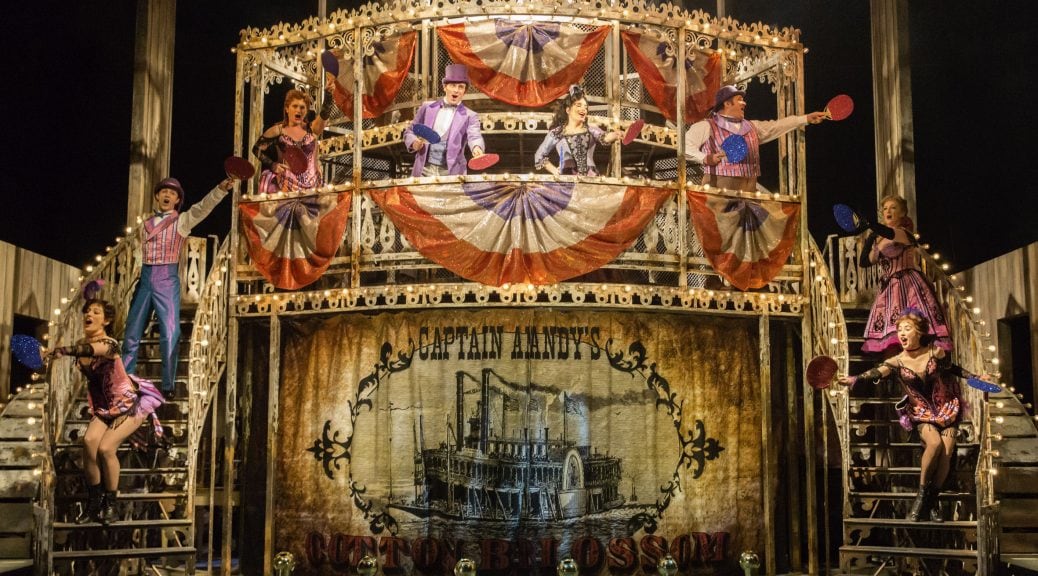
Let’s not be prudish – for the West End it’s essential to put bums on seats. Taking a lesson from its real-life subject – a nude variety show presented by the eponymous producer during WWII – there’s plenty of flesh on display here and scope for good old-fashioned smutty humour. At least in 2016, Mrs Henderson’s girls are given a voice, although the exploitation of their naked bodies is glossed over as an opportunity for them to be extraordinary. And the show’s boast of bravely running throughout the Blitz provides predictable flag-waving sentimentality. Neither crowd-pleasing tactic is particularly edifying.

This is not, of course, the fault of the cast. And while Terry Johnson’s book is surprisingly leaden, his direction is good, as are a strong set from Tim Shortall and costumes by Paul Wills. Tracie Bennett and Ian Bartholomew are excellent leads as Mrs Henderson and her right-hand man, Vivian Van Damm. Entering the theatre business is a whim for her and he is Jewish – this seems to be all we need to know about them. There’s a sweet love story for Emma Williams, who leads a strong ensemble, but a general lack of emotional attachment to an assortment of quickly sketched characters. The biggest disappointment comes with a dreadful role for Jamie Foreman, a pointless narrator and comedian with dire jokes – a warm-up man who leaves you cold.

Indeed, Mrs Henderson Presents is a pretty frigid and calculated affair. Much could be forgiven if the songs were good but George Fenton and Simon Chamberlain’s tunes are mostly forgettable. The first half is particularly foggy and while things do pick up there’s really only one adventurous number – foolishly the only chance for Williams to show off a great voice. The real shock comes from Don Black’s lyrics, at times so banal that you start guessing which rhyme will come up next. Unforgivably, one song has lad, mad and bad in one verse. The performances on offer might mean the show should be a hit but the lyrics are merde.

Until 18 June 2016

www.mrshenderson.co.uk

Photo by Paul Coltas

“A Steady Rain” at the Arcola Theatre

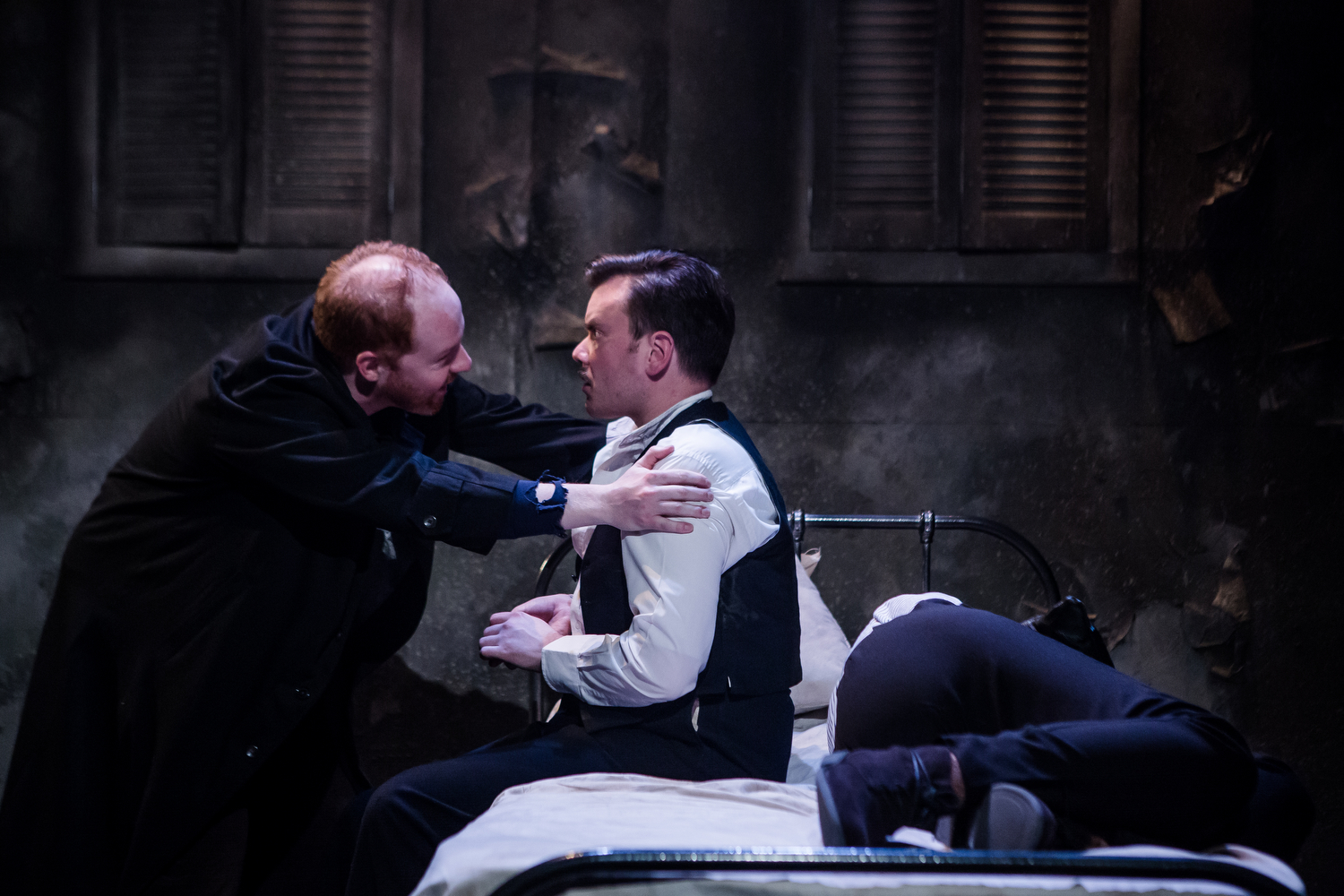
Known for his work on House of Cards and Mad Men, writer Keith Huff’s hit Broadway play receives its London premiere under the skilled direction of Andrew Pearson. “Oppressive and grey” in tone and subject matter, this is a grim police tale, superbly performed.

Never mind the rain, beat cops Danny and Joey tell the story of a bloody summer. Tragic events escalate (a little too torrentially) into an exciting crime story of crooked, out-of-control cops and marital breakdown.

Police procedures and political correctness add an authentic air, although a touch labored. More impressively, Huff evokes a love triangle with Danny’s wife. Despite the play being a two hander, the marriage and affair are palpably conveyed.

Danny is a “stand up guy”, his faults coming into explosive focus. Vincent Regan gives a performance that brims with violence – showing Danny’s loyalty to family jostling alongside illegal activities. Pal Joey is a “non starter”, a “mutt” even, as a recovering alcoholic out for the good life Danny has. David Schaal makes us root for this underdog while questioning how devoted he is to his bullying old friend.

The biggest achievement from both actors is in their teamwork, which convinces quickly and absolutely of their closeness. Their intimacy is the foundation for an examination of friendship against an increasingly breathless plot that’s so accomplished it becomes satisfyingly tricky to precisely locate blame and betrayal.

Until 5 March 2016

www.arcolatheatre.com

Photo by Nick Rutter

“Nell Gwynn” at the Apollo Theatre

Historical romps are not uncommon on the British stage. And the theatre loves referencing itself. Combining the two, with the story of 17th-century actress-turned-courtier Nell Gwynn, makes sense and provides a hit for playwright Jessica Swale. There’s plenty of fun from Gwynn’s love affair with King Charles II, while John Dryden’s hastily scribed plays add a touch of behind-the-scenes Noises Off style laughs. Having started at Shakespeare’s Globe, this show retains the venue’s vibe, pleasing the crowd with great gags and catchy tunes. No time for stuffiness here – this is a terrific night out.

Gemma Arterton’s performance in the title role is a joy. She’s cheeky, chirpy and utterly charming. Easily carrying Swale’s pointed remarks on women in the theatre and making the risqué comedy look effortless, Arterton proves a queen of innuendo. There are superb cameos from Sarah Woodward and Sasha Waddell as the other women in Charles’ life – both suitably overblown and over-painted – but the glorious Michele Dotrice steals every scene as Nell’s dresser, bringing the house down with a single salutation to the King and getting more laughs out of playing a triangle than you’d have thought possible.

Michele Dotrice
Michele Dotrice

There are men in the play, too and it’s satisfying that for once they take a back seat. Greg Haiste has the best lines as the actor who used to perform women’s roles before those “actor-esses” came along. And there’s a fine turn from David Sturzaker as Charles, who gracefully allows himself to be upstaged by a dog. The chemistry between the King and his mistress is down to the performances and builds touchingly. And yet it’s only fitting that the irresistible Arterton grabs our main attention. As for demanding better parts for women, condemning Shakespeare’s Juliet as a “noodle”, the play provides its own irrefutable answer.

David Sturzaker
David Sturzaker

A lot of Swale’s script should really be too downright silly to work. The comedy is as broad as a pantomime and historical references land with a bang that I presume is designed to pop any pomposity. More seriously, attempts to give the characters depth – let’s make the merry Monarch melancholy – are ham-fisted. Subtle it ain’t, but it works. And in spectacular fashion, with direction from Christopher Luscombe powering the play along and a series of performances that rocket the piece into the comic stratosphere.

Until 30 April 2016

www.nimaxtheatres.com

Photos by Tristram Kenton

“Hardboiled: The Fall of Sam Shadow” at the New Diorama Theatre

This fun show brings film noir vigorously to the stage. It’s a detective adventure story that combines the gumshoe genre’s humour and sentimentality, updates the sexual politics and finds time for a conspiratorial twist. As the power goes out in Los Angeles, the theatre fills with atmospheric shadows. But what exactly is going on at Addison Electric to make all the filaments flicker?

This is a production with plenty of light-bulb moments. The staging, devised by the Rhum and Clay Theatre Company with director Beth Flintoff, sparks with invention. A case of smoke and sliding doors, props are used perfectly, including e-cigarettes. And as you’d expect, Nick Flintoff’s lighting design is essential. The dialogue might disappoint, given the show’s antecedents, but the focus is on movement, with long stretches that show the cast’s prowess and an impressive soundtrack.

There’s some fantastic talent here. In the title role Julian Spooner manages to convey a surprisingly complex hero. Inheriting the job from his father, this little-guy P.I. becomes his own man with satisfying subtlety. Christopher Harrisson and Matthew Wells take on numerous roles faultlessly, as well as gracefully moving around the props on wheels. Showing the mechanics of the staging, down to carrying around the smoke machines and filters for the lights, isn’t new but it’s seldom done with such understated charm.
Hum & Clay present Hardboiled at The New Diorama Theatre. 9th Feb 2016 Photo Credit: Richard Davenport 2016 richard@rwdavenport.co.uk
Stealing the show is Jess Mabel Jones, who plays all the female parts, including Shadow’s secretary and the obligatory femme fatale, using tiny costume changes and great vocal skills. Even a ditzy secretary is given her due, showing a knowing nod to the role of women in film noir. All indicative of a fresh eye on a beloved style, performed with care and creativity.

Until 27 February 2016

www.newdiorama.com

Photos by Richard Davenport

“Road Show” at the Union Theatre

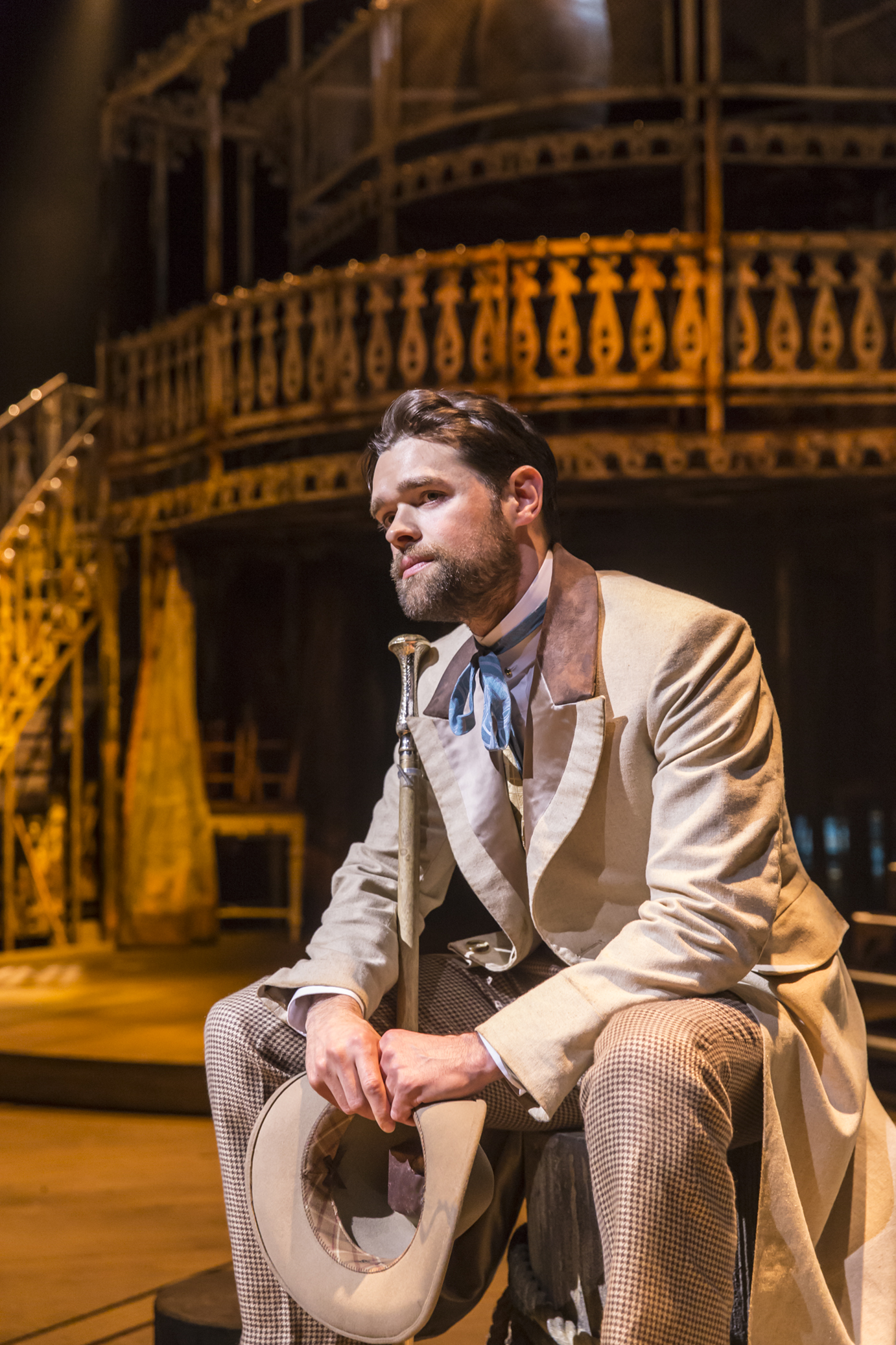
The construction of luxury flats on Union Street is a topical tag for Phil Willmott’s production of this Sondheim and Weidman musical. Following the fortune-seeking Meisner brothers, the focus is their later careers as Florida property developers, and the American Dream is examined through the land boom building of Boca Raton. It’s an odd subject matter and a strangely clinical piece.

There’s a good deal of brothers Addison and Wilson’s journey that’s entertaining and insightful: from the gold rush to gambling, with the familiar Sondheim theme of the arts and patronage. The songs and the lyrics are strong but this is sub-standard Sondheim – still good, of course, but much time is spent wondering why it isn’t better.

On his deathbed, the brothers’ father wonders what type of nation his boys will help to create, but this weighty central question feels forced. Too quickly afterwards there’s a deal of rushed campery as the hapless siblings struggle away. Road Show is notable for its explicit gay relationship between Addison and a poor little rich kid called Hollis. It’s the only time we’re allowed a glimpse of sentiment. Call me soppy, but this seems a bit mean.

There’s not much Willmott can do with these problems. However, while miming sequences in the show are a neat move, they could have been better (and should surely have been suspended for a scene in which one brother draws a knife on the other). Willmott is too keen to use his large cast, but having them double up to fill the stage proves distracting. And yet the director has secured a number of strong performances.

In the lead roles Howard Jenkins and Andre Refig perform well and sound great. The latter, as Wilson, convinces as a rogue, fool and thriller but his acting might be better suited to a larger venue. Jenkins’ appropriate restraint is preferable. The brothers’ mother has a great number that Cathryn Sherman makes the most of, and Joshua LeClair is a fine Hollis.

Another big problem is the show’s lack of humour. The laughs are set up but seldom land. Sometimes it’s a question of delivery but more often it’s the piece’s downbeat tone. Both brothers feel like devices to show societal ills, Wilson a con artist, and architect Addison denied his chance to be more a than master builder. The central relationship between them is poorly constructed, their closeness clumsily established and not fully explored until the conclusion. It’s simply not motivating enough, making this a show you can’t roll with, merrily or otherwise.

Until 5 March 2016

www.uniontheatre.biz

“The Master Builder” at the Old Vic

Matthew Warchus’ finest work since taking charge at the Old Vic marks new ground for the director – his first Ibsen play. With a vivid new adaptation by David Hare and a lavish set – with a trick up its sleeve – from Rob Howell, this is a luxurious production with a superb cast. In this demanding play of ideas, there’s a marriage in turmoil, plenty of hypocrisy, painful psychological insight and a mid-life crisis that, at times, poses as philosophy. Miraculously, it’s all present and correct.

A trio of women make life, let’s say, complicated, for the eponymous subject of the play, Halvard Solness. Fearing for the future, Solness is paranoid that “the young will arrive”, while also guilty about his past – his career success making him the archetypal Man who had all the luck. There’s the overdevoted bookkeeper (Charlie Cameron) he uses despicably. There’s his dutiful wife, a role made weighty by an excellent performance from Linda Emond. Above all, there’s the enigmatic Hilde, who Solness once encountered as a child and creepily promised to make a princess. Now Hilde’s at the door, demanding her castle in the air and showing an unhealthy interest in steeples. This London debut from rising Australian star Sarah Snook is one people will be talking about for a long time – Snook brings a deep-voiced, earthy quality to this ethereal, childish and dangerous heroine.

Linda Emond (Aline Solness) and Sarah Snook (Hilde Wangel) in The Master Builder at The Old Vic. Photos by Manuel Harlan.
Linda Emond and Sarah Snook

In the title role, Ralph Fiennes gives one of the finest performances of his career. In his studio, his bullying lothario is convincingly charismatic and dry witted – Fiennes has always been good at lofty but here we’re allowed to laugh at the character as well, a clever layering that squeezes out the text’s suggestions and innuendo. Solness’ ego never takes a break. But there’s something wrong. His artistic output is linked to an argument with God and any mistakes or errors of judgment become a question of free will. Accounting for Hilde’s strange hold over him, there’s talk of trolls and devils, and a belief that he has some kind of supernatural help, making his wishes comes true “mercilessly”.

With Ibsen revealing cruel truths and Fiennes up to the job of depicting them, we come to see the “soft and gentle” side Solness’ wife claims exist. The pain at the loss of his children and disappointment that, while he builds homes, there is “nothing but despair” in his own, means the solipsism slips. And finally, there’s fear, expressed as crippling vertigo, through which we fully appreciate the deconstruction of the character Fiennes so carefully presents. It’s a masterfully built performance that should not be missed.

Until 19 March 2016

www.oldvictheatre.com

Photos by Manuel Harlan

“Rabbit Hole” at Hampstead Theatre

When it comes to sensitive subject matter, a family’s grief at the death of a child is a particularly brave topic to tackle. But the sensitivity and intelligence that playwright David Lindsay-Abaire brings to his play will make you glad to have seen a work that feels so truthful.

The marriage of Becca and Howie is placed under pressure after the accidental death of their son. Claire Skinner and Tom Goodman-Hill are tremendous as this unfortunate couple. Following their ups as well as downs, seeing the differences in how they manage their bereavement, their strengths and weaknesses are revealed. Skinner is especially strong in the single scene where she breaks down. Restraint is the key to her character and the whole play – emotions are palpable but skilfully held in check in a rich text full of suggestions and suspicions, which explores grief but never feels exploitative.

Georgina Rich and Penny Downie

Such is Lindsay-Abaire’s skill that, remarkably, this is a play with plenty of laughs despite the subject. Much of the humour comes from clever observations of social class in America. This is a family split demographically, with Becca’s mother and sister having a little of the “Jerry Springer” about them. Impeccably performed by Georgina Rich and Penny Downie, both are fully realised, appealing, characters and could easily have a play of their own. The point is that neither the play, nor its characters are paralysed by grief. After all, in the real world, you can’t be.

Sean Delaney
Sean Delaney

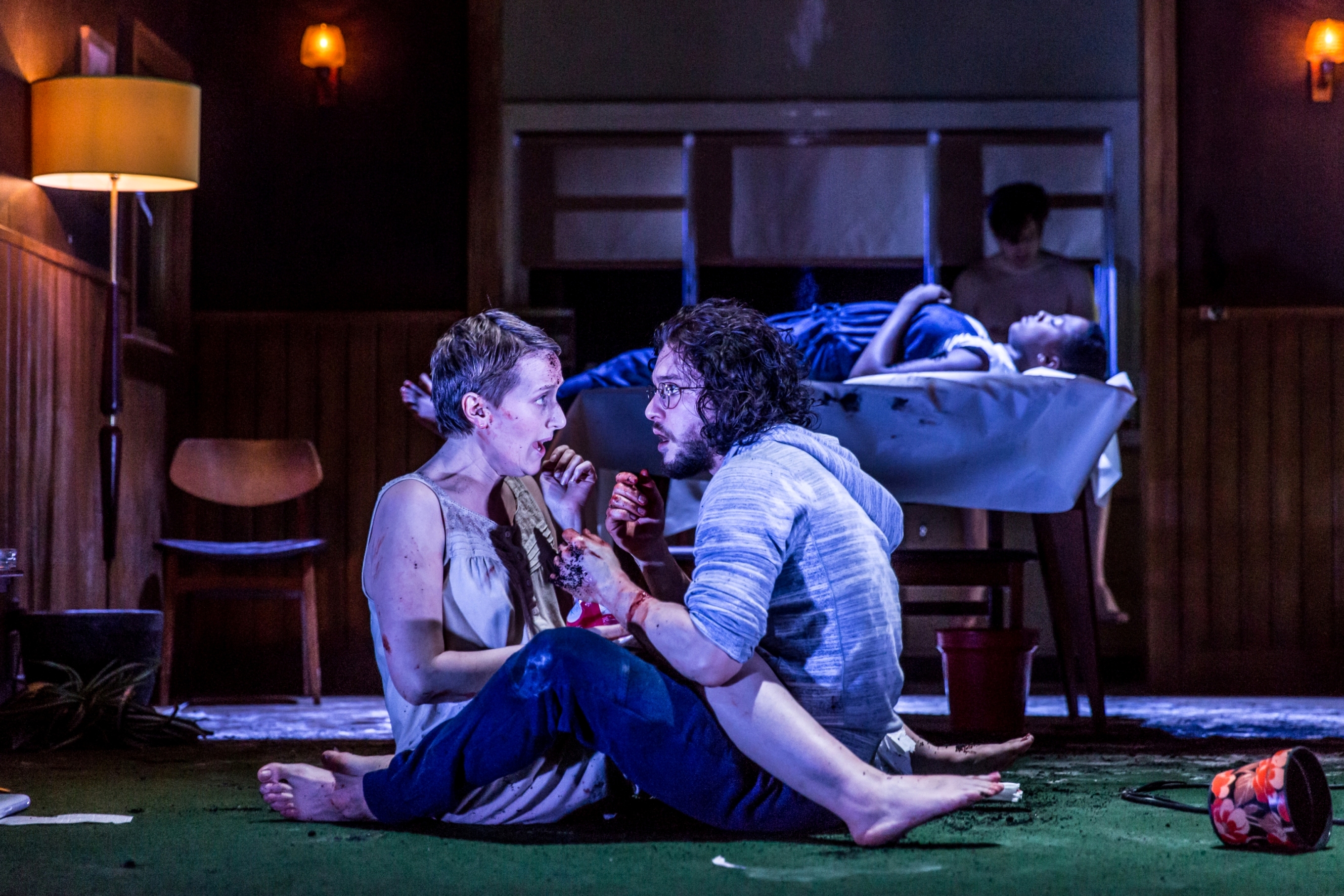
Becca and Howie are the focus but they come to fear “the face” from others who can’t deal with their tragedy – in particular, Jason, the driver of the car involved in the accident, who looks to find his own closure. In three short scenes, Sean Delaney makes his mark in the role. Becca’s willingness and Howie’s reluctance to meet him provide the play’s most heartfelt moments. Fittingly, Jason provides hope in the play, providing a scientific theory of parallel universes that Becca can take solace from (she movingly speculates that her present shows only “the sad version of us”).

Rabbit Hole is the second play by Lindsay-Abaire to be performed at Hampstead. Previously, Good People was a theatrical highlight of 2013 and a West End transfer that it’s to be hoped sets a trend. It’s a fruitful association for the venue and director Ed Hall, who shows a through appreciation of the writing and an ability to empower the cast to face the comedy in the piece. I can’t wait to see more from the combination.

Until 5 March 2016

www.hampsteadtheatre.com

Photos by Manuel Harlan

“Ma Rainey’s Black Bottom” at the National Theatre

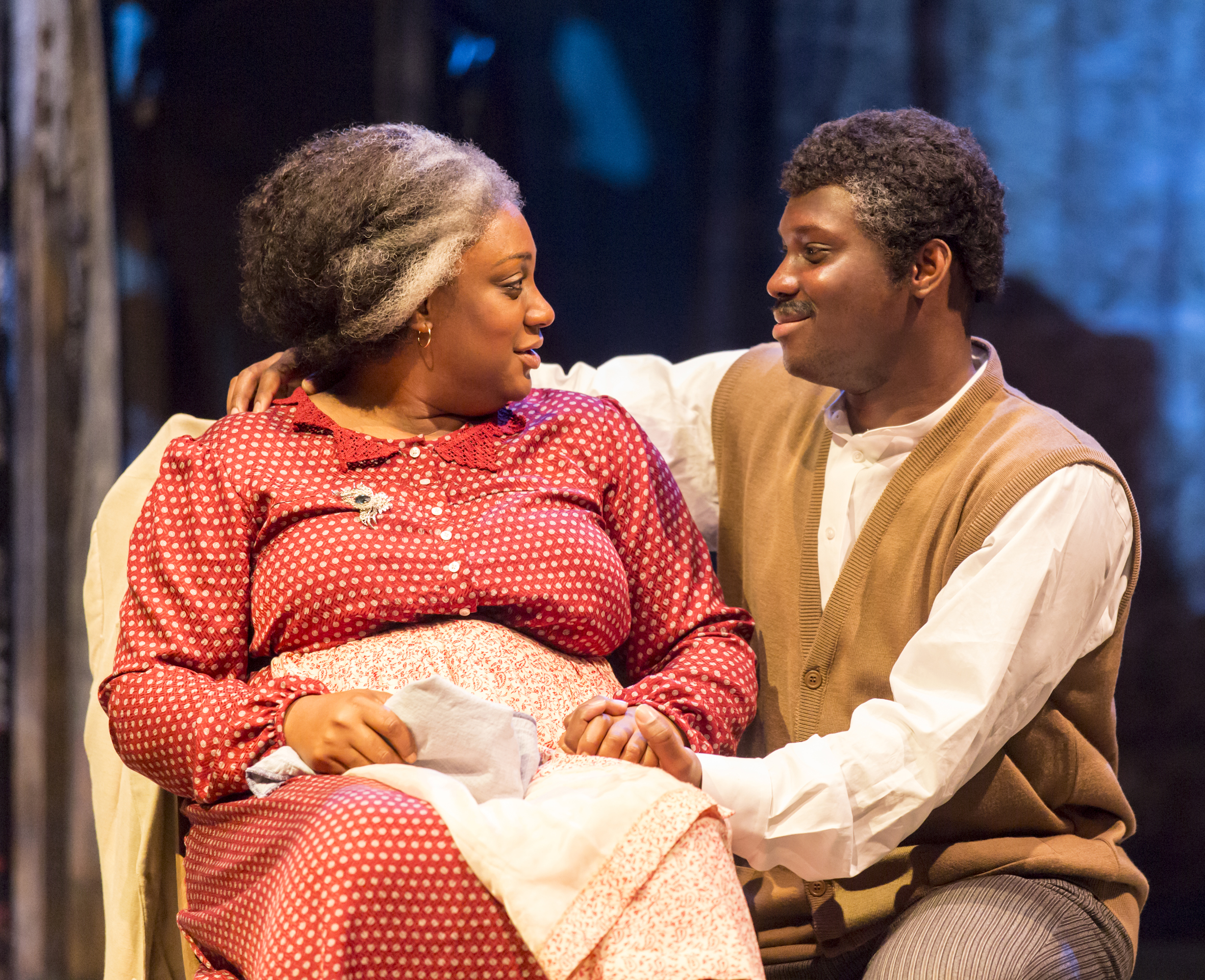
Part of August Wilson’s decathlon of plays about race relations in America, this 1982 work is set in a 1920s Chicago recording studio. While the titular diva, known as the mother of the blues, fights with her manager and producer over adapting her signature song into a modern jazz style, her backing band’s members reveal personal and political tensions of their own.

It could be heavy stuff. Yet, by setting up plenty of laughs and endearing characters, Wilson’s play is hugely entertaining. Most impressively, by showing how racism infuses – indeed poisons – lives, the politics here are as emotive as they are educational. The segregated society the play is based in takes some getting your head around – the gap between races so fundamental – but showing how the players take it for granted has a humbling effect.
If the play has a failing, it’s that you can’t – and don’t – get enough of Ma Rainey. A flaw compounded by the fact that the excellent Sharon D Clarke takes the role. Written relatively thinly, the motivation behind her often-amusing artistic temperament is portrayed confidently and certainly makes you think. But with a voice this strong, it seems downright foolish not to get more music out of Clarke.

Impeccably directed by Dominic Cooke, Ultz’s design creates a sound booth aloft and a basement room that the band rehearses in. The feeling is sparse, almost wasteful given the size of the Lyttleton stage, but the claustrophobia is fitting enough. In a narrow space a quartet of excellent performers carefully reveal frequently harrowing stories from the boys in the band.

O-T Fagbenle and Lucian Msamati

Giles Terera and Clint Dyer make a great double act as long-standing friends who play together. O-T Fagbenle has the star part as Levee, a talented, troubled and ambitious youngster, who embodies the power of new music – jazz. A tough call, we have to take Levee seriously while laughing at him quite a bit and Fagbenle manages this balance well, skillfully revealing the character’s tragic background. Lucian Msamati’s philosophising Toledo wants to open the eyes of his illiterate colleagues. Exquisitely delivering the most didactic of lines, he deserves our applause – our affection for him paying off with the play’s startling, tragic, conclusion. The impact and legacy of racism is clear here, making the play still frighteningly apposite.

Until 18 May 2016

www.nationaltheatre.org.uk

Photos by Johan Persson

“Escaped Alone” at the Royal Court

Sometimes the theatre seems obsessed with youth: plays about teenagers, hot new stars and valiant efforts to attract ‘new’, i.e. younger, audiences. But here’s a play that takes old age and experience seriously, while highlighting another important debate – about women in the theatre. The 77-year-old Caryl Churchill’s new play is for four older women, a brilliant piece confirming that being radical isn’t about age but about sheer skill and vision.

Escaped Alone is short, under an hour, and director James MacDonald tightly controls the duration. It’s worth paying attention to Christopher Shutt’s audio work here, with sounds and silences in the piece as carefully constructed as the impeccable script.

Despite the brevity, Churchill manages more than most playwrights. This is a buy-one-get-two-free play, mixing genres to startling effect. First a group of friends, chatting in the garden – the conversation observed to perfection and their relationships conveyed with marvellous economy – is funny, wise and topical.

Monologues interrupt, revealing the women’s current fears. These are poems on anxiety, depression and regret, each one capable of moving you to tears. Circling around the theme of loneliness, the show is explicit about the “bitter rage” we all contain.

ESCAPED ALONE by Churchill,    , Writer - Caryl Churchill, Director - James Macdonald, Designer - Miriam Buether, Lighting Peter Mumford, The Royal Court Theatre, 2016, Credit: Johan Persson/
Linda Bassett

And then there are scenes of storytelling. Dystopian tales of earth, wind, fire and water that Churchill has wicked fun with. The outrageous scenarios bring laughs, but the abject isn’t far away. Absurd suggestions, worthy of any conspiracy fantasist, these apocalypses come close to our darkest imaginings.

Linda Bassett takes the lead in these stand-alone scenes, so she excels among an amazing cast. She’s joined by Deborah Findlay, Kika Markham and June Watson, who each seem incapable of putting a foot wrong, and it’s hard to imagine another ensemble this strong.

The production marks a stellar beginning to the Royal Court’s anniversary year. The venue’s tagline, ‘sixty years young’, feels appropriate for Churchill’s fresh work. Settling into the home of previous career triumphs, Escaped Alone is just as experimental and challenging, bold both structurally and thematically. Forget those angry young men… it’s time for these wise old women.

Until 12 March 2016

www.royalcourttheatre.com

Photos by Johan Persson