Tag Archives: Old Vic Theatre

“Arcadia” at the Duke of York’s Theatre

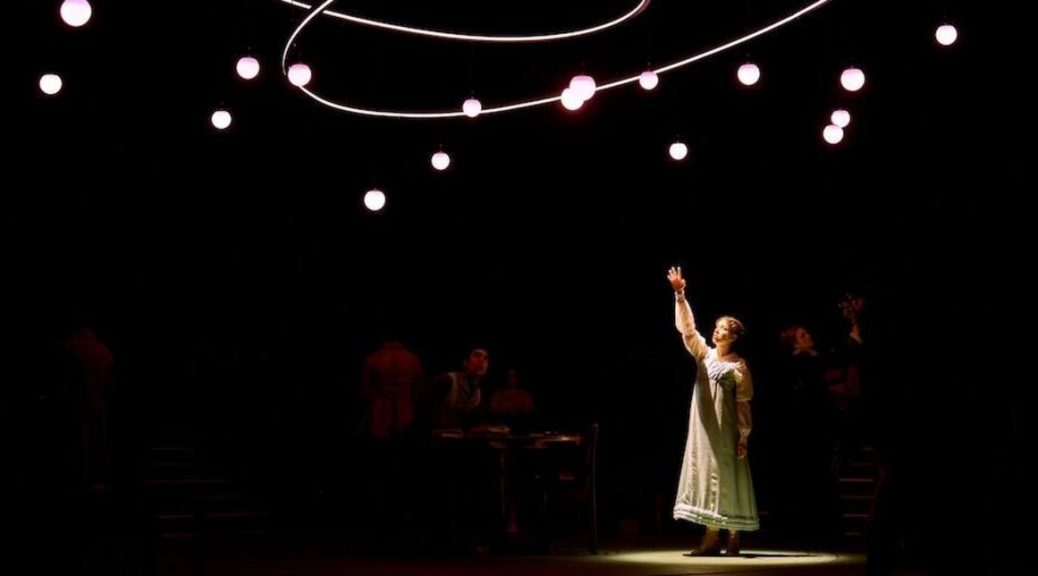
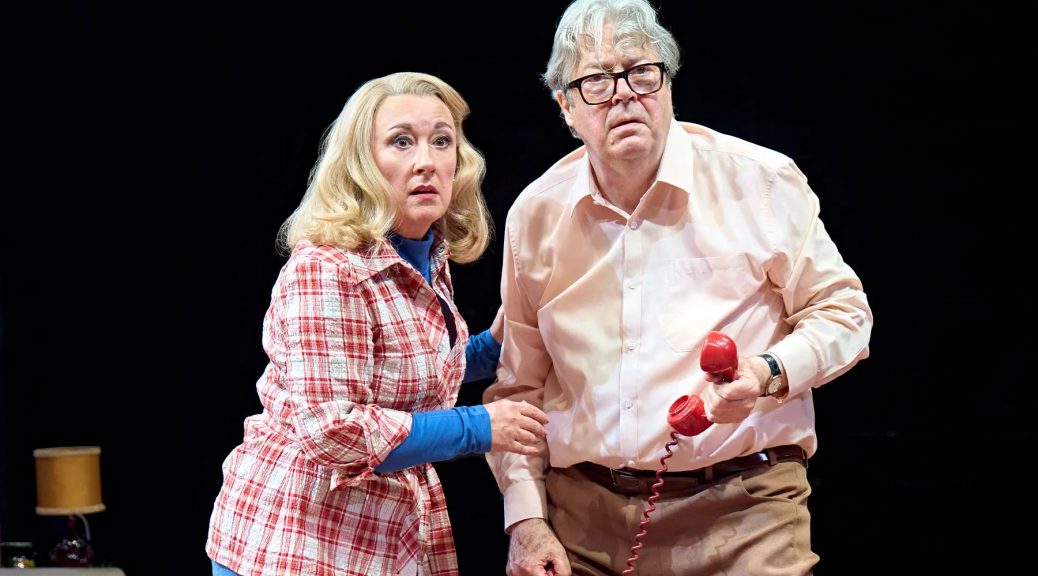
Transferring from the Old Vic into the venue soon to bear the playwright Tom Stoppard’s name, this revival of his 1993 play deserves its rave reviews. Spanning centuries, as well philosophy and culture, Arcadia is full of big ideas. Director Carrie Cracknell and her superb cast seem a little in awe of the piece, and you can’t blame them – the fusion of sex, science and culture is grand. Without doubt, the production is a first-rate affair. But it can be noted that it never questions Stoppard’s genius.

It’s hard not to be daunted, though. Stoppard’s knowledge is profound as well as extensive. A history of the Enlightenment and Romanticism in the historical sections of the play is reflected on in modern-day moments. Stoppard’s facility with language and his erudite characters make every line intelligent. Naturally, he is writing about a bunch of clever clogs who say a lot of things that make you think. It’s tough to admit, but, this can be tiring and the play, however great, is long.

The focus is an 18th-century maths prodigy called Thomasina, performed impeccably by Isis Hainsworth who manages (no easy task) to convey the girl’s youth as well as her brains. Her tutor Septimus is another smarty pants, and Seamus Dillane conveys his many attractions convincingly. Septimus is almost dangerously charismatic – he is a schoolfriend of Lord Bryon, who he makes seem a little tame – although you might wonder if more questions could be raised about his conduct.

In the present day, the couple are researched (kind of) by modern academics. Nikki Amuka-Bird and Oliver Chris get a good deal of fun from the rivalry between the two writers, while Stoppard’s structure, his provision of hindsight, is hugely rewarding. But while Chris can land laughs as the arrogant historian, the performance comes close to being a little too broad. Would his inflated ego really fool or impress anyone, especially in such rarefied circles?

All of the characters are interesting. Yolanda Kettle has a fine role as Thomasina’s mother, full of the kind of acerbic snobbery that’s great on stage, while Angus Cooper plays another maths whiz struggling with something complicated. Stoppard manages to explain a lot of ideas brilliantly and Cooper’s understated performance is a highlight. Everyone has plenty to say and there is humour and romance, the latter aided by Alex Eales’ stylish set.

Best of all, Cracknell and the staging convey a sense of wonder. There’s less melancholy than I remember from Matthew Warcus’ production in the same venue a decade ago. The focus is more on intellectual excitement, with discussions about physics and philosophy that are fascinating, if occasionally hard work. It’s hard to follow what Thomasina’s breakthrough actually is, the trials of the modern academics too. And if you wonder at least some of the time what it is they are all talking about, don’t worry – you’re not alone.

Until 12 September 2026

www.oldvictheatre.com

Photo by  Manuel Harlan

“Glengarry Glen Ross” at the Old Vic Theatre

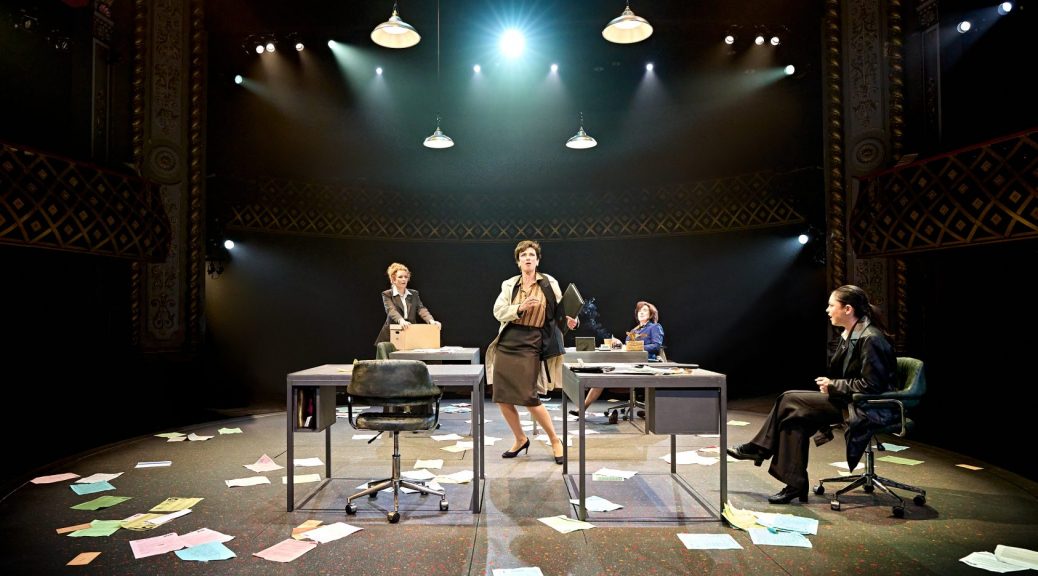
This revival of David Mamet’s play will probably be remembered for its all-female casting. It’s a first – prominently advertised – and the twist is oddly appropriate to writing so obsessively focused on masculinity. The story of real estate salesmen, ruthless and desperate in equal measure, is made stranger, uncanny even, by director Patrick Marber and his performers. Yet, unlike the very best revivals, this production adds surprisingly little to an appreciation of the piece.

To be clear, the cast is excellent. There’s Dorothea Myer-Bennett as office manager John, revelling in the bureaucratic power over the leads that help sales. Frustrated Dave and insecure George, played by Niky Wardley and Nancy Crane, are both in danger of losing their jobs because they cannot close sales. And Shelly ‘The Machine’ Levine, one of Mamet’s most powerful creations, inspires one of Indira Varma’s finest performances. Shelley is paired with former protégé Roma, played by Rosa Salazar, whose strong portrayal helps establish a bond with Levine that is one of the few humane relationships in the show.

The cast revel in roles they surely never imagined they would get the chance to play. They embrace the absence of anything appealing about the characters – that is Mamet’s point. Marber doesn’t shy away from the ugliness of the business, and Salazar is particularly strong at showing it (the deal with a gullible client, played by Mercedes Bahleda with great reserve, is particularly uncomfortable). Yes, you can recognise the salespeople; Varma even allows you to feel sorry for Levine, and Crane creates sympathy, too. But with so much greed on display, no matter how accurate Mamet’s analysis, Glengarry Glen Ross is not an easy watch.

Being uncomfortable is part of the intention, of course. These salesfolk aren’t super successful and you can pity them. They are exploited, too, by the offstage owners Mitch and Murray, who Mamet makes so vivid. If the argument is laboured, it doesn’t feel dated. The play’s observations on capitalism and morality, made by many, are as valid as ever. But for all the skill, the production has a problem. The casting won’t convert anyone to the play. Of course, it doesn’t have to, as the show stands strong. But this is an unpleasant piece you’ll either love or hate – nothing has changed on that front.

Until 18 July 2026

www.oldvictheatre.com

Photo by Manuel Harlan

“The Real Thing’ at the Old Vic Theatre

This revival, from director Max Webster, of Tom Stoppard’s acclaimed 1982 play is hard to fault. The clever script is matched by a stylish production and intelligent performances. If there has to be some kind of balance between enthusing an audience and making them think, this show attains an equilibrium. It is easy to admire and enjoy The Real Thing, but perhaps harder to fall in love with it.

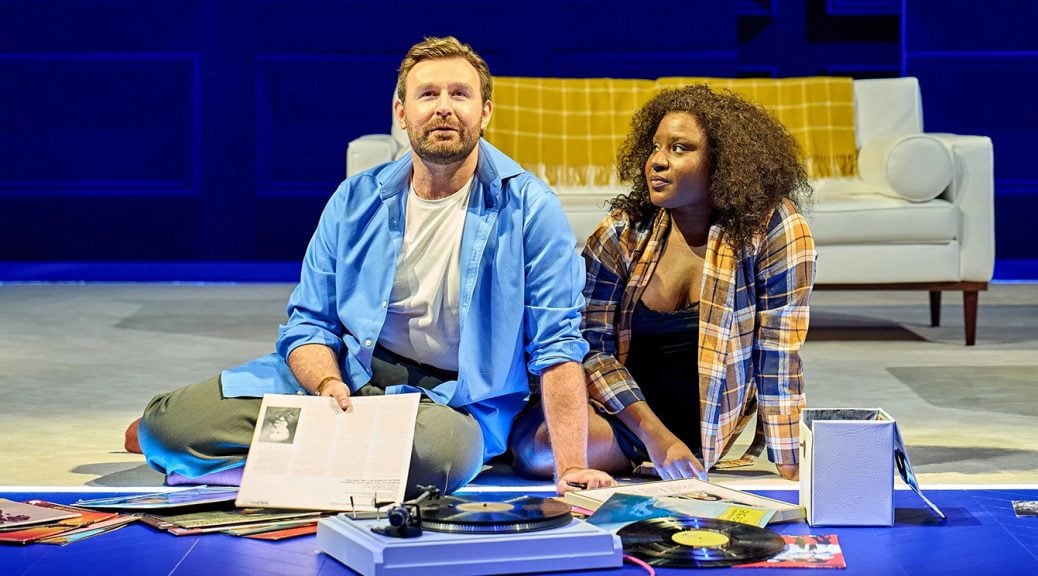
The play is Stoppard on love – explored through art, of course – and as you might expect the writer provides a lot that’s worth hearing. Since the characters are a playwright and a group of actors, he knows exactly how they should say it all. Webster matches the meta-theatricality in the script with stagehands joining in the action. Everything is smart and funny, entertaining and full of ideas.

That should, surely, be enough? What more could a poor playwright do? But since this is Stoppard, it is hard not to find it all a little… thin. Where’s the culture and history from plays such as Rock ’n’ Roll or Leopoldstadt? Writing so broadly is this playwright’s forte – and unusual gift. Of course, Stoppard can try something different. But – and it’s horribly unfair – The Real Thing just feels like a lot of arty poshos rambling on. 

“persuasive nonsense”

Dismissing Henry (the playwright) and his wives (Annie and Charlotte) is trebly mean as they – and Stoppard – try hard to avoid “persuasive nonsense”. They aim to be truthful, even if they hurt themselves as a result. By being aware of character flaws, the play contains its own critique (Stoppard’s preferred form of defence). But is Stoppard too unkind to his creations? Henry is particularly insufferable, almost challenging the audience to feel for him. 

One benefit from such carefully written characters is the potential they provide for performers. Webster’s exciting cast makes the most of them. Bel Powley’s Annie grows the most, from mercurial to mature, and it is a joy to watch this. Susan Wokoma is particularly funny, while maintaining a steely edge for Charlotte. Both have a lot of argument to get across and do it well. 

James McArdle and Bel Powey in The Real Thing at the Old Vic Theatre
James McArdle and Bel Powey

It is to the credit of all that James McArdle’s Henry is controlled and contained. McArdle finds the wit easy but also conveys the aloofness of the character and his genuine struggle for his art. But how pleasant is it to spend time with Henry? It is certainly hard to see why either woman bothers. We end up with three clearly blessed characters who all come too close to smug. 

The play becomes unbalanced, and secondary roles (all well performed) are lost. Younger characters suffer most but even Oliver Johnstone’s superb performance as Annie’s first husband, Max, feels a distant memory by the interval. Worse, the role of working-class writer Brodie (played by Jack Ambrose) is positively uncomfortable. Of course, it’s supposed to be – he is there to raise questions – but Stoppard doesn’t write straw men, and something has gone wrong here. Do folk talk more about privilege now than they used to? Maybe, but while this lot are aware of how lucky they are, Stoppard seems to have lacked prescience about how grating they would appear some 30 years on from when he wrote the play.

Until 26 October 2024

www.oldvictheatre.com

Photo by Manual Harlan

“Machinal” at the Old Vic Theatre

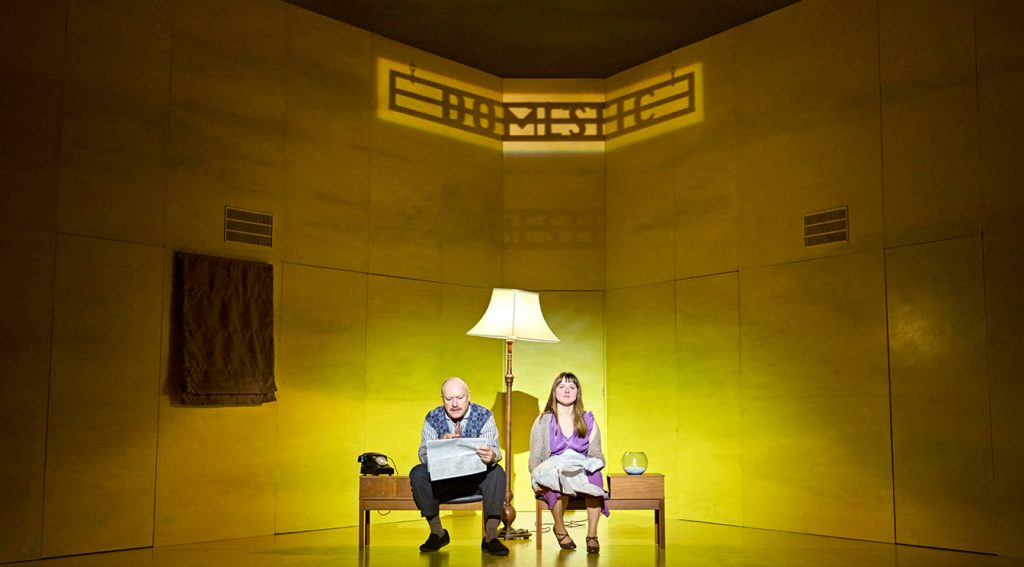
After an acclaimed run in Bath, this revival of Sophie Treadwell’s 1928 play comes to London. It’s a confrontational piece based on the execution of Ruth Snyder, who killed her husband in his sleep. The stylised script, described as Expressionist, is matched by Richard Jones’ direction and is unquestionably memorable. But a word of warning: the play is a challenge and at times downright unpleasant.

Treadwell’s version of Snyder is called Helen and is quite a puzzle. She’s super-sensitive to touch and noise and mentions smells more than once. She reacts violently to stimuli with physical spasms. Taking the lead, Rosie Sheehy gives a suitably intense performance that is easy to admire. It’s a mammoth, exhausting role that will surely, deservedly, earn award nominations. The depiction is visceral, but it is also oppressive.

Through a series of (literally titled) scenes, we see Helen’s desperation at home and her unhappy marriage. Then there’s a one-night stand that she reacts to with unexpected passion but characteristic ferocity. The character is clearly ill, but it’s left to the audience to try to work out how – and to question how much sympathy to have for her. Treadwell’s career as a journalist might help here. Is she somehow trying to present events objectively?

Tim Francis and Rosie Sheehy in Machinal at the Old Vic
Tim Francis and Rosie Sheehy

Other roles are small, but strong performances make them memorable. Helen’s lover and husband, Pierro Niel-Mee and Tim Francis respectively, are excellent. They don’t quite know what to make of Helen either! The performance from Buffy Davis, as Helen’s mother, is more complex. As with those Helen meets at work or within the legal system, characters have a deliberate flatness and are occasionally comic, which makes you wonder: are we seeing the world all through Helen’s eyes?

The large cast works in a small space, Hyemi Shin’s set makes the stage tiny, so that Jones’ staging is hugely accomplished. All the movement (credited to Sarah Fahie) is controlled – mannered and alienated – while Adam Silverman’s superb lighting design creates yet more claustrophobia through spooky shadows and a lot of strobes.

It all grates. Of course, that’s the point. And theatre doesn’t just entertain. Jones and his committed cast take tremendous efforts to discomfit us (and nearly two hours without a break makes sure of this). Sheehy really is remarkable, and there are moments in Machinal that made my skin crawl. It’s an achievement, of sorts, but not one for all tastes.

Until 1 June 2024

www.oldvictheatre.com

Photos by Manuel Harlan

“Jitney” at the Old Vic Theatre

August Wilson’s great play gets a good revival under the directorial guidance of Tinuke Craig. Set in the office of a taxi company (the cars give the play its name) the piece is a close look at a community, full of emotion and drama.

The co-op business is headed by the admirable Becker (Wil Johnson) who is struggling to keep the premises open and about to meet his son who has just been released from prison. Old-time drivers struggle with drink (leading to a sensitive performance from Tony Marshall) or their past, while in conflict with a younger generation. Arguments between the gossiping Turnbo and the aptly named Youngblood are a highlight and make strong scenes for Sule Rimi and Solomon Israel. In all cases, Wilson’s characterisation is impeccable.

Unlike the writing, the performances are uneven. Some scenes feel more rehearsed than others. It’s an odd fault but Johnson – who is outstanding – possesses considerably more confidence than his colleagues which leads to uncomfortable moments. Johnson’s is a performance not to be missed as he portrays his character’s dignity and trauma with considered attention and intense passion. The production sags after Becker and Johnson finally leave the stage.

The play’s 1970s Pittsburgh setting is evoked in costume design and video projections (strong work from Alex Lowde and Ravi Deepres). But the period feel doesn’t always come through in performances – accents are hit and miss and the odd declamatory moment jars.

The production works from firm ground though. There’s an excellent balance between humour and darker moments that shows the writing’s sense of rhythm. And some serious thought-provoking antagonism as younger characters – Becker’s son especially – are told to take responsibility for their lives. Wilson draws us into the characters’ complex lives with consummate skill and Craig’s calm understanding of script’s strengths ensure the revival’s overall success.

Until 9 July 2022

www.oldvictheatre.com

Photo by Manuel Harlan

“A Number” at The Old Vic

This is an excellent revival, directed Lyndsey Turner, of Caryl Churchill’s popular sci-fi two-hander. The scenario of cloned children, head-to-head in conversations with their father, gives instant drama. The sons, played by the same actor, of course, are either discovering their parentage or have been abandoned. How they and their father react means the different scenes offer huge potential for interpretation.

The script is a prospect sure to excite actors, and Paapa Essiedu and Lennie James leap at the opportunities. Which is not to say the play is easy to get your head around. You can see the pitfalls with Es Devlin’s design. Having the walls and ornaments all the same colour is clever – a play on identity and difference. But such concepts quickly become portentous.

“Positive spirit”

Turner avoids the potential weight of the script and the fact that it is a famous play. This version of A Number is clearer, lighter and funnier. Revelations about the father’s history (that could be cryptic or odd) are treated like a thriller: exciting but also creating sympathy. The humour is almost exaggerated, Essiedu especially has great comic skill. The “positive spirit” of the first character we meet (a contrast with another ‘version’) lifts the play. Which is not to say serious concerns aren’t raised.


The nature/nurture debate is explored swiftly and effectively in A Number. Too quickly you might argue, as the show is only an hour long. Essiedu’s confusion, anger or interest in the different characters he takes on are all thought-provoking. Big issues of independence and identity are raised, as are themes of memory and responsibility.


Under Turner’s confident direction, Essiedu and James impress with their ability to bring out the play’s arguments so naturally. These are excellent performances that belie such demanding roles. Churchill’s text is as heavy with concepts as the experiment both men are part of. To make the debate feel so human is a big achievement.

Until 19 March 2022

www.oldvictheatre.com

“Bagdad Café” at the Old Vic

Nobody brings film to the stage like director Emma Rice. Following hits such as Brief Encounter and Romantics Anonymous it’s now the turn of Percy and Eleonore Adlon’s 1987 movie. The story of an unlikely friendship between two women – Brenda and Jasmin, estranged from their partners in the remote titular location – has a quirky appeal. While the adaptation fails to move beyond appealing eccentricity, a drop in standards for Rice is still a show worth seeing.

As a Rice fan, I’d argue the problem lies with the source material. I’m puzzled by the choice. There’s a fairy-tale charm in the story of a German tourist and a hassled coffee shop owner… but little else. The women’s quirks, as well as those of Brenda’s family and clientele, replace plot. Maybe this was the attraction – Bagdad Café is novel and Rice is one of the most original theatre makers around – but, frankly, too little happens.

It is a collection of characters to enjoy. Much is made of former “songbird” Brenda and her current sorry state struggling to run a business. Sandra Marvin takes the part and is believable. But it’s her husband, performed by Le Gateau Chocolat, who complains about how hard she works – it’s not clear why we should share that problem. The show’s heroine Jasmin, who walks out on her husband in a scene with no dialogue, is a touch too mysterious. Patrycja Kujawska portrays the character’s quiet power well as she changes the lives of those she ends up living with. But she encounters oddities rather than odds, as conflict and tension are absent. Even learning magic tricks comes suspiciously easily. With little backstory, secondary characters are pleasant to watch but suffer a similar complaint: there are lovely turns from Gareth Snook and Sam Archer as a couple of misfit hippies, but you can’t help wondering how they ended up in the story and what they are there for.

The music for the show, ably directed by Nadine Lee, consists of too few tunes (the show relies heavily on Bob Telson’s hit, Calling You). And the numbers are truncated. There’s a defence for this – Bagdad Café isn’t trying to be a conventional musical. But the show’s originality ends up frustrating. It’s down to the theatricality of the production to hold our interest. Rice and her cast attempt this admirably. There are lovely touches with puppetry and movement (credit here for John Leader, Sarah Wright and Etta Murfitt) that make for plenty of memorable moments – it’s almost enough.

Bagdad Cafe at the Old Vic
Sandra Marvin and Patrycja Kujawska

A world is vividly created. And even if it puzzles too much to entirely suspend disbelief, it is enchanting. There’s not much to Bagdad Café apart from atmosphere. But what an atmosphere! A finale where Brenda and Jasmine put on a show gave me goosebumps. The show’s feelgood simplicity coalesces to make sure we leave the theatre happy. And an encore, showing an accompanying digital project for the production, further confirms a striving for originality that wins admiration. The conjuring here is more than tricks that Jasmine enjoys on stage, it’s theatrical magic of the kind Rice excels at.

Until 21 August 2021

www.oldvictheatre.com

Photo by Steve Tanner

“The Greatest Wealth” from the Old Vic

If Covid-19 has taught us anything, it’s that the NHS is as emotive and essential a subject for debate as it ever was. This series of monologues, curated by Lolita Chakrabarti, directed by Adrian Lester and funded by the TS Eliot Estate, uses the humanity – and drama – surrounding the greatest of British institutions with a strong sense of purpose. It is essential viewing.

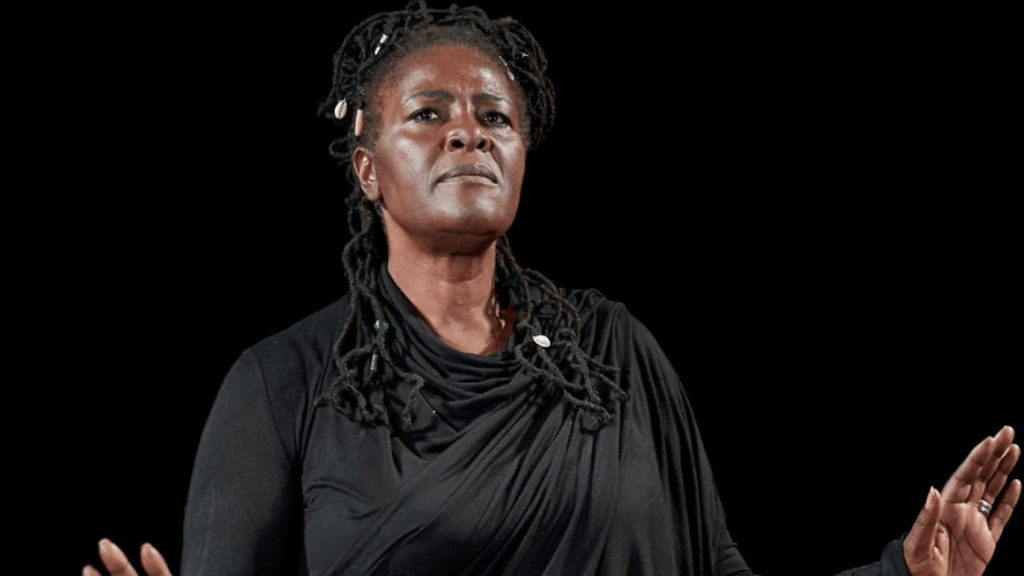
The project started in 2018 but a new commission, from Bernardine Evaristo, starts the line-up online. First, Do No Harm has a personification of the NHS recounting her achievements and challenging us as to her future. Overtly political, with an attack on “myopic puppet” politicians, this effort to give the institution a voice is stirring and powerful. If some of Evaristo’s references, let alone lines such as “I have X-Ray vision”, come close to being overblown, a magisterial performance from Sharon D Clarke makes them work. The effect is tremendous.

Sharon D Clarke in 'The Greatest Wealth' from The Old Vic
Sharon D Clarke

Patients

Chronologically, the series starts with Jack Thorne’s charming piece, Boo, performed by Sophie Stone and showing the impact of the new NHS on a young deaf girl. It’s interesting to see suspicion about the service at its inception, and the writing has plentiful details and an admirably light touch.

Another patient’s perspective – similarly fresh and funny – is told in Choice & Control by Matilda Ibini, which has Ruth Madeley’s character getting on with her life in a wheelchair. It may not be “the Rolls-Royce of wheelchairs” but the point about having access to mobility is well made and Madeley has a lovely way with the audience.

Slightly less successful, if a touch more ambitious, Paul Unwin’s piece adds a dystopian twist that makes his At The Point of Need confusing. David Threlfall’s performance recounts how the NHS has touched his character’s life, but in too much of a rush. It is the only piece that ends more depressing than celebratory – a brave effort that backfires.

Practioners

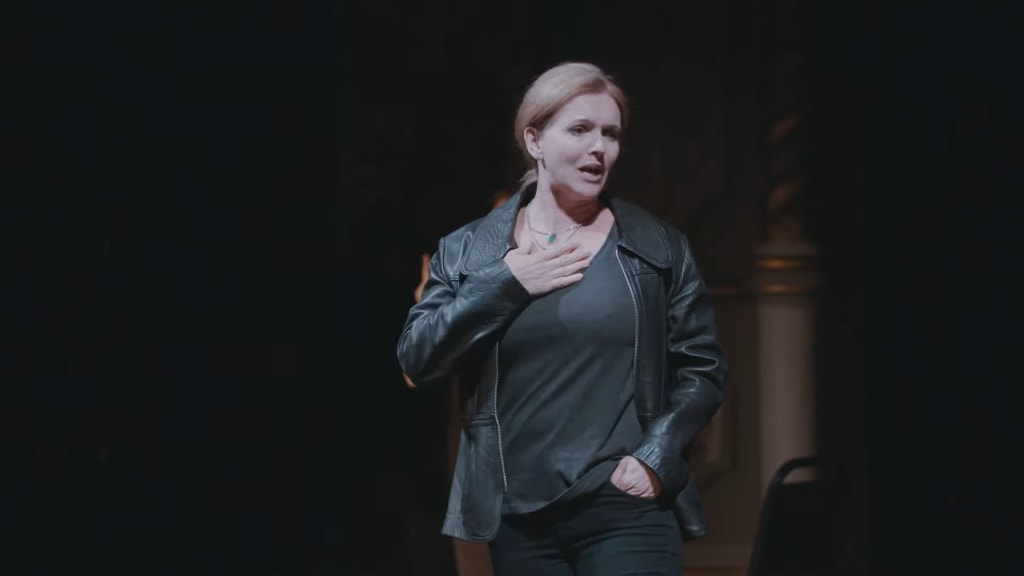
A gentle humour, with an increased sense of awe about the science of medicine, is present in pieces about the 1970s and 1980s. Sister Susan by Moira Buffini and Speedy Gonzales by Chakrabarti show us a nurse and a consultant telling us about their work. Characters to truly admire lead to wonderful performances from Dervla Kirwan and Art Malik. 

Sister Susan from 'The Greatest Wealth' at The Old Vic
Dervla Kirwan

Pressure on the NHS is carefully conveyed in the piece about the 1990s. Another nurse and another strong role are present in Family Room by Courttia Newland with Jade Anouka. And stress on NHS staff gets a good twist. Newland highlights the difficulty of health workers protesting that fits well with the whole project’s aim.

High points

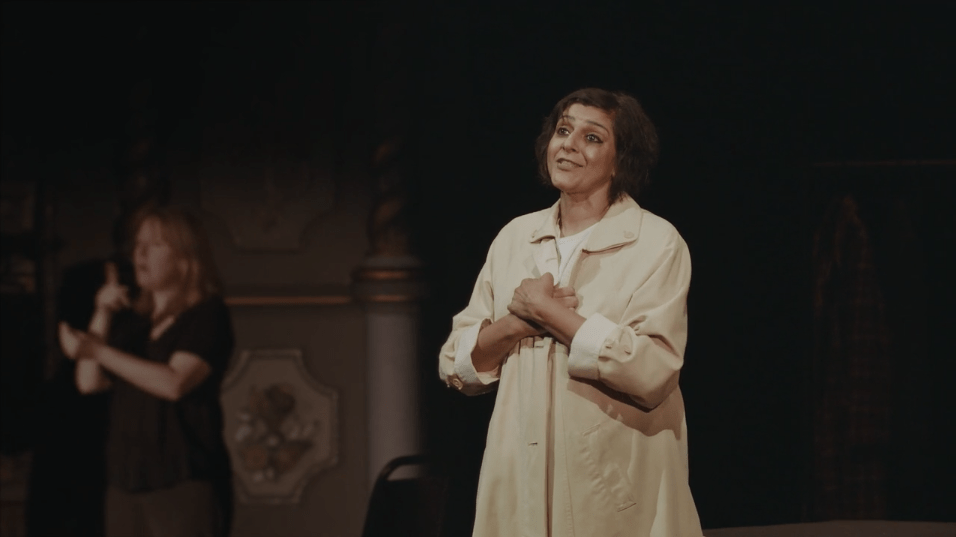
For me, the two highlights of the season contained the most humour, used to great effect in Meera Syal’s Rivers. Performing as a midwife in the 1960s, Syal handles the comedy expertly, with delicious irony and sarcasm. While many of the monologues highlight the role of immigrants within the NHS, Syal has a prime position within the debate and opens it up into a broader look at racism. The result rings true and gets laughs – an impressive combination. With powerful emotional twists, the writing has some great turns of phrase and a lovely rhythm.

Myra Syal in 'The Greatest Wealth' from The Old Vic
Myra Syal

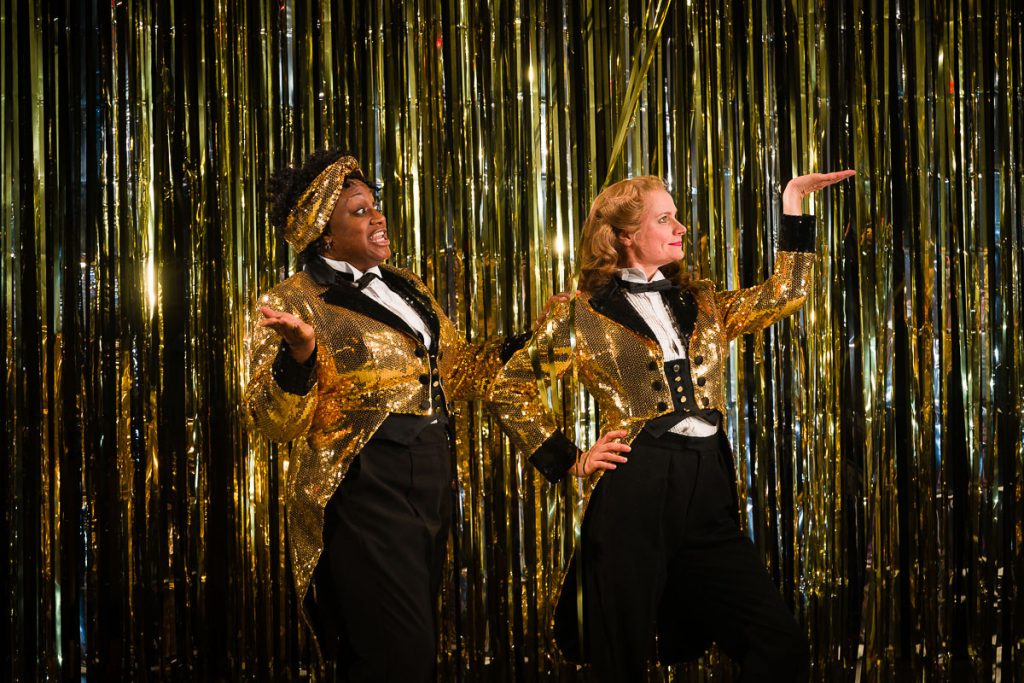
A cabaret monologue, The Nuchess by Seiriol Davies makes for a great change of pace. There’s plenty of satire, including outsourcing the last chorus! And more points for rhyming heaven and Bevan. Performed with exuberance by Louise English (pictured top), this jolly personification of the NHS is markedly different from that in First, Do No Harm. But neither are performances to forget in a long time. The NHS doesn’t lack advocates, but they seldom come as articulate as the contributors here. Let’s hope that a monologue addressing the next decade contains only good news.

www.oldvictheatre.com

“A Monster Calls” from the Old Vic

Artistic Director Matthew Warcus’s Coronavirus lockdown project, entitled Your Old Vic is off to a fantastic start with this hit from 2018, co-produced with the London theatre’s namesake in Bristol.

Like the best of theatre aimed at younger audiences (the age recommendation is 10+) this adaptation of Patrick Ness’ novel appeals to all. And similar to the best of its kind – think Warhorse and Coram Boy – it tackles a tough subject we might shield children from. This story of a schoolboy whose mother is dying of cancer is tough stuff. Yet it’s brilliant from start to finish.

Anchored by wonderful performances from Matthew Tennyson, as Conor, Marianne Oldham as his mother and Selina Cadell as his Grandma, the play is honest about the complicated emotions that surround a long illness. The monster of the title is, of course, cancer. But the play also contains a pretty scary Yew Tree (Stuart Goodwin) who takes Conor on a journey of self-discovery.

Although the ensemble has some bumpy moments, three stories told by the tree and performed by all, means a lot of roles are covered by the small cast. Hammed Animashaun and John Leader impress as a Prince and an Apothecary as well as bullies in Conor’s ordinary life. Ness makes the important point that Conor’s problems at school continue. Other troubles don’t go away when cancer arrives.

In using fantasy and story-telling to reveal the truth, Ness tackles the anger and fear around loss for all his characters. Frequently violent, like many fairy tales, you might share Conor’s scepticism about allegorical touches. But with wit and twists we becomes convinced that “stories are the wildest things”. A sense of danger gains dramatic momentum in every scene.

Matching Ness’ imagination, the ideas for the show – inspired by Siobhan Dowd, devised by the company and directed by Sally Cookson – fill the stage with invention. Dick Straker’s brilliant projections and the sophisticated score from Benji Bower complement a simplicity to the staging that uses ropes to suggest the tree and many props. Technically brilliant, frequently beautiful, the shows very creativity serves as a hopeful note to help us through its emotional turmoil.

Until 11 June

www.oldvictheatre.com

Photo by Manuel Harlan

“Present Laughter” at the Old Vic

That Andrew Scott’s career is currently at such a well-deserved high adds extra piquancy to his taking the role of actor Garry Essendine in Noël Coward’s play. In a part that’s easily interpreted as the writer’s alter ego, Scott has the star quality to make this study of fame convincing. With such charm and magnetism having everyone run around after him, battling adoration from all and succumbing to temptation time and again, becomes believable and increasingly funny. The joke is on everyone – those chasing and our poor, pursued hero.

Scott doesn’t just get laughs from Coward’s studied script, which is wonderful, but has such command of the stage that every moment is made potentially comic. Showing as much incredulity as élan gives us the oft-cited childishness of the middle-aged man, as well as lot of energy. But Scott has the skill as an actor to make his character’s flaws mean something: for all Essendine’s self-obsession, this is a tender portrayal that appreciates the man’s loneliness.

The production belongs to Scott. Coward made the character – which he performed of course – a mammoth role. Few will complain, in this case. But while the variety of the author’s wit is shown with the various hangers-on around him, the play’s other characters are underdeveloped. The laughs are consistent enough, especially with Sophie Thompson’s performance, but the “adoring and obeying” entourage are mere foils. Only Essendine’s ex-wife can hold her own against him and Indira Varma’s performance benefits as a result: a truly suave figure, her delivery of the world “congealed” is worth attendance alone. Changing the gender for one of Essendine’s lovers – Joanna becomes Joe – barely raises an eyebrow. It’s nice to get the subtext shared by so many of Coward’s plays out of the way and it gives a menace to the role that Enzo Cilenti does well with.

For all the practiced superficiality of the characters and the farce within the plot, the production shows Coward’s depth as a writer. The sweet sorrow that was the text’s original title is given its due – to Scott’s credit – but also through director Matthew Warchus’ sensitivity and intelligence. Each act has a distinct tempo, as a drawing-room comedy becomes sexy before developing a mania that almost becomes grating. Meanwhile, the final act plays with the farce we have just seen before becoming somber. The ending is brave, as the quips that have proved so entertaining alter in tone to become fraught. Essendine’s rants, the overacting we’ve enjoyed so much at, pass into something sad, even dangerous. The play shows itself to be about more than present laughter as Warchus gives it the potential to linger in the mind.

Until 10 August 2019

www.oldvictheatre.com

Photo by Manuel Harlan