“Bacon” at the Finborough Theatre

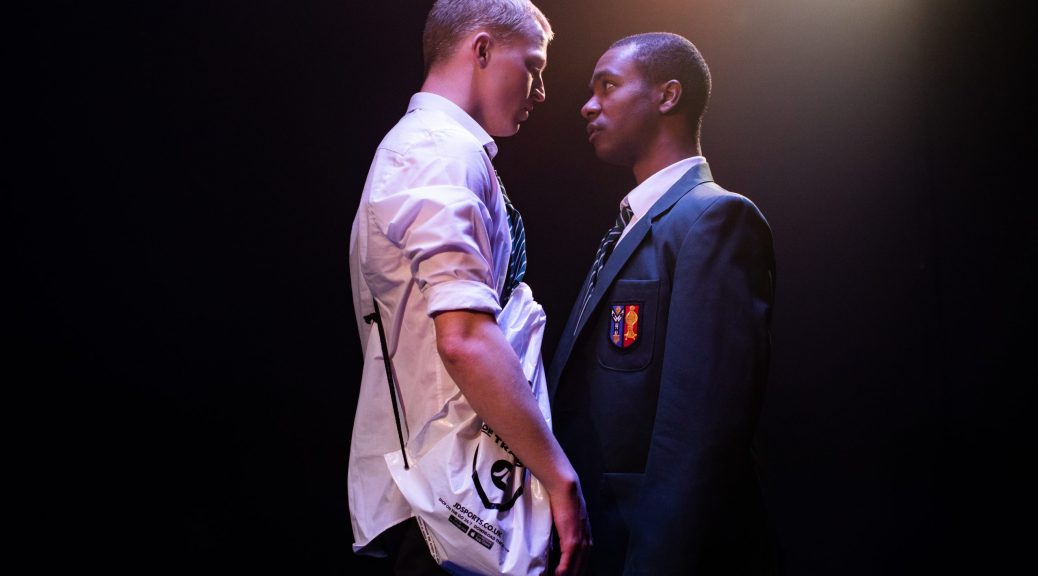
Teen dramas are two a penny. Young lives have plenty of problems, ample angst and content that, as the saying goes, is relatable. A playwright needs to up to the ante with this subject matter. And that’s exactly what Sophie Swithinbank does with her powerful and smart script.

Swithinbank takes us on a journey with her characters Mark and Darren that is carefully plotted. The writing, full of strong yet understated imagery, is admirable. But praise does come with spoilers…

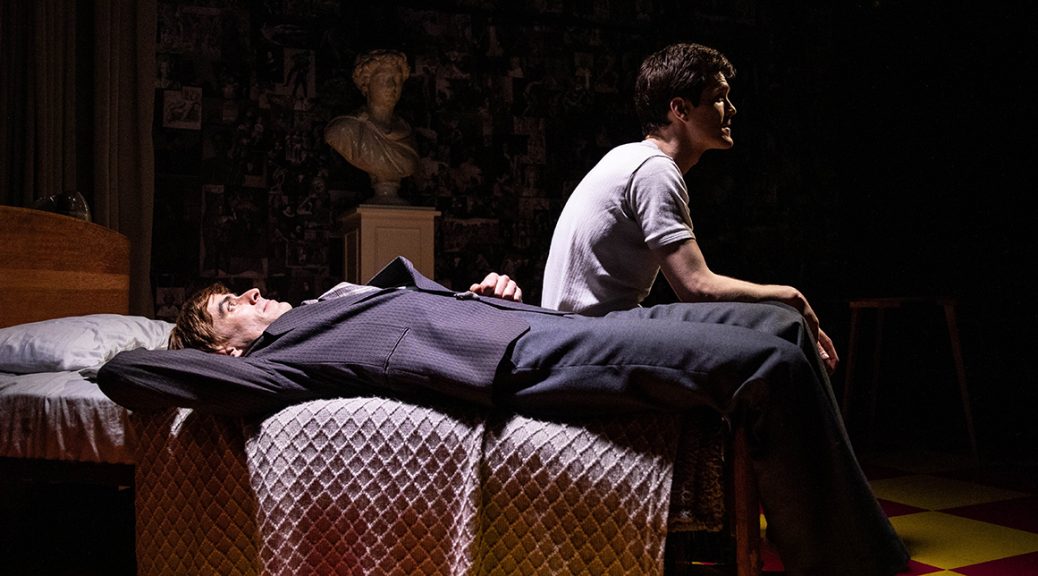
Bacon-Finborough-Theatre-Ali-Wright-63-scaled

I’ll admit I was fooled at first. The odd friendship with clean-cut new boy Mark and his rough friend Darren has charm and effective (if predictable) humour. There are laughs about the aloofness of one and the ignorant swagger of the other. It seems that Swithinbank will treat their very different problems equally.

In a bold move, the tone of Bacon changes quickly. The teens’ burgeoning relationship, told in flashbacks, reveals not the romance Mark wants but trauma. The play becomes disturbing as the relationship becomes emotionally and physically damaging.

Think of a topic that gets a trigger warning and it’s here: suicidal ideation, self-harm, domestic and sexual abuse. Could  some have been avoided and others given more time? But there’s no doubt the cumulative effect is dramatic. Some scenes are difficult to watch as Swithinbank explores how lost and lonely these young men are. It’s depressing how incapable they are of understanding, let alone expressing, feelings.

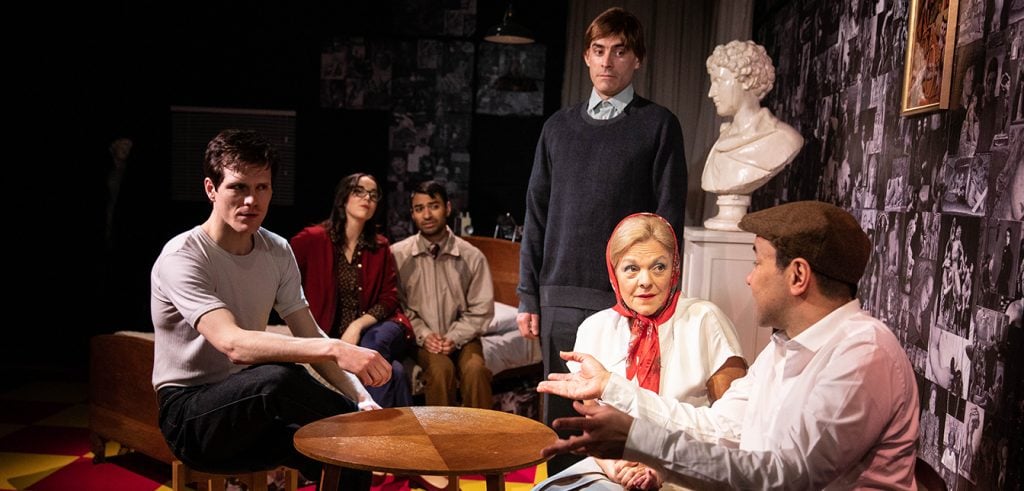
Bacon-Finborough-Theatre-Ali-Wright-63-scaled

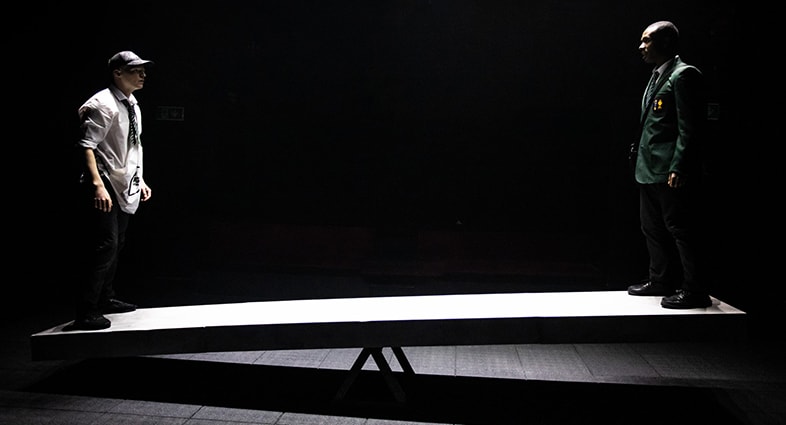
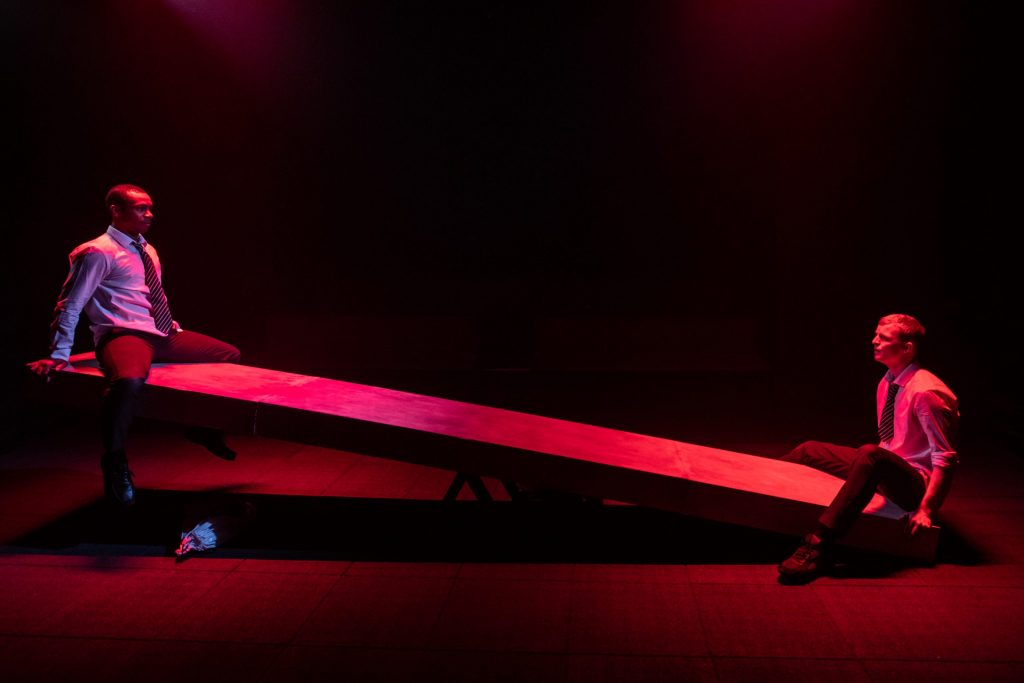
The production rises to the challenge of Swithinbank’s ambition. Matthew Iliffe’s direction is faultless, flipping between relaxed and tense moments. The design by Natalie Johnson consists of a simple see-saw used to great effect: reminding us we are watching children and reflecting instability. Further praise goes to top-notch lighting and sound design (Ryan Joseph Stafford and Mwen) each used dramatically at key moments without being distracting.

As for the performances, two such intense and dynamic roles are gifts to actors. Both Corey Montague-Sholay and William Robinson are flawless, with have a strong command of the comedy (balancing how the audience might laugh at, rather than with, the characters). Montague-Sholay brings out Mark’s charm, Robinson does the same with Darren’s vulnerability, ensuring remarkable sympathy. When violence arrives, we see the characters sharing shock and pain. Strong performances and a daring play make this an easy one to recommend.

Until 26 March 2022

www.finboroughtheatre.co.uk

Photos by Ali Wright

“The Woods” at the Southwark Playhouse

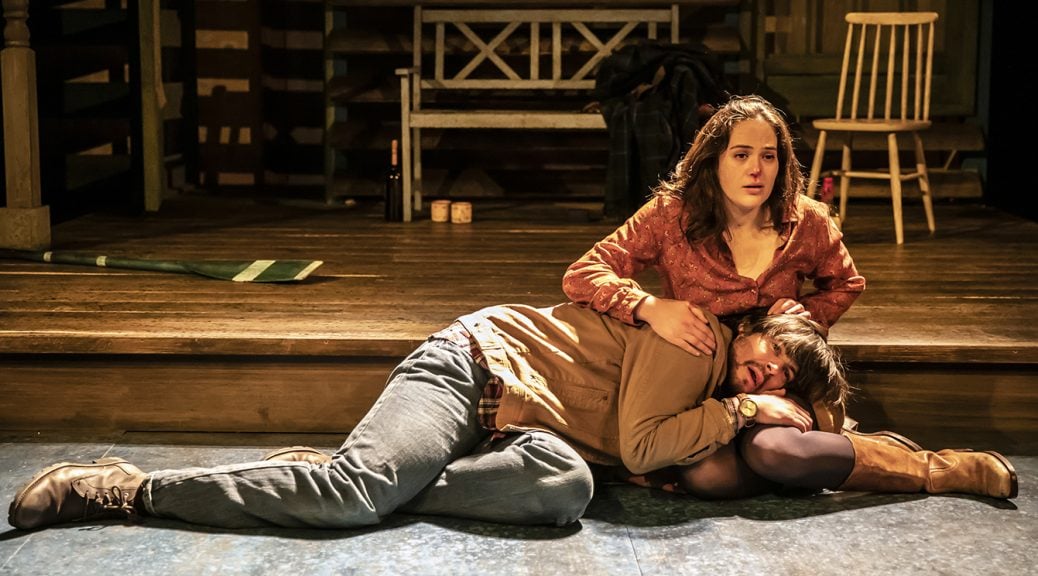
David Mamet’s 1977 play is a romantic drama – just a very fancy one. The script is clever and, in this revival, carefully managed by director Russell Bolam. Allusions are dense, the angst extreme and the sexual politics wretched. If you aren’t a Mamet fan, it can prove tiresome. There’s an easy misanthropy behind the story of a couple falling out of love in a romantic cabin, even if the ideas spouted are highbrow. Is it obvious I’m not sold?

But I’d still recommend this show unreservedly – because the two performances here are fantastic.

Watching Sam Frenchum as Nicholas and Francesca Carpanini as Ruth isn’t pleasant. As a gushing hippy away from the city, she is frankly annoying. Nor does her mistaken idea that ursine partner is “serene” generate much sympathy. Meanwhile, Nicholas’ mansplaining isn’t going to win him many admirers.

The anxiety both characters share is carefully revealed, especially by Frenchum, while Carpanini triumphs in showing Ruth’s desperation. And this is all despite Mamet’s exaggerations… let’s just say that the idea of alienation has a witty twist.

Nobody could make light work of the dark atmosphere Mamet insists on, or the secrets toyed with so effortfully. Nonetheless, these actors – and Bolam – understand the play’s undeniable dynamism. Watching the characters develop and respond to events and revelations is the highlight. Both actors bring intensity to their roles at just the right moments. From who you find more annoying to when you start to get scared, it’s all effective drama and very well performed.

Frencham manages to make the existential speculation here feel as natural as it can, and Carpanini proves an effective foil (it isn’t her fault that her character is only a point of contrast). If The Woods doesn’t move you emotionally, it will still make you think.

A final point of praise seems appropriate and serves as a bit of a spoiler. There is violence in the play and this is brought to the stage with such skill that it should come with a warning (I thought something had gone horribly wrong at one point). It’s overall technically brilliant, undoubtedly impressive, but somehow remains cold.

Until 26 March 2022

www.southwarkplayhouse.co.uk

Photos by Pamela Raith

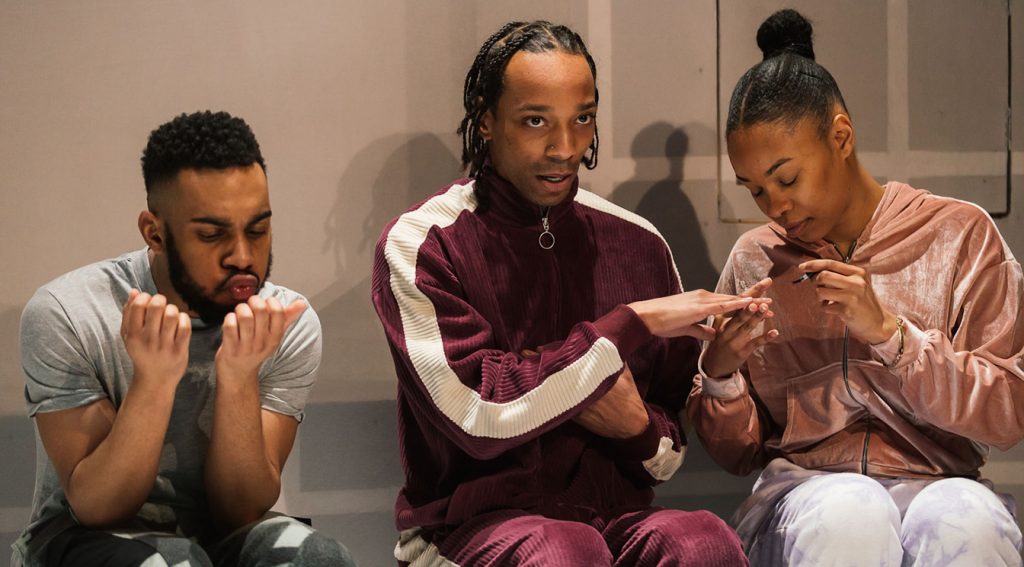
“Red Pitch” at the Bush Theatre

This assured debut by Tyrell Williams makes playwriting look easy. A carefully modest story of young friendship, Red Pitch is funny, sweet and has something important to say about life in London.

The three 16-year-olds we watch practising football is surely a challenge to negative stereotypes about young black men. You can’t review what a play isn’t but, suffice to say, they are an admirable trio: smart, supportive of one another and dedicated. Getting to know them is a pleasure. And Williams’ comedy writing is joyfully solid.

It helps that the roles are wonderfully performed. Under Daniel Bailey’s exuberant direction, Kedar Williams-Stirling, Emeka Sesay and Francis Lovehall bring the characters to life – comfortably so. The confidence isn’t surprising – all three performers are bright young things – but it’s also appropriate given the sense of camaraderie between them. The banter is recognisable as common among young men. The affection, less so – and this is what impresses most.

These lives are not easy. But nor are they a grim, defeated struggle. Omz is a primary carer, despite his age, which leads to moving moments for Lovehall. Bilal is under pressure to become a professional football player – a plot allowed to emerge with skilful subtlety. The pace of the whole play is commendable, Sesay’s strong depiction of Joey, who matures most as we watch, is indicative of how firmly structured the writing is.

There is a further pressure on these youngsters – one they have no control over. The redevelopment of their estate is a backdrop to the action (carefully evoked by Khalil Madovi’s sound design). As their families relocate, and their community is about to change, there are moments of touching naivety to remind us that our heroes aren’t as old as they pretend to be.

Tensions erupt, and the play threatens to end on a sour note. Separation will occur, and not just because of relocation – these childhoods are about to end. But, as an indication of how involving Red Pitch is, I’m glad Williams suggests friendship will endure, that the bonds shared and enjoyed by the audience aren’t so easily broken.

Until 26 March 2022

www.bushtheatre.co.uk

Photo by Craig Fuller

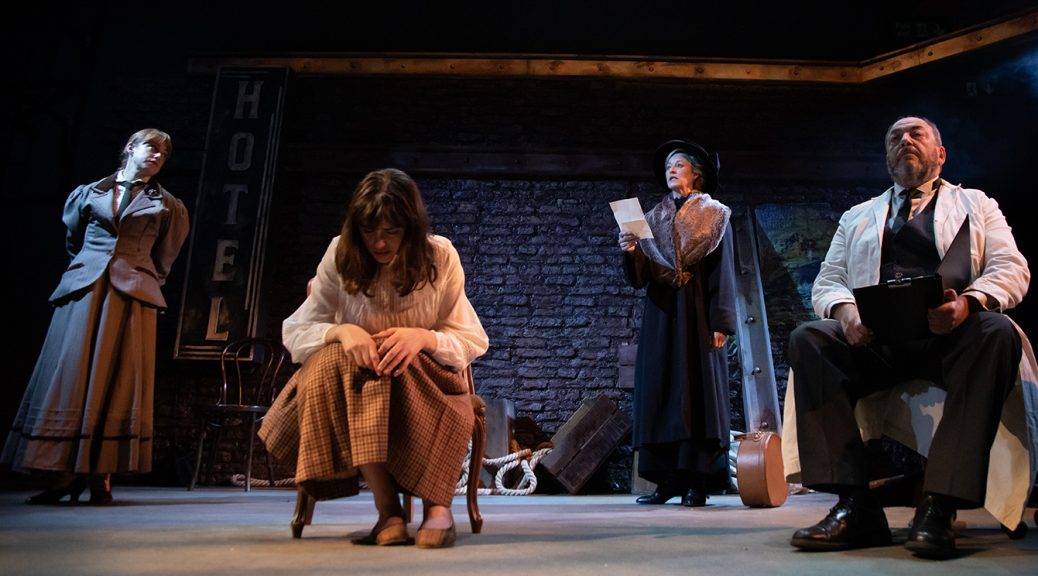
“The Ballad of Maria Marten” at Wilton’s Music Hall

Beth Flintoff brings this story of a murder victim to the stage with skill and originality. Based on a real-life case that was a news sensation in 1828, this production is a thriller, but in an unexpected fashion. The Ballad of Maria Marten is more social history than murder mystery – and is all the better for that.

The focus is on Marten’s life rather than death, taking in village society and the status of women. Marten’s childhood was difficult but not unhappy – we see close bonds of friendship. Her first encounter with a man was little more than prostitution but later there was a true love affair. Considering Marten’s brutal death, there’s a lot of joy in this ballad.

The speculative biography and convincing picture of another time and place are brought to the stage by only six performers. They are all strong. But Elizabeth Crarer’s massive title role is awe inspiring. Other characters are types with work to do: the timid stepmother, the “brazen” one and the religious friend. But Sarah Goddard, Bethan Nash and Susie Barrett manage to show us depth in the trickiest roles. The latter two impress twice over, performing as two of the men in Marten’s life.

The Ballad of Maria Marten 1 credit Mike Kwasniak

It is when using the performers together that director Hal Chambers secures the strongest theatrical moments. Acting literally as a chorus – the songs from Luke Potter are fantastic – the cast physically supports Marten at moments of crisis. Aided by movement direction from Rebecca Randall, there are beautiful scenes as they dance, dress and clean their friend.

The Ballad of Maria Marten 1 credit Mike Kwasniak

After the interval the play gets darker. Marten’s relationship with her murderer William Corder is used by Flintoff to explore “coercive control”. Crarer shines as she performs powerful scenes solo. Flintoff’s research with Lighthouse Women’s Aid, which works with those affected by domestic abuse or violence, has paid off. Along with the dramatic tension, there is much to learn as gaslighting leads to mental breakdown.

The idea of denying Corder an appearance on stage is powerful. A further twist in the way tales of murdered women get told is less successful. Flintoff also wants to look at the legacy of violence on Marten’s friends. These women deserve a voice, too, of course, but the stories become truncated. The incendiary finale is neat but rushed. Even so, the show is thoroughly recommended – ideas and execution are grand. This ballad deserves to be a big hit.

Until 19 February 2022 and then on tour

www.mariamarten.com

Photo by Mike Kwasniak

“Steve” at the Seven Dials Playhouse

The European première of this neat comedy drama is a sensible bet for a new venue. Mark Gerrard’s play is a solid affair, Andrew Keates’ direction is sure-footed, and the cast is a dream. With the refurbished Actors Centre looking swanky, and exciting forthcoming productions announced (don’t miss Foxes), the Seven Dials Playhouse is off to a great start.

Steve has the eponymous character’s marriage, to Steven, under pressure, not least because of their young son Stevie. Their best friends are either starting a new life as a ménage à trois or sick. If this mid-life trauma is sadly predictable, Gerrard handles the tropes… by adding show tunes. And we all know, musical theatre improves everything.

To be clear, nobody actually sings. But Steve and his circle are obsessed with Broadway shows and the work of Stephen Sondheim in particular. No matter what – infidelity, parenthood, sex, death, and friendship – there’s a Sondheim song to quote. And there’s musical accompaniment from a pianist to suggest, to those in the know, what might be coming next.

When it comes to the humour, it helps to have a working knowledge of Sondheim’s work. I’m such a fan I’ve seen Do I Hear A Waltz? so I thought it was all hilarious. But with so many references to Into the Woods and Company there is a danger some of the jokes are obscure. That said, my favourite line was a reference to the Géricault painting, with Steve describing his group’s fading sexual attraction akin to a gay Raft of the Medusa. With the help of confident comedy skills from the cast, Gerrard’s wit should entertain all.

Joe Aaron Reid in Steve at the Seven Dials Playhouse credit The Other Richard
Joe Aaron Reid

It helps that Steve is appealing, aided by a sterling performance from David Ames. Even the character’s moaning is entertaining. But the central relationship needs work in the script as well as in the play. Joe Aaron Reid plays the husband and does well in a horrible scene where he is juggling phone calls on his own. But we need to know this character better.

For heart the play relies on friendship. Most notably with Carrie, dying of cancer yet still very much alive: full of intelligence, integrity and humour. Taking the role, Jenna Russell shows why she is an actress to never miss – each scene she is in is lifted immeasurably. There are many reasons to see the show, but it’s Russell that makes Steve unmissable.

Until 19 March 2022

www.sevendialsplayhouse.co.uk

Photos by The Other Richard

“The Forest” at the Hampstead Theatre

Few will rate this new play from Florian Zeller as his best. But a world première from the successful French writer is a feather in the cap of any theatre. Add a superb cast and skilled direction from Jonathan Kent and the show becomes a hot ticket.

Zeller likes to play with an audience, and you either love or loathe his intellectual games. His obsession with truth and family relations, with reality and mental illness, are familiar from hit shows such The Father and The Son. In The Forest, additional surreal touches and elements of a thriller make this story of infidelity original and entertaining.

“Sad and strange”

The Forest has three romantic affairs, well, two, really, with three acts containing repetitions as well as alternate outcomes. All the action is engendered by one man’s perspective. It’s less complex than it sounds (thanks to Kent’s disciplined approach). The idea of a kaleidoscope (cribbed from the programme) is worth bearing in mind, but it’s still often wilfully baffling.

Gina Mckee in The Forest credit The Other Richard
Gina McKee

There’s a lot of suffering in the play. A strong performance from Gina McKee as The Wife shows suspicion and concern. Angel Coulby is great as The Girlfriend, a deliberately opaque role. That this woman is perceived as unstable and dangerous comes to the fore. Both characters are shown as they relate to the lead protagonist, and increasingly so, which gives the text dynamism as well as making it uncomfortable.

If we struggle to find an emotional response to the play, this could well be Zeller’s intention. Toby Stephens leads the action alongside Paul McGann as The Man, a character so important that he needs two performers. Interpretations are welcome; but it seems we are watching a mental breakdown, fantasies and all – his mistress kills herself (or was she murdered?).

“Abandoned in a forest”

Coulby’s character is described as “difficult to manage”. And that isn’t going to endear this Man to anyone. The status of this wealthy, much-respected figure is emphasised. Is our sympathy for him a challenge? Stephens manages to convey grief and tension, and it’s hard not to feel for someone so lost.  Especially when the imagined therapist/interrogator he talks to is a spooky Man in Black, exquisitely depicted by Finbar Lynch.

Zeller’s audience might feel a little lost at times, too. Instruction for the distinct zones of Anna Fleischle’s design is that “interpenetration” occurs. Thankfully, this is subtly handled by Kent. Hugh Vanstone’s lighting is excellent. The play is a puzzle, stylishly set (quite literally… there’s some lovely furniture here). As delusions escalate (let’s just say we end up with a dead deer on stage), you can’t help feeling it all seems a great deal of effort for a simple moral message.

Until 12 March 2022

www.hampsteadtheatre.com

Photos by The Other Richard

“A Number” at The Old Vic

This is an excellent revival, directed Lyndsey Turner, of Caryl Churchill’s popular sci-fi two-hander. The scenario of cloned children, head-to-head in conversations with their father, gives instant drama. The sons, played by the same actor, of course, are either discovering their parentage or have been abandoned. How they and their father react means the different scenes offer huge potential for interpretation.

The script is a prospect sure to excite actors, and Paapa Essiedu and Lennie James leap at the opportunities. Which is not to say the play is easy to get your head around. You can see the pitfalls with Es Devlin’s design. Having the walls and ornaments all the same colour is clever – a play on identity and difference. But such concepts quickly become portentous.

“Positive spirit”

Turner avoids the potential weight of the script and the fact that it is a famous play. This version of A Number is clearer, lighter and funnier. Revelations about the father’s history (that could be cryptic or odd) are treated like a thriller: exciting but also creating sympathy. The humour is almost exaggerated, Essiedu especially has great comic skill. The “positive spirit” of the first character we meet (a contrast with another ‘version’) lifts the play. Which is not to say serious concerns aren’t raised.


The nature/nurture debate is explored swiftly and effectively in A Number. Too quickly you might argue, as the show is only an hour long. Essiedu’s confusion, anger or interest in the different characters he takes on are all thought-provoking. Big issues of independence and identity are raised, as are themes of memory and responsibility.


Under Turner’s confident direction, Essiedu and James impress with their ability to bring out the play’s arguments so naturally. These are excellent performances that belie such demanding roles. Churchill’s text is as heavy with concepts as the experiment both men are part of. To make the debate feel so human is a big achievement.

Until 19 March 2022

www.oldvictheatre.com

“Dirty Dancing” at the Dominion Theatre

If you are a fan of the 1987 movie this show is based on there’s a chance you will enjoy seeing the action on stage. If you don’t know about, or don’t care for, the coming-of-age romance between a woman called ‘Baby’ and her dance tutor Johnny, seeing Dirty Dancing would be a mistake.

The production is a catalogue of frustrations and missed opportunities.

The slim plot (credited to Eleanor Bergstein) is difficult to follow. With scenes so truncated, a knowledge of the original is essential. Calling what we hear dialogue is excessive praise. The script is no more than a collection of famous lines, delivered in a rush.

The lead trio are Kira Malou and Michael O’Reilly, joined by Carlie Milner as Johnny’s colleague, whose pregnancy is the focus of the drama. All three have little chance to act or establish their characters. Tension evaporates in director Federico Bellone’s rush to the finish. And despite the shocking speed there isn’t even the relief that the show is short.

Cinematic montages are difficult to bring to the stage. The production doesn’t know what to do with scenes of Baby learning to dance (although Malou makes a valiant effort). For a scene practicing in water a screen descends so the audience can’t see what is going on. The sense of resignation rather than excitement about the challenge is depressing.

What of those missed opportunities? The dancing is good, but there’s surprisingly little of it. There’s strong singing from Samuel Bailey and Mimi Rodrigues Alves who each get a good number. But the show isn’t a musical; most of the songs are snatches to applaud and move on from. Could the production focus on one or the other? As it is, both the dancing and music are unsatisfying.

An effort to contextualise the story, to include the civil rights struggle, fails. A campfire and a protest song are added but simply confuse the already fragmented plot. Then someone remarks “remember last fall…the Cuban Missile Crisis” and…cut. Far bolder additons are needed. In a humourless show it was the only time I laughed.

Apologies to those who love the film, but the story cries out for updating and needs to change for the stage. Would some concession or embracing theatricality be too much to ask? Yes, I guess. If you assume the folks interested don’t want any surprises (which seems insulting). You get what’s advertised here. Includes the song and choreography of the finale. But strictly nothing more.

Until 16 April 2022

www.dirtydancingontour.com

Photo by Mark Senior

“The Night Larry Kramer Kissed Me” at the Studio, New Wimbledon Theatre

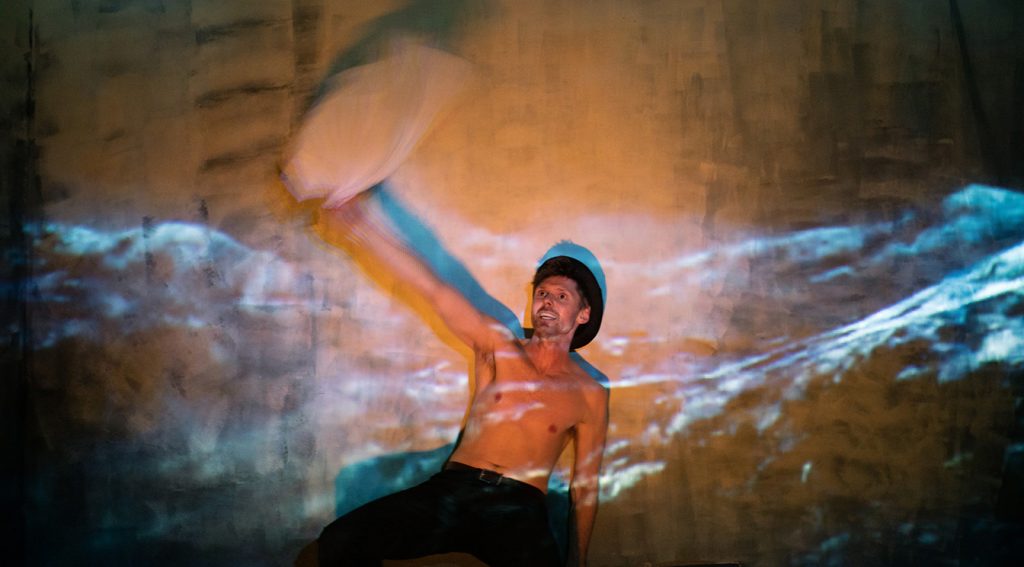
David Drake’s hour-plus monologue covers coming out, the AIDS epidemic and activism. Steven Dexter’s forceful direction of this off-Broadway hit does the script justice and the performance from John Bell is a stage debut to cheer.

The show’s subject matter is important, but this ground has been covered before, not least by the playwright whose name features in the title of the show. Legacies – cultural and political – are important to Drake. But he also brings an originality that offers something new, even if the writing is sometimes laboured.

Infused with a love of song, from musicals to disco, the language is heavy with rhythm. Bell delivers the script well but the lines themselves aren’t easy to follow. The twists and turns in Drake’s thinking are invigorating but also dense. You might think of the show’s segments (a childhood prayer, nights spent cruising or protesting) as lyrics waiting for songs.

The language doesn’t make the show an easy one to perform. All the more credit to Bell, who enhances a sense of continuity and character for scenes that too frequently feel disconnected. The actor juggles a mix of sex and violence bravely and brings humour to the show successfully.

Aided by exceptional lighting design from Aaron Dootser, the show has plenty of emotion and insight. The strongest moments focus on theatre. Yes, Drake is preaching to the converted (I’m not surprised the piece is award winning) but skilfully including lyrics in his script is only the starting point.

The title refers to Larry Kramer’s play, The Normal Heart, only recently revived at the National Theatre. It’s that play that leads to the political awakening we watch here. Reflecting and admiring on culture and community, The Night Larry Kramer Kissed Me serves as a mirror that reflects the importance of representation in a rewarding fashion.

Until 26 February 2022

www.atgtickets.com

Photo by Mark Senior

“The Book of Mormon” at the Prince of Wales Theatre

Being both outrageous and mainstream is tricky. While there are lots of musicals that challenge an audience, few have had the success of this show from Trey Parker, Robert Lopez and Matt Stone. But after the hype, and coming up to a decade playing in London, is The Book of Mormon still risqué?

Never fear, a show about religion, with jokes about Aids, still has the potential to offend… if that is what you want. The representation of Africa, where the Mormon missionaries we follow end up, wants to be controversial. And the show is aggressively sceptical about faith. The cynicism has always struck me as contrived. And the humour is puerile, no matter how clever its creators. But embrace the tastelessness and you’ll love it.

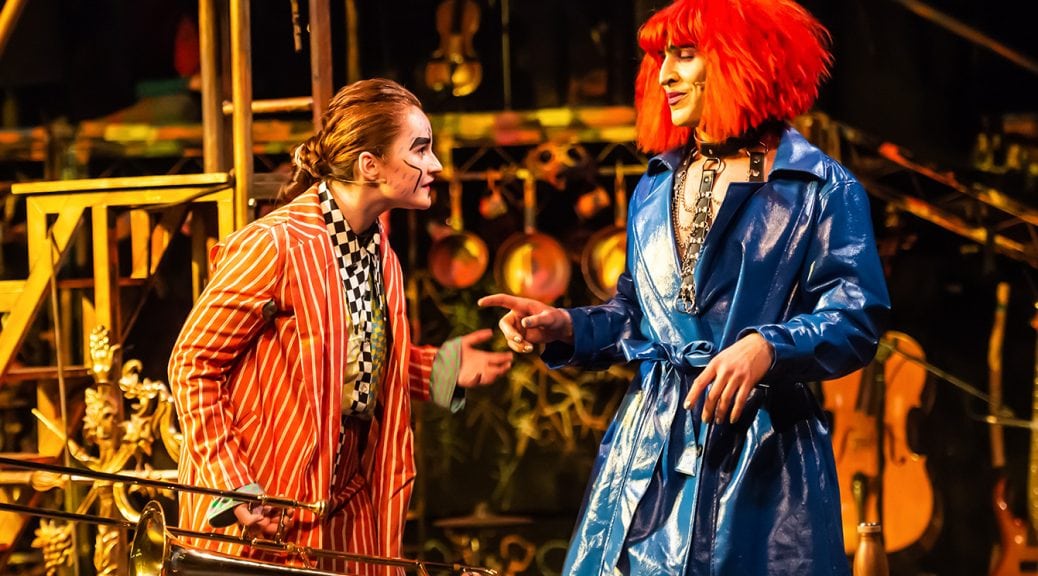
Even if the crudity is too much for you, it’s well done – a cartoonish design from Scott Pask, perfect for tableaux explaining Mormonism, is indicative of the strong production. Yes, even the set gets laughs.

Casey Nicholaw’s direction and choreography are action packed – the show doesn’t settle for a second. The performances are full of energy, too. If the characters that we come to know are few (and caricatured), they are depicted well. With the two male leads, Dom Simpson’s strong voice is complemented by Tom Xander’s comedy skills. Steven Webb’s smaller role as Elder McKinley proves a crowd pleaser. And. although the role of Nabulungi is particularly unforgiving – it’s downright odd, nowadays, to see a female lead so passive – Leanne Robinson does a great job.

The performers and Nicholaw appreciate how the songs drive narrative in a traditional manner. This is one of many smart moves from Parker, Lopez and Stone, and the score has gently grown on me as a result.

Gentle is an odd word for a show that that revels in offending. The Book of Mormon takes a harsh look at faith and human nature: attempts to do good don’t work out. The pastiche soundtrack comments on this – that’s the joke, of course – but the songs also add balance and… warmth. Mimicking big musical numbers – both peppy and inspirational – gets laughs. But the tunes are still perky and moving. There’s the question of atmosphere, too, as the show has many return fans. Being in a room where people know the jokes takes some sting from a punchline, but it’s also a boon. Time for another surprising word – The Book of Mormon turns out to be a charmer.

www.thebookofmormonmusical.com

Photo by Johan Persson