Tag Archives: William Robinson

“Please Please Me” at the Kiln Theatre

It is an achievement on the part of playwright Tom Wright not to relegate music manager Brian Epstein to a footnote in the Beatles story. This Epstein is a strongly realised, complex character and a great role for Calam Lynch, who rises to the occasion. If the man’s identity as a queer Jew is pointed out a little clumsily, the piece has a lot to say. But Wright is almost too anxious to make the picture rounded. And, unfortunately for Epstein, he was surrounded by interesting people – bad for a biography but great for the audience and the actors.

The supporting cast is excellent. There’s Epstein’s dad and cousin – good roles for Arthur Wilson – and a great performance from Noah Ritter as a sexy John Lennon, while the excellent William Robinson works hard as Epstein’s best friend and two hustlers (one of whom gives the best stage punch I’ve seen for a long time). It is satisfying to note that in a play with a lot of men, the only woman gets the chance to shine. Eleanor Worthington-Cox plays Cynthia Lennon, Cilla Black, and Lennon’s formidable Aunt Mimi, and is fantastic with every wig change.

Yet the supporting characters are so strong that they too often overshadow Epstein. Despite Lynch’s fine performance, Epstein is not always the protagonist. That may be realistic enough, but it leaves the play feeling fitful. Amit Sharma’s stylish direction, aided by Jess Williams’s movement work and Tom Piper’s set design, gives the production flair. We see Epstein jostled around the stage, pushed and pulled by others while dodging the furniture. It’s a neat idea, but there remains a sense of the play being uneven rather than unsettling.

The invented scenes between Epstein and Lennon are arresting but might come too close to fan fiction for some. And Epstein’s ‘fall’, precipitated by drugs and self-loathing, seems a little too sudden. Epstein’s poetic touches are his – and Wright’s – finest moments. When waxing eloquent, the piece is transformed and elevated. Back on earth, there are problems. Maybe there isn’t enough effort to date the characters or provide a timeline for the less informed. The decriminalisation of homosexuality could be clearer, as we cover a decade so quickly that I fear confusion. Wright knows his stuff and he uses the material inventively, but there isn’t enough background to help those who are new to the story, or enough insight to please those who already know it.

Until 29 May 2026

www.kilntheatre.com

Photo by Mark Senior

“The Pitchfork Disney” at the King’s Head Theatre

Let’s celebrate that Lidless Theatre, which had great success with Philip Ridley’s Leaves of Glass last year, provides the chance to see this 1991 work from the incomparable playwright. The early piece is far from his best work. But Ridley’s writing is so exciting that this story of an encounter between troubled siblings and an odd duo who give the play its title is wild, unforgettable, theatre.

The start is strong. Performed expertly by Ned Costello and Elizabeth Connick, Presley and Haley are twin siblings who are heavily medicated and living as hermits, their lives shaped by routine and fantasy. They repeat and invent stories that defy logic and, like their characters, are full of ambiguity and emotion.

The chance arrival of Cosmo Disney and his sidekick Pitchfork (who is tricky to discuss without spoilers) upsets the scenario less than might be expected – they are an even stranger pair. Pitchfork, played by William Robinson, is a compelling (and dangerous) figure who invokes repulsion rather than magic or charisma. There’s a wonderful variety of abjection, but it is all down to earth.

This is a valid interpretation. Horror is the key and, of course, there is banality in evil. But arguably, director Max Harrison embraces the play’s controversial reputation too forcefully. Discomfort and shock are only part of the play. The stories recounted should – sometimes – offer succour. Disney’s bleak view of human nature might , if not oppose, contrast with the siblings.

A similar position is taken with the tricky comedy in the play. With Ridley, laughs are always barbed – it’s deliberate that not everyone in the audience joins in – but here they are also broad. Too much deadpan delivery is a mistake, and it blunts the script.

Both reservations are subjective. Harrison has his ideas for the play and, if questionable, that vision is consistent, considered and thorough. The performances are committed and the delivery technically accomplished. But I think there’s something missing – a conflict between stories that structure and those that shock. Disney and Pitchfork are showmen and of the moment. The twin’s tales are private and endure. And at least one thing Ridley is asking is which kind of story is more frightening.

Until 4 October 2025

www.kingsheadtheatre.com

Photos by Charles Flint

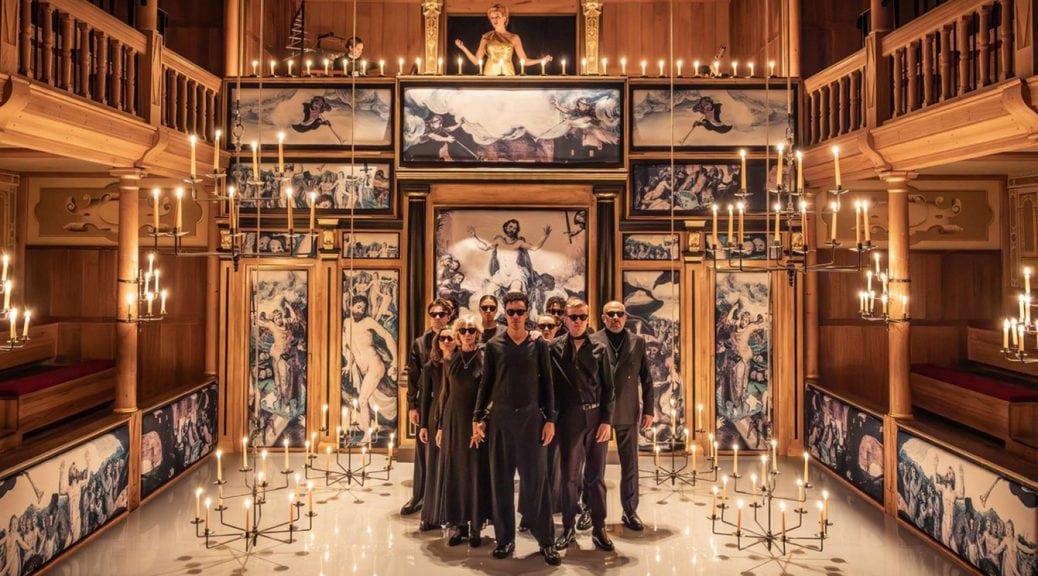
“All’s Well That Ends Well” at the Sam Wanamaker Playhouse

While Shakespeare’s text mentions life as “a mingled yarn, good and ill together”, it is easy to see why a modern audience might focus on the unhappier parts of the play. The orphaned Helen’s adoration of noble-born Bertram and his behaviour overall are hard to stomach. Director Chelsea Walker’s production takes a forceful approach to the piece that is successfully invigorating.

Ruby-Bentall-as-Helen-in-Alls-Well-That-Ends-Well-at-Shakespeares-Globe-credit-Marc-Brenner
Ruby Bentall

Walker’s sympathies are clear – and who’s going to argue with them? Still, it is an achievement to make the women in the play stand out as she has done. There’s a superb starring role for Ruby Bentall as Helen and her performance is great. Even if we can’t fathom why she’s so in love, her determination and scheming fit in a production that feels like a thriller. Bentall is also a strong comedian, getting laughs from some dark humour. The production is notable for making so much of her accomplices in plotting to fool Bertram – Catrin Aaron and Georgia-Mae Myers – who are excellent at showing a moral dilemma while injecting a sense of risk.

William-Robinson-as-Paroles-and-Kit-Young-as-Bertram-in-Alls-Well-That-Ends-Well-at-Shakespeares-Globe-credit-Marc-Brenner
William Robinson and Kit Young

While the virtue of the women was, probably, what characterised them for Shakespeare’s audience, nowadays it is their intelligence. Debates within the play are injected with excitement. The contrast with the men is startling. They seem a little…dull. Or, to be generous, enthralled by their own machismo. Exciting talents Kit Young and William Robinson take the parts of Bertram and his sidekick Paroles. Adding the suggestion the two might be lovers is eye-catching, but it is when Paroles abandons his pretence at being honourable that both characters come into focus. It’s a captivating performance from Robinson as his character acts as a mirror to Bertram’s ‘heroism’ and calls it to account.

Just so we don’t focus on youthful indiscretions in the play (wouldn’t that be a convenient excuse?), Walker is tough on older characters, too. Siobhán Redmond, who is excellent as Bertram’s mother, is petulant. And the sickly king, played by Richard Katz, and Emilio Doorgasingh’s Lafew both show cantankerous abuse of their power. These are the evening’s poorer performances (their characters look a little silly). But Walker makes her points well: less happy ending, more sorry affair. A direct, intelligent approach to the play, executed with few tricks and admirable care, produces great results.

Until 4 January 2025

www.shakespearesglobe.com

Photos by Marc Brenner

“Bacon” at the Finborough Theatre

Teen dramas are two a penny. Young lives have plenty of problems, ample angst and content that, as the saying goes, is relatable. A playwright needs to up to the ante with this subject matter. And that’s exactly what Sophie Swithinbank does with her powerful and smart script.

Swithinbank takes us on a journey with her characters Mark and Darren that is carefully plotted. The writing, full of strong yet understated imagery, is admirable. But praise does come with spoilers…

Bacon-Finborough-Theatre-Ali-Wright-63-scaled

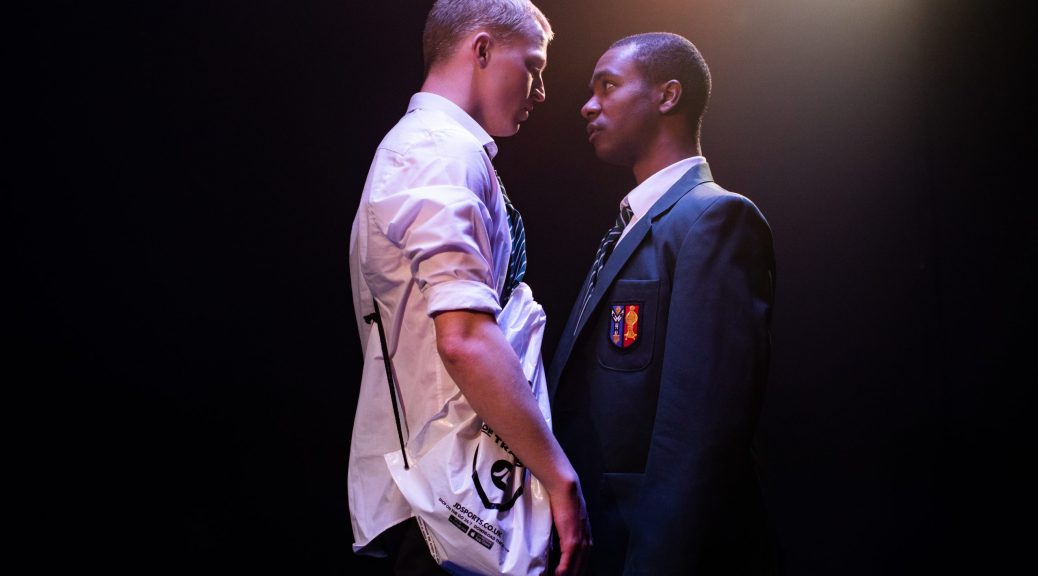
I’ll admit I was fooled at first. The odd friendship with clean-cut new boy Mark and his rough friend Darren has charm and effective (if predictable) humour. There are laughs about the aloofness of one and the ignorant swagger of the other. It seems that Swithinbank will treat their very different problems equally.

In a bold move, the tone of Bacon changes quickly. The teens’ burgeoning relationship, told in flashbacks, reveals not the romance Mark wants but trauma. The play becomes disturbing as the relationship becomes emotionally and physically damaging.

Think of a topic that gets a trigger warning and it’s here: suicidal ideation, self-harm, domestic and sexual abuse. Could  some have been avoided and others given more time? But there’s no doubt the cumulative effect is dramatic. Some scenes are difficult to watch as Swithinbank explores how lost and lonely these young men are. It’s depressing how incapable they are of understanding, let alone expressing, feelings.

Bacon-Finborough-Theatre-Ali-Wright-63-scaled

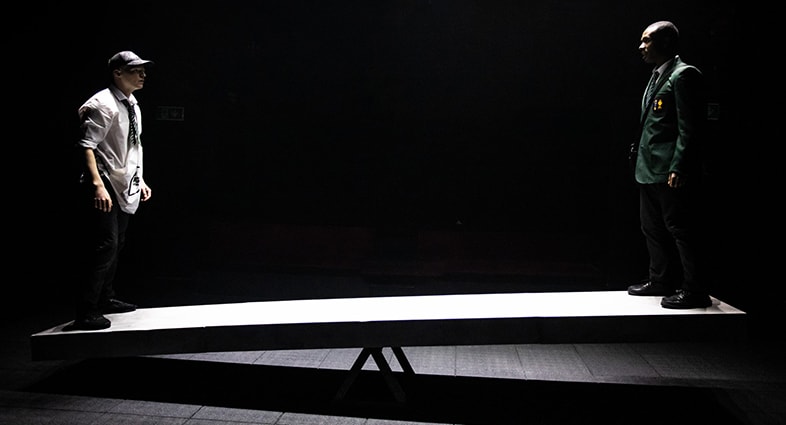
The production rises to the challenge of Swithinbank’s ambition. Matthew Iliffe’s direction is faultless, flipping between relaxed and tense moments. The design by Natalie Johnson consists of a simple see-saw used to great effect: reminding us we are watching children and reflecting instability. Further praise goes to top-notch lighting and sound design (Ryan Joseph Stafford and Mwen) each used dramatically at key moments without being distracting.

As for the performances, two such intense and dynamic roles are gifts to actors. Both Corey Montague-Sholay and William Robinson are flawless, with have a strong command of the comedy (balancing how the audience might laugh at, rather than with, the characters). Montague-Sholay brings out Mark’s charm, Robinson does the same with Darren’s vulnerability, ensuring remarkable sympathy. When violence arrives, we see the characters sharing shock and pain. Strong performances and a daring play make this an easy one to recommend.

Until 26 March 2022

www.finboroughtheatre.co.uk

Photos by Ali Wright