Category Archives: 2017

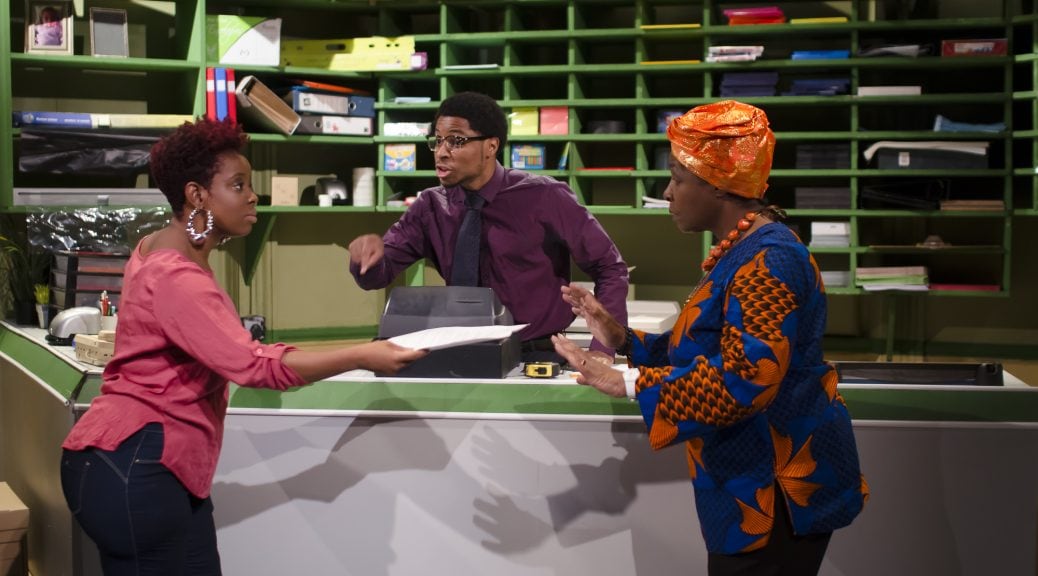
“Dolphins and Sharks” at the Finborough Theatre

The European premiere of James Anthony Tyler’s play presents a slice of working life in contemporary America, based in a printing and stationery shop in Harlem. Graduating from the Finborough’s 2016 Vibrant Festival, the care and attention invested result in a successful pay-off for director Lydia Parker.

When Xiomara takes her chance for promotion to management, the lives of her staff, both old friends and new starters, suffer – to the company’s benefit. This isn’t much of a dramatic revelation. The plot holds no surprises and the play little subtlety. Thankfully some strong performances are on hand and Tyler’s observational comedy is well served.

Tyler’s characterisation is efficient. Rachel Handshaw makes the struggling new leader complex and engaging, Ammar Duffus is appealing as a recent graduate desperate for cash, and Hermeilio Miquel Aquino does well as the store’s cleaner. The evening relies on Shyko Ammos and her role of recalcitrant veteran employee – and she is super. A natural comic, Ammos makes many lines shine with a character that’s larger than life yet believable. And, when her character’s troubles come into focus, Ammos delivers a controlled yet emotional performance.

The issue of race pervades the play, interwoven with the world of employment. Startlingly, to say the least, Tyler parallels the idea of a wage slave with chain gangs. Arguments around prejudice lead to funny, provocative dialogue. The conclusion is a crusading note, presented by a magisterial Miquel Brown who plays a regular customer and long-standing local resident. There’s a call to arms, with a no-nonsense tone and direct address to the audience that feels – refreshingly – old-fashioned. Tyler’s text has an appealing sense of sincerity appropriate to his serious concerns that Parker appreciates and skilfully conveys.

Until 30 September 2017

www.finboroughtheatre.co.uk

Photo by  Alexander Yip

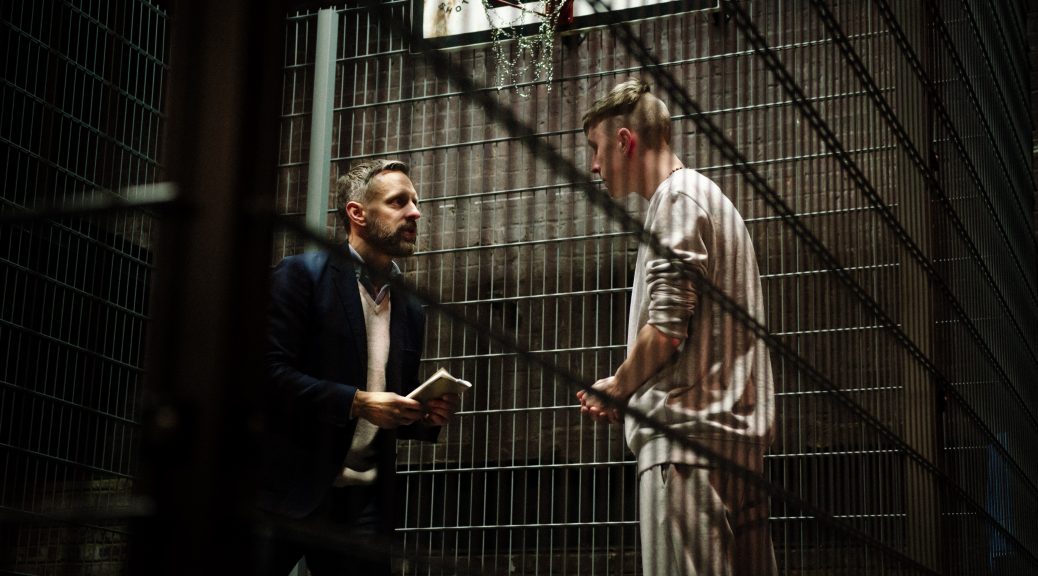
“Thebes Land” at the Arcola Theatre

Warning: this blog may contain hyphens. Lots of them. Franco-Uruguayan playwright Sergio Blanco’s acclaimed piece returns as part of its director-translator Daniel Goldman’s CASA Latin American Theatre Festival. Ostensibly an exploration of patricide, we watch a dramatist’s encounters with a murderer in prison. But we also watch the construction – writing and rehearsals – of the very play we are watching. Confused? Don’t be. Described as a multiple-reality drama, Thebes Land uses its novel approach to fantastic results.

Blanco sets up layers within his play marvellously; unravelling the motives behind a brutal murder, while commenting on the process of any play coming to the stage. The playwright, performed by Trevor White, greets us and makes what’s going on transparent… and then not so. But Blanco and Goldman wear their learning lightly. Deflating any pretentiousness only adds to the cleverness and the humour – White is excellent here – and it’s a lot of fun.

Take meeting our convicted killer Martin – first as a ‘real’ criminal, then as the actor called Freddie who plays him. Alex Austin makes both roles convincing, switching with skill and reflecting the text’s magnificent dynamism. Austin is more than good – he is Daniel-Day-Lewis-in-1985-good. The play gets funnier, as our RADA grad questions the motivations of a character whose life is so far removed from his own. Suddenly this whole theatre thing starts to look silly!

There’s drama in Thebes Land, too. Austin makes his literally caged character bristle with violence. There are a good few jumps as tension is heightened by Goldman’s direction. As for unexpected twists, Blanco urges we don’t read the play before we see it, and he’s worth listening to. I was genuinely shocked at one revelation here, and by the way the metatheatricality develops.

Ultimately, of course, making theatre is serious stuff. The elision between art and life gains power from Blanco’s approach. Randomness in the creative process is examined brilliantly – with a little help from Whitney Houston. While the link to myth and Oedipus Rex (predictably a red rag for our over-earnest writer) is broadened to explore the darkness that is within us all. There’s a connection and responsibility between artists, audience and subject that’s not to be laughed at.

Emotions blossom from the play displaying artifice so blatantly. We feel an insight into our writer (yet more credit to White) and affinity with the actor whose work we see progress. As for Martin – there’s respect for the serious investigation into his crime and punishment. The fictional status of all three becomes mind-bogglingly blurred, likewise their relationships. An unbearably touching moment of filial affection is followed by erotic tension. Having both in the same play, without being creepy, is an indication of how complex this text is: an intellectual-comedy-thriller-satire-tragedy like no other.

Until 7 October 2017

www.arcolatheatre.com

Photo by Alex Brenner

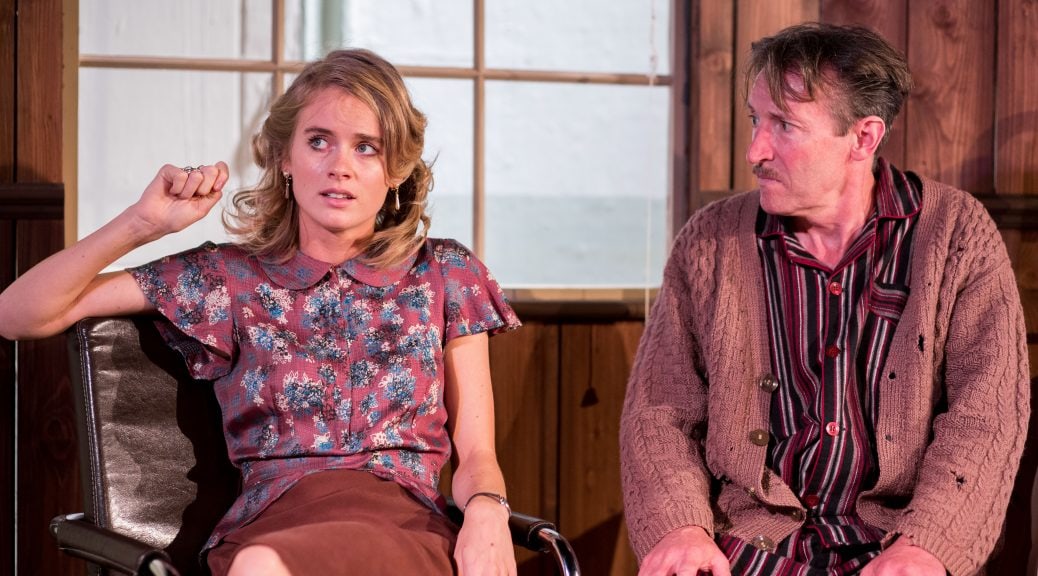
“Mrs Orwell” at the Southwark Playhouse

Tony Cox’s play, a sell-out at the Old Red Lion Theatre, should enjoy continued success with this transfer south of the river. A careful mix of literary biography and period detail, it’s a calm and stately piece, with Jimmy Walters’ direction adding to the air of polished professionalism.

As George Orwell lies dying in a far from down-and-out hospital room, he declares his love for the young and glamorous Sonia Brownell. The proposal is that she becomes his “literary widow” as much as wife and, to the quaint surprise of all, she accepts.

Orwell’s eccentricity is utilised for entertainment. With the exception of a brief Marquis de Sade moment it’s all endearingly old-fashioned. And there’s masses of name dropping fun as Lucian Freud draws Orwell’s portrait and starts an affair with Sonia. Freud makes a lovely cameo for Edmund Digby Jones who doesn’t hold back on the Bohemian flair – all the better as a foil to “Grumpy George”.

Cressida Bonas takes the title role, while Peter Hamilton Dyer as Orwell is really the focus. His is a careful study – his depiction of tuberculosis impressive, while conveying insecurities, intelligence and flashes of rage. The perfectly cast Bonas feels like a natural in the part – you can easily imagine her at the Café Royal. It’s a shame we run out of time for Sonia’s character to develop. What she’ll do as Orwell’s executor is full of dramatic potential.

Disappointingly, the play falls apart at Orwell’s death. There’s a bizarre rant from his publisher (played by Robert Stocks), left sweating in the scrabble to send us away with some facts. It’s a clumsy lapse of confidence to end a pleasantly nostalgic and convincing glimpse at literary genius in a bygone age.

Until 23 September 2017

www.southwarkplayhouse.co.uk

Photo by Samuel Taylor

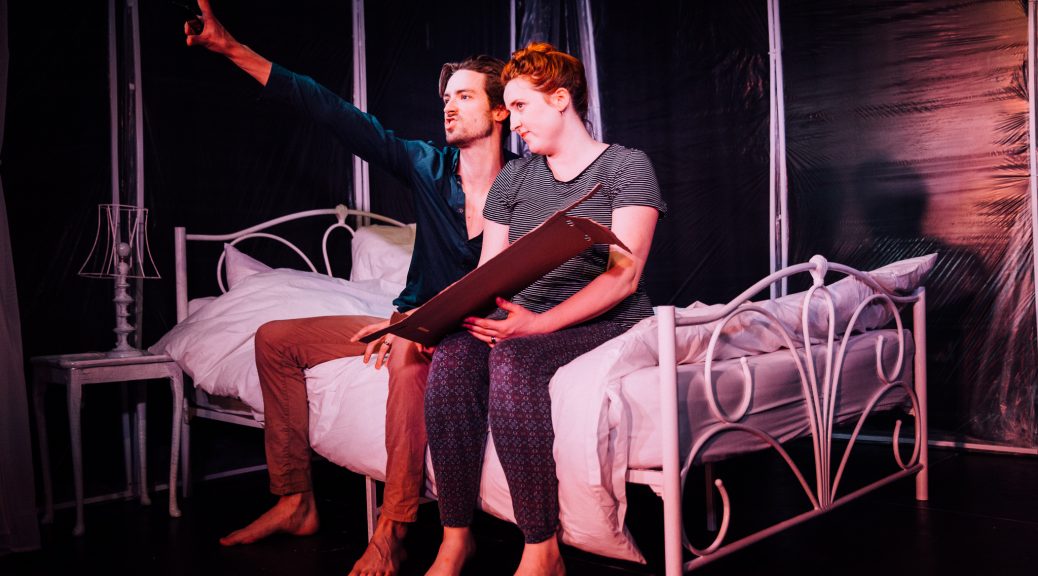
“Window” at the Bread & Roses Theatre

I live opposite a big hotel, so I’m careful to draw my curtains in case the view of me spoils anyone’s holiday. But the couple who live opposite two uninhibited youngsters in Ron Elisha’s play aren’t so lucky. From an initial frisson watching their neighbour’s sexual gymnastics, using opera glasses, then bringing in the popcorn, their voyeurism ultimately has distressing consequences.

Idgie Beau plays Grace, whose unbalanced empathy with the young girl across from her leads to neglect of husband and daughter. Beau gives a convincing depiction of mental angst and her character’s developing pregnancy. She and Charles Warner make a great couple that it’s hard not to care about. Warner makes the support his character offers believable and the injections of common sense a dramatic relief.

Director Dave Spencer has secured strong performances but has a misplaced faith in Elisha’s text. Some pretty obvious questions are ignored to look at the ideas around living vicariously and mental health – it’s hard to credit the couple opposite are so ignorant they are being observed – but the concerns feel both forced and undeveloped. And the play’s structure is frustrating: tiny scenes mean we end up watching the cast repeatedly putting on and taking off T-shirts.

Window has a neat idea behind it and is well acted but the themes aren’t given their due and the ending is flat. Like the voyeurism in the play, it may feel worth watching at first but is ultimately unsatisfying.

Until 16 September 2017

www.breadandrosestheatre.co.uk

Photo by Greg Goodale

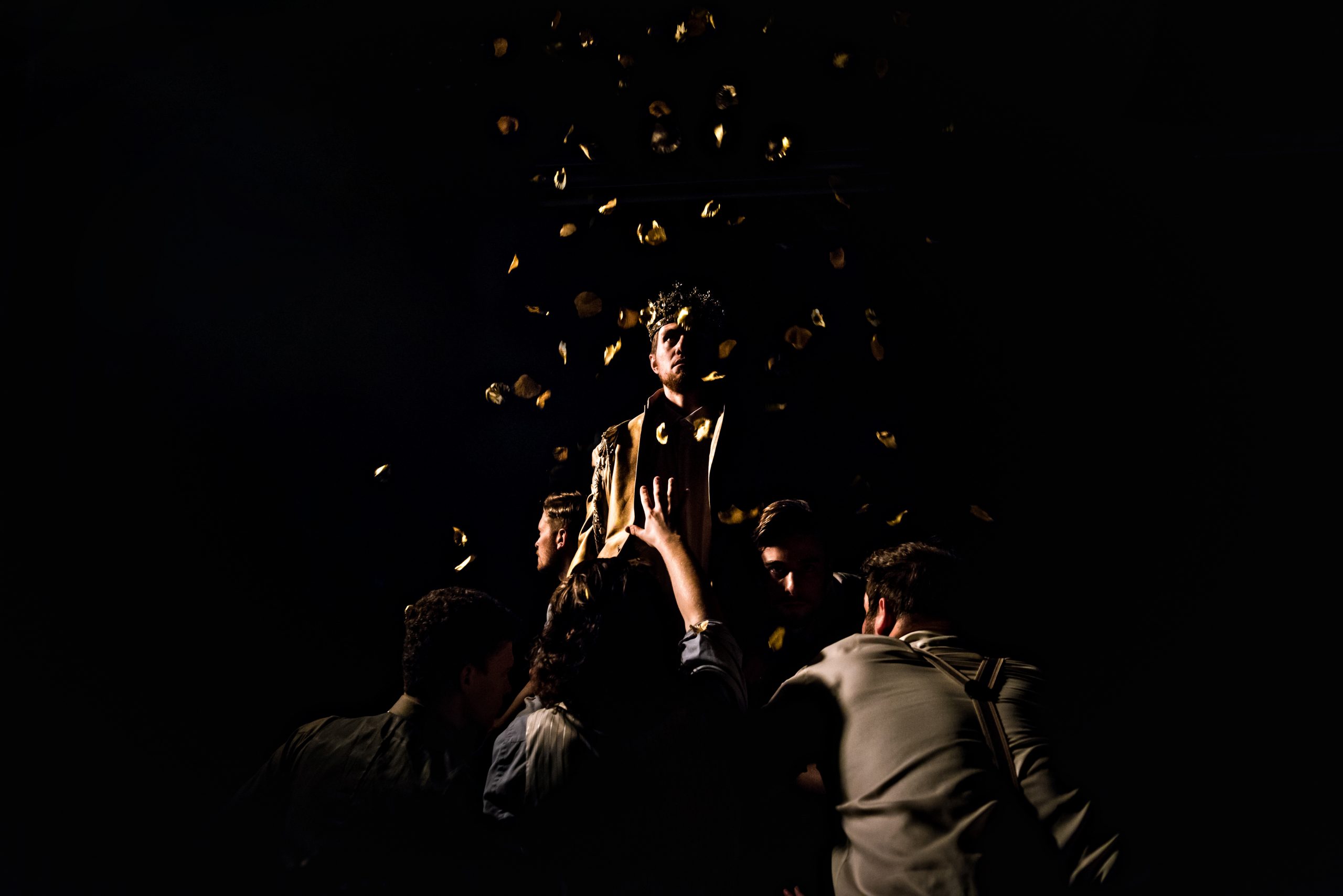
“Edward II” at the Tristan Bates Theatre

Lazarus Theatre’s production of Christopher Marlowe’s play has much to recommend it. Director Ricky Dukes’ 90-minute adaptation shows a sharp intelligence: practical, dramatically effective and unwilling to patronising the audience. The story of the gay king’s disastrous reign benefits from strong visuals: Dukes and his designer Sorcha Corcoran, working with Ben Jacobs on lighting, produce some marvellous imagery within this tiny space. The creativity and imagination here is the stuff that makes the fringe so great.

The nine-strong ensemble stays on stage throughout and proves a disciplined crew. Making up a rebellious peerage, the actors ensure that confrontations with the King bristle with anger. Andrew Gallo and Jamie O’Neill are especially strong as the brothers Mortimer, with the latter detailing his treachery with a mix of violence and intrigue.

Luke Ward-Wilkinson takes the title role and goes for a fey monarch who is impish and petulant. Arguably, this cheats the play of some tension (conflicts seems a foregone conclusion). And it also short changes Edward’s relationship to his wife – a shame, since Lakesha Cammock makes a very fine Queen Isabella. But Ward-Wilkinson’s decision is committed and consistent, getting humour out of the role as well as passion. It’s also brave. Dukes’ vision for Edward’s notorious assassination is nightmarish, kinky and demands a lot from his cast. The ensemble are all in their pants, with disposable aprons and gloves. Believe me, it’s creepy. The addition of masks goes too far, only causing confusion – are the same characters in disguise and, if so, why bother? But this is not a scene you’re likely to forget in a hurry.

The finale is certainly memorable with Ward-Wilkison naked and sprayed with blood from the ceiling – another memorable tableau. Yet the real strengths of the production are simpler: tight directorial control and technically strong delivery all round. Dukes and his team have produced a piece of remarkable clarity. It may be too blunt for some tastes, but you can’t argue with its force or the skill on stage.

Until 9 September 2017

www.lazarustheatrecompany.com

Photo by Adam Trigg

“Harry Potter and the Cursed Child” at the Palace Theatre

I sometimes feel as if I’m the only person to have neither read nor seen the adventures of JK Rowling’s schoolboy wizard. Which might make blogging about the two plays that form a sequel a little foolhardy. Don’t curse me, but I’ve never been that bothered. And since the Potter corpus is an extensive one, my worry about joining in was whether I’d work out what was going on. Still, you can’t argue with a record nine Olivier awards. And, while my fears were not unfounded, they didn’t spoil a show that turned out to be lot of a fun.

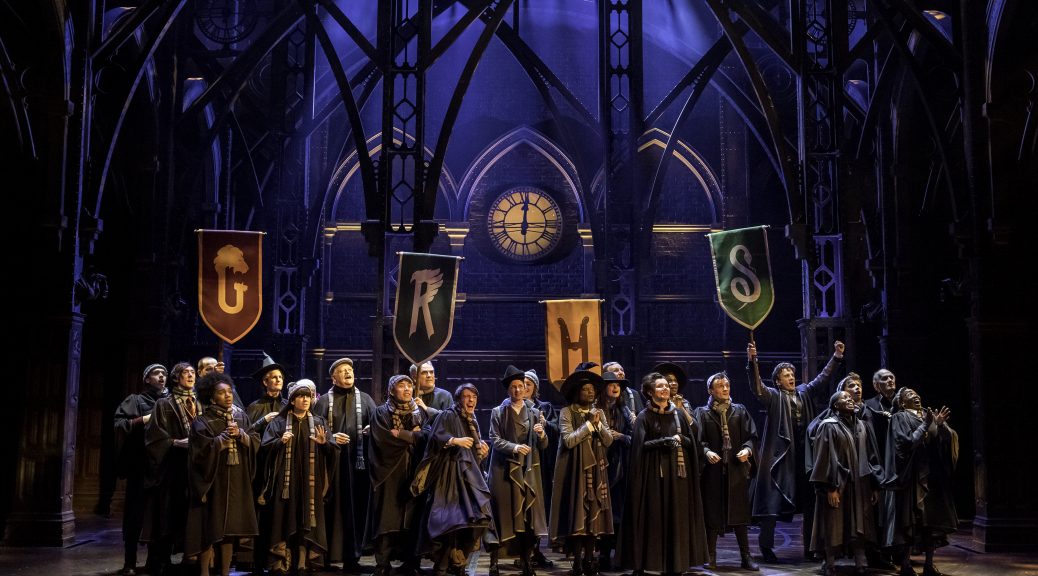
With a successful #keepthesecrets campaign, I wouldn’t dare reveal plot points. And I wouldn’t want to, either, as the best thing here is the atmosphere: contagious enthusiasm and excitement in one of London’s biggest venues. And it’s a bit of relief to have to keep quiet. Those steeped in Potter lore might underestimate how complicated it is. Thankfully, as a coming-of-age adventure story, it is easy to keep up with. But I suffered for my ignorance: there was some nudging amongst the audience as they recognised favourite characters, a proper gasp at a revelation that left me baffled, and lots of jokes lost. The story is by Rowling herself. Abetted by Jack Thorne (credited for the script)  and the show’s director John Tiffany, the plot thickens nicely and their combined efforts make this gripping stuff.

The show is satisfyingly theatrical. The magic illusions from Jamie Harrison are good and spaced out well. There are eye-catching effects, but nor is Tiffany scared of small touches – which takes confidence in such a big show – so props are minimal and the stage often bare. It’s clear you can do a lot with a swirling cape and this crew really works them. Steven Hoggett’s movement direction is first rate. Best of all is Imogen Heap’s music for the show, which adds pace and atmosphere.

Even I know that the original films have led to fame for several youngsters. The focus here is on the next generation, with Samuel Blenkin making an astonishing professional debut, showing natural comic skills. Theo Ancient is there to deliver the teenage angst and confusion that makes the whole affair relatable and moving – he is fantastic, too. As for those stepping into very big shoes: Jamie Glover takes the part of Harry, rising to the challenge of a play that is demanding of its cast. The theme of fatherhood and friendship is a thoughtful vein amongst the fun. This trio and the intimate scenes between them are the strongest. Where we move from wizardry to the “messy emotional world” – that’s when we get the real magic.

www.harrypottertheplay.com

Photo by Manuel Harlan

“The Ferryman” at the Gielgud Theatre

Superstar playwright Jez Butterworth’s latest drama was a hit before it even opened: the West End transfer was announced simultaneous to its sell-out opening at the Royal Court and a new cast will soon take the show into 2018. This long harvest day’s journey into tragedy is the story of the Carney family, farmers in Northern Ireland whose connections with the IRA haunt them. This is a big family drama – and not just due to the size of the household, but because of Butterworth’s exquisite writing.

There’s a luxurious feel to the show – although this is a working-class world – created by Rob Howell’s design and director Sam Mendes, who resists the temptation to rush a single moment. Three hours is a long running time for a new play, but every minute holds you. Above all, a huge company, including some extraordinary younger performers, are awe-inspiring. It really shouldn’t be possible to have so many characters so clearly delineated by their own compelling stories.

There’s a lot of laughter in the family, a real sense of warmth, and not a few Irish stereotypes. This has been commented on by Sean O’Hagan, better qualified than myself. To be sure, there’s a lot of whisky drinking and some gags around children swearing seem cheap, if effective. But the stories told, swirling around the discovery of a murdered family member’s body, broaden the play’s themes beyond the Troubles.

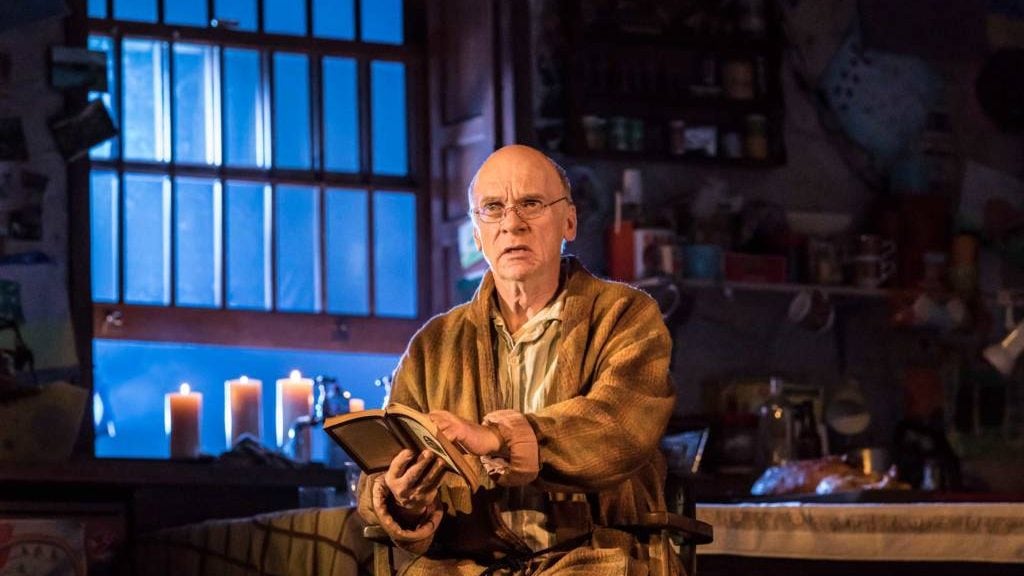
Myth and history populate the play. The past preoccupies Aunt Maggie Far Away, “visiting” from her dementia, and obsesses Aunt Pat, whose brother died in the Easter Rising: two brilliant roles engendering stunning performances from Bríd Brennan and Dearbhla Molloy respectively. Meanwhile Uncle Pat has plenty of anecdotes while, with another strong performance from Des McAleer (pictured top), enforcing the play’s theme of death, which escalates with such foreboding.

Tom Glynn-Carney
Tom Glynn-Carney

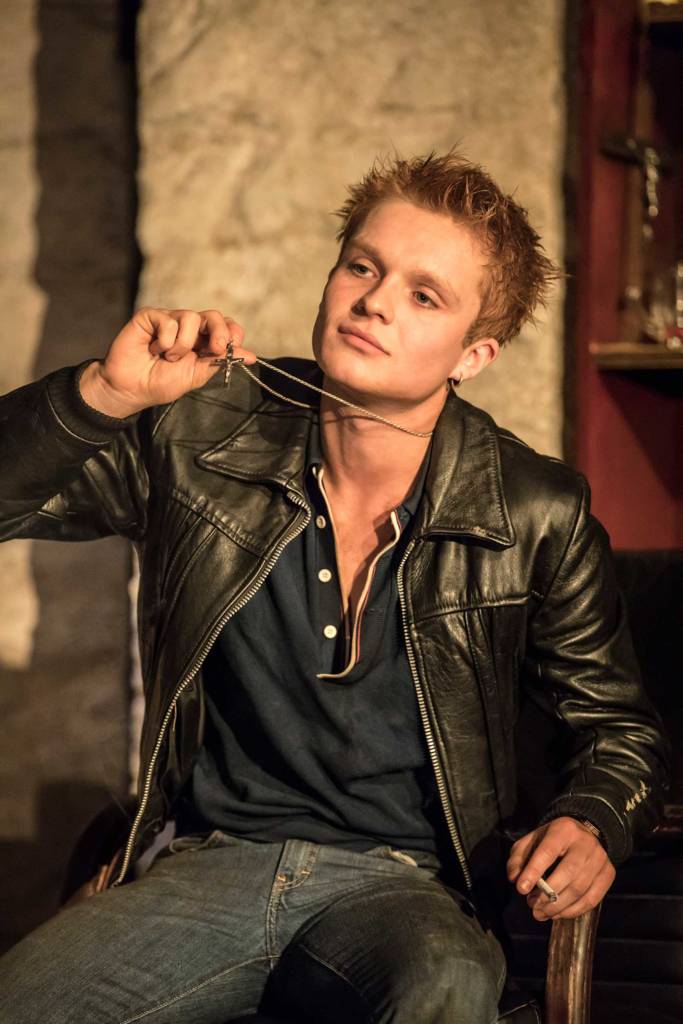
There’s a point to all the marvellously crafted yarns – The Uses of Story Telling, if you’re looking for a dissertation title. The tales form a link to violence inherited by the young. A terrific scene with four youths, led with febrile energy by Tom Glynn-Carney, shows them captivated by accounts of IRA leader Mr Muldoon (Stuart Graham) and the 1981 hunger strikers. In the shadows (there’s plenty of eavesdropping in this play – stories morph into rumour and hearsay, after all) is an even younger “wean”, skilfully depicted by Rob Malone, who is driven to desperate measures.

Laura Donnelly and Genevieve O’Reilly

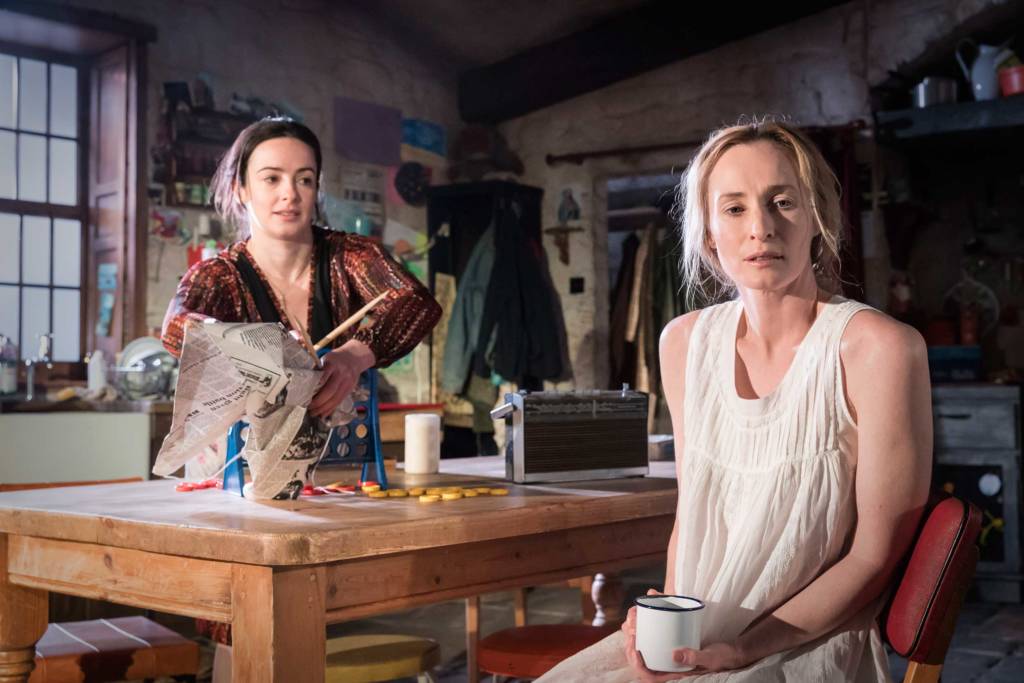
At the heart of the play is a love triangle that leads to star performances. A repressed affair between the play’s patriarch Quinn, performed with charming assurance by Paddy Considine, and his bereaved sister-in-law Caitlin, a role Laura Donnelly articulates marvellously, leads to some of the best dialogue. Although appearing relatively late, Quinn’s wife Mary is given her due through Genevieve O’Reilly’s quiet performance. The unrequited emotions of all three create an unusual love story that thrums with excitement. As Quinn’s IRA past rears its head with a tension that would please any thriller writer, Mendes’ strengths shine. The fear of what might come next hangs over the final hour of the show. Butterworth manages to juggle all this with enviable dexterity, producing a work of complexity and popular appeal.

Until 6 January 2018

www.TheFerrymanPlay.com

Photos by Johan Persson

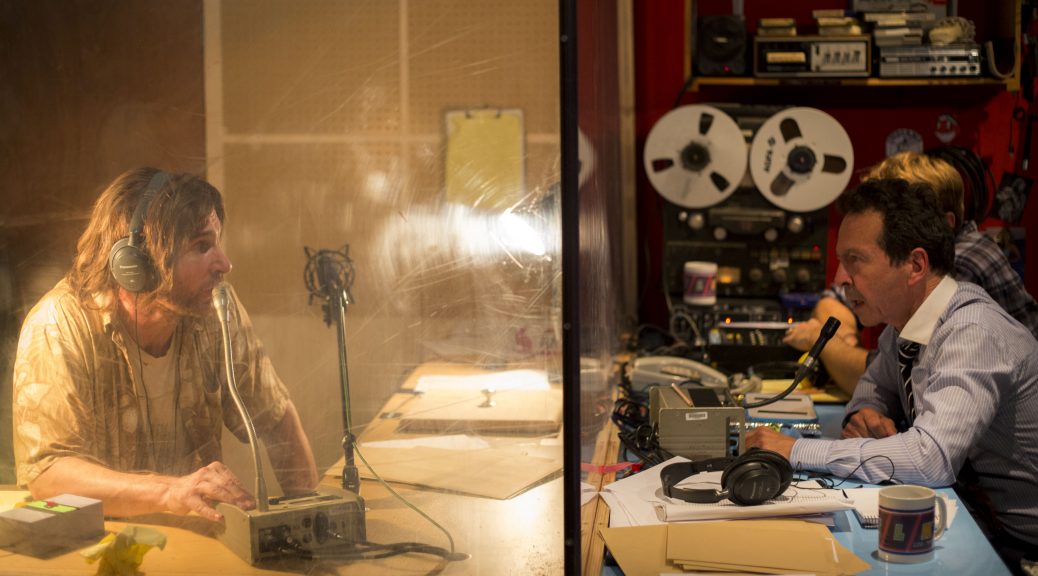
“Talk Radio” at the Old Red Lion Theatre

Theatre loves finding relevance in older plays and it’s easy to see why a revival of Eric Bogosian’s 1987 play is a candidate. One night with a ‘shock jock’ on US talk radio is a great scenario and the combination of free speech as a credo, with neo-Nazi’s and loons leaping on board, can’t help but feel prescient. It’s a relief, in a sense, to be reminded that hate speech is nothing new; as the play’s lead actor Matthew Jure notes in the programme, these phone-in shows were the proud parents of Twitter trolls. There are plenty of salient observations and much to ponder on.

It’s a shame neither the play nor production lives up to its potential. While Jure’s DJ, Barry Champlain, specialises in cutting off callers, Bogosian himself leaves too much hanging. There’s a hoax bomb threat, a love affair and an impromptu visit from a caller (a role Ceallach Spellman does well with), but no storyline feels resolved. Maybe there’s not enough for the supporting cast to work with: monologues from Barry’s colleagues, played by Molly McNerney and George Turvey, are the only chance they have to stand out. Director Sean Turner doesn’t inject enough energy, so there’s little sense of the drama of live broadcast and the script’s humour is blunted. And, while Max Dorey’s design is impressive, it proves impractical.

Another dead end is Barry’s history, a mythology created by the radio station manager. We need to see a lot more of Andy Secombe, who plays this part – his is the only character who develops past cliché. And the idea of Barry as a fraud could have been explored much earlier, since his real agenda and his delusions of grandeur form the kernel of the play. Jure conveys desperation and malice well and makes a final breakdown moving, but he’s sorely lacking in charisma (after all, Barry has fans). Instead, there’s only contrariness – quickly boring and frequently silly – and anger. Talk Radio has fallen for Barry’s own nemesis – taking things too seriously – leading to listeners tuning in and dropping off.

Until 23 September 2017

www.oldredliontheatre.co.uk/theatre

Photo by Cameron Harle

“Yerma” at the Young Vic

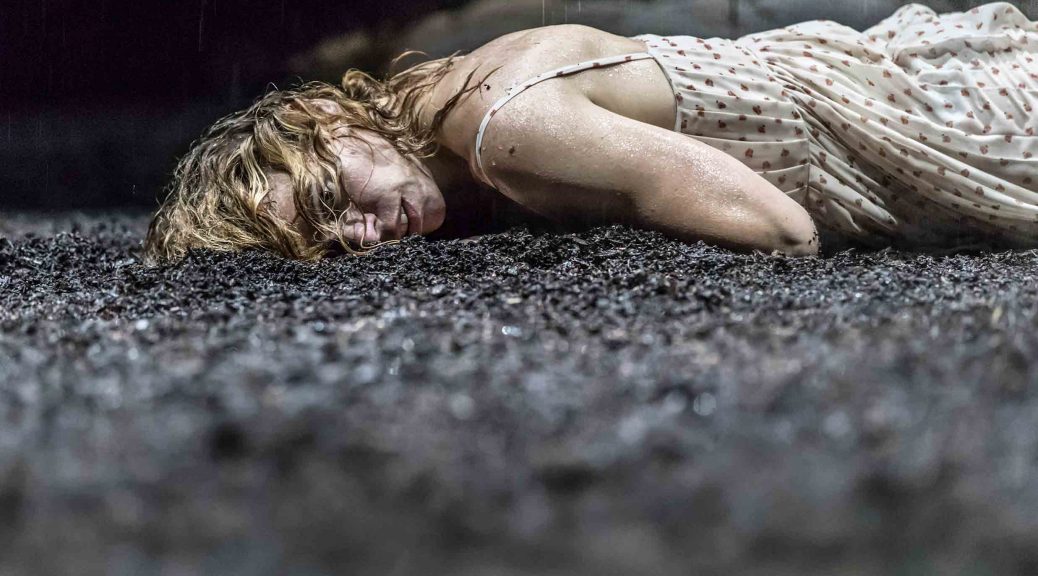
For all the praise heaped on Simon Stone’s adaptation of Federico García Lorca’s play, my heart sank when the curtain rose to reveal two of my pet hates: the action takes place in a glass box and sound is relayed to the audience. Separated from the audience twice over, it’s an isolating experience. But this clinical technique, putting lives under surveillance, is actually used to perfection.

‘Her’, the contemporary Londoner whose life we follow in chapters, has it all – even a house. From the start, Billie Piper shows she’s worthy of the Olivier award she received for this performance, endearing us towards a character she makes instantly recognisable. The chemistry with her onstage husband is similarly convincing (taking that role, Brendan Cowell should have picked up a trophy, too).

It turns out that ‘Her’ has everything except a baby. The play follows her efforts to get pregnant with painful exactitude. The effects on the family are detailed with further great performances from Charlotte Randle and Maureen Beattie as ‘Her’ sister and mother. As desperation increases, mental health deteriorates rapidly and Piper’s performance becomes harrowing.

Stone is forceful about bringing his adaptation into the here and now. Piper’s character is a journalist, with blog posts that becomes increasingly personal. Egged on by a younger colleague (Thalissa Teixeira) the over-sharing may be predictable but it’s startling and provides pause for thought.

On a very literal level, it seems hard not to view the play as reductive – woman goes mad because she can’t reproduce – and it’s impossible not to feel uncomfortable about this. To add to such a challenge is the assumption the modern woman has fewer societal expectations since Lorca wrote in 1934. But does she? That desire to confirm is the uneasy question Stone leaves hanging, making his work a vital piece of theatre.

Until 31 August 2017

www.youngvic.org

Photo by Johan Persson

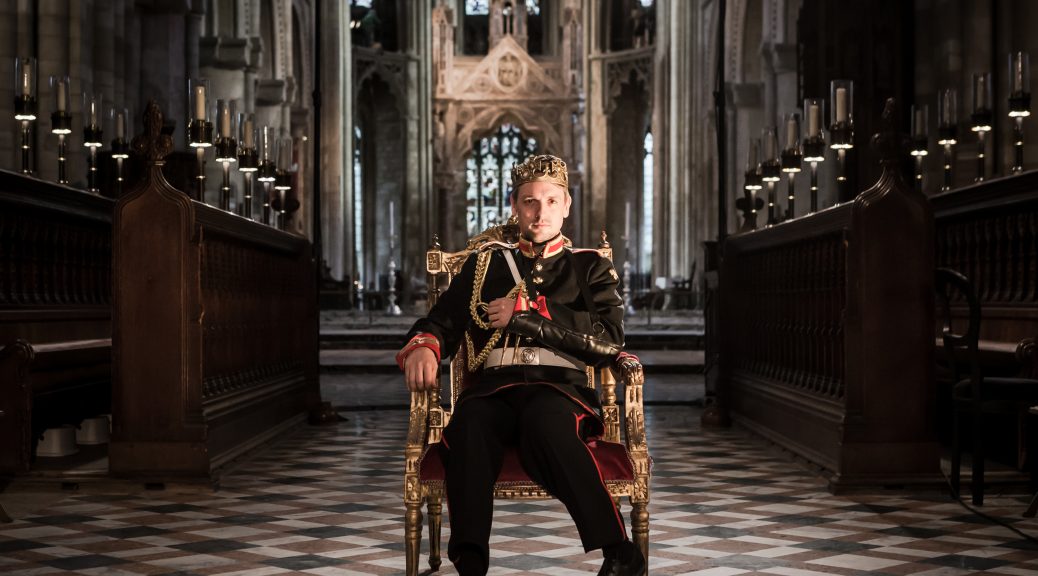
“Richard III” at Temple Church

Toby Manley plays a super-posh version of Shakespeare’s super villain in Antic Disposition’s new production. The crystal- clear diction is a delight, the suave air (and a bow tie) adding to a new take on the despicable king that is well constructed and carefully delivered. The description of Richard as an “intelligencer” is the key, with Manley securing the role’s infamous charm and emanating an air that he might work for the secret service. As a double agent, of course – he’s almost your cachinnating villain at one point. And I’ve wanted to use that word for ages. Thank you Mr Manley.

This Richard makes for a great show. It’s a shame that those around him seem a little too foolish. A group of Ya Ya Yorkists, with a Noel Coward dressing gown and pearls, if not furs, are too easy to overcome. And several performances are too broad and unconvincing as a result. But Manley is frequently restrained (another reason he stands out), suggesting the Bullingdon Club with subtlety. And Jess Nesling impresses as a Queen Elizabeth who just might refrain from falling for Richard’s plans. At the opposite extreme, Joe Eyre’s exaggerated performance works well. As with Richard, his Buckingham gives the sense of power played out as a public school boys’ game.

A modern dress setting is made much of by the directors Ben Horslen and John Risebero, the latter of whom also designed the production, but their clever touches seen unnecessary. And those aiming at humour – Richmond’s yoga and the Mayor of London carrying a Starbucks cup with Boris written on it – don’t deliver. The music, composed by James Burrows, doesn’t help either, with a confusing mix, close to pastiche, arriving abruptly. The frustration is that Horslen and Risebero don’t need any of this – these guys really know what they are doing.

The cuts made to the play are sensible. The production is a model of clarity. And the doubling up on parts is well done. Although a touring company, the performers seem at home in this magnificent space and the traverse staging is handled superbly. The simple device of having Richard’s victims band together – as a body watching throughout the play and attacking him during his dream on the eve of battle (including great work from lighting designer Tom Boucher) – is spine tingling. The disparate group of those who have crossed him is led by Louise Templeton, who does fine work as spectral Queen Margaret, recruiting the dead to her side one by one. Take away some fussy touches and this is good, solid work that combines into a strong production.

Until 9 September 2017

www.anticdisposition.co.uk

Photo by Scott Rylander