“The King’s Speech” at Wyndham’s Theatre

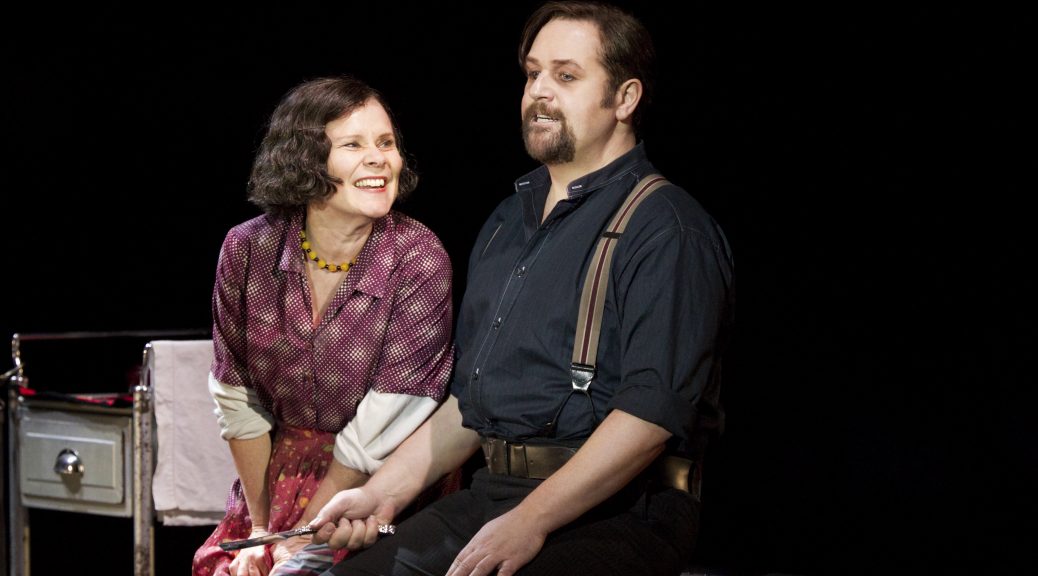
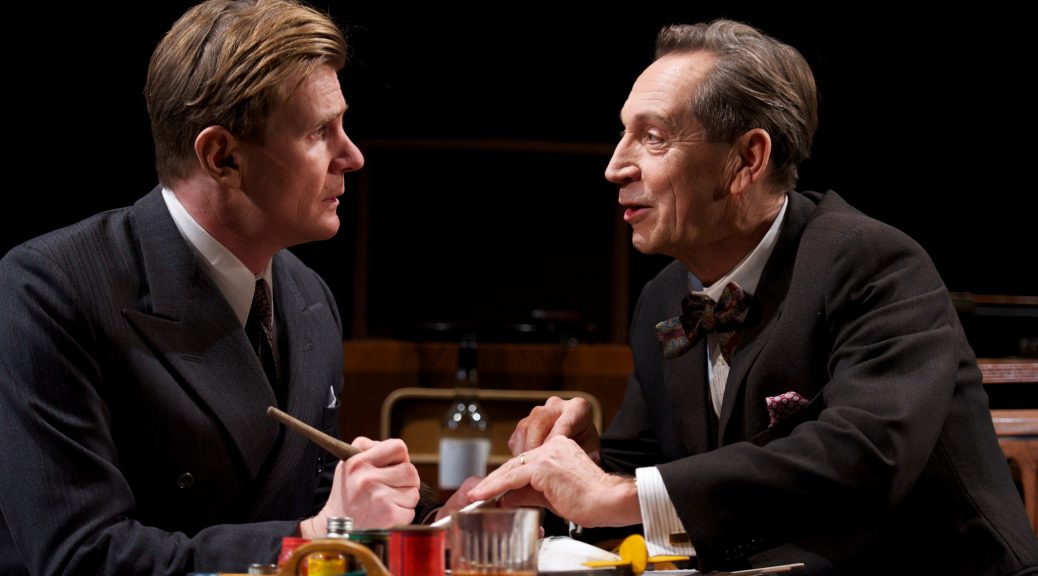
Director Adrian Noble has a hit on his hands with his new production of The King’s Speech at Wyndham’s Theatre. Buoyed by the success of the film and interest in all things royal, the play is an entertaining work with humour and a touching sentimentality. And, to warm the hearts of theatregoers, it isn’t an adaptation. Remember, please, that David Seidler’s play came first.

And what a fine, well crafted piece it is. We all know the story of George VI’s struggle with his speech impediment – and his therapist Lionel Logue is now a household name – but the clear plotting of The King’s Speech and the skilful re-imagining of the pre-war period still impresses. It isn’t inspired or adventurous stuff – the play seems too short to allow any journey of self-discovery for its characters to really take off – but Seidler knows his job and does it well.

The King’s Speech works superbly as theatre. Noble stages at speed and Anthony Ward’s revolving design, around a gigantic frame, not only echoes the play’s theme of presentation but also focuses attention on the acting. No fancy locations or fetishisation of props here – the piece is theatrical enough to rest confidently on its story.

Noble’s is a focused presentation that gets the most out of his cast. There are stirring cameos from Joss Ackland as George V and Ian McNeice as Winston Churchill. Charles Edwards gives a technically astounding performance as the stuttering royal, swearing, singing and dancing his way through the speeches that terrify him, and Jonathan Hyde is full of charm as the “familiar” mentor Logue who becomes almost part of the family. Lionel’s wife Myrtle is made into a major role with a stealing performance from Charlotte Randle. Desperate to return back to Australia but devoted to her husband’s ambition, Myrtle’s forceful stage presence highlights a fascinating triangle of affection that derives from this production’s proud theatricality.

Until 21 July 2012

Photo by Manuel Harlan

Written 28 March 2012 for The London Magazine
“Filumena” at the Almeida Theatre

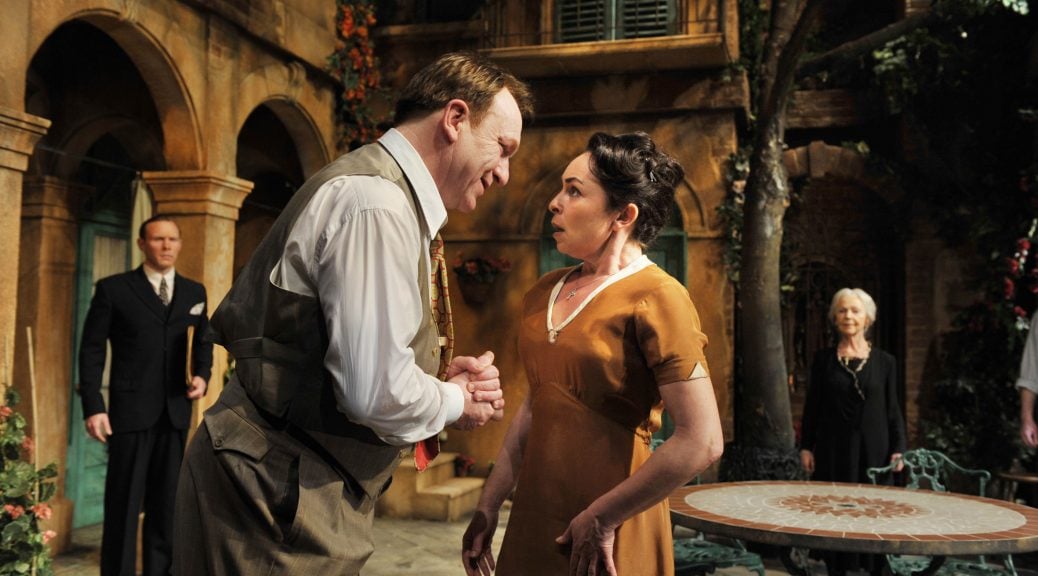
Both the Almeida and its artistic director Michael Attenborough have well-deserved reputations for European classics. Their latest offering, Filumena, is a quality affair that both entertains and highlights the voice of its author, Eduardo De Filippo. In a tight, sprightly new version by Tanya Ronder, the show sparkles with wit and preserves an unusual edge. Filumena, a retired prostitute and the ultimate tart with a heart, plots and plans marriage with her long time partner Domenico in order to secure a future for her illegitimate sons. And what could be a cliché is enriched by the text and the direction to contain thrilling elements of the will-they-won’t-they kind and a moral questioning that runs through to its satisfyingly sweet end.

Clive Wood plays Domenico, an ageing lothario with a touch of Tony Soprano and a patronym Filumena fancies for herself. We shouldn’t like him but we do. Part of the appeal is his relationship with Filumena. Wood does a fantastic show of both frustration and fidelity. Because of his bullying tactics, it’s great to see him taunted, yet the dilemmas Filumena forces upon him make him much more than just a stereotype. As Filumena chillingly invites him to “laugh while you still can, because soon you won’t remember how,” his machismo mask slips just long enough for us to see his complexity – treading this fine line is a marvellous achievement from Wood.

Wood has a worthy sparring partner. Samantha Spiro brings alive any production she stars in and in Filumena she excels yet again. Formidable and frightening, she’s a shrew who refuses to be tamed and yet conveys a sense of vulnerability, presenting her character’s tumultuous, potentially hackneyed journey in a way that feels real. It’s not just funny, it’s also engaging, as we band behind Filumena praying she gets her way. Attenborough’s pacing is essential here, giving us time to catch our breath and think. But never long enough to fall out of love with Filumena. Domenico knows he is with someone special but that he has to take care. “Anyone who has anything to do with you needs to be wide awake,” he says. Given Spiro’s magnificent performance, it’s true that you won’t want to take your eyes off the stage.

Until 12 May 2012

www.almeida.co.uk

Photo by Hugo Glendinning

Written 24 March 2012 for The London Magazine
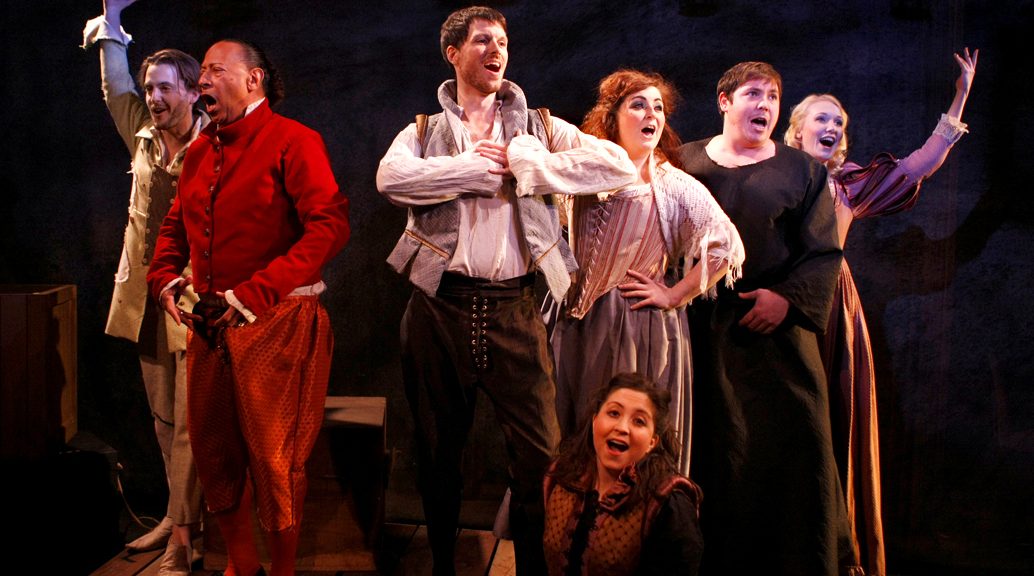
“Sweeney Todd” at the Adelphi Theatre

Arriving in London from rave reviews at the Chichester Festival Theatre, Jonathan Kent’s production of Sweeney Todd is the must-see show of the summer. Arguably Stephen Sondheim’s masterpiece, certainly his most famous work, it’s a musical that’s as intellectually stimulating as it is approachable.

Kent and his team make the most of each show-stopping number: almost to the production’s detriment as the evening is in danger of turning into a collection of hits rather than flowing as the excellent book by Hugh Wheeler intends it to. To be fair this really isn’t Kent’s fault – the audience response is rapturous, the atmosphere fantastic.

There is plenty to applaud. Michael Ball is remarkable in the title role. His transformation into the demon barber of Fleet Street makes him unrecognisable. More to the point, he gets to show what a fine actor he can be and remind us what a great voice he has. He does justice to Sondheim’s challenging score and embraces Sweeney’s tragic predicament in a stark manner that avoids camp.

Sweeney’s partner in crime, Mrs Lovett, is a role to kill for and Imelda Staunton has a great deal of fun with it. Her comedy is spot on and her voice strong. In love with Sweeney, Lovett’s descent into crime is swift, inevitable and wickedly funny, giving the production great pace. Staunton’s is a cracking performance that never slows and continually impresses.

Several recent productions of Sweeney Todd have been performed by opera companies reverent towards the score and resourced in a manner you might miss here – the chorus seems small and at times unsatisfying. There’s also a suspicion that Anthony Ward’s set feels a little lost on the large Adelphi stage; Sweeney’s London hardly teems with people, even if Mark Henderson’s lighting design creates atmosphere in abundance. But such cavils certainly won’t stop you enjoying the evening. This isn’t the perfect production of Sweeney Todd but it’s within a whisker of it.

Until 22 September 2012

Photo by Johan Persson

Written 23 March 2012 for The London Magazine
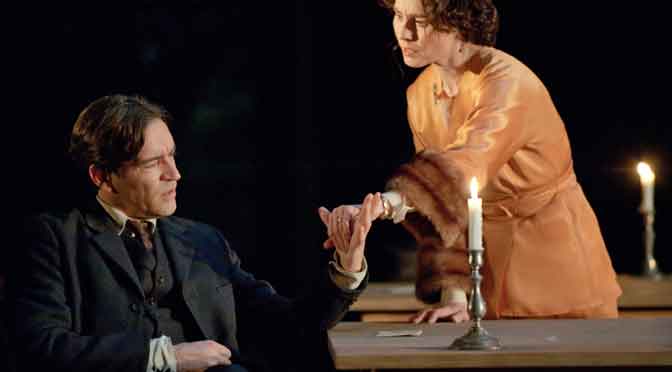
“One Flew Over The Cuckoo’s Nest” at the Lost Theatre

An ambitious production of One Flew Over The Cuckoo’s Nest at the Lost Theatre in Wandsworth gives us cause to celebrate the 50th anniversary of Ken Kesey’s novel. The story of life in an insane asylum, with its charismatic anti-hero McMurphy, is a stirring battle between the individual and the institution, which director Paul Taylor-Mills production tackles commendably.

Sean Buchanan takes on the role of McMurphy made famous by Jack Nicholson in the 1975 film. Nicholson’s performance has only this week been named the best ever in cinema by Total Film magazine but Buchanan doesn’t seem one bit daunted – his energetic delivery as the “mad dog” is commanding and the inspiration he offers his fellow patients convincing.

There is some fine work from this large cast. Bradley Rhys Williams plays Dale Harding, the president of the patients’ council, cogent and waspish by turns, and Lee Colley is deeply moving as the stammering Billy Bibbit, both cowered into submission by Annabel Capper’s formidable Nurse Ratched. The intensity of Bobby Bulloch’s catatonic Ruckly deserves a mention as does the attention to detail shown in Paul Cleveland’s obsessive Cheswick and Richard Vorster’s paranoid Scanlon.

During large group scenes, Taylor-Mills’ direction excels and One Flew Over The Cuckoo’s Nest really excites. This show is full of intelligent touches, including Tom Munday’s projection used to great effect when Dwayne Washington’s Chief Bromden tells his story. Washington makes the most of his role but his part is the play’s biggest problem –sadly, common to many adaptations, Dale Wasserman’s script is a pale adaptation of Kesey’s masterpiece. Ultimately, despite the production’s valiant efforts, the best way to celebrate this anniversary would be to read the book again.

Until 31 March 2012

www.losttheatre.co.uk

Photo by Daniel Joseph Serra

Written 22 March 2012 for The London Magazine
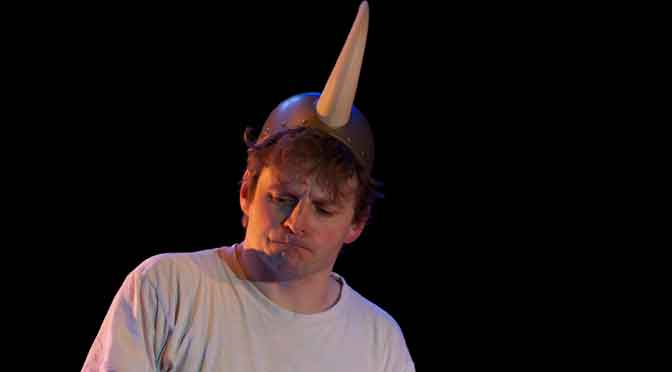
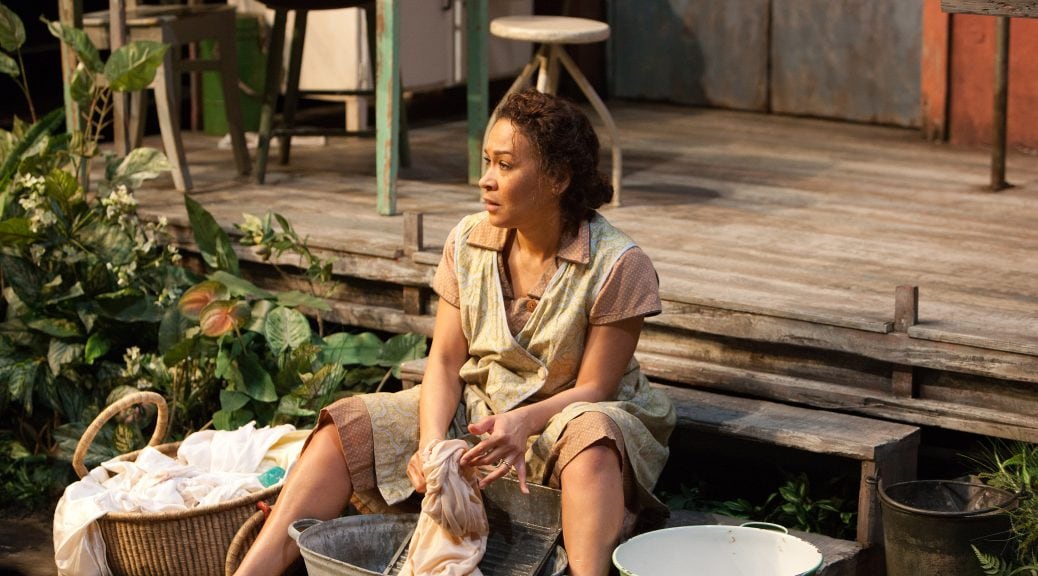
“Moon on a Rainbow Shawl” at the National Theatre

The National Theatre’s revival of Errol John’s 1957 play, Moon on a Rainbow Shawl, is only the fourth time the work has been seen in London. Michael Buffong’s production is, therefore, an opportunity not to be missed: this is a good old-fashioned play with a cracking plot and an authentic voice that ensures it still sounds fresh.

A group of Trinidadian neighbours, each with their own dreams and dramas, struggle to make the most of their lives. Their humble stories have a universal resonance and the characters are wonderfully drawn. Moon on a Rainbow Shawl has its brutal moments, but is always deeply humane, and finds the humour in its protagonists’ harsh conditions.

None of the characters is a saint but each has some heroic spark. Ephraim, a trolley bus driver desperate to better himself, and Sophia, a struggling matriarch devoted to her bright young daughter, are remarkable roles and Danny Sapani and Martina Laird give fantastic performances. Ephraim’s rage when confronted is magnificent as is Sophia’s collapse when events escalate and she succumbs to exhausted despair.

It’s impossible not to note the magnificent Jenny Jules who plays Sophia’s arch-foe Mavis – their battles are legendary, their squabbling, as Ephraim points out, comes from living like “hogs”. Beneath its exotic location, this is a kitchen sink drama but the politics never detract from the emotions on stage.

The action is plentiful and Buffong’s production admirably physical. Unfortunately, Soutra Gilmour’s set feels restrictive, wasting rather than exploiting The Cottesloe auditorium’s wonderful intimacy. And the set causes problems with sight lines too – don’t try to scrimp on restricted view tickets for this one. Initially impressive, the production would have worked better in a larger space. Staging Moon on a Rainbow Shawl elsewhere would have given more people the chance to see the work – make sure you don’t miss out.

Until 9 June 2012

www.nationaltheatre.org.uk

Photo by Jonathan Kennan

Written 19 March 2012 for The London Magazine

“The Glorious Ones” at the Landor Theatre

The Landor Theatre in Clapham has the coup of presenting the European première of the off-Broadway musical The Glorious Ones. Set in 17th-century Italy, in the world of Commedia dell’Arte, it celebrates theatrical collaborations. Such affirmation seems appropriate: written and composed by award-winning team Ahrens and Flaherty, of Ragtime fame, the show reunites Landor dream team director Robert McWhir and designers Martin Thomas and Howard Hudson.

The conceit underlying The Glorious Ones is the satisfying fantasy that the actors are as interesting offstage as they are on it. In a stirring opening number we are told that their “lives are like a play within a play”. Flaminio Scala is the man in charge – a pied piper of performers, gathering an ensemble together as much for their personality as their ability. A famous pioneer in the history of Commedia dell’Arte, Scala’s passion is improvisation, and this is the key to his comedy.

Naturally improvisation in a musical is tricky but the cast is admirably fresh and McWhir has succeeded in creating a sense of camaraderie appropriate to a travelling company, aided by the Landor’s intimacy and Martin Thomas’ cleverly designed set. Mike Christie gives a sterling performance as Scala, joined by Peter Straker as Pantalone in fine comic form, and there are excellent turns from Jodie Beth Meyer and Kate Brennan.

The miniature performances of Commedia dell’Arte performed by the group are never quite as thrilling as the musical moments. And a challenge to change the art form from one of improvisation to scripted works – embodied in the conflict between Scala and his protégés – struggles to ignite the imagination. But there are more than enough songs and strong performances to allow The Glorious Ones to live up to its title – praise for the show should be plentiful in every sense.

Until 7 April 2012

www.landortheatre.co.uk

Photo by Mitzide Margary

Written 13 March 2012 for The London Magazine
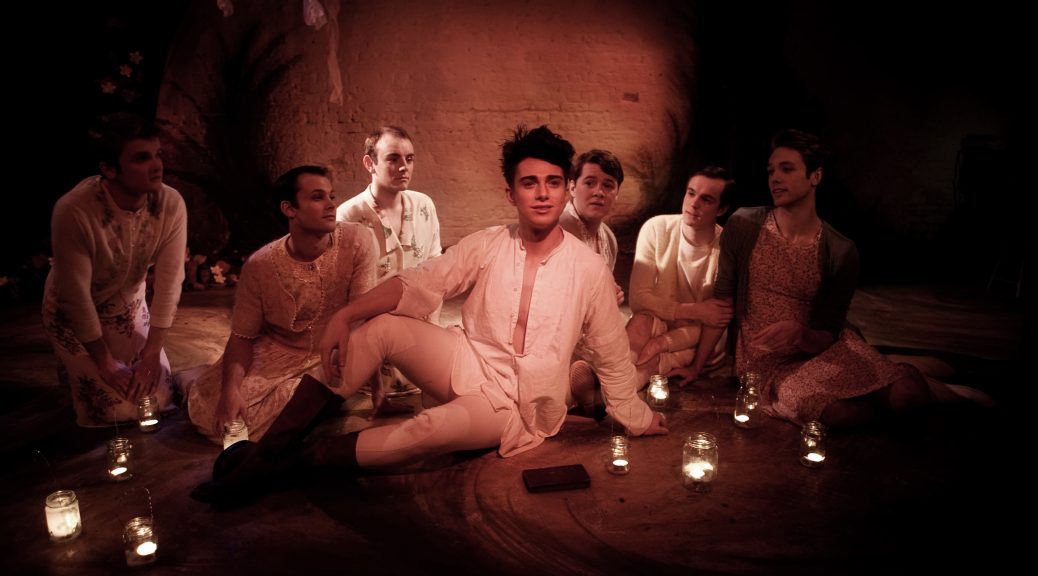
“Farewell to the Theatre” at Hampstead Theatre

Farewell to the Theatre, a new play at Hampstead, takes as its subject the life and work of Harley Granville-Barker. A pivotal figure in British theatre, the multi-talented Granville-Barker is today known primarily as a playwright. Boldly taking on another writer as his subject, the play’s author, Richard Nelson, shows off his own experience with an impeccably crafted, intelligently layered script.

Granville-Barker was also an actor and it is easy to imagine he would have been proud of these performances at Hampstead. Ben Chaplin takes on the lead with a commanding intelligence and complexity: Granville-Barker was a severe critic with a cruel tongue but also a wish to be kind. Jemma Redgrave is superb as the Chekhovian sister to a persecuted lecturer Granville-Barker is staying with. Tara Fitzgerald is wonderful as a retired actress mooning over a young boy performing in the college play, a role that allows William French to make an impressive debut.

Granville-Barker moved from acting to direction. His lessons about ensemble work haven’t been lost on director Roger Michell, whose control and sensitivity bring out the best in Farewell to the Theatre’s cast as well as its script. Michell’s pacing is superb. Avoiding all traces of indulgence, he takes the production at “a good clip”, just as Granville-Barker advised we should deal with Shakespeare: at 100 minutes straight through we are left satisfied but wanting more – not an easy trick to pull off.

Ultimately, the influence Granville-Barker has on the stage stems from his work as a theoretician: born of a passion for the theatre that, during the course of the play, we see under threat. Farewell to the Theatre is a play Granville-Barker is writing – about a thespian tired of the business that surrounds putting on a play. It is an exhaustion I guarantee you will not feel if you see this one. Concluding with an impromptu performance of a mummers’ play, here we have the magical power of theatre confirmed, in a simple, effective, efficient fashion.

Until 7 April 2012

www.hampsteadtheatre.com

Photo by Stephen Cummiskey

Written 9 March 2012 for The London Magazine

“The Summer House” at the Gate Theatre

The Summer House is a comedy thriller about a British stag party in Iceland, where three hapless, very modern males, have to face up to a harsh environment and their personal issues. With the lads going slightly mad and getting steadily drunker, the comedy is anarchic. Throw in plenty of Norse mythology and this becomes one crazy evening.

It is the kind of madcap fun that fringe audiences love. Devised by John Wright, who also directs, along with its three energetic performers, Will Adamsdale, Neil Haigh and Matthew Steer, the play is full of invention and laughs, with a tight structure that shows off the performers’ comedic skills. The characterisations are admirable and there’s a nice balance of one-liners and slapstick.

The Summer House contains observations on contemporary masculinity sure to strike a chord. The groom and his best man, Will and Matthew, are successful doctors: as keen on tea as beer, with a grating faux laddishness and a penchant for impersonating WWF wrestlers. Their more laconic companion Neil shares their anxiety but at least he has real problems and these come to provide the play’s suspenseful moments. There isn’t quite enough tension for my liking, which is a shame since the scene in which Will and Matthew work out neither of them really knows Neil is one of the best in the show.

The stag weekend becomes wild but not in the manner expected and certainly not according to the laminated cards created by Will. Contrasting with the trio are Norse Gods, whose story is also told with a nice twist – especially when we see Odin and Thor have problems of their own. The subplot allows all three performers to excel in their numerous roles, providing the funniest Viking warriors and best panic attack you are likely to see on stage.

Until 24 March 2012

www.gatetheatre.co.uk

Photo by Edmund Collier

Written 2 March 2012 for The London Magazine

“Hay Fever” at the Noël Coward Theatre

The winter is over and what better way to clear the head than a trip to see Noël Coward’s Hay Fever? Howard Davies’ fabulous new production is spring-like in its appeal; fresh and life affirming, it positively bounces along and is a sure hit.

Coward’s comedy about a bohemian family and their unfortunate weekend guests is one of his finest and liveliest works. The Bliss family are wonderful characters, dripping with 1920s glamour. In keeping with their ecstatic nomenclature, the Blisses are out of this world – inhabiting an altogether more theatrical sphere.

Lindsay Duncan is perfect as the matriarch Judith. Not that one would dare use that term in front of her. Sexily voiced and revelling in her “celebrated actress glamour,” she casts everyone in a play of her own making – whether they like it or not. Drama follows her like an expensive scent, with hilarious results. And not good drama either – it takes talent to act this badly. Duncan delights as she hams it up creating ‘scenes’ that include her baffled visitors.

Hay Fever has a strong supporting cast, including rising star Freddie Fox, whose cheek bones alone make him perfect for period drama, and Jeremy Northam, who gives a charmingly understated performance. Two more members of this talented ensemble must be highlighted. Phoebe Waller-Bridge plays Judith’s daughter, getting a laugh out of every line, and Olivia Coleman is Myra – the only guest to challenge the Bliss phenomenon. Far more at home in London, Myra cattily accuses Judith of “rusticating” in the country. It’s a glorious put-down, delivered sublimely in a play full of clever insults, which is sort of ironic, since nothing but praise should be written about this play or this production.

Until 2 June 2012

Photo by Catherine Ashmore

Written 27 February 2012 for The London Magazine

“Patience” at the Union Theatre

Sasha Regan’s all-male productions of Gilbert and Sullivan’s operettas have become much-anticipated events. And rightly so. Regan’s direction breaths life into G&S in a manner that retains respect for the classics she is dealing with. Patience follows the successful formula: presenting a silly story of love amongst poets, with a milk maid and dragoons thrown in, that does justice to Gilbert’s contemporary satire while providing a knowing eye to what a modern audience might make of it all.

Sullivan’s take on satire was to mock everyone indiscriminately – being uniformly sarcastic somehow makes it seem fairer. The primary target in Patience was the Aesthetic movement, and there are plenty of reference to lilies and the like, but Regan effortlessly broadens the focus to pretentiousness and fashion in general. In so doing, she preserves and expands the show’s humour, ensuring that this is a night full of laughter.

The main character, Bunthorne, a sham aesthete who confesses “my medievalism’s affectation, born of a morbid love of admiration”, is played marvellously by Dominic Brewer, who takes lyrics such as these into his appropriately elongated stride. Followed around by a troupe of smitten maidens, played by an ensemble of uniformly admirable young performers, Bunthorne’s heart belongs to Patience, a young girl confused by the fuss everyone makes about love.

Following topsy-turvy logic, Patience decides the best way to make her love a sacrifice, a key element to its being Aesthetic, is to marry someone she dislikes, so she ignores her true love for the narcissistic Adonis Grosvenor. Edward Charles Bernstone gives an immaculate, intelligent performance in the title role, while the startling Stiofàn O’Doherty is perfectly cast as Grosvenor.

As well as followers of fashion, Sullivan has an eye on the establishment with a troop of dragoons, the residuum of all that is noble in British manhood. There are sterling performances here from both Edward Simpson and Matthew James Willis, who bring out the wit in Drew McOnie’s choreography and whose strong voices highlight another reason why Patience is so good.

This is a musical, after all, and the splendidly subtle musical direction from Richard Bates, with additional input from Michael England, is just as much a star of the show. Accompanying the performance on only a piano and allowing plenty of a capella makes the most of the remarkable voices on offer, ensuring the show is something to be heard as well as seen.

Until 10 March 2012

www.uniontheatre.biz

Written 22 February 2012 for The London Magazine