“Future Conditional” at the Old Vic

Marking Matthew Warchus’ first production in charge at the Old Vic, Tamsin Oglesby’s new play is literally about education, education, education, with three views of schools crammed into one, like an overcrowded classroom. The evening is entertaining and feels fresh, and one or two parts might have passed on their own, but cumulatively the play doesn’t score highly.

Lucy Briggs-Owen (Hettie) and Natalie Klamar (Suzy) in Future Conditional. Photo credit Manuel Harlan
Lucy Briggs-Owen and Natalie Klamar

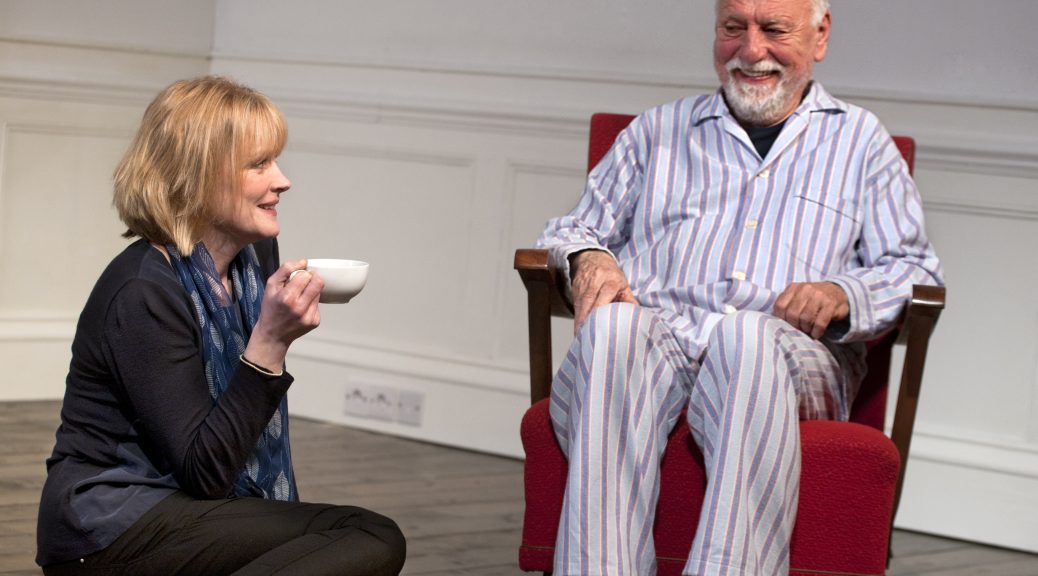
There are those pushy mums at the primary school gates, desperate for their kids to get on. OK, predictable, but the social observations are funny. There’s a strong turn from Lucy Briggs-Owen, as her character justifies going into the private system, and heartfelt angst from Natalie Klamar with a struggle to stay state. There’s a stilted amazement at class differences – are the school gates one of the few places people mix? I suppose I’m not qualified to say. The scenes are fun if slight.

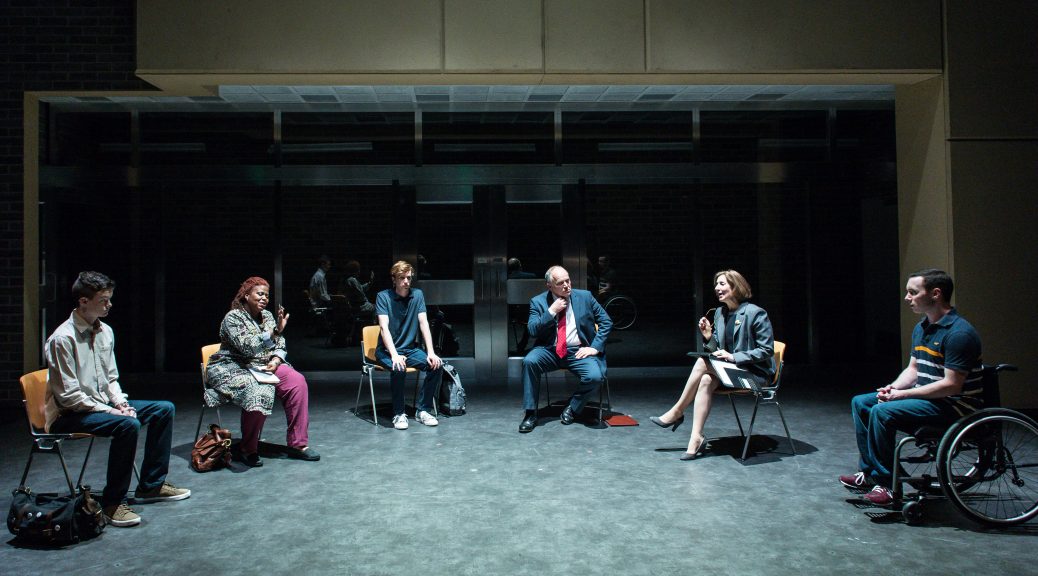
Then there’s an education committee, a talking shop that Oglesby gets more laughs from. Warchus comes into his own here with the direction far tighter than the writing. Talk about shooting fish in a barrel: the arguments are so simplistic and the many characters so transparent it’s almost insulting to an audience. Ironically, the chances of learning anything about education, or being challenged in your thinking, are far too slim.
Rob Brydon (Crane) in Future Conditional. Photo credit Manuel Harlan (2)
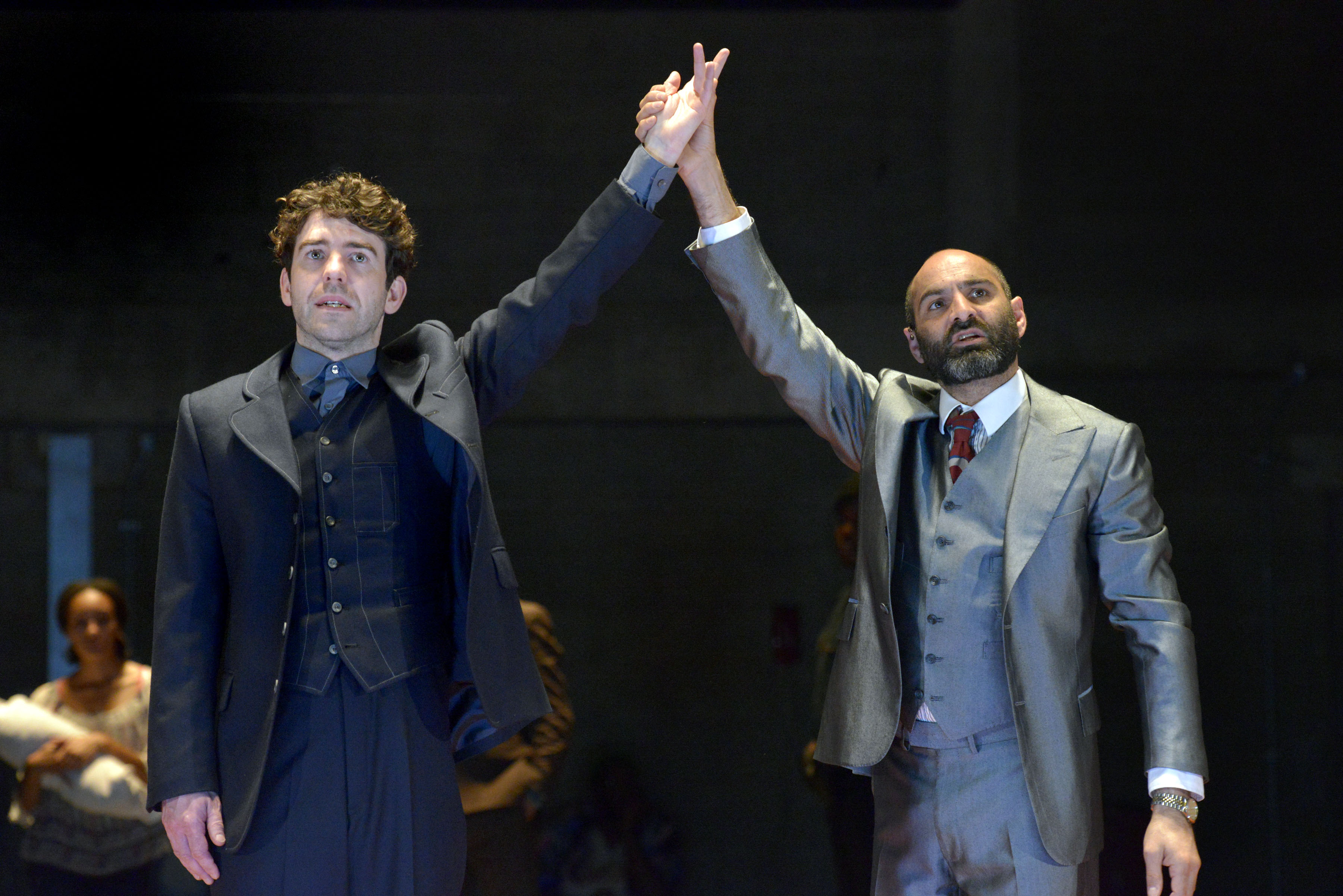
Future Conditional’s most moving narrative has an emotional topicality, with the story of a Malala-like refugee from the Taliban, played impressively by Nikki Patel. She is joined by a woefully underused Rob Brydon as her inspirational teacher, sadly reduced to a trite little speech about how teachers are societal scapegoats. Patel’s Alia is the only character to appreciate learning and her story is uplifting. That her destination is, you’ve guessed it, Oxford, points to the play’s flaw: Warchus and the young cast have plenty of energy and create an exciting feel, but Ogelsby tries to tackle so much that originality goes to the back of the class.

Until 3 October 2015

www.oldvictheatre.com

Photos by Manuel Harlan

“Song From Far Away” at the Young Vic

The combination of respected playwright Simon Stephens and director of the moment Ivo van Hove makes this new play a hot ticket. A demanding monologue, presented as letters written by well-to-do young banker Willem recalling his brother’s death, funeral and family relationships, it’s an intense 80 minutes that has exceptional moments.

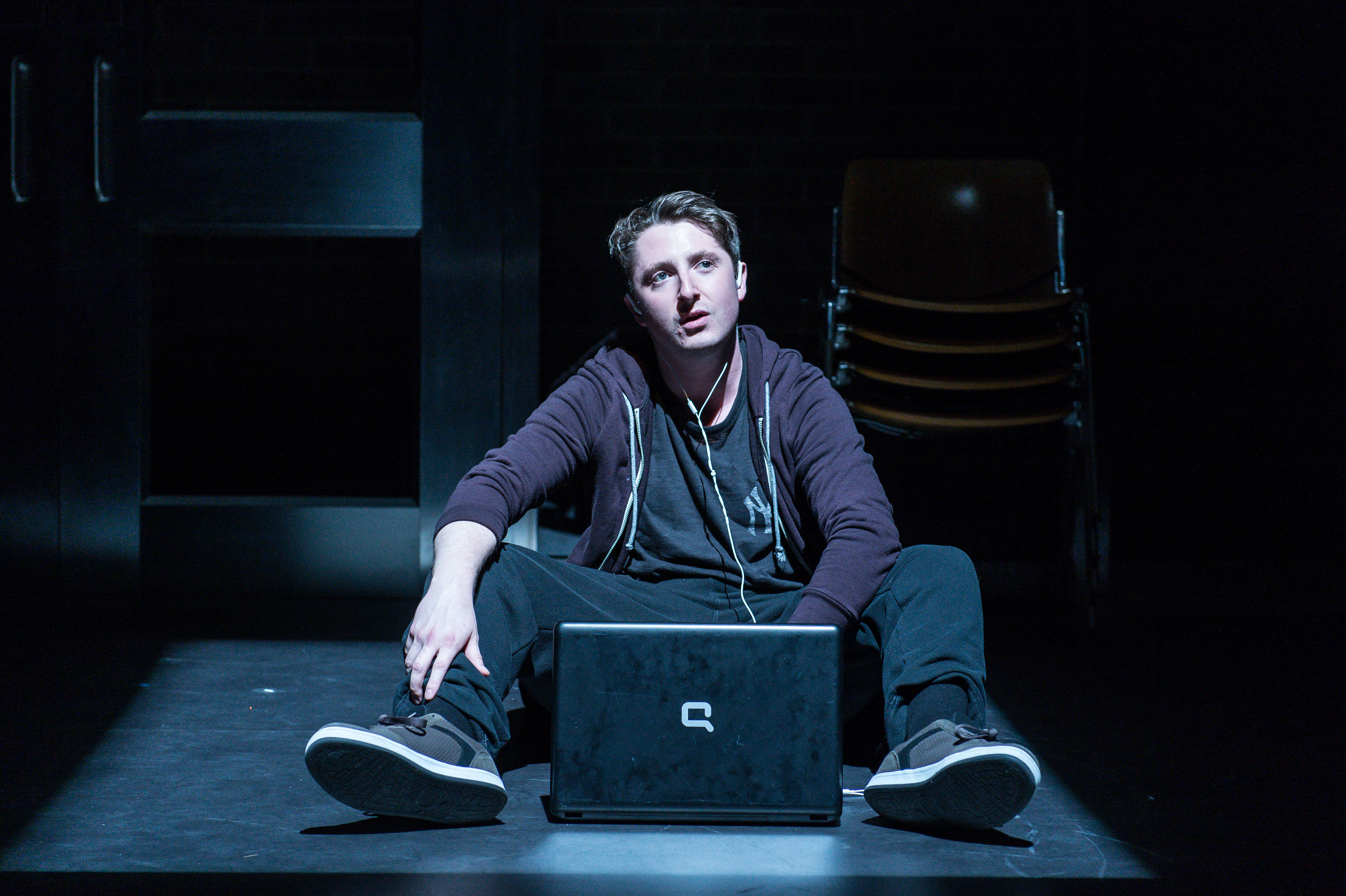
Dutch actor Eelco Smits gives a wholly admirable performance in a difficult role – not least because a good part of it is performed naked, and mostly since the character is curiously bland. While it’s clear he’s a tortured soul, the reasons why remain tantalisingly unexplored. Stephens carefully controls Willem’s above-average executive angst and the audience’s latent sympathy. Moments of empathy for his parents are moving, his own lost love likewise, but so much is left unsaid, despite detailing his life and grief.
Eelco_Smits_in_Song_From_Far_Away._Photo_by_Jan_Versweyveld_3Stephens’ writing is poetic and full of satisfying observations. The ordinary is addressed in a meticulous manner that grows on you. But it’s hard to disguise the play’s thinness. Nonetheless, van Hove makes the show super stylish with a portentous atmosphere. There’s a fulsome appreciation of the silences in life, which Stephens writes eloquently about and enriches Mark Eitzel’s recurring song for the piece. Above all, there’s some stunning staging, akin to still lifes with nudes, through the exquisite design and lighting by Jan Versweyveld, which enforce the play’s understated poignancy.

Until 19 September 2015

www.youngvic.org

Photo by Jan Versweyveld

“The Man Who Had All The Luck” at the King’s Head Theatre

Director Paul Lichtenstern celebrates the centenary of Arthur Miller’s birth with a respectable revival of the master playwright’s first Broadway play. It’s probably fair to say this is a less well known and, overall, lesser work but, as the piece is so seldom performed, you should take a chance the see it. And even Miller before his best is way ahead of most writers.

Lichtenstern works dedicatedly with the script, drawing out the mileage Miller gets from his hero David’s blessed life: his luck in both marriage and work, how obstacles disappear and opportunities embrace him. Jamie Chandler takes on the role of this contemporary tragic hero and is clearly an actor to watch out for, transitioning eloquently from responsible young man to paranoiac – his fortune contrasts so profoundly with those around him that he obsesses that he will have to pay one day.

Jamie Chandler, Michael Kinsey in The Man Who Had All the Luck at King's Head Theatre, photography by George Linfield
Jamie Chandler and Michael Kinsey

The strong surrounding cast includes Keith Hill and Michael Kinsey, playing David’s father and brother, with a dexterous sub plot about a baseball career that goes wrong. And Chloe Walshe, in a mostly underwritten role, deals superbly with the final scene when her character and David, now wife and husband, come closest to breaking down.

The play is overwhelmingly schematic – Miller termed it a ‘fable’ – but it’s constructed, or maybe it’s better to think of it as contained, with skill and sincerity. Lichtenstern appreciates the piece’s probity, attempting to question fate and autonomy alongside that old chestnut, the American Dream, and adding a superb score that he composed with Mike Smaczylo. That Miller’s concluding act is less satisfactory, coming too close to contrived, doesn’t take away from this production’s achievement.

Until 27 September 2015

www.kingsheadtheatre.com

Photos by George Linfield

“The Oresteia” at Shakespeare’s Globe

It’s hard not to contrast this new production of Aeschylus’ trilogy with that from the Almeida – acclaimed and transferred to the West End. But Rory Mullarkey’s adaptation has its own aims. A more literal translation of the story, miraculously condensed and painfully blunt, it focuses obsessively and powerfully on the theme of justice. For all the Almeida’s contemporary touches, Mullarkey’s version is the riskier. But unfortunately the plays, despite their universal themes and influences that echo especially loudly in Shakespeare’s Globe, come across as downright wacky.

There’s a great start, with a fluid chorus containing excellent actors. Hannah Clark’s costumes, with a nod to the geometric style of pre-classical Greek art, end up giving us a sixties-siren Clytemnestra that Katy Stephens performs marvellously. The modern score, by Mira Calix, will not be to every taste although it’s satisfyingly integral: Cassandra’s role is mostly sung, accompanied by a saxophone, and Naana Agyei-Ampadu won my admiration in the role even before she had to perform in a gold lamé swimsuit. Even a prophetess couldn’t have seen that one coming.

0resteia-2-credit-Robert-Day
Joel MacCormack and Rosie Hilal

For the second play, there are strong performances from Joel MacCormack and Rosie Hilal, playing Orestes and Electra. Stephens’ return as a Biba-bitch is again strong, with a startling wardrobe malfunction. But director Adele Thomas’s camp touches start to get out of control. Cue the Furies, presented as something out of a horror film – it makes sense, I suppose, but the zombie twitching and grunting, admittedly light hearted, detracts from the powerful language. We’ve already had plenty of gore, the stage literally “blood carpeted”, and a Chamber of Horrors tableau Tussaud’s would be proud of. None of this compares favourably with Mullarkey’s text.

And on to the final play, peopled by “the gods, the ghosts, the monsters, the demons”, a combination that’s clearly too much for any audience’s good. It’s impossible to forget how odd this all is as drama: a lesson about the first ever murder trial, with a Goddess in charge. Athena is, strangely, as wooden as a statue that descends like something out of Spinal Tap. There’s an uneasy humour again… and even a giant golden phallus. Thomas’s embrace of the oddity a modern audience inevitably senses ultimately seems lazy, even if the cast works like mad.

Until 16 October 2015

www.shakespearesglobe.com

Photo by Robert Day

“Our Country’s Good” at the National Theatre

An undisputed modern classic, Timberlake Wertenbaker’s play explores politics, power and the potential of theatre. Its setting is an 18th-century Australian penal colony, its performers, newly arrived convicts who stage a play. It is a text to spend time with and Nadia Fall’s revival presents the ideas with great clarity. But it should also be a work that entertains and invigorates, and, here, this production lacks consistency.

The show looks great, with Peter McKintosh’s design a mix of Aboriginal art and Anish Kapoor, creating a sense of heat and tension. But this show is a cold affair, distinctly lacking humour and failing to exploit the text’s many ironies. Fall’s pacing slows and rushes – possibly because so much music is introduced. Cerys Matthews, making her theatrical debut as a composer, creates a diverse soundscape with snatches of songs you never hear enough of to enjoy.

There are credible performances from the lead: Jason Hughes plays the soldier tasked with directing the convicts and Caoilfhionn Dunne is the prisoner who becomes his leading lady. It’s a shame there isn’t more sexual tension between their characters – an element missing throughout the show which could have added considerable drama.

Productions often have actors doubling up roles to perform as both guard and prisoner – Fall has a larger crew but the play doesn’t benefit from bigger numbers. Disappointingly, with some of the cast, there is a sense of fighting for attention that should have been checked. The actors that do stand out give the most generous and controlled performances: Ashley McGuire’s down-to-earth Dabby Bryant and Peter Forbes’ bullish Major.

The later acts are better; the violence in the colony is bravely depicted and that raises the stakes. But what might have countered this brutality – camaraderie between the players and what little joy their common humanity affords them – isn’t given its proper place. That the show goes on and the prisoners perform doesn’t leave us as elated as it should.

Until 1 October 2015

www.nationaltheatre.org.uk

Photo by Simon Annand

“Henry V” at Temple Church

Benefitting from a fantastic location, the show that marks theatre company Antic Disposition’s tenth birthday serves to commemorate World War I as well as the 600th anniversary of the battle of Agincourt. If that sounds like a lot for even Henry V to take on, rest assured that the play is neatly manipulated and finely produced.

Joint directors Ben Horslen and Jon Risebero have a group of convalescing British and French soldiers putting on the play during a break from the trenches. You might question the efficacy of this as a therapy – it’s hardly It Ain’t Half Hot Mum material – but impressive gains result. Poignancy comes from the prologue’s excuse for a “crooked figure” performing – these men are injured. And there’s a lovely sense of complicity, with pretend fumbling at the start and lots of addresses to the audience. The play’s female roles benefit from the backdrop, especially the courtship scene with Floriane Andersen, whose character we also see as a nurse. Henry V Temple Church 4 Andrew Hodges, Alex Hooper, Freddie Stewart (Henry V) James Murfitt Photo- Scott RylanderAnother particularly strong moment (pictured above) has the soldier playing the role of Bardolph breaking down as he faces his execution, performed painfully well by James Murfitt.

Freddie Stewart shows exciting promise in the title role. His youth is a slight barrier when it comes to Prince Hal’s transformation into a responsible royal; it’s difficult to imagine him having time for “greener days”. But this plotline is downplayed and we enjoy a virile and appealing King under pressure, juggling bluster and humanity, while examining his duties.

The play is presented in traverse, with an accomplished mobility that shows this is a team used to touring. With the church’s acoustics, the whole production sounds sublime – it’s a genuine aural treat. And it’s easy to understand the addition of well-performed songs by George Butterworth to poems by A E Housman, although this extra layer to the show brings it close to overload. There’s a surfeit of ideas here – and all credit to the ambition of Horslen and Risebero. But the show – well worth seeing – aims for more bite and emotional impact than it has time to deliver.

Until 5 September 2015

www.anticdisposition.co.uk

Photos by Scott Rylander

“Penetrator” at The Hope Theatre

Sensitive souls may not welcome the return of ‘in-yer-face’ theatre – writing marked by hothouse aggression and surreal shock tactics – but this revival of Anthony Neilson’s 1994 play, from director Phil Croft, shows the genre has intelligent admirers. The cast is remarkably strong – with two exciting professional debuts – and the work feels smack up to date.

A couple of “waster” friends obsessed with porn and drugs are enough to make anyone middle-aged feel as old as the hills. Their foul language and crass observations are exhausting. And the presence of stuffed toys in such a sex-mad environment initiates some particularly gross scenarios. When an old friend, Tadge, returns from the army in a distressed and delusional state, the comedy darkens impressively: to say that this blood-stained arrival is “off his nut” is delivered as a marvellous understatement. The trauma that unfolds is tautly delivered and thought provoking.

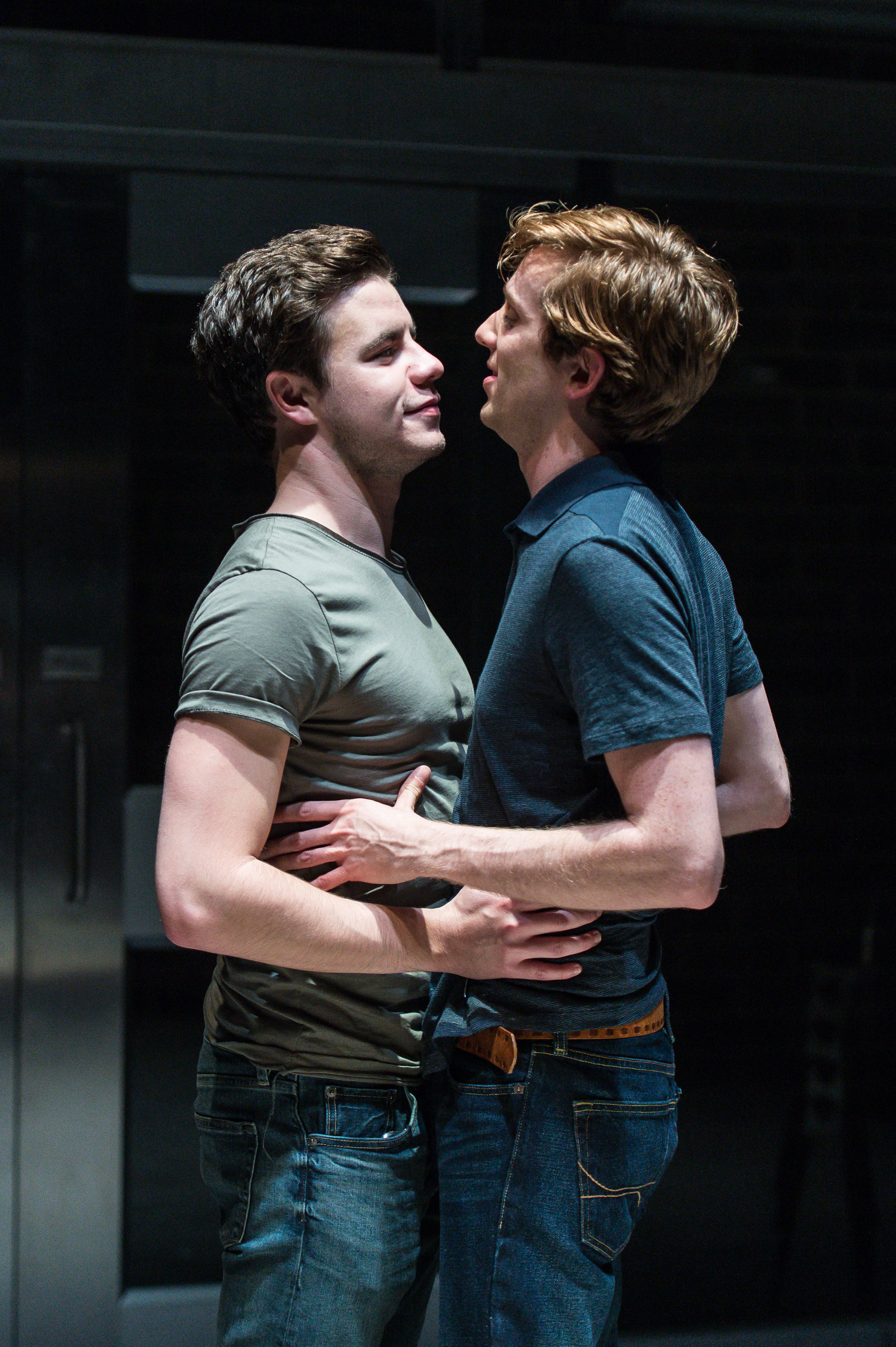
Ambiguous sexuality is only one part of the confusion gripping this strange trio: the characters are deliberate exaggerations. And yet Alexander Pardey and Jolyon Price (pictured) both impress, with youthful bluster and insecurities that remain recognisable.
Tadge brings grim conspiracies of sexual violence with him and a paranoid feast ensues. Neilson’s script balances violence and comedy brutally, Croft guarantees tension and Tom Manning performs so magnificently that I was genuinely concerned.

Tawdry and full of fragility, Penetrator is truly pathetic by the end. The writing is strong enough to generate a good deal of sympathy for the teddy bears, let alone these lost characters. Neilson depicts masculinity as infantilised but, more importantly, indicates the consequences of this and the pain that ensues.

Until 22 August 2015

www.thehopetheatre.com

“The Red Lion” at the National Theatre

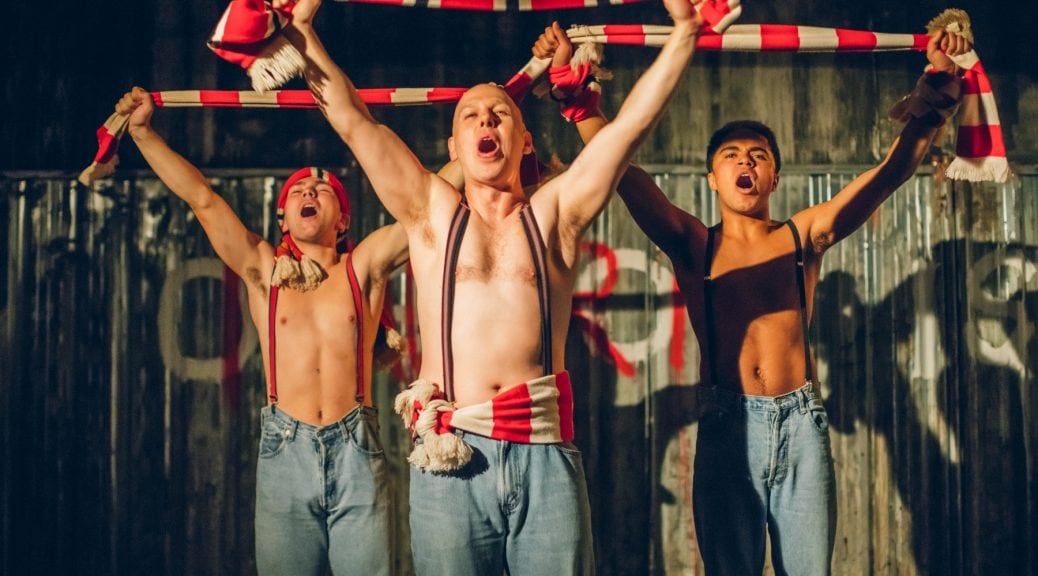
I’ve no interest in football, and I can barely understand how anyone has. But the first play by Patrick Marber in eight years has to be seen. OK, sport can make good drama. And Marber uses what he calls the “dreaming game” to look at themes of loyalty, masculinity and society. But the real shock is that this play has changed my mind about soccer: the passion is so convincing, it’s contagious.

Don’t worry, I’m not going out to a match or anything. But the three ages of man we meet in the changing room of a non-league club – the kind we are told is like a thousand others – are believable despite taking their sport so seriously. Although it contains a fair few jokes, The Red Lion is a serious play, about elation but mostly desperation.

These are great characters and it’s heart wrenching to see this trio flounder. Each speech changes the focus of the play with fluidity – each role becomes, literally, the playmaker by turns. And I am reliably informed each man is instantly recognisable. Taking along my sole football fan friend was my game plan.

THE RED LION national theatre
Peter Wight

First on stage is the club’s Kit Man, a former legend, whose history is troubled. He’s said to “drink too much, think too much and feel too much”. Peter Wight brings out the role’s layers, handling the humour precisely: his devotion to the team is religious, which gets laughs at first… but has the most serious consequences.

Daniel Mays plays the club’s on-the-make manager, with the “courage to be despised”. He speaks in clichés: take his boast at being a bad loser, “I’ll kick a puppy. I’ll kick you.” But with May’s expert delivery, and Marber’s masterly exposition, the character intrigues against the odds.

THE RED LION national theatre
Calvin Demba

The object of both men’s adoration is a talented youngster played by Calvin Demba. Whether they see him as a commodity or some kind of salvation, a contrast made subtle by the plot, they each want to use him. But the kid has a past of his own. Where innocence or purity lie is a rich seam in the play.

Faultlessly directed by Ian Rickson, who gives this brilliant text every chance, The Red Lion has a melancholy streak that stops and starts play. Footballers are said to have three deaths, at different stages of their careers, but we see more than that here. A genuine love of the game drives Marber, but machinations in the club clearly have wider parallels. What’s searched for is a player with “aggression, technique and guile” – Marber’s writing has all three. If theatre had a transfer season, this would be the play to bid for.

Until 30 September 2015

www.nationaltheatre.org.uk

Photos by Catherine Ashmore

“Operation Crucible” at the Finborough Theatre

Kieran Knowles’ play, which started in the Finborough Theatre’s Sunday and Monday slot, before a national tour, and now returns for an extended run, is set in Sheffield’s steel industry during World War II. Learning about the workers’ lives in a somewhat earnest manner, with a heavy dose of nostalgia, the drama revolves around a near-death experience on the night of a vicious bombing raid. The writing is tight and the production superb, making this a strong fringe piece deserving many fans.

A sense of comradeship among four steel workers is well evoked by Knowles, who stars alongside Salvatore D’Aquilla, Paul Tinto and James Wallwork. Finishing one another’s sentences, and working fluidly together as they mime manufacturing, producing commendable performances. Only D’Aquilla’s character feels delineated satisfactorily, though, and as a result his performance slightly overpowers. Getting more laughs than played for, the inexplicable amusement a West London audience finds in the Yorkshire accent might have been taken into account: that’s my only criticism of director Bryony Shanahan, who consistently enforces the strong passages of writing excellently.

The lyricism surrounding factory work – a “magic” the men see in their manual labour – is the most inspiring aspect of the play, which is preoccupied with time and the idea that the factory is a home and shapes identities. Combining the strong physicality of the performances, simple staging (especially when the men are trapped after the bombing) and direct addresses to the audience, Knowles and Shanahan know how to win a crowd. I suspect this is a work that will be around again soon, and often.

Until 22 August 2015

www.finboroughtheatre.co.uk

Photo by Ben Macintosh

“Bakkhai” at the Almeida Theatre

With the first instalment of the Almeida’s Greek season, Oresteia, having announced a West End transfer, Bakkhai, has a lot to live up to. James Macdonald’s production of Euripides’ play is a traditional affair that takes us close to the original. bringing an opportunity to learn something deeper about Greek drama and its power. Vastly different from Oresteia’s contemporary take, the show makes a great contrast and confirms the season is one of this year’s theatrical highlights.

Marked by a strong sense of purpose, Antony McDonald’s simple design and Peter Mumford’s lighting accompany a clear and concise text from Anne Carson. Both Carson and Macdonald have a powerful appreciation of the dichotomies embraced by the religion at the heart of the play, explaining the concept of a daimon and its implications for Dionysus’ crazed followers. Macdonald’s grip never falters as he crafts the tension and explores the consequences of hubris. Most notable is the primary role of the Chorus and music in the show – nearly half of the production is sung.

The star attraction is Ben Whishaw, heading up the excellent promotional photography, and perfectly cast to bring out the complexities of the god, with flowing hair and fey gestures transformed into something sinister in a moment. As with his fellow performers, Whishaw takes on other roles admirably, but Bertie Carvel gets the best of this tactic, playing the ruler Pentheus with confident efficiency, then his mother Agave, with a visceral turn that puts the ghost of his Miss Trunchbull from Matilda to rest. Joining them is Kevin Harvey, whose roles include Cadmus, holding his own and making him an actor that joins my list of ones to watch.

It is the ten-strong Chorus that makes this Bakkhai one to celebrate; singing a capella throughout, with music credited to Orlando Gough. The sound is both otherworldly and tribal – an invigorating mix that keeps you guessing, veering from the frightening, almost repulsive, to strangely beautiful melodies. The singing acts as an exposition of the religion the women follow. The acting is strong, bearing in mind that mass ecstasy is a big ask. It’s when they comment on events and respond to the story that they really move you, showing a clear idea of the Chorus’ role in Greek theatre. Now, as then, the group draws in the audience, making us part of a truly powerful show.

Until 19 September 2015

www.almeida.co.uk

Photo by David Stewart