All posts by Edward Lukes

“The Threepenny Opera” at the National Theatre

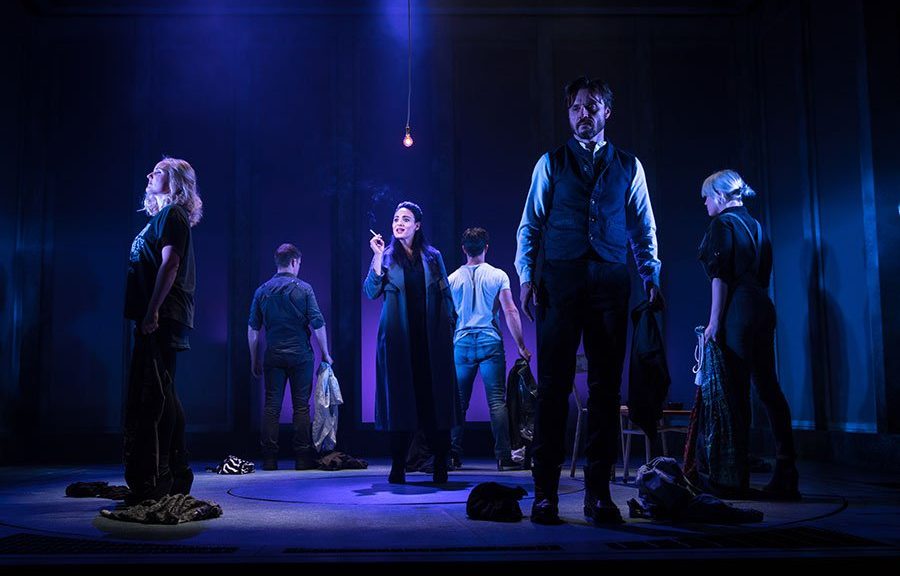
While the chance to see Bertolt Brecht and Kurt Weill’s famous work is welcome, regrettably, this production isn’t the finest hour of anyone involved. There’s nothing embarrassing – there are even good bits – but Simon Stephens’ new adaptation lacks charge, while Rufus Norris’ direction of his talented cast is low voltage.

Of course it’s fine to change the original setting (Brecht and Weill used John Gay’s earlier work themselves). Mack the Knife, aka Captain Macheath, the libidinous crook whose adventures we follow, is recast as an East End gangster. Neat enough. But not specifying a time period for this ‘updating’ diminishes its power. The dark reflections on human nature are robbed of satire, falling into a generic gloom that fails to challenge. Stephens’ lyrics are admirably clear, but they can’t shock – no matter how many expletives are crammed in – as it feels those involved would like them to.

The Brechtian staging of the work is tokenistic. There are knowing gags, including Keystone coppery and Buster Keaton, but the production feels lost or, more specifically, better suited to a smaller stage. Regular visitors to the National Theatre will know how powerful the Olivier can be – even empty – but here, Vicki Mortimer’s set of stairs and paper screens feels both slim and cumbersome. And there are a lot of signs to read – tricky from the circle. Impressive moments of staging have to be ascribed to Paule Constable’s lighting.

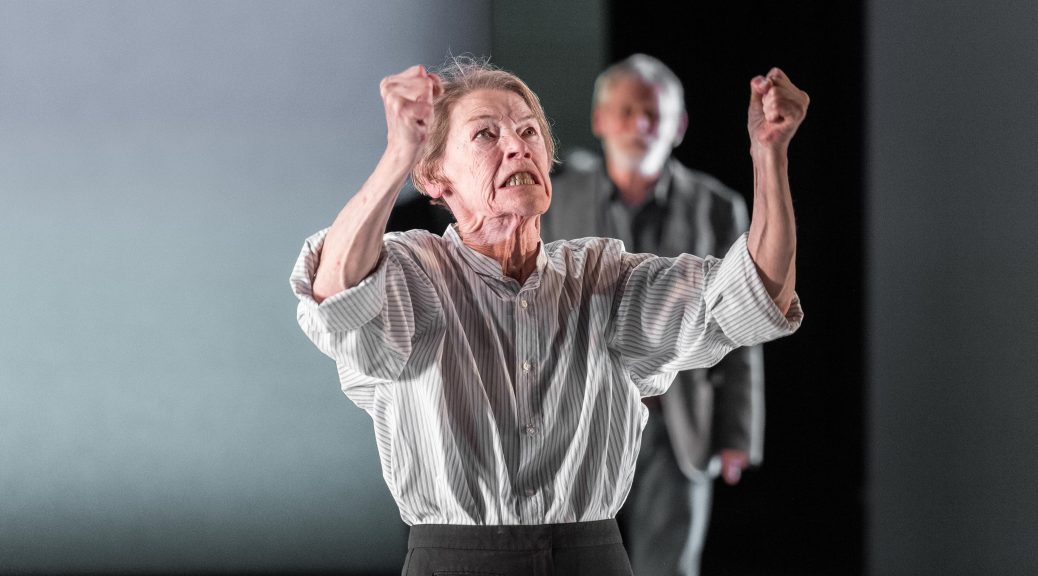
Haydn Gwynne and Nick Holder

The biggest disappointment here is the cast. There are good performances when you’d expect great ones. Rory Kinnear takes the lead, his singing voice a pleasant surprise, but even his brilliant acting can’t hold things together. The excellent Rosalie Craig, as his young bride Polly, fails to bring her normal shine (maybe the interpretation of the role as an accountant hampers too much), while Sharon Small, as one of Mack’s many former lovers, sounds painful. The show belongs to the Peachums, Macheath’s enemies, played by Nick Holder and Haydn Gwynne. With this malicious Mr and Mrs, exaggerations in the piece pay off. Elsewhere, this Threepenny Opera feels deflated.

Until 1 October 2016

www.nationaltheatre.org.uk

Photos by Richard Hubert Smith

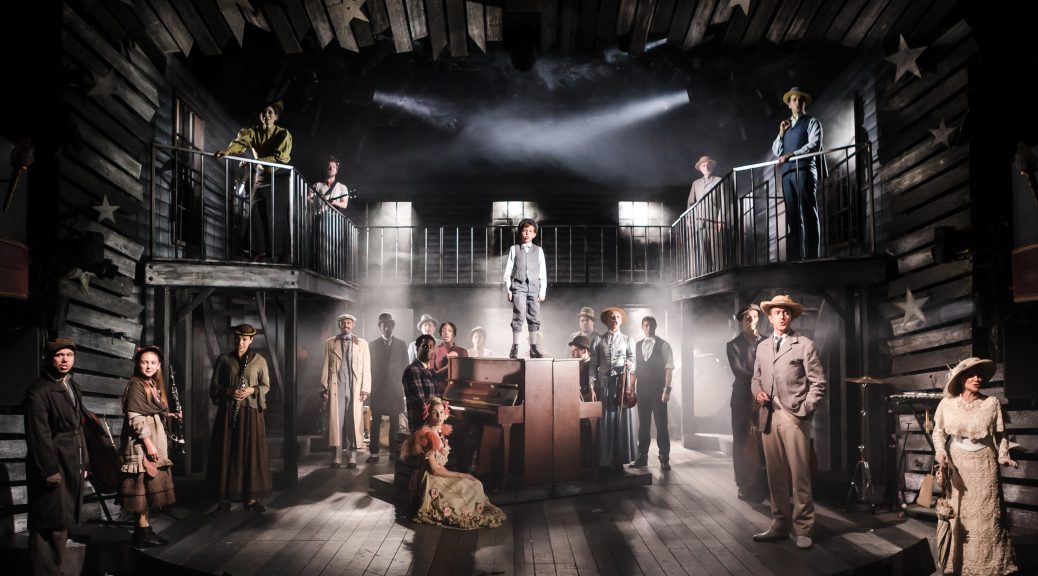
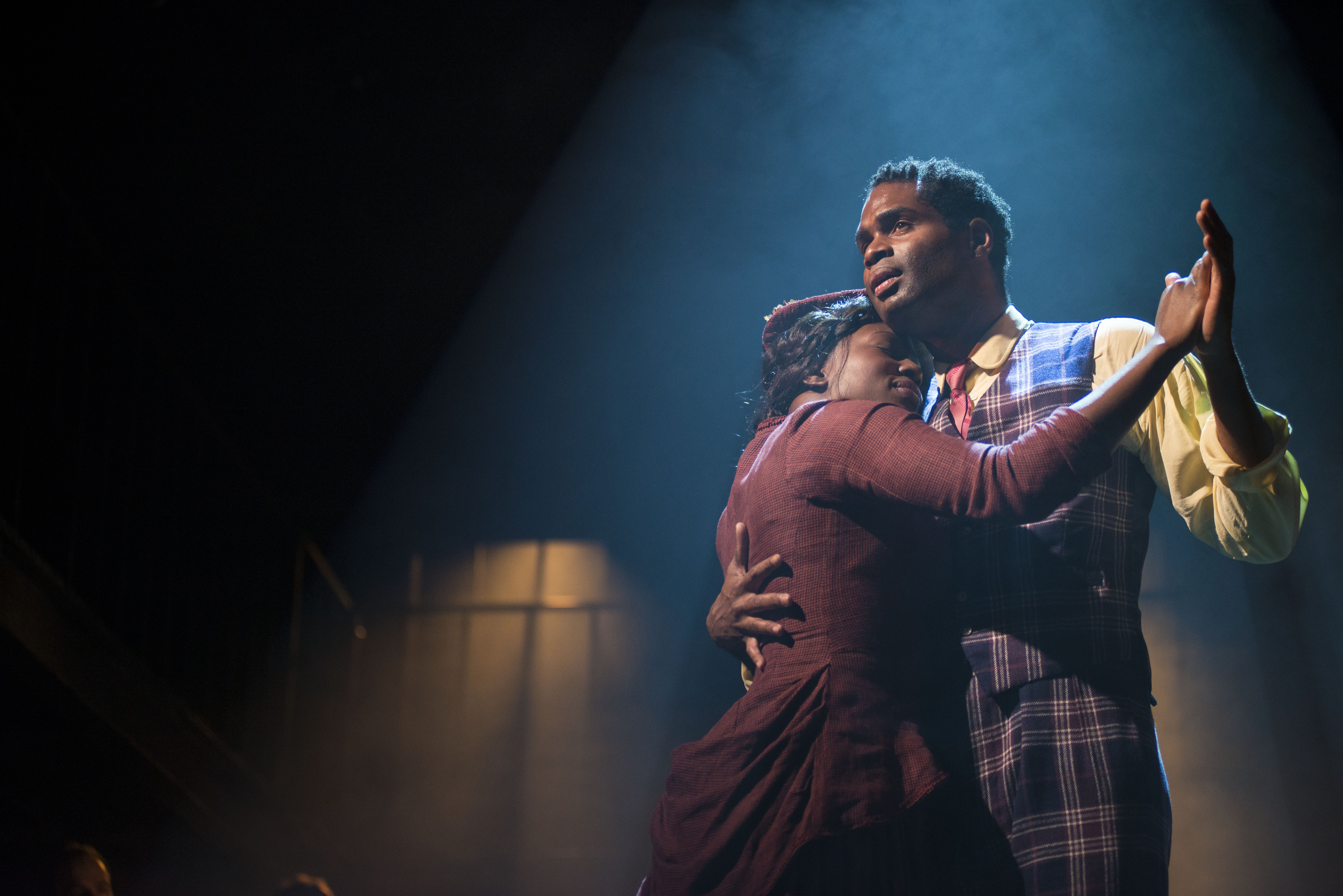
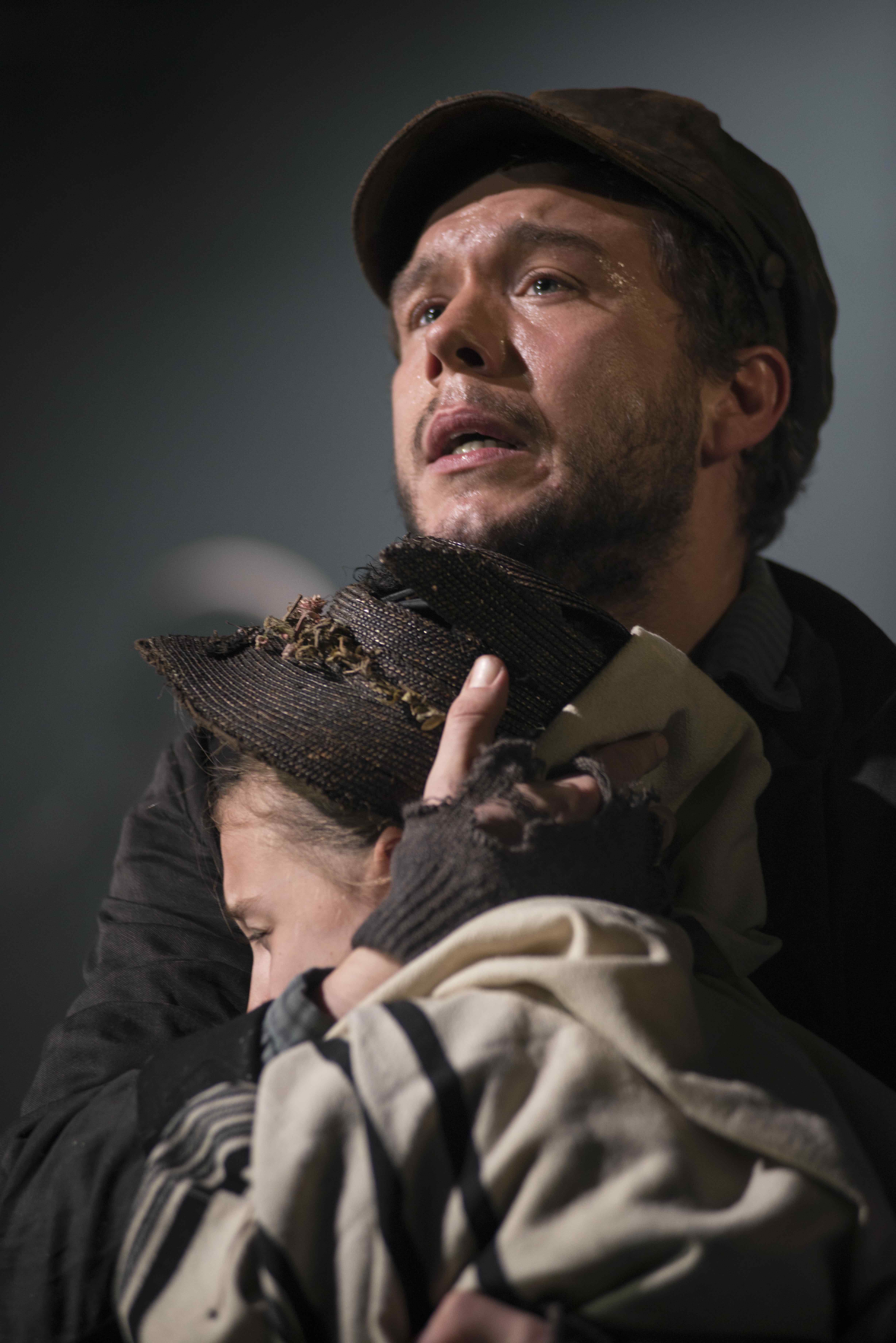
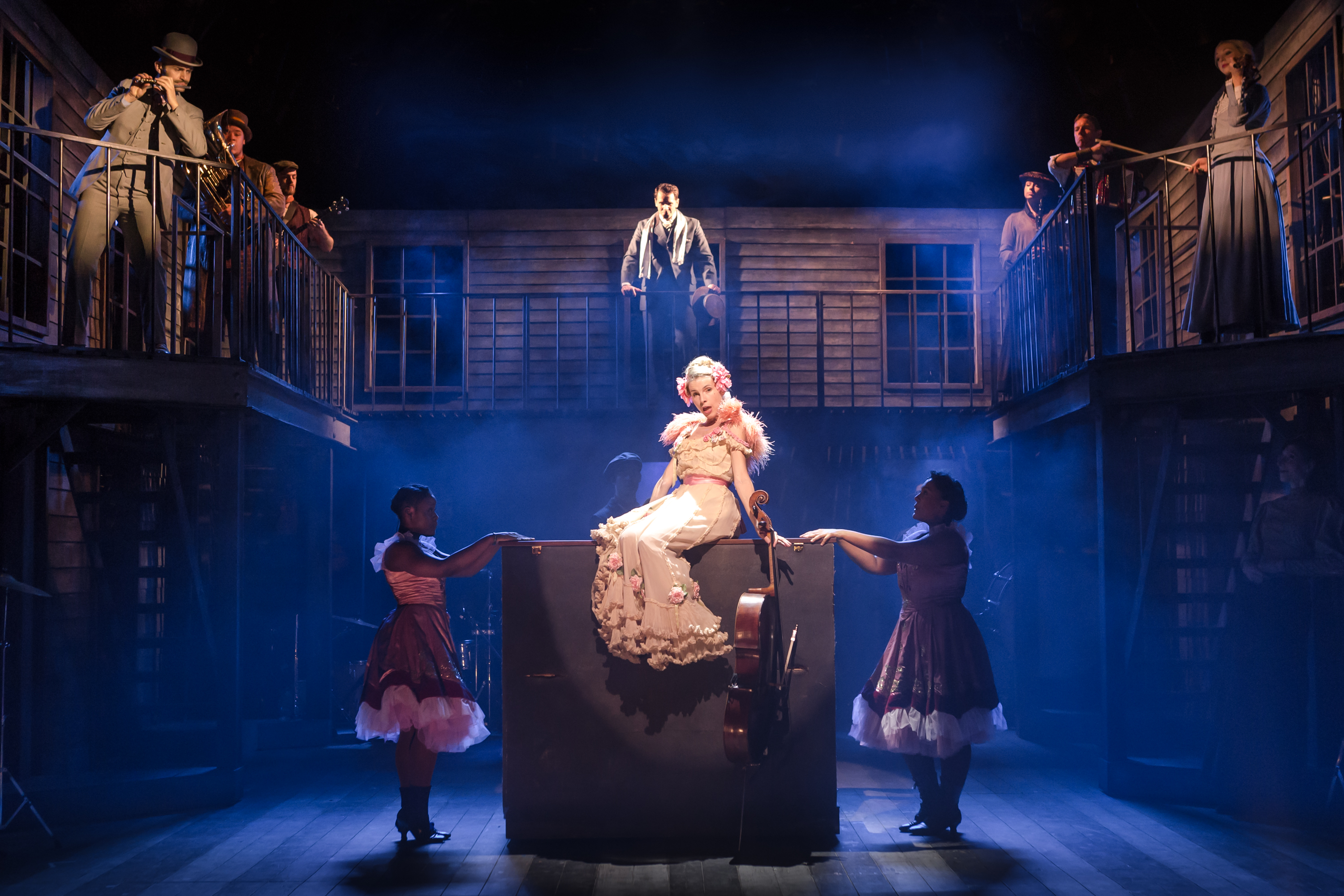
“Allegro” at the Southwark Playhouse

It’s hard to believe there’s a musical by Richard Rodgers and Oscar Hammerstein II that is only now receiving its UK premiere. The coup of finally staging this 1947 piece goes to the team of producer Danielle Tarento and director Thom Southerland. While you can understand why this life story of an Everyman, Joseph Taylor Jr, hasn’t joined the composer and lyricist’s formidable hit parade, the show is well worth seeing.

Taking the lead is Gary Tushaw, first handling the puppet that represents his role’s young years, taking us through first love at high school, a career as a doctor and finally the breakdown of his marriage. Tushaw is endearing and sounds great but his character is perhaps a little too saintly. We meet his family, of course – grandmother (Susan Travers) and parents (Steve Watts and Julia J Nagle) – all fine upstanding performances for the roles of fine upstanding citizens. Surprisingly, his love interest isn’t likeable, which makes her a deal more interesting and gives Emily Bull something to get her teeth into.

ALLEGRO 1 Gary Tushaw (Joseph Taylor Jr.) and company Photo Scott Rylander
Southerland injects as much energy into Hammerstein’s book as he can, with the help of some superb choreography from Lee Proud and a nimble set from Anthony Lamble that makes me confident none of the cast suffers from vertigo. And it’s difficult to criticise this “simple” story for being just that – when the “commonplace” is so clearly the aim. Taylor turns his back on big success – that’s his achievement. Time in the city, where living a “ratrace” gives the musical its title song, is far from the overall tone. The piece is obsessed with hope and home. Maybe I am a softie but I was amazed something so sentimental wasn’t cloying.

The ambition of Rodgers and Hammerstein in Allegro wasn’t timid, and nor is Southerland, but the show is small in scope and occasionally condescending. And yet a collection of songs this strong should not be missed. It’s clear that the ensemble, which includes professional debuts for Matthew McDonald, Benjamin Purkiss and Samuel Thomas, are committed to them. With numbers as good as The Gentleman is a Dope for a supporting role (a superb Katie Bernstein), you can’t fail to be impressed.

Until 10 September 2016

www.southwarkplayhouse.co.uk

Photos by Scott Rylander

“Jesus Christ Superstar” at Regent’s Park Open Air Theatre

Artistic Director Timothy Sheader scores tops marks yet again for his venue’s annual musical. Sheader has wowed with grown-up and demanding shows before, but in this production of Tim Rice and Andrew Lloyd Webber’s concept album/rock opera even the glitter is gritty. This abbreviated Passion of Christ could win converts with its charged staging of ‘The Flagellation’ alone.

Updates to the music are respectful, coming mostly from the vocals. The score feels fresh and the rock guitars aren’t just retained, they are revelled in. More startlingly contemporary is choreographer Drew McOnie’s work and the athleisure clothes from designer Tom Scutt. Jesus and the apostles aren’t hippies but hipsters. It makes sense. Flares, glitter, a glam-Rocky-Horror outfit for Peter Caulfield’s excellent Herod and Judas’ hands dripping in silver paint, show carefully colour-coded scenes. All aided by Lee Curran, whose lighting for the finale is breath taking.

Sheader emphasises community (those ‘Shoreditch’ touches have a point). This is a big cast and it encircles the auditorium before mounting the stage, grabbing microphones and playing around with the stands, cultivating the idea this being a concert. The performative angle provides insight into the piece. And such a commanding use of the ensemble adds emotion as those who followed Jesus quickly turn, to hound him, then demand his death.
JESUS CHRIST SUPERSTAR by Webber, , Lyrics - Tim Rice, Music - Andrew Lloyd Webber, Director - Timothy Sheader, Designer - Tom Scutt, Choreography - Drew McOnie, Lighting - Lee Curran, Regent’s Park Open Air Theatre, London, UK, 2016, Credit - Johan Persson - www.perssonphotography.com /
There are as many superstars on stage as you could pray for. Anoushka Lucas is an excellent Mary, making the most of her show-stopping number. Tyrone Huntley (above) is a faultless Judas, with a soaring range and tremendous power. As the lead, Declan Bennett may strike you as lacking charisma – his Christ is introspective – but when power is called for Bennett delivers and his acting is astonishingly focused. Moments when it is difficult to hear what Bennett is singing are an especial pity, given that these are Tim Rice’s best lyrics. It’s testament to the strength of the production that a normally fatal flaw does little to diminish the power of this revelatory show.

Until 27 August 2016

www.openairtheatre.com

Photos by Johan Persson

“Spitting Image” at the King’s Head Theatre

You can see the motivation behind tracking down Colin Spencer’s 1968 script to headline this wonderful pub venue’s second season of Queer Theatre. ‘The first openly gay play’, performed only a year after the decriminalisation of homosexuality (and not seen since), the work has historical importance. Unfortunately, the past is where the play belongs and no amount of good intentions here save it.

The idea of a gay couple miraculously conceiving a child has potential. Having seen this play, you wouldn’t know it. Interesting ideas fail to resonate. The plot plods, unconvincing characters flounder with lumpy lines, the play screams issues, with a dash of the risqué (cue gratuitous nudity), then painfully searches for a conclusion.

Even worse, Spencer’s play is ill served by Gareth Corke’s slow direction. Scenes that deliver little and cry to be cut are interspersed by interminable breaks with random Sixties songs. Some of the nonsense, absurdist in intension, has touches of Carry On conspiracy, but the satire is crushed by a lack of technical skill. How Amanda Mascarenhas’ minimal set takes up so much time is a frustrating puzzle.

Predictably, the cast can’t save this mess, but mistakes are compounded. As the only performer whose comic skills break out, Amanda Ambrose provides glimpses of respite, creating something out of nothing with her role. Playing the gay couple who are the lead characters, Nick Chinneck and Alan Grant lack any chemistry. Rachel Gleaves and Paul Giddings try hard with all the other roles, but with uneven success. The highlight of the show was the latter delivering the word “Billericay”. A single word really was the best bit. To similarly sum up: terrible.

Until 27 August 2016

www.kingsheadtheatre.com

“The Collector” at The Vaults

It’s unfortunate for Mark Healy, the adapter of John Fowles’ gripping novel, that this reviewer, on top of his homework, is so fresh from reading the book. The story, of a lottery winner who kidnaps an art student he is long obsessed with, is still great and the acting here is strong, but while all the mechanics are present and correct the magic is missing.

A tough job for sure, the novel consists of long diaries, from both parties, showing different sides of the same event. Healy mashes the two together so the play is more conventional. It’s clear what’s going on and it’s a tense affair but a lack of ambition makes the characters flatter and the show is slowed by some fussy touches from director Joe Hufton and an incongruously cluttered set.

The plot is still strong enough to grip and leading man Daniel Portman has a star role to boast about. Not exactly well cast (that’s a compliment) he embodies the kidnapper Frederick’s peculiarities perfectly. There are moments of sexual repression here but that’s not Fowles’ focus and Portman constructs a boundary around these, showing us the “gentle force” he uses, which is much more frightening. We’re kept guessing about the depths of his insanity. Portman’s nuanced depiction drives the show.

His victim, played by Lily Loveless, suffers more from the inevitable editing but still presents a well-rounded character and is great in more emotional scenes. Awkward moments aren’t of Loveless’ making. Abandoning the original early 60s setting, there’s an iPhone and Fowles’ musical references are ignored, an obsession with class becomes jarring: inconsistent, incoherent and frankly odd. It’s as if Frederick has kidnapped a hipster and never had access to the Internet – we know he’s mad but both character’s here are adrift in time. The clash of cultures that should provide most of the motivation is lost. If Healy wanted to update, fair enough, but a more radical approach would have been necessary.

Until 28 August 2016

www.thevaults.london

Photo by Scott Rylander

“Treasure Island” at St Paul’s Church, Covent Garden

A little damp weather can’t harm Iris Theatre’s ship-shape and extremely jolly adaptation of Robert Louis Stevenson’s classic adventure story. Ambitious sets by Valentina Turtur have taken over St Paul’s church and grounds, while a score from Candida Caldicot breathes further life into this fine children’s show. Eight and above is the recommendation, but parents have a strong chance of enjoying it just as much as their kids.

Director and adapter Daniel Winder’s clever move is to split the audience into privateers and pirates. A brave number of scenes feel like private affairs. While some of the audience battle it out on the good ship Hispaniola, another group mutinies by ambushing the Admiral (a superb Nick Howard-Brown). You’re either in or outside the stockade for a parlay, then you’re solving clues to find treasure or plotting to petrify the pirates. The gardens buzz and I wouldn’t be surprised at demands for return visits to see the other side of the story.

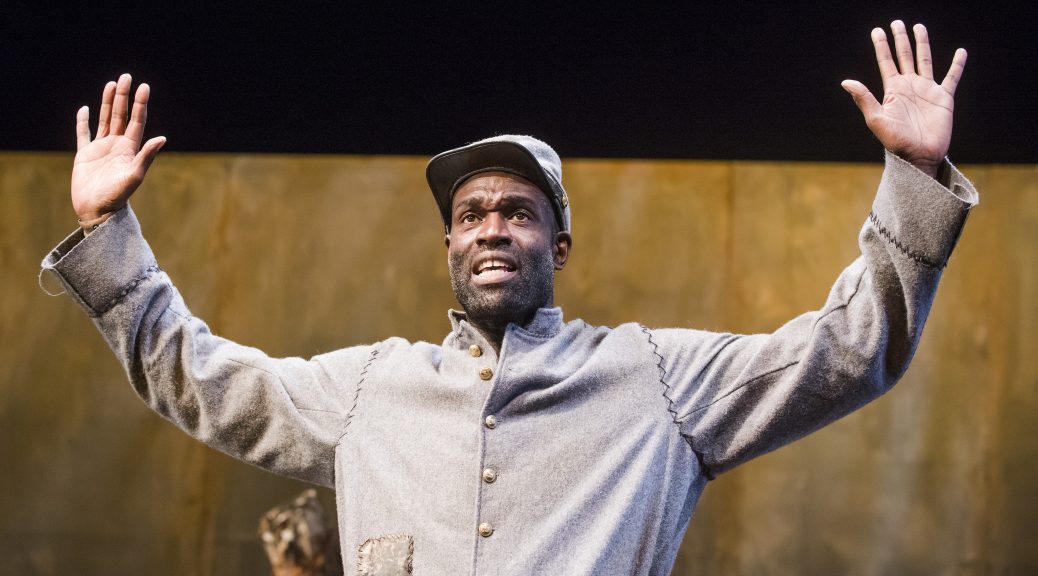
Harold Addo
Harold Addo

With this clever structure, it’s plain sailing for such a talented ensemble. Dominic Garfield is a suitably hirsute and downright dastardly Black Dog. Dafydd Gwyn Howells a swivel-eyed Long John Silver who’s as camp as you could wish. There’s a strong professional debut from Harold Addo as our hero, Jim. Anne-Marie Piazza wows for a second time this season as the indestructible Isabella Hands, an updated nod to the tradition of female pirates.

There’s just enough humour for the grownups and a big dose of audience participation for the kids, handled perfectly by the cast. Winder makes light of the “ticklish work” of finding treasure, steering clear of Disney by highlighting superstition on the high seas, pointing out just how much grog was swilling around and doing justice to Stevenson’s cynical look at class structure on board the ship, all the while expanding everyone’s pirate-related vocabulary with great skill. Yo-ho-ho and huzzah!

Until 28 August 2016

www.iristheatre.com

Photos by Hannah Barton

“Shangri-La” at the Finborough Theatre

Amy Ng’s new play takes us to China, tackling relationships with Tibet and the West through the well-applied prism of tourism. Our heroine is Bunny, skilfully portrayed by Julia Sandiford, a local who becomes a tour guide and photographer and whose breaking of taboos neatly establishes the play’s dramatic dilemmas.

Bunny’s employer is a company that aims for authentic and sustainable travel. Sounds nice. The naïve boss (Kevin Shen) wants “relationships not transactions”, and yet Ng’s strong script falters with the former, unaided by director Charlotte Westenra’s speedy pacing. This remarkably assured first full-length play deserves a more nurturing delivery.

Andrew Koji and Rosie Thomson

Bunny’s dedication to her employers for isn’t quite convincing, while her animosity to her fellow guide (a standout performance from Andrew Koji) also stumbles. Credit is deserved for showing restraint when it comes to jokes about their rich-bitch client. Rosie Thomson, who takes the role, tries hard to add some depth, also impressing in flashbacks as a photojournalist who bribes and inspires Bunny. It’s a shame these first encounters with a camera – Bunny’s biggest passion – are the poorest scenes, being written too literally and delivered too quickly.

When it comes to those “transactions”, though, Ng is pin sharp and develops her play perfectly. The exposition of history and culture impresses and informs without condescension, while the economic arguments and impact of tourism are explored with nuance, and deeper repercussions ripple out nicely. Putting forth so much discussion so comprehensively is often what playwright’s struggle with most. Shangri-La leaves you wanting to see where Ng will visit next.

Until 6 August 2016

www.finboroughtheatre.co.uk

Photos by Scott Rylander

“Breakfast at Tiffany’s” at the Theatre Royal Haymarket

Richard Greenberg’s adaptation of Truman Capote’s novella wins admiration for resolutely not replicating the famous film onstage. Going back to the original source, there’s a determination to show the dark side of heroine Holly Golightly’s desperate life: prostitution, abuse and depression, described as the “mean reds”. It’s a disorientating experience for an audience if expectations are based on the production poster. Not necessarily a bad thing.

Sitting near me, a fan of singer Pixie Lott, who takes top billing in a font size bigger than the title, seemed puzzled. It can’t have been the thin story, which director Nikolai Foster propels nicely. Maybe it’s the small amount of singing (although what there is impresses). Lott gives a credible performance, tethered by studiously avoiding any trace of the movie’s iconic star, Audrey Hepburn. Here, Holly is blonde, defiant and downright sexy – it really is “Golightly gone” – a total transformation. A fine idea, but consequently we have to wait until two emotional scenes near the end to really glimpse Lott’s considerable acting potential.

Matt
Matt Barber

It’s clear to Lott, although it may be another surprise to some, that Holly isn’t the focus here. It’s Capote’s alter ego, a nameless writer, we are forced to focus on. Played by an exceptionally hard working Matt Barber, who injects a good deal of dynamism, fiercely holding the show together, it all comes down to how interesting you find this one writer’s struggle for success and journey of sexual discovery.

Capote, of course, found himself fascinating. If you don’t share his opinion, despite Foster’s efforts, the story is inconsequential. The show comes close to feeling like breakfast, lunch and dinner at Tiffany’s when just a cup of coffee would have sufficed. And there’s a cat – an astonishingly well-trained one you can follow on Twitter (@TiffanysBobCat). While everyone here is far too good to be upstaged by his feline talents, I’d rather follow him than the author any day.

Greenberg’s work is exemplary in creating the feel of a short story on stage – which is interesting – so the crux is how much Capote you can cope with? The case against? Holly isn’t quite the invention she’s cracked up to be, while secondary characters are weak, with the ensemble reduced to dodgy divertissements (rollerskates? No thank you). If you like your humour waspish with a big dose of self-indulgence, this fine production serves the author better than he deserves.

www.breakfastattiffanys.co.uk

Until 17 September 2016

Photos by Sean Ebsworth Barnes

“Into The Woods” at the Menier Chocolate Factory

Derek McLane’s set, surrounding the Fiasco Theatre Company as it performs its hit transfer from the States, is a sculptural presence that takes us inside a piano. Discarded keyboards frame the stage and the strings are ropes, suggesting the trees among which James Lapine cleverly mixes and matches fairy tales to Stephen Sondheim’s brilliant music.

menier chocolate factory
Claire Karpen as Cinderella with Noah Brody and Andy Grotelueschen as the Stepsisters

Visually and aurally, this is a stripped-back show. A single piano, with an impressive array of percussion and a smattering of other instruments, is performed by the cast, and led by pianist Evan Rees. Sacrifices are inevitable, incidentally discordant notes at the entrée of Act Two are unnecessary, but the singing is all you could wish for, especially with Claire Karpen and Vanessa Reseland as Cinderella and The Witch. There’s some lovely doubling of roles as well. Having the princes perform as the wicked stepsisters is worth sacrificing two sopranos; Noah Brody and Andy Grotelueschen are marvellous, also taking the roles of the wolf and the cow in their stride.

Vanessa Reseland as The Witch

It all seems a casual and convivial affair. The troupe wear home-spun costumes (crochet is always comforting), the props are minimal and the emphasis on invention is, well, jolly. There’s a conversational tone injected by directors Brody and Ben Steinfeld, constructed by having the cast share the role of narrator, while nodding at audience participation and our shared knowledge of the stories. Brilliantly done, but the payoff is to come.

It’s the ‘ever after’ that’s the best bit, when the wishes made have come true but life remains just as complicated. The baker and his wife come into focus – with terrific performances from Steinfeld and Jessie Austrian. This couple are the key and the most relatable characters in the show, even if they do live next to a witch. Fiasco has prepared the ground cleverly; all that complicity and transparency links their stories to our own lives. In showing how you make the make believe, going into these woods feels like a real journey we must all undertake.

Until 17 September 2016

www.menierchocolatefactory.com

Photos by Catheine Ashmore

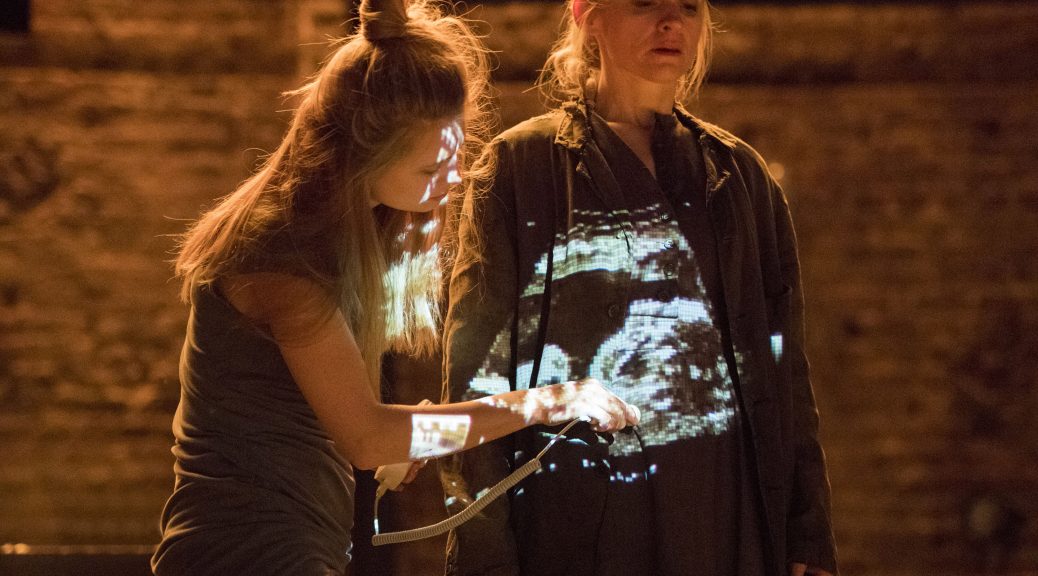
“Fury” at the Soho Theatre

Damsel Productions’ third show confirms that this young team can pick a great play. And that co-founder/director Hannah Hauer-King is a confident, fresh talent. An intelligent interaction with the story of Medea, achingly contemporary and set on a South London council estate, Phoebe Eclair-Powell’s script has a brave lyricism and the production is gut-wrenchingly gripping.

There are more topical concerns here than you can shake a stick at: gentrification, a clash of classes and the collapse of the welfare state. Yet there’s no trace of ticking boxes, rather a sincere wish to question the demonisation of a “terrified and lonely” single mother. Sarah Ridgeway takes the main role, a performance magically more than the sum of its parts, made intense by the play’s aim of “showing us the pieces of her life”.

An Argonaut is notably absent here. Instead there’s an upstairs neighbour, a student called Tom who comes to dominate and abuse. The role is perhaps the play’s weakest link as he’s too creepy from the start, besides the fact that anyone at college who hires a cleaner is suspect. Thankfully, when a truly evil side is shown, Hauer-King has established enough momentum for Alex Austin to shine in the part.

Eclair-Powell’s most fruitful synthesis from Euripides is the reconfiguration of the Greek chorus. Performed by a talented trio, Naana Agyei-Ampadu, Daniel Kendrick and Anita-Joy Uwajeh, they are beautifully choreographed and their singing sounds great. They do so much: shaping action and interpretation, by turns interrogatory, accusatory and sympathetic. Adopting secondary characters roots us in the real world and ensures Fury is stimulatingly layered.

Towards the bloody finale, the chorus appear as social workers. This Medea’s revenge and desperation is not focused on a single man. Casting her net as wide as can be, Eclair-Powell’s ambition is brilliantly refocused – it isn’t just one woman’s life we see on stage but our whole society.

Until 30 July 2016

www.sohotheatre.com

Photo by The Other Richard