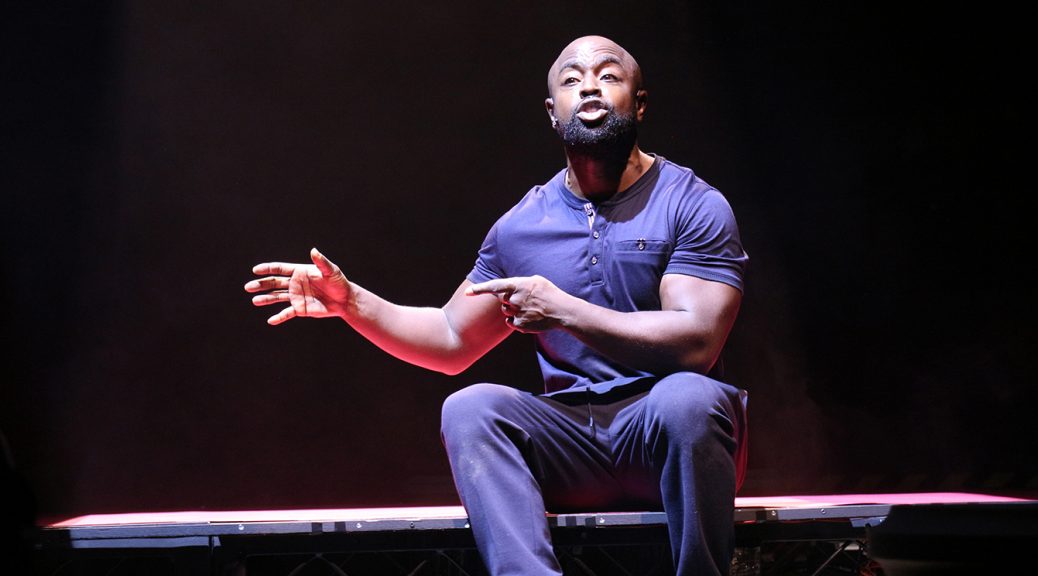
“Prayer” from the Gate Theatre

Hands up, I like theatre sets that are expensive, literally flashy and preferably moving. But this online project from award-winning designer Rosie Elnile is impressive for the opposite reasons. From her work with Ellen McDougall in Notting Hill, Elnile has taken the lockdown as an opportunity. And that’s the first recommendation to check out her project.

Creating a digital space to explore and enjoy, Elnile takes us into her thinking about set design with a collection of writings, poems and pictures that have inspired her, along with commentary to listen to, provoke and educate. The thinking is deep, questioning the fundamentals and ramifications of her discipline.

It is striking, and topical, how concerned with the broadest of cultural trends and theories Elnile is. Also, how politically correct. The later isn’t intended to be derogatory… why wouldn’t you want to be right about politics? The environment and all manner of power structures are considered as Elnile makes structures of her own. The concerns are eye-opening, if anxiety producing. The happier point is that Elnile’s practice is energised by the problems. There is woe… but get up and go, too.

The project is original: Elnile is quick to describe Prayer as unfinished and clear that the work shows “impossible models”. And we’re used to perfection in the theatre! But both factors engender idealism and new thinking, centring on the process of making rather than an outcome. Prayer becomes a personal piece: Elnile’s artworks are presented and there’s a strong sense of commitments and passions.

Among all the caveats and concerns – which taught me a deal – there’s one point I’d take issue with. Describing prayer as a “kind of surrender” is interesting. But is Elnile doing justice to her achievements? As well as prayers of submission, there are also prayers of resolution. It is clear Elnile can problematise, with a steely eye on history and politics. But there is also resolve… for the future. The idea that design should facilitate care and compassion proves, well, exciting. The tone of the piece is meditative, but it is also motivating.

Until 24 July 2020

www.gatetheatre.co.uk

“Talking Heads” at the Bridge Theatre

Four out of eight… that’s not some strange rating for these shows, far from it, but the number I’ve managed to see in this series of Alan Bennett monologues. The tickets are reasonably priced, the staff on top of social distancing, and creative director Nicholas Hytner’s idea of bringing his lockdown TV shows to the stage (where they clearly belong) is a simply brilliant.

The Shrine & Bed Among the Lentils

First up is Monica Dolan’s brilliant portrayal of a grieving widow. Learning about her husband’s life – after his death – her version of Clifford the bird watcher has to expand to include Cliff the biker. The Shrine is sensitive and often funny. It’s classic Bennett territory, with plenty of wry observation. And an important point about how individual bereavement is.

The accompanying piece has Lesley Manville’s turn as an “upstanding Anglican lady”. Battles with her husband the Vicar, and his fan club parishioners, start well. But does competitive flower arranging sit uncomfortably alongside the AA meetings the character ends up at? It’s Manville who makes the extramarital affair here seem something magical. Another performance not to miss. Both pieces are directed with a sure hand by Hytner.

The Hand of God & The Outside Dog

Another piece is also mostly noticeable for its performance. Did you ever imagine Kristen Scott Thomas could ‘do’ frumpy? The Hand of God is a touch predictable but, with an affecting melancholic air there’s no doubt this is another of Bennett’s strong characters. Playing a small-time antiques dealer, with humour coming from her snobbery, is a real achievement on Scott Thomas’s part.

More impressive – as the performance is excellent and the writing surprising – is The Outside Dog where Bennett moves to less familiar ground. A serial killer’s wife, a role Rochenda Sandall gets lots from, in a script that twists like a thriller. It’s plot driven but note its brevity. While the TV might drag a serial out of something like this (and we’ve all seen plenty on Netflix lately) Bennett and director Nadia Fall cram mystery, drama and emotion in a quarter of an hour – fantastic!

There are four more big stars to come – Lucian Msamati, Imelda Staunton, Tamsin Grieg and Maxine Peake – in two more double bills. This may be bite size theatre, but the season is a big achievement.

Until 31 October 2020

www.bridgetheatre.co.uk

Photos by Zach Harrison

“The Greatest Wealth” from the Old Vic

If Covid-19 has taught us anything, it’s that the NHS is as emotive and essential a subject for debate as it ever was. This series of monologues, curated by Lolita Chakrabarti, directed by Adrian Lester and funded by the TS Eliot Estate, uses the humanity – and drama – surrounding the greatest of British institutions with a strong sense of purpose. It is essential viewing.

The project started in 2018 but a new commission, from Bernardine Evaristo, starts the line-up online. First, Do No Harm has a personification of the NHS recounting her achievements and challenging us as to her future. Overtly political, with an attack on “myopic puppet” politicians, this effort to give the institution a voice is stirring and powerful. If some of Evaristo’s references, let alone lines such as “I have X-Ray vision”, come close to being overblown, a magisterial performance from Sharon D Clarke makes them work. The effect is tremendous.

Sharon D Clarke in 'The Greatest Wealth' from The Old Vic
Sharon D Clarke

Patients

Chronologically, the series starts with Jack Thorne’s charming piece, Boo, performed by Sophie Stone and showing the impact of the new NHS on a young deaf girl. It’s interesting to see suspicion about the service at its inception, and the writing has plentiful details and an admirably light touch.

Another patient’s perspective – similarly fresh and funny – is told in Choice & Control by Matilda Ibini, which has Ruth Madeley’s character getting on with her life in a wheelchair. It may not be “the Rolls-Royce of wheelchairs” but the point about having access to mobility is well made and Madeley has a lovely way with the audience.

Slightly less successful, if a touch more ambitious, Paul Unwin’s piece adds a dystopian twist that makes his At The Point of Need confusing. David Threlfall’s performance recounts how the NHS has touched his character’s life, but in too much of a rush. It is the only piece that ends more depressing than celebratory – a brave effort that backfires.

Practioners

A gentle humour, with an increased sense of awe about the science of medicine, is present in pieces about the 1970s and 1980s. Sister Susan by Moira Buffini and Speedy Gonzales by Chakrabarti show us a nurse and a consultant telling us about their work. Characters to truly admire lead to wonderful performances from Dervla Kirwan and Art Malik. 

Sister Susan from 'The Greatest Wealth' at The Old Vic
Dervla Kirwan

Pressure on the NHS is carefully conveyed in the piece about the 1990s. Another nurse and another strong role are present in Family Room by Courttia Newland with Jade Anouka. And stress on NHS staff gets a good twist. Newland highlights the difficulty of health workers protesting that fits well with the whole project’s aim.

High points

For me, the two highlights of the season contained the most humour, used to great effect in Meera Syal’s Rivers. Performing as a midwife in the 1960s, Syal handles the comedy expertly, with delicious irony and sarcasm. While many of the monologues highlight the role of immigrants within the NHS, Syal has a prime position within the debate and opens it up into a broader look at racism. The result rings true and gets laughs – an impressive combination. With powerful emotional twists, the writing has some great turns of phrase and a lovely rhythm.

Myra Syal in 'The Greatest Wealth' from The Old Vic
Myra Syal

A cabaret monologue, The Nuchess by Seiriol Davies makes for a great change of pace. There’s plenty of satire, including outsourcing the last chorus! And more points for rhyming heaven and Bevan. Performed with exuberance by Louise English (pictured top), this jolly personification of the NHS is markedly different from that in First, Do No Harm. But neither are performances to forget in a long time. The NHS doesn’t lack advocates, but they seldom come as articulate as the contributors here. Let’s hope that a monologue addressing the next decade contains only good news.

www.oldvictheatre.com

“The Space Between – A Musical Short”

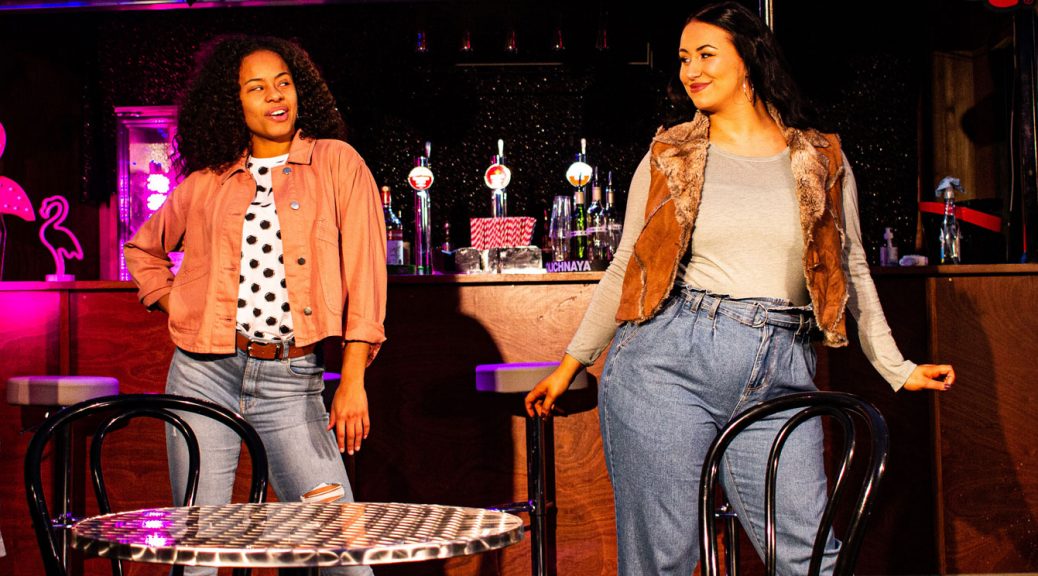
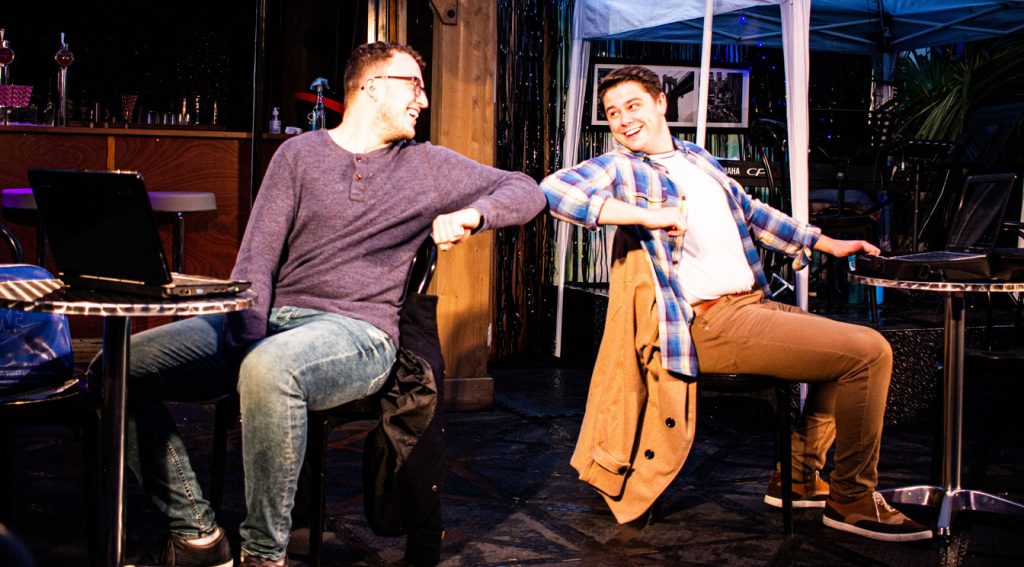
This sweet little treat showcases the considerable talents of David Hunter and Caroline Kay. Three songs characterise a couple under strain because of Covid-19. Forced to live apart, they break up during lockdown.

That Hunter and Kay haven’t met face to face is amazing. There’s a good sense of a long-established relationship between their characters, despite the brevity of the show. Likewise, that neither has met musical director Nick Barstow is remarkable: the songs, as well as their voices, sound fantastic.

Musically and lyrically, The Space Between owes a lot to Jason Robert Brown. That’s not a bad source of inspiration. It might have been nice to get more sense of a London setting, but the three numbers are strong and the writing has a realism and humour that balances sentimentality.

Kay’s character is a little better developed. Maybe I just took a dislike to the misplaced irony of her partner listing ‘Her’ on his phone? But the piece is packed with detail – it even tackles the (increasing) problem of showing a series of video calls well. Including guest appearances, as friends and family, is a brilliant idea.

Impressive all around and, at just 15 minutes, easy to listen and watch again and again…which I will.

Available on You Tube

"The Deep Blue Sea" from NTLive

This week the National Theatre’s fund-raising offering is sheer class. Carrie Cracknell’s 2016 production of Terence Rattigan’s play is a traditional affair that oozes quality, with a solid script, stunning set and stellar performances.

The Deep Blue Sea is far from easy sailing. It starts with its heroine, Hester, having just attempted suicide, as the affair that broke her marriage is coming to an end. Concern over mental health has progressed since Rattigan was writing in 1952 but the playwright’s insight into depression offers much to learn from.

Rattigan’s preoccupation, however, is Hester’s passion. Her love for her husband, eclipsed by that for RAF pilot Freddie Paige, is fascinating. The romance is dangerous – this sea is stormy. Hester sees no chance of escaping a love that will not work: she and Freddie are “death to each other”. The production’s first triumph is to make sure Rattigan’s piece doesn’t descend into melodrama.

Tom Burke in The Deep Blue Sea. Image by Richard Hubert Smith
Tom Burke

The love triangle provides strong roles for Peter Sullivan and Tom Burke, who are excellent. Their chemistry with their leading lady is astonishing. Burke is especially strong in making the occasionally odious Freddie convincingly alluring as an “homme fatale”. But the show belongs to Helen McCrory whose performance as Hester is flawless. Sharp and wry, the mix of “anger, hatred, shame” is conveyed in every move.

There’s a sense of British reserve behind all the action, darkly adding to the potency, but McCrory and Cracknell keep this as under control as Hester’s emotions. Moments when Hester is alone and can let go – holding her face to the light or crawling on the floor in desperation – are awe-inspiring in their emotional power.

The Deep Blue Sea image by Richard Hubert Smith
Tom Schutt’s impressive set

Focusing on a sense of community within the boarding house setting, aided by Tom Schutt’s impressive set full of solicitous neighbours, means Cracknell adds to the play. A brilliant scene where Hester is joined by the women in the piece (played by Marion Bailey and Yolanda Kettle) alters our focus. It’s a move all the more remarkable given that the play, through Rattigan’s biography, is often discussed for its gay subtext.

If interested, try to track down a copy of Mike Poulton’s play Kenny Morgan, about the suicide of Rattigan’s lover (and a fascinating work in its own right). There is a danger that The Deep Blue Sea can be overpowered by this biographical note. But Cracknell has provided a space for the play to exist independently; an achievement for any revival that makes Rattigan’s script and his legacy stronger.

Until 16 July 2020

To support, visit nationaltheatre.org.uk

Photos by Richard Hubert Smith

“The Beast Will Rise” from Tramp Productions

While the cancellation of Philip Ridley’s The Beast of Blue Yonder is regrettable, this series of monologues – released weekly – features the cast due to perform his play and is admirable compensation.

Directed by Wiebke Green, the online project shows the breadth of Ridley’s imagination and his inimitable style. Full of vivid images and memorable phrases, the stories and sense of humour are unmistakable. 

Fantastic beasts and

Animals, and the animalistic in us, are joined with apocalyptic scenarios and touches of fairy tales in this collection.  There’s a sense of nature, including human nature, as dangerous but also magical.

Take Telescope (with beasts are in the stars and wildlife on the local common), a piece that Unique Spencer does so well with performing. Alongside a gruesome murder, Ridley gives us a brilliant take on agoraphobia.

There’s a telescope too in Night, a short piece with Tyler Conti playing a young man who is dying, that proves haunting without any touch of the supernatural. 

Dismemberment and exploitation, horror and fantasy are all combined. And there are laughs too, including a twisted childhood prank in Chihuahua that is downright bizarre. Another strong example (with Grace Hogg-Robinson’s excellent performance) is Zarabooshka; a “shrivel-free” character’s imagination consoles and disturbs by turns. 

Finding great storytelling

From poetic snippets like Snow and River to longer pieces with “terrible things” in a world gone mad, the stories destabilise expectations as well as entertain. 

Flights into fantasy can switch off an audience. Credit to Green and many of her cast for holding fast to the writing and making the pieces so engaging: Rachel Bright in Gators, Mirren Mack in Wound and Steve Furst in Performance with the same aim – gripping an audience and not letting go.

Standing out, not just because of its longer duration, Eclipse serves as a brilliant showcase for Mike Evans. A self-conscious exercise in storytelling, it’s a macabre tale with wonderful characters. Society has broken down – again – and “old world problems” come alongside cups of tea and creepy cravats. The twisted parallel with the Coronavirus (it’s the young who are infected here) shows Ridley’s wicked streak and creates tension.

The fecundity of Ridley’s creativity is remarkable but it is a matter of quality as well as quantity. Alongside post offices and jacket potatoes, Ridley combines strong observation, a powerful sense of community (albeit frequently a mob) and recognisable geography to ground his brand of incredible. 

It’s a pet theory of mine that Ridley is the playwright of his generation who will be looked at in the future. That this collection, made under far from ideal conditions, is so consistently strong makes The Beast Will Rise a major achievement.

Posted online from 2 April 2020

www.wearetramp.com

“Nine Lives” from the Arcola Theatre

Zodwa Nyoni’s excellent monologue, currently available on YouTube, is easy to recommend. Impeccably directed by Alex Chisholm, with a fantastic performance from Lladel Bryant, the recording is rough and ready. But Nyoni’s encompassing vision, full of humanity and poetry, make this one of those shows you feel everyone should see.

The story of a young man, Ishmael, seeking refuge from Zimbabwe because he is gay proves compelling. Bryant’s performance makes the character always approachable; even as Nyoni reveals traumatic “nightmares of the past” and during the painful wait for his fate to be decided in the UK (“limbo comes with every morning”).

Aided by effective lighting and sound design (credit to Jonathan Girling and Ed Clarke) Bryant, with just a suitcase, shows complex emotions revolving around the wish for a simple life. A range of extra characters, including his flatmate and his friend Becs, give Bryant the chance to further impress and add texture to his story. That Ishmael still faces homophobia – being “excluded by the excluded” – leads to a different kind of fund-raising appeal for this show: viewers are directed to the UK Lesbian & Gay Immigration Group.

Nyoni sees a bigger picture behind the main story – which is why her play seems so vital. A strong sense of community within Nine Lives comes with the repeated refrain: “some of us”. Recalling Zimbabwe, and the lives of those persecuted there, then drawing out the problems faced by refugees, expands the story with skill. This modest show becomes powerful and important by being perfectly formed and beautifully nurtured.

“Les Blancs” from NTLive

Although unfinished at her death in 1965, and in a production that’s four years old, Lorraine Hansberry’s play feels more urgent than ever. Questioning the perceived price of African lives, the legacy of imperialism and featuring the death of a black man in police custody, it is depressingly topical in this summer of Black Lives Matter protests.

Yaël Farber’s strong production doesn’t suit filming – that happens sometimes. The slower pace, which can work in a theatre, makes watching online tedious. Several scene changes, which use the theatre’s revolve well, dampen the script’s considerable tension on screen. That Hansberry wrote a thrilling play with plenty of action is a little lost.

Thankfully, even on film the strong characters and performances still shine. The ‘Whites’ of the title, running a missionary hospital in an unspecified African country, are well developed by James Fleet and Anna Madeley. And a visiting journalist – a little too close to a device to provide an American perspective – is played with passion by Elliot Cowan. A magnificent role for Siân Phillips, the wife of the Mission’s pastor who everyone is waiting to show up, illustrates the complexities of colonialism in a moving fashion.

LES BLANCS The National Theatre, 2016 photo Johan Persson
Siân Phillips and Danny Sapani

Three brothers, torn by the conflict for independence, provide drama of an epic nature that results in fantastic acting. Gary Beadle’s Abioseh is about to become a priest, while “mixed up” Eric, a powerful role for Tunji Kasim, wants to go to war. The focus is Tshembe, now established in Europe but “ravaged” by his responsibilities. Which path will he take?

Danny Sapani takes the part of this intellectual and reluctant revolutionary with a clear understanding that this is a unique kind of hero. Sapani shows Tshembe’s intelligence and humanity, making him interesting and appealing. But he is also aloof and dangerous. The tragic outcome is one of the most shocking you can imagine.

The brutal ending of Les Blancs shows its real strength lies in Hansberry’s unflinching bravery. Many scenes featuring Clive Francis’ bigoted Major Rice are difficult to watch, no matter how well they work dramatically. But, with Hansberry’s forensic arguments, the play is also bold. The exploitation of colonialism is easy to see, but what about the idea of the missionary sense of fulfilment also being at the expense of Africans? The play’s obsession with “reason”, easily contrasted with tradition, and a flirtation with violence (let alone nods to Marxism) are startling and powerful. 

Available until Wednesday 8 July2020

To support, visit nationaltheatre.org.uk

Photos by Johann Persson

“Toast” from the Lawrence Batley Theatre

Another fund-raising attempt to bring a successful stage show online, this adaptation of Nigel Slater’s autobiography is a radio play spiced up with some lovely animation from a company called Dusthouse.

Should you wish, a ticket can include a recipe you can cook and a Walnut Whip to enjoy while watching. But the show’s success, as director Henry Filloux-Bennett appreciates, comes from Slater’s writing.

An appealing author, whose work is full of honesty, observation and heart. Slater manages – for the most part – to avoid making his nostalgia cloying. The depiction of his family, carefully portrayed from a child’s perspective, make strong characters for Lizzie Muncey and Stephen Ventura as his mum and dad, while a cooking cold war with his stepmother proves a highlight.

There’s a good deal of sweet humour about middle-class life in the 1960s. And heartbreak, with his mother’s early death. Notably, the homophobia Slater experienced is tackled with a light touch – the idea of “girl’s sweets” surely raises smiles of recognition. Ending with an optimism that makes Toast a comforting and safe affair, it is clear that the parallel with food of the title is not lost on its author.

Until 31July

  www.thelbt.org

“Birdsong” from The Original Theatre Company

While wanting to get out of my living room and into a real auditorium as soon as possible, this online show is a fantastic effort at producing theatre during lockdown.

Adapting her previous stage production for the internet, Rachel Wagstaff has an intelligent eye on what works on screen, using letters and prayers for effective solo scenes to camera. The film’s editor Tristan Sheppard benefits from the effective sound design (Dom Bilkey) and subtle backgrounds by David Woodhead, carefully focusing attention on fantastic performances.

If the final result is uneven, its problems are shared with the source material – Sebastian Faulks’ hit novel – exacerbated by Wagstaff’s slightly reverential approach to the text.

Faulks is closely involved with the project, serving as a narrator. That’s quite a coup… but not a successful one. As good his writing is, Faulks is not a performer and it might have been better to get a cast member to read his work. But the story is great and this World War I drama, focusing on soldiers who tunnelled under enemy trenches, is gripping stuff.

Max Bowden as Tipper
Max Bowden

The production makes the most of the show’s two leads – sapper Jack Firebrace and lieutenant Stephen Wraysford – leading to magnificent performances from Tim Treloar (pictured top) and Tom Kay, respectively. Credit to directors Alastair Whatley and Charlotte Peters, who have done fantastic work with both leads and supporting cast, especially Max Bowden and Samuel Martin. Jack is the hero, and Treloar makes him a valiant figure. Meanwhile, Kay’s exploration of Stephen’s quirky edge adds intrigue, even danger, to the character.

Tom Kay and Madeleine Knight

The love story told alongside the battle of the Somme isn’t such a success, in truth it drags a little. While Madeleine Knight’s final scene is wonderful, Stephen’s adulterous romance with her character, Isabelle, has little chemistry. It’s hard when the performers can’t be in the same room. Isabelle’s cuckolded husband proves more interesting, as Stephen Boxer proves expert with the character’s threatening and dismissing remarks.

Maybe because the love affair feels hollow, having both the war and the romance described as a “crime against nature” doesn’t have the impact intended. Instead, it’s the characters journey into darkness that interests – more credit in particular for Kay – and provides the emotional power the show undoubtedly boasts. For all the technical accomplishment, that this comes from performances makes it cheering to note how much better Birdsong would be live.

Until 4 July 2020

www.birdsongonline.co.uk