Tag Archives: Yolanda Kettle

“Arcadia” at the Duke of York’s Theatre

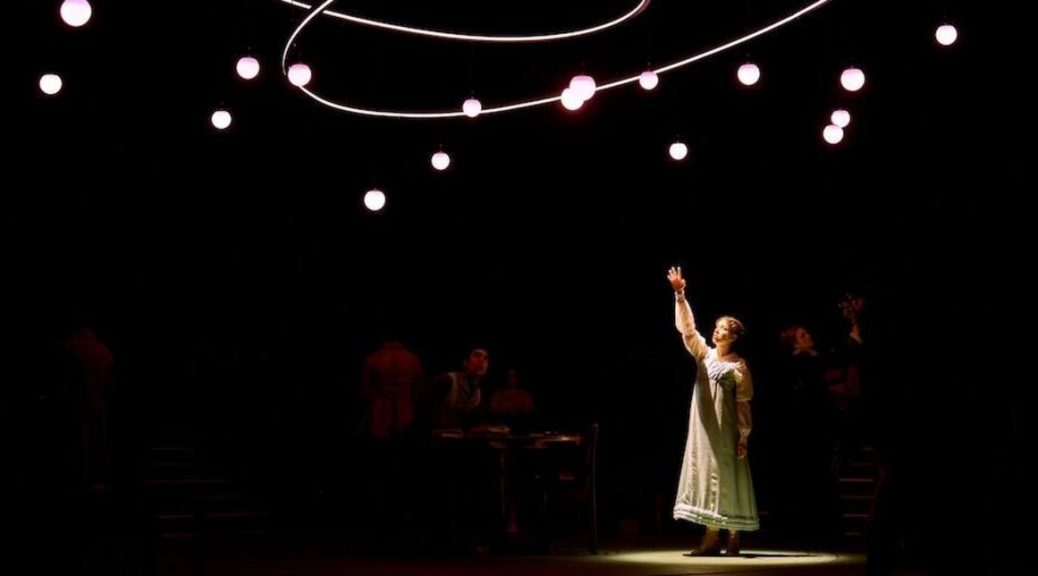
Transferring from the Old Vic into the venue soon to bear the playwright Tom Stoppard’s name, this revival of his 1993 play deserves its rave reviews. Spanning centuries, as well philosophy and culture, Arcadia is full of big ideas. Director Carrie Cracknell and her superb cast seem a little in awe of the piece, and you can’t blame them – the fusion of sex, science and culture is grand. Without doubt, the production is a first-rate affair. But it can be noted that it never questions Stoppard’s genius.

It’s hard not to be daunted, though. Stoppard’s knowledge is profound as well as extensive. A history of the Enlightenment and Romanticism in the historical sections of the play is reflected on in modern-day moments. Stoppard’s facility with language and his erudite characters make every line intelligent. Naturally, he is writing about a bunch of clever clogs who say a lot of things that make you think. It’s tough to admit, but, this can be tiring and the play, however great, is long.

The focus is an 18th-century maths prodigy called Thomasina, performed impeccably by Isis Hainsworth who manages (no easy task) to convey the girl’s youth as well as her brains. Her tutor Septimus is another smarty pants, and Seamus Dillane conveys his many attractions convincingly. Septimus is almost dangerously charismatic – he is a schoolfriend of Lord Bryon, who he makes seem a little tame – although you might wonder if more questions could be raised about his conduct.

In the present day, the couple are researched (kind of) by modern academics. Nikki Amuka-Bird and Oliver Chris get a good deal of fun from the rivalry between the two writers, while Stoppard’s structure, his provision of hindsight, is hugely rewarding. But while Chris can land laughs as the arrogant historian, the performance comes close to being a little too broad. Would his inflated ego really fool or impress anyone, especially in such rarefied circles?

All of the characters are interesting. Yolanda Kettle has a fine role as Thomasina’s mother, full of the kind of acerbic snobbery that’s great on stage, while Angus Cooper plays another maths whiz struggling with something complicated. Stoppard manages to explain a lot of ideas brilliantly and Cooper’s understated performance is a highlight. Everyone has plenty to say and there is humour and romance, the latter aided by Alex Eales’ stylish set.

Best of all, Cracknell and the staging convey a sense of wonder. There’s less melancholy than I remember from Matthew Warcus’ production in the same venue a decade ago. The focus is more on intellectual excitement, with discussions about physics and philosophy that are fascinating, if occasionally hard work. It’s hard to follow what Thomasina’s breakthrough actually is, the trials of the modern academics too. And if you wonder at least some of the time what it is they are all talking about, don’t worry – you’re not alone.

Until 12 September 2026

www.oldvictheatre.com

Photo by  Manuel Harlan

"The Deep Blue Sea" from NTLive

This week the National Theatre’s fund-raising offering is sheer class. Carrie Cracknell’s 2016 production of Terence Rattigan’s play is a traditional affair that oozes quality, with a solid script, stunning set and stellar performances.

The Deep Blue Sea is far from easy sailing. It starts with its heroine, Hester, having just attempted suicide, as the affair that broke her marriage is coming to an end. Concern over mental health has progressed since Rattigan was writing in 1952 but the playwright’s insight into depression offers much to learn from.

Rattigan’s preoccupation, however, is Hester’s passion. Her love for her husband, eclipsed by that for RAF pilot Freddie Paige, is fascinating. The romance is dangerous – this sea is stormy. Hester sees no chance of escaping a love that will not work: she and Freddie are “death to each other”. The production’s first triumph is to make sure Rattigan’s piece doesn’t descend into melodrama.

Tom Burke in The Deep Blue Sea. Image by Richard Hubert Smith
Tom Burke

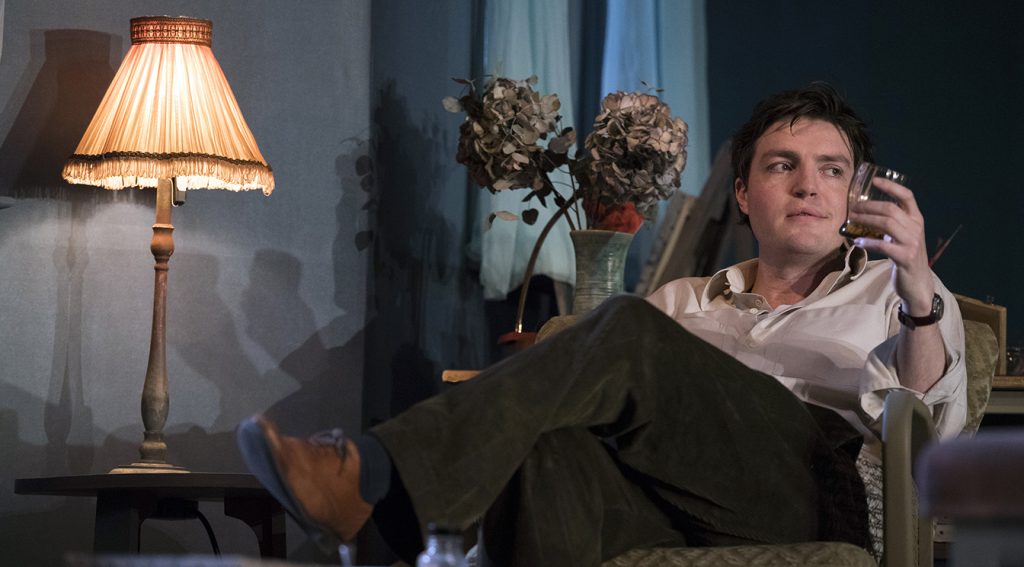
The love triangle provides strong roles for Peter Sullivan and Tom Burke, who are excellent. Their chemistry with their leading lady is astonishing. Burke is especially strong in making the occasionally odious Freddie convincingly alluring as an “homme fatale”. But the show belongs to Helen McCrory whose performance as Hester is flawless. Sharp and wry, the mix of “anger, hatred, shame” is conveyed in every move.

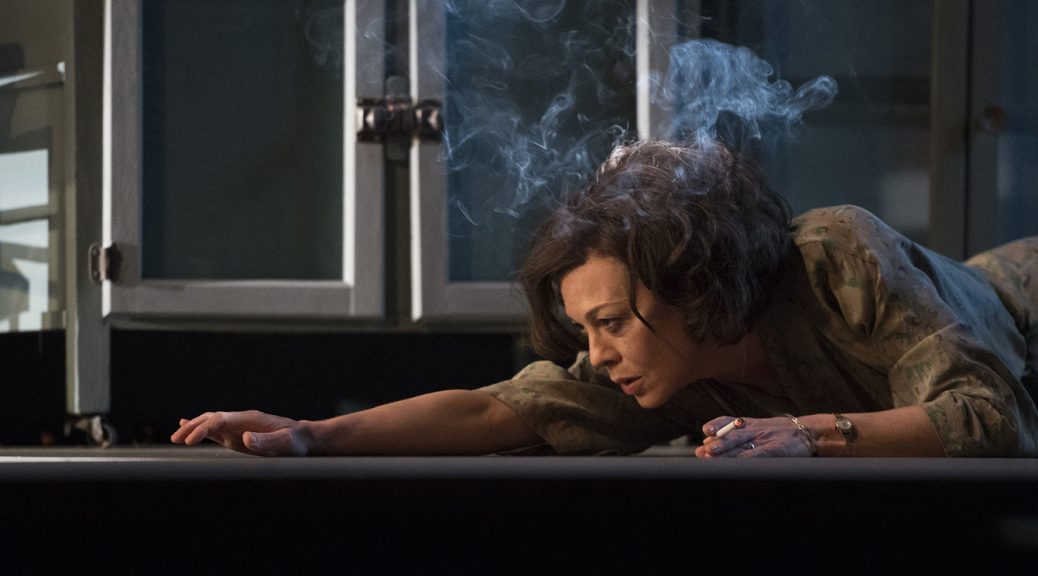
There’s a sense of British reserve behind all the action, darkly adding to the potency, but McCrory and Cracknell keep this as under control as Hester’s emotions. Moments when Hester is alone and can let go – holding her face to the light or crawling on the floor in desperation – are awe-inspiring in their emotional power.

The Deep Blue Sea image by Richard Hubert Smith
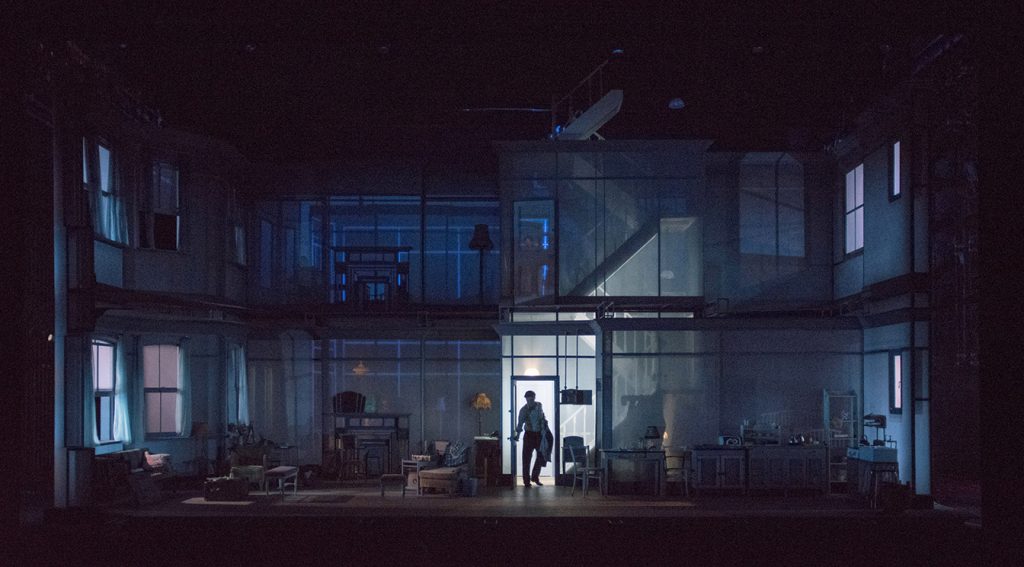
Tom Schutt’s impressive set

Focusing on a sense of community within the boarding house setting, aided by Tom Schutt’s impressive set full of solicitous neighbours, means Cracknell adds to the play. A brilliant scene where Hester is joined by the women in the piece (played by Marion Bailey and Yolanda Kettle) alters our focus. It’s a move all the more remarkable given that the play, through Rattigan’s biography, is often discussed for its gay subtext.

If interested, try to track down a copy of Mike Poulton’s play Kenny Morgan, about the suicide of Rattigan’s lover (and a fascinating work in its own right). There is a danger that The Deep Blue Sea can be overpowered by this biographical note. But Cracknell has provided a space for the play to exist independently; an achievement for any revival that makes Rattigan’s script and his legacy stronger.

Until 16 July 2020

To support, visit nationaltheatre.org.uk

Photos by Richard Hubert Smith

“Oil” at the Almeida Theatre

Ella Hickson’s time-travelling play overflows with contemporary concerns. Scene one shows the not-so-good life of Cornish farmers in 1889. It’s followed by a trip to Tehran in 1908, Hampstead in 1970 and a couple of forays into the future. All show the consequences of oil, or the lack of, in society. Each scene is played around the dynamic of a mother called May (Anne-Marie Duff), Orlando-like over the centuries, with her daughter, Amy, who appears just conceived, aged eight, as a teen and as a middle-aged woman. You can’t doubt the play’s ambition.

The danger here is in overwhelming your audience. Hickson manages to stop her play feeling like an online search for conspiracies with the help of director Carrie Cracknell’s inventive staging and some deliciously mischievous humour. It’s a self-consciously crazy affair, with an experimental feel that has a certain charm. But there are moments of confusion. The box-of-tricks set by Vicki Mortimer has distracting elements, while repeated motifs that steer the audience are effortful. And there’s also a pop song (by Justin Bieber) – an overused trend I wish would stop.

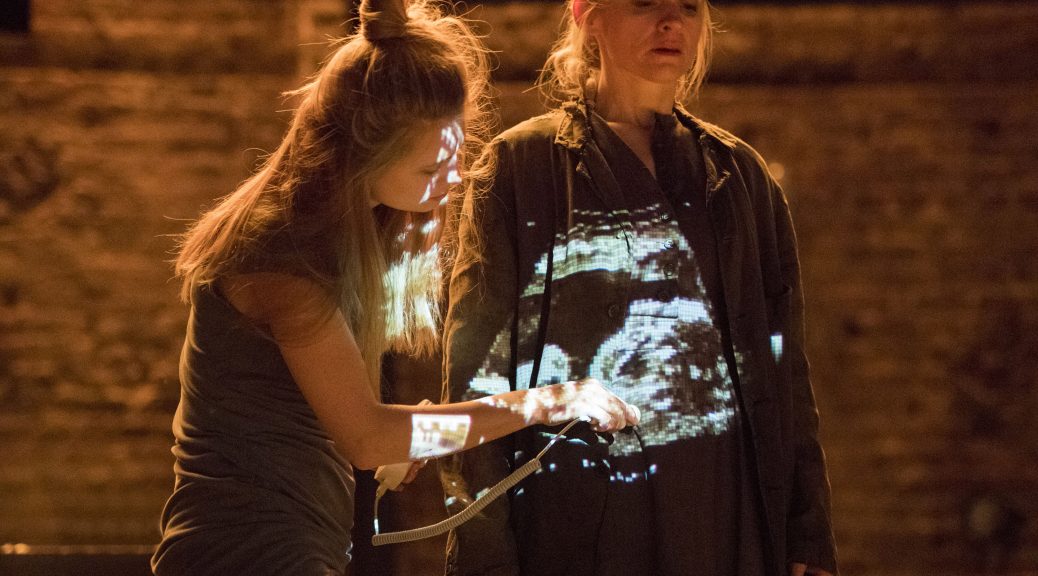
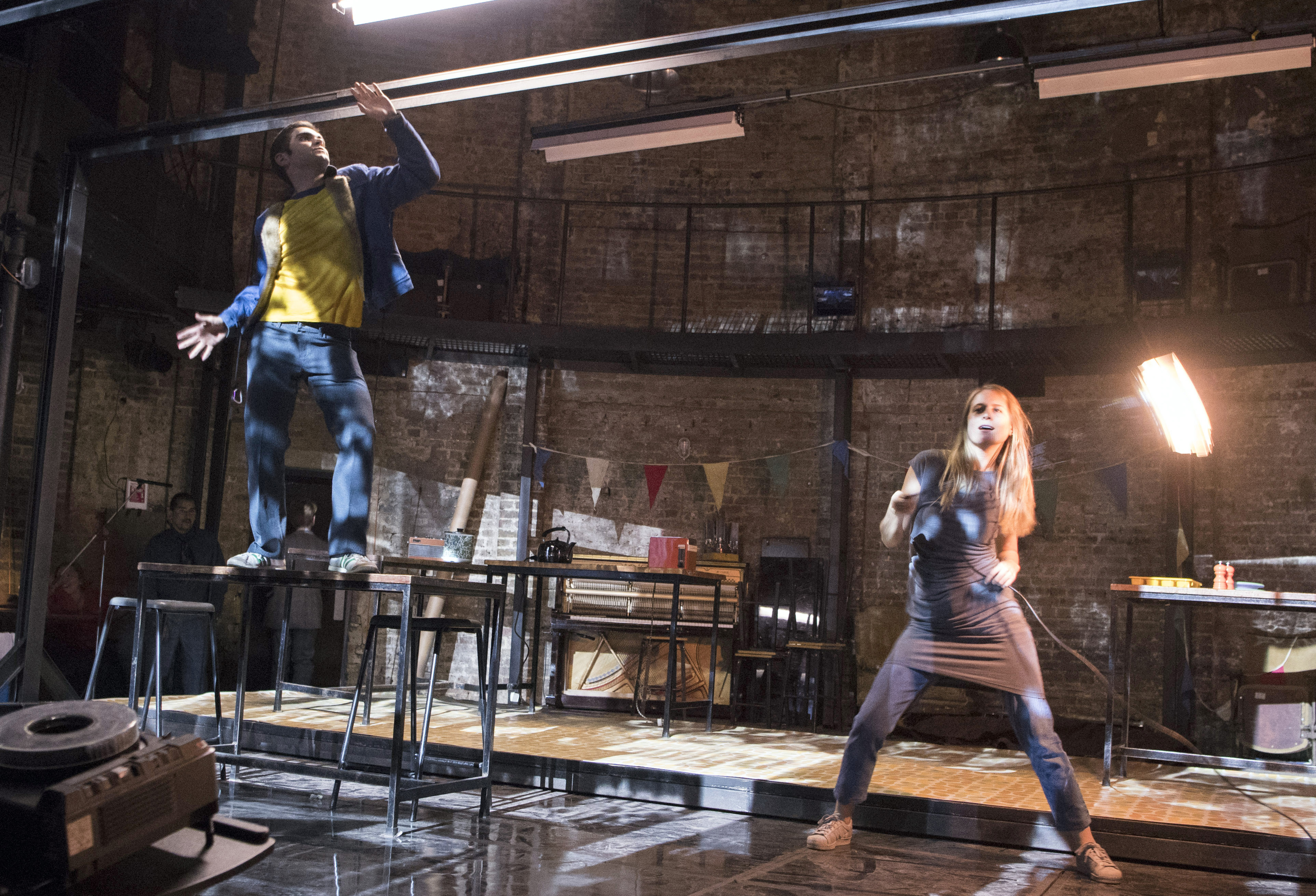
Sam Swann and Yolanda Kettle

The combination of global politics and gender studies is original and startling. Matching empire and parenthood produces some charge, not least an excoriating invective when Amy’s boyfriend (Sam Swann) is dispatched by May – the play’s best scene. But depressingly, the insights here aren’t revelatory, even if they are well delivered. Scenes set in the past don’t privilege historical accuracy, those looking to the future have silly touches; both are a little too obvious about how we live now, giving rise to a sense of naïvety. This is a young writer who sees the world getting worse and is angry about it. Fair enough. An impressive, almost intimidating energy drives the play, but it lacks control.

Oil is grim stuff. Hickson is harsh on all, not just those from the past, and the play’s themes of loneliness and narcissism, allied to the selfishness of Empire, create affecting moments. Trying to help is a confusing thing and the future will be lonely and (literally) cold. Unfortunately, cynicism overwhelms the text. It’s hard to knock a play with so many ideas, a good deal of them well executed. But it’s only Duff, seconded by Yolanda Kettle who plays her daughter over the centuries, who manages to inject some real feeling and provide a reason to see the play.

Until 26 November 2016

www.almeida.co.uk

Photos by Richard H Smith