“Sons of the Prophet” at the Hampstead Theatre

There is a Christmas tree in Stephen Karam’s play, which makes it seasonal in a way, but this smart, dark comedy is good all year round. The challenging humour is combined with deep emotions. And in a show that’s all about suffering, the treatment is remarkably light. What’s special is Karam’s distinctive voice. The writing – evidently respected in director Bijan Sheibani’s faultless production – is a unique joy.

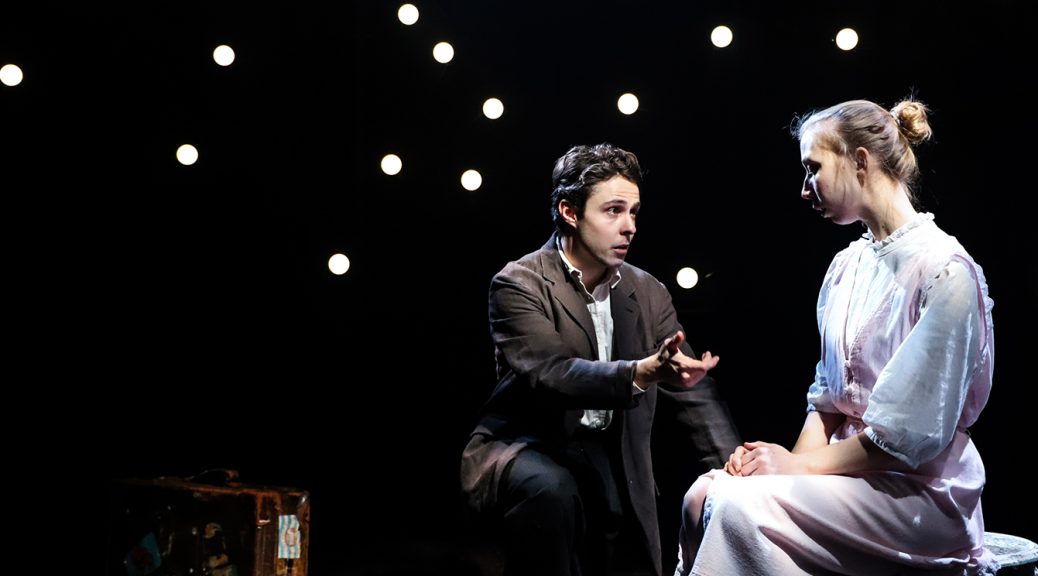
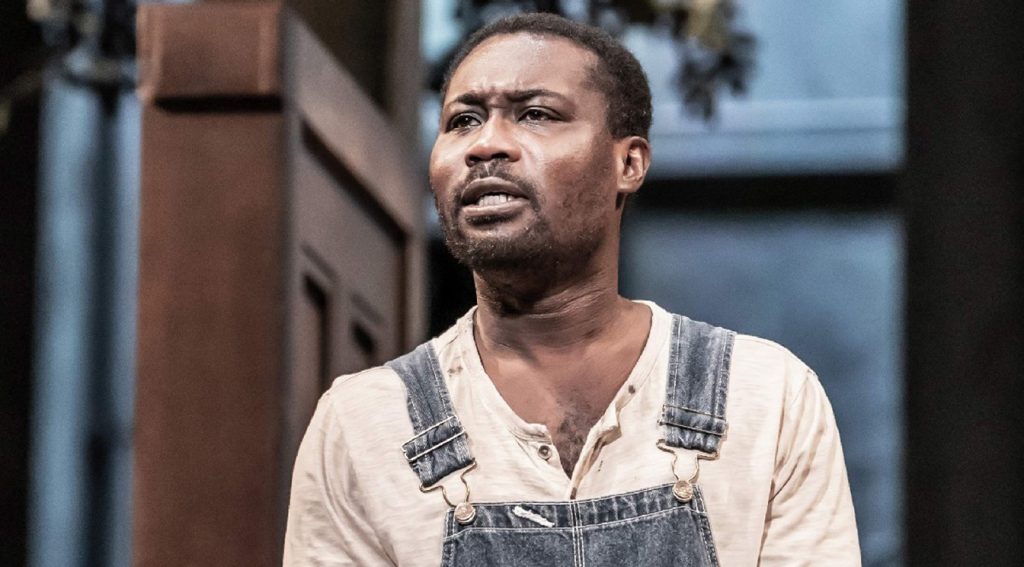
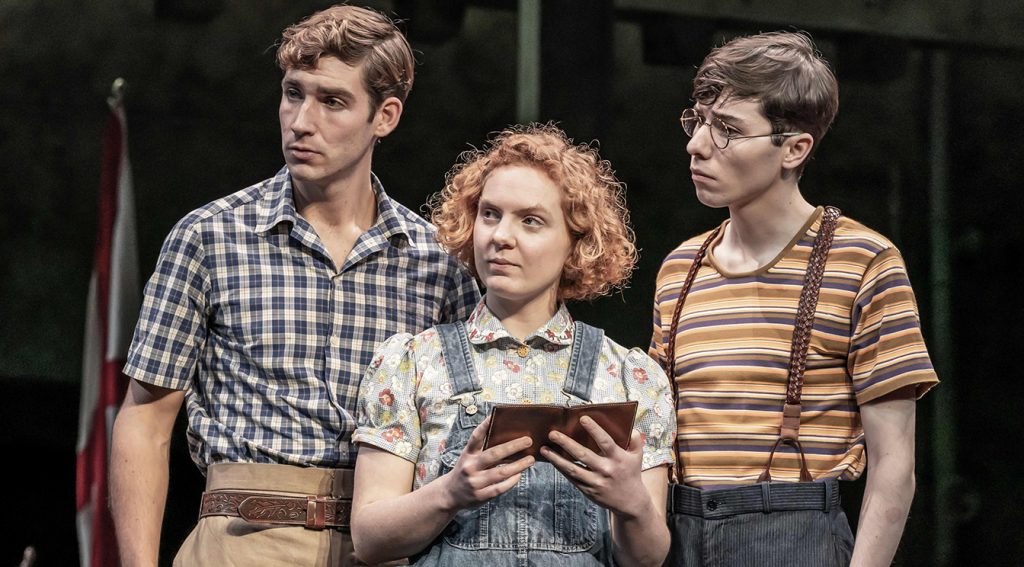
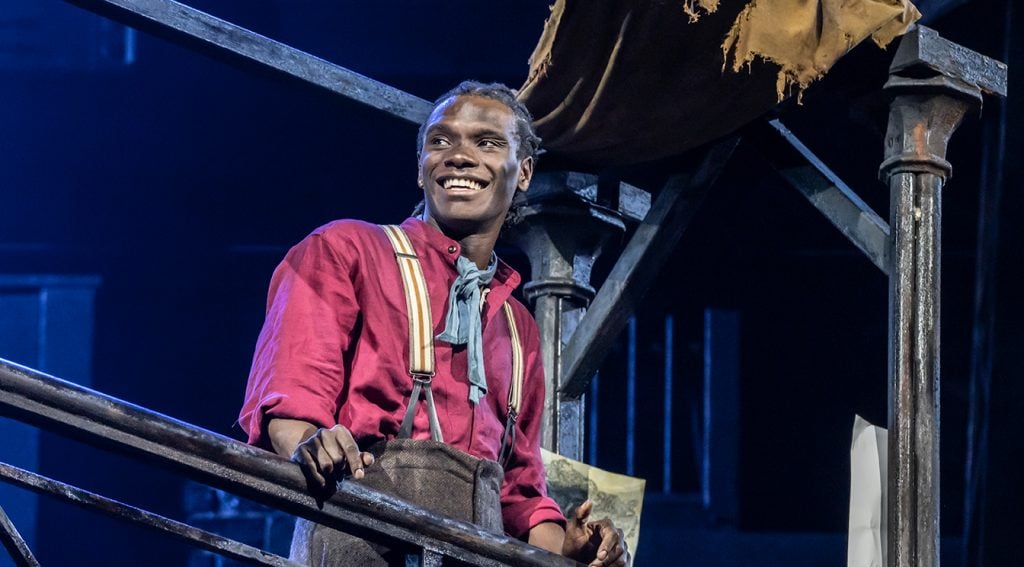
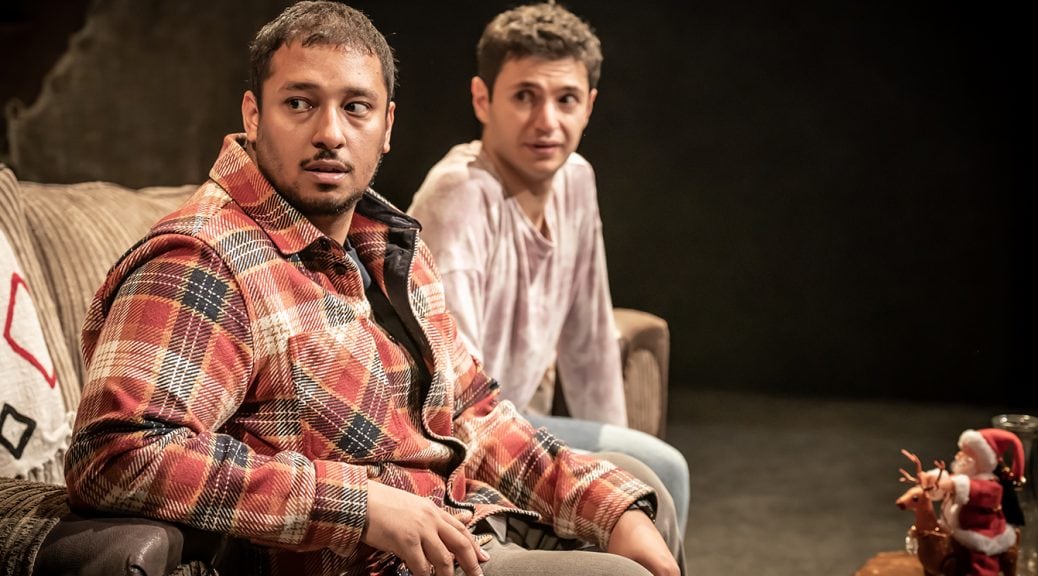
The play follows a bad year for Joseph, a fantastic role for Irfan Shamji, who is tremendous. Joseph’s father has died in a freakish accident, his uncle is ill, and his own health is a worry. So much pain… so how come so much of the play is funny? Karam depicts a Maronite family in rural Pennsylvania (reflecting his own background), stressing their averageness. While problems could overwhelm (they touch on the subjects of religion, immigration and health care), humour rises above every issue. Shamji is the foundation for the play; his dead-pan responses to a whole lot of rubbish he hears hit home every time.

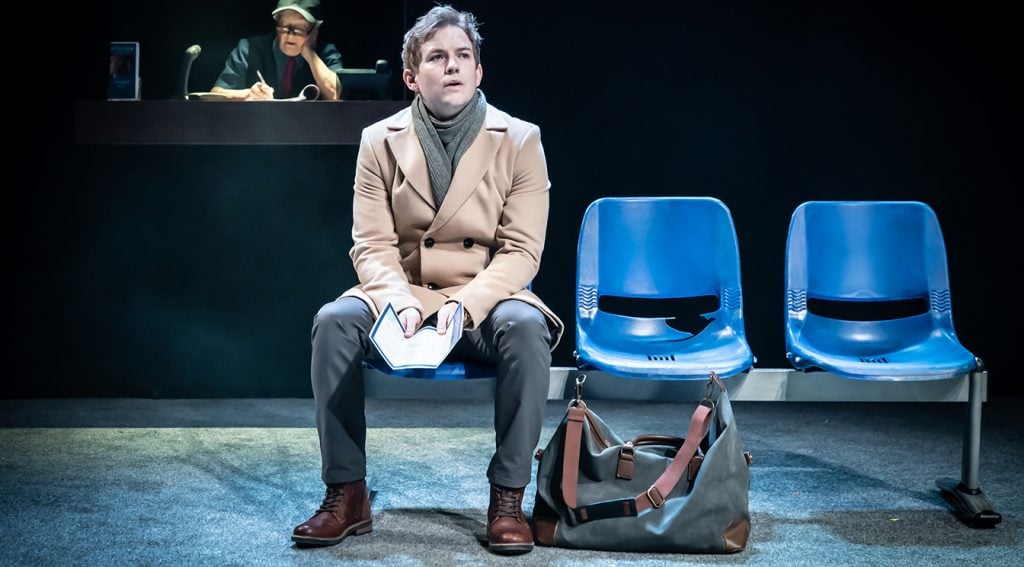
Jack Holden as Timothy in Sons of the Prophet credit Marc Brenner
Jack Holden

Joseph isn’t alone. The play provides him with a wonderfully written sassy sibling (a role Eric Sirakian excels in). Their relationship is, simply, beautiful. They squabble as much as support each other, working through worries and grief together. But Joseph does have to put up with a quartet of characters, superbly characterised and performed, who pain him. Vin, the young man responsible for his father’s death, needs help with the apology a court is making him write! Raphael Akuwudike makes the character a figure of sympathy and endearing awkwardness. Closer to home are a prejudiced uncle (Raad Rawi) and an arrogant journalist (Jack Holden). Both excellent performances steer clear of caricature. Best of all is Joseph’s boss, a “wealthy, deranged” New Yorker publisher who is also grieving… and funny with it. The latter is a role that the excellent Juliet Cowan makes her own, taking us to the heart of Karam’s humour.

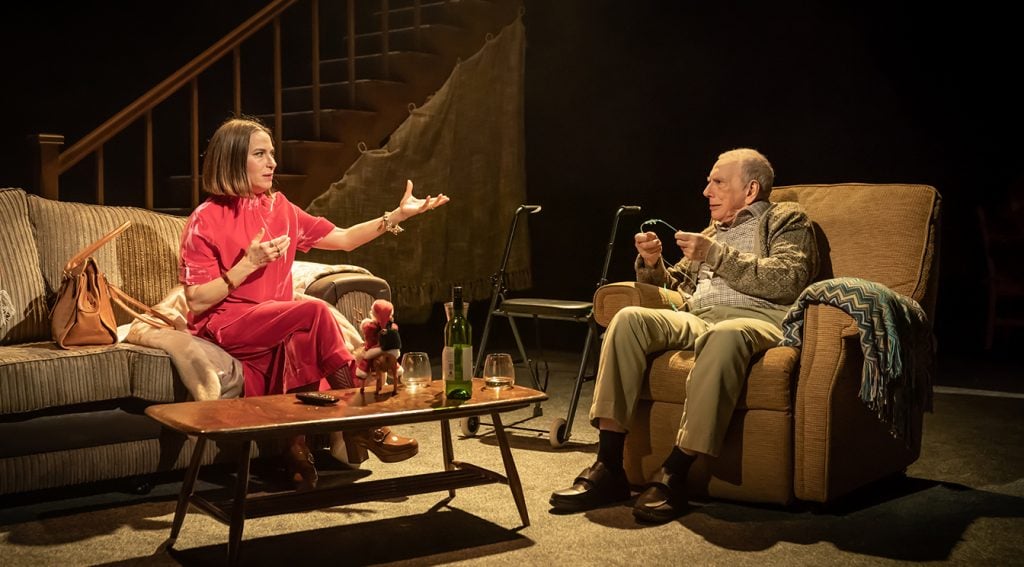
Juliet-Cowan-&-Raad-Rawi-in-Sons-of-the-Prophet_credit-Marc-Brenner
Juliet Cowan and Raad Rawi

All the characters say things they really shouldn’t. Frequently selfish, crass and embarrassing, it’s not a surprise they are funny. But note, while Karam’s satire is sharp – Joseph doesn’t suffers fools gladly even if he does suffer – there’s no toe-curling here. Cowan spouts her character’s nonsense particularly well. But, as with the other roles, there are snatches of wisdom, too. And there’s little malice. Above all, everyone’s pain is real. Suffering turns out to be a leveller. Karam may keep us laughing at unexpected moments, but his play has real soul.

Don’t make the mistake of thinking Joseph is a stoic – his frustration is palpable. The play’s title nods to Khalil Gibran, a distant relation of the family that makes Gloria sniff a book deal! But Joseph thinks Gibran is too easy. While the play has scenes with projected titles as in Gibran’s The Prophet, I suspect the Philosopher Poet is a tad declamatory a teacher for Karam’s taste. The reversal of pain to joy and the dictum “all is well” don’t convince. Given what’s going on, why should they? And yet Sons of the Prophet suggests that with honesty and warmth it is possible that we might “hurt less”. I’ll take it.

Until 14 January 2023

www.hampsteadtheatre.com

Photos by Marc Brenner

“Kerry Jackson” at the National Theatre

If you are already tired of seasonal fare – there’s a lot of Christmas carolling going on in theatreland at the moment – this clever class comedy is a gift. With no Santa in sight, it’s a smart play from April De Angelis – and briskly directed by Indhu Rubasingham – that’s full of good jokes.

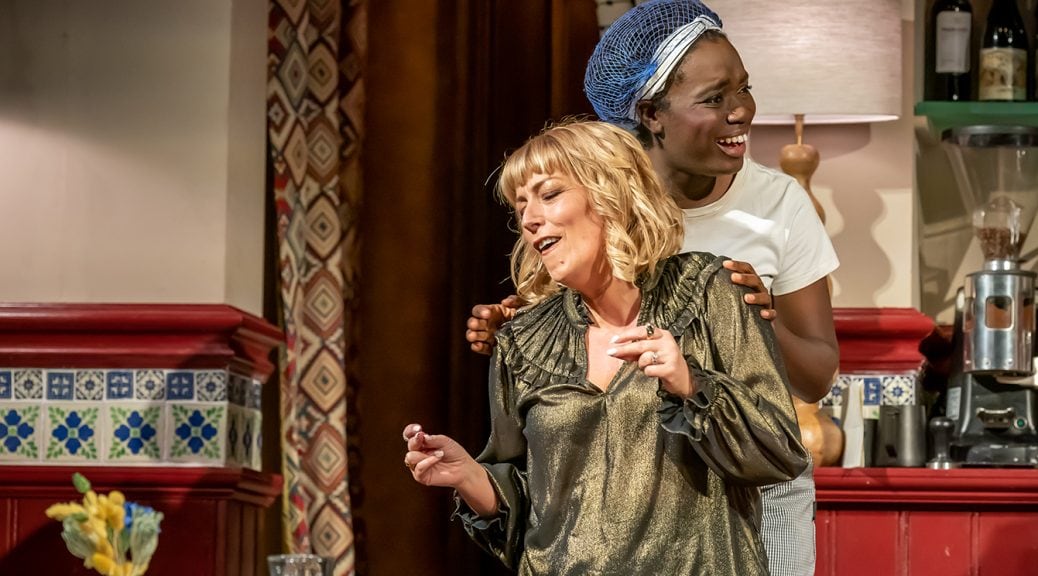
The titular heroine is a new restaurant owner and fine comic creation that makes a cracking part for Fay Ripley. Initially presented as a working-class cliché, Kerry overshares outrageously, and her every view is politically incorrect. And Kerry can be clueless – she’s called the business El Barco and put a mural of a shipwreck on the wall. You almost feel bad for laughing… but laugh you will. How much can we admire determination based on delusions?

The location is gentrified Walthamstow Village – cue class conflict – where local philosophy teacher Stephen and his Gen-Z daughter (skilfully performed by Michael Gould and Kitty Hawthorne) live. De Angelis is just as sharp about these hand-wringing liberals and the result just as funny. Since they are grieving for their wife and mother, there’s more sympathy, cleverly nurtured. But Kerry’s gaffs, delivered brilliantly by Ripley, are just all the more cringeworthy.

A homeless man called Will and Kerry’s talented chef, Athena, bring problems that connect to class and introduce topical ‘issues’ to the play. This is a piece obsessed with privilege… which can prove tiresome. Will’s objectional politics and Athena’s immigration status should give other characters pause for thought. The suggestion is that politics, both left and right, can’t deal with these real-life problems. Credit comes from dealing with the topics in depth, and creating two more great roles that Madeline Appiah and Michael Fox excel in. Yet it seems impossible for playwrights to introduce ‘privilege’ without seeming to lecture. And, in this play, that really stands out.

It’s Kerry who counts and, to De Angelis’ credit, she is an unusual figure to see take centre stage. It’s not as if a lot of sense is talked, and Kerry’s romances are improbable (there’s another love interest for her – an uncomfortable role that Gavin Spokes does well with). Furthermore, Kerry has a very nasty side. It’s a further tribute to Ripley that the character rides through a disappointing tirade. Again, Angelis is even handed – there’s a comeuppance for Stephen and a softer approach to the younger generation that shows a generous spirit. Kerry Jackson does tick boxes but is specific enough to convince (the detail is great). There’s plenty to digest, not least when it comes to Kerry’s tiramisu. And it gets a lot of laughs along the way.

Until 28 January 2022

www.nationaltheatre.org.uk

Photos by Marc Brenner

“Orlando” at the Garrick Theatre

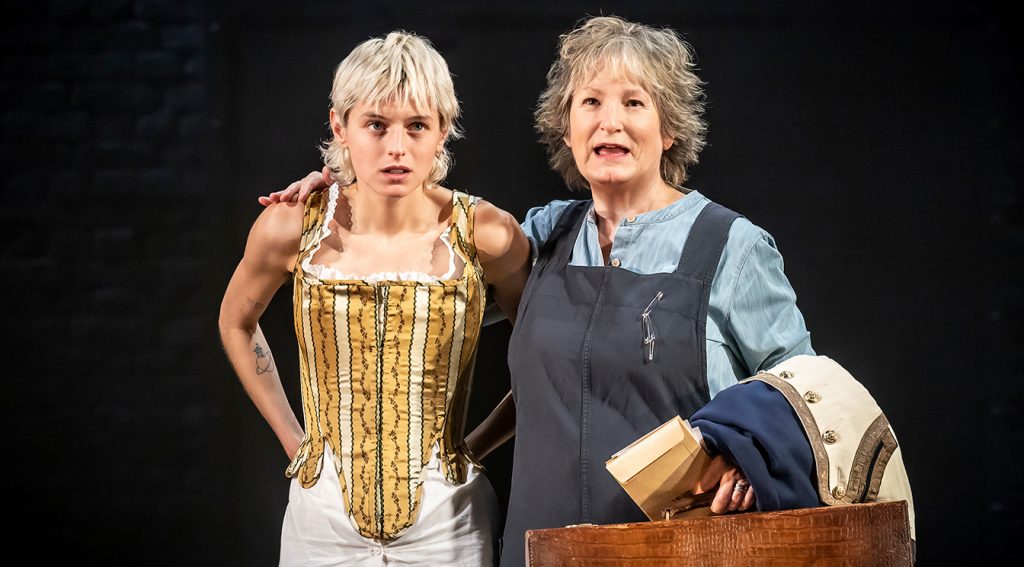
The star casting of Emma Corrin should, quite rightly, attract an audience to this new play based on Virginia Woolf’s classic novel. Corrin wears their heart on a variety of gorgeous sleeves while addressing deep questions about the identity of the gender-swapping century-traversing character lightly. “Who am I?” interests as much as torments this iconic figure, and Corrin is as energetic as emotional.

For all Corrin’s achievement, it is playwright Neil Bartlett who impresses me most by producing a piece that gives us Woolf’s work… and so much more. Starting with the Elizabethans, Bartlett brings in Shakespeare (from the sonnets to Hamlet to The Merchant of Venice), Woolf, of course, but also a nod to Chekhov, touches of bawdy and even some Kander and Ebb. It’s all tremendously clever and fun. The script is as witty as it is intelligent, as approachable as it is erudite.

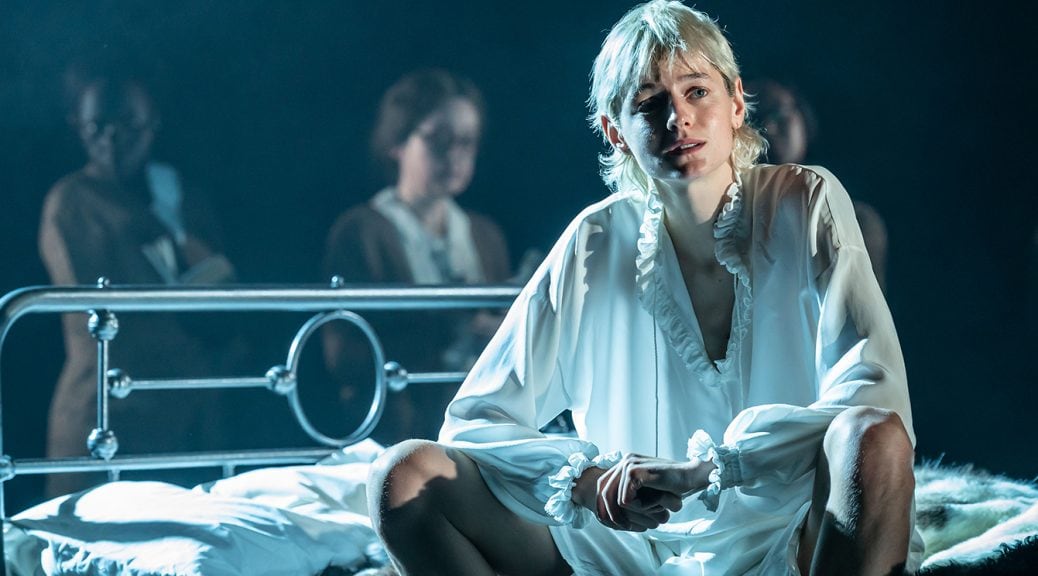
Emma-Corrin-and-Deborah-Findlay-in-Orlando-photo-by-Marc-Brenner
Emma Corrin and Deborah Findlay

The playful and mind-bending in Woolf’s novel is made to fit on stage marvellously. Michael Grandage’s superb direction takes every chance to enforce theatricality and the result is engaging throughout what feels like a very brief 90 minutes. The pace is startling, yet observations on history and prejudice are clear. The action is guided by the brilliant Deborah Findlay, who plays Orlando’s equally long-lived maid and gets some of the best gags. The sparse staging uses Peter McKintosh’s superb costumes to take us through time and show transformations in simple, effective style.

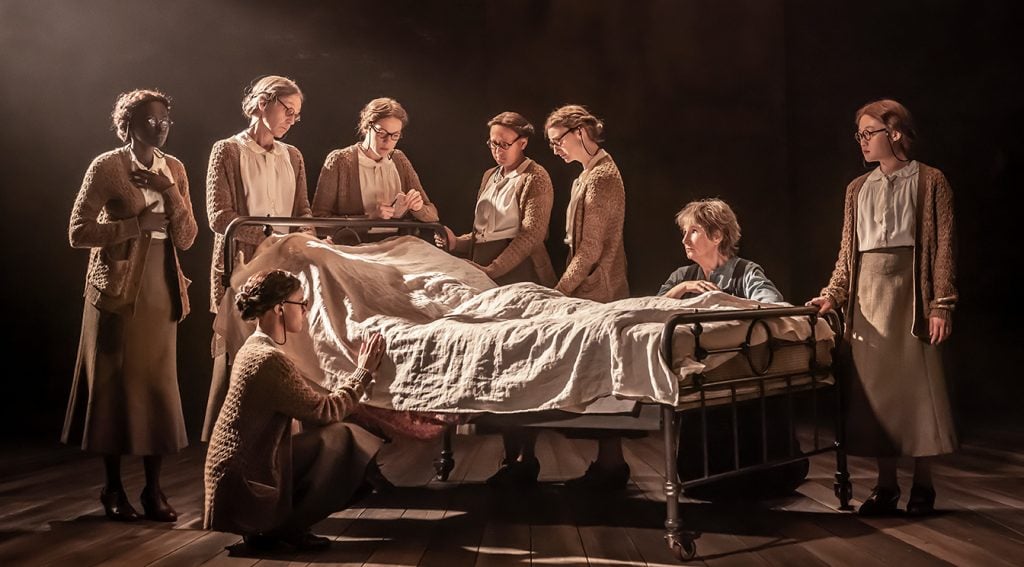
Orlando-company-photo-by-Marc-Brenner

Bartlett’s Orlando is also about Virginia Woolf. The author isn’t just a character – she is a chorus, with nine performers donning comfy cardis and specs. What would be the collective noun for that? Surely not a pack of Woolfs? The show has too much generosity for that…a Bloomsbury of Woolfs? No, a room of Virginias! The group take us through the writing of the novel, remind us of Woolf’s lectures, while Bartlett’s script shows her as an inspiration. How the work affected Woolf’s life, as well as some of her own story, is interwoven in a moving fashion. And the cast takes on a variety of other roles – different ages and genders again – providing moments in the spotlight for Lucy Briers as Elizabeth I and Millicent Wong as an 18th-century sex worker.

Fluidity is all, and Grandage appreciates that theatre can explore this particularly well. And there’s more. Orlando lives for centuries, but the search for love is always relevant. The show isn’t just contemporary in addressing “Ladies and Gentleman and Everyone”. Constraints imposed by others versus definitions claimed by oneself are examined… and exploded. Background plays a part, with a topical concern for ‘authenticity’ that seems appropriate for a piece so big: Corrin is a star very much of the moment and clearly revels in the radical ideas here. Bartlett presents fluidity on the West End stage with an unapologetic touch that is gleeful. The show becomes an optimistic celebration. Like conditions for women, a recurring theme given its due, things are getting better. All that history has a point, it’s leading somewhere. What is Orlando’s favourite time? It’s now!

Until 26 February 2022

www.michaelgrandagecompany.com

Photos by Marc Brenner

“Here” at the Southwark Playhouse

Clive Judd’s Papatango New Writing Prize-winning play bravely tries an audience’s patience. A thoughtful look at grief, and a novel kind of ghost story, the play’s tight focus and slow pace show confidence. That the domestic drama we spend time with doesn’t quite justify two hours is not all Judd’s fault.

The design by Jasmine Swan is disastrous. A gauze veil that stands for the walls of the room the play is set in proves hugely frustrating. What little the set achieves in spooky moments (thanks, really, to Bethany Gupwell’s strong lighting) cannot make up for being able to see so, so little throughout the show. It is a terrible idea.

Sympathetic direction by George Turvey and fine performances by a talented cast sustain a first hour as we get to meet Jess, her parents Monica and Jeff, and prodigal cousin Matt, returning for the first time since his grandfather’s death. Grieving is the theme, handled with sensitivity and intelligence. It takes a while to work out how much the family has fallen apart without this (too shadowy) paterfamilias.

“Lives before lives”

There’s a quiet tension and touches of humour that impress. Although the younger characters are better written, Judd handles all oddities calmly; there are plenty of frustrations as the shopping is put away. It’s all well observed, although little happens. The skill comes with revealing how deep the characters’ problems are. The growing sense of complex lives and their history is well played out.

The fulsome roles are made the most of. Lucy Benjamin and Mark Frost play the older characters with gusto. Their daughter on stage is the better role and Hannah Millward shows a flexibility that is to her credit. Sam Baker-Jones adds intrigue to his guileless character of Matt. Matt’s interest in sound recordings and hope that they might reveal voices of the dead doesn’t end up sinister – no small achievement.

Safety is the key. The Gen-Z angst that Judd skilfully details is handled sensitively. It’s interesting to hear Jess’s take on being “edgy”. And how what she and her cousin crave is security. As if to answer his characters, Judd becomes reassuring. Here is an original take on a ghost story, but don’t expect to be spooked. The play doesn’t grip – I’m not sure it is trying to – but could still prove memorable.

Until 3 December 2022

www.southwarkplayhouse.co.uk

Photo by The Other Richard

“Marvellous” at the Soho Place Theatre

For the opening of the first purpose-built theatre in London for 50 years, a production from the New Vic Theatre in Newcastle-under-Lyme, is sweet. Unfortunately, Marvellous does not live up to a title that tempts fate.

Yet Marvellous has many admirable qualities. Like its subject (and one of its writers), Neil Baldwin, the show is all about feeling good. An eccentric character who did not let any label stand in his way, Baldwin is an inspirational figure. And although it’s based on a film, director Theresa Heskins tries to make the show as theatrical as possible. Well done.

The New Vic is in the round – just like this new swanky venue. I suspect that made the transfer seem like a good idea and Heskins handles the format expertly. But an easy fit doesn’t make up for the show’s failings or even play to its strengths. The latter first. While Baldwin was a true local hero (and mascot for the football club), a lot of information about the Potteries is taken for granted. The detail would go down great where the show comes from, but the jokes (and the nostalgia) need tweaking for a wider audience.

As for failings – well, maybe that’s a bit harsh. There’s nothing wrong with Marvellous… but it is long. And it’s too clear that an easy edit would improve the show considerably.

The performances are good, especially Suzanne Ahmet who plays (mostly) Neil’s mother, and Gareth Cassidy who shows off a lot of accents. The cast nearly all take on the role of Neil through his life so there are lots of jokes about performance and the acting craft. And they are joined by a ‘Real Neil’ (Perry Moore did a great job the night I saw the show), whose naivety adds to this source of fun. Everyone is hard working, with slapstick and physical comedy thrown in.

The problem is that every joke is repeated.

It’s sweet that Neil has a ‘magic’ shopping bag that props appear from, that the cast pretend to be cupboards, or that local radio presenters who comment on the footie are impersonated. But we don’t need these jokes in triplicate. While the story is fun and Neil Baldwin winning, it does go on… and on. The ideas on inclusion and community can’t be argued with. But the delivery is laboured and the message ends up heavy handed.

Until 26 November 2022

www.sohoplace.org

“Cyanide at 5” at the King’s Head Theatre

Tom Stoppard fans might venture out to this clever two-hander to see how the playwright Pavel Kohout influenced his work. But the piece deserves a larger audience, as its excellent script debates art and history – and the interaction between the two – with economy and emotional power.

The scenario is simple – an ‘I’m your biggest fan’ kind of visit to a wealthy novelist. There’s suspense, as it’s clear the intense Irene isn’t simply nervous about meeting an author, while the urbane writer Zofia has something to hide. Peter Kavanagh’s tense direction (aided by some classy lighting) has touches of Hitchcock of Highsmith. What’s not to like already?

The power play between the two women is exciting. These are meaty roles that Lise-Ann McLaughlin and Philippa Heimann clearly relish. I’m not sure Irene needs such a strong accent (she has spent most of her life in the UK), but the delivery is good. And Zofia’s frailty doesn’t quite convince, despite an excellent performance from McLaughlin. But this is solid work on characters that could be defined solely by issues, and both performers make them full of life with a palpable sense of their histories. There are also great twists for both, as Kohout plays with who we feel sorry for, or admire, more.

“A voice to her scream”

So, lots to praise. But neither the craftsmanship nor the production’s strengths form the best part of Cyanide at 5! The real satisfaction comes from an intelligent script with a surprisingly light examination of the role of art, alongside a powerful insight into the history of the Holocaust. Kohout isn’t intimidated by either big topic. Zofia defends her book’s profitability because she gave a voice to a victim – but most of her defence is less lyrical. The big concern is authenticity. Yet we’re asked to think about the publishing industry and celebrity alongside how books affect their readers.

As for the power of art, Zofia’s book – and its questioned status as fiction – comes into dramatic conflict with real life. Irene was a refugee, smuggled out of wartime Poland. Zofia has become rich but has lost a lot. Irene’s dangerous anger is overpowering… is it fair? And how well does Zofia’s justification for her carefully revealed actions work? Kohout’s open-ended conclusion is fitting, given the sophistication of emotions and arguments presented.

Until 26 November 2022

www.kingsheadtheatre.com

Photo by Tara Kelly

“Mouthful of Fingers” at the Bridge House Theatre 

Post-apocalyptic scenarios are periodically popular in theatre but a genre with plenty of clichés can prove tricky to make your own. Playwright Andrew Mapperley adds elements of horror and fairy tale to his sketch of “lovers at the end of the world” that show originality. The play doesn’t lack ambition and is sure to hold your interest. 

 The world created is unsettling but too confusing. Detail may not interest Mapperley but an audience tends to like some, or at least, trying to work out what catastrophe has happened can be a distraction. The make-up and costumes here don’t help – there is a lot of oddity for its own sake. 

 At a guess, Chekhov is an influence – the family members we meet are all waiting and longing for something. And J.B. Priestley:  there’s a lot about reality and time as well as a kind of Inspector – a spooky role that Caitlin Lee Smith does well with. More importantly, Mapperley uses whatever inspiration to his own ends presenting a distinctive, if unrestrained, set of concerns. 

The language is stilted and elaborate with a biblical feel; none of this is to every taste, a lot of it is clunky, but the mix shows courage. The cast make the dialogue work and give performances to be proud of. Joseph Wood has the very difficult role of the family grandfather which he performs with confidence and conviction. Mapperley, Kat Stidston and Giulia Hallworth play three siblings with plenty of problems; the latter, with her tenuous grip on reality, proves far the most memorable. 

Much of the imagery is powerful and touches on the play’s biggest strength…but also weakness – the sheer amount of neurosis in Mouthful of Fingers. The end of the world and radiation are not these guys biggest problems! There are macabre stories and dreams that would delight an analyst, enough OCD to go around with sexual frustration and hemophobia for good measure. Questions of history and inheritance are also thrown in. Credit for cramming – a lot of the anxiety hits home and the atmosphere is suitably tense – but the play is overloaded. And characters come too close to being defined by their ailments. 

Elisabetha Gruener’s direction is firm and restrained – clearly appreciating the play needs no further histrionics. But it’s still a puzzle. The age and fate of Volvo, a role played tenderly by Rens Tesink, is problematic. Many of the stories started don’t have an ending, a bold idea but one most listeners find frustrating. Riddles can be intriguing – and dramatically effective – but it doesn’t hurt to help an audience out a little.

Until 12 November 2022 

www.thebridgehousetheatre.co.uk 

Photo by Hayley and Kyle Madden

“Cabaret” at the Kit Kat Club

Still a hot – and pricey – ticket since opening last December, Rebecca Frecknall’s production of John Kander and Fred Ebb’s musical is now on its third set of leading performers. And it has seven Olivier Awards to boast about. There’s a special thrill about seeing a hit – and a sense of success fills the air of the refurbished Playhouse Theatre. This one’s getting better and better.

As for the awards, Frecknall is a deserving recipient for directing such a bold show. But I’m a little surprised choreographer Julia Cheng didn’t get an accolade: her work adds tremendous interest and, with the ensemble at work before the show and during the interval, is a big part of making the evening special. Likewise, the design from Tom Scutt, whose set makes the interior lush while the costumes aid the performers, could easily have picked up a trophy.

It was the performers who gained most of the gongs, so a change of cast could be tricky for the production. But never fear. Taking the roles of Emcee and Sally Bowles are exciting young stars Callum Scott Howells and Madeline Brewer. Sid Sagar brings plenty of intensity to Clifford Bradshaw, while Vivien Parry and Richard Katz play the story’s older romance with sweet and melancholic touches.

Just as important as the famous characters, the whole ensemble have the confidence to support the leads and shine in their own right. There are a lot of eye-catching moves and humour from the Kit Kat Club’s performers. Everyone is given a moment in the spotlight and grabs it, but they work together wonderfully, particularly bringing Cheng’s dance – both gritty and otherworldly – to life.

The show has grown in humour. This was my only reservation from an initial visit. There’s more fun at the start. The number, Two Ladies, is a lot ruder! And there’s a looseness to the performances that works well. Scott Howells seems particularly relaxed and his Emcee is really enjoying himself. It’s not just a question of more fun for all. Less tension at first makes the drama to come more powerful. Cabaret was great to begin with and has now found its feet to becomes something even more special.

www.kitkat.club

Photos by Marc Brenner

“From Here to Eternity” at the Charing Cross Theatre

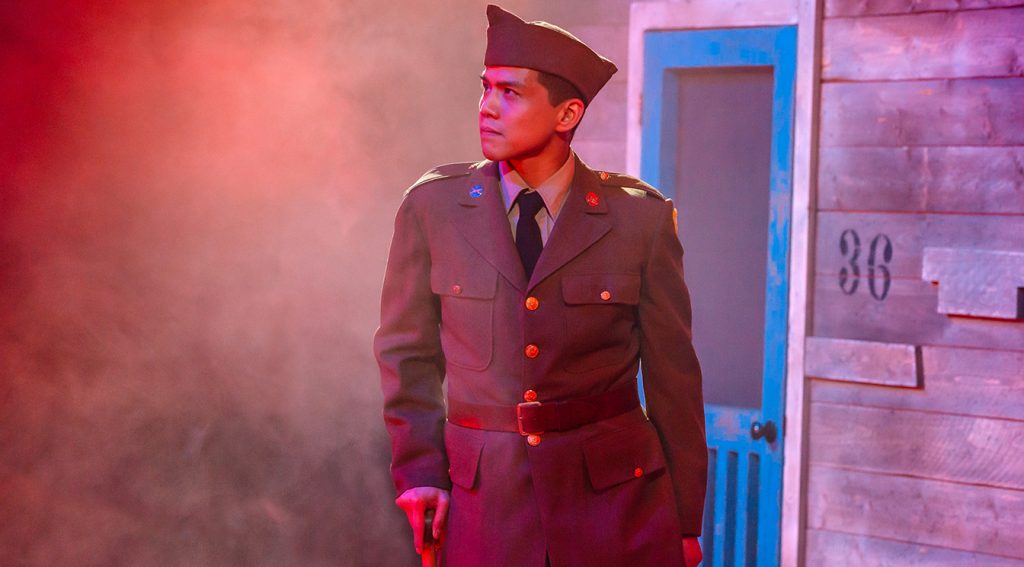
This first London revival of the musical by Stuart Brayson and Tim Rice has admirable qualities but unfortunately highlights some of the show’s shortcomings. It’s set on the eve of Pearl Harbour, where the love lives of bored soldiers, more interested in boxing than war, is a little too much like a soap opera. The book, by Donald Rice and Bill Oakes, is impressively adult but rushes the action. And the production, directed by Brett Smock, follows suit, splurging on plot and leaving little time for emotion.

The music might not be the most memorable, but Brayson’s songs are good and the score coherent. The new orchestration from Nick J Barstow is bold. And the performances are enjoyable. But the effort to inject energy is too transparent. There’s a lot of soldiers running around and far too much moving the boxes that make up a big part of Stewart J Charlesworth’s design. Scenes feel truncated – snapshots of army life – and are occasionally confusing.

Nervous rather than macho is the atmosphere. The show has something to say about masculinity and war, but gives us little time to think. The roles of Warden and Prewitt are interesting and Adam Rhys-Charles and Jonathon Bentley, who take the roles, sound great, though neither holds attention for long. We are on to another scene too quickly, too often. The build-up to the bombing, clearly designed to provide structure and tension, is overworked and underdelivers.

Jonny-Amies-(Maggio)-Photo-Mark-Senior
Jonny Amies as Maggio photographed by Mark Senior

The cast has plenty of young talent to enjoy and they acquit themselves well. There is a sense of life in the barracks that is tense if not particularly detailed. Jonny Amies as Maggio, “the Joker of the pack”, is smart not to force the show’s attempts at humour and ends up a moving figure. But more experienced performers do shine. Alan Turkington makes the role of the cuckolded Captain work. And Eve Polycarpou, who plays the show’s brothel owner, makes her number (not the strongest) stand out.

The women in the piece – despite being outnumbered – are the highlight. There are strong performances from Carley Stenson and Desmonda Cathabel as the love interests, who inject some much-needed pathos. The songs are sometimes hampered by the lyrics – serviceable yet uninspired – but the delivery is good. The singing gets better and better. But there’s still the problem of just too much going on that feels rushed through or episodic. Storylines have to be resolved even quicker than they were set up. This leaves a poor impression of good show.

Until 17 December 2022

www.charingcrosstheatre.co.uk

Photo by Alex Brenner

“Evening Conversations” at the Soho Theatre

Writer and performer Sudha Bhuchar’s new piece is like a cosy chat, maybe a work in progress for friends, with an impromptu feel. But the ruminations on Bhuchar’s life and career are structured around her sons and contain a lot of careful thought. Bringing intergenerational views, along with plenty of her own, to the stage makes the show interesting and entertaining.

Bhuchar is one cool mother. She even swears. Her rapport with the audience is fantastic and let’s hope her erudite offspring know how lucky they are. As Bhuchar adopts the voices of ‘The Sons’ (I’m sure the notes she holds capitalise that) she has fun but doesn’t condescend. Ever get a sense of awe around super smart Gen Z’s? Even if we all understand they don’t know everything. Bhuchar strikes the perfect balance between listening and questioning.

The lockdown chats Bhuchar was inspired by are serious. Deep Meaningful Conversations (inevitably abbreviated) that raise and contribute to issues around race, aspiration, and expectation. The show is moving, from her family history of immigration, to tackling current fears including austerity and climate change. And there are surprises – the younger perspectives on identity and politics display plenty of originality.

Along with insight, Evening Conversations is funny. Who rolls their eyes most – the boys or their mum – is a close call. A calm confidence makes the gentle jokes here a pleasure. Bhuchar describes the multiculturalism that is part of her life as “convivial” – a word that could be applied, if not sum up, her show. With “no story and nothing happening” this piece forces us into the moment. An appropriate aim for a yoga practitioner like Bhuchar. And that moment is both wise and charming.

Until 12 November 2022

www.sohotheatre.com

Photo by Harry Elletson