“Bat Boy” at the Southwark Playhouse

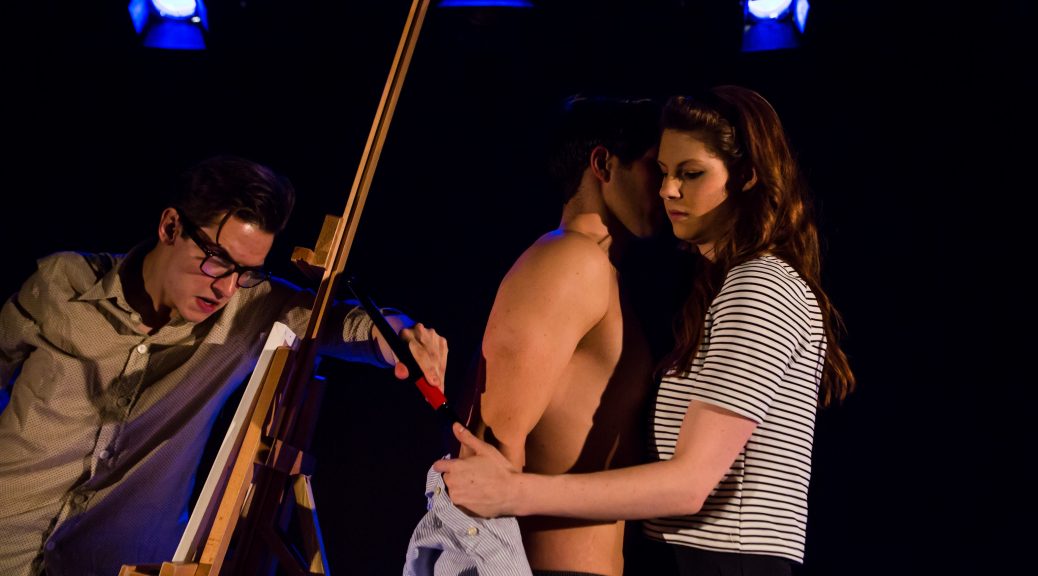
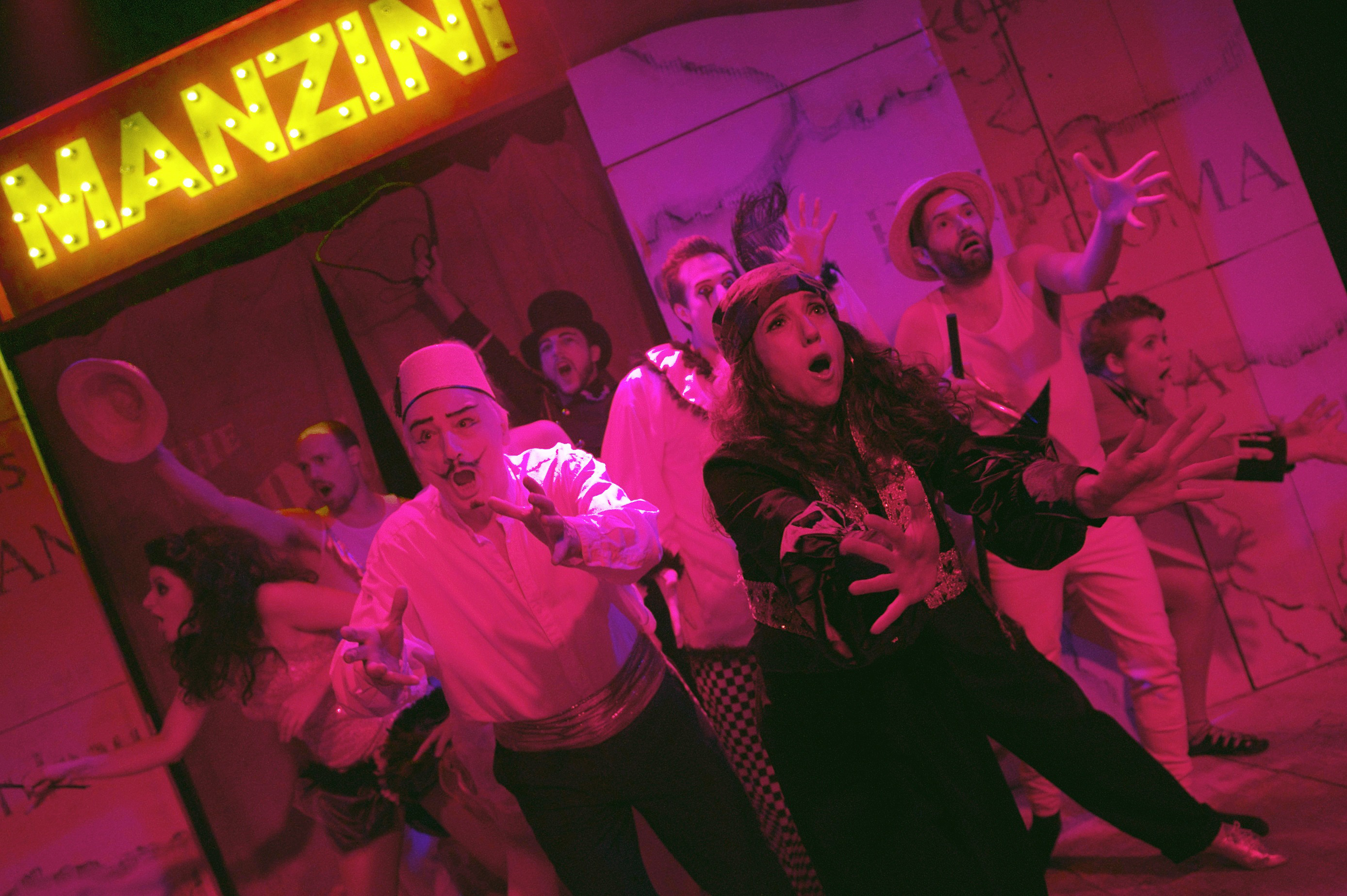
This cultish musical, which ran for a few months at the Shaftesbury Theatre back in 2004, has been revived by Morphic Graffiti’s director Luke Fredericks and designer Stewart Charlesworth. Its camp, fringe feel has an appeal, taking a tabloid fantasy of a boy who is partly a bat and having fun trying to make such an outlandish premise fly.

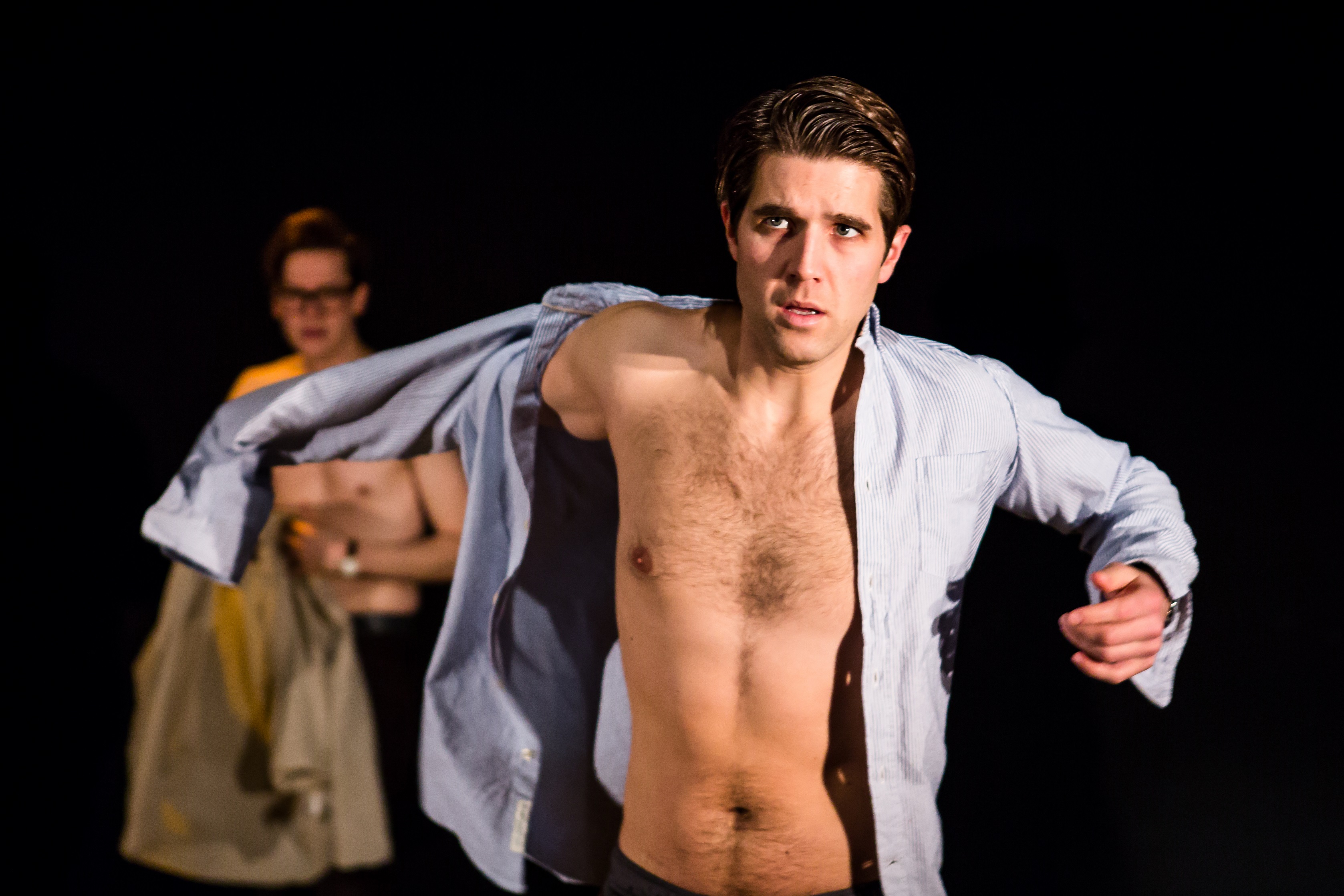
Bat Boy is really a standard misunderstood monster story. Our sympathies lie with the young orphan, renamed Edgar and taught to speak RP, while fun is made of the small town hicks our vampiric hero seeks approval from. It’s a strong role for the titular character, played with athleticism by Rob Compton, who earns the distinction of sounding good with fangs.

Matthew White and the excellent Lauren Ward perform well as the local vet and his wife, the Parkers, who give Bat Boy a home. It gives away too much plot to detail their relationships but a lot goes on and it’s interesting enough. Touches of schlock horror and tastelessness abound and the show revels in these, injecting enough comic book touches to get away with being so crass.

But the show isn’t as funny as it could be. There’s a brilliant use of stuffed toys, but overall Charlesworth’s B-movie aesthetic relies too heavily on impressive projections, which becomes tiresome. Some performances are the wrong side of overblown, with the notable exception of Georgina Hagen, who excels as the young Shelley Parker, the show’s most sympathetic character.

The book by Keythe Farley and Brian Flemming is bravely outspoken in its contempt of ‘Christian charity’. The show is full of the cynicism so popular in musicals right now (think Book of Morman and Urinetown) and not much to my taste. Still, though religion and prejudice make easy targets, the aim here is sure and the bull’s-eye hit.

The music is pure pastiche, but damn clever. Composer and lyricist Laurence O’Keefe knows how a musical works, with particularly rousing numbers around the interval. The lyrics are impressive too – fast, funny and polemical. The sheer cheek of the plot carries Bat Boy a long way, to a positively Jacobean finale, so it is easy to imagine many will, you’ve guess it, be batty for this show.

Until 31 January 2015
www.southwarkplayhouse.co.uk

“Bull” at the Young Vic

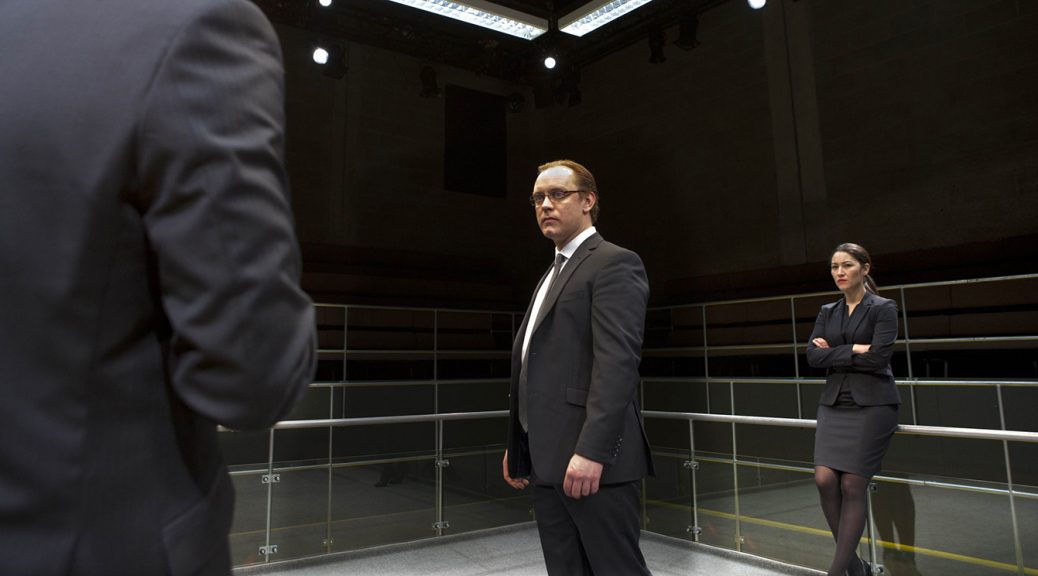
Mike Bartlett’s play Bull is a scorching consideration of corporate culture and bullying at work. Under an hour long, it’s remarkably powerful, as three colleagues do battle for two jobs. It’s an unfair contest, with Tony and Isobel ganging up on the “drip drip” Thomas, using underhand tricks and downright menaces to torment their co-worker into becoming the eponymous beast – and we all know what happens to bulls in the ring.

This fight is gruesome. Though darkly funny, the play is the stuff of nightmares for office workers. You really do want to hit Adam James, his performance as team-leading Tony is so good, while Eleanor Matsuura, as Isobel, gets better each moment of the show. Sam Troughton takes the part of Thomas, careful not to make him too sympathetic a character, his violent breakdown at the play’s finale superb.

Clare Lizzimore’s direction is spot on, but the show is all about Bartlett’s skillful script. Starting out the wrong side of exaggerated, with witty barbs you can just about imagine and Neil Stuke’s excellent appearance as the ruthless boss, more convincing that Alan Sugar (in real life), Bartlett becomes increasingly daring. Thomas loses the job but his humiliation isn’t complete. Even though the competition is over Isobel circles her prey with an offensive rationale that makes a chilling conclusion.

Until 14 February 2015

www.youngvic.org

Photo by Simon Annand

“The Talented Mr. Ripley” at the New Diorama Theatre

The Talented Mr. Ripley is 60 years old. Continually popular, Patricia Highsmith’s superb novel has now been brought to the stage by The Faction Company. The work of director Mark Leipacher, this is a sterling adaptation, focused on Tom Ripley’s inner life, exploring his murderous adoption of Dickie Greenleaf’s identity, and dramatising his spiraling actions in thrilling fashion. It’s a respectful affair, arguably slightly too long, but eminently theatrical. Ripley wanted to be an actor after all and he’s a consummate performer – continually adapting roles and using fantasy to project himself into other lives – it makes sense to see him on stage.

Adam Howden as Dickie Greenleaf

Leipacher’s direction is bold and inventive. A bare, square, raised platform with a pit at its centre is superbly lit by Chris Withers and serves as a base for the cast to perform on, around and under. Scenes are ‘cut’ and restaged, a neat disorientation device taking us inside Ripley’s fraught imagination and adding tension. The Faction make for a strong ensemble with Adam Howden suitably charismatic as the wealthy Greenleaf heir and Christopher Tester sternly convincing as his father (in spite of being too young for the role). There’s also a subtle performance from Natasha Rickman as Dickie’s girlfriend, Marge.

The script emphasizes Ripley’s insecurities. A fair choice: Ripley is one of those fictional characters complex enough to merit varied interpretations. Like Matt Damon in Anthony Minghella’s 1999 film, this Tom feels inferior, “incompetent” even, far from Highsmith’s accomplished anti-hero. And in this demanding title role, Christopher Hughes is fantastic, delivering the complex plot and emotions with dynamism and a fitting shrillness. He is particularly strong when evoking Ripley’s paranoia, making the most of the venue’s intimacy. One of the joys of a fringe show is seeing an actor destined for big success: I have no doubt we will see a lot more of the talented Mr. Hughes.

Until 28 February 2015

www.newdiorama.com

Photos by Richard Davenport

“The Chronicles Of Kalki” at the Gate Theatre

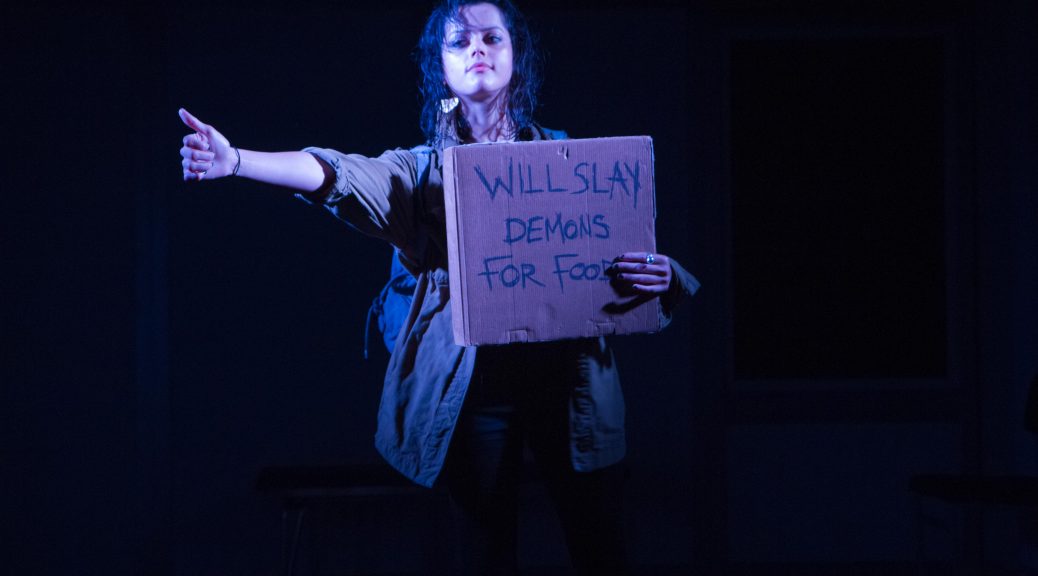
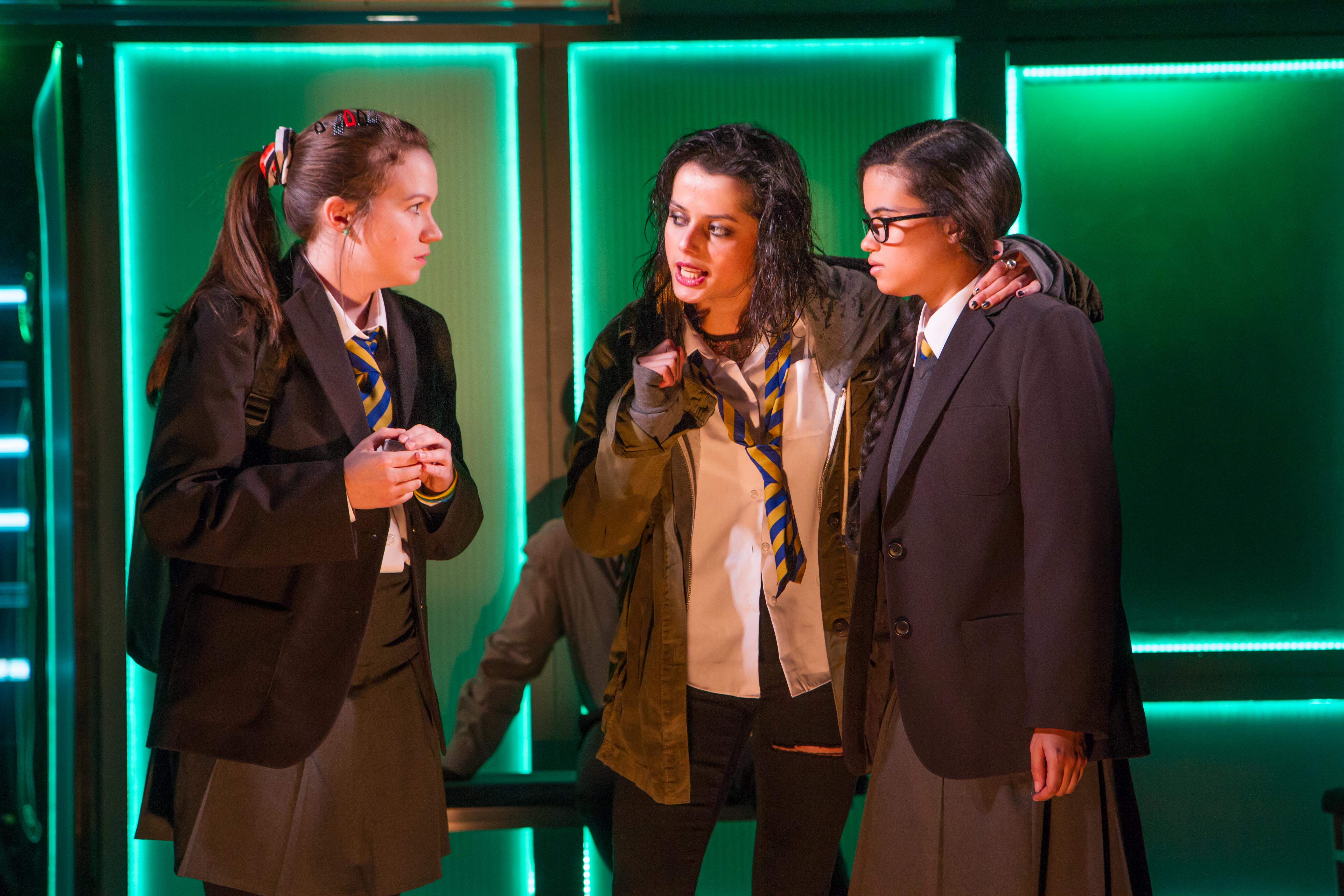
Aditi Brennan Kapil’s play is a teenage drama with an unusual twist: Kalki, a new arrival at school, might just be the tenth incarnation of Vishnu. When she disappears just as mysteriously as she arrived, a police investigation ensues, creating an intriguing and entertaining piece that’s easy to recommend.

The Chronicles of Kalki at the Gate Theatre. Angela Terence (Girl One), Amrita Acharia (Kalki), Jordan Loughran (Girl Two). Photo credit - Helen Murray (4)
Angela Terence, Amrita Acharia and Jordan Loughran

With taut direction by Alex Brown, the chronicles zip along with humour, mystery and edginess. Kalki takes her schoolmates shoplifting and to a house party, injecting danger and a confidence into their lives that inspire a renegade status. She’s not the kind of girl you’d want you daughter to hang out with, but she’s hard to resist. If, as in my school, religious instruction was entirely C of E, this “Hindu window” can be a little confusing but it’s always interesting.

Engaging, well-performed roles secure the work. Angela Terence and Jordan Loughran play Kalki’s young friends: their relationship convincing in its insecurity. A capable Trevor Michael Georges is the amiable policeman tasked with questioning the girls about Kalki’s disappearance and he serves as a foil to their youth. Appropriately, Amrita Acharia is the centre of attention, giving a divine performance: sexy and dangerous, elemental and charismatic. A skittish short play, with dialogue as mercurial as its title character, The Chronicles of Kalki are more convincing than you’d think possible, creating a rich and memorable evening.

Until 31 January 2015

www.gatetheatre.co.uk

Photos by Helen Murray

“The Grand Tour” at the Finborough Theatre

Those hoping to find a formula for the success of a musical may be confused by the The Grand Tour’s poor reception on Broadway. The 1979 show by the legendary Jerry Herman is only now receiving its London premiere at the tiny Finborough Theatre, and I can’t for the life of me work out why. The book by Michael Stewart and Mark Bramble is more than serviceable, while the music and lyrics by Herman are superb. The show’s themes certainly live up to its ambitious title.

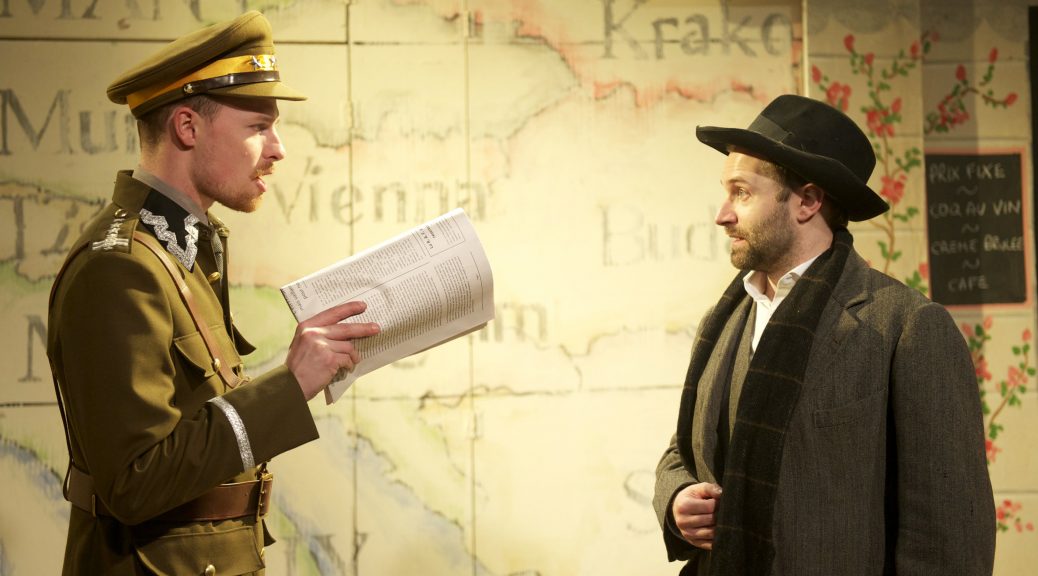
OK, so The Grand Tour is old fashioned. Maybe it’s not that original either. And the escapades of Jewish intellectual Jacobowsky and Polish Colonel Stjerbinksy as they flee from the Nazis are sometimes a little silly: there’s a circus, a wedding and even some nuns. But these flights of fancy fill a desperate journey with colour – even a scene on a crowded train is vivacious – and Herman’s score looks past dark events to embrace affirmation.

The Grand Tour 5 Natasha Karp, Nic Kyle, Vincent Pirillo, Michael Cotton, Samuel J Weir, Laurel Dooling Dougall, Alastair Brookshaw and Lizzie Wofford photo Annabel Vere
Natasha Karp, Vincent Pirillo, Michael Cotton, Samuel J Weir, Laurel Dooling Dougall and Lizzie Wofford make up a powerful ensemble

Alastair Brookshaw succeeds in making the unbelievably optimistic Jacobowsky heroic, while Nic Kyle gives Stjerbinsky more dimensionality than he’s written with. The finest moments come with a gentle love triangle around Marianne, the Colonel’s fiancée, played by the charming Zoë Doano. The excellent Thom Sutherland directs a powerful ensemble and Phil Lindley’s set is cleverly cartographic. Sutherland works flawlessly in small venues and The Grand Tour deserves big success.

Until 21 February 2015

www.finboroughtheatre.co.uk

Photos by Annabel Vere

Winter’s Tales at the Sam Wanamaker Playhouse

With a venue as special as the Sam Wanamaker Playhouse, it seems fitting to host a variety of events. The reconstructed Jacobean indoor theatre, which opened last year adjacent to The Globe, has already staged opera as well as plays and an eclectic mix of musical concerts. The latest idea is Winter’s Tales – a series of readings by candlelight with musical accompaniment.

Stories by Daphne du Maurier brought the season to a spine-chilling conclusion, following on from work by Anton Chekhov, Katherine Mansfield, D H Lawrence, James Joyce and F Scott Fitzgerald. Harriet Walter gave a great reading, joining a list of equally impressive previous performers: Penelope Wilton, Deborah Findlay, Roger Allam and Aidan Gillen.

Walters read The Happy Valley, a surreal ghost story set in Cornwall, and The Birds, which was surprisingly just as taut and exciting as Hitchcock’s film. Being read to is an incredible indulgence – the perfect Christmas treat. And while the dark nights really add to spooky stories, it’s to be hoped the theatre continues these events so we can have this blissful experience all year round.

www.shakespearesglobe.com

Photo by Peter May

“Almost, Maine” at the Park Theatre

Widely performed in its native United States, John Cariani’s Almost, Maine has received its first UK production at Park Theatre. A series of scenes, with different couples facing the exigencies and ecstasies of love, it’s about ordinary people in a small American town facing up to romantic problems. The potential for sentimentality is notable, so director Simon Evans uses his talented cast to make the proceedings clear rather than cute.

Almost Maine park facebook page 2
Ian Keir Attard and Patrick Walshe McBride

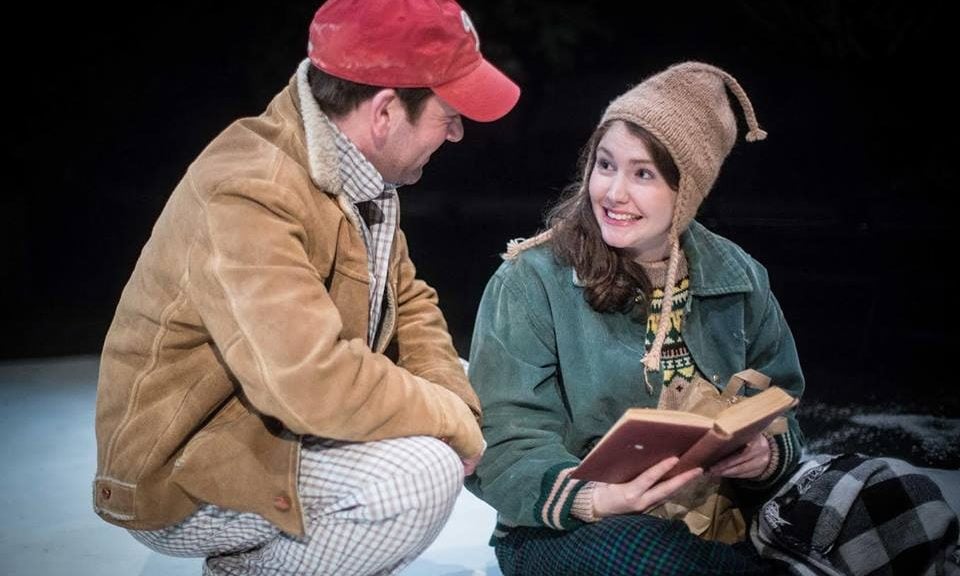
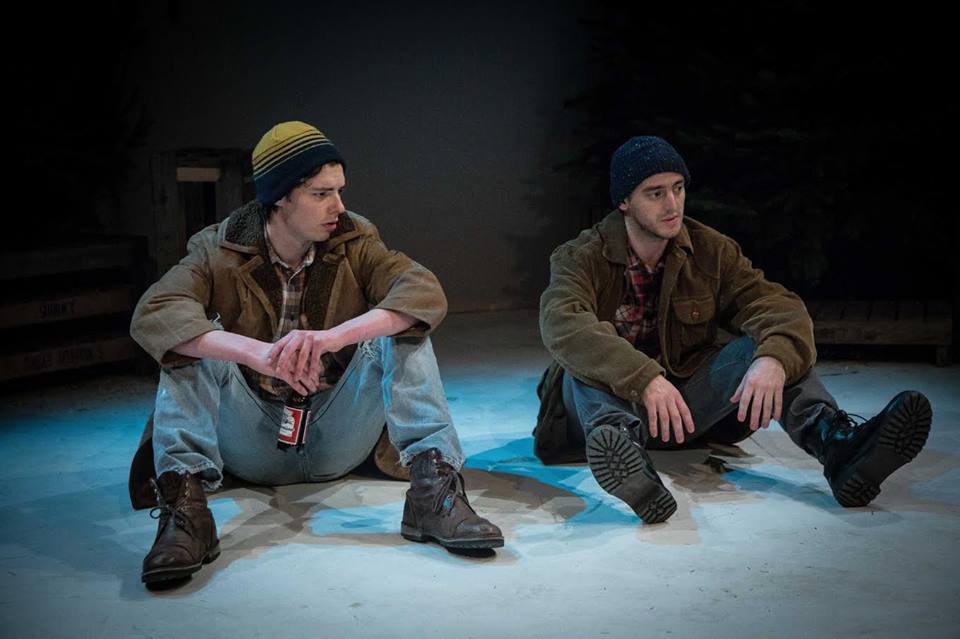
The little stories might be divided into two types. There are those that deal with recognisable situations: an awkward meeting between ex-partners the night before one of them marries, where Susan Stanley conveys her character’s nervous energy perfectly, or the courtship of a tomboyish girl, which gives Lucy Eaton a chance to shine. Then there are scenes with a more surreal edge. Melanie Heslop is wonderfully cookie as a woman who carries her broken heart around in a paper bag. Hamish Clark is splendid in a scene where his character’s long-term girlfriend brings all the love she gave him back – in mail sacks. Ian Keir Attard and Patrick Walshe McBride have a great moment playing friends who literally fall in love, incapable of standing upright, made acrobatic by the truth dawning upon them.

It might frustrate you that Almost, Maine is a collection of sketches. There are unifying factors – characters are mentioned in other stories, random kisses are common and the weather is always cold – but these feel contrived. Also, it’s a little difficult to place the show in time, which bothered me. And though its hardly Cariani’s fault his effort to inject ‘magical moments’ might remind you too much of a chocolate box. I preferred the more bizarre scenes but it’s safe to say there’s something quality here for everyone – what’s your favourite favourite?

Until 17 January 2015

www.parktheatre.co.uk

“The Merchant of Venice” at the Almeida Theatre

Rupert Goold’s production of The Merchant of Venice is an eye-catching and entertaining take on Shakespeare’s play. Moving the action from Venice to Vegas, complete with show girls and slot machines, is in keeping with this energetic director’s past work. Since both cities focus on money, more specifically greed, the relocation isn’t crazy, and the parallel between gambling and the risks the merchant Antonio takes really works. So Las Vegas adds fun. Unfortunately, this means some forced interpretations of the text, particularly in the recollections of the servant Lancelet, played by a very game Jamie Beamish transformed into an Elvis impersonator. It’s definitely something you’ll either love or hate.

On firmer ground, Goold stages the competition for Portia’s hand in marriage as a tacky quiz show – think Deal Or No Deal. Portia (Susannah Fielding) and her maid, a co-host, are airhead hillbillies, while suitors choose which box contains permission to marry, on TV. Live recording the action on stage feels like a frill, but the approach adds drama to repetitive scenes that can be dull and develops a theme of role-playing nicely. In the courtroom scene, when Portia comes disguised to defend Antonio, it’s thankfully not a case of Legally Blond, but real desperation she conveys. Portia’s insistence on the law becomes vicious, in keeping with a strain of shock tactics that make the scene gripping.

Ian McDiarmid as Shylock

So here’s the real surprise of the evening. This Merchant of Venice boasts Ian McDiarmid, making a welcome return to the Almeida and never to be missed on stage. Also, the excellent Scott Handy does a superb job as Antonio, the still centre of this often stormy show. But it’s Fielding and the role of Portia that really intrigues. The play’s anti-Semitism is clear and bravely dealt with, yet Goold seems more concerned with its misogyny. The final scene, a happy reunion at Belmont, often a cozy rounding up of the play, has a suggestion of violence towards the young brides that leaves an uneasy feeling. As Portia dons the blonde wig she wore on television, clearly destined to an inferior role in her new marriage, it appears she has lost her bet.

Until 14 February 2015

www.almeida.co.uk

Photos by Ellie Kurttz

“Golem” at the Young Vic

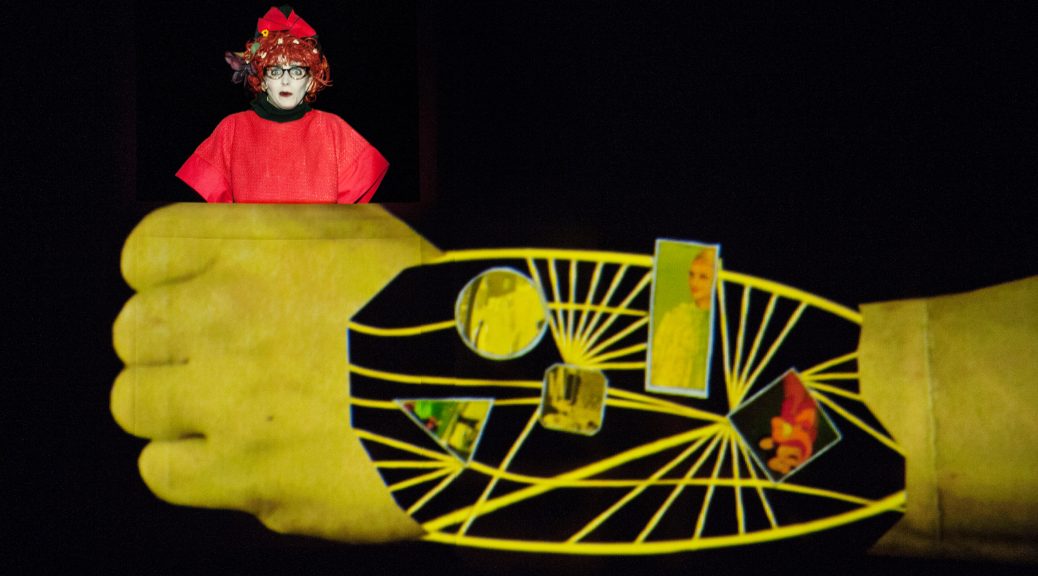
1927’s new work, Golem, is currently showing at the Young Vic. The company, which combines live performance with animation and film, creates spellbinding works with stunning visuals and a wicked sense of the comic, both characterised by a unique style and independence of thought. Gustav Meyrink’s novel about Golems ­– clay figures that can ceaselessly follow human commands – is the inspiration for the show, and creates a springboard for a witty and insightful commentary on modern technology.

The magical Golem, who revolutionises the world, morphs from an all too anatomically correct mute to an updated version, a Klaus Nomi-styled imp, who knows what you want before you do and tells you about it. The illustrations by Paul Barritt are a marvel, and the interaction with them by the talented cast is a joy. Blink and you’ll miss the rich details. The accompanying music by Lillian Henley contributes atmosphere and humour. You’ll want to be all ears, as well, for the clever verse script by writer and director Suzanne Andrade, which I would love to take home and study.

Wry and wise, it’s the ubiquity of the Golem and its corporate owners, a chain called ‘Go’ that upsets most. The home, office and town drawn by Barritt change as Go’s logo takes over. Things become cleaner, maybe safer, but a lot more homogenised – sounds familiar? 1927 knows none of us is immune, not even the show’s punk band, Annie and the Underdogs, which is eventually co-opted (anarchy is also a lifestyle choice). But not all is gloom. This theatre company alone is contrary enough to show that all is not lost – 1927 at least wants to think for itself and does so with style. As Robert comments after the first attempt to sell him Golem, it’s intriguing, and it rhymes.

Until 31 January 2015

www.youngvic.org

Photo by Bernhard Muller

“Behind The Beautiful Forevers” at the National Theatre

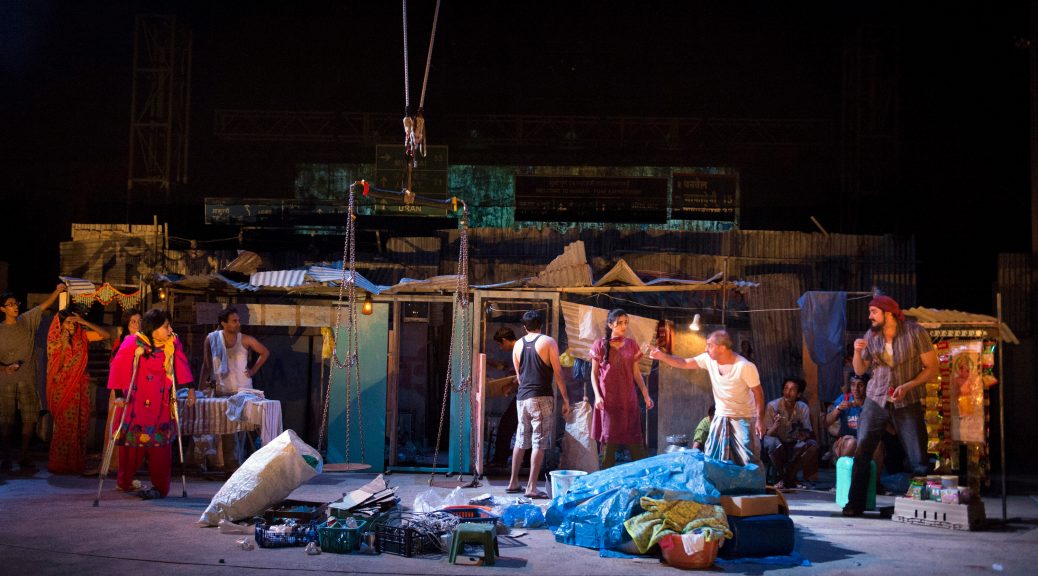
David Hare’s new play is an exemplary dramatisation of Katherine Boo’s non-fiction work about the slums of Mumbai. Hare squeezes the most theatrical moments out of Boo’s Pulitzer-Prize-winning reportage, preserving the clarity of voice and retaining the objective tone that gives the book such power. Boo’s research into the Annawadi slum, whose destitute inhabitants live off rubbish generated by the nearby airport, investigates poverty in an intelligent, non-patronising and thought-provoking manner. The book and stage show are glimpses into another world – horrifying and filled with tragedy, and yet full of life and hope.

Stephanie Street - Asha Waghekar, Meera Syal - Zehrunisa Husain Behind the Beautiful Forevers image by Richard Hubert Smith2
Stephanie Street as Asha Waghekar and Meera Syal as Zehrunisa Husain

A strong cast peoples the slum effectively. One surprise is how matrifocal society in Annawadi is. Stephanie Street plays Asha, a ruthless yet complex figure aiming to control the slum, with her own shocking take on the virtues of corruption. Victims abound, including the once relatively prosperous Hussain family, headed by Zehrunisa (Meera Syal gives a terrific performance), caught in the Indian legal system after the tragic machinations of their neighbour Fatima. Thusitha Jayasundera, who wonderfully doubles as a judge, takes the part of the crippled Fatima, who burns herself to death to spite the Hussains. A parallel tale of a girl so desperate that she drinks bleach shows the prevalence of suicide in the slum as an act of self-determination – grim exercises in defiance that come to haunt the stage.

Designer Katrina Lindsay recreates the spatchcock dwellings with bold economy. Director Rufus Norris marshals activity to recreate the energy of the environment and especially among its younger inhabitants: Sunil, who becomes a thief despite the dangers, and the innocent Abdul, whose brush with the law makes him want to become ever more virtuous. Further strong performances here from Hiran Abeysekera and Shane Zaza in these roles. As Norris’ first project at the National since the announcement that he is to succeed Nicholas Hytner, Behind The Beautiful Forevers is an exciting choice. Norris uses the Olivier auditorium with confidence, revelling in its scale. More importantly, he and Hare have created one of those works of theatre that strike you as something everyone should see.

Until 13 April 2015

www.nationaltheatre.org.uk

Photos by Richard Hubert Smith