All posts by Edward Lukes

“Halcyon Days” at the Riverside Studios

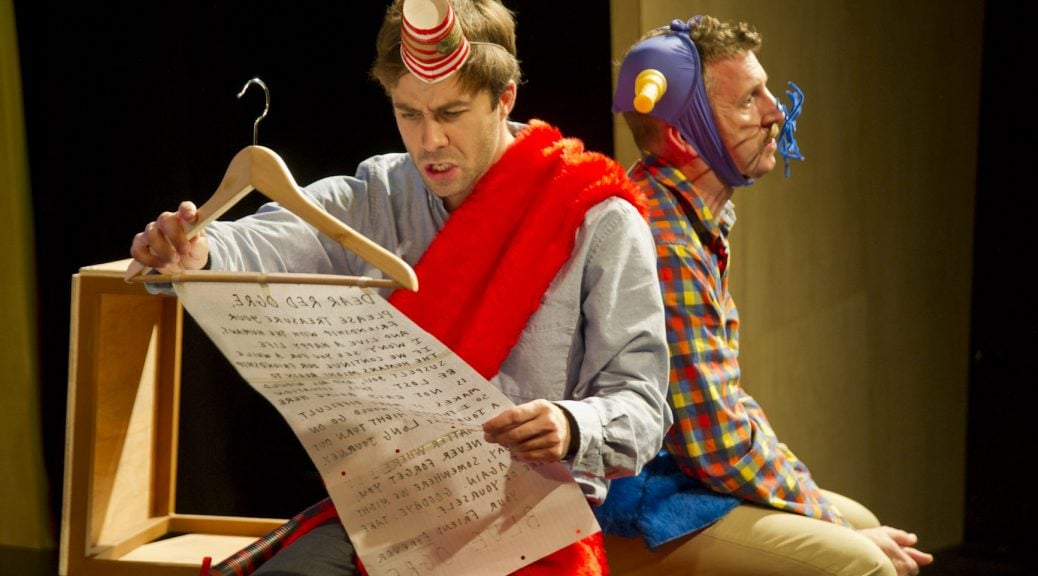
Halcyon Days, the story of strangers who meet on an Internet suicide forum, is a surprising comedy. Writer and director Shoji Kokami takes what could be an earnest, morbid subject matter, and handles it so imaginatively that this potentially grim tale is rendered funny, even bawdy at times.

Kokami presents the story, not as reportage on an Internet phenomenon, but as a real life drama, toying with the fantasies his characters invent in the process. Mark Rawlings plays Hello Kitty, a closet homosexual seeking a flamboyant suicide as an end to his debts. He meets the delusional Masa, performed with intensity by Dan Ford, who is suffering from information overload, and believes that his own suicide could save the world.

This odd couple are joined by a counsellor called Kazumi, a character brought to life by Abigail Boyd, in a skilfully layered performance. Followed everywhere by a ghost (Joe Morrow, making an impressively impish London debut), Kazumi’s intention is to help the men but it’s clear she has issues of her own. A therapy session like no other ensues as the cast prepare a play about a lonely ogre and his friends – it’s deliciously mad stuff ‘yet there is method in’t’.

The blackest of humour pervades Halcyon Days, but there are also touches of farce. Aya Ogawa’s translation of Kokami’s play reveals puns a Carry On film would be proud of, and Rawlings does an especially great job playing up to them. But the halcyon referred to here is a sleeping drug: for all the fun that they are having, the characters are in no Arcadia. They have responsibilities in the real world, all revealed at a clever tempo to ensure that they are misfits that matter to us.

Halcyon Days has an elegiac streak that is central to Kokami’s precise pacing. As the cast gaze at the beauty of the night sky, they learn lessons about themselves and the world. Theirs is a trip to the dark side of the moon well worth watching.

Until 18 September 2011

www.riversidestudios.co.uk

Photo by Gerald Nino

Written 26 August 2011 for The London Magazine
“Top Girls” at the Trafalgar Studios

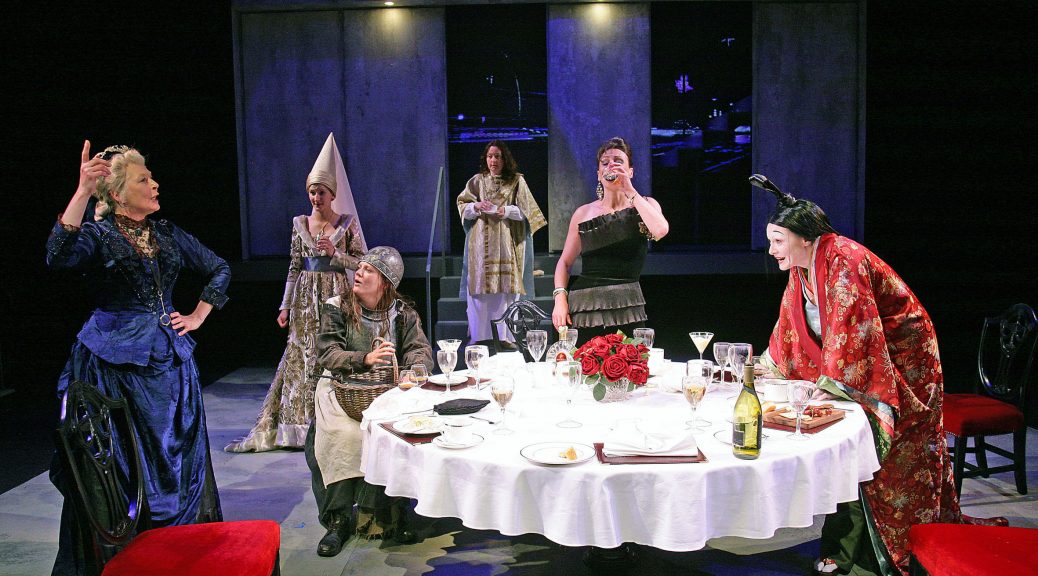
What an opening: given its first act, it’s no wonder Caryl Churchill’s Top Girls has such a great reputation. A riotous dinner party unites women from myth, history and fiction in an Absurdist tableau to discuss their lives, loves and deaths. The stuff of doctoral thesis is seldom this funny – witness the Victorian explorer’s racist faux pas towards the medieval Japanese noblewoman – but what makes the scene so riveting is Churchill’s ability to bring the pain these women experienced so close to the surface.

How this connects to the rest of Top Girls is another chapter in that thesis. The play becomes the story of the party’s host Marlene. An 80s career women with a recruitment agency, the role is performed superbly by Suranne Jones. Wonderfully attired and every inch the thrusting executive, Joseph Epstein could have had her in mind when he coined the phrase ‘yuppie’.

Marlene’s is a cruel world. One of her clients, in a stand-out performance from Lucy Briers (who has a great night, also playing Pope Joan), is a bitter middle manager of 47, who’s told that her age is a “disabling handicap”. And Marlene’s back story, escaping to the city, has enough drama when she returns to Ipswich to match The Homecoming.

Max Stafford-Clark’s assured direction does a lot of favours to Churchill’s text. He has the experience, having directed the premiere in 1982 at the Royal Court, and this new production arrives from Chichester with rave reviews.

Marlene’s casual rejection of her daughter Angie, played cogently by Olivia Poulet, is devastating – she’s no “top girl”. The family confrontation that centres on Angie’s future is electric, with a passionate performance from Stella Gonet, the character who gets to ask what will happen if the young girl just can’t “make it”.

Top Girls is political to its core. Marlene’s pin-up girl is Mrs Thatcher – she’d give her the job – and Churchill’s particular politics of fear, debatably, makes the play feel dated. But the strength of this revival is to show the nuances within this landmark play. The complexity of the characters indicates that there are still questions to ask – Churchill’s provocative presentation demands they are answered.

Until 29 October 2011

Photo by John Haynes

Written 17 August 2011 for The London Magazine
“Crazy For You” at Regent’s Park Open Air Theatre

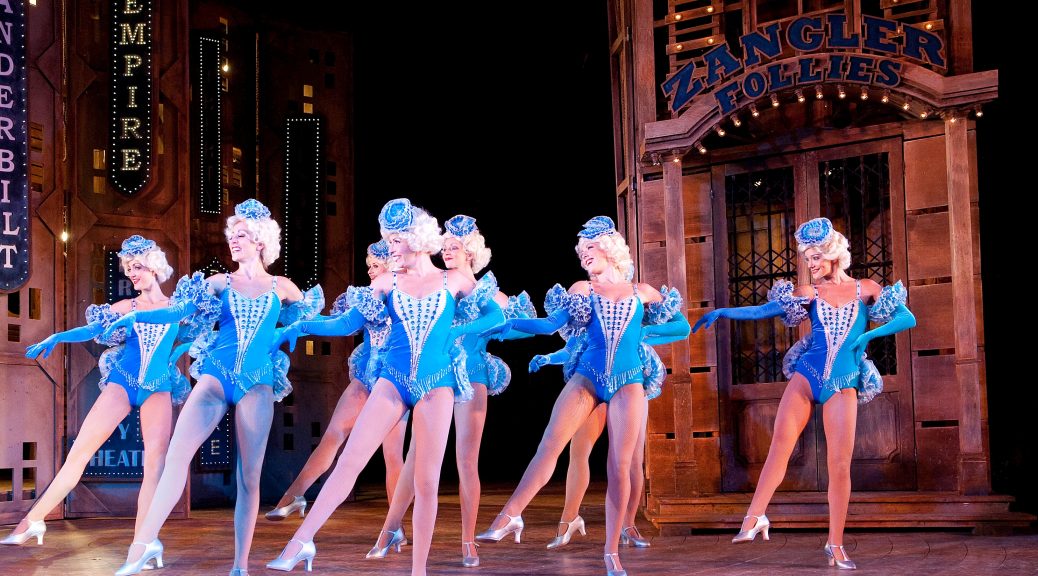
Crazy For You, which had its Broadway debut in 1993, is a tribute musical woven from the work of George and Ira Gershwin. Inspired by the 1930 stage hit Girl Crazy, Ken Ludwig provides a new book and adds hit songs. An appropriately slim, yet seamless, plot has a banker-cum- wannabe-dancer disguising himself as a theatrical impresario in order to save a neglected theatre and win a girl.

Taking us from New York to Nevada, mixing the Ziegfeld Follies with the Wild West, there are plenty of laughs and, more importantly, plenty of tunes. Musical theatre takes any opportunity to sing -‘Let’s put on a show’ – and witness, without questioning, the power of a show tune to change lives. This is joyous stuff full of the feelgood factor.

The Regent’s Park production is marked by a justified sense of confidence, most notably in director Timothy Sheader’s lightness of touch. These days, Sheader has an enviable reputation for musicals and he has reunited the team that brought us Hello Dolly, including Peter McKintosh, whose intelligent costume design surely merits him another Olivier nomination.

Sheader gets the best out of his cast. Sean Palmer takes the lead of Bobby with ever-present charm and elegance. His love interest, Polly, is played by Clare Foster. Her voice doesn’t zing, but it is wonderfully sweet and her acting skills are superb. And there’s a thrilling supporting cast, including Harriet Thorpe and Kim Medcalf, with a string of great numbers.

Gershwin’s music is made to dance to. This is the real joy of Crazy For You and Stephen Mear’s choreography, full of wit as well as grace, does it justice. McKintosh provides a moon to ride and Tim Mitchell’s lighting design means the stars aren’t just in the skies above you. This team succeeds in making Regent’s Park more glamorous and romantic than it has ever been.

Until 10 September 2011

www.openairtheatre.org

Photo by Tristram Kenton

Written 11 August 2011 for The London Magazine
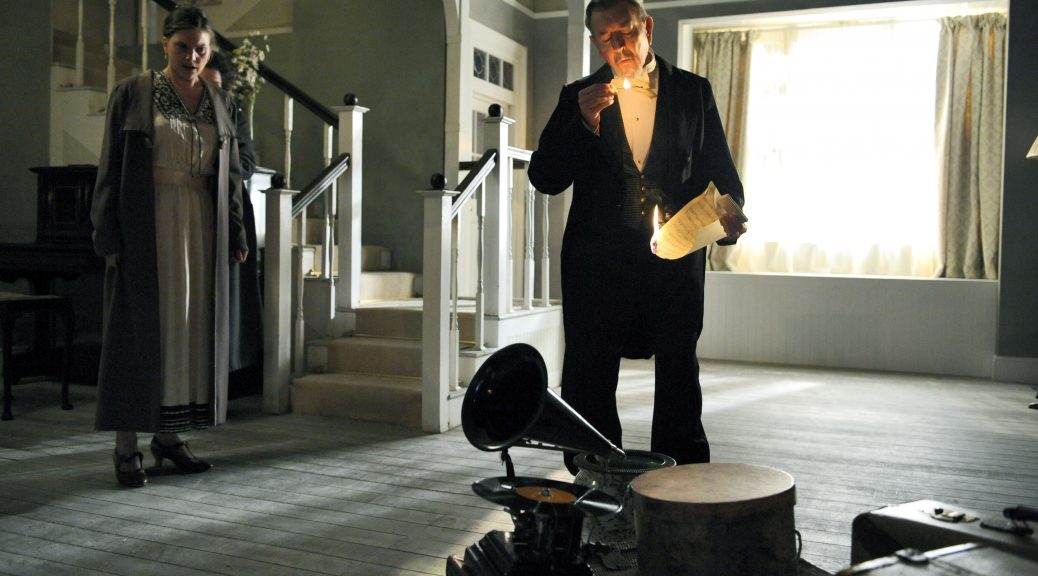
“Double Bill” at The National Theatre

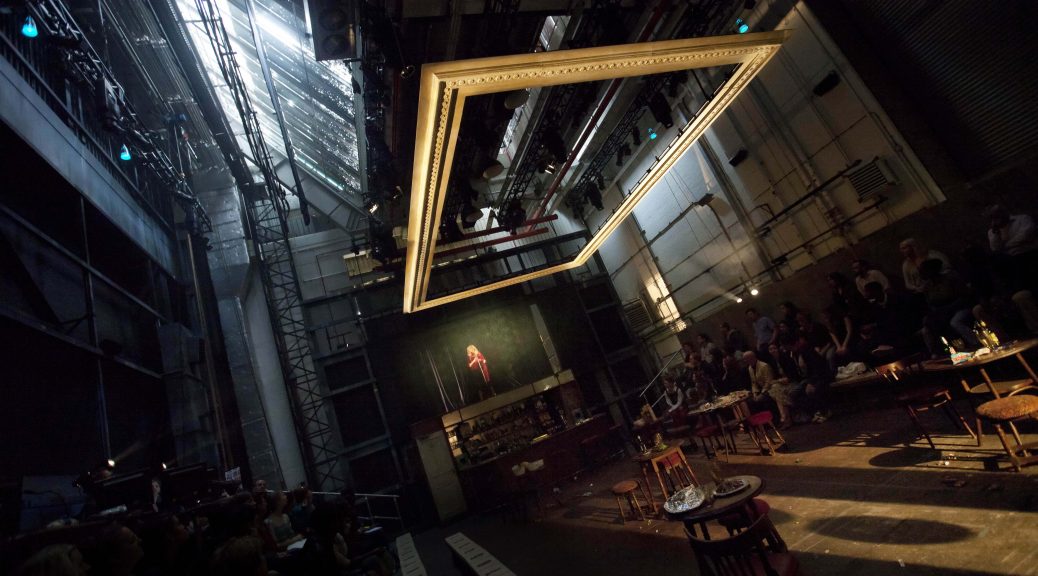
Double Bill, The National Theatre’s programme of four short plays by new writers, finds itself located in the theatre’s paint frame. An impressive working space, it’s a startling location for the pieces: edgy and exciting, this minor reworking of Lasdun’s building does the theatre credit.

First up are Edgar and Annabel by Sam Holcroft and The Swan by DC Moore. Both writers already have exciting reputations. It’s only fitting that the National gives them a platform, and they rise to the occasion.

Holcroft presents a dystopian future with swift precision, turning a political scenario into a domestic drama with such wit and originality it doesn’t deserve a plot spoiler. The eponymous couple have a dark secret that leads to hilarious dealings with a karaoke machine and explosives. In the title roles Trystan Gravelle and Kirsty Bushell deal with their characters’ double lives impeccably.

DC Moore takes us to a more familiar place. The London Magazine readers won’t visit many pubs such as The Swan, certainly not on the occasion of a wake for a crowd like this one, but Moore’s family tragedy contains both compelling humour and drama.

With a star turn from Trevor Cooper as the patriarch Jim, who delivers every line with an obscenity, and a superb cameo from Claire-Louise Cordwell, damaging secrets are hidden to preserve a deeper truth – brought home to us with a little help from Spandau Ballet. Moore’s characters have to be seen to be believed and they are well worth watching.

Both Holcroft and Moore have an unfailing gift for dialogue; vital since despite superb design here, and hard work for the back stage crew whose home we are invading, these are modest productions. The conversations that occur in any relationship when it becomes mundane and the talk you might overhear in a less than salubrious South London local are wonderfully observed and then developed to another level with a mature concern for the truth.

Any institution with the longevity and largesse of the National Theatre will have a chequered history of new writing. Playwrights coming to work there are placed in the spotlight and automatically join a debate about the state of the arts, whether they want to or not. If these first two plays are anything to go by, new writing is in superb shape – Double Bill is an event that one hopes will become a fixture.

Until 10 September 2011

www.nationaltheatre.org.uk

Photo by Johan Persson

Written 5 August 2011 for The London Magazine
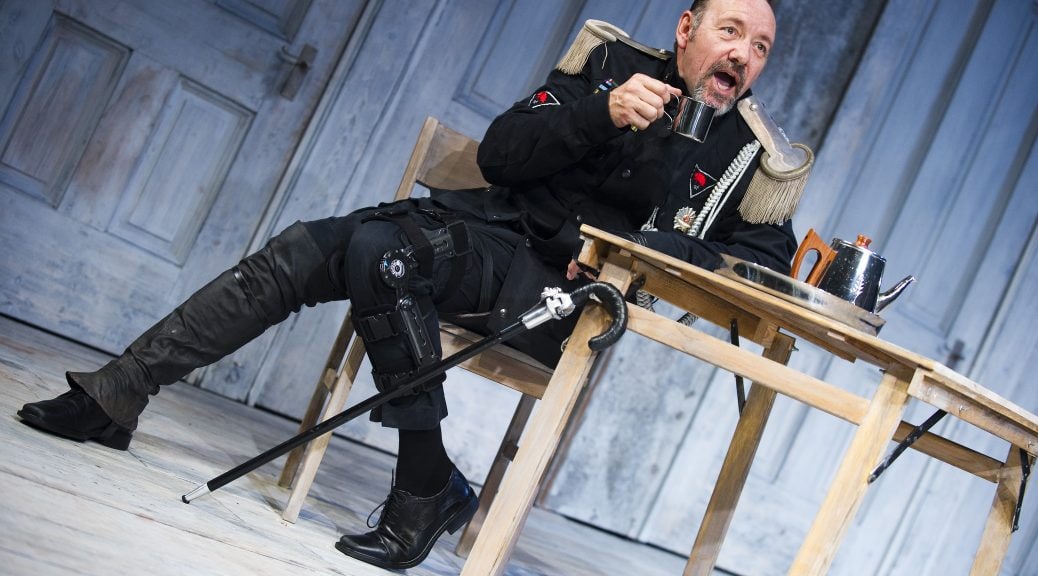
“Slay it With Music” at The Space

The Space is an arts and community centre in Westferry Road, a short journey from Canary Wharf. The space in question is a converted church of modest dimensions, a former Presbyterian mission built by TE Knightly, that brims with potential and is used for a variety of performances, from chamber music and classic plays to new writing.

The current production, Slay it With Music, is the UK premiere of an off-Broadway show. It tells the story of a faded Hollywood star, Enid Beaucoup, who lives just down the road from Gloria Swanson and shares a case of sibling rivalry to match Baby Jane’s. Enid’s sister Marcy is a daytime soap star and isn’t keen on Enid’s comeback in a slasher movie entitled Chop Chop. She fears that the film will remind the world about the sisters’ infamous love triangle with a hairdresser, their ‘paramour coiffure’, which resulted in his bloody murder.

With tongues firmly in cheek, Joseph Walsh’s cast have plenty of fun in Slay it With Music. Given that it would be almost impossible to ham it up too much they are on safe ground. Walsh is also the choreographer and ensures the proceedings are sharp as a knife.

Taking the star role, Andrea Miller is the unhinged, pearl-bedecked Enid. Every sentence becomes an exclamation and her evil laugh is as camp as one might wish for.  Ellen Verenieks shows admirable comedy skills as Marcie and Andrew Hayler does especially well as the butler Zachery – as waspish as they come; his devotion to the former musical star is a trait astute musical theatre lovers might recognise in their more obsessive compadres. In a murder mystery musical who knows where such obsession will lead us?

Writer Michael Colby is certainly smart enough to supply us with a twist. Slay it With Music is a tender send-up, a hommage from a fan who knows his stuff. It teems with references – so much that Paul Katz’ music seems somewhat swamped. This is very much an evening for aficionados –potentially overwhelming if you don’t get the joke. But if you are in the know – it’s to die for.

Until 4 September 2011

www.space.org.uk


Written 28 July 2011 for The London Magazine

“A Woman Killed With Kindness” at the National Theatre

Thomas Heywood’s 1603 domestic drama, A Woman Killed With Kindness, has a fair claim to still being relevant; family fortunes and adultery are great topics for drama. Nowadays, not many would contemplate the solutions for debt or infidelity Heywood’s characters come up with but Katie Mitchell’s bold production at the National Theatre makes it a fascinating night.

This is a story of the gentry; Heywood’s subjects hadn’t been seen on stage before, they are neither the great and the good nor the lowest in society. But confusingly, designers Lizzie Clachan and Vicki Mortimer present two well-off households next door to one another – giving the impression this is a troubled terrace, a kind of grand Coronation Street, when these are really two country estates.

The staging means that Mitchell can draw parallels between the women in the two stories; characters echo each other’s actions, creating an intense stereoscopic experience that is surreal and unnerving. It is continually arresting but never fully believable.

Mitchell moves the action to 1919. The stiff upper lips adopted by the nobility fit oddly with the passion so obvious in Heywood’s text. Homespun honesty is provided by an ensemble of solicitous servants (Gawn Grainger’s laconic Nicholas stands out) but their relationships are surely more feudal than the upstairs-downstairs setting suggests.

Heywood’s naturalism is acknowledged with lots of action off-stage, yet for all Mitchell’s previous ‘collaborative’ work with actors, the cast struggle against a touch of Grand Guignol. There are great performances from leading ladies Liz White and Sandy McDade, who use the extra time on stage created for them by the design well, but even they sometimes appear like puppets directed from above.

Mitchell is a director with such a strong vision she seems in competition with the author. And yet maybe that’s what the play needs: A Woman Killed With Kindness can be objectionable and Heywood’s morality perverse. It’s thrilling to hear the heroine grab the last line – it really seems to belong to her, although Heywood’s text has her husband say it. Mitchell’s version is more chilling and complex, and at times almost manages to convince.

Until 12 September 2011

www.nationaltheatre.org.uk

Photo by Stephen Cummiskey

Written 20 July 2011 for The London Magazine

“Richard III” at The Old Vic

Kevin Spacey’s Richard III has been London’s most anticipated play for a while – there just seemed something so right about the casting. And for once you can believe the hype, since Spacey is superb as Shakespeare’s villainous king.

This Richard is a spin-doctoring politician. Not a subtle one, which gives rise to plenty of humour, but the tin-pot dictator of a nation ravaged by civil war. Sounds familiar? It’s supposed to – the surtitle that welcomes us at the Old Vic proclaims the winter of our discontent to be NOW. Spacey is an actor with his eye on the news, and bringing Richard’s mad-dog qualities to the fore gives his performance plenty of bite.

Surtitles also serve to introduce scenes with the names of Richard’s numerous victims, giving each episode a focus. It’s a simple, bold device on the part of director Sam Mendes that aids comprehension and adds tension. It also allows the women in the piece to shine through. Annabel Scholey as Lady Anne, who Richard woos in such bizarre circumstances, and his nemesis Elizabeth (Haydn Gwynne) both give striking performances.

Mendes infuses his production with the supernatural, courtesy of Gemma Jones in the role of Margaret. Victim of a previous coup in the Wars of the Roses, she’s not just full of curses but capable of enacting them, even making an appearance on the battlefield. Mendes’ treatment adds a fascinating dimension to the play – martial drums, used so effectively, double up in a chilling ritual of revenge.

So it’s really Sam Mendes who is the star of the show. Richard III marks the culmination of the Bridge Project, and taking the lead in this last production reflects Spacey’s dedication as part of the massive touring company. Uniting together British and American talent on a global stage brings out the best in both men and has resulted in a magnificent and long overdue rematch.

Until 11 September 2011

www.oldvictheatre.com

Photo by Tristram Kenton

Written 5 July 2011 for The London Magazine

“Lend Me A Tenor: The Musical” at the Gielgud Theatre

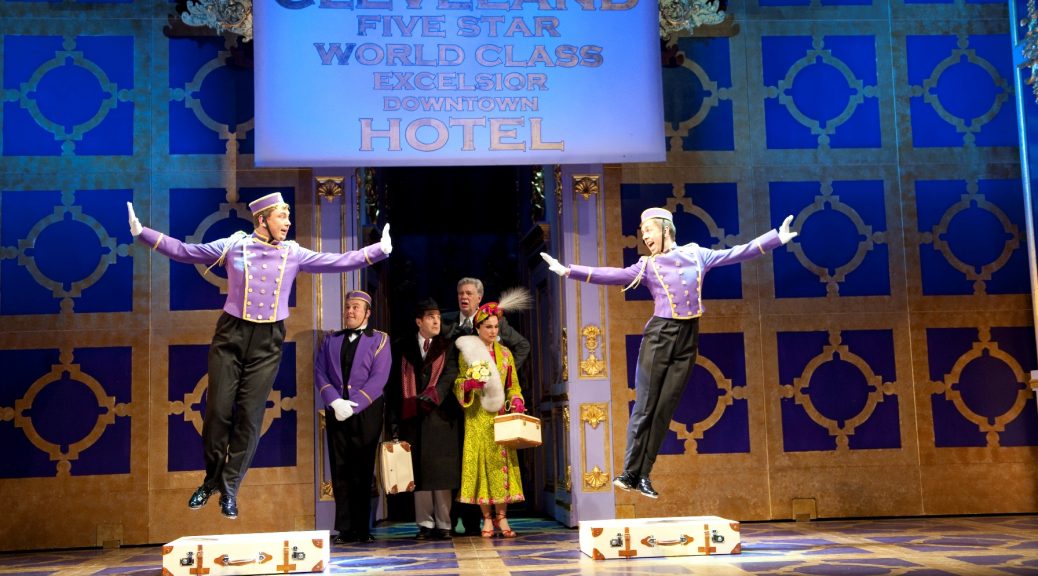
A musical farce is a tricky thing to pull off, but Lend Me A Tenor shows us how it’s done. The book is the important thing. Based on the play by Ken Ludwig, Peter Sham’s adaptation of a star tenor’s guest performance is as simple as a farce is able to be. Confused love affairs, disguises, behind-the-scenes dramas and onstage shenanigans at a Midwestern opera house are combined with ease and plenty of laughs.

Sham’s lyrics are a model of clarity and hilarity. And if it takes guts to rhyme the name Tito with “indeed-o” then it pays off. Brad Carroll’s intelligently nostalgic score is easy on the ear. So what if you can see the mechanics? It works.

Despite the manic action (with the doors on Paul Farnsworth’s impressive set naturally getting a satisfactory amount of slamming), Ian Talbot’s direction seems effortless. With this cast, he can afford to be confident – Lend Me A Tenor has plenty of experience on stage and it really shows.

Matthew Kelly takes the role of Henry Saunders, harassed opera impresario, in his stride. Michael Matus is the star singer with a believably great voice and the kind of Italian accent you only get on stage. This team knows there is only one thing funnier than an outrageous accent… another character faking an outrageous accent. Stepping into the tenor’s shoes is Damian Humbley as mild-mannered Max, who gets the show’s big tune, ‘Be Yourself’, just as he is going onstage to masquerade as the divo.

With its female leads, Lend Me A Tenor, also excels. Maggie (Cassidy Janson) is our ingénue, and the opera’s resident diva Diana DiVane (Sophie-Louise Dann) is the “not so ingen-new”. Both are infatuated with Tito the tenor for romantic and professional reasons: Maggie wants to borrow him for a fling before she settles down, leading to the show’s romantic title tune, DiVane sees him as a kind of bridging loan to the Met and has a show-stopping ‘audition’ number. The superb Joanna Riding plays Tito’s long-suffering wife with delightful comic timing.

This cast is so strong that the performers might seem somewhat wasted; it’s an enviable position for any production to be in. But a musical needs more – that special something that critics are loath to describe as ‘heart’, and Lend Me A Tenor is such an enchanting piece that it’s clearly in credit.

Until 6 August 2011

Photo by Tristram Kenton

Written 1 July 2011 for The London Magazine

“The Beggar’s Opera” at Regent’s Park Open Air Theatre

It’s hard to underestimate the success and importance of The Beggar’s Opera. The influence of John Gay’s satirical ballad opera is so enduring that viewing is essential for theatre lovers. As Londoners we are further obliged to attend: the premiere production paid for the construction of the first theatre in Covent Garden and the work teems with references to home that Londoners will love.

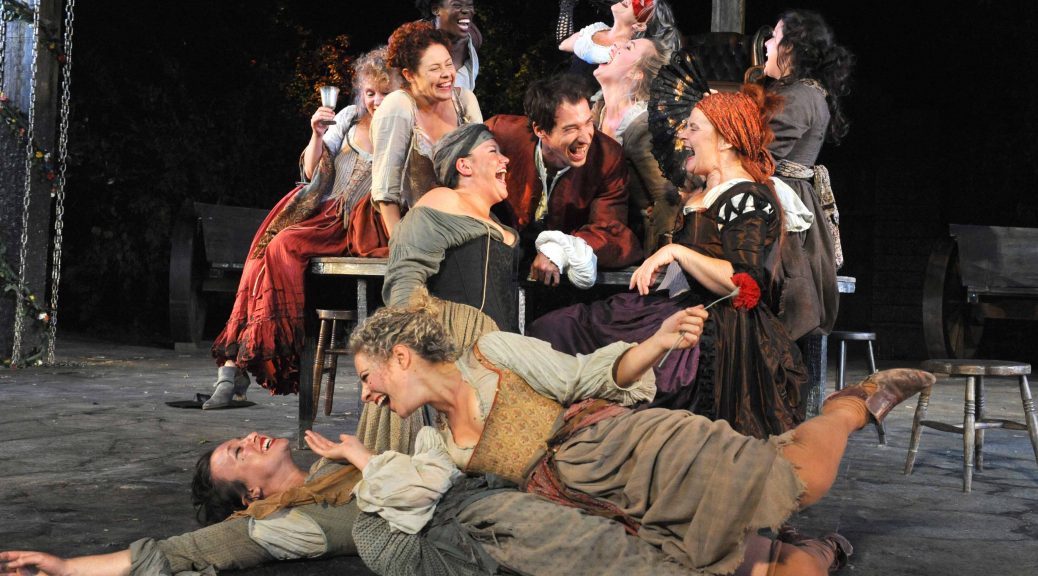
In Regent’s Park Open Air Theatre’s production, 18th-century London is masterfully evoked by William Dudley’s ambitious set. The park is cast as a pleasure garden, the criminals’ party in the shadow of Tyburn: the gallows are garlanded, the maypole formed with chains, but Newgate is only a cart ride away.

The stage is set so well that the story of love and dishonour amongst thieves speeds along. Bigamy and betrayal, awash in the ‘strong waters’ of gin, mean fists are always at the ready. Praise must be given to those often ignored in reviews – the movement and fight directors, in this case Maxine Doyle and Terry King – whose work with this Hogarthian epic never distracts from Gay’s dictionary of abuse. ‘Beggars’ is such a delicious catalogue of invective that it makes you wonder if we have lost the art of the insult.

The cast is as rude as can be. David Caves’ Captain Macheath is convincing as the sensual highwayman and Flora Spencer-Longhurst is refreshingly full blooded as Polly Peachum. But for sheer sauce Beverly Rudd steals the stage as Lucy Lockit.

Rudd is in fine voice – important since The Beggar’s Opera is essentially a musical. Director Lucy Bailey makes the laudable decision to use selections of the original score, performed superbly by The City Waites on period instruments, yet what should be the focus of the show seems like an addition.

Bailey is such an intelligent director that this reservation can be cast aside. Steeped in satire that still feels fresh, Bailey’s take on the highwayman as a celebrity makes her finale riveting and shows her understanding of this genre-busting work. She makes the importance and success of The Beggar’s Opera easy to understand.

Until 23rd July 2011

www.openairtheatre.org

Photo by Alastair Muir

Written 30 June 2011 for The London Magazine

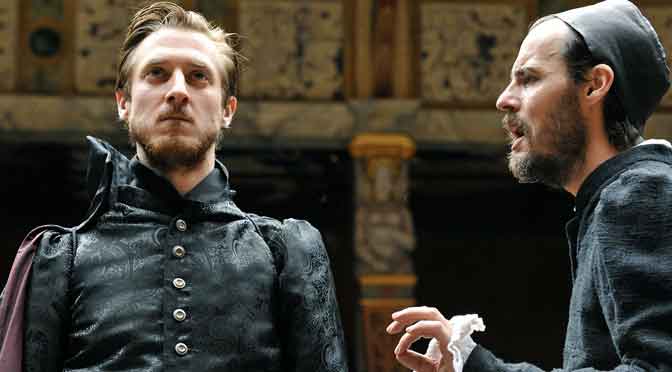
“Doctor Faustus” at Shakespeare’s Globe

Thanks to the film Shakespeare in Love we think of Christopher Marlowe as more celebrated in his own day than Shakespeare. Now, of course, his work is performed far less frequently, making any production an event, especially when Shakespeare’s own Globe conjures up its first production of Doctor Faustus.

Director Matthew Dunster does his best to make the story of the man who sells his soul to the devil resonate with a contemporary audience. The emphasis is on magic rather than religion – a sound move in our agnostic times – aided admirably with a soundscape from Jules Maxwell.

But Doctor Faustus poses problems. With roots in morality plays, 16th-century concerns and seemingly impossible stage effects, several scenes are potentially odd to modern eyes. Dunster’s solutions are admirable, using wit, imagination and strong doses of broad humour to engage: Georgina Lamb’s choreography is a capable distraction when the Doctor meets the seven deadly sins, the Pope becomes a comic mafia don, and a castle in the air is a simple inflatable balloon that floats off over the South Bank.

Paul Hilton is a model of clarity in the title role. Fingers stained with ink, this scholar-turned-magus’s pride is painfully convincing and, if he lacks the sensual touch that comes to dominate a man “ravished” by desires, his relationship with Arthur Darvill’s commendably understated Mephistopheles is electric.

Dunster injects a huge amount of movement into what is potentially rather a static play, and his tautly controlled ensemble works hard, peopling the world Faustus plays in. Of particular note are Charlotte Broom and Beatriz Romilly as the angels who fight over Faustus’ soul with samurai swords. With flashy touches such as this, Dunster grapples with Marlowe’s mighty play in a magical fashion and does not sell Doctor Faustus short.

Until 2 October 2011

www.shakespearesglobe.com

Photo by Keith Pattison

Written 24 June 2011 for The London Magazine