"Joan of Leeds" at the New Diorama Theatre

Breach Theatre’s successful new musical comedy is a rude and riotous show that could become a cult classic.

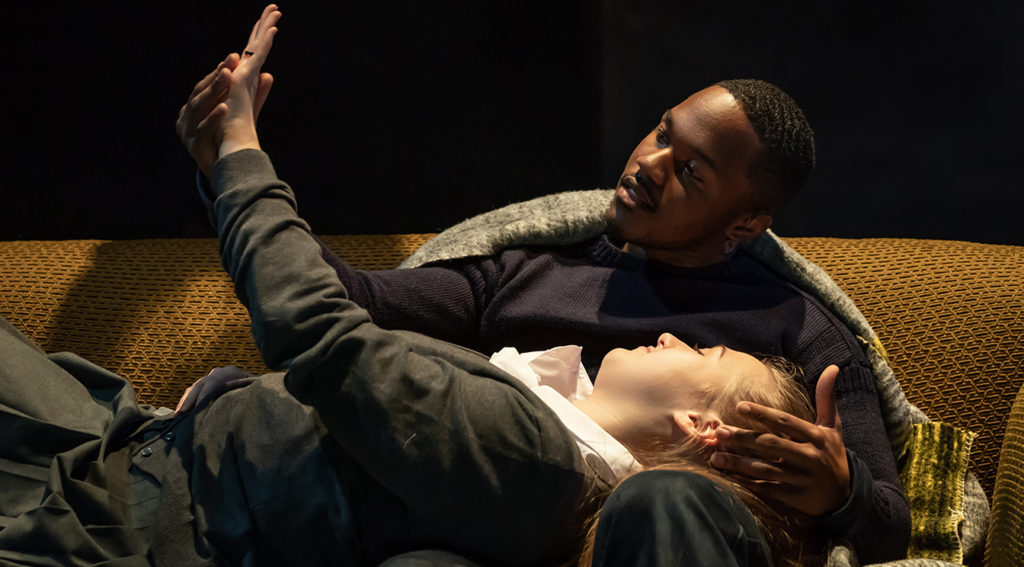
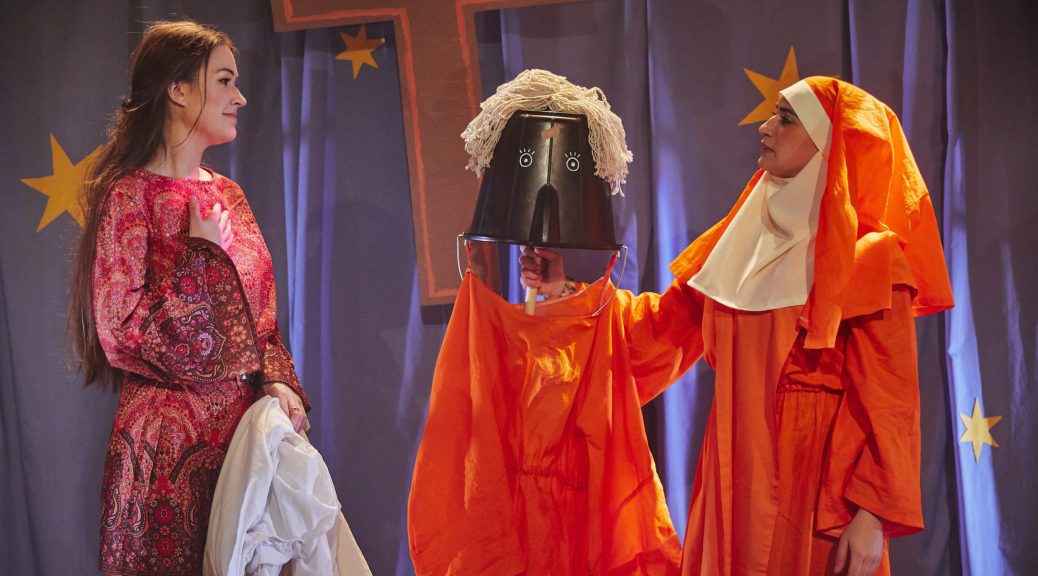
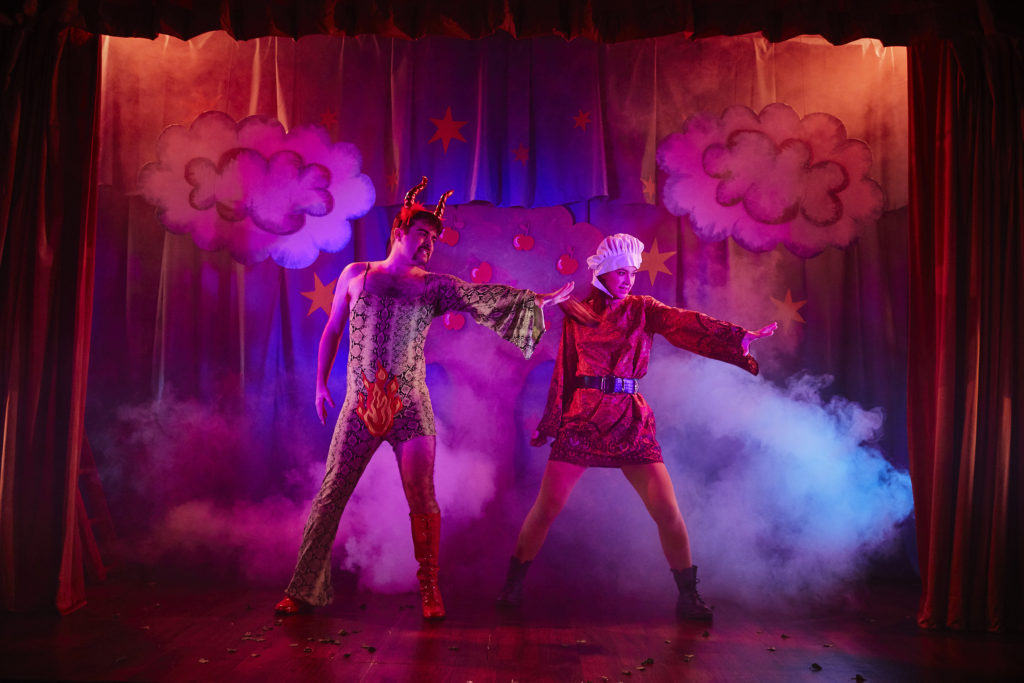
If you love a nun in a musical (and why wouldn’t you?), Joan of Leeds has three of them. Brilliantly decked out in safety-orange habits, that they’re mediaeval nuns adds to the fun. And – even better – it turns out they’re all pretty rude. The dramatic dilemma for our titular heroine, played with a suitably feisty attitude by Bryony Davies, is a struggle with her carnal desires. She’s tempted by saints as well as sinners and tries not to succumb… just not for long.

Joan isn’t just a naughty nun, she’s a lesbian one. With her Sapphic sister, a role that allows Rachel Barnes scope for her excellent singing, there are tender moments, considering this is all-out comedy. And we can leave inspired as the couple prompts a sexual revolution for the 14th century that (with a touch of Ken Russell) might be a bit too much for some people even today.

Alex Roberts and Bryony Davies in Breach Theatre's "Joan of Leeds"
Alex Roberts and Bryony Davies

Add in Joan’s escape from the convent (she’s the original nun on the run) and time as a bored housewife, and there’s plenty going on. Aiding all the action is a great Mother Superior, Joan’s psychiatrist and… the devil: all played with fantastic comic skills, and no inhibitions, by Alex Roberts and Laurie Jamieson.

Meanwhile, Joan’s Bishop turns into the villain of the piece. It’s a great role for Olivia Hirst, whose character tries to narrate, in verse, and control the action with increasing frustration. Hirst uses the Yorkshire accent to especially good effect and gets the most of co-writers Elice Stevens and Billy Barrett’s consistently delicious rhymes.

Joan of Leeds is full of funny touches – keep your eyes peeled. But its success really comes from providing takes on not one but two genres. Based on a believe-it-or-not story, Joan did exist, and the show is an effective spoof on documentary theatre, showing us the story’s manipulation as we watch it. Being presented by the Yorkshire Mystery Players, there’s also a twist on am-dram-goes-wrong. So we get all the usual fun of “professional enthusiasts” not quite coping – handled expertly by the real director, Barrett. Such a firm base makes the show double the fun and smart from start to finish.

Until 21 December 2019

www.newdiorama.com

Photos by The Other Richard

"Fairview" at the Young Vic

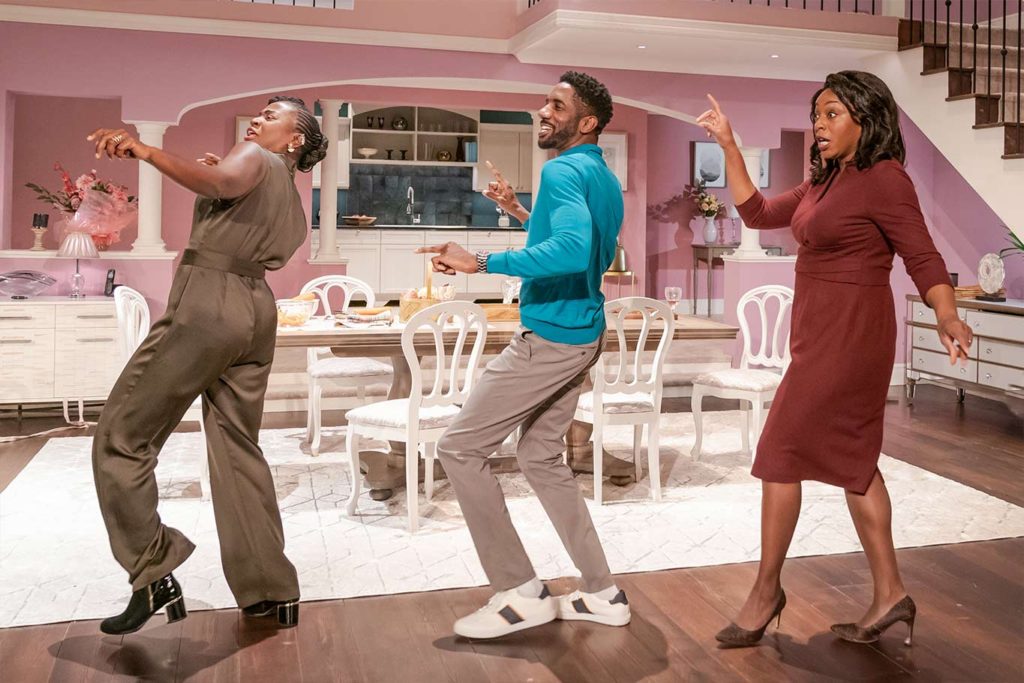
This Pulitzer Prize-winning play by Jackie Sibblies Drury is a challenging piece that explores racism in such a bold manner that it makes for uncomfortable viewing. There’s no doubt that Fairview is startling theatre – its potency and originality are embedded in its very structure. Beware plot spoilers as the action, sturdily directed by Nadia Latif, is deliberately – and brilliantly – disorientating. It’s impossible to forget that its award is American: many of the references are culturally specific and the final fourth-wall-breaking scene may have a different response in the UK. But, sure to prompt plenty of discussion, it will be fascinating to see if a work about cultural divisions can cross the Atlantic divide.

The cast of "Fairview" at the Young Vic
Naana Agyei-Ampadu, Nicola Hughes and Rhashan Stone

First, we see an African American family dinner, played as a light sit-com that becomes surprisingly tiresome. The scene is then repeated as mime while we hear another set of actors debate race. The later dialogue proves truly excruciating – increasingly so as it becomes clear that they are talking about what we are watching.

Using those theories about the gaze so admired by cultural studies (and turning the tables on an audience) certainly makes the play powerful. The toe-curling talk presumably plays at being even-handed – regardless of the politics of those overheard, they are all pretty awful. So, you might think Drury is a little tough on a well-off liberal? Or that the treatment of an ignorant French speaker is a little silly? Maybe you’ll get nervous about the cultural appropriation of a third talker who later appears as a drag queen? And I’d rather just skip the fourth ‘shock-jock’ style interlocutor. The dialogue, and its interaction with what we see on stage, is often funny but also infuriating.

We have to get back to that drag queen. The voices heard – who turn out to be Caucasian performers – come to the stage as family members. The resulting action is frantic and a sense of chaos not quite controlled by Latif. Fairview is obsessed by performance – from films and dancing to how we behave in front of others – and generates bold questions, notably about the fluidity of identity, that Drury is brave to raise. Writing of such intelligence creates a daunting number of layers to negotiate.

The only caveat is that the play deconstructs so much that the result is bewildering. And a heartfelt finale, led by Donna Banya, where members of the audience identifying as white are asked to go on stage, makes what can come next a daunting question. It becomes hard to know what to take away from Fairview – aside from being hugely impressed. The production is undoubtedly superb: Naana Agyei-Ampadu, Nicola Hughes and Rhashan Stone give brilliant performances. And Fairview is imminently theatrical; it engages with an audience as only live theatre can. I couldn’t argue with the pessimism Drury highlights, but it results in a cold response to the work. With a suspicion that it is not the desired intention, respect (and a touch of confusion) is the best I can muster.

Until 23 January 2020

www.youngvic.org

Photos by Marc Brenner

"Hunger" at the Arcola Theatre

This adaptation of Knut Hamsun’s 1890 novel has clever moves and clear decisions. As we follow its starving character, a student and writer who struggles as a “loser and misfit” in a big city, the direction from Fay Lomas has smart touches. The staging is inventive, the design by Anna Kezia Williams and Rajiv Pattani well used, while tight choreography creates considerable momentum. Pain is effectively portrayed, and highlighting the mental health problems that arise from malnutrition proves enlightening. A case that this tale of a down-and-out could occur any time and any place is obviously the point. Lomas works to show just that – and it’s a job well done.

There’s no doubt the piece serves as a brilliant showcase for a talented quartet of performers. Archie Backhouse, Katie Eldred and Jessica Tomlinson act as the population of a whole town; they cannot fail to impress as you lose count of the ages and accents depicted. They even manage to make a few named characters vivid, despite the brevity of the roles. With the unnamed lead, Hunger makes an exciting vehicle for Kwami Odoom who brings a great presence to the stage and intelligent responses to his task. It’s a thrill for the audience too – there’s a sense of seeing a big talent for the first time and the hope we’ll be able to boast about it one day!

Kwami Odoom in Hunger at the Arcola Theatre photographed by Alex Brenner
Kwami Odoom

Much of the production’s clarity comes from Amanda Lomas’s adaptation. For a plotless novel that explores psychology through a first-person narrative, her decisions seem sensible, if conservative. Unlike Hamsun, Lomas provides a hero for us to focus on – the play’s lead is far more sympathetic than in the book. The most distressing and controversial scenes are passed over: the character chews on orange peel rather than a bone and his relations with women are made less problematic. We’re given more background, a sense of his age and a more carefully chartered descent into poverty that work well dramatically and serve a broadly political purpose.

Lomas has created a more even experience than that of reading the book. She has an eye on an audience rather than an existential axe to grind. Hamsun was obsessed with pride and religion – both have a small part here as they don’t fit with the programme. And it has to be admitted that there’s a disappointing lack of intensity for a novel famed for just that quality. The character’s ego and his rants against God end up a little lost. Thankfully, it’s possible to argue that the production’s aims are served by toning both down. We’re presented with a story about poverty made universal and powerful by theatre makers with a strong sense of purpose.

Until 21 December 2019

www.arcolatheatre.com

Photos by Alex Brenner

"Death of a Salesman" at the Piccadilly Theatre

Successful revivals – and this is one of the best – tend to present a classic text with reverence or remodel it for the current day. Trying to do both – respecting and reinventing – usually pleases nobody. But just such a combination has been achieved by co-directors Marianne Elliott and Miranda Cromwell with Arthur Miller’s classic story of Willy Loman’s demise. It’s like no production of the show before, but presents Miller’s concerns for the working man with utmost conviction. The result is marvellous. 

Casting the Loman family as African American is the most obvious difference. The consequences are profound, rippling through the show, continually adding layers to Miller’s text. Take Willy’s subservience to his much younger boss – more painful than ever. Highlighting the play’s concern with Willy’s breakdown is novel, too: since Miller’s day appreciation of mental health, including dementia, and how distressing it can be for victims, has grown. Flashback scenes, with bold lighting design from Aideen Malone, add a distressing air that increases sympathy for Willy. The production takes modern sensibilities into account and fills the play with new questions and tensions.

Meanwhile Miller’s political concerns are amplified. Rather than connect Willy to buzzwords (“the squeezed middle” or the “precariat”), ideas about the dignity of work, perhaps old fashioned, are explored as the writer intended. Likewise, the aspirations that obsess Willie, maybe even drive him mad, are given space. A period atmosphere is aided by Femi Temowo’s compositions and musical direction – I don’t think Miller’s ever been this cool. The brilliant design, by Anna Fleischle, makes the family home, just about to be purchased, a frame: a perfect reflection of how transparent these lives become to us.

Matthew Seadon-Young and Wendell Pierce in 'Death of a Salesman'
Matthew Seadon-Young and Wendell Pierce

As if all this weren’t enough, this production also boasts some of the most fantastic performances you could witness. The whole cast is impeccable, even the smaller roles who add to the music in the show. Victoria Hamilton-Barrit and Matthew Seadon-Young excel, despite their characters coming close to being devices. The Loman brothers are vividly depicted by Ṣọpẹ́ Dìrísù and Natey Jones with performances that complement each other – as they should. The tension for one bubbles under while the other’s anger proves explosive.

Making a West End debut that will surely be remembered for a long time, Wendell Pierce takes the lead role with astonishing skill. Willy is not an appealing character, rather a tin-pot tyrant who’s easy to condemn. But Pierce makes him a man you can warm to – and a surprisingly diffident person that you feel for. Adding a purity of intention, focusing on his sons, he becomes a noble character whose end is truly tragic. 

As his wife Linda, Sharon D Clarke recognises the role as the lynchpin of the play. Often quite literally centre stage, Clarke has the presence to make the role major. For Linda is also the play’s moral compass and Clarke gives a performance of dignified intensity that becomes heart-breaking. Finally, the chemistry between the two leads is something really special – adding an urgency to the drama and, again, an emotional impact that makes this the most moving Miller I’ve ever seen.

Until 4 January 2020

www.atgtickets.com

Photos by Brinkhoff & Mogenburg

“Dear Evan Hansen” at the Noël Coward Theatre

Theatrical responses to young adult mental health hit the big time with this highly anticipated tear-jerking transfer from Broadway. Teen suicide and all manner of problems for millennials make the target audience sometimes painfully clear. But there’s an intelligence behind Steven Levenson’s excellent book that raises Dear Evan Hansen well above many coming-of-age dramas.

The action revolves around social media (these kids are more online than at school). Tension mounts as Evan’s deceit, about his friendship with deceased class mate Connor, entangles him in the world wide web. A campaign, including Kickstarter, and the inevitable empowering vocabulary that follows, is treated with a mature, sometimes sceptical, touch. 

Doug Colling and Sam Tutty in the London production of "Dear Evan Hansen"
Doug Colling and Sam Tutty

Connor’s death is the best thing that’s happened to Evan; he finally has a profile at school. But the friendship it engenders is an imaginary one with the dead boy. Meanwhile, contact with Connor’s sister results in a clever twist on Cyrano de Bergerac that’s heartbreaking. Along the way, the roles provide strong parts for Doug Colling and Lucy Anderson, who contribute to the uneasy atmosphere that Michael Greif’s direction explicates. As Evan promises his lost and lonely cohorts “You Will Be Found” – becoming an internet hit himself – the drama that he will be found out is considerable.

Sam Tutty and Rebecca McKinnis in the London production of 'Dear Evan Hansen'
Sam Tutty and Rebecca McKinnis

The story may be simple, even predictable, but it broadens gracefully. Becoming a show that concerns mourning and parenthood, there are well-drawn roles for the adults in the piece. Unashamedly, rather than learning from themselves or their peers, they are the characters for their children to learn from. Rebecca McKinnis is superb as Evan’s struggling mum, while Lauren Ward and Rupert Young play Connor’s grieving parents with believable intensity. All three are included in scenes of psychological complexity that ensure depth.

Scenes of extended dialogue mean that Dear Evan Hansen is – almost – as much a play with songs as a musical. The show has its own pace, handled boldly by Greif, that is distinctive. The numbers by Benj Pasek and Justin Paul are already hits, so whatever formula they have for bringing on the tears is clearly effective. The music is good, although more of it, as well as more variety, would be welcome. And the lyrics are superb – not a word jars. 

These numbers are not easy to perform. As well as demanding considerable acting skills, the score acts symbiotically with the performances to make the show increasingly impressive. The same pressure makes the title role especially exciting, as you need a superb singer and a strong actor. Ticking both boxes, the part of Evan is sure to make a star of Sam Tutty. While the show is more of an ensemble piece than you might expect, the role of Evan is crucial. Again, Levenson allows a considerable complexity that Tutty can develop: this isn’t your average hero, or even your everyday misfit. The balance to retain sympathy for Evan proves fascinating.

If the conclusion of Dear Evan Hansen is a little pat, it is also impressively understated; any positivity isn’t cloying. Hope for the future is the best that can be offered, maintaining a distinctly melancholy air. Seclusion is the prevailing theme; which is especially sad as you never forget this is a show for young people. Thankfully, support and a sense of perspective are present – they give the piece an underlying wisdom. And the show’s success provides inspiration; the audience response, amidst much sniffling, is contagious. Deservedly, lonely Evan Hansen should prove to be a long runner.

Until 30 May 2020

www.dearevanhansen.com

Photos by Matthew Murphy

“Gaping Hole” at The Ovalhouse

Writers and performers Rachel Mars and Greg Wohead are playing a literal part in this venue’s special “demolition season”. As the theatre says goodbye to its current home, the hole in the title of this show turns out to be real – a big part of the floor has been taken away! Mars and Wohead have given themselves an unusual stage for an original show that’s full of creativity.

Gaping Hole is a two-hander that looks at fiction – in particular the gaps and flaws in plots – with wit, imagination and charm. Starting out with straight comedy, Mars and Wohead chat about silly moments in Hollywood movies in a lovely convivial manner.

A couple of cinematic puzzles are taken up – from The Shawshank Redemption and Titanic – to be elaborated into fantastic stories. The crazy developments (any revelations would be real spoilers) build cleverly; the storytelling skills are impressive.

The work behind crafting these additions to both films is paralleled with effort of a different kind. Building things lies at the heart of Gaping Hole and as the deconstructed floor is covered – what a strange pleasure watching people at work is – we arrive at another section for the show.

The idea of “personal plot holes” asks how our actions don’t fit the stories we like to tell about our own lives. Wohead imagines his own future death while Mars takes a trip into her past. It’s a fascinating idea for artistic motivation that proves tremendously constructive. If there’s a failing, it’s with how short the whole show is.

As the Ovalhouse plans to reopen in Brixton in 2021 (you can follow plans at #RoadToBrixton) the solution seems obvious. A long-time location for radical theatre makers just like Mars and Wohead, here’s hoping they find a home at the new venue so that they can continue to explore and tell their tales.

Until 23 November 2019

www.ovalhouse.co.uk

Photo by Alex Brenner

“I Love You, You’re Perfect, Now Change” at the Chiswick Playhouse

This massive off-Broadway hit, which has had international success since its first outing in 1996, is the first show at the previously named Tabard Theatre in Turnham Green. More a review than a musical, with book and lyrics from Joe DiPietro and music by Jimmy Roberts, it’s a fun night out providing plenty of laughs. With a sketch show feel and an eye on contemporary mores, the songs provide a “world wind tour” through many stages of love – from first dates to divorce – and makes for perfect fringe theatre material.

The production is a UK premiere of sorts – it’s a new version of the show – and director Charlotte Westenra does a fine job conveying a fresh feel to both additional and familiar songs. If the recent numbers are a touch predictable (focusing on technology), they’re funny enough. Picking out situations everyone can recognise means DiPietro’s lyrics often have a stand-up comedy feel. And seeing the jokes a mile off can become tiresome. But Westenra deals with potential pitfalls well: she uses a light touch, steering clear of cynicism, and rapid costume changes to create an informal atmosphere. There are heartfelt songs to change the pace, but the emphasis is on entertainment and the 80 minutes zip along.

The production is aided by a top-notch quartet who bring out a lot from each number. In alphabetical order, Dominic Hodson, Laura Johnson, George Rae and Naomi Slights all deliver a variety of accents, ages and characters that mean they impress with each number. Do the boys have an edge? Playing two old men towards the end might mean they take the prize. But there’s enough battling of the sexes in the show itself – and all four impress with their acting. Even better, the production is a chance to hear perfect singing without amplification – a truly welcome change that I love.

Until 30 November 2019

www.chiswickplayhouse.co.uk

Photo by Savannah Photographic

"Ghost Quartet" at the Boulevard Theatre

Here’s another new theatre for London, and a particularly stylish one – it’s clear that cash has been splashed on this refit of the Comic Strip’s one-time home in Walker’s Court, Soho. Still a little seedy outside, the theatre is one of the comfiest I’ve visited and the first year of programming from artistic director Rachel Edwards looks like a good mix. First up is a deceptively modest affair, a song cycle for four performers from Dave Malloy that’s a stylish American import aimed at a sophisticated clientele.

While there may be a Halloween connection, Edgar Allen Poe interests Malloy as much as ghosts. The piece takes in so many different kinds of relationships, around the themes of love and loss, with so many references, it ends up quite dizzying. Malloy cites the concept album as an inspiration, with track numbers announced to the audience, but any concept seems loose. There is a unifying story buried here, a love triangle with two sisters, but the focus isn’t clear. The story spans time and space and even seems to be connected to the Arabian Nights! It all becomes a little too confusing to actually enjoy. While fluid identities may be exciting to explore, they don’t aid any narrative here. And unrelated songs, while often musical highlights, don’t help either. As for the score, it’s eclectic to the point of bewildering. You expect a few scraped strings given the title but there are moments when Malloy gets carried away with the weird that aren’t so wonderful. And he isn’t scared of lyrics devoid of poetry, which is fine, but occasional imagery that could be described as baroque adds to an inconsistent feel.

Zubin Varla in Ghost Quartet at the Boulevard Theatre
Zubin Varla

If these are problems – and you could easily defend or revel in the compositions’ diversity – the cast take them in their stride. The Boulevard Theatre has recruited some serious talent that really delivers. Zubin Varla serves as a commanding presence and sounds fantastic, while ‘cellist Niccolò Curradi leads the music. Both Carly Bawden and Maimuna Memon play plenty of instruments and their voices are remarkable; Memon is especially good when it comes to creepy, Bawden a natural at puzzled innocence as past lives come into focus. The whole cast makes the more outlandish moments of the stories feel grounded and, when it comes to audience participation – of which there’s rather a lot – shows yet more expertise.

Carly Bowden and Maimuna Memon in Ghost Quartet at the Boulevard Theatre
Carly Bowden and Maimuna Memon

A lot of Ghost Quartet is wilfully quirky. It’s a quality that clearly appeals to director Bill Buckhurst. Again, that audience participation comes into play, with drinks and musical instruments handed out to the crowd prompting a chaotic feel. The benefits include keeping an audience engaged – it’s impossible to know what’s coming next, and it feels original and is often funny. But being so obviously ‘challenging’ can come across as contrived – to the point of being smug. Nonetheless, the show is undoubtedly an excellent choice for the venue; Buckhurst makes the most of its intimacy and clubby atmosphere, while Emma Chapman has fun with an impressive lighting rig. While I can’t imagine many falling in love with Ghost Quartet, it is a natural choice that makes a super start for the Boulevard Theatre.

Until 4 January 2019

www.boulevardtheatre.co.uk

Photos by Marc Brenner

"The Antipodes" at the National Theatre

Playwright Annie Baker’s first two outings on the Southbank made me a big fan. While The Flick and John were also concerned with storytelling, this third trip to London makes that topic even more explicit. As with the other plays, the setting is one room; this time a group of writers are trying to come up with ideas. Frustratingly, the scenario is never fully explained but as they brainstorm, telling seemingly random stories for inspiration, the play becomes obtuse and ends up a disappointment.

Led by Conleth Hill’s Sandy, some kind of studio guru who wants to create a “safe space” for ideas, there’s sharp satire on the creative industries, with some great observations on hierarchy in the workplace. And, as usual, Baker’s ear for contemporary voices is faultless. It’s a shame none of the characters we meet is someone we come to care about. Two old hands reveal intimate details just to shock (which leads to great performances from Arthur Darvill and Matt Bardock). Other recruits do less well: Stuart McQuarrie’s character, superbly performed, disappears after his tender personal history doesn’t impress. It all raises questions about creativity, pretty obviously. There are lots of discussions about formulas for stories that naturally interest writers – maybe audiences not so much? But Hollywood (or possibly the videogames business) isn’t really Baker’s aim…there’s more to come and The Antipodes gets increasingly confusing as a result.

The target is myths, the origin of storytelling, which takes us into dark territory. There’s much discussion of monsters and voids, but to what aim? Possibly Baker directing her own work, with the aid of Chloe Lamford, is too close to the project? The journey to explore all these themes is poorly handled, the results unconvincing. Take the forest fires that trap the protagonists at work – a too obvious attempt to create an apocalyptic air. As the writers continue failing in their aim to come up with new ideas – which in itself isn’t very interesting to watch – what’s going on becomes more bizarre. A scene performed by Bill Milner is the focal point here, but defies explication. It’s fine to abandon narrative structure (Milner’s character’s actions aren’t part of any plot) but expanding their thematic fit would be helpful. The tension Baker and Lamford create becomes both uncomfortable and uncanny. Top marks for atmosphere. But what the whole exercise is for becomes a puzzle.

Until 23 November 2019

www.nationaltheatre.org.uk

Photo by Manuel Harlan

"Vassa" at the Almeida Theatre

Mike Bartlett’s adaptation of Maxim Gorky’s 1910 play is a suitably irreverent and darkly funny version of a text with revolution at its heart. About capitalism as much as feminism, it provides a magnificent title role for Siobhán Redmond and a range of grotesque characters for a strong supporting cast to have fun with. Both Bartlett and director Tinuke Craig have a keen eye on entertaining their audience and, although the show is uneven, the production has enough humour to make it a success.

Vassa is as much a mogul as a matriarch. As her husband lies dying upstairs, her concern is to secure the family business by fiddling his will. She has to tackle her useless sons and mendacious brother-in-law, who each want their inheritance, along with their various romances, all of which are problematic. Herding these cats is done with a vicious tongue and a ruthlessness that beggars belief. Every acid line and heartless act is delivered to perfection by Redmond, who makes a brilliant villain.

Since it was revived this summer, you might think of Githa Sowerby’s Rutherford and Son as an English equivalent to Vassa: close in date, with another tyrannical capitalist and questioning economics. But Gorky, via Bartlett, has a more satirical edge that shows venality in many forms. Yet there’s a fussy feeling to the direction that detracts from how forceful the adaptation is. It’s interesting to see Craig play with elements of farce – notably with Fly Davis’ set full of doors – but unfortunately the comings and goings in this conspiratorial household aren’t that well-handled. Bouquets of flowers that cover the floor for the finale are another example: the idea might delight a florist but the blooms become bothersome.

It isn’t quite accurate to say Vassa only cares about money – her legacy plays a part, too. Any case for her as an arch pragmatist is weakened by this (for the better) while abuses of power for its own sake bubble underneath the text. The results allow a depth to her character that might surprise and that Redmond excels with. The relationship with her daughter, played exquisitely by Amber James, proves fascinating. Likewise her affection for her daughter-in-law Dunya, played by Daniella Isaacs, is developed well. More unhappily, the fate of her maid Lipa, superbly performed by Alexandra Dowling, brings home how high the stakes are.

It’s the men in the piece that let the production down. This isn’t quite Bartlett’s fault, or the performers’ – Vassa dominates the play so much that, when she’s off stage, interest plummets. As her sons, Arthur Hughes and Danny Kirrane have characters a touch too hysterical to deal with. And as Vassa’s potential nemesis, Michael Gould’s Prokhor just isn’t enough of a threat. Thankfully, with a lot of judiciously placed swearing, the text is fresh as well as funny. And the attention to detail is great. There’s a brilliant line about an off-stage character, described as “so drunk he fell over his own arm”. Touches like that aren’t just funny – they convey Vassa’s world so vividly that visiting it proves engrossing.

Until 23 November 2019

www.almeida.co.uk

Photo by Marc Brenner