“Bare E-ssentials 5: Far From Home” from Encompass Productions

The last instalment of this online writing night – which has been a real boon over lockdown – is good news! Good, because a real-life event is planned, at The White Bear Theatre, in November. I’ve already got my ticket.

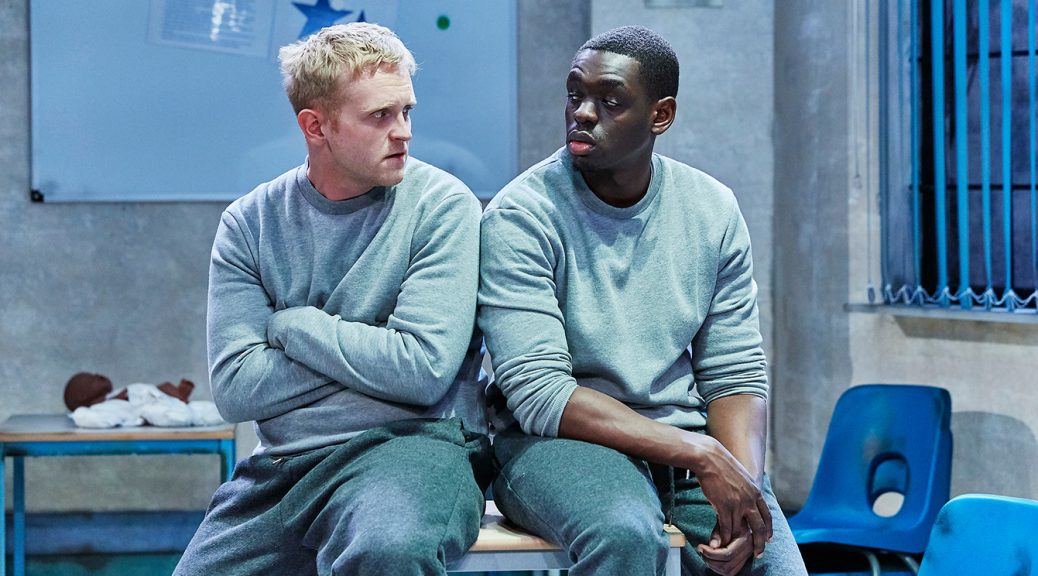
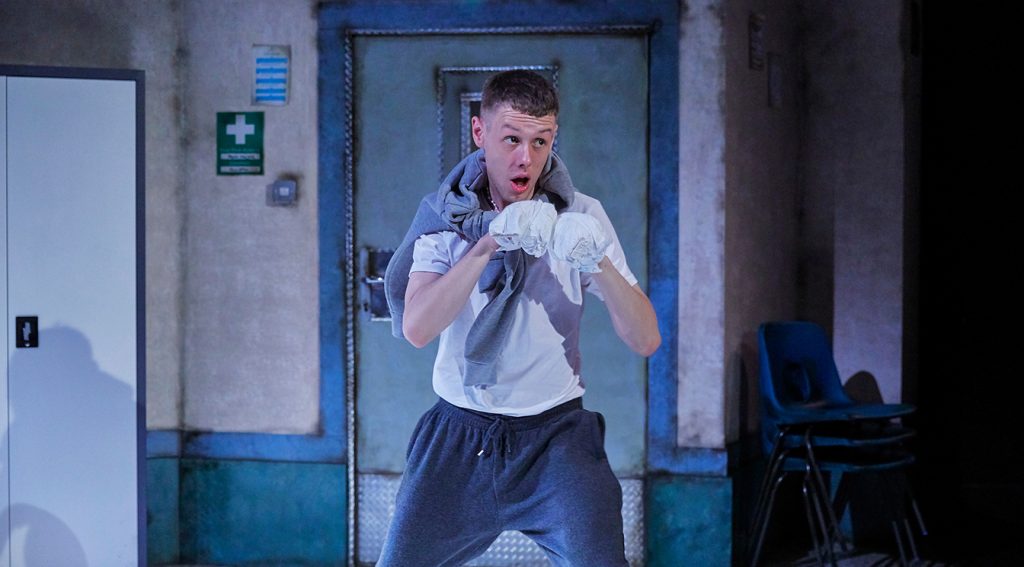
The finale spoils theatre lovers with six shorts of a high standard that are strong on comedy. Two very short pieces, Suburban Buffalo Sighting by Elizabeth Speckman and Nuns by Vicky Richards, entertain. The Front Line, by Linda Robinson, is a nice take on a zoom call: a job interview for a prison officer that’s sure to make you cringe. Both Mark Keegan and Ryan Brannon are splendid as, respectively, the tactful but exasperated interviewer and the candidate who ticks all the wrong boxes. Director Jonathan Woodhouse does well with the video format.

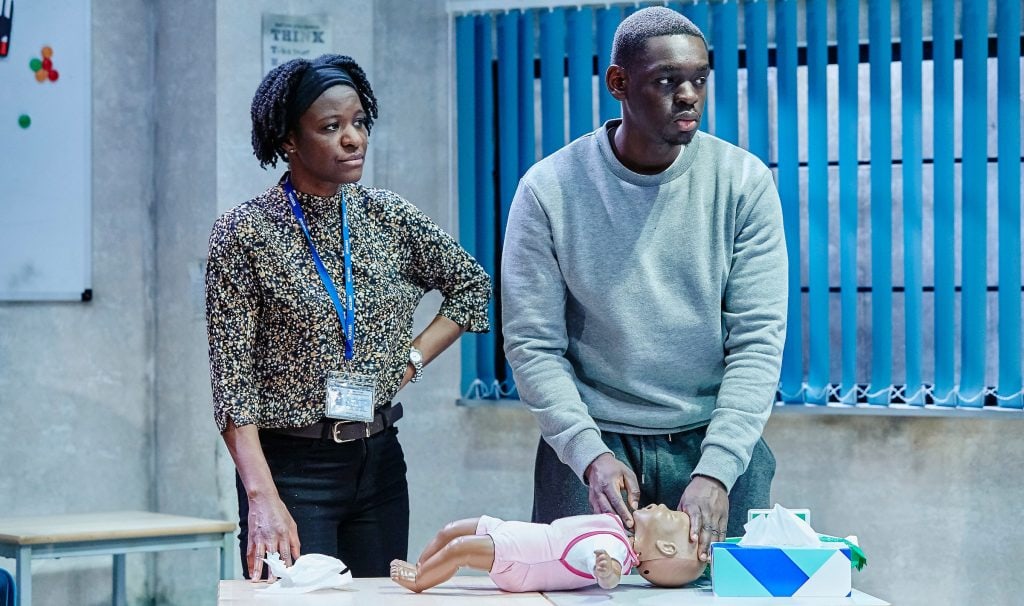
Mark Keegan and Ryan Brannon in 'The Front Line'
Mark Keegan and Ryan Brannon in ‘The Front Line’

For me, the highlight for laughs is Ken Preuss’ piece, A Dave With Destiny. This quirky two-hander has a random meeting and a couple trying to work out where they have seen each other before. The characters are a treat that performers Ramzi DeHani and Jennie Delaney clearly enjoy. There are good gags (pork-based jokes are always fun) that director Rachael Owens marshals well. Preuss handles the ending, always tricky for short pieces, with aplomb.

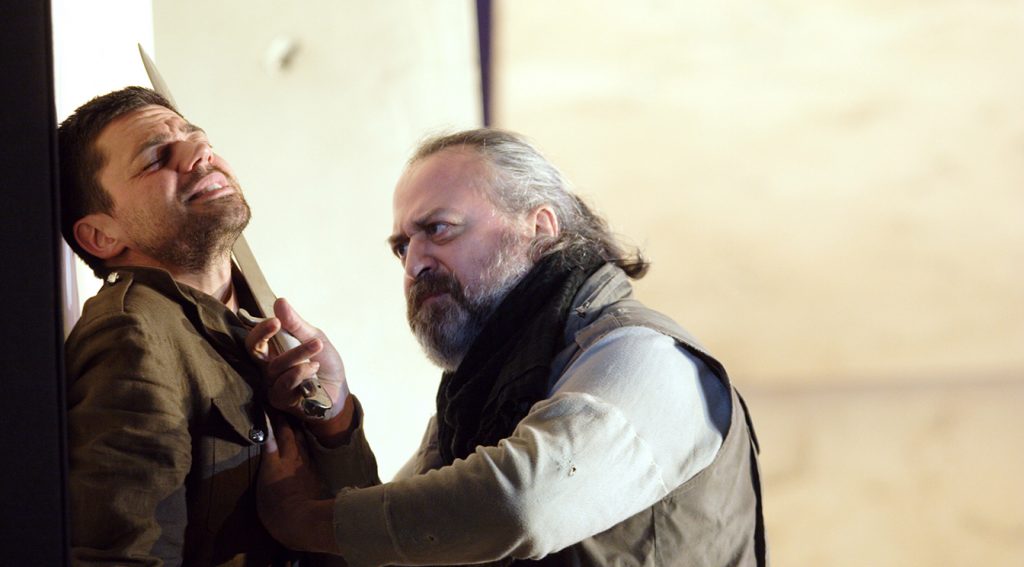
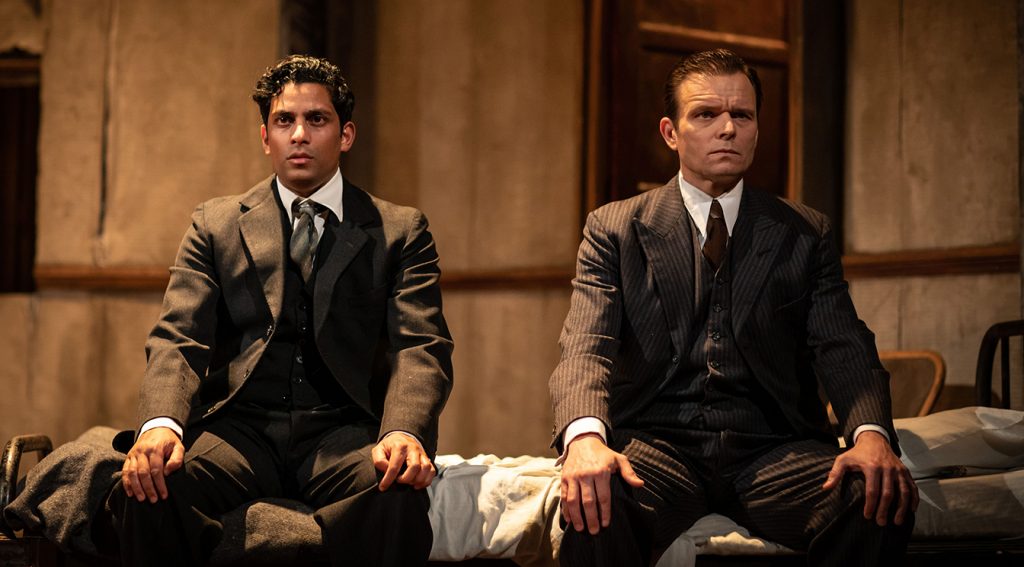
The night’s dramatic offering was less successful but still deserves praise. Brothers in Arms by Warren Paul Glover is an ambitious World War I drama with siblings in the trenches confronting a secret about their private lives as they prepare to go over the top. The period language is not convincing and there’s too much cliché. But performers Will Bridges and Jack Christie do a commendable job. Above all, Glover and the team assigned to his piece by Encompass (Owens directs once more) illustrate the project’s aims and achievements. It matters not a jot that uniforms haven’t been procured or that the action takes place in someone’s hallway; the idea of focusing on writing and performance, showing us the bare essentials of theatre, is present and correct.

A final treat comes from the show’s compère – the marvellous Mr Liam Fleming. A frequent director during the series, Little Pieces shows his talent as a writer. Clearly, helping to choose so many shorts plays has taught him lessons. Fleming crams in comedy and emotion, with a strong concept opened up and explored. A super delivery from Alice Corrigan only adds to the considerable charm of the piece. The idea of questioning the vagaries of our memory is a fitting end to a series that has helped during difficult times and that I will remember fondly.

www.encompassproductions.co.uk

“Wilde Without The Boy” at the Playground Theatre

Here’s a one-man show with a difference. Gareth Armstrong’s adaptation of Oscar Wilde’s prison letter, De Profundis, takes a fascinating text and reveals its complexity admirably. As the genius author’s relationship with his lover Lord Alfred Douglas is recounted with considerable tension, an emotive case for a spiritual journey is presented. More than a monologue, the show is an intelligent engagement with a historic text.

Gerard Logan takes the role of Wilde. The performance is one of great subtlety and nuance. Already well-acclaimed, and rightly so, Logan presents an Oscar without exaggeration and few affectations. Nearing the end of his prison sentence, it’s a broken man that we see. But also one claiming to have rebuilt himself through suffering.

How convincing you find the humility of the self-proclaimed “lord of language” is for you to judge. How much of a victim to an uncontrollable passion is also open to debate. And how pain and suffering relate to plenty of talk about the soul might make your head spin. But Logan is utterly convincing when it comes to Wilde’s devotion to Douglas. And he is very good when it comes to showing Wilde’s terror at events. Further, with more than a little superiority and glimpses of cruelty, care is taken to ensure Wilde isn’t entirely likeable.

The evening ends with a further treat. A performance of Wilde’s poem The Ballad of Reading Gaol. It’s an excellent pairing that aids the argument within Armstrong’s text perfectly, and the influence of Wilde’s experience on his art becomes crystal clear. Accompanied by a sensitive score from Simon Slater, Logan’s delivery is a huge achievement. Surely this poem is the one last work of art discussed in De Profundis and the case made for the work’s status as a masterpiece. It is a rare treat indeed to hear a recital of this quality.

Until 27 September 2020

www.theplaygroundtheatre.london

“Sunnymead Court” at the Tristan Bates Theatre

Gemma Lawrence’s new play, impeccably directed by James Hillier, is a love story set during lockdown. References to the recent hot – and a bit boring – summer abound. Lawrence conveys the frustrations and problems of this period, notably working from home. Impressive detail includes a character moving back to her family… and her homophobic parent.

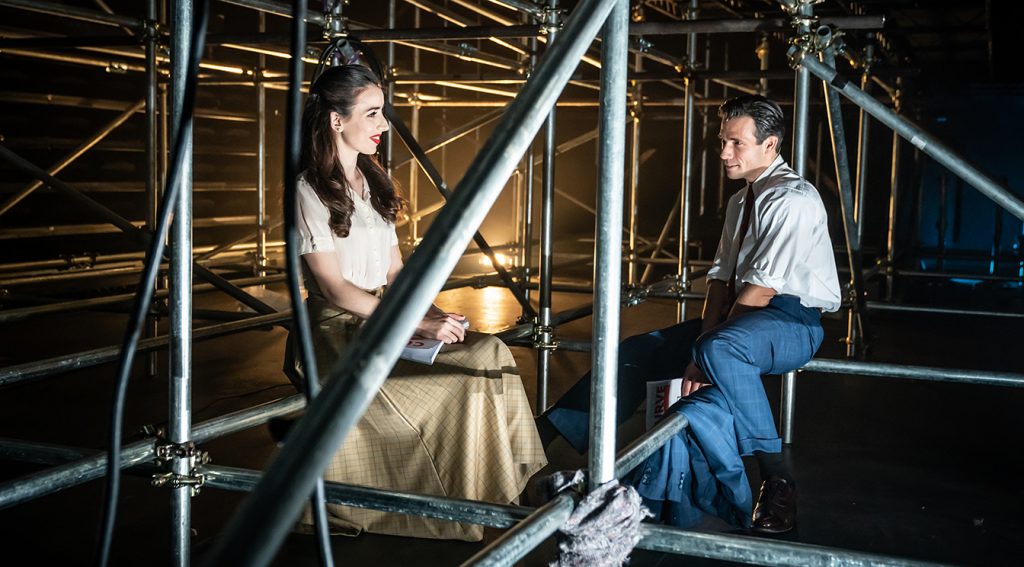
Love across the balconies of a London estate adds charm and hope. The obstacles faced by two women are surmounted by humour, drama and a dash of chance. The characters grab your sympathy straight away, impressively, for different reasons. They make great roles for Lawrence as Marie, who is joined by Remmie Milner as Stella, whose complementary energy makes a neat contrast.

My heart sank at first, as Marie starts out with her back to the audience staring at a computer. I didn’t come into the theatre (even one so welcoming, thanks to its lovely staff) to stare at a screen! But Lawrence’s close study of Marie’s anxiety is cleverly developed and has a relevance far beyond our current conditions.

Marie takes to isolation dangerously easily. Living online, and working too much, her relationship to her own body (from food consumed to routines followed) becomes troubled. Stella sees the problem, too: technology means we can “hide ourselves in our pockets”, while a joyous scene of dancing has Milner conveying the thrill of a “full” body experience. All this is, surely, a trend lockdown has exacerbated, rather than created. That debate aside, Lawrence highlights a concerning mental health trend with heartfelt sensitivity.

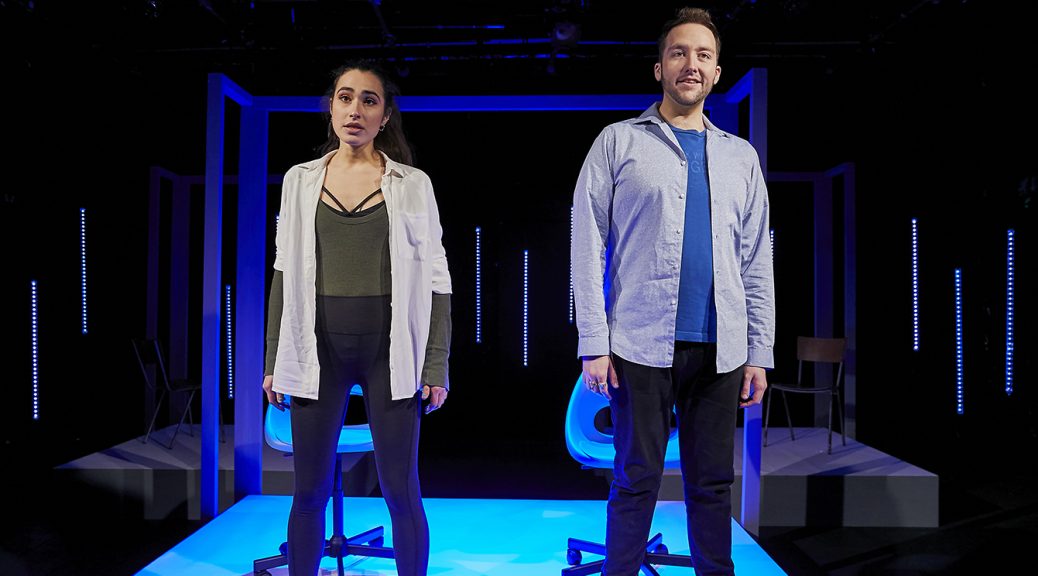
Importantly, for theatre lovers at least, is how this relationship to the body is conveyed on stage. With the actors apparently controlling Will Monks’ lighting, both become increasingly physically involved in the performance of the story. From glances at one another – anxious then often cheeky – to more and more movement, a sense of complicity is skilfully developed.

Lawrence uses her characters’ anxieties, and the problems of our times, to create a story that should appeal long after this summer is over.

Until 3 October 2020

www.actorscentre.co.uk

Photo by Jack Holden

“Pippin” at the Garden Theatre

More than a little mad, Stephen Schwartz’s musical, ostensibly about the son of Emperor Charlemagne, has a big revival in this small-scale venue.

This new version of the phenomenal hit has a cast of six who create a band-of-players feel that, along with the traverse staging, suits the setting. And director Steven Dexter hits the mark creating hippy vibes: dating from 1972, the show is very much of its time.

Ryan Anderson does a lovely job with the score’s main theme and its clever love song, where he is joined by Tanisha-Mae Brown making a strong professional debut. Anderson’s Pippin also manages some character development (no small achievement in this role) from awkward to angry – well done.

Tanisha-Mae Brown, Tsemaye Bob-Egbe and Ryan Anderson in Pippin
Tanisha-Mae Brown, Tsemaye Bob-Egbe and Ryan Anderson

Anderson may take the lead, but the production’s sextet works especially well together. They seem like they’re having fun! The cast’s skills show Nick Winston’s choreography superbly, impressive work for such an intimate space.

Pippin has great tunes and smart enough lyrics. The cast do well with the humour (which in truth is one note) aided by jokes about the lo-fi staging and theatre under current conditions. Joanne Clifton deserves special mention for camping it up as Pippin’s gran and his stepmother.

While Dexter has done well, it’s still hard to really get involved with this “anecdotal review”. Pippin’s search for fulfilment is exposed with deep cynicism – fair enough – but the self-conscious storytelling isn’t as clever as it would like and ends up feeling frosty.

Thankfully, Anderson manages to inject some genuine emotion. And the show’s overbearing concepts, with the sinister idea that Pippin is being manipulated, are in the capable hands of Tsemaye Bob-Egbe who performs as the Lead Player; her excellent voice and commanding presence brings the whole show together.

Until 11 October 2020

www.gardentheatre.co.uk

Photos by Bonnie Britain

“The Wild Duck” at Theatro Technis

Although a few venues are valiantly reopening this month, with small-scale shows and new writing, here is a chance to see a full-length classic with a larger cast. At the moment no show needs more to sell itself!

The production, presented by The Acting Gymnasium, has problems: rehearsals during lockdown can’t have been easy and one performer lost her voice as the run was about to begin (resulting in an admirable stand-in from Gintare Smigleskyte, working from the book).

Despite less than ideal circumstances, the chance to see this early masterpiece from Ibsen – a story of two sons and their fathers, with lots of indignation and insight – is well worth it. With metaphorical and moral blindness pitted against idealism, there should be plenty of thought provoked.

The show is solid rather than imaginative and the result a little stilted. A notable lack of Ibsen’s humour isn’t just down to the play being a particularly pessimistic tragicomedy. It’s also hard not to see the roles of Relling and Molvik (played by Crispin Holland and Eugene Doris respectively) as somewhat lost. Heavy handed it may be, but Ibsen wrote a doctor and a theologian in for a reason and they should stand out more.

Nonetheless, the ensemble supports one another well – and it really is great to see more than one person on a stage at a time. Irving Jones and Alan Kenny stand out as the older generation, with murky secrets suggested skilfully. For their sons, Kim Gjersoe does best when his character, Gregers, shows righteous outrage (which is, thankfully, quite often). Dhvel Patel takes the more sympathetic role of Hjalmar. Patel’s delivery could be clearer: louder, slower and with less fussing over props. But there is clearly an intelligent appreciation of the text and fine touches to enjoy from the depiction of a complex character.

Spacious for a fringe venue, with chairs removed Theatro Technis can accommodate 45 comfortably. I’ve seen plenty of shows with viewer seats occupied. Given the admirable work here, this Camden venue is well placed to carry a torch for fringe theatre during lockdown. Fingers crossed.

Until 26 September 2020

www.theatrotechnis.com

“Jesus Christ Superstar” at Regent’s Park Open Air Theatre

It wasn’t the pandemic that scuppered my first effort to see this revival of Timothy Sheader’s award-winning production, but the British weather. A word about that trip, though, since the atmosphere was wonderful, even if torrential rain brought an early end to the evening. It just wouldn’t be summer without a trip to Regent’s Park Open Air Theatre and the weather was a comforting touch of normality.

More importantly, front-of-house staff get the first cheer here: kitted out in PPE, but always smizing, they were welcoming and excited, even while wearing a visor and taking a temperature. Getting back to the theatre is the important thing. And, even with the show’s billing as a concert, the chance to hear Andrew Lloyd Webber’s masterpiece is welcome – for Tim Rice’s excellent lyrics as much as the score. But that ‘concert’ description is modest. True, there’s no set for the show. And performers are careful to socially distance. But the idea of a fresh look at the Gospel story is present and powerful. And the manner in which current constraints have been used by Sheader, his cast and his choreographer Drew McOnie is brilliant. The production is far from a reduced experience.

From the moment when performers simultaneously take off face masks (to a cheer), the show is gripping. The use of microphones and cables as props, albeit an invention born from social distancing necessity, is effective. And McOnie’s work really comes into focus. Isolated movements, reflecting the emotions of whoever is singing, don’t just feel appropriate to our times – with the space around each performer, intensity is increased. There feels like more to look at and more appreciate than ever.

Jesus Christ Superstar focuses on characters’ immediate, personal relations to the story (including speculation as to Christ’s frame of mind with the marvellous number Gethsemane). This makes the acting in the roles – and Sheader’s direction of them – key. Declan Bennett’s Jesus is mercurial and complex, full of humanity, with a unique charisma. As all know, the show belongs to Judas, and a surprisingly sweet-sounding Ricardo Afonso explores circumstance and motivation in dynamic fashion. Current reviews already testify to the achievements of the cast. Their performances are a further aspect of the show that even the most simple of staging enhances rather than detracts from.

Until 27 September 2020

www.openairtheatre.com

“My Beautiful Launderette” from the Curve Leicester

In the hope of much-needed donations during lockdown, director Nikolai Foster has made this archival recording, from a production last year, available to theatre lovers. Hanif Kureishi’s own adaptation of his renowned 1985 film, concerning immigration and 1980s Britain, proves a real treat.

The recording is of a dress rehearsal – so not strictly suitable for review – but well worth watching. Playing to an empty auditorium, a few of the performances are somewhat shrill. But this is impressive work in progress from the nine-strong cast that made me envy those lucky enough to have seen the show.

Gordon Warnecke (who played Omar in the original film) and Kammy Darweish play brothers from Pakistan. Kureishi’s script conveys a strong sense of their history, even though they only meet in the final scene. There’s a similarly fantastic chemistry between the leads from a younger generation – Johnny and Omar – played by Jonny Fines and Omar Malik respectively. And a strong performance from Hareet Deol as family friend Salim, who is “cunning, dangerous and a liar”, with each quality shown with convincing menace.

It’s the changes Kureishi has made to his script, which Foster directs with confidence, that fascinate. Deol benefits, as his role is far more central as part of a boosted plot. The roles of Nasser’s wife and daughter (now “a revolutionary”) have both been expanded. There’s also more to hear from Johnny’s fascist friends, a move that isn’t so successful. The two characters here are just too stupid: that may be accurate given their views, but it doesn’t serve the piece dramatically – despite the violence in the play, they are bizarrely unthreatening.

While the love affair between Johnny and Omar was explicit in the film, Kureishi spends more time with their relationship on stage. Starting as friends, their love story develops with humour, tenderness and eroticism. The romance makes for some magical theatrical moments that use Grace Smart’s set and a soundtrack from none other than the Pet Shop Boys to great effect. 

Seeing this recording will surely make you miss live theatre more than ever, provoking fond memories for those lucky enough to have seen the show for real and providing a chance for the rest of us to glimpse a fascinating show I’d love to see revived sometime.

Available at www.curveonline.co.uk/the-show-must-go-online/

“Beat The Devil” at the Bridge Theatre

Leading the return to live theatre, Nicholas Hytner has his venue on the South Bank up and running. OK, it’s a season of monologues and we’ve seen a lot of them online during lockdown. And even though seats have been removed, rather than being left empty, the capacity is sadly shrunk. But the season, and this opening piece, are exciting. And it is great to be back inside an auditorium to experience theatre for real.

David Hare’s monologue is based on his own experience of contracting Covid-19. You might share my reservations about the subject matter – enough pandemic already! – but bringing Hare’s talent and intelligence to the subject is valuable. Full of insight and wit, with a perfect blend of humour around this serious topic, provides a healing quality to the show. Maybe it’s wishful thinking, but I left feeling that things are starting to get a little better.

The show has star appeal, with Ralph Fiennes taking the role of the writer. The delivery is impeccable, aided by Hytner’s confident direction, always aware of the text’s nuance. The balance of humour, humility and serious points is reflected well in the performance. The effects of this “dirty bomb” of a virus on Hare are detailed but contain no self-pity. More noticeable is the “survivor’s rage” when he comes to consider how politicians have been handling things.

It isn’t hard to claim Hare is preaching to the choir. There’s some fun personifying the virus, imagining it targeting Boris Johnson and Donald Trump’s faults. Developing an eloquent disbelief at how incompetent our leaders have shown themselves has considerable bite. As topical as could be, Hare’s anger is hopefully an indication of his full recovery. Holding those with power to account, as he has so many times in the past, is healthy and invigorating.

Until 31 October 2020

www.bridgetheatre.co.uk

“Bare E-ssentials 4: A New Hope” from Encompass Productions

I have to admit I couldn’t make the live streaming of this new writing night. And I really did miss it! Thankfully, the show is available online and the atmosphere created by its host and “custodian of the scripts”, director Liam Fleming, can still be enjoyed. The evening has become quite a habit during Lockdown and the strong writing – comedy and drama – continues to live up to high expectations.
 
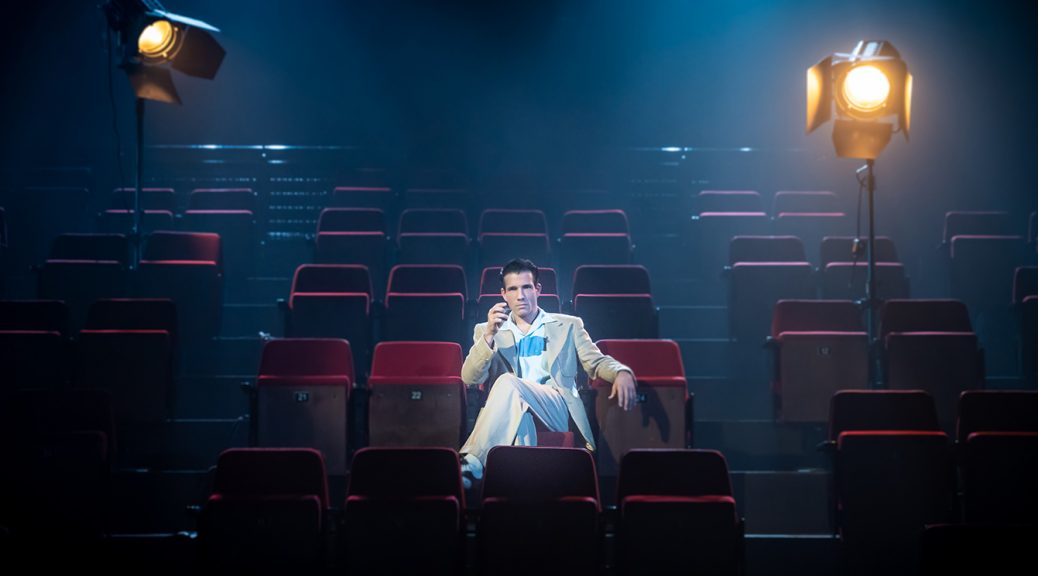
Cold Call by Scott Younger is a fun piece, centred on a bored data management employee flirting over the phone. The solid script is elevated by Fleming’s direction and the performance of Duncan Mason (pictured top). Younger has good sense of momentum and provides a nice twist.

A different kind of call centre is the setting for Donna Hoke’s take on the idea of ‘paying it forward’.  There are three performers (Encompass Productions are spoiling us), all impressive: Josh Morter, Simon Pothecary and Holli Dilon. A nice sense of the ridiculous makes this one enjoyable, and the idea of how charity, anonymity and social media mix could easily be developed.

Less successful, but with strong ideas, is Katie Murphy’s Just A Game. Two online gamers, with a strong back story, reveal secrets and lies. The piece has a lot of potential, so it’s a shame the script and performances are a little stilted.

The evening has a stirring finale with a powerful monologue by Alan Hall, about homelessness. Impeccably performed by Megan Pemberton, with Fleming’s direction sure-footed again, this is a particularly impressive piece – and, remarkably, the writer’s first monologue.
 
If there is a reservation, it’s clear that using phone or video calls as a device, while suited to an online show, is becoming the new normal. It makes sense – I get it – but is it wearing thin already? Yet fear not! While another online event is planned for the 30th of September, the company hopes to be back in a real theatre – The Old Bear in Kennington – in November. I’ll be buying a ticket as soon as I can.

www.encompassproductions.co.uk

“Godspell” On Line, In Concert

This recorded concert, celebrating the 50th anniversary of a legendary show, boasts a special introduction from its composer and lyricist Stephen Schwartz. Fans have the chance to hear some great new performances from a strong cast. And it’s all in aid of good causes: Manchester’s Hope Mill Theatre, Acting For Others and the National AIDS Trust.

I’m not a huge admirer of the piece, but there are plenty of good songs. While Schwartz knows variety is needed, both in style and emotional tempo, there aren’t enough stand-out numbers in a score that’s a little too easy on the ear. Thankfully, there’s no sense that any of the performers share my reservations. Among the West End stars assembled, it’s great to see and hear talents such as Alison Jiear, Jenna Russell and Sam Tutty. George Carter’s musical direction is of the highest quality.

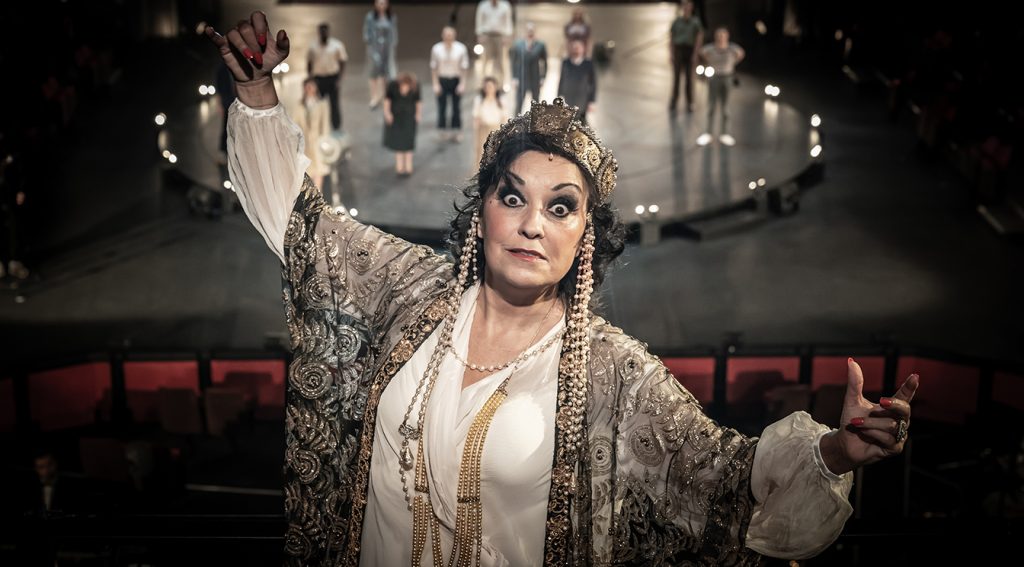
Director Michael Strassen tries hard to tackle the fluid nature of the song cycle format. While original productions presented parables, here inserts reveal abstract concepts of what the songs are ‘about’: Prepare, Hope, Faith, even Class. The approach provides some structure but conflicts with the inclusion of photographs from the present day, mostly of care workers, that feel proscriptive. And Godspell’s religious content is strangely absent. It takes a while to remember that John-Michael Tebelak’s book is loosely based on the Gospel story. As a result, Darren Day’s emotive performance as Jesus ends up disconnected and rather odd.

Although a smaller problem, the performers are not helped by the video work in this production. The variety of backgrounds is nice, but the split scenes, phone screens (of course) and graphics are frequently, well, naff. Especially disappointing is their intrusion in Ruthie Henshall’s number, Turn Back, O Man, performed in the bath! With a rubber duck on board, we don’t need bubbles added – the performance alone is enough.

Another notable exception – some humour – comes with a fine performance from Ria Jones of Learn Your Lessons Well. Otherwise, the tone is earnest, dry even. Plenty of effort is made to inject energy (Jiear is especially good at this) but as a collection of short films, momentum never takes off. Much of this is not Strassen’s fault – it’s a reflection of the show itself. While it always sounds top notch, the piece is downright monotonous.

Until 29th August 2020

www.hopemilltheatre.co.uk