All posts by Edward Lukes

“This Joint Is Jumpin’” at The Other Palace

This concert show aims to channel the spirit of jazz master Fats Waller with world-class performers honouring a selection of his music in a stylish, contemporary, manner.

The band is The Shakes, five outstanding musicians, and the show is conceived by Michael Mwenso and Michela Marino Lerman. It’s the performances that are the attraction: there’s only the ghost of a story here – snatches of Waller’s life and times read from newspapers, letters and books. To be blunt, the fragments prove a distraction – you learn next to nothing new.

The talent on stage is remarkable, though. Vuyo Sotashe joins Mwenso on vocals, both oozing charisma and cool, making a magnificent duo and blissful sounds. The tap dancing moves by Marino Lerman and Joseph Wiggan set a new benchmark for me, their percussive feet truly integrated into the compositions. On a stage crowded with talent, their personalities shine.

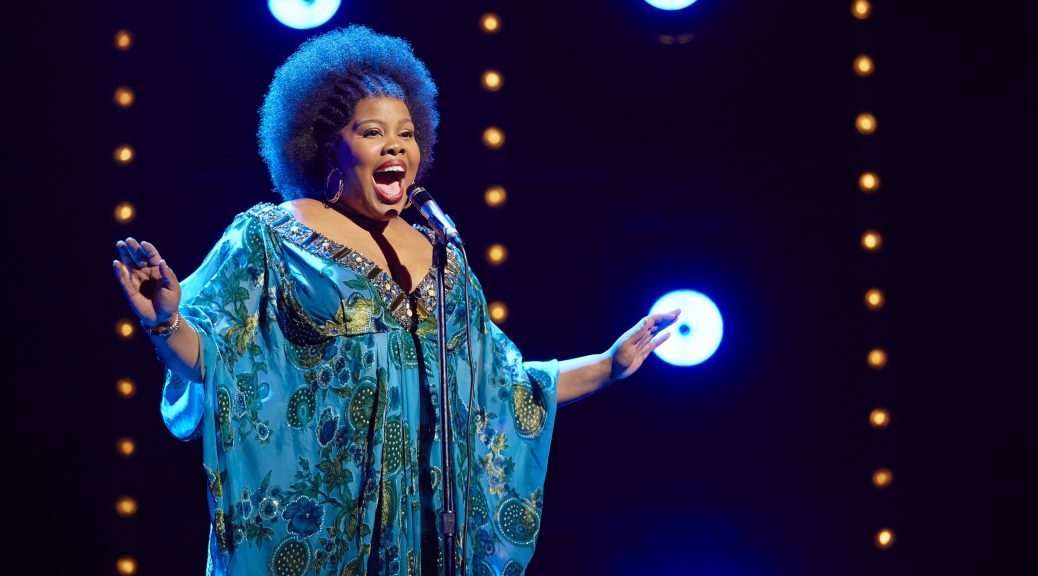
The show has a special treat, too – an appearance from the legendary Lillias White. A Broadway stalwart with awards for roles in Dreamgirls and The Life (both having London revivals right now), White is the real deal. Her numbers – too few of course – are total value, showing a playful flirtatiousness with Squeeze Me and then giving goose bumps with a civil rights number, Black and Blue. It’s an honour to see a performer like White on stage and the chance to do so is not to be missed.

Until 15 April 2017

www.theotherpalace.co.uk

Photo by Darren Bell

“Miss Nightingale” at The Vaults

Previous incarnations of Matthew Bugg’s musical, set in wartime London, have already received acclaim and this hard-working show deserves its extended run in the capital. With a spirit of utility, the tried and tested device of a cabaret interspersed with behind-the-scenes action is employed with good songs and an affecting story.

There’s a slightly confusing mix of musical styles, but Bugg’s compositions are impressive. Pastiche music-hall numbers, catapulting the show’s titular star to fame, have a nice line in naughty. That one of them is called ‘The Sausage Song’ probably reveals enough. Can you have too many soldiers standing to attention jokes? Probably, but I smirked from ear to ear anyway.

The comedy numbers are aided by a sterling performance by the multi-talented Tamar Broadbent. She gets a lot out of the innuendo with some drag king touches thrown in. The role is stock “formidable” Northerner, and yet Broadbent makes this Miss a hit – think Sally Bowles from Sheffield. It’s easily worth sitting through an air raid just to watch her.

Other music is more adventurous, with gambles that don’t always pay off. There’s a “bit of Berlin” from song-writing émigré George and numbers that reflect the drama of his relationship with the impresario promoting Miss Nightingale, Sir Frank Worthington-Blythe. The men’s love story get equal billing with our on-stage star (connections are intimate in several ways) – for Bugg provides plenty of story to accompany the songs.

Nicholas Coutu-Langmead & Conor O'Kane
Nicholas Coutu-Langmead & Conor O’Kane

Emotional impact comes from the romance – a story of gay cruising in the blackout and blackmail threats that are heavy on history. Conor O’Kane has a tough job as George, since the role has hysterical touches and isn’t free of stereotyping. Nicholas Coutu-Langmead is appropriately “dashing” as posh war hero Frank, a much fuller character who struggles with his sexuality (not one but two good numbers here) and is especially impressive when angry. Both men sound good, and a bold duet – ‘Waiting’ – is a third highlight.

The plot has holes, several around the villain of the piece, ably performed by Niall Kerrigan who needs a solo number added ( and, given Buggs’ talents I’d guess one exists and has been cut). Another issue is that while the songs are great the score doesn’t coalesce into something bigger. The tension between its central character and gay love story isn’t squared satisfactorily. But that’s also the charm of the piece – the messy ménage-a-trois here is satisfyingly complex and shouts its modern sensibility proudly.

Until 20 May 2017

www.missnightingale.co.uk

Photos by Robert Workman

“Incident at Vichy” at the Finborough Theatre

There is a dichotomy within Arthur Miller’s 1964 play, in which we meet ten men captured for questioning by German forces in Occupied France. A cool examination of evil combines with the emotional impact of events. Allying both aspects shows director Phil Willmott’s experience and skill.

Miller observed Nazi war crimes as a journalist and, like Hannah Arendt, adopted an intellectual rigour to understand the complexity of events. The text overflows with ideas, to its detriment – issues of class, race and alterity arrive too thick and too fast. Designer Georgia de Grey’s cold white box of a set makes the perfect environment for this clinical questioning. Two members of the strong cast convey the arguments, which lie heavily on the page, superbly: Brendan O’Rourke as a politicised working man and Gethin Alderman as a psychiatrist hailing from Vienna. Bright lights are appropriate for such an interrogation but also show the growing tension as stories are revealed and beads of sweat on foreheads start to show.

Gethin Alderman
Gethin Alderman

Miller presents his characters as “symbols”, several don’t have names and one, the “Old Jew”, doesn’t speak – great credit to Jeremy Gagan for making this role so effective. Rebuking the Nazi idea that there are “no individuals”, the men’s stories suffuse the work. There’s sterling acting here, including PK Taylor’s hip flask swigging thespian – a deluded pragmatist who dismisses theories and fears. And a collection of impressive breakdowns as the waiting continues. Both Lawrence Boothman and Michael Skellern, as an artist and a waiter, build their performances well. Edward Killingback, as a Vienese nobleman, comes into his own under Alderman’s scrutiny and Henry Wyrley-Birch makes a great contribution as a somewhat token “decent” German.

It’s these glimpses of lives, most about to end, that highlight Willmott and his casts’ talents. A collection of strong performances, finely controlled, that preserve the life and death tension in a piece that occasionally sounds like a textbook, making it work as drama.

Until 22 April 2017

www.finboroughtheatre.co.uk

Photos by Scott Rylander

“An American In Paris” at the Dominion Theatre

Like a recent almost-best-film-Oscar-winner, this adaptation of the 1951 MGM classic movie musical gains a lot of momentum from nostalgia. It’s a trip to Ooh-La-La Land – a struggling post-war France full of artists and amour. With a classic score and gorgeous dancing, aided by updated touches from Craig Lucas, the yearning for style and sincerity so often connected with the past is delivered to perfection.

The romance here has plenty of swoon, but is satisfyingly grown up – with three men falling for one girl, they can’t all get her. Set in the “ashes of war”, conflict hangs over the show. It’s Christopher Wheeldon’s achievement as director to combine this trauma with the theme of celebration: optimism is the role of the Arts post-war. This is arguable, of course, but it makes this show joyous.

Since the music and lyrics are by George and Ira Gershwin it’s a given that the tunes are sublime, but the orchestration from Rob Fisher is particularly sensitive and the voices well suited. David Seadon-Young plays talented young composer Adam, working with wannabe cabaret performer Henri (Haydn Oakley); both sound great and act well. With the same qualifications, Zoë Rainey plays Milo Davenport, the American patron of the ballet that forms the show’s divine finale. Described as a “pistol” of a woman, Rainey hits the bulls-eye with her performance.

From left, Robert Fairchild, David Seadon-Young and Haydn Oakley

Ballet star Robert Fairchild originated the role of Jerry on stage. An aspiring demobbed artist, Fairchild has a gracefulness that most could only dream of. Everyman’s muse Lise is played by Leanne Cope, whose gorgeous gamine looks make this perfect casting. Both dancers, who travelled with the show from Broadway, can sing well and their chemistry is breathtaking. Their romance isn’t a matter of youthful optimism on Jerry’s part, but rather the drive to make the most of the rest of his life, while Lise’s desire to live with “no history, no past” shows there is plenty she needs to escape. It makes the stakes high and their dancing together truly ecstatic.

It’s the footwork that is the star of the show. Wheeldon has played to his strengths as a choreographer by emphasising the dance, and it is among the best you could see. Even moving the scenery around is done stylishly, with everyone dressed in costumes by Bob Crowley that are good enough make you sigh. There’s a sense you wouldn’t want to work for those in charge here – the rigour on display is so daunting – but watching the result is amazing. It’s an ensemble of impeccable talent working flat out for an audience’s entertainment and achieving tens across the board.

Until 28 April 2018

www.anamericaninparisthemusical.co.uk

Photos by Johan Persson

“Dark Vanilla Jungle” at Theatre N16

Here’s a chance to see a great play by one of the finest writers around. Philip Ridley’s nightmarish nativity tale is an 80-minute monologue of consummate storytelling that’s not for the faint hearted. Second Sons Theatre Company’s production can be viewed as a summons to explore the darkest of subject matter – you have been warned.

As with another of Ridley’s short plays, Tonight With Donny Stixx, this is an intimate encounter with a disturbed, taboo-breaking youngster. As an examination into sexism, too, given Ridley’s ripe imagination, the result is one of toxic potency. It’s a huge role for Emily Thornton as Angela. A troubled childhood as “an invisible” abandoned by parents, a horrific, sexually abusive relationship, then a fantastical – and repulsive – breakdown and a crime are all mixed together. Thornton conveys her character’s unbalanced naivety well, her make-believing even better, and has a go with the themes of “camouflage” that excite Ridley. If there’s a shortcoming, some of the wicked humour is missed, but this is a performance to be proud of.

Samson Hawkins’ direction is unflinching, the staging bravely minimal. Andrea’s confused ideas about gender roles, including a flirtation with the language of fundamentalism, voice fears that many leave unspoken. It can’t be stressed enough that this is queasy stuff. But a play this audaciously florid, with a production that does it justice, is a challenge to an audience that should be accepted.

Until 31 March 2017

www.theatren16.co.uk

Photo copyright Second Sons

“The Wild Party” at The Other Palace

The renamed St James Theatre, now in Lord Lloyd Webber’s portfolio, has the new raison d’être of trying out and refining musicals. And there’s the aim of starting conversations from artistic director Paul Taylor-Mills that warms a blogger’s heart. The first show, by Michael John LaChiusa, is a strong start, but a puzzle, too. Seen on Broadway in 2000, it already seems so cogently formed that there is little new to talk about.

The piece is experimental in that it is based on a poem – by Joseph McClure March – can anyone think of another musical apart from Cats with such a source? George C Wolfe’s book is structurally audacious and, while the scenario couldn’t be slimmer – someone holds a party, that’s it – the tension ratchets up and up. Both music and lyrics have little time for novices or a discernable eye on commercial success. The milieu here isn’t that familiar to a British audience (jokes, in particular, are a touch obscure) but LaChiusa’s knowledge of American music is obviously profound.

A good portion of the show is a series of introductions. Taking the lead is Queenie, a dancer in Vaudeville, brilliantly portrayed by the legendary Frances Ruffelle, who gives this tart-with-a-heart appropriate depth. Her common law husband, played by John Owen-Jones – also tremendous – ensures the show is not one for coulrophobics. This complicated relationship is the vehicle for exploring obsession and dependence.

John Owen-Jones and Victoria Hamilton-Barritt

Presenting other partygoers gives the rest of the ensemble a chance to shine. Dex Lee is particularly strong as the arch hedonist Jackie, a sophisticate who turns bestial. And, as Queenie’s best friend Victoria Hamilton-Barritt really gets her teeth into a juicy role. It would be hard to sacrifice any of these characters… but maybe more focus might have made the show more enjoyable? Combining high and low life and a mix of ages, races and sexualities has a point but means there’s a lot to handle here. And don’t forget a moral. Like many works of art about libertines, The Wild Party is a warning. When the bootleg gin arrives, complete with bathtub on stage, it would make Hogarth proud.

The venue’s aim as an experimental home is fulfilled for Drew McOnie. While his acclaimed choreography adds enormously to what could be a static affair, his remarkably assured debut as a director is the real story. The piece calls for strong acting and McOnie secures it. There’s a cutting pathos to many of the affairs. And a crazed wish for love, sex, drugs and ambition, with a scary intensity that McOnie doesn’t spare us from.

Until 1 April 2017

www.theotherpalace.co.uk

Photos by Scott Rylander

“After Party” at the Pleasance Theatre

Like Edward Albee’s Whose Afraid of Virginia Woolf?, James Meteyard’s play explores a (metaphorical) hangover from years of trauma and delusion. Opening with a debauched celebration, nicely summarised, we join a group of mid-twentysomethings slowly discovering their grief over a tragedy that happened at college. In this drama about adult friends living together, the ambition is impressive, but the results are uneven.

The humour is on one note but delivered well; especially by Atilla Akinci, whose character is the only one removed from past events (using him more could have aided exposition). A bigger problem is the dialogue around those big sex and death themes – horribly stilted and painfully long winded. Will is the troubled lead with a secret – credit to Jamie Chandler for dealing with some clunky lines. One analogy – something to do with a scab – is so laboured that I glazed over. Chief culprit in the bar-room philosophy stakes is Will’s “bro” Harlan, who has an attraction for abstractions that Alex Forward braves valiantly. Injecting some much-needed realism into the group is Megan Pemberton’s Phoebe – the only character even trying to act her age. Cat Robey’s direction needs to speed this indulgence up considerably.

James Meteyard and Callum Cameron

Tiresome heart to hearts, accompanied by far too much forehead slapping and exasperated sighs, are in stark contrast to scenes of tension. The group’s old friend Max’s release from prison and arrival ‘home’ are superb: the mood changing instantly and the suspense terrific. It’s a small role for Callum Cameron, but he steals the show and brings out the best in his colleagues, particularly former partner and unforgiving ex-pal played by Eleanor Crosswell and Olivia Sweeney respectively. Meteyard also performs here – well, it should be added – arguing the case for Max while his own character’s agenda creates a tense undertow.

There’s a suspicion this confrontational scene was the kernel for the play – it’s strong enough – but it takes forever to arrive. Too much effort is expended on giving time to each member of the ensemble. There’s a bold end, but it’s a shame this scene is the only one that feels hurried. Overall, a work with potential that needs polish.

Until 26 March 2017

www.pleasance.co.uk

Photos by Isaac Whittingham

“Who’s Afraid of Virginia Woolf?” at the Harold Pinter Theatre

Casting doesn’t get more exciting than this. For the first revival of Edward Albee’s masterpiece since his death last year, Imelda Staunton and Conleth Hill take on the iconic roles of George and Martha, the feuding couple whose frustrated lives on a New England college campus are full of twisted alcohol-fuelled fantasies. Imogen Poots and Luke Treadaway, as the younger Honey and Nick, join them for a party – unfortunates drawn into troubled lives for a fight night they will never forget. The stage brims over with talent for this astounding play.

George and Martha’s “exercise” of combat is frightening. Their aim at one another is practised and potent, themed on his stagnant career and her drinking and adultery. Their “games” escalate ferociously – and they start out pretty vicious. Staunton and Hill convey the complicity between the couple perfectly, who display a mix of resignation and excitement over their perverse sport. The final scene, revealing who is really the most damaged, shows how carefully constructed both performances have been. Yet it is the younger cast who offer the most insight into the play. The 1966 film shows how easily these roles can be eclipsed, but Honey and Nick are more than sacrificial pawns. Potts and Treadaway work to create a convincing relationship, a foil to their elders. Potts does a great drunk (never to be underestimated) and Treadaway adds an edge to his “smug” character with cold ambition and repressed physicality.

Luke Treadaway and Imogen Poots

Yet the production is not an unqualified success. It’s too funny. Yes, Albee’s text is full of wit but here the humour is blunted and misogyny unquestioned. Director James Macdonald hasn’t mistakenly stumbled into his approach and clearly gets what he wants – big belly laughs. But it is a disappointment. Take a moment of physical violence (noting how rare and strange it is) and Honey’s reaction to it: Potts gets a roar of laughter but this should be a moment of raw bestiality. Macdonald has stripped the play of surreal touches, such as George’s ironic obsession with order. Deliberate mistakes, over job titles, locations and dates, are treated glibly when they should be unsettling. Too much of the comedy is treated as sparkling and fresh – it should be fetid and uncomfortable. George and Martha’s “flagellation” is sordid stuff, but here it feels like a drawing room comedy.

Until 27 May 2017

www.whosafraidofvirginiawoolf.co.uk

Photos by Johan Persson

“Frankenstein” at Wilton’s Music Hall

This potted production of Mary Shelley’s tale makes for an entertaining evening. In this somewhat ruthlessly adapted version by Tristan Bernays, the skeleton of the story remains, while casting one performer as both the eponymous doctor and his monster puts flesh on the bones of ideas about their relationship. Adding only simple props – lamps, buckets and a flight case – establishes a strong story-telling feel of considerable charm.

The show is a star vehicle for recent graduate George Fletcher, who plays both creator and creature. We see mostly monster – racing through ‘infancy’ efficaciously with admirable physicality, while creating possibly too much sympathy. He is joined as The Chorus by Rowena Lennon, who takes on some extra speaking roles admirably and even more impressively creates visual and aural echoes of Fletcher’s actions and emotions.

The show comes fromThe Watermill Theatre. Might it have been scarier if its genesis was the atmospheric mid-19th century Wilton’s? The Victorian loved to be spooked, after all. Director Eleanor Rhode brings clarity to weighty questions, but there could be more tension here. Nonetheless, the performances are strong, while excellent effects (light and sound by Lawrence T Doyle and David Gregory) ensure the show impresses, even if it is cerebral rather than creepy.

Until 18 March 2017

www.wiltons.org.uk

Photo by Philip Tull

“a profoundly affectionate, passionate devotion to someone (-noun)”

AT THE ROYAL COURT


The subject matter for debbie tucker green’s new play may be romantic love, but there’s very little in it. Five brilliant actors play three couples, and the audience becomes privy to (mostly) their arguments. It could be dull, but is transformed by an ability with language that’s phenomenal. More like a poem than a play, its remarkably recognisable everyday voices are combined with startling musicality.


Language isn’t the first thing that strikes us, though. Working with designer Merle Hensel, the seating consists of swivel stools in the centre of the space, with a raised stage on three sides. Performers draw on green floor-to-ceiling chalkboards. Any connection between their scrawls and communication isn’t elaborated. A more immediate connotation is a tennis match, as words start to fly and feelings that should be left unsaid are spoken out loud.


The majority of the play is spent with a young couple, called A and B, with back and forth scenes of tension in their disintegrating relationship, blissfully interspaced with glimpses of joy and sensuality. With such variety in emotions, actors Gershwyn Eustache Jnr and Lashana Lynch deserve the highest acclaim. Fights, trivial and important, as the post-mortem of their marriage is picked over, have a disturbing rawness. The inventive structure moves perspectives, continually searching the past and examining lost potential.


There are two further scenes, showing an older couple, Woman and Man, played by Meera Syal and Gary Beadle, then Man’s new relationship with Younger Woman, played by Shvorne Marks. The acting is again superb, but these stories feel truncated, the characters less fleshed out and parallels forced. Giving them so little time is one of the smaller puzzles here – so many questions are raised that the play will not satisfy all audience tastes.


The annoying lower-case title alludes to defining something. One way of doing that is to remove specifics, making the dialogues a questioning of Form (no escaping a capital letter here). tucker green certainly provides few particulars. But a warning – trying to work out ‘what’s going on’ is ingrained, and having so little to work with can be frustrating in a play. The trick instead might be to focus on the theme of communication. The characters are said to either talk too much or too little. And their ‘look’ – a fruitfully theatrical element brought to the fore with the author working as director, aided by such a strong cast – shows there is more to a conversation than words. Aiming for a definition on love inevitably falls short. But the attempt at elucidation here still has many pleasures.


Until 1 April 2017


www.royalcourttheatre.com


Photo by Stephen Cummiskey