All posts by Edward Lukes

“Christie in Love” at the King’s Head Theatre

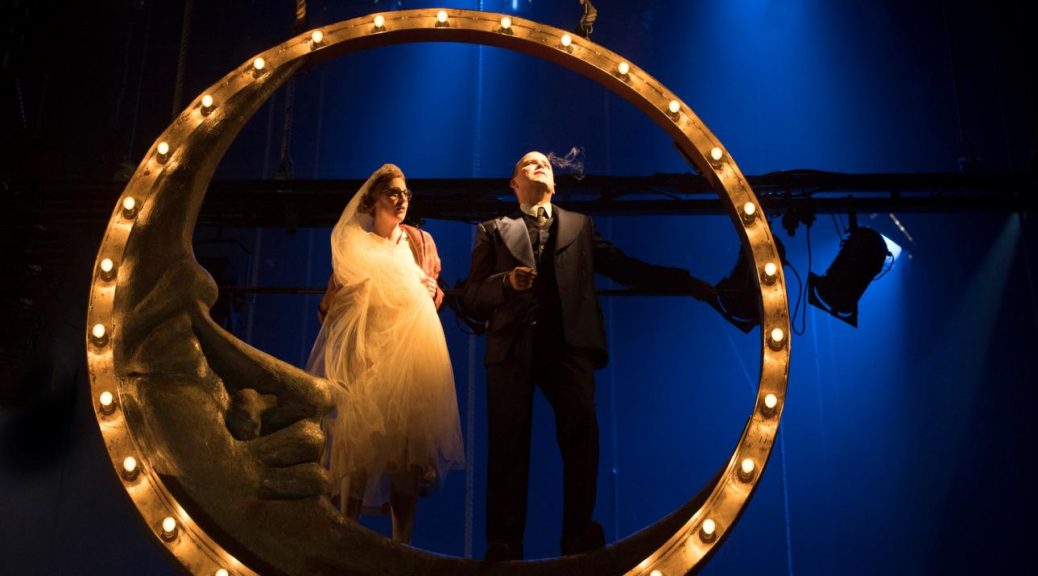
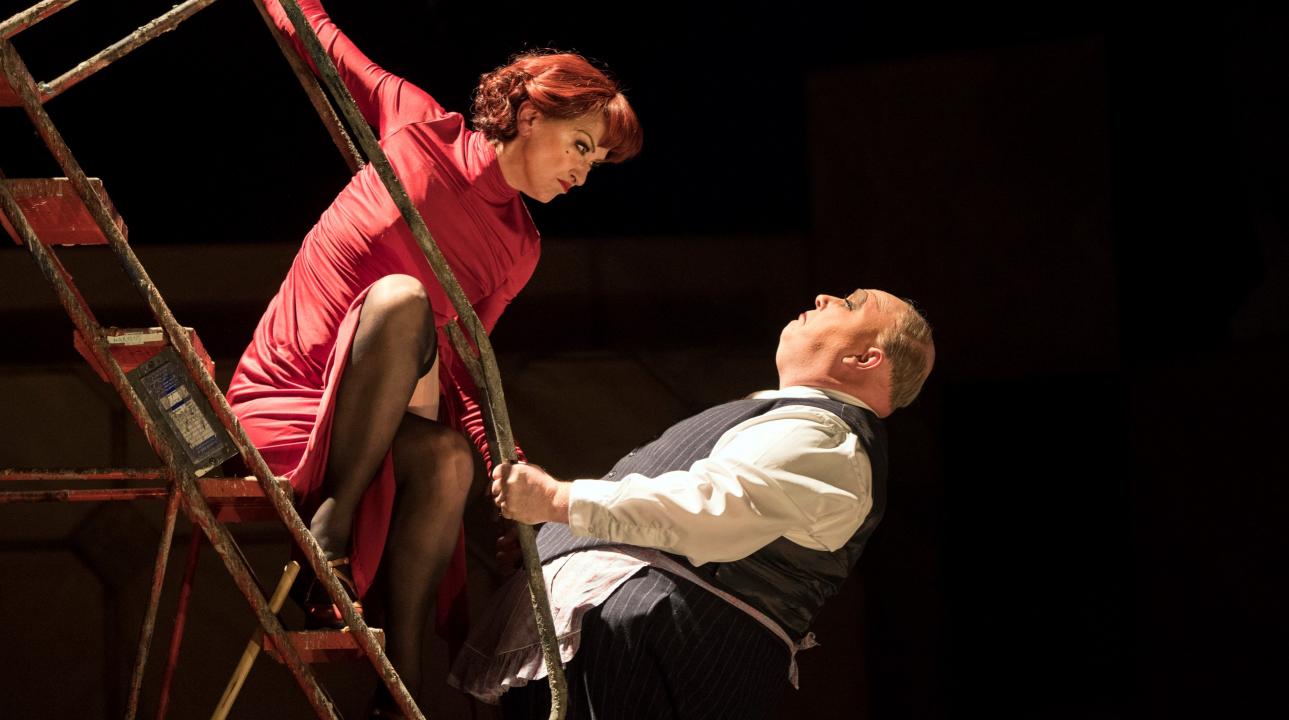
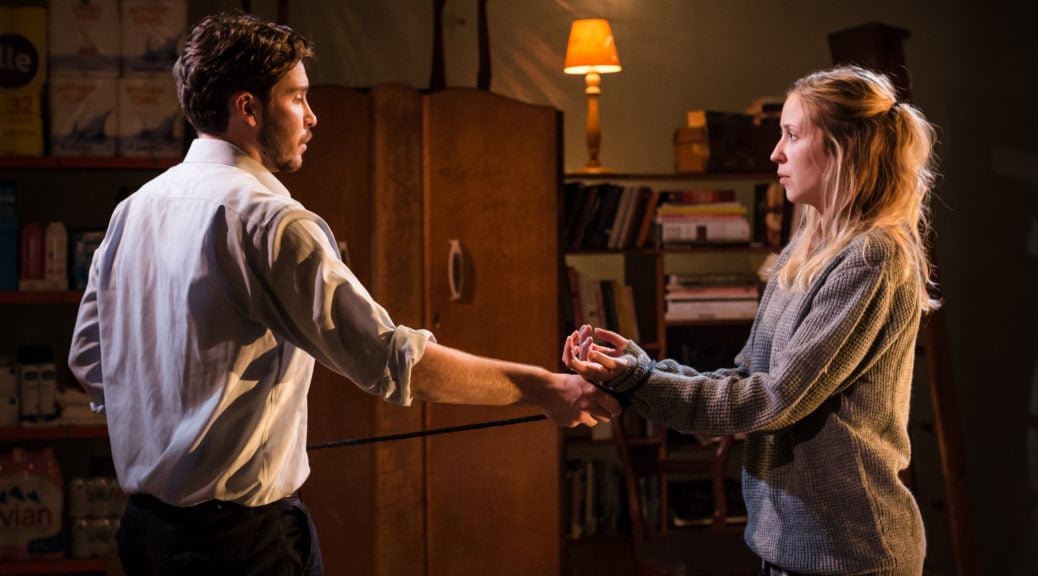
This welcome revival of Howard Brenton’s 1969 play, about the serial killer who secreted eight victims at his home, 10 Rillington Place, is exceptional for its fearlessness. A police constable and detective uncover bodies and interrogate the creepily reserved John Christie in a play that’s frightening, bold and adventurous. Brenton casts a cynical eye on the establishment, incompetent and clichéd by turns, while his portrayal of the psychopath, including explicit sexual kinks, is unflinching.

Director Mary Franklin handles the eccentric text bravely. There are pauses aplenty and our first encounter with Christie, masked and masturbating, is truly bizarre. And Franklin secures three superb performances. Daniel Buckley plays the nervous young copper with a taste for nasty limericks, who impresses with his puppetry skills in a flashback scene that has a prostitute encountering Christie. Jake Curran is just as good playing the Inspector, a tricky part full of irony and repression that he makes thrilling. Murray Taylor takes the title role and is truly scary. Unafraid of making eye contact with the audience, he guarantees goose bumps, but this isn’t a shock-horror affair. Hugely committed, Taylor shows Christie as a part of society no matter how abhorrent his actions.

For all this – three of the finest performances you could wish for on a stage – the real star is designer Christopher Hone. With a giant newspaper-filled rectangular box performed on, in and around, this is a set full of surprises. There’s literally a balancing act for the performers, which adds a tension of its own, while the concept serves to focus attention and raise questions, just like the play itself.

Until 18 June 2016

www.kingsheadtheatrepub.co.uk

Photo by Chris Tribble

“Sunset at the Villa Thalia” at the National Theatre

You can take the playwright out of Sloane Square and yet, it appears from Alexis Kaye Campbell’s new play, London is never far away. The subject here is the history of modern Greece, the coup in 1967 and its aftermath in the writer’s mother’s home country. But when an arty English couple snap up a second home at a bargain price, it feels as if the London housing crisis is giving rise to debates about politics and intervention.

Elizabeth McGovern
Elizabeth McGovern

Simon Godwin’s tight direction and a superb cast are the best things here. Theo and Charlotte, brilliantly performed by Sam Crane and Pippa Nixon, are a playwright and actress. Yes, the self-referentiality is tiresome, but it’s in keeping with the theme of personal responsibility in the play. Contrasts with an American couple, holiday friends, are fun and Elizabeth McGovern from Downton Abbey is a revelation as the drunken June, who likes her fruit punch without the fruit. It’s June’s husband, a shady American official called Harvey, that Kaye Campbell does best with: he’s a dark figure who claims his dirty dealings secure freedom and enable democracy (with its ‘twin’ the theatre) to flourish. Balancing charisma, intelligence and danger, Ben Miles excels in the role.

Sam Crane and Ben Miles

The laudable, openly declared question of ‘What would you do?’ is fair game. Cramming politics into a play is never easy, being blatant is fine. Nonetheless, it’s all too easy to dismiss many arguments here as naïve – left or right – even though Miles and Nixon are riveting. The effort is thorough, the play hard working and this surprisingly traditional piece is an entertaining, erudite affair. The playwright within the play is demoralised that his work is “quietly political”. Applying the same assessment to Kaye Campbell might not please him, but the passion often feels contrived, the arguments too easy, and so that label fits.

Until 4 August 2016

www.nationaltheatre.org.uk

Photos by Manuel Harlan

“Human Animals” at the Royal Court

Stef Smith’s new play looks at control and civilisation, depicting a particularly English apocalypse under the veneer of an environmental disaster. The dystopia created when pigeons and foxes go mad (my, how playwrights love these disasters) leads to quarantine and mass destruction. It’s predictably grim but nonetheless affecting.
The production is innervated by direction from Hamish Pirie, while Camilla Clarke’s colourful murals, video projections and windows splattered with blood create an impressive set. Efforts are made to inject tension, but the trajectory of the story and political responses of the characters frustrate this.
Human Animals
The cast is top notch. Stella Gonet plays a grieving widow wonderfully (it’s the best part), joined by Natalie Dew as her spirited daughter. Their respective approaches to the crisis – resignation and revolt – are the central dynamic for Smith and could have made a play of its own.
Human AnimalsA young couple, admirably performed by Lisa McGrillis and Ashley Zhangazha, share the dilemma of what to do as the state takes charge. One saves animals secretly and the other works for the company profiting from slaughtering all the wildlife. Their relationship is depicted carefully but the argument is blunt.
Human Animals
For a final pairing, oddity is the theme. Two unlikely drinking partners, with bizarre twists to their conversations, are apathy and action personified. Even performers as magnetic as Ian Gelder and Sargon Yelda can’t save the roles from being a puzzle. Showing their bestial sides, as society breaks down, isn’t enough of a pay off.
With the majority of characters too briefly sketched, and the scenario less than compelling, it’s fortunate Smith writes with a powerful, poetic turn. Vivid imagery and bold scenes, where the cast combines to choral effect, are the highlights that ensure this sketchy play becomes impressively pushy.

Until 18 June 2016

www.royalcourttheatre.com

Photos by Helen Maybanks

“Realife TV” at the Barons Court Theatre

This solid and serious new play from Ian Buckley is tightly directed by Anthony Shrubsall. Tackling the subject of domestic violence through the prism of a documentary filmmaker, the play works best as a suspenseful thriller, uncovering the past of an initially charming psychogenic amnesiac. More cerebrally, Buckley aims at big issues surrounding the reporting of crime.

An incredible story, inspired by true events, the tension builds well. Clearly, a man recovering his identity would make good TV. It’s a shame that the lead character, an investigative journalist played commendably by Roseanna Frascona, is too well meaning and naïve to be credible. Likewise her creepy, clichéd TV producer (oh, go on then, maybe he is believable) is an unhappily clunky role for Alex Jonas. The debate is truncated and the characters sometimes flat.

The victims – labelling them as such indicates the central dynamic within the piece – are more interesting. Katrina Cooke fleshes out her character marvellously and similarly detailed work from Fed Zanni creates a husband and wife we care about. Estranged by a traumatic event, carefully revealed by Buckley, the TV cameras lead them to relive it and the result is tragic. The impeccably performed finale grips. This one scene is the germ of a play that could have been grown further, given the fertile ground here, but the piece impresses as it stands.

Until 29 May 2016

Call 020 8932 4747 for tickets

“Monster Raving Loony” at the Soho Theatre

If you want to classify contemporary playwrights, James Graham is the one that writes about politics. His new play, via the Theatre Royal Plymouth, is engaging and imaginative. Taking as its subject David Screaming Lord Sutch and his political party, which gives the play its name, biography is combined with politics, cultural history and inspiring touches of English eccentricity. The masterstroke is to tell Sutch’s story via famous comedians. It’s a bonkers technique that’s appropriate for its subject and it’s original, funny and brilliantly written.

So, Sutch’s mum is first a pantomime dame. Then, as mother and son plan to open a bric-a-brac shop, she becomes Albert Steptoe. Interviews are conducted on Just A Minute and a visit to the doctor is a Monty Python sketch. It’s quite a carry on – yes that’s there too –  an encyclopaedic journey through comedy masters. In each sketch, Graham is up to the job – he could have written for any of these greats. And it’s all manipulated to tell Sutch’s life story. Wow.

Joseph Alessi & Samuel James Photo Credit Steve Tanner
Joseph Alessi & Samuel James

A demanding play for actors, the impersonations are non-stop and the delivery breathtaking. Samuel James gives a stellar performance as the lead, joined by four others, alongside Tom Attwood whose role as The Musician roots the play. Highlights may depend on your comedy preferences: Joe Alessi’s Alf Garnett is perfection, and how quickly Jack Brown embodies Kenneth Williams and Julian Clary cannot fail to impress. Tellingly reflecting the sexism of the time, the women have fewer pickings. But Vivienne Acheampong does well in a bed-hopping farce and Joanna Brookes is stunning in the male roles she adopts.

James’ performance is the one that requires real depth. Not that this stops a great Frank Spencer impersonation. But there is Sutch’s struggle here as well. Focusing on this fascinating figure is a task slightly at odds with such a high-energy show. Prone to depression and trapped in a public persona, his story gets a little lost despite the skills of director Simon Stokes. Sutch’s suicide seems too much for the play to handle.

Stokes shows fine work when it comes to audience participation – it’s cunning for a director to control this. Such planned fun is always a pet hate (joining in with songs makes my toes curl). But the raffle tickets and bingo cards waiting on seats have a point here that makes them (almost) worthwhile. Another bold stroke from Graham, games typify his novelty and magpie humour in this damnably clever piece.

Until 18 June 2016

www.sohotheatre.com

Photos by Steve Tanner

“The Toxic Avenger” at the Southwark Playhouse

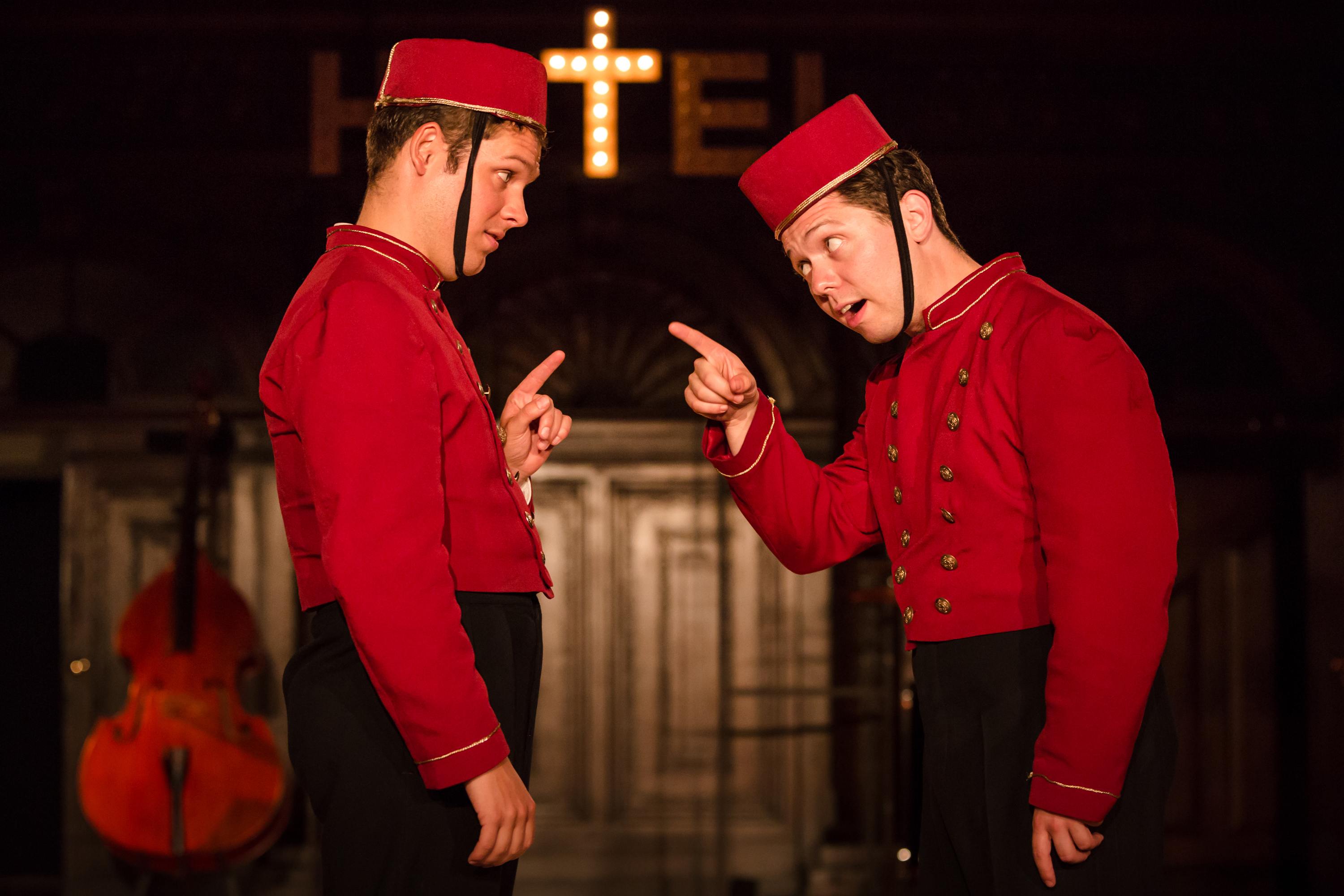
B-movie inspired musicals are an established genre, from Rocky Horror shows and Little Shops to recent examples such as Bat Boy at this very venue. Joe DiPietro and David Bryan’s 2008 work, based on Lloyd Kaufman’s film, shares the schlocky kitsch appeal and knowing references that fans love. And there’s a super cynical side that suits contemporary musicals, with a take on government and environmental issues – Urinetown springs to mind – ensuring wide comedy appeal.

There’s a superhero angle that provides laughs, as the town nerd gains great powers (applause for nifty costume changes throughout) and sets about tackling pollution in the town of Tromaville, New Jersey. Battling corruption and prejudice with a love interest thrown in, there’s plenty to parody, and The Toxic Avenger does parody very well indeed.

The script is a good deal stronger than the score, which lacks direction and possesses conviction only when it comes to comedy. But the lyrics are frequently inspired – geranium rhymes with cranium, for example – and the jokes are good. And the pace is impressive; this show is literally a laugh a minute.

The cast is accomplished and creates an infectious sense of fun. Mark Anderson takes the lead, deserving acclaim, with a superb voice. Hannah Grover is the blind librarian Sarah, uninterested in a romance until Toxie’s transformation; her comic skills make the most of jokes about disability and sexiness (a little too obvious a ploy to make this an ‘adult’ affair). Lizzii Hills impresses even more, playing both mother and town mayor, scoring a big hit in a number that is a duet between the two. The power behind all three voices skates over some bland musical moments.

The stars of the show are Marc Pickering and Ashley Samuels, who play all the other roles – doctors, scientists, policemen, thugs and Sarah’s girlfriends (condragulations (sic) on that one). Running around like mad, Pickering and Samuels’ standard of singing never drops, the folksy title number is delivered brilliantly, their interaction with the audience great and, under Benji Sperring’s strict direction, each gag itself is never overplayed.

However, the major drive in The Toxic Avenger is in the dismantling the conventions of musicals themselves and this does become repetitious. There’s a Les Mis reference and a Phantom gag. Everyone loves a show with in-jokes (think Forbidden Broadway) and Sperring ensures the humour feel fresh, spontaneous even. But it’s a shame The Toxic Avenger doesn’t go that little bit further. There’s a suggestion it might, with a darker turn of events. Instead, we fall back on the fact it has a small cast and one joke that builds superbly. But it fails to surprise.

Until 21 May 2016

www.southwarkplayhouse.co.uk

“A Midsummer Night’s Dream” at Shakespeare’s Globe

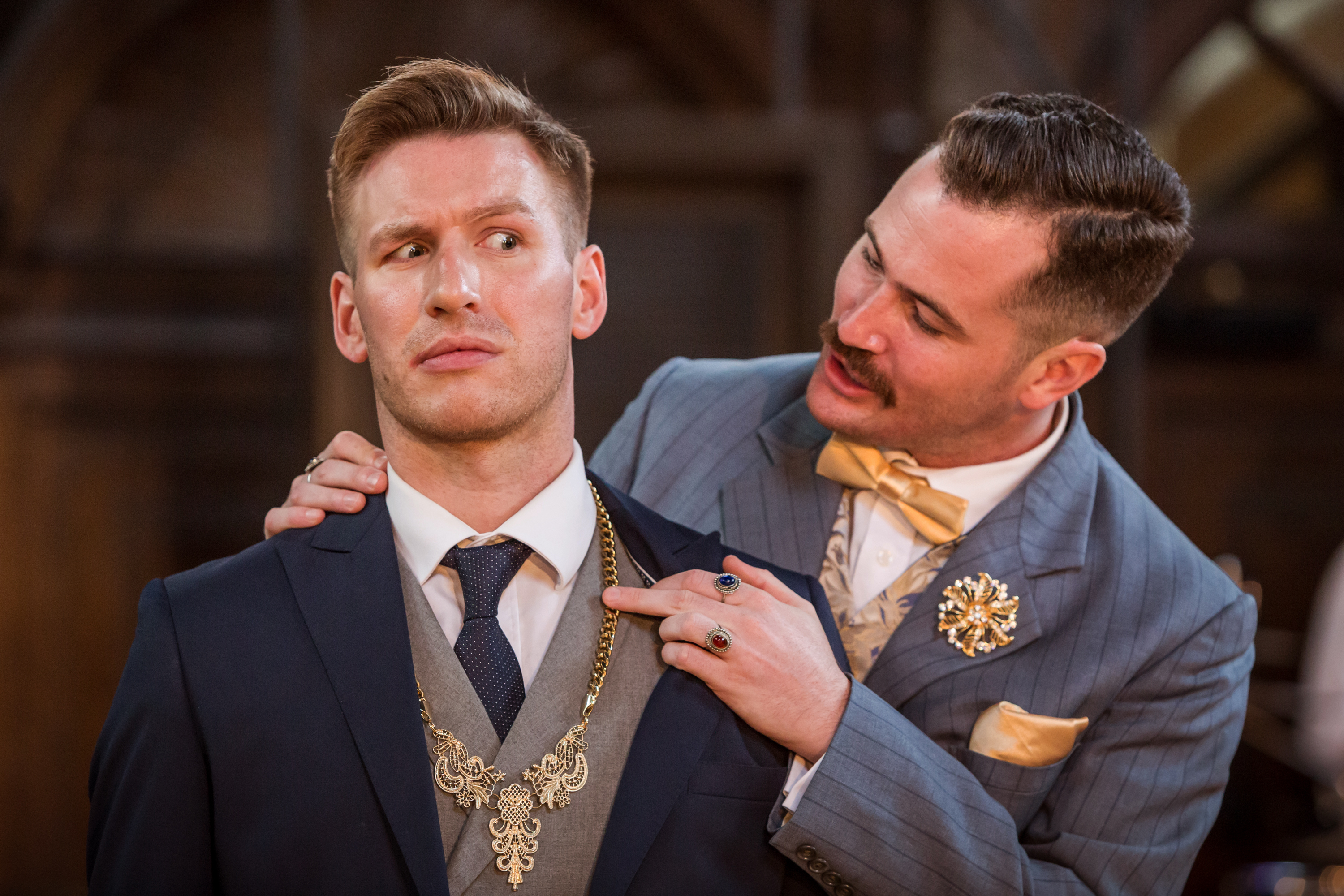
Emma Rice’s first production as artistic director at the Globe has provided controversy for the much-loved venue and tourist hotspot. Fans of Rice’s work with her previous company, Kneehigh, will recognise some techniques here. But applied to Shakespeare, her irreverence and inventiveness proves invigorating.

First a caution – for some odd folk – this approaches Dream: The Musical. No excuse necessary, but it is striking how much of the play is sung. Stu Barker’s score is accomplished, dramaturg Tanika Gupta’s lyrics (drawing on the Sonnets and John Donne) are exciting and the singing West End standard. There’s a clever Indian twist and an electric sitar, so let’s describe the sound as Bollywood Rock. Is Rice being provoking? I do hope so.

Raucous is de rigueur at the Globe but, for good or ill, Rice has upped the stakes. If it weren’t for fear of sounding hopelessly out of touch I’d suggest some age advisory warning. There were squeals of horror in the crowd at some pretty full-on audience participation.

midsummer 1
Zubin Varla and Meow Meow

The show is sexy – many clothes are shed – and the polymorphous sexuality in Shakespeare is emboldened. Most impressively, with the King and Queen roles played by Zubin Varla and cabaret star Meow Meow – both intense performers –their chemistry is captivating. We’re reminded how creepy Titania being “enamoured of an ass” really is and both stars hold the stage, despite too much going on.

There are reservations. When Beyoncé is first quoted, your heart might sink at such an easy appeal to a younger audience. There’s a great deal of movement and some of it is messy. With water pistols, crazy costumes and a lot of accents, it’s anything for a lark. And the problem? Too many lines are difficult to hear, even lost. Rice lands the laughs, but they often fall at the expense of Shakespeare or, more generously, use the play as merely a springboard.

The hyped gender-bending casting (which is hardly new) may have been seen before, but not with the bite that Rice manages. Katy Owen does a superb job as Puck, working the crowd brilliantly, despite that water pistol. The rude mechanicals are recast as women. Only Bottom remains male – Ewan Wardrop doing the guys proud. Updating the wannabe theatricals into Globe volunteers is sweet and leads to excellent cameos, especially for Lucy Thackeray, whose calm ad lib, “my nephew’s gay”, tickled me pink.

midsummer 3
Ncuti Gatwa and Ankur Bahl

But it’s most with the Athenian lovers that Rice’s indiscretions are forgiven. Updating the couples into Hoxton hipsters is very funny. Ncuti Gatwa and Edmund Derrington make an energetic Demetrius and Lysander. Anjana Vasan gets roars of approval for her very modern Hermia. Ankur Bahl plays –hold on – Helenus, with wit and courage. There’s more to this decision than giving the line “ugly as a bear” a new twist. An uncomfortable response from some, admittedly young, audience members gives pause for thought. The Globe is a global institution (listen to how many visitors are from abroad). To see love between two men portrayed with complexity on such a stage is remarkable. There may be touches of over enthusiasm here but Rice balances public appeal with a radical streak that makes this show, and her direction, one of the most exciting things around.

Until 11 September 2016

www.shakespearesglobe.com

Photos by Steve Tanner

“The Flick” at the National Theatre

Annie Baker’s novel Pulitzer Prize-winning play is packed with offbeat humour. It’s a revelation that three cinema employees, sweeping up popcorn and just chatting, can be so engaging. The pace is slow, bravely so, yet this is one of the quickest three hours you could spend in a theatre.

The eponymous movie house is under threat – about to be converted from 35mm to digital projection. The new technology distresses cineaste cleaner Avery, on a break from his college film course, and puts the jobs of his colleagues at risk.

How films might influence self-presentation and how the characters, well, project themselves to one another is combined by subtly playing with the theme of performance. Time is taken to get to know these three and the result is curiously intimate, sincere and innocent: the trio become our friends.

jpeg 31_The Flick
Matthew Maher

Travelling with the production from America, Matthew Maher and Louisa Krause play the longer-term employees, so fully embodying their tragicomic roles that they are a privilege to watch. Theirs are moving and realistic stories of unrequited love against a backdrop of aimless existence that’s recognisable, believable and seldom staged.

jpeg 11_The Flick
Louisa Krause and JaygannAyeh

Fitting in perfectly with the show is Jaygann Ayeh as troubled college boy Avery. His coming-of-age story is the backbone of the piece, while carefully distanced from any film fodder. Again, it is the understatement that impresses – his toe-curling sexual encounter with Rose and budding yet doomed friendship with Sam all performed with a studied awkwardness that makes the character endearing.

Under the direction of Sam Gold, also with the show since its beginning, a fitting confidence marks the methodical pacing – think art house not Hollywood. It’s a refreshing change to see something so gentle, so quiet. And the speed serves to immerse you in the detail of these lives in a precise and controlled manner.

Baker’s ear for dialogue is superb. It might seem easy to put ‘like’ into every sentence but in this script the technique is credible and the low-key jokes are treasures. Despite the play’s length, it’s economy that’s the key. Sam’s question, asking if a new team member is “familiar with the oversize polo shirt” – that ubiquitous uniform for the underpaid – is something that will stay with anyone whose has ever had a ‘bad’ job.

A final point in favour of The Flick: workers in low-paid jobs with few aspirations are seldom the subjects of drama. Better still, with her unpatronising and realistic treatment of these frequently boring, frustrated lives, Baker goes behind the scenes to provide a drama about a new kind of working class that makes her play one of the most original around.

Until 15 June 2016

www.nationaltheatre.org.uk

Photos by Mark Douet

“The Lovers of Viorne” at The Theatre Room, 6 Frederick’s Place

Director James Roose-Evans’ new project, Frontier Theatre, aims to promote older talent. The actors in their third age (their term, not mine) in this premiere production indicate that the company will have no difficulty finding performers. The play chosen is more problematic. Marguerite Duras’ text (translated by Barbara Bray) is rooted in post-war French philosophy. Ostensibly a mystery story, based on a sensational murder, the biggest puzzle is the play itself.

A long way from a whodunit (the confession has been heard and motive is talked about a lot), even the why seems beneath Duras. Existential angst fills the play: talk of dreams, freedom and “seething” alienation, while family ties and religion get predictably short shrift. Unashamedly intellectual and, to be honest, somewhat hard work, you can practically see the Gauloises cigarette smoke and imagine yourself on the Left Bank.

Which is not to say that the production isn’t superbly well done. Roose-Evans’ direction reveals his experience, superbly controlled and sharing Duras’ intellectual vigour. The direction benefits the play with taught pacing and, without frills, enforces its seriousness.

First we meet the husband of the murderer. A philandering egotistical figure, blunt and articulate, impeccably delivered by Martin Turner. There’s a strong sense of the man’s inner life, grasping Duras’ psychological insight, even as we mostly hear about his wife, Claire.
When we meet this murderess, it’s electric. Charlotte Cornwell’s performance is a marvel as this proud, pained, haphephobic psychopath. As a study of a peculiar kind of madness, Cornwall’s performance gains considerable power from understatement – she really has you on the edge of your seat.

Martin Turner and Kevin Trainor

A younger actor, Kevin Trainor, takes the largest part of The Investigator. That’s right, he doesn’t have a name, and pains are taken to point out he isn’t a policeman. Trainer does well with this flat role, injecting a primness and energy that almost brings him to life. But the character is so clearly a device, full of clever theories, that he quickly becomes tiresome.

What ‘facts’ exist in the mystery are broken down by Duras with skill. Trainor’s monosyllabic final speeches are perfectly handled. While the openness of the text is an achievement that might stimulate, be warned, it is also frustrating and uncompromising. Nonetheless, one of Frontier Theatre’s aims is to produce master classes using its participants’ wide theatre experience, and this show ticks that box right from the start.

Until 21 May 2016

www.frontiertheatreproductions.co.uk

Photos by Oscar Blustin

“My Mother Said I Never Should” at the St James Theatre

Charlotte Keatley’s acclaimed play was one of the first I ever saw, leaving a profound impression that, I’m pleased to say, is retained by this revival. The story of four women from one family, the action covers most of the 20th century and uses a non-chronological structure that was once regarded as radical. Going backwards and forwards in time has made the play influential. More importantly, this time-travelling technique elevates an interesting domestic drama into something extra special.

Flitting through the decades makes the women’s shared experiences bristle with connections. Family and motherhood link them, while their marriages and experience of work differ. This is the first production from a new company, Tiny Fires, led by producer Tara Finney and director Paul Robinson. Clearly excited by the prestige of the piece, history is emphasised – fair enough – and the ‘progress’ for women is examined carefully. But I’d argue this isn’t the heart of the play. There’s too much focus on generational differences rather than similarities here.

Katie Brayben & Serena Manteghi

What can’t be disputed is that, by showing the women throughout their lives, Keatley created four remarkable roles for performers. Serena Manteghi and Katie Brayben take on the younger parts, full of energy and angst. And ably stepping into the role of Margaret mid-production is Hilary Tones (replacing Caroline Faber). The star casting comes with Maureen Lipman in the role of Doris. Given Lipman’s skills, it’s no surprise that comedy leaps to the fore (there are lessons that Manteghi and Brayben will surely learn). But there’s more than laughs here. Remember, the role goes from infancy to old age and, at the conclusion, Lipman switches from a great-grandmother to a young fiancée – the phrase tour de force could have been invented for her character.

Yet more astounding, it’s the quieter, emotional scenes that Lipman pulls out the stops for, highlighting the pervasive repression that Keatley writes of. Churlish as it sounds, Lipman’s achievement unbalances the show. Doris does have many of the best lines, but all four characters share the quality of having “no sense of compromise” and this could come across more clearly. It’s a small flaw that doesn’t stop all four women, precisely defined, convey themes that have that often-searched-for quality of timelessness in a play that is both compelling and moving.

Until 21 May 2016

www.stjamestheatre.co.uk

Photo courtesy Savannah Photographic