All posts by Edward Lukes

“The Children” at the Royal Court

The critical consensus seems to be that Lucy Kirkwood’s new play is slow. True, it’s three talking heads: retired physicists coming to terms with a disaster at the nuclear power plant that they built and tackling personal meltdowns along the way. But Kirkwood’s wit – there are some very good jokes here – and some fantastic characterisation make her play so entertaining it grips from start to finish.

Against the dramatic backdrop of exclusion zones and power cuts, director James Macdonald allows the dynamics between three old friends (and lovers) to develop, doing justice to Kirkwood’s observations and dialogue. The carefully crafted performances are strong. Ron Cook plays Robin, who feels “eroded”, with a grumpy old man act that proves more complex than the first gags suggest. Francesca Annis performs as his one-time mistress, Rose, making the most of her character’s humour and mystery; reappearing after many years to pose the play’s dilemma – her plan to return to the toxic plant to replace younger workers who have more of their lives ahead of them.

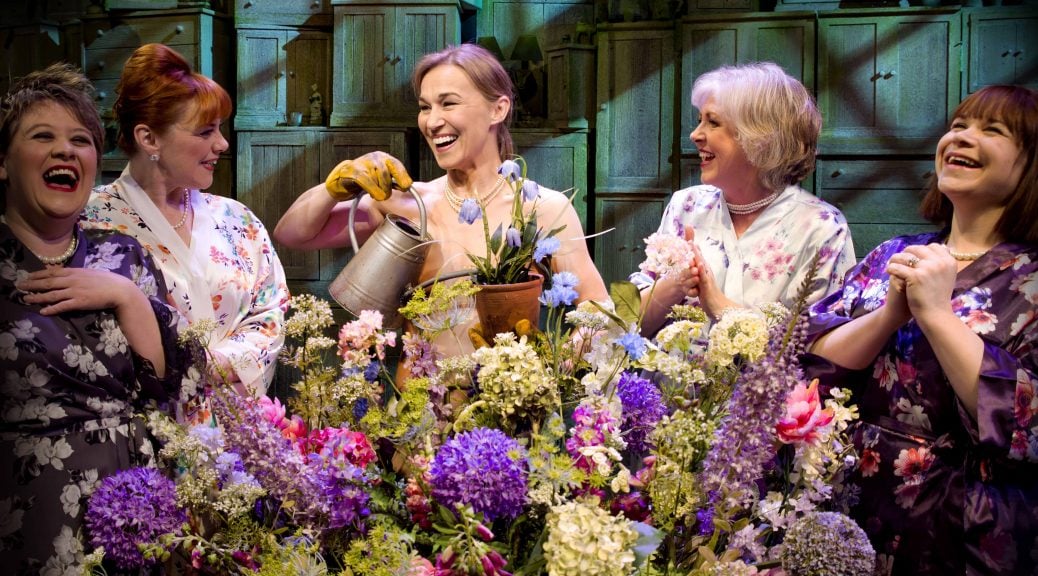
In a year that’s seen several strong roles for mature women (there are interesting parallels here with Caryl Churchill’s Escaped Alone, which makes a welcome return early next year), Rose is joined by Ron’s wife Hazel, a brilliant part that allows Deborah Findlay to make the play her own. The atmosphere surrounding this “cautious” character crackles with tension, and the relationship with her husband is full of credible touches. Findlay even lights candles in character: carefully using only one match to suggest, ironically, eco-friendly convictions.

Hazel is appalled by Rose’s self-sacrificing suggestion – she doesn’t see her life as anywhere near over. Behind the homely touches there’s a steeliness that present the counter argument. Kirkwood isn’t simply baby-boomer-bashing, but it’s pretty clear where she thinks the moral obligation lies. Children is a less showy affair than the playwright’s biggest hit, Chimerica, or her previous work at the Royal Court, NSFW. The theme tackled, the responsibility of one generation to another, is thought provoking – this problem feels real world and ripe for exploration. But the presentation and symbolism are too blunt. Utilitarianism is a hard taskmaster and doesn’t leave a dramatist much room for manoeuvre.

Until 14 January 2016

www.royalcourttheatre.com

Photo by Johan Persson

“Lazarus” at the King’s Cross Theatre

The starting point for David Bowie’s hit musical is Walter Tevis’s book, which was turned into a film by Nicolas Roeg, The Man Who Fell To Earth, which Bowie starred in. And heaven help you if didn’t know that. Lazarus is a sequel, brought up to date, to our own confusing times, following an alien stranded amongst us. Newton the extra terrestrial, stricken by gin-soaked delusions, is homesick and lovelorn. Much, or most, of the action happens within his broken psyche – and remember, this is an alien mind – with characters and events set free from time and described by him as “a dream, a delusion, a chemical belch inside my head”. In his desire to travel home, Newton’s travails are trippy, to say the least.

Given the title, along with Bowie’s untimely passing, it’s obvious that death is the theme here. Impressively, there’s nothing morbid or sentimental about it. Instead, it’s a remarkably objective questioning of mortality, in connection with cognition, that results in an intellectually engaging piece. The guess is that Bowie’s spiritual beliefs are behind a lot of it. Working with playwright Enda Walsh gives the book clout and aids the piece’s strongest feature – originality. If you feared a jukebox musical, rest assured, Lazarus is worlds away from that. There’s original music to enjoy and the Bowie back catalogue used is incorporated with wonderful ingenuity. It’s a shame that overall, (space) oddity is revelled in a little too much.

Michael C Hall takes the lead with a studied performance that’s impressively agile, utterly committed and shows a voice that uncannily approaches Bowie’s own. But the role of Newton overwhelms other characters. Only Michael Esper comes close, injecting passion and some much needed humour into the devilish role of a psychotic called Valentine. Quite what the character is there for is one of many opaque points. Strange it all is. Relentlessly. Ivo van Hove directs, relying heavily on a central screen and video projections (courtesy of Tal Yarden) that are the key to Jan Versweyveld’s cool design, along with the choreography of Annie-B Parson. It has to be stressed that the filmic extras are among the best you could see on stage. And the movement is brilliant. Van Hove creates startling images. But, combined with the uncharismatic temporary venue that houses the show, it’s all too reminiscent of a music video and strangely one note-monotonous in its intensity, despite all that novelty.

Until 22 January 2016

www.lazarusmusical.com

Photo by Jan Versweyveld

“The Red Barn” at the National Theatre

I am happily reading Penguin’s reissue of George Simenon’s Maigret novels, so David Hare’s adaptation of a stand-alone novel from the great author offers the chance to branch out from brilliant detective stories into a psychological thriller of a different kind. Hare’s adaptation is accomplished. Moving away from the book’s first-person narration, which details the mental breakdown of a successful lawyer, here we have a superb ménage à trois of lawyer, wife and mistress that’s better suited to the stage.

As for the production’s dressing – it is truly impeccable. Given that Simenon was concerned more with clarity than any modishness, the 1960s nostalgia goes possibly too far here. Robert Icke directs with a strong cinematic feel, creating cool that isn’t out of place… but feels almost fetishised. The stage curtains slide – up and down, left and right – creating apertures for us. With astonishing rapidity, we are taken to the different scenes of Bunny Christie’s meticulous set – homey farm, glam penthouse – and it’s a real technical achievement. Icke feels the need for a camera’s speed, which is a slight shame with a story this good, but there’s no doubt the show is gripping and the ending a real shock. No quibbles either with the soundtrack, a subtle masterpiece by Tom Gibbons that gets you slowly sliding to the edge of your seat.

The cast is stellar. Mark Strong leads, convincing us that his character, Donald Dodd, was once a decent man. It’s a single event, almost whimsical – when no effort is made to save a friend lost in a blizzard – that changes everything. The subsequent turmoil feels real and, impressively, is never overplayed. And Dodd’s pent-up frustration is more than sexual, an important point that Icke preserves throughout. By the by, Strong’s wig is superb.

Hope Davis plays Ingrid, the “serene” wife, whose husband’s paranoia makes her all-seeing. Davis skilfully brings out Ingrid’s intelligence without making her seem too cold, portraying the occasional moment of frankness with subtlety. Donald’s affair is with his former friend’s wife, Mona, played by Elizabeth Debicki, who also gets the chance to reveal layers of a character that comes to fascinate. Determined not to play the “weeping widows”, at a couple of points it’s Ingrid and Mona’s relationship that excites most. It’s with the two women in the piece that Hare makes his mark, doing justice to Simenon’s skills and creating a theatrical piece worthy of his name.

Until 17 January 2017

www.nationaltheatre.org.uk

Photo by Manuel Harlan

“Tonight with Donny Stixx” at the Bunker Theatre

Eighty minutes is a long time for a monologue. Holding an audience and taking them on a journey for such a span is an awe-inspiring feat. And with a storyteller like Philip Ridley, accompanied by a faultless performance from Sean Michael Verey and aided by director David Mercatali, this twisted tale is one not to miss.

Donny Stixx is a teenage magician. No secret is made of the fact that he is unstable and it’s soon clear he has committed an atrocious crime. But we’re told to expect the unexpected and Ridley’s imagination prevents any predictability. Cleverly, Donny isn’t an unsympathetic character. There’s the hope the boy might be as talented as he is delusional, a wish cruelly dismantled. Ridley’s peculiar brand of humour is central here. “What’s funny?” puzzles Donny. Harsh (bad) jokes are bravely played with, raising questions, teasing and probing the audience.

Dealing with such a downright scary character needs a fine balance that Verey masters. Fanaticism and some frighteningly convincing panic attacks aren’t easy to watch. There’s an array of voices – family, neighbours and his unfortunately unglamorous assistant – all cleverly delivered. The mix of intrigue and sympathy is well managed.

Ridley has a light touch when it comes to contemporary questions. Internet trolls play a part, as do the cult of celebrity and art as therapy. Where some might hammer at these themes, Ridley never loses the focus of telling a story. Taking us into the mind of Donny Stixx may not be pleasant, but it’s an unforgettable trip.

Photo by Savannah Photographic

www.bunkertheatre.com

Until 3 December 2016

“iHo” at the Hampstead Theatre

To give Tony Kushner’s play its full title – The Intelligent Homosexual’s Guide to Capitalism and Socialism with a Key to the Scriptures – is to sell it short. This is a history of left-wing politics and activism in the US that sweeps across the whole of the 20th century. And it’s also a family drama of parodic contemporary complexity that turns into a meditation on death. Thanks for the abbreviation, but it’s “iHo, iHo and off to work we go” with such a dauntingly demanding piece.

It can be hard to connect with characters taking abstract ideals so seriously, but Kushner makes Communist Party member Gus convincing, and asks us to question why the values he has lived by might feel alien. A kind of leftist Willy Loman, Gus is a superb role in which David Calder excels. The declaration that he is soon to take his own life sends his family into a spin and adds mounting emotion to the text. Dividing the house among his children, each of whom make King Lear’s kids look positively benign, brings secrets out of the woodwork, adding further tension.

Gus’s sons Pill (Richard Clothier) and Vito (Lex Shrapnel) are joined by Tamsin Greig, who plays his daughter. She’s the favoured child, heir to all that theory, and, as the play grows, her increasing concern with mortality sees her performance gain in strength. Along the way the sibling dynamics provide a lot of humour. I-Ho is very funny. The younger generation’s complex personal lives (let’s just mention Pill’s affair with a prostitute, confirming Kushner’s obsession with commodification) and their academic partners provide a lot of laughs, with outrageous narcissism and jargon-laden chat. I’ve a theory they’re all imprisoned by identity politics: a trend that’s ripe for exploration.

The part of Aunt Clio provides such a blast for Sara Kestelman that it’s a real highlight. Once a nun, then a Maoist and now moving on to Christian Science, she’s described as addicted to the “metaphysical crack pipe”. With characters like her it’s hard not to love the play. But a warning is needed: nothing about i-Ho is easy. More than one scene has the large cast talking over one another. It’s masterfully handled by director Michael Boyd but proved too much for some audience members. It feels as if Kushner is cramming more than one play into the night. Each of the three acts here would have been satisfying. Cumulatively, by the end of three hours, if you managed to keep up you definitely deserve a certificate.

Until 26 November 2016

www.hampsteadtheatre.com

Photo by Manuel Harlan

“Half A Sixpence” at the Noël Coward Theatre

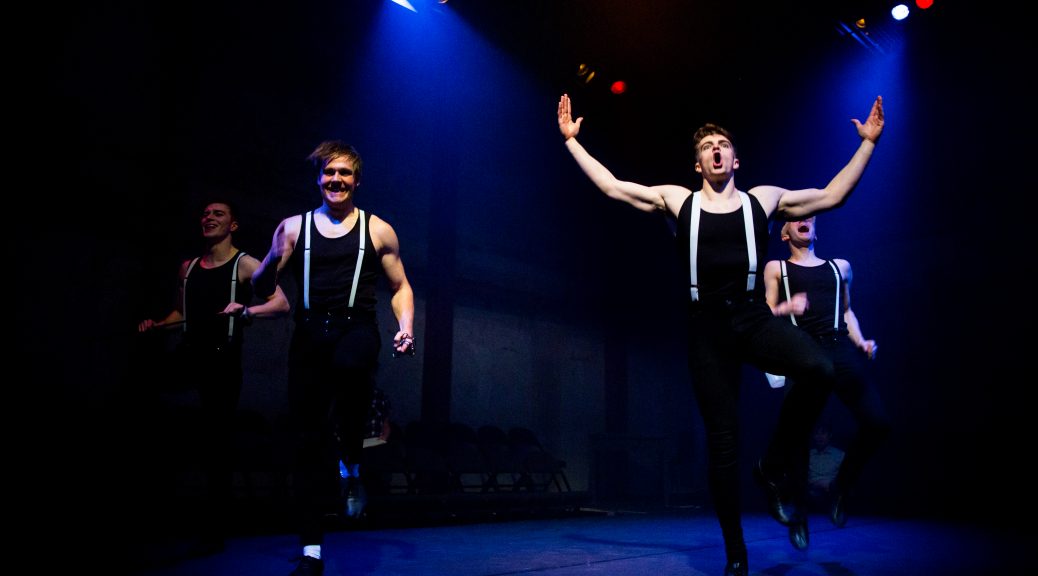
The Chichester Festival Theatre’s new version of David Heneker’s musical arrives in the West End trailing rave reviews. And rightly so. Surely some critics were aggrieved that producer Cameron Mackintosh, credited as co-creator, had already bagged the perfect description to promote his work – this really is a “flash, bang, wallop” of a show.

The simple love story of an apprentice haberdasher who comes into money and has to choose between his childhood sweetheart and a once unattainable upper-class lady gives us a pleasingly Pygmalion spin and a hero, one Arthur Kipps, every bit as endearing as Eliza Doolittle.

Arthur may be called Art by his friends, but it is his artlessness that makes him so appealing, genuine and infectiously joyous. Taking the lead has catapulted Charlie Stemp into the big time with a star-is-born moment that theatre goers will find electrifying. Stemp can sing as superbly as he can dance – and he can act, too. In short, he’s the real deal.

Ironically the big achievement of the show, with new music and lyrics by George Stiles and Anthony Drewe, and a book by Julian Fellowes, is to downplay Kipps’ part. Originally an uneven vehicle for Tommy Steele, the show has been recalibrated to allow the rest of the cast to rise to Stemp’s achievements. Both of Arthur’s love interests are superb. Devon-Elise Johnson plays the love-token-swapping parlour maid with credible vigour. The posh idol, Helen Walsingham, is Emma Williams, and, in a piece where toffs do badly, she’s still appealing, making Arthur’s decision a real dilemma.

Half A Sixpence praises working-class culture in a manner that is out of fashion and makes for a fresh change. Arthur’s colleagues in the shop are wonderfully delineated (praise for Sam O’Rourke, Alex Hope and Callum Train). As for Bethany Huckle’s Flo, Arthur may not fall for her, but I did, with an end-of-the-pier number about sexual frustration that makes the role stand out. This new song, ‘A Little Touch of Happiness’, perfectly embodies a postcard humour that makes many numbers here laugh-out-loud funny, with a sentimentality that magically weaves naiveté and nostalgia. All are combined to perfection by director Rachel Kavanaugh. And this is before the storming second-act number, ‘Pick Out a Simple Tune’, with one cast member literally swinging from a chandelier. What more could you ask for?

It isn’t just the deserving praise already received that gives the show its unbounded confidence. In Kavanaugh’s capable hands, taking a lead from the cleverly constructed new material, Half A Sixpence is akin to a theatrical comfort blanket. We know when to applaud – freeze frame on the action and get ready to clap – and when to give a standing ovation. With the keen-as-mustard cast delighting in its triumph everyone goes home happy.

Until 2 September 2017

www.halfasixpence.co.uk

Photo by Manuel Harlan

“School of Rock” at the New London Theatre

Since Matilda’s triumph, anyone putting kids on stage has more than ever to live up to. Even with credentials as impeccable as Andrew Lloyd Webber’s, this film adaptation can’t be called the best thing in the West End. The fact that it is so predictable probably doesn’t matter – many like to see a movie on stage – and with some good songs added, one of which is still buzzing around in my head, this is a crowd-pleasing show.

It’s the story of a wannabe rock star, David Fynn, fraudulently becoming a teacher in a posh school. Too ‘hardcore’ to bother with ‘gold stars’, his attitude endears him to the privileged but ignored pupils and sets him in conflict with their parents. Recognising “soul brothers and sisters” in the children, he takes them to compete in a Battle of the Bands, fulfilling his dreams and engendering new ambitions in them. And there’s your structure. I can’t imagine Julian Fellowes, credited with the book, broke into much of a sweat, unless stubbornly refusing twists or complexity is difficult for him.

Dewey Finn takes the lead and is amiable, busy and charismatic. With the best will in the world, though, you can’t say the role belongs to anyone other than Jack Black who made the film a hit. The other adult roles are disappointingly flat. School of Rock tries too hard to get the kids on side for my taste, and parents get too rough a ride, but pandering to the young audience makes commercial sense and is done well. The children in the cast cannot fail to impress with their talent and energy, creating a palpable excitement. This pedagogical introduction to musical theatre, a well-trodden path for Lloyd Webber, is hard to dislike, but there’s little here for grown ups.

Until 14 January 2018

www.SchoolOfRockTheMusical.co.uk

Photo by Tristram Kenton

“King Lear” at the Old Vic

Returning to the stage after working as an MP for 23 years, Glenda Jackson’s decision to take the title role in Shakespeare’s tragedy has made this show hotly anticipated. It’s something of a relief, then, to report that the Oscar-winning actress gives a commanding performance. Her Lear may not be the most emotional, but it is subtle and intelligent. No time is wasted debating the gender blind casting – she’s doing Lear, get over it – the delivery sounds fantastic while pathos and power build masterfully. As if confirmation were needed, it’s clear Jackson is not afraid to take risks, showing a surprising element of mischievousness during the most painful scenes.

A stellar line-up joins Jackson, but nobody challenges her eminence – which is not surprising, but perhaps a little disappointing? Too many cast members seem burdened by ideas from director Deborah Warner. There are great performances from Celia Imrie and Jane Horrocks (Goneril and Regan). But overall there’s a tendency to try too hard to make a mark: case in points are Simon Manyonda’s yoga-posing Edmond, Morfydd Clark’s over-earnest Cordelia and a misguided choice of accent for Sargon Yelda’s Kent. Harry Melling holds his own as Edgar, despite a ridiculous bin-bag nappy. Rhys Ifans is less successful with his Superman costume for the Fool. There’s more to his role than being funny, of course, but some lines are supposed to tickle us – instead Ifans eats a raw egg to get attention.

With a set of projections and black rubber sheeting, designed by Warner with Jean Kalman, there are plenty of clever moves and gory touches (watch out for flying eyeballs) that provide excitement. But abandoned, surely deliberately, is a sense of a society – when and where all this is taking place. Warner wants to deal with abstracts, which is her prerogative, and some of the play’s themes do gain when treated in this way (the lust for power is seen more starkly without a context). But surely a trick is missed in making this King Lear feel outside politics? More concerning, drama is distinctly lacking as a sense of predestination comes to the fore. It’s admirable that no laurels were sat on, but attempts to make this more than Glenda Jackson’s show don’t quite work.

Until 3 December 2016

www.oldvictheatre.com

Photo by Manuel Harlan

“Murder Ballad” at the Arts Theatre

This tale of adultery and death is deliberately downbeat. In the hands of director Sam Yates the realism aimed for casts a spell. With just four characters, who sing throughout, a strong cast creates a greater intimacy than the show really deserves. Distracting from Juliana Nash’s music – efficient with imaginative touches – are too many poor lyrics. Acknowledging truisms doesn’t make them clever. Making stereotypes a theme doesn’t make them interesting.

The cast is superb. Wicked star Kerry Ellis clearly wants to show a serious side and she succeeds, despite nonsensically singing that her character “shouts silently”. Ellis plays Sara, who is in a love triangle with Tom and Michael (Ramin Karimloo and Norman Bowman). The two men in her life sound great, establish their thin characters miraculously – and fans will be pleased that Karimloo takes his shirt off. The latter rises above the fact that he has to sing about the one that got away – literally – moving on to a better number where he gets to be creepy. Shame it occurs so late. Worse, it’s hard to get over Sara and Tom being described as “two cats in a fish bowl”. How big a bowl? How did they get in it? Why don’t they just climb out?

Kerry Ellis and Ramin Karimloo

The show belongs to a fourth character, played by Victoria Hamilton-Barritt, who acts as a narrator and brings a cooler edge, observing proceedings, with cynical sophistication. She also gets the best song, which compares the tawdry tragedy on stage to the glamour of the movies. Yates takes his cue from this cinematic reference, creating a noirish feel, with admirable use of projections that adds tension and style. It’s the atmosphere Yates crafts that allows us to examine the “roles assigned” – husband, mother, lover – with wit and intelligence. That’s how you work with clichés.

Until 3 December 2016

www.murderballadmusical.com

Photos by Marc Brenner

“One Night In Miami…” at the Donmar Warehouse

Kemp Powers’ play touches on the depressingly topical struggle against racism with calm sophistication. Placing four iconic African-Americans of the 1960s in one hotel room – each of them at a pivotal moment in their lives and with the US on the brink of change – it’s a brilliantly simple and effective device to examine individual legacies and question how much progress has been made regarding civil rights.

Francois Battiste as Malcolm X.

Fresh from winning his fight against Sonny Liston, Cassius Clay is about to become Muhammad Ali. Sope Dirisu gives a show-stealing peformance conveying the young man’s charm and naiveté. Clay is meeting with his mentor Malcolm X, performed by Francois Battiste with control and precision. The activist is keen on claiming prize conversions to Islam but political troubles are the tense undertone, as the bodyguards outside the door remind us.

The two are joined by football star Jim Brown and legendary musician Sam Cooke. Both are secular, independent thinkers, about to branch out into acting and political song writing, respectively. David Ajala plays Brown, easily carrying complex arguments with a deft touch of down-to-earth humour. Arinzé Kene takes the part of Cooke, conveying a fierce articulacy and with a few snatches of singing that display an exceptional voice.

Director Kwame Kwei-Armah knows what a treasure this script is and paces it judiciously, treating it with respect. The relationships are woven like an intricate dance. Tempers flare but the friendship here is firm, providing a realistically casual tone with plenty of banter. Ideas come to the fore, with a streak of melancholy around “self destructive dreams” that endanger all four. With race, politics and religion all linked with questions of celebrity and influence, this is an articulate, intelligent and educative night to remember.

Until 3 December 2016

www.donmawarehouse.com

Photos by Johan Persson