“Father’s Son” at the Vault Festival

James Morton’s helpful title prepares us for the topic of his nicely focused piece. The playwright achieves an impressive amount in three entertaining scenes, less than an hour in length.

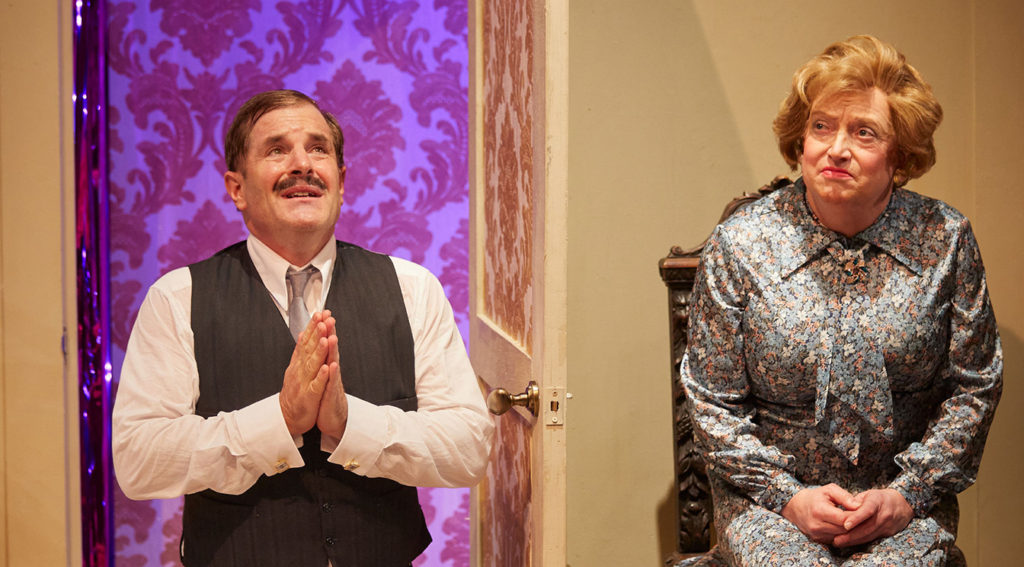
Spaced between 1974 and 2018, we see three fathers and sons having difficult conversations. The set-up serves as a fine showcase for the talents of its two performers. Mark Newsome plays the fathers with gruff touches along with plenty of confusion and fear that make the roles frequently touching. In truth, Newsome isn’t quite old enough for the parts, but he rises to the challenge. Kenny Fullwood plays the teenage sons and is better cast, bringing truth to a similar range of emotions.
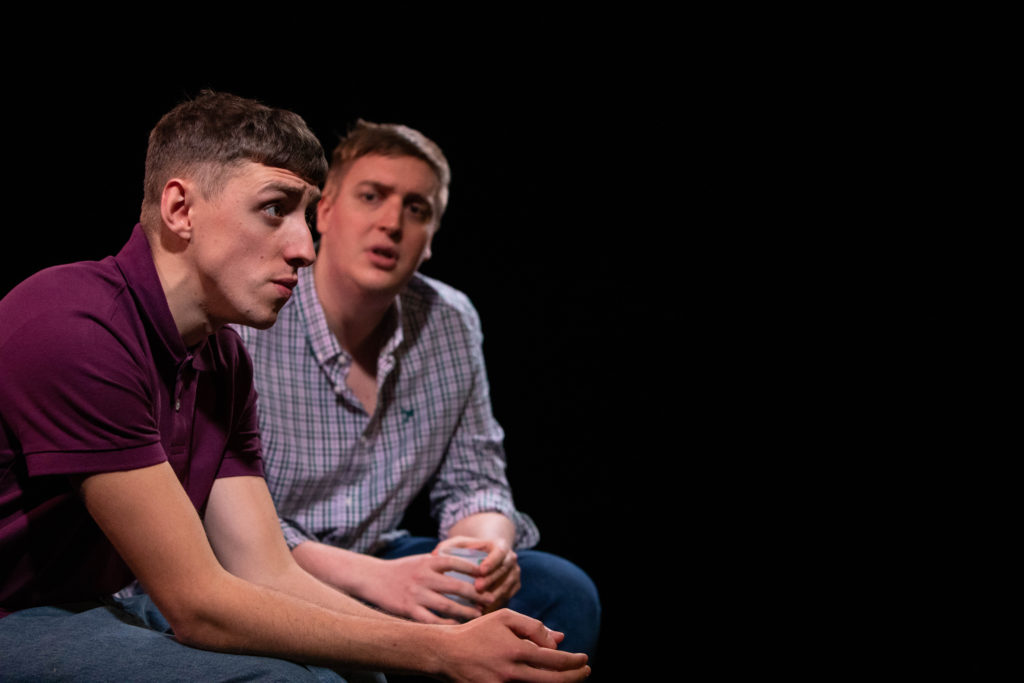
Father's Son at The Vault Festival photo by Ali Wright

There’s no doubt Morton agrees with the perennially discussed crisis of masculinity. But, blissfully, there’s little trace of therapy groups or theories behind his writing so that the dramatic situations he presents have an authentic feel. The dialogue could be worked on, the script being too quick to give the characters’ speeches, so a sense of conversation suffers. Maybe director Carla Kingham, who has done a good job overall, could help here?

It’s Morton’s plotting that is his forte. The trio of scenarios reveal themselves well – you want to know what’s going on – showing variety, particularly for Fullwood, and plenty of tension. Connections between the scenes provide another level to ponder on but are understated – shadows rather than statements – showing impressive restraint on Morton’s part. There’s an evocative air to the show that is questioning rather than proscriptive, indicating an exciting maturity to the writing.

Until 28 February 2020

www.vaultfestival.com

Photo by Ali Wright

“The Prince of Egypt” at the Dominion Theatre

There’s plenty of theatre aimed at younger audiences that everyone can enjoy. This musical about Moses is not one of them. It’s a right royal disaster.

The show succeeds in its painfully clear aim of being big and bold. And, while running with the alliteration would be fun, it isn’t boring – Scott Schwartz’s swift direction prevents that. Actually, it’s just bad.

Problems come from a dependence on the show’s origin as an animated film. Projections, from Jon Driscoll, are impressive but overused and only reinforce how everything about The Prince of Egypt is two-dimensional.

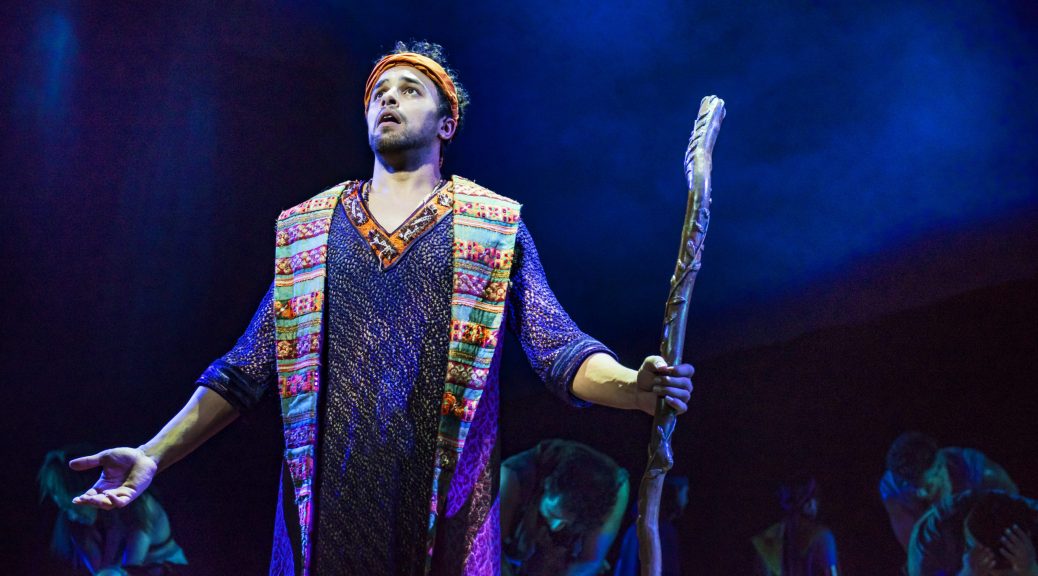
Luke Brady is instructed to give us a modern Moses and he delivers. But the character is flat and his development paper thin. The focus on his adoptive family, the Egyptian Pharaohs, isn’t a bad move. But, accompanied by a pantomime High Priest and some confusing costumes (Ann Hould-Ward), what should be a major role for Liam Tamne, as Ramses, is simply a sketch.

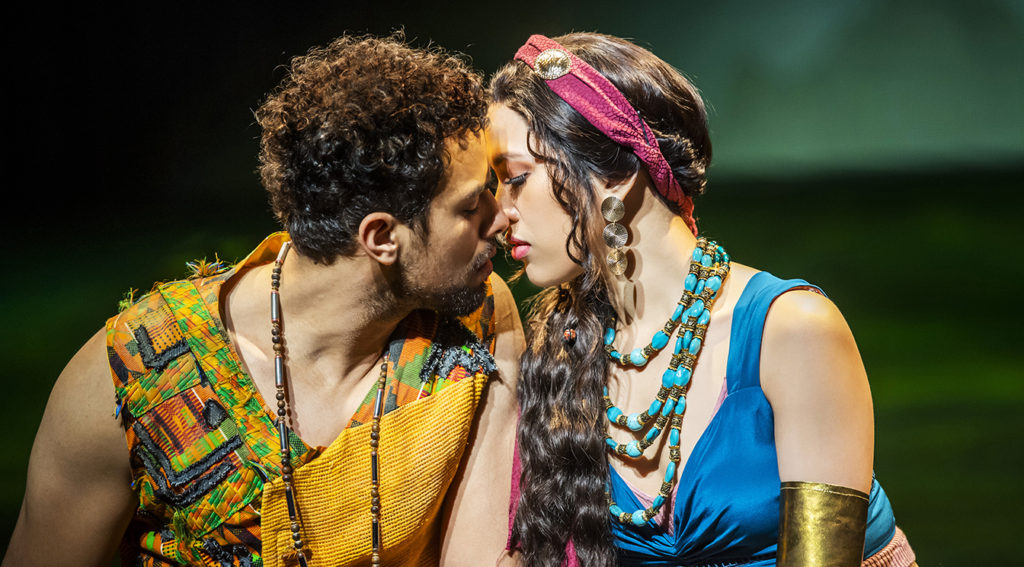
Luke Brady and Christine Allado in The Prince Of Egypt
Luke Brady and Christine Allado

It’s good that women are brought to the forefront of the story. But Moses’ sister Miriam and his wife Tzipporah are further missed opportunities – another shame as Christine Allado and Alexia Khadime are exciting performers. The former just acts delighted every time she bumps into her brother and starts singing about deliverance without any preamble. Mrs Moses bangs on about freedom in a cartoonish costume.

Composer Stephen Schwartz has an impressive back catalogue and is the show’s big selling point, but his work here is lacklustre. These are songs you forget before they’ve even finished. And the score is horribly repetitive: anthems and ballads merge, dripping with sentiment and cliché. Every number has an unfailingly loud end. It’s enough to make you wonder if the Jews went into desert for a bit of peace and quiet.

The only thing worse than the lyrics, which ram home predictable rhymes relentlessly, is when people speak. The dialogue by Philip LaZebnik is awful. Take: “If you don’t choose your own path, you’re lost wherever you go.” Who knew self-help books were popular in Ancient Egypt?

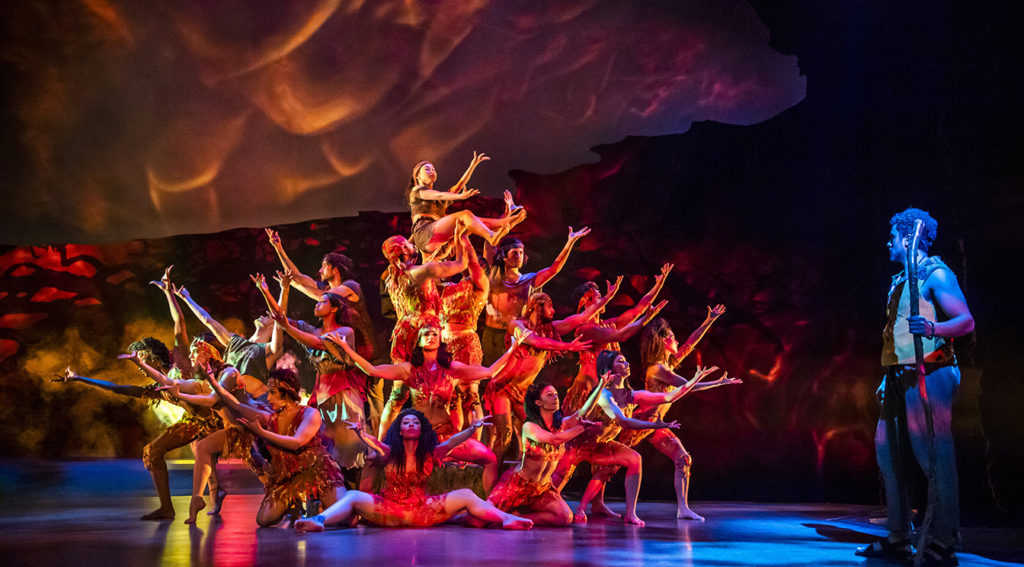
The Prince Of Egypt, credit Tristram Kenton ©DWA LLC
The burning bush appears to Moses

Possibly to distract from all this, The Prince of Egypt is very much a dance show. Burning bushes and bloody rivers keep a crack squad of athletes impressively busy. But choreographer Sean Cheesman isn’t the miracle this show badly needs. Right from the start, with a bunch of very healthy-looking Hebrew slaves, the execution is excellent. But each trick is repeated too often. I guess there’s only so many ways you can move around fake stones artistically, but I’m pretty sure I’ve now seen them all.

The few attempts to inject humour are dire. And the tone overall is portentous and grates quickly. Having a Moses for a modern age fails. That the prophet has a crisis of faith and is confused about his identity is interesting. But the show hasn’t the depth to explore either. Moses even refers to God’s “magic” at one point. Bizarrely, religion is pushed to the side. The oft repeated hit number for the show, ‘(There can be miracles) when you believe’ – those self-help books again – becomes a nonsense. It’s never really clear what Moses, of all people, believes in.

Until 31 October 2020

www.theprinceofegyptmusical.com

Photos by Tristram Kenton and Matt Crockett

“Death of England” at the National Theatre

If anywhere should host a state-of-the-nation play it’s surely our nation’s theatre. Roy Williams and Clint Dyer’s new work is an intelligent example of the genre. Full of insight and observation, their writing is expert. That said, it’s easy to imagine that the show will be primarily remembered for the extraordinary performance from its sole actor – Rafe Spall.

Williams and Dyer really have done a great job. The death in the title covers that of their character Michael’s father. The complex relationship between the two men, indeed the whole family, provides an intimate drama with plenty of humour. But the writers’ concerns are much wider, injecting the play with an urgent directness.

As well as getting to know a family, Death of England is a brilliantly observed look at a white working-class community and suggests a summation of the state of masculinity as much as race relations in the country. That’s a lot, and at times ‘issues’ feel forced, but Dyer’s direction of his text powers through.

Focusing on Michael’s father’s racism, Brexit and the Far Right raise their ugly heads. But Williams and Dyer want to point out that racism isn’t a fringe problem. That the father’s twisted logic includes a “time and place” for bigotry (criticising those who are too open about their prejudice) proves chilling. Michael knows he should have challenged his dad more and we can see the impact it has had on his friendships and his family. His cry to “search my history” may come in the context of the cache on a laptop but has far wider implications.

This root-and-branch examination of our country’s problems rests on Spall’s shoulder and he really is magnificent in this once-in-a-lifetime role. Addressing the audience throughout, and interacting with them a good deal, for all his faults, his patter and honesty make him appealing and often funny.

Spall’s is an incredibly physical performance, not least since a cross-shaped stage takes up a good portion of the theatre’s pit seating. With the character fuelled by drugs and alcohol, as well as rage, the switches from aggression to grief are frequent and sudden. The speech is nearly always at break-neck speed. Add the frequent shouts and tears (aside from worrying about Spall’s vocal chords) and it’s remarkable you can hear what he is saying so well.

When it comes to depicting other characters, Spall shows further intelligence. These are impersonations that Michael is making, the aim isn’t to bring another figure onto the stage but show Michael’s version of them. Getting to meet the whole family in this peculiar manner is wonderfully layered and brilliantly executed, serving Williams and Dyer’s play to perfection.

Until 8 March 2020

www.nationaltheatre.org.uk

Photo by Helen Murray

“The Future is Mental” at the Vault Festival

I like the idea of presenting a show of short plays. And citing Black Mirror and Killing Eve as inspirations shows playwright Rosie de Vekey has a keen eye for popular trends. But if your event is a selection of sketches, any response is bound to count hits and misses. Regrettably, the tally here is poor.

There’s a clear standout piece called ‘Decluttering’, a prize-winning short story driven by a neat, topical, idea. Let’s just say I knew there was a reason to worry about the Marie Kondo trend. Suzy de Lezameta does well in the role of a woman who takes tidying up too far. Another story, ‘Mood Lighting’, has the germ of a good idea, where our feelings displayed to the world by a colour-coded bracelet – the mind boggles nicely.

As for the other four pieces, the verdict has to be a fail. The ideas feel old and clichéd: a silly satire on social media with a beyond the grave twist that lacks impact, a paranoid monologue about artificial intelligence and a couple of weak political satires, one of which riffs on Logan’s Run (and that’s from a long time ago). The attempts by De Vekey to pick up on trends and concerns – even if they are justified – don’t have enough originality to really make us think.

The delivery doesn’t help De Vekey’s writing, and directing her own work may have been a mistake. Too many small roles lead to a relatively large cast looking lost. And a series of nervous performances results in too many uncomfortable moments. It’s a mix of painful diffidence and overcompensation on the part of a cast that seems poorly handled. Even worse, little here shows promise for development. I’m afraid the majority of the scenes just don’t have a future.

Until 23 February 2020

www.vaultfestival.com

“The Rage of Narcissus” at the Pleasance Theatre

Sergio Blanco’s play is described as auto-fiction. It features events and conversation that may or may not be true. The author is presented as a character – an invention – and the actor introduces himself, thereby highlighting a second fiction. The result is a mind-bending piece that’s heavy with theory but gripping nonetheless – a very special combination of erudition and theatre that’s sure to leave a lasting impression.

The strategy, relentlessly playing with the line between fiction and fact – what Blanco may have done and what he has certainly made up – is complicated and not to all tastes. It’s stimulating, puzzling and profound all at once, but it isn’t easy. It’s down to director and translator Daniel Goldman and the sole performer, Sam Crane, to aid comprehension – which they do brilliantly.

Sam Crane in 'The Rage of Narcissus' by Sergio Blanco at the Pleasance Theatre

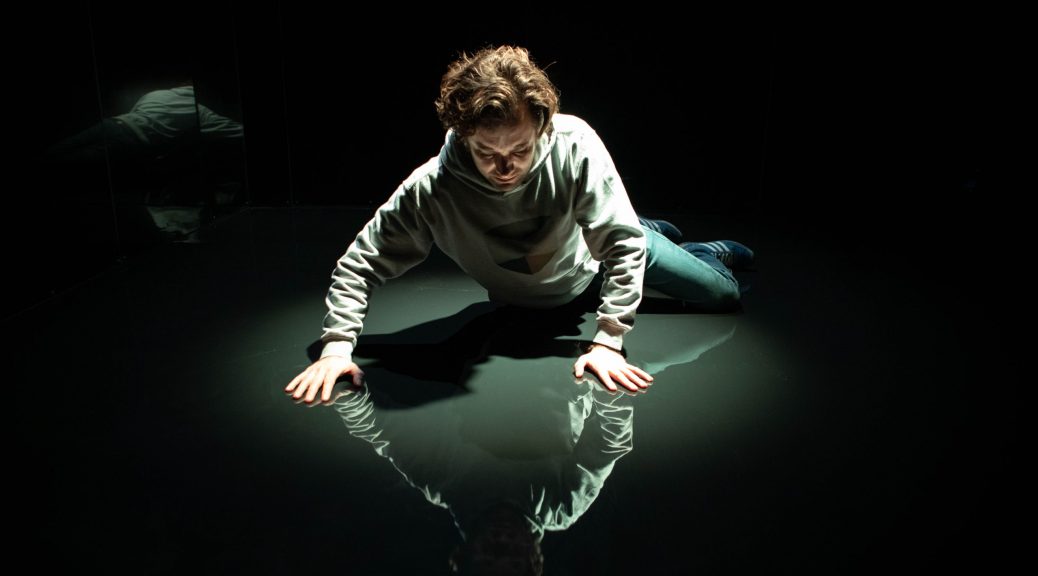
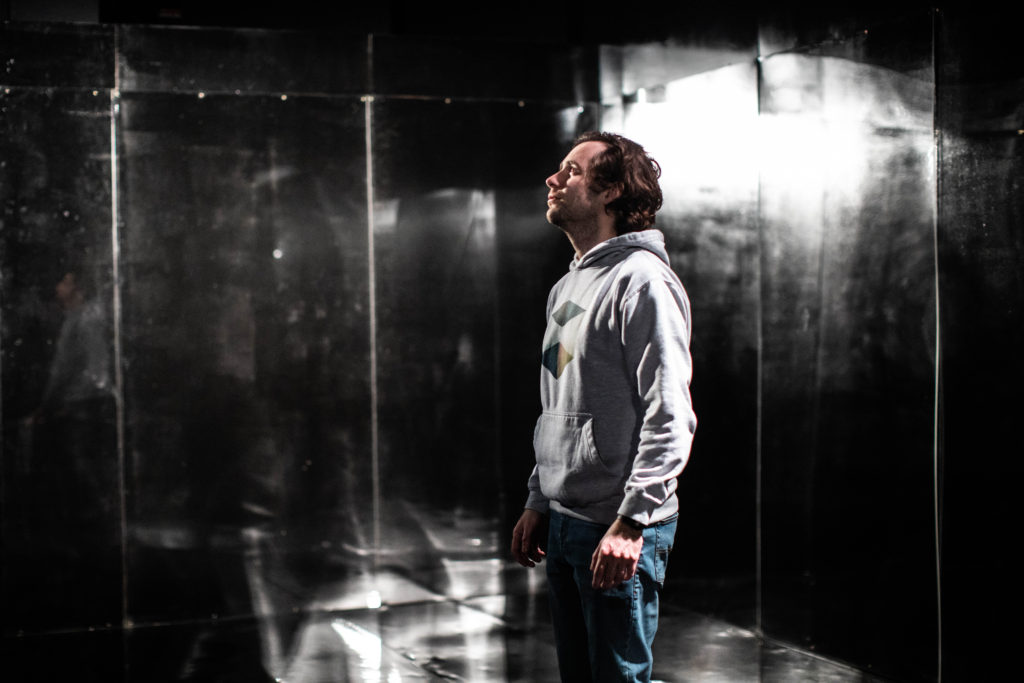
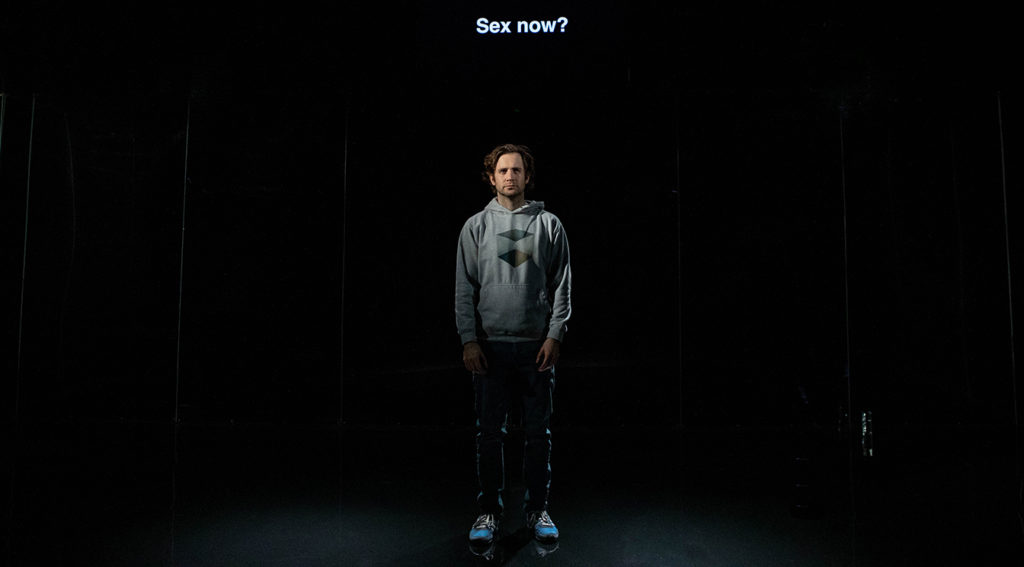
Yet, in keeping with the play’s remit, Goldman and Crane never miss a chance to enforce theatre’s artificiality: designer Natalie Johnson’s set is mirrored, and the lighting by Richard Williamson takes a dominant role. The audience is destabilised and left continually questioning.

Things only get tougher when it comes to the ideas in the play. At its centre is a lecture about Narcissus that takes us to big questions about ‘art’ with blunt directness. Blanco’s is not a reading list I could keep up with, Derrida and Heidegger are thrown in casually. I wonder if André Gide would be a good one to mention: his treatise on Narcissus includes the idea that gazing at one’s reflection means losing oneself as a result. Which is, maybe, what happens next.

The Rage of Narcissus is more than a metaphysical mystery story, though. Inspired by bloodspots on a hotel room carpet, and a casual sexual partner who becomes obsessed, we get a ‘real’ murder story, too, that’s also of startling originality. It’s not just storytelling that Blanco wants dissecting. Alongside all the theory there are proper goosebumps.

The text has a forensic quality. Crane coldly narrates horrific events and then passionate encounters. A question arises as to the humour that follows. Crane slips into a cheekiness, accompanied by distinctly British giggles from the audience, that jar with Blanco’s frankness. For in tandem with the precision of the writing there’s a visceral quality that engages with all those cerebral concerns. If you think myth and murder is a potent combination, throw in sex and danger, too.

Blanco’s self-reflexive writing is likened to a Möbius strip or Escher drawing on stage. Fair enough, and helpful. But the description of a sex party attended towards the play’s finale struck me more forcefully: “The idea was to keep things moving. To try new things. To mix and combine…”. That could be a description of both the script’s virtues and its excesses. It’s to Goldman and Crane’s credit that all of this is brought out so vividly. Blanco has written an orgy of a text and this production knows better than to try and tame it.

Until 8 March 2020

www.pleasance.co.uk

Photos by Ali Wright

“La Cage aux Folles [The Play]” at the Park Theatre

Jean Poiret’s French comedy of manners with a drag twist has never been translated into English before. That’s a surprise given its enormous stage success, along with the two films and hit musical it has spawned. Thankfully, director Jez Bond thought the lack a shame – I agree – and has recruited Simon Callow to produce a script that works a treat.

There are bold decisions behind the production, namely, to make the show gloriously old-fashioned. Time and place – the French Riviera in the early 1970s – are enforced; there’s even a reference to the UK joining the EU. As a result, there are plenty of attitudes that seem archaic. The play makes for an interesting history lesson, if you want one, just in case anyone forgets Drag can be political. And you might find the role of Jacob the servant (which Syrus Lowe tackles well) intriguing. If a lot of the gender politics is worlds away from being “woke”, maybe it’s best to just shrug and feel smug that things are better now.

There’s nothing serious about La Cage aux Folles. It only makes sense to judge it as silly and this is good nonsense. The plot is clear while crazy touches build well. The jokes are good, although in truth it’s the performers rather than the lines that get the laughs. No matter, it’s a fun evening and all the more credit to Bond and his cast.

La Cage aux Folles at the Park Theatre  By Jean Poiret. Photo by Mark Douet
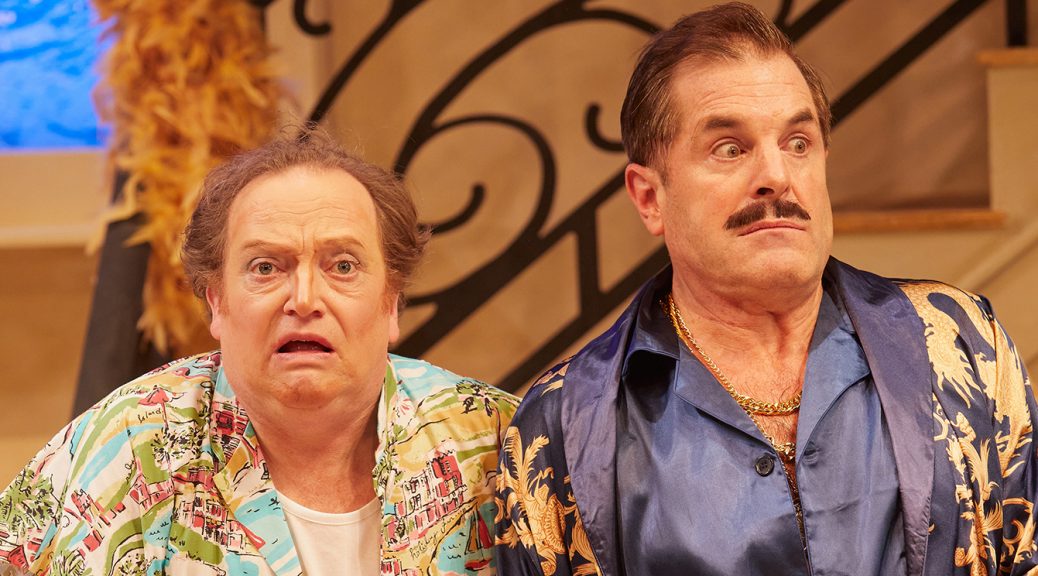
Michael Matus and Paul Hunter

Paul Hunter and Michael Matus play the flamboyant couple, performer and owner of the titular nightclub, with assurance. Their insults and rows are enjoyable and both performers make the most of every moment. Arthur Hughes is good as their son, Laurent, whose future marriage drives the plot: it’s a tricky role that needs to introduce an amount of restraint to proceedings. There’s also strong support from Mark Cameron and Simon Hepworth.

The fun doesn’t increase quite as much as you might hope. As our heroes meet their conservative future family, hosting them for a disastrous dinner party, the second act feels skimpy. Female characters get a raw deal. But Hunter and Matus keep up the energy with some quick transformations adding fun. Remarkably, the play manages to escape the shadow of its famous progeny to show itself as a fine farce in its own right.

Until 21 March 2020

www.parktheatre.co.uk

Photos by Mark Douet

“Far Away” at the Donmar Warehouse

Although it has a running time of only 45 minutes, there’s nothing little about this masterpiece from Caryl Churchill.

Believe it or not, despite the brief duration, Far Away could even be thought of as three plays rather than one. Maybe the scenes, despite shared character names, don’t have to be connected? 

Churchill’s invention provides a trio of dystopian visions, each scary and increasingly bizarre, held in tense suspension with one another. 

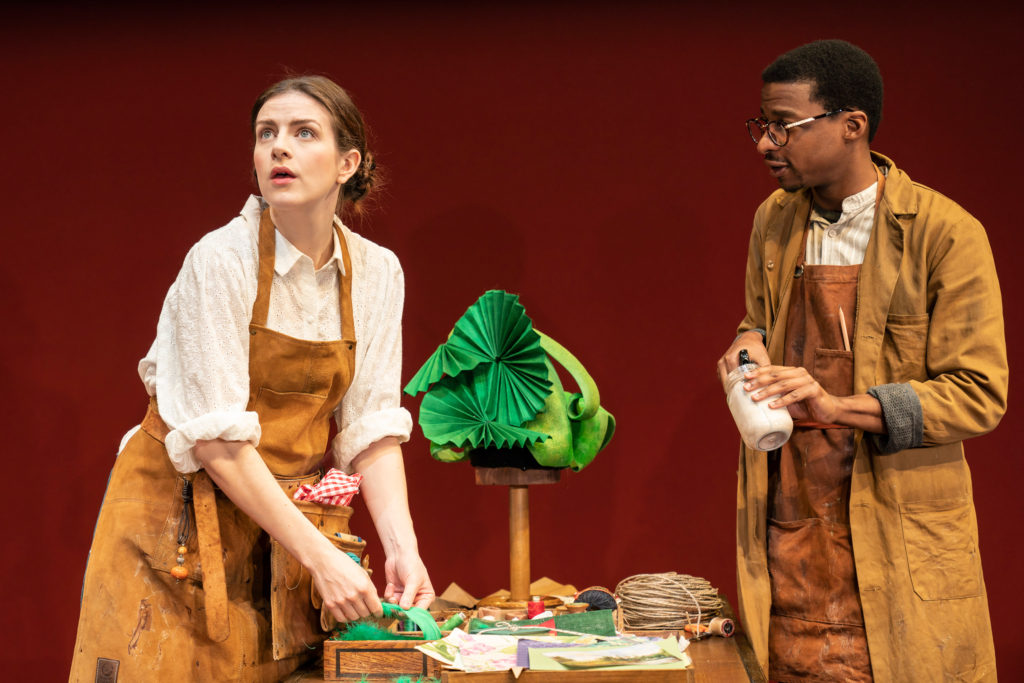
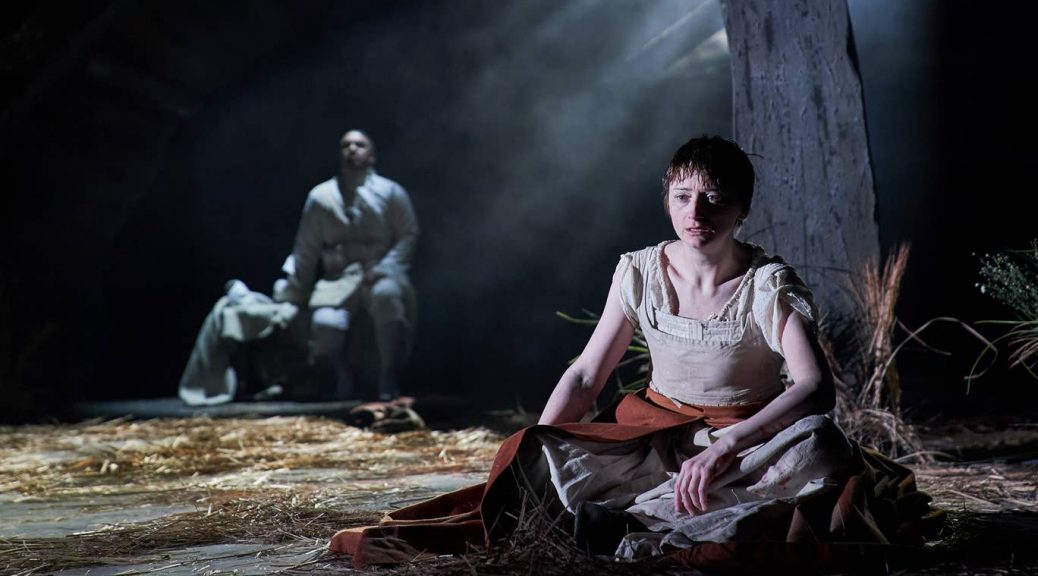
First there’s a trip to the proverbial woodshed, then a workshop producing hats for a judicial display. Finally, we see the world at war in a peculiar fashion. This is political turmoil that straddles allegorywith prescient fears in a unique fashion.

Of course, Churchill didn’t invent dystopian dramas, and she uses Orwellian overtones expertly. But it’s easy to see how influential this text from 2000 has already been. The mix of sci-fi with macabre touches means the play hasn’t dated a jot. And this production does the text proud.

Lizzie Clachan’s set combines simplicity with theatrical surprises. The sound design from Christopher Shutt will give you goose bumps without being ostentatious. And director Lyndsey Turner admirably resists the temptation to spin out the stories. The only extravagance is the use of supernumeraries, drawn from the Donmar’s ‘Take The Stage’ programme, who do a great job. But their appearance is brief. There’s a recurring theme here – a respect for Churchill’s marvellous economy.

Far Away at the Donmar Warehouse
Aisling Loftus and Simon Manyonda

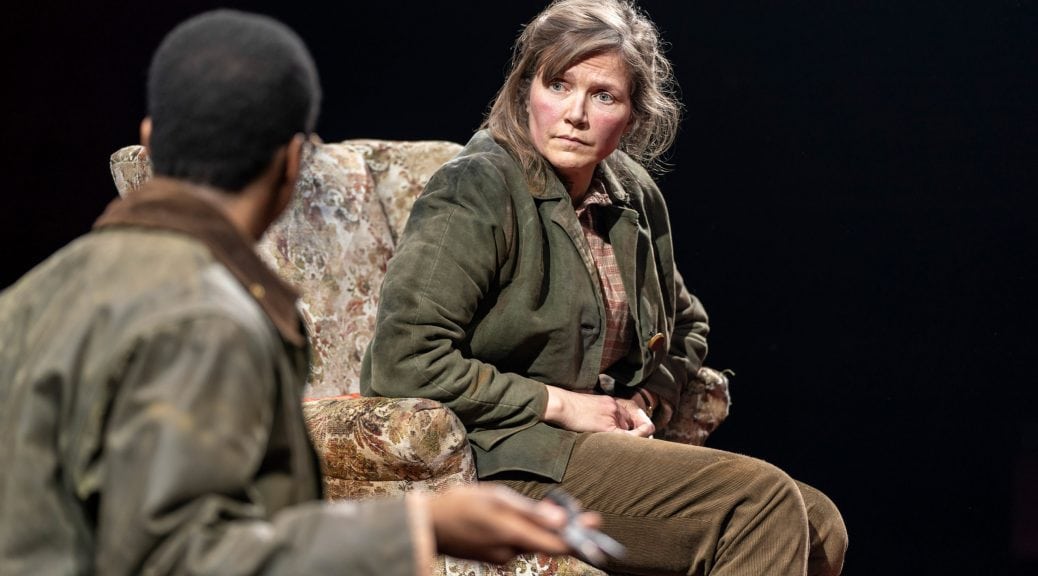
Take the characters that we meet, so briefly and in such complex circumstances. Turner’s cast is superb in creating a sense of ordinary individuals no matter how removed from us the situations seem. Jessica Hynes, Aisling Loftus and Simon Manyonda provide just enough glimpses into the everyday lives of the roles they take. While appearing respectively as Harper, Joan and Todd twice, the characters change dramatically, revealing extraordinary skill from the actors and creating incredible tension. That such richness can come from such austerity really shouldn’t be possible! Churchill’s writing is breath taking – every line in Far Away works close to the bone.

Until 4 April 2020

www.donmarwarehouse.com

Photos by Johan Persson

“Salmon” at the Vault Festival

Eve and Sea Productions, created by Eva Lily and Constance Eldon McCaig, tackles themes of grief, depression and drug use with its premier show. It is an insightful piece that boasts a strong performance but loses its way with surreal touches.

Angus, devastated by a recent bereavement, is a well-drawn character and the details of his life on a Scottish island are convincing. Joshua Going’s delivery of the role deserves praise. Here’s a recognisable young man, now a little too old to party, dissatisfied with the options on offer if he wants to grow up. Going shows confusion, desperation and anger, while making the metaphorical mentions of Angus’ favourite fish (arguably overused) an endearing obsession. The delivery is bold – showing strong directorial decisions – as Angus stumbles physically and mentally trying to remember a recent past while lost in a drug- and grief-induced haze.

It’s understandable that the script contains crazed moments, not a bad idea in itself, but unfortunately the delivery of trippy panic or anxious paranoia causes problems. There are technical issues (the voiceovers are difficult to hear). And it doesn’t help that both performers joining Going, Eden Hastings and Ben Spring, double up roles that are so different. While overlapping conversations work well, showing a talented team, too many superficial touches, from sound design to costume, feel predictable. Trying – but not quite managing – to be crazy creates a disappointing aftertaste to a play that has potential.

Until 14 February 2020

www.vaultfestival.com 

"The Incident Room" at the New Diorama Theatre

If you are a lover of true crime stories, you’ll lap up this show. An in-depth retelling of the Yorkshire Ripper case that gripped Britain in the late 1970s, the detail is fascinating and the story compelling. But there’s more to Olivia Hirst and David Byrne’s play – an intelligent engagement with history makes their work the very best of its kind by questioning the genre it is part of.

Hirst and Byrne condense events with skill, but their real triumph is in imposing focus on the story by highlighting police work and effectively ignoring the killer. The raw material is fascinating: the lengths the police went to over tyres, bank notes and the sheer number of people interviewed.

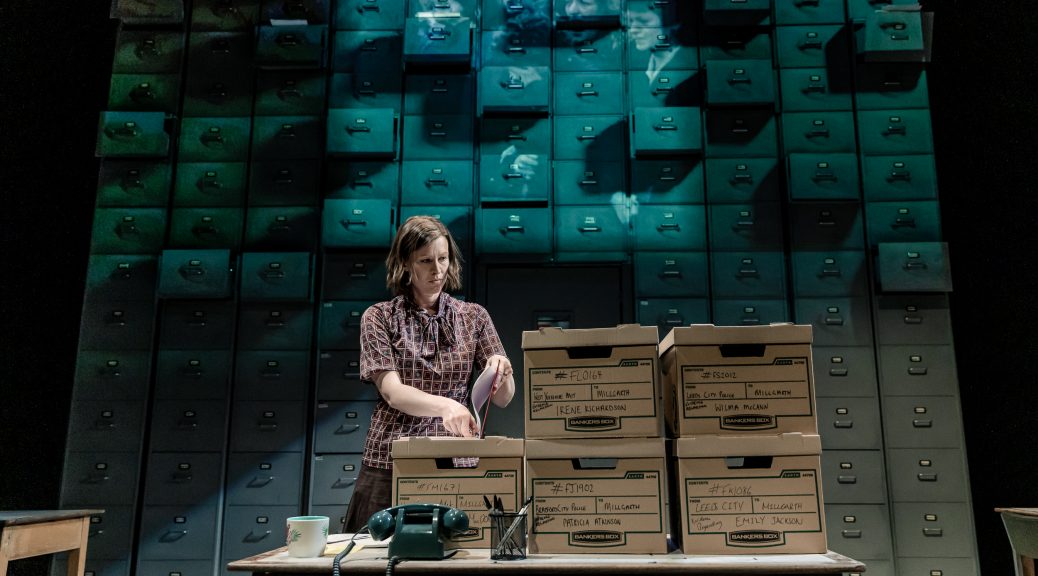
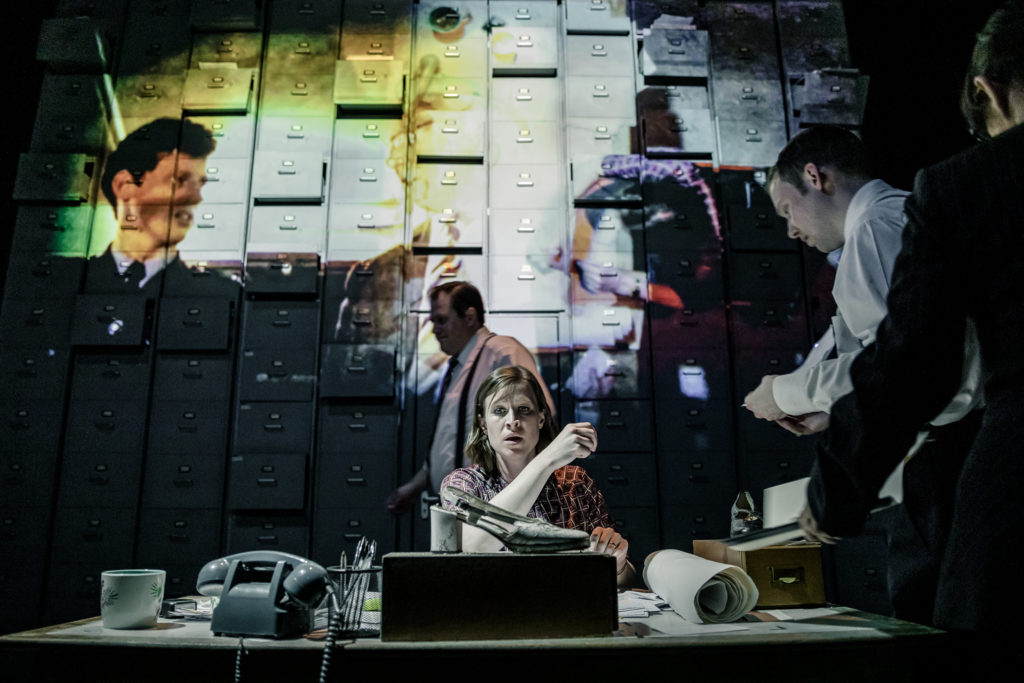
Yet what provides the driving force for the show is the tension of working a case that is massive and inventive – apparently changing police procedure – but was ultimately a famous failure. Aided by excellent live video work, designed by Zakk Hein, and a Kafkaesque set from Patrick Connellan, Byrne, along with Beth Flintoff, directs with discipline. The action – in reality slow, boring, work – becomes engrossing and the impact of events powerful.

The Incident Room at the New Diorama Theatre credit The Other Richard

The precision creates characters a long way from your average crime drama, surely aided by the fact that the show is devised by its ensemble. A cracking cast rises to the material with solid performances. As police under pressure Colin R Campbell, Peter Clements, Ben Eagle and Jamie Samuel are all good, creating an impression of a tight team with conflicts big and small managing to inject a surprising amount of humour. But Hirst and Byrne are relentless and focus further.

For The Incident Room has a steely eye on both sexism and the responsibilities of telling stories of this kind. Parallel instances of women in a men’s world reflect both of these concerns. A female journalist, played with winning presence by Natasha Magigi, who sees the chance for a big break, provides commentary while piling on the dramatic pressure. Meanwhile, detective Megan Winterburn, ignored for promotion and doing far too much typing, narrates events in a very special fashion. As Winterburn re-enacts the case in her mind (as if she were rewriting the story, like the playwrights) we see how what she could have done haunts her. Hindsight reveals how traumatic the case was for the police involved. It makes a star role for Charlotte Melia, who gives a magnificent performance.

The Incident Room knows that its subject matter treads a fine line between truth and “titillation” and is careful to address the victims of the Ripper’s crimes. Here the skill is to continue to reflect those concerns about story telling in such a sensitive, honest, fashion. With a woman who survived an attack, Maureen Long, the wish is to be forgotten. Fearing she will be forever defined by her victimhood, an address to the audience, delivered with passion by Katy Brittain, who takes the part, serves as a powerful theatrical moment characteristic of a show marked by both brains and sensitivity.

Until 14 March 2020

www.newdiorama.com

Photos by The Other Richard

“Faustus: That Damned Woman” at the Lyric Hammersmith Theatre

We know that Faustus, who famously sold his sold to the devil, makes for a good story. It’s been told often enough. This new version from playwright Chris Bush is a mixed bag, but it does a lot with the tale’s potential, and modern twists make the story approachable and intriguing.

Changing the gender of the protagonist is a good start. The show provides a star role for Jodie McNee who plays Johanna Faustus with gusto. She’s ready to spar with Satan as much as sign Beelzebub’s book, and sexism becomes the big evil in the play.

Part of Johanna’s motive for her diabolic bargain is to be independent – to be her own woman in 17th-century London. Cue witches, corruption and the plague. Bush sets up an entertaining story with interesting ideas.

Director Caroline Byrne does a good job creating an exciting atmosphere, handling historical flavour well. There’s strong support from Katherine Carlton, Alicia Charles and Emmanuella Cole. Line Bech’s costume design also deserves a nod.

But things start to go awry with the show’s humour – there’s a playfulness with the past that doesn’t always work. The jokes are good, but dilute the tension too much. Take Mephistopheles, the devil contracted to serve Faustus: Danny Lee Wynter does well with the wit in the role, but that wit doesn’t help the play as a whole.

A further big idea is sounder – Faustus has a plan to “save the world to shame the devil”. It’s never clear how selfish our heroine is; Bush and McNee do well to keep this question open. But, of course, doing good isn’t easy, and the show becomes more a wait to see what will go wrong. While the passion that drives Johanna has an interesting origin, her anger becomes abstract and simply isn’t hot enough.

As the action moves into the future and starts to engage with technology, this coolness increases. The play gets less surprising and at times a little silly. Messing around with Elizabeth Garrett Anderson and Marie Curie turns into a diversion rather than a serious point; GM foods and minds uploaded into the cloud follow too quickly. The latter is intriguing in a play obsessed with souls (a tricky topic in 2020) but needs fuller development.

“Wait” is the show’s final word. And I like the way it’s given to Johanna. But by that point it feels as if we’ve seen enough, and Bush hasn’t managed to inject any sense of peril about what might come next. An order to the devil is appropriate for this feisty Faustus – but it’s a damp squib of an end for a play that wants to be fiery.

Until 22 February 2020

www.lyric.co.uk

Photos by Manuel Harlan