Tag Archives: Shakespeare

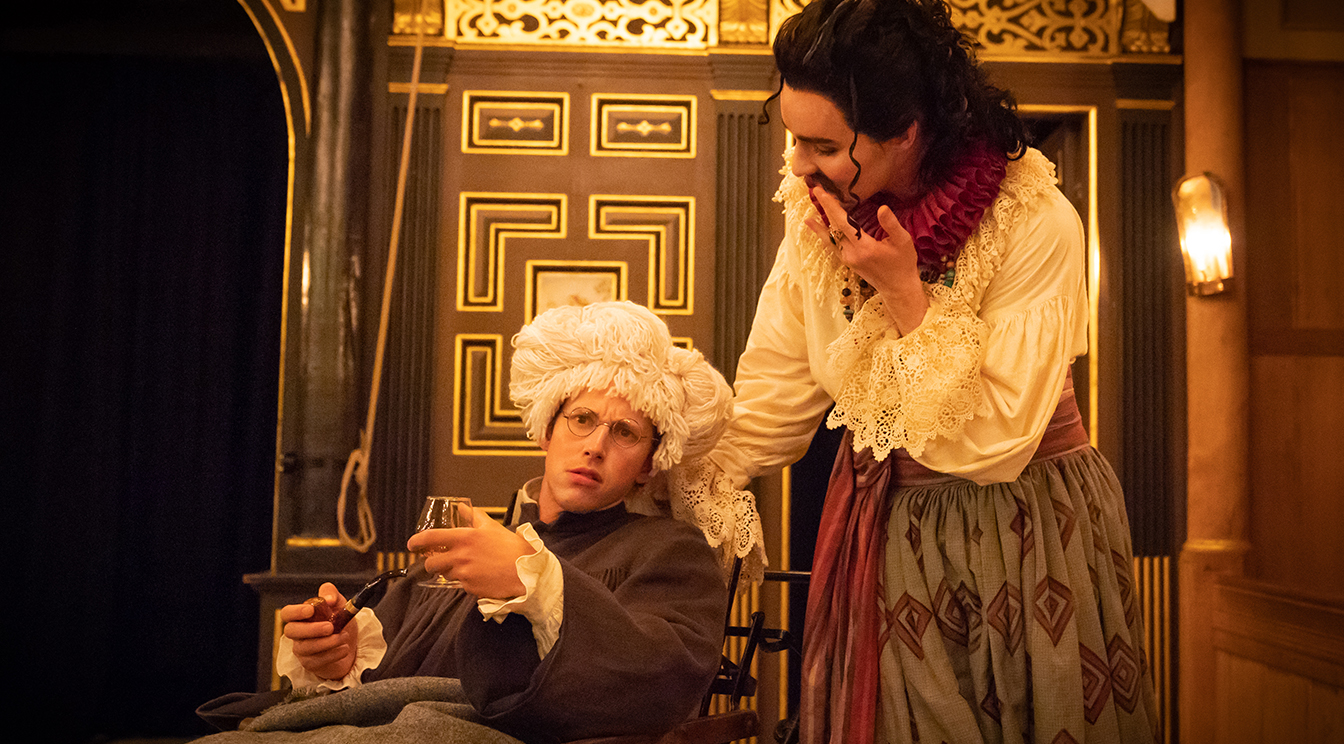
“The Merry Wives of Windsor” at Shakespeare’s Globe

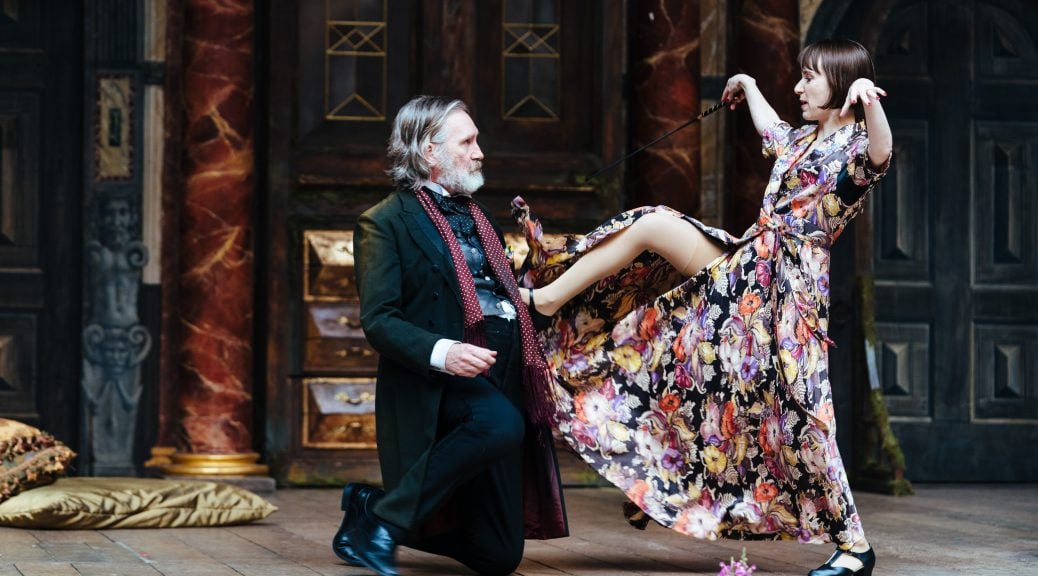
Shakespeare’s comedy, containing all manner of trials for married life, could well be the perfect fit for the South Bank venue that bears his name. In Elle While’s production, the often broad humour enjoyed in productions at The Globe is in full force. The show is as smutty as it is witty, all out to include the crowd, and a great deal of fun.

The setting for Sir John Falstaff’s efforts to become a gigolo – and the plots to stop him – is updated to the 1930s. The decade provides some lovely costumes from designer Charlie Cridlan while Frank Moon’s music adds a great deal of energy. But the production is very much for today, with an eye on the #metoo movement the men here are pretty awful. I’ll not argue with the observation but there’s a danger, as men try to tyrannize wives and daughters, that the comedy will turn sour; it’s While’s achievement that the play still manages to be funny.

With the husbands, who aren’t really going to be cuckolded, Forbes Masson has a nice line in apoplectic rage while Jude Owusu does well with his character’s jealousy. The men who surround their houses, a trio of suitors and a Welsh parson, are also easy to laugh at (with Richard Katz’s ‘Allo ‘Allo accent making him stand out). Meanwhile, Falstaff becomes a real villain. The interpretation is fair enough when you consider his plans. Pearce Quigley’s performance is undoubtedly a success: his deadpan delivery gets a lot of laughs and his plentiful adlibs, while getting most of their charge from seeming irreverent, are good. Just one question, against all the odds, don’t we want Falstaff to have some charm?

There’s no doubting Quigley’s success with physical comedy – he can really hold a stage. Indeed a big key to the success of the show lies with its continual movement, most obviously with Sasha Milavic Davies’ choreography and a lovely little recap scene that is mimed. But a combination of manic dashes and confident surveying of the stage are carefully balanced throughout. The Merry Wives of Windsor isn’t a true farce, the pace is different and While understands that. You can see the combination in Falstaff’s final humiliation, when the cast mask themselves for a fairy masque, (which will look quite lovely when the weather improves) – here’s a scene marked by a wonderful sense of rhythm.

The real triumph of the production comes with the women in the play which it brings to the fore and makes the real stars. Sarah Finigan and Bryony Hannah take the leads as the eponymous wives and give delightful performances. They’re joined by a feisty Anne, the wonderful Boadicea Ricketts, who excels at carrying the show’s story of young love. And the play’s democratic bent adds further joy with its working class figures. There’s Mistress Quickly, of course, but a clever recasting of the local landlord as a hostess makes both Anita Reynolds and Anne Odeke major roles that add heart to the show. Revelling in its female characters, While delivers not just merry wives, but merry women all around, and a happy audience as well.

Until 12 October 2019

www.shakespearesglobe.com

Photo by Helen Murray

“Twelfth Night” at the Rose Playhouse

The Ovo Company’s version of Shakespeare’s comedy is set in the 1920s. For a further twist, most of the action takes place on a cruise ship. Both are jolly ideas, but it has to be pointed out the production doesn’t always roar and is not all plain sailing. Yet the show as a whole is diverting and, with just enough clever touches, its strengths are memorable.

Shakespeare has been much more vigorously mauled before now and, doubtless, will be again. The search for parallels in different ages pursued here aren’t unreasonable or uninteresting. But they do feel forced. While director Adam Nichols does well with staging in such a small space, the concepts need smoothing out and the edit is reckless: it’s questionable how much sense either plot or production would make if Twelfth Night weren’t so well known. And some of the characters suffer horribly, notably Feste the fool and Antonio, the devoted Captain, not fitting into the scheme at all. Firmer steering is needed with Anna Franklin’s Lady Toby Belch and Orsino, recast as Captain of the SS Illyria and played by Will Forester. Both characterisations contain too many puzzles and, at times, seem to belong to a different piece.

Moving to happier ground, the love story between Olivia, made into a modern material girl by Emma Watson, and the disguised Viola, depicted with charm and a surprising common touch by Lucy Crick, is funny as well as risqué. There’s a very nice turn from James Douglas as Aguecheek, a not very bright young thing, who does wonderfully well with this limited role. Also strong is Faith Turner who, following the National Theatre’s gender-swapping a couple of years ago, appears as Malvolia rather than Malvolio. With a touch of the blue stocking and plenty of repression, Turner ends up stealing the show.

The production really picks up steam with its music, which Nichols prioritises boldly to great effect. Using cover versions of pop songs, from Rihanna to Lady Gaga, is not new, but here it is employed with frequent wit and – thanks to musical director Tom Cagnoni – the versions themselves are, mostly, superb. The idea really comes into its own with Malvolia’s mistreatment at the end of the play. If anything, Nichols makes this distasteful episode more jarring than ever – which is a problem. But the take on what might be the world’s worst joke, here including a Radiohead song, is undoubtedly effective. The excellent Turner deserves the play’s last line. It will be difficult to see the character again without hearing the song Creep from now on – and that is a peculiarly special achievement.

Until 5 May 2019

www.ovotheatre.org.uk

Photo by Lou Morris

“Antony and Cleopatra” at the National Theatre

Lavish is the only word to describe Simon Godwin’s new production of Shakespeare’s epic historical romance. With an iconic love story, battles for an empire, a star cast and luxurious fittings, everything about the play is overblown. It makes sense for Godwin to follow Shakespeare’s lead, but so much exaggeration does end up tiring.

This is a traditional production. Despite some modern uniforms and a TV screen, the delivery is clear and there are no fancy ideas driving it. Quality is the aim and that is achieved. Hildegard Bechtler’s set makes grand use of the space, Cleopatra’s costumes by Evie Gurney could come from a catwalk and Michael Bruce’s live music, with a flavour of both the East and the military, is so good it deserves to be released.

The performances are strong, too. Sophie Okonedo takes the daunting title role in her stride. She makes a beguiling queen and is carefully understated. The constant performance Cleopatra sets up (the character is aware she always has an audience) is made to feel natural and entertaining. Ably supported by Gloria Obianyo as her servant Charmian, the queen moves in an Egyptian court dripping with sophistication. But all that confidence ends up a problem. It robs the tension from Antony’s first departure and, more importantly, deflates the play’s obsessive insistence on fate. It’s easy to believe Cleopatra’s pride would lead her to a final suicide, but isn’t she supposed to see it as an escape from fickle fortune?

There’s a similar stubbornness in the other star name, Ralph Fiennes. His “old ruffian” Antony is convincingly down to earth – he runs off for a drink as if going into battle. But when his authority “melts”, it’s hard to remember it was ever there. The “Roman thoughts” that Cleopatra fears will overcome him don’t seem to enter his mind. Nonetheless, it is fantastic to see a performer who can hold the Olivier stage as well as Fiennes. Both Fiennes and Okonedo deliver the verse with a natural fluency that is a high point of the show. This may be too safe an affair for some, but Godwin and his cast deal with a difficult play with extravagant competency.

Until 19 January 2019

www.nationaltheatre.org.uk

Photo by Johan Persson

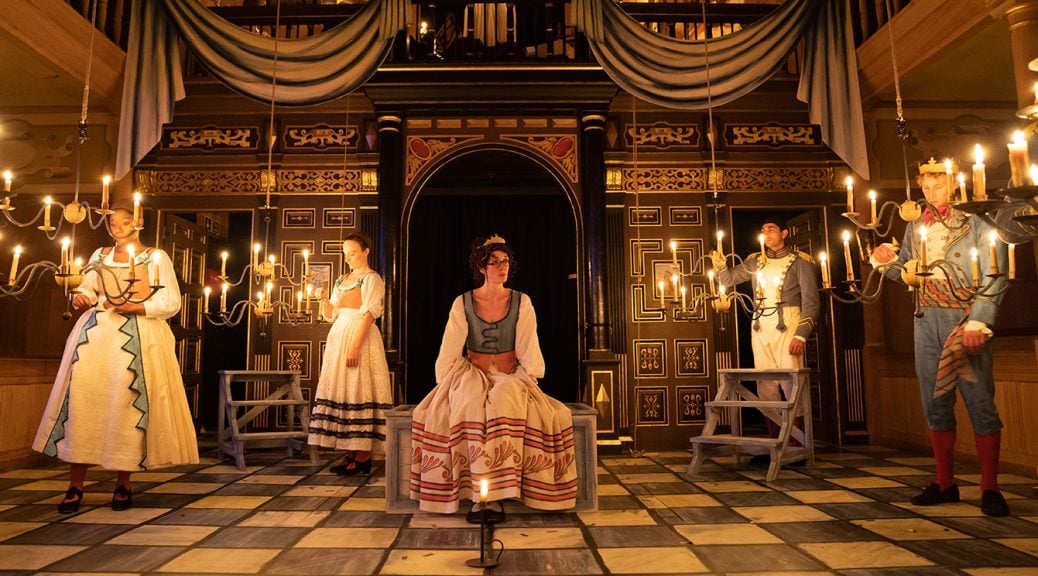
“Love’s Labour’s Lost” at the Sam Wanamaker Playhouse

One of the insights provided by the Globe’s indoor venue is the amazing acoustics early audiences could enjoy. You can hear a pin drop here; a treat used to great effect by composers James Fortune and Laura Moody, whose score is this production’s first triumph. Moody, performing her work alongside percussion and harp (Joley Cragg and Louisa Duggan, respectively), adds plenty of fun to Shakespeare’s comedy, but also a sense of experimentation and mystery – appropriate to an often puzzling play. And there’s a melancholy that understands the piece’s poetry. For the finale, a music box with a punched sheet echoes the letters that fill the play’s plot – as the paper floats around Moody’s head the look is magical, the sound haunting. I sincerely hope someone is planning to release a recording.

This cerebral play is not an easy one. Full of the conventions of courtly love, the wordplay is particularly dense. Even when parodying verbosity it is, well, verbose. It’s director Nick Bagnall’s achievement that a text neglected as unplayable feels so at home on a stage. Bagnall creates a sense of playfulness that makes this Love’s Labour’s Lost entertaining and enchanting. Toy soldiers, hobby horses to ride on and a dressing-up box create a storybook feel. The actors’ movements recall charades. It’s sweet but also sad, creating the perfect keys – major and minor – for a play where vows of chastity and love are not just celebrated but questioned, even deflated.

A sense of enjoyment in irreverence and exploration is embodied by the cast. Bagnall edits proceedings down to three couples who fall in love, but whose marriages are postponed, and they are performed with considerable fun but also an injection of cynicism. Leaphia Darko, Jade Williams and Kirsty Woodward all work hard to make a princess and her ladies-in-waiting real women. Although the roles are uneven, they feel like a matched trio. The “young bloods” who vow celibacy only to renounce it moments later are suitably ridiculous. There’s excellent comic work from Dharmesh Patel, Tom Kanji and Paul Stocker. A disguised appearance as a “mess of Russians” combines fantasy and farce beautifully.

Paul Stocker and Jos Vantyler

Kanji and Stocker also impress as a vicar and tutor combo who Shakespeare mocks for their pretentions. This is a tough job – a lot of the jokes are arcane – but with just a touch of The Muppets‘ Statler and Waldorf, there are plenty of laughs. Nonetheless, the star turn has to be Jos Vantyler who gives an unforgettable performance as the Spaniard, Don “a mint of phrases” Armado. Vantyler’s comedy accent is superb, and that it isn’t to the detriment of the lines is a huge technical achievement. Accompanied by a page boy that we have to imagine (Vantyler gets his lines, too), he postures like a toreador and uses machismo to tip the performance into drag king territory. This fantastic interpretation is a further high note for this winning show.

Until 15 September 2018

www.shakespearesglobe.com

Photos by Marc Brenner

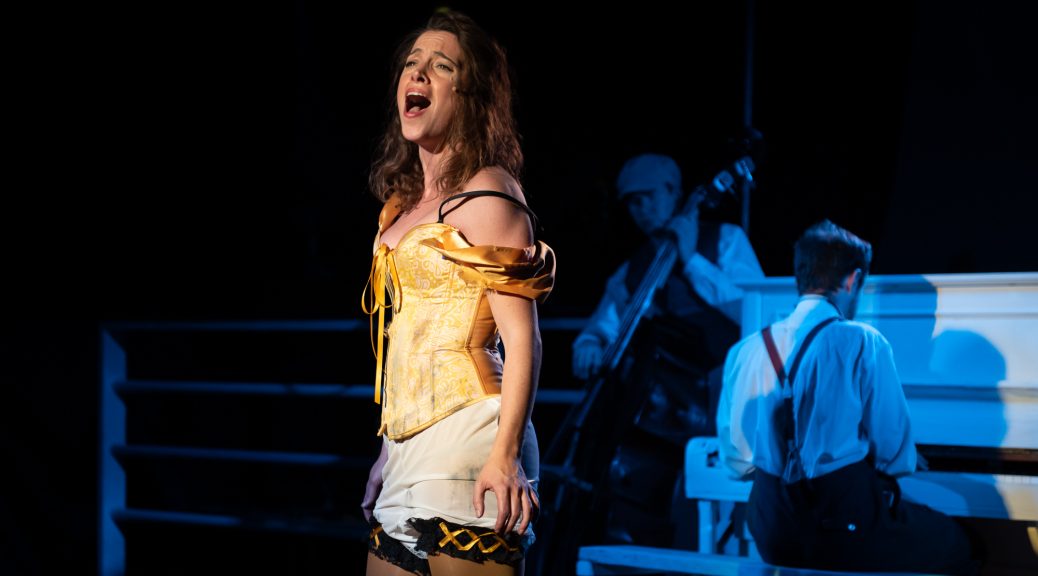
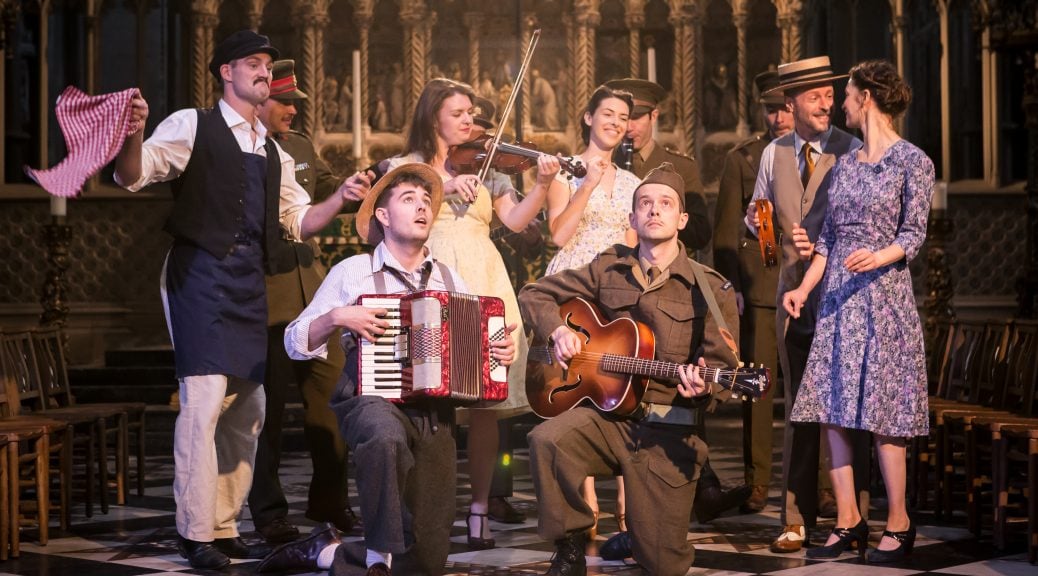
“Much Ado About Nothing” at Gray’s Inn Hall

Antic Disposition are an acclaimed theatre company who tour to gorgeous locations. Having shown this neat new production of Shakespeare’s romantic comedy in English cathedrals and at open-air venues in France – so the show is in tip-top form –their London sojourn marks a return visit for them to this beautiful Tudor hall. The location, alongside a production full of fun, makes the evening easy to recommend.

Inspired by the company’s travels, the play is relocated to France after the end of World War II. The move makes the most of an Anglo-French cast and aims to inject the bonhomie of a liberated nation with tricolour bunting and café style seating for some audience members. Several bilingual performers are impressive but there are some strong accents deployed by all the cast and some lines are lost. It’s a pity not to hear everything but all the performers make up for this with energy and élan. The trio of Beatrice, Hero and Margaret are played by Chiraz Aïch, Floriane Andersen and Molly Miles who make an impressively close team. Stiff upper lips abound for the English soldiers who come wooing: an idea that adds comedy to the performances from Nicolas Osmond as Benedict and Alexander Varey as Claudio, while resulting in a more prominent role than some productions allow for Theo Landey’s excellent Don Pedro.

French flair also aids the role of Constable Dogsberry (let’s be honest, those scenes are sometimes tiresome) whose malapropisms may now recall Officer Crabtree from ‘Allo ‘Allo although programme notes say the source is Jacques Tati. Either way lots of physical comedy allows Louis Bernard to get laughs and win over the audience. The company’s founders, Ben Horslen and John Risebero, co-direct the show with an eye on entertainment. An excellent score from Nick Barstow fills out both period and location, while calling on the ensemble to pick up their instruments further illustrates their talents and piles on winning charm.

Until 1 September 2018

www.anticdisposition.co.uk

Photo by Scott Rylander

“A Midsummer Night’s Dream” at Wilton’s Music Hall

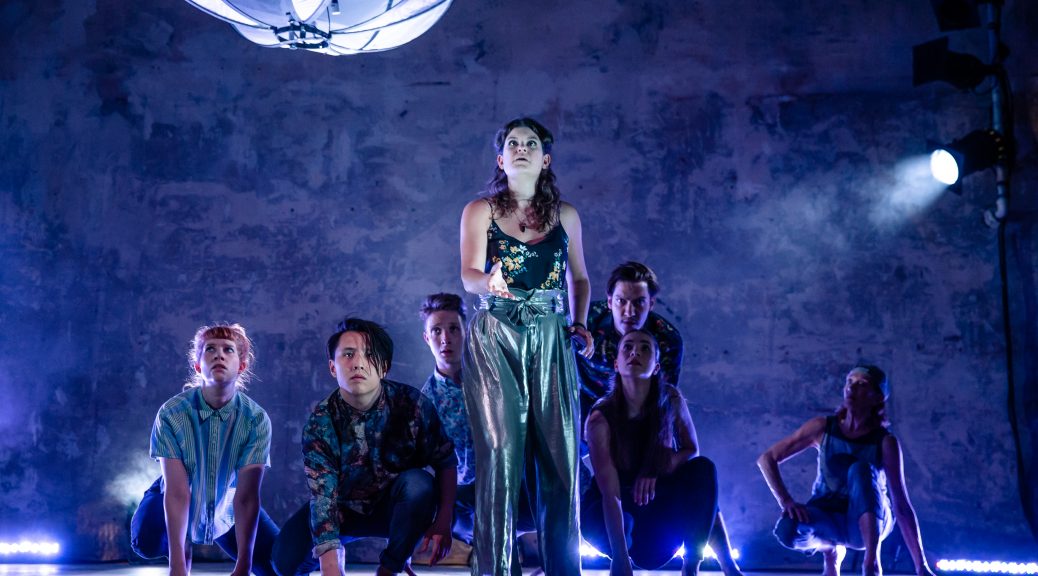
The Faction theatre company wastes no time with its new production of Shakespeare’s romantic comedy. Tamarin McGinley’s brilliant Hippolyta is imprisoned in a ring created by her fellow cast members and snarls at her soon-to-be husband Theseus – he wooed with his sword, after all! The startling depiction of their relationship shows a skill at interpreting the text. And the method of using the actors’ bodies rather than props as a cage shows off a signature physical style. Setting out its stall from the get go, this production excites from the very beginning.

Christopher Hughes as Bottom

Director Mark Leipacher is well aware that the course of true love isn’t supposed to run smooth and injects a tension into the romantic turmoil of the play. When it comes to the Athenian workmen, preparing a play of their own for the nuptial celebrations, the company does just as well with the play’s comedy. Led by Christopher Hughes as Bottom, in blissfully funny thespian form, the transformation into an ass has the cast taking turns as his ears and tail. It’s surprisingly effective and shockingly… sexy. Again, there is an attention to the text that shows an underlying intelligence: this is the first time I’ve been interested in the scene when Bottom is introduced to his fairy attendants.

Physicality is pushed to an extreme at times: the four Athenian lovers, interfered with by magic, end up wrestling one another in the woods – it’s brilliantly done, but you do lose some lines. And with only eight in the cast, the normal doubling of roles becomes a tripling and leads to a truncated finale that loses the witty commentary from those usually watching the show (since the same actors are performing it). But it’s a thrill to see every role embraced by each performer, especially Christopher York, who gets full comic potential out of a trio of parts.

It should be pointed out that a knowledge of the play helps, especially when it comes to the scene changes, crafted using sound and light by Ben Jacobs and Yaiza Varona, respectively – they are beautiful, but might not aid comprehension enough. But the production is full of rewards, with Richard James Neale’s direction of movement continually fascinating and Leipacher’s engagement with the text consistently intelligent. Combined, this is a winning offer and I think it’s magic.

Until 30 June 2018

www.wiltons.org.uk

Photo by The Other Richard

“The Tempest” at St Paul’s Church, Covent Garden

Congratulations to Iris Theatre, which celebrates ten years of its summer season at ‘The Actors’ Church’. For 2018 its family show, The Three Musketeers, starts on 2 August, while its annual Shakespeare offering is the story of Prospero wielding his magical powers to reclaim his usurped Dukedom. The production shows the company’s strengths: accessible, solidly crafted, engaging shows that fully exploit this venue’s charms.

It is laudable that a decade on director Daniel Winder still wants a challenge: The Tempest is a tricky text with a lot of ink spilt over it. The play’s oddities aren’t shied away from here; programme notes suggest it’s a response by Shakespeare to court masques, those peculiar entertainments designed by Inigo Jones, who also built St Paul’s. But what seems serendipitous on paper isn’t elevated on to the stage: the masque within the play, performed inside the magnificent church, is too far from the “majestic vision” described.

There are other problems, too. Anna Sances’ costume designs are intelligent but need more budget in execution. Candida Caldicot’s musical compositions are good, the cast’s vocals superb, but background music (and noises) are an odd, sometimes overpowering, mix.
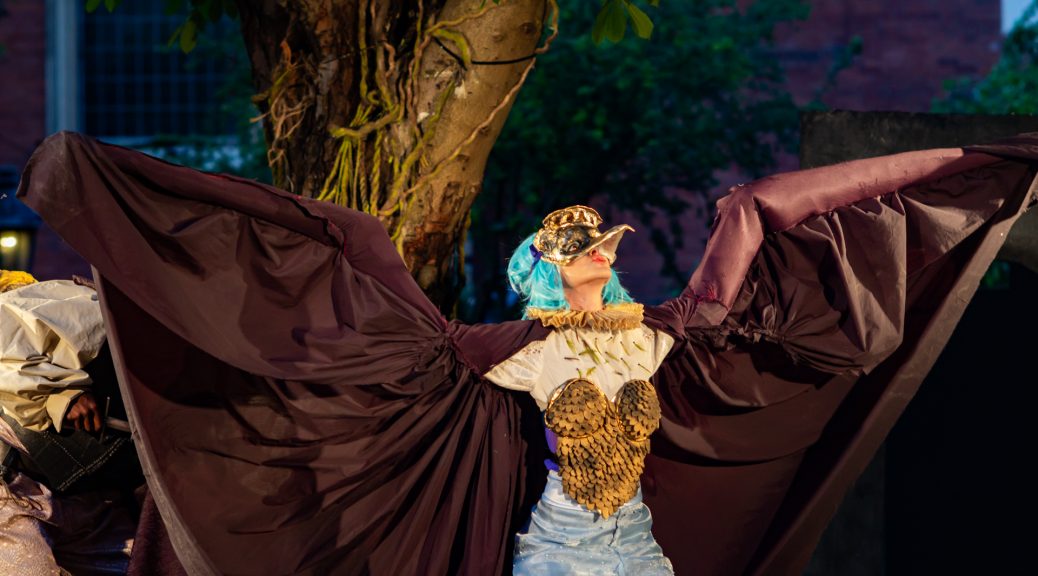
Flashy touches thankfully don’t detract from the production’s strong base. Winder knows what he is doing and gets a huge amount from his small cast. There are only seven performers here – acting their hearts out – and, if there are mixed results a lot of the blame rests with the comedy. There’s a sound effort made by Paul Brendan and Reginald Edwards in the roles of drunken Trinculo and Stephano, but I’ve never seen the scenes get that many laughs. There is strong work from Prince Plockey as Caliban and a particularly impressive Antonio.

Underpinning the show is a classy performance from Jamie Newall as Prospero, who is a joy to hear. But the evening belongs to Charlotte Christensen as Ariel. With her total commitment to the role, alongside a stunning singing voice, Christensen brings out a sense of wonder and sensitive confusion. There is a quality of fragility and questioning, as well as power that is lacking in the rest of the production. Nonetheless, while Winder’s ambition doesn’t always pay off, his confident show safely pulls through.

Until 28 July 2018

www.iristheatre.com

Photo by Nick Rutter

“The Two Noble Kinsmen” at Shakespeare’s Globe

This is Michelle Terry’s first season as artistic director on Bankside. And good luck to her. While she takes on Hamlet, and has programmed other big beasts, it’s notable and reassuring that there is new writing to come later in the summer, and the chance to see this less performed work, penned later in life by Shakespeare working with John Fletcher. Colourful and crowd pleasing, this production is an accessible and entertaining introduction to the piece.

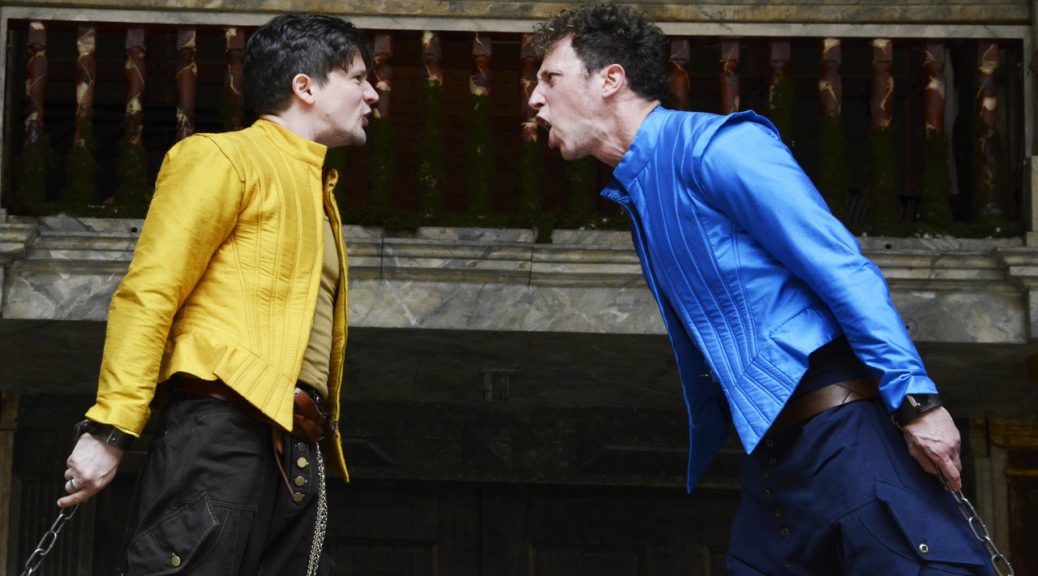
Following the adventures and love rivalry between the titular cousins, Arcite and Palamon, as they battle for marriage to Emilia, is quite the tale, crazily combining courtly manners, ancient gods and plenty of characters who are literally mad for love. Director Barrie Rutter, of Northern Broadsides fame, has only worked at the Globe once before but shows a clear command of the space. There are strong costumes from Jessica Worrall and lots of music from Eliza Carthy. Any incongruous notes go to show how much Rutter wants to reach out and grab the audience’s attention, hence the story is clearly presented, the staging swift and the action exciting.

This is an actors’ production. Rutter makes a focal point of the performances, rather than any kind of concept or argument, and the result is relaxed and enjoyable. Right from the start there’s the stylish Jude Akuwudike as Theseus and Moyo Akandé as Hippoltya to impress, while Ellora Torchia plays their sister Emilia and excels with the plot’s incredulous moments – of which there are many. The play rests with the leading men, and Bryan Dick and Paul Stocker deservedly steal the show. They can both cut a dash as heroic figures making us (almost) believe in their desire to die to for love, while also enjoying their sudden rivalry.

It can be tricky to have fun with Shakespeare – some people get upset if you try. But here the jibes at valour and exaggerated love are so convincing there’s a case that Bard’s efforts with Fletcher have their own knowing irony. There’s still the suspicion that the piece wouldn’t be performed without Shakespeare’s name attached as the concerns and references are too arcane. But the production makes a strong case for the play, undaunted by its oddity and rooting itself in heady emotions that remain recognisable.

Until 30 June 2018

www.shakespearesglobe.com

“Julius Caesar” at the Bridge Theatre

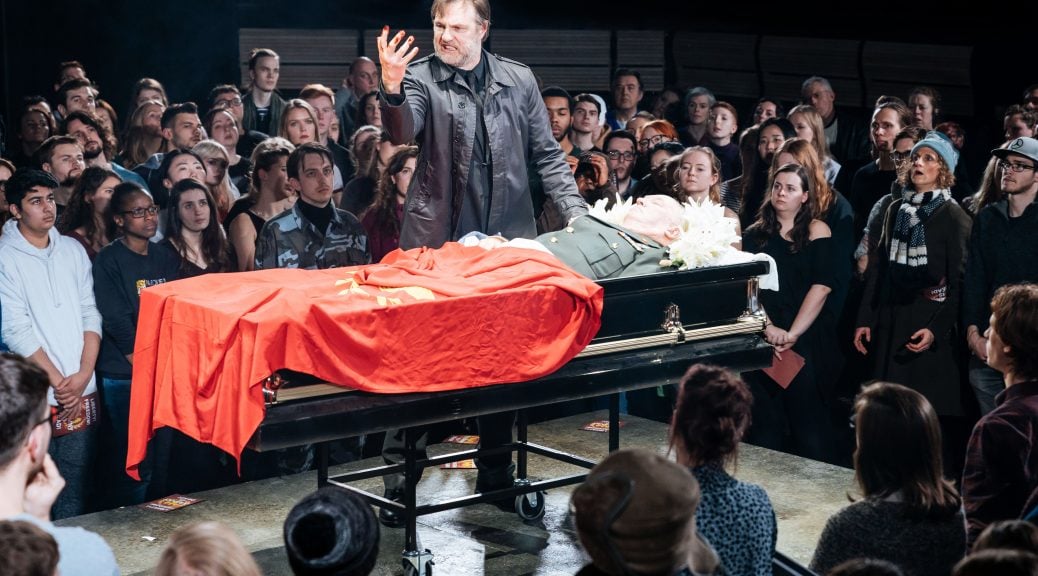
Showing off his new venue’s versatility, director Nicholas Hytner has transformed London’s newest theatre for only its second show. Presenting Shakespeare’s Roman tragedy as a promenade performance, with the pit peopled by theatregoers standing in for the populace, reveals a cavernous space that seems rather empty at first. But as Bunny Christie’s set of rising and falling cubes gets into action we see Hytner’s skill at staging. This crowd control is superbly done, and probably fun if you are in among the action (I paid to sit). But it’s almost too interesting to watch the hard-working ushers moving the crowd around.

In a play that discusses manipulating the masses so openly, there’s a kind of appropriateness to being distracted by the mechanics of the production. There are many instances when it’s clear the show is trying hard to be a spectacle with impressive touches that give it an expensive feel. It’s loud – right from the start when a band opens the show – and Bruno Poet’s lighting design is superb. Scenes of battle include a barricade that appears with stunning speed to divide the space. There’s even a Jeep for a few seconds.

Ben Whishaw
Ben Whishaw

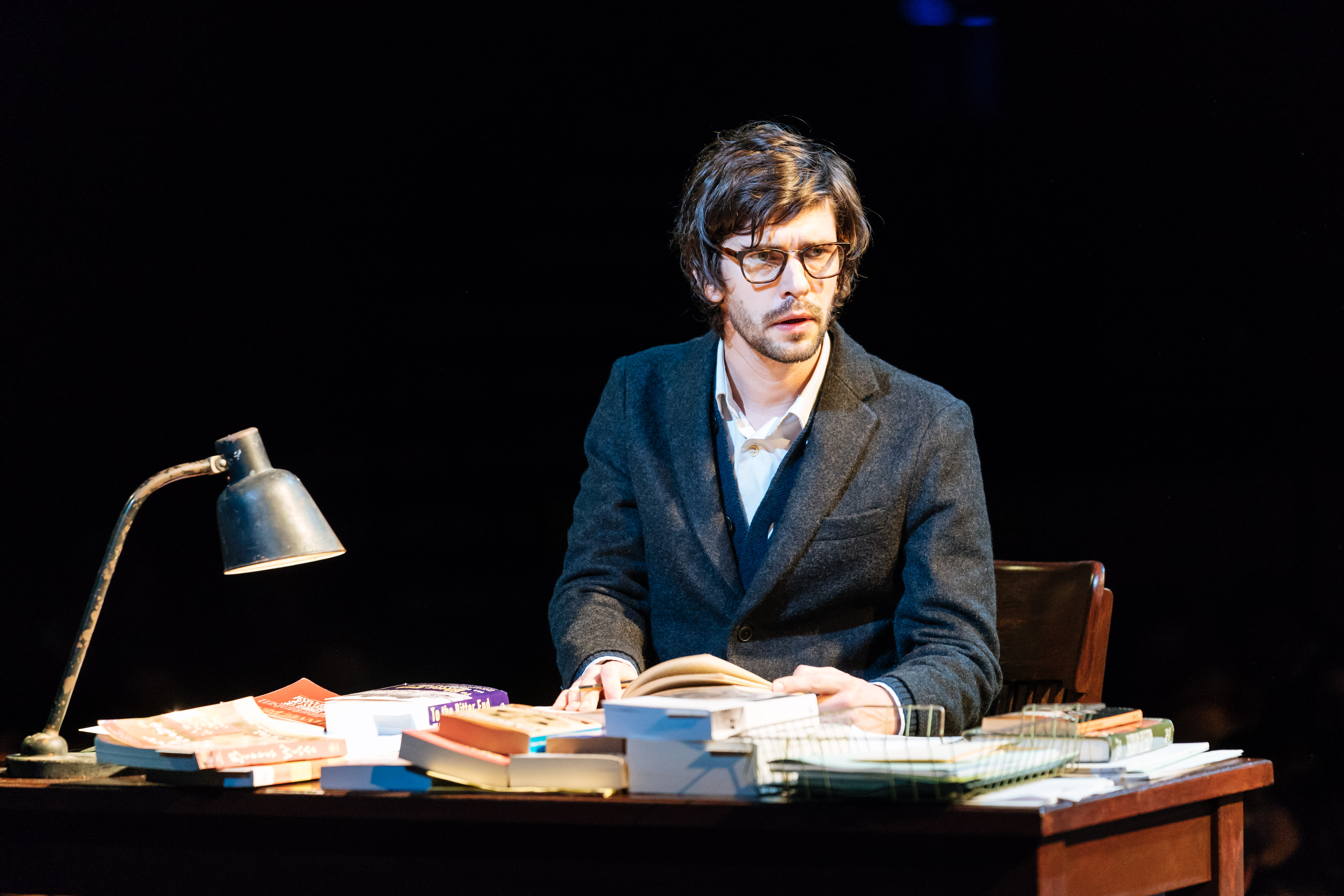
The performances have to fight against a lot here – with mixed results and plenty of shouting. Those who join the mob seem best placed, including Rosie Ede and the show’s lead vocalist Abraham Popoola. But David Calder’s Caesar seems lost; presenting him as a populist politician may make the production feel topical but it stunts his performance, making the role a box ticked rather than a figure to engage with. David Morrissey’s Marc Antony holds the crowd, he is convincing and a suitable heir to his crowd-pleasing mentor. Ben Whishaw delivers his lines with finesse and his performance is in keeping with a theme of sincere activism, but his Brutus is too meek. Cast as an academic who plays with his spectacles, it’s tricky to see his nobility behind his obscurantism. There are also strong performances from two women cast in traditionally male roles: Michelle Fairley and Adjoa Andoh make an impassioned Cassius and a ruthless Casca, respectively.

It is nuance that is lost in Hytner’s production. The action is clear, often exciting, but rather too black and white. And this is a humourless Julius Caesar. Of course, the play isn’t a comedy but there’s usually a cynicism that delivers a dark wit. These characters are all politicians, after all, manipulating one another as well as the mob, but the tone is one of intellectual conviction. Arguably, it’s in keeping with the times to persist in such an earnest tone. What inspires Hynter is a feeling of youthful sincerity – but this doesn’t make the play particularly interesting or entertaining.

Until 15 April 2018

www.bridgetheatre.co.uk

Photos by Manuel Harlan

“As You Like It” at the Chelsea Physic Garden

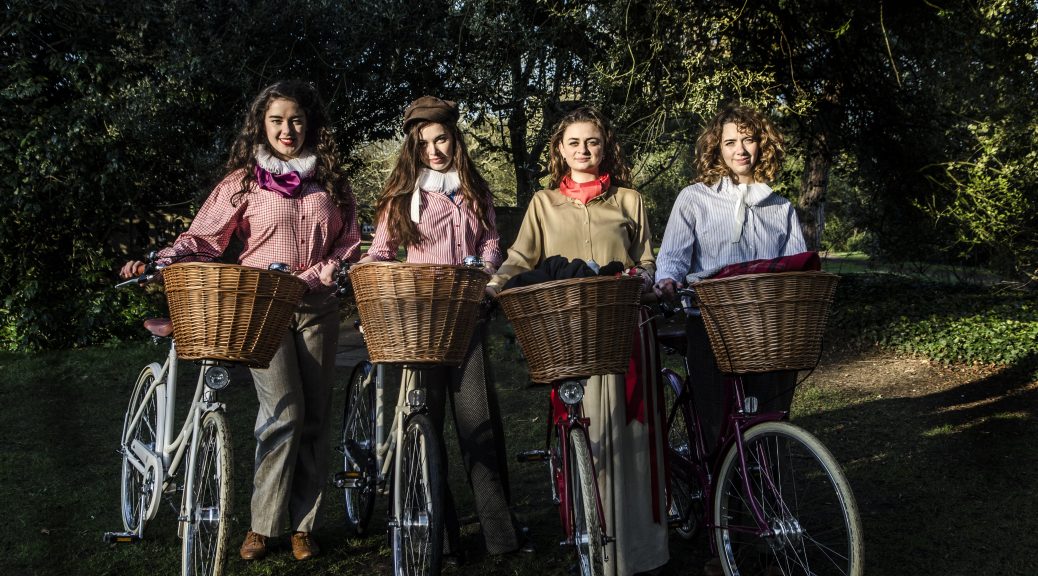
The Handlebards, who tour their shows on their bikes, closed their 2017 tour with characteristic fun and bravado. The female troupe, who this year tackled As You Like It, share a sense of adventure with their male counterparts, who have been spinning out A Midsummer Night’s Dream. The performers create an informal atmosphere of chaos and adlibs that belies their skill and makes for great entertainment.

With only four in each cast – and recall that four couples get married at the end of the AYLI – the Handlebards have to handle the Bard fast and loose. In fact, that’s the strategy and their charm – leading to plenty of invention. Naturally, you’re waiting for them to shout out, “We need a wrestler”, as audience participation is a must. And when it’s this well-handled, even someone as averse to it as me can forgive it. Lots of accents make differentiating the characters jolly; from Lotte Tickner’s lisping Orlando to Jessica Hern’s prim and proper Celia. Lucy Green makes a super Rosalind – with comedy flirtation transformed into a believable teenage Ganymede. Eleanor Dillon-Reams embodies the whole approach. A natural comedian, she excels at a sense of complicity with the crowd.

What impressed most for the women’s final show was their work under difficult conditions. The Chelsea Physic Garden sounds like a great stand-in for the Forest of Arden – it’s certainly somewhere to “willingly waste” time in. But on a flightpath noisier than the Globe or Regent’s Park, it cannot be easy to perform in. Continual drizzle and a cold wind didn’t help, either. And then the fireworks started. Clearly experienced in the unexpected, the cast’s sense of fun an energy never flagged. Using any distractions, while creating their own havoc among the audience’s picnic hampers, is all part of the team’s attraction. Here’s looking forward to them getting back on their bikes in 2018.

www.handlebards.com

Photo by  Rah Petherbridge