“Brimstone and Treacle” at the Hope Theatre

Here is a real find on the fringe. Many a larger venue might have considered a 40th anniversary revival of Dennis Potter’s landmark play, but director Matthew Parker has beaten them to it and can bask in the glory of his superb production of this brilliant piece.

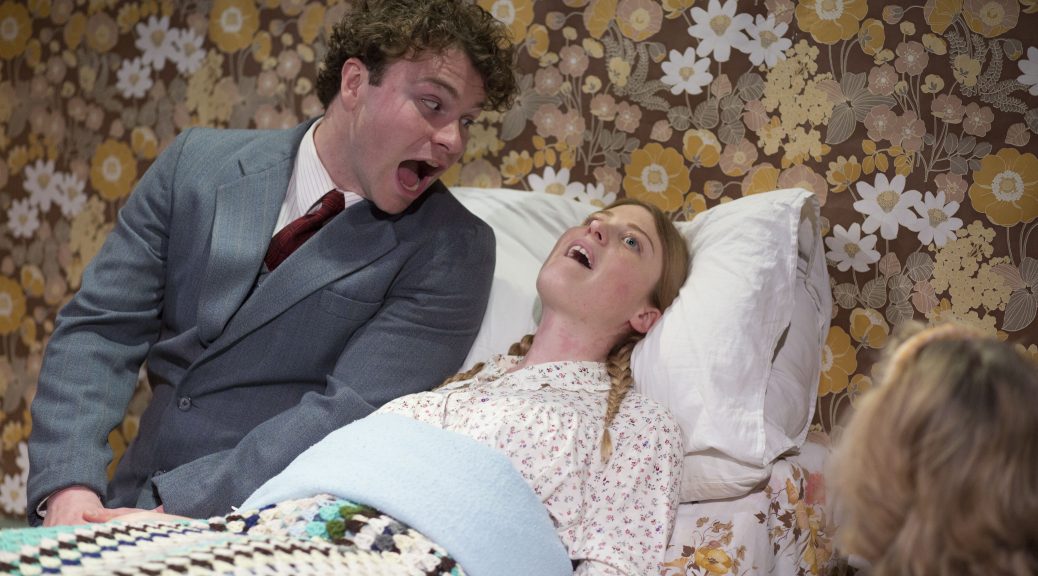
Potter’s scenario has a severely disabled girl, tended by her desperate parents, visited by evil. It’s a remarkable performance by Olivia Beardsley as Pattie, the bedridden victim of a hit and run who’s unable to speak yet communicates frustration and fear. Pattie’s father regards her as dead. The alternative – that she is “locked in” –is just too frightening for him, but the possibility that she is sentient haunts the play.

Both Pattie’s parents are struggling. Her mother, a house-bound full-time nurse, is played to perfection by Stephanie Beattie, who combines her wretchedness with humorous touches. The talented Paul Clayton plays the father, an objectionable figure who’s close to parody. Clayton invites us to take the character seriously, while glimpses of his love and regret are tender without being mawkish. The couple’s flirtation with right-wing politics makes Potter visionary – the yearning for isolationism and a past where people “did less sniggering” – gives us plenty to think about in 2017.

It’s with the character of Martin, played here by Fergus Leathem, that Brimstone and Treacle becomes unforgettable. He is a visitor claiming to have been Pattie’s fiancé. First comes nervous laughter at supernatural overtones, then chills with his monotonal singing and glances to the audience, culminating in truly shocking abuse. Parker’s staging of all these levels of discomfort is handled brilliantly, destabilising the audience and aiding the tension in the text.

This suburban Satan may have a Rosemary’s Baby plan in mind. But he is also a common conman and out of luck crook, all combined to make him a catalogue of fears. There’s a twist, too – a sin that has nothing to do with him revealed as a last disorientation. Fully developing Potter’s nuanced play, without denying dangerous edges and firmly establishing it within its period, are all big achievements for this tiny theatre. With four performances as good as any you could see on a stage, this is one to grab a ticket for… quick.

Until 20 May 2017

www.thehopetheatre.com

Photo by lhphotoshots

“A Lie of the Mind” at the Southwark Playhouse

Sam Shepard’s award-winning 1985 play is a slow-burning, haunting family drama. After a brutal act of domestic violence, Beth is left brain damaged and her husband Jake unhinged. Their families, aiming to care for them, become increasingly irrational, unlocking the play’s momentum and considerable dramatic power.

Gethin Anthony and Alexandra Dowling acquit themselves well as Jake and Beth. These are difficult roles and the temptation for shrillness isn’t fully controlled. Shepard is averse to sentimentality and makes it a struggle to empathise with these damaged figures. Nonetheless, Anthony and Dowling convey their characters as repositories of cumulative pain.

Gethin Anthony, Mike Lonsdale and Alexandra Dowling
Gethin Anthony, Robert Lonsdale and Alexandra Dowling

The couple’s siblings have problems too. Initially overshadowed by Jake’s instability, his brother and sister, played by Michael Fox and Laura Rogers, do well to build their roles, acting as foils for the increasing oddity around them. Meanwhile, Robert Lonsdale gives a cracking performance as Beth’s consoling and then avenging brother. Caught up in a maelstrom of metaphor, Lonsdale gives the role clarity.

Best of all are the older characters, portrayed with conviction and welcome humour by a skilled trio so that the play’s dated gender relations create fewer snags here. Shepard is too sophisticated to blame the parents for the sins or woes of the children, but a legacy of emotional repression is clear. Nancy Crane and Kate Fahy play the mothers – far too keen to have their kids back at home and infantilised. John Stahl gives a strong performance as Beth’s irascible father, whose tirade against ageing is one of the play’s finest moments.

Marshalling all this – and it’s a lot – is James Hillier’s direction. Some of Shepard’s dark humour isn’t transmitted and a firmer hand on histrionics with a little more work on accents would be welcome. But Hillier has created a stylish show, aided by live music from James Marples. The production appreciates Shepard’s extremes, giving his Americana a back seat to examine the topical subject of mental health. It’s a solid revival of a fascinating play.

Until 27 May 2017

www.southwarkplayhouse.co.uk

Photos by Lidia Crisafulli

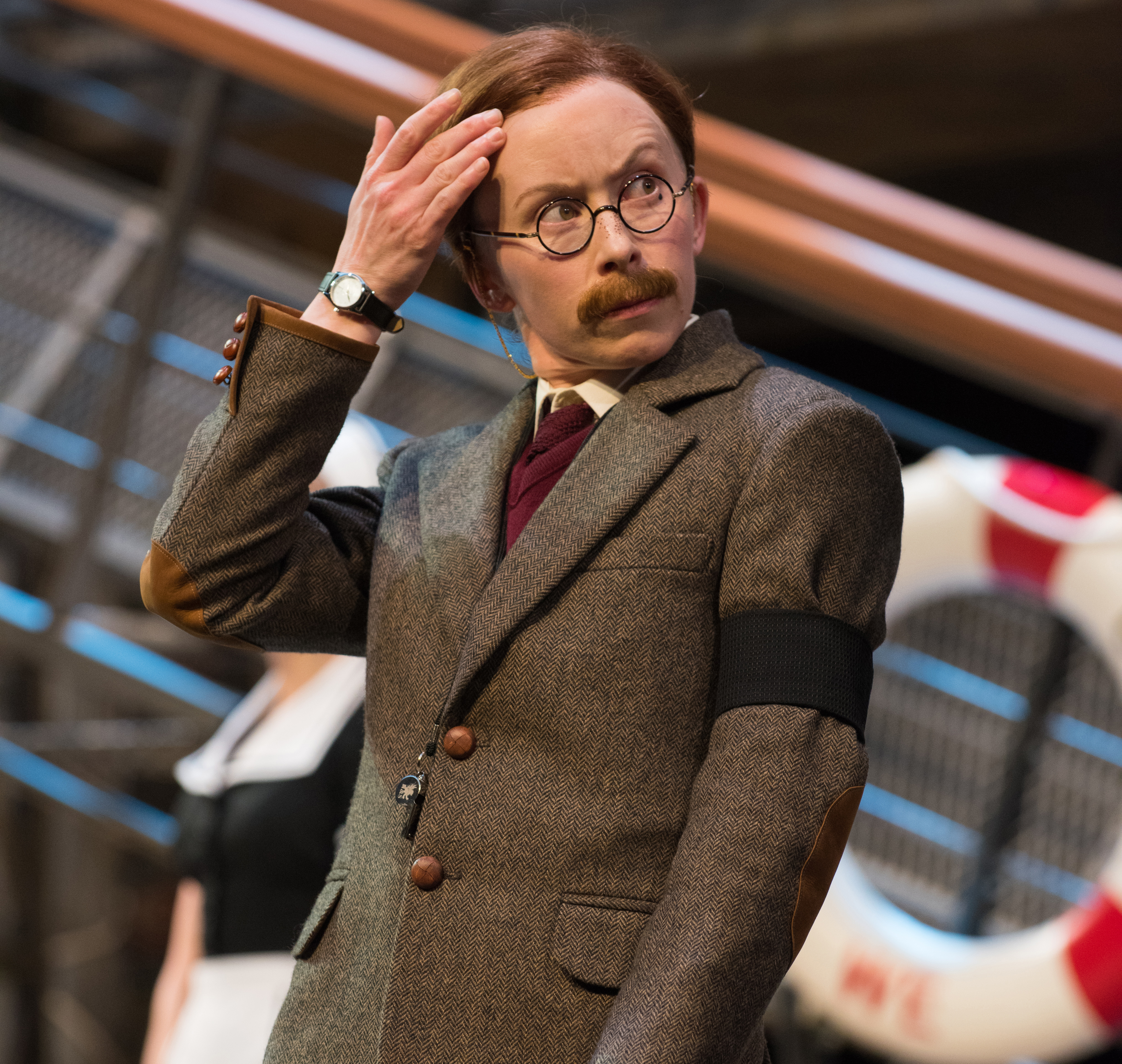
“Madam Rubinstein” at the Park Theatre

Everybody loves Miriam Margolyes. This story of a monstrous cosmetics tycoon, once one of the richest self-made women in the world, provides a larger-than-life role that brings her centre stage. One of our finest comic actresses, it’s a thrill to see Margolyes expertly handle some great jokes.

The briefest research about Helena Rubinstein shows that playwright John Misto’s depiction is motivated by the potential of caricature. So be it, making the character ruthless and miserly gives the perfect palate for Margolyes to work with. She shouts Yiddish insults from her skyscraper to rival Revlon’s, while keeping chicken drumsticks in the office safe. At least she’s kind enough to provide free electricity for those slaving away in her office. A collection of clichés yes, with malapropisms via Poland, but it’s all very funny.

While the comedy foundation is good the rest of the play’s makeup is hastily applied. Attempts at suspense surrounding espionage in the cosmetics business fail to add tension. Helena’s traumatic lifestory and emotional frigidity feel tacked on. A substitute son, in the figure of her gay bodyguard, capably performed by Patrick O’Higgins, gives rise to more good gags before becoming a dead end. Intense rivalry leads to some great scenes with the excellent Francis Barber as Elizabeth Arden (this relationship already the subject of a documentary and a musical) but the two makeup maestros’ could have more time together. Barber seems criminally wasted.

Jez Bond directs efficiently but like the no frills set from Al Turner there’s a lack of imagination that the show really needs an injection of. Listed like this, it all sounds negative. But you’ll be laughing enough to forgive. Nearly all of Turner’s jokes – and there are a lot of them – land. If the play gets as many star ratings as it has laughs its sell out run at the Park will only be the start of things.

Until 27 May 2017

www.parktheatre.co.uk

Photo by Simon Annand

“Out There On Fried Meat Ridge Rd.,” at the Trafalgar Studios

Fried Meat Ridge Road isn’t the kind of place you readily visit and it has taken some desperate house hunting on the part of Mitch, expertly played by Robert Moloney, to end up here. Laid off from his job in a spork factory (they have to be made somewhere) Mitch finds himself alone in Appalachia, with only a degree in Disposable Cutlery Technology to his name and about to become motel roommates with an oddball called JD. Their budding bromance makes for fantastic comedy. JD may be a “bizarre red neck” but he’s a funny one, and assisted by Harry Burton’s sharp direction this short play guarantees long laughs.

A slice of rural Americana, with any audience prejudice cleverly subverted, the neighbours are fun too and cover plenty of comedy bases. Marlene and Tommy are a painter and poet making their lives more complex with drugs and affairs, providing a skilful riff on pretension that performers Melanie Gray and Alex Ferns do well with. The motel’s owner, Flip, is also more than your standard hick. Michael Wade might further explore some of his role’s surprises but, like all the cast, his comic timing is finely tuned. And the more out there the whole thing gets – there’s a dance number, a destroyed gazebo, and a shoot-out with the local sheriff – the better the show becomes. Like JD himself, it’s just the right kind of crazy.

There is a pilot TV show feel to things, but this won’t stop your enjoyment of the jokes – imagine a sitcom with enough well-polished stories to become a treasured box set. What’s really special, however, is playwright Kevin Stevenson’s performance of his lead role. An adorable bear of a man, his charm crosses over into his character, with a naivety that makes JD appealing and thought-provoking. The character’s openness, generosity and vulnerability are all funny, but these qualities are also strengths. JD has some secret help – let’s just say his family history means he’s well connected – leading to a sweet twist that means you leave the show on a divine high. Stevenson’s ability to make sincerity convincing and funny is miraculous.

Until 3 June 2017

www.atgtickets.com

Photo by Gavin Watson

“Romeo And Juliet” at the Union Theatre

Like Daniel Kramer’s production of the same play, currently showing at the Globe, Andy Bewley reimagines Shakespeare in a radical fashion. Here the most famous lovers in the world are men. And they and their families are rival football fans. Think Beautiful Thing with the beautiful game thrown in. Both ideas are interesting – bravo for originality – but neither works that convincingly. Put together, the creative team have too much to tackle.

As Joe M. Mackenzie’s credit for dramaturgy and adaptation indicates, the production is a version of Shakespeare. A lot of text is left out. I suspect the inspiration is the scene of Romeo and Juliet’s marriage night – enchantingly transformed using movement rather than verse. Other cuts should have been as bold. Predictably, changing the genders becomes messy. Maybe I’m missing a point but why not just change Juliet’s name to Julian?

Even more puzzling, the novel ideas don’t do much. Everyone is remarkably comfortable about the men’s sexuality and apart from some empty pint glasses, these football fans are pretty refined. Which is lovely…but avoiding the chance for extra drama seems odd. The ball skills shown off impress and Mercutio’s Balotelli t-shirt is a nice touch. But the sporting veneer adds little. Dropping it leads to a strong final scene; the action in the tomb plays like an unfolding news story, all the cast are used well, and a feeling of chaos is skilfully constructed.

Best of all, there are some fine performances here. Bewley is a careful, even-handed director with his cast. There is an air of earnestness that flattens some characters but all roles are well delivered. Gabrielle Nellis-Pain is a hard working nurse, Allegra Marland does very well as Paris and Celeste De Veazey makes the often-neglected role of Benvolio stand out. Sam Perry’s Juliet is impressively sweet; he is good at bringing some caution to the role, showing a timidity that’s seldom expressed. Abram Rooney’s Romeo has a down-to-earth delivery that is captivating, with brilliantly petulant touches. The scene of Romeo’s banishment – snotty tears and all – shows great talent. It’s the leading men that that really score.

Until 20 May 2017

www.uniontheatre.biz

“The Treatment” at the Almeida Theatre

Martin Crimp’s 1993 play is an exploration of truth and lies that uses art like a prism. The key question is who ‘owns’ a story – is it the teller or all of us? It’s a structuralist trope that gives rise to vivid characters who enliven the play’s opaque moments. And it’s a lot more fun than it sounds.

The piece pivots on husband and wife “facilitators” in the movie business, depicted skilfully by Julian Ovenden and Indira Varma. This gloriously devilish duo is working on the eponymous treatment that will become a film. Unbelievable, yet recognisable, the couple and their project turn out to be extremely funny.

Ian Gelder
Ian Gelder

Their treatment is of the ‘real life’ tragic story of an odd woman called Anne, recruiting a struggling writer (the excellent Ian Gelder) along the way. Aisling Loftus produces a figure disturbed and disturbing in Anne, using the role’s cipher-like qualities to advantage. Anne’s would-be amanuensis falls victim to the Shakespearean pretentions he tries to force upon her story (“vile jelly”, anyone?) in a shockingly grisly scene. How could the film being worked on relate to true events this strange? Combine the smart satire around the New York pseuds with Anne’s fragile mental health and art doesn’t stand a chance.

Gary Beadle
Gary Beadle

The film’s progress has a quasi-magical impact on real lives. Scenes of the movie’s planning are interspersed with Anne and her estranged husband (played by Matthew Needham), giving us an alternative view. Similarly, the high-profile actor/producer brought on board – a charismatic role for Gary Beadle – manipulates Anne’s story further. Meanwhile, his claim that “art changes everything” is debunked by the unsettling elision of truth and fiction.

Supernumeraries from the Almeida’s community programme provide a large cast that adds a well-used note of realism. Lyndsey Turner’s sure-footed direction, with Giles Cadle’s stark staging and Neil Austin’s lighting, combines naturalism with the bizarre and exaggerated superbly. A description of the moviemakers’ luxurious world as “allergic” to reality is typically solipsistic. Everyone involved, including the audience, is struggling to get to the bottom of motivations. But there’s fun to be had working out what’s going on – this is entertaining avant-garde.

Until 10 June 2017

www.almeida.co.uk

Photos by Marc Brenner

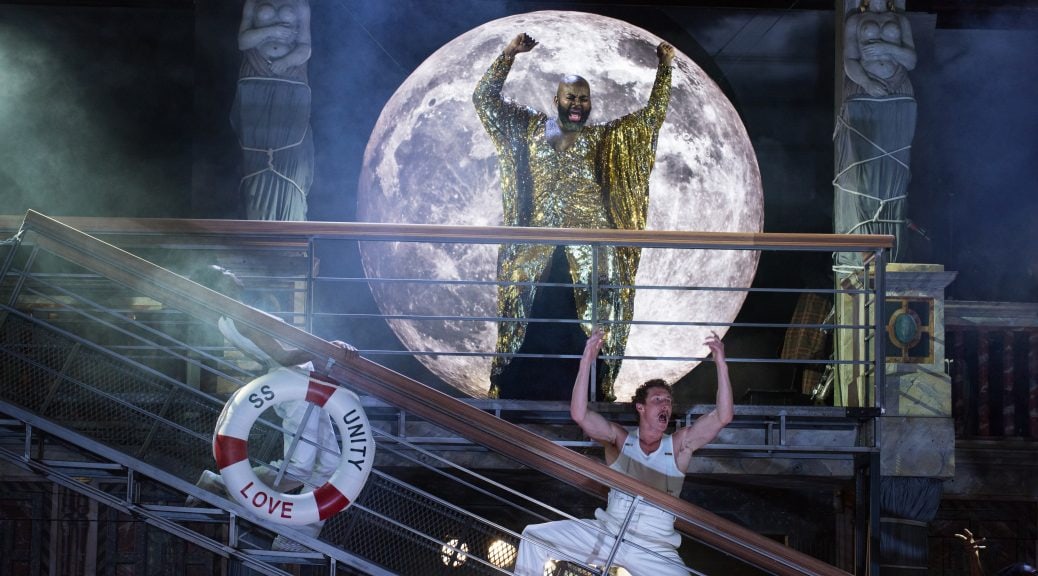
“Romeo and Juliet” at Shakespeare’s Globe

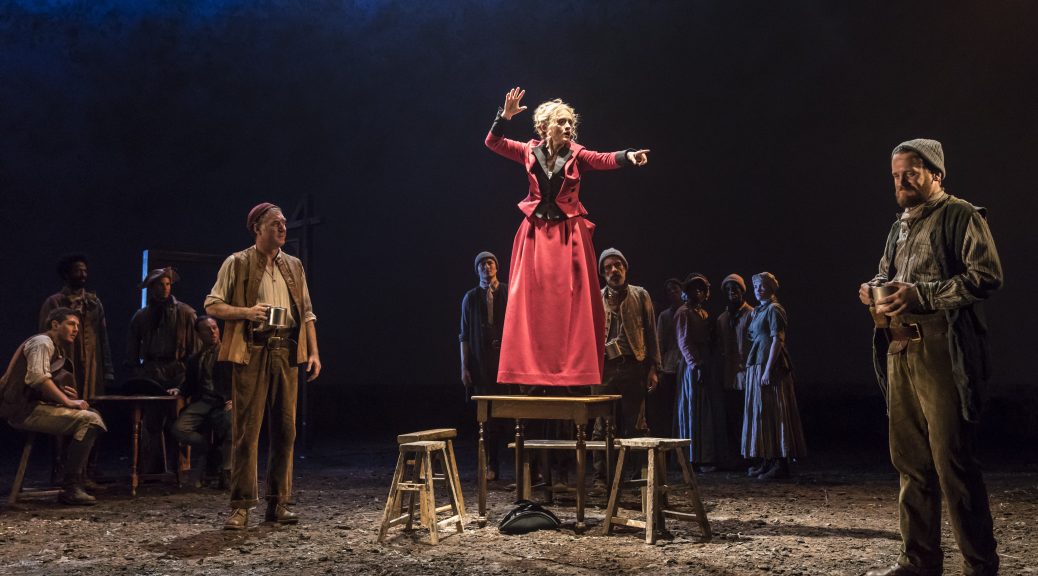
Emma Rice’s second, and sadly final, season as creative director on the South Bank opened last night with a bold, experimental show directed by Daniel Kramer. Not for all tastes, and far from flawless, the production brims with intelligence as well as tricks – if originality is what you seek, it is plentiful.

The Montagues and Capulets are made up like clowns – “alike in dignity” indeed. Missiles hang in the sky and coffins abound as doom and death pervade the arena. Subtle it ain’t. Nearly every line is wrung for all its worth, with exaggerated delivery or incidental action. Even Romeo changing his trousers can mean missing a plot point. It’s exhausting, but always engaging. And such bombast makes the masque scene unmissable: karaoke ‘Y.M.C.A’? Why not? And Mrs C’s Fay Wray fancy dress is to die for.

Some of Kramer’s ideas are a puzzle. Why does Lady Capulet double as the apothecary? And why are there so many guns when knives and poison are specified? Other ideas have unfortunate consequences: the make-up and incredible costumes, a cohesive part of Soutra Gilmour’s design, make it difficult to differentiate characters. Which leads to the production’s biggest fault – a sense of performers struggling to stand out, leading to a kind of hyperinflation.

The notable exception is Golda Rosheuvel’s Mercutio, whose recasting as a woman adds tension to her friendship with Romeo. Rosheuvel embodies Queen Mab in unforgettable fashion and her death scene is shocking. In the title roles, Edward Hogg energetically follows Kramer’s strategy, using every inch of the stage. Kirsty Bushell’s Juliet is more captivating. The lovers present some of their venerated lines as hackneyed – a startling move that accentuates the often ridiculous and embarrassing nature of teenage love.

Kramer’s vision of the play is bleak right to the end –it’s about dying kids, after all. Anger fills the show, with a lot of running around. There’s a fantasy execution of parents and in-laws by Romeo, and Juliet’s lust is violent, too. Both scenes are riveting. The only quiet moment is the marriage night, during which Bushell and Hogg magically introduce a sombre tone. These lovers are more star defying than star crossed, leaving little room for any other emotion.

Kramer’s most exciting idea is conflating scenes. Joining Romeo and Juliet’s marriage with Mercutio’s fatal encounter with Tybalt adds poignancy. Playing scenes two and three of Act III simultaneously creates a riff on the theme of banishment and death that is inspired. It’s a shame these interpretations are more successful than the production’s emotional impact. Yet they are brilliant insights, shaping the way we see the play and, in my eyes, redeeming many of its faults.

Until 9 July 2017

www.shakespearesglobe.com

Photo by Robert Workman

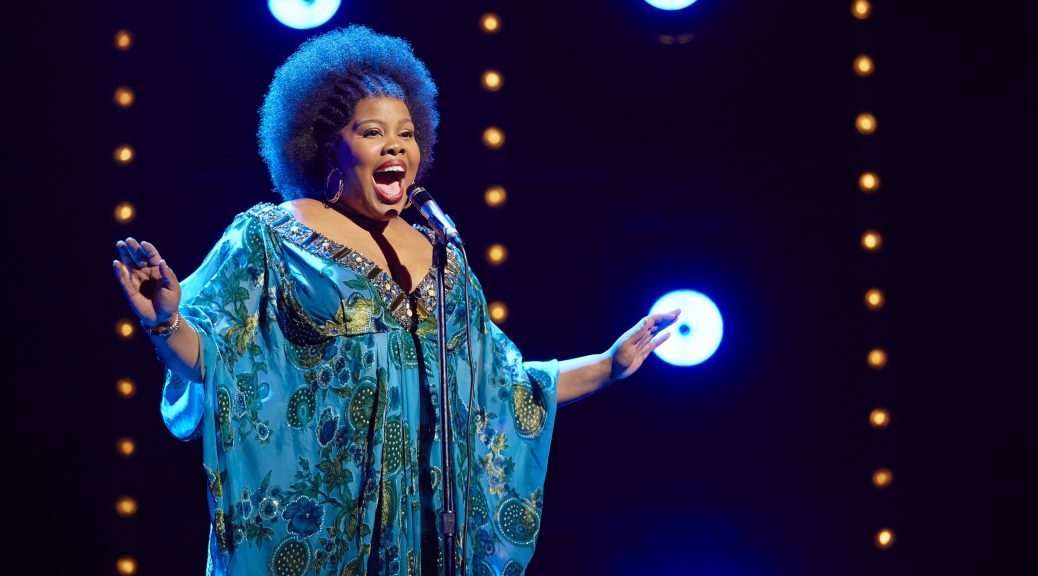
“Carousel” at the English National Opera

Director Lonny Price’s new production of Rodgers and Hammerstein’s classic musical is billed as ‘semi-staged’. But with a massive stage that rotates, impressive projections to set the scene and a huge cast – you’d be very fussy to feel short changed. This is a big-scale show, befitting such an iconic piece, with star names and an orchestra that do justice to the legendary score.

The much-loved Alfie Boe takes the lead of wastrel Billy Bigelow. Star soprano Katherine Jenkins joins him as the devoted Julie Jordan. Their doomed love affair sounds so good that any deficiencies in their acting skills are easily forgiven. Jenkins is a little wooden and Boe seems to regard running around as shorthand for frustration. But it’s a tough job making characters fit for a parable really breathe.

Smaller roles compensate. The show boasts a strong villain in Derek Hagen’s Jigger Craigin – his work with the chorus on Blow High, Blow Low is a real highlight, full of convincing machismo, adding tension that ripples out through the whole piece. And there’s a super Mr and Mrs Snow, in Gavin Spokes and Alex Young, who are full of sweet comic touches.

The operatic voices here, bolstered by the excellent ENO chorus make an ambitious statement about taking the sublime score seriously. But the production has a reverence that’s questionable when it comes to the dated sexism of the piece. Julie’s final exoneration of Billy’s domestic abuse is too tough a line to stomach. Changing it wouldn’t be a matter of political correctness – it was never the suggestion that hitting your wife is OK. The finale is for resolution and keeping the line doesn’t work anymore. A small quibble about an excellent show… but it leaves a nasty taste that could be avoided.

Until 13 May 2017

www.eno.org

“The Braille Legacy” at the Charing Cross Theatre

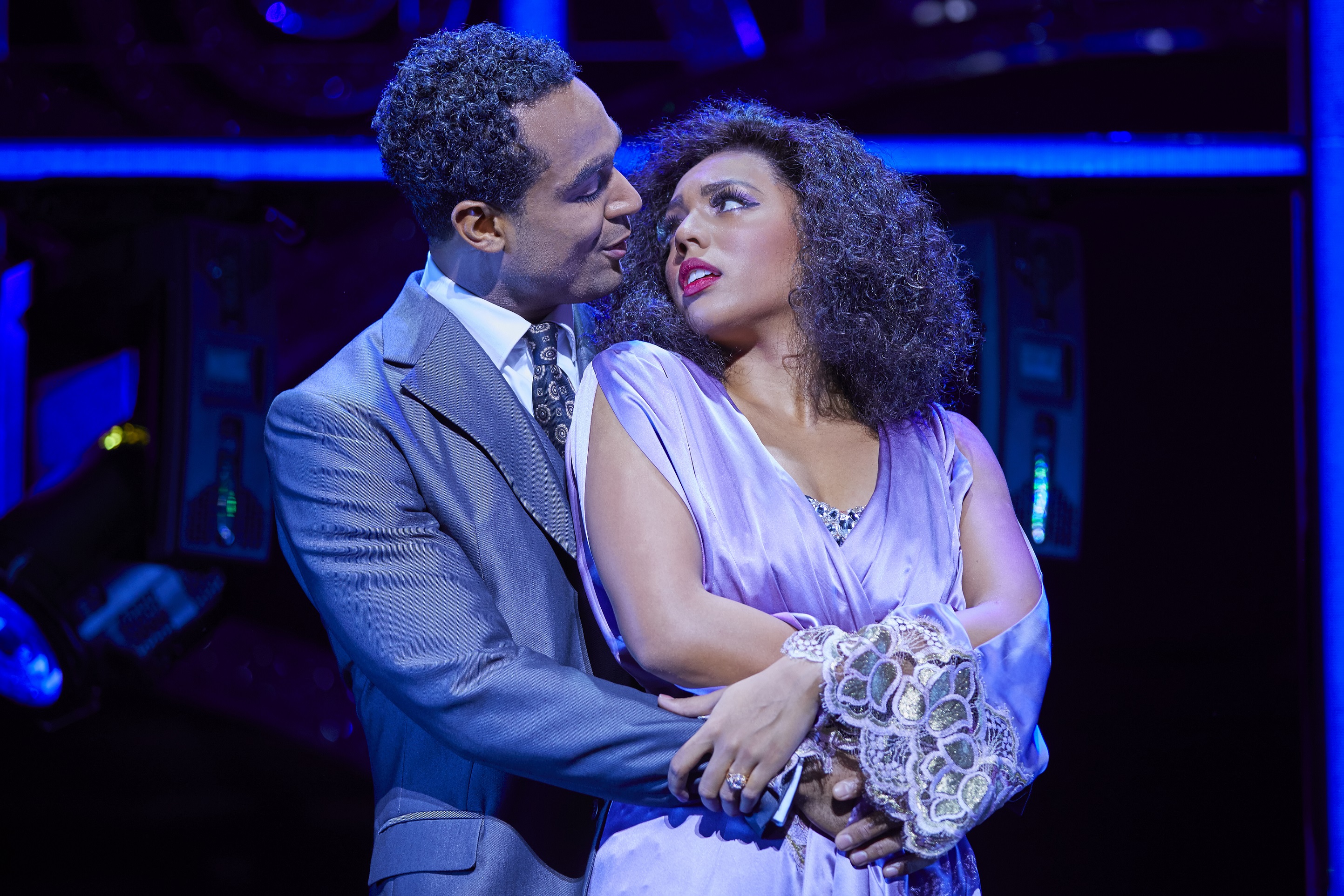
This new French musical’s world premiere benefits from the talents of director Thom Southerland. It’s the story of Louis Braille, who battles against prejudice to improve lives with his invention of a reading and writing system for the blind. The aim is to inspire and, with a rousing, diligent score, here’s a chance it’ll induce goose bumps and maybe a tear or two.

Now, while Braille changed the world for the better, he did so from behind a desk, his “silent revolution” being slow rather than dramatic. So it’s quite a task for Sébastian Lancrenon’s book to animate Braille’s story for the stage and the results are unsteady.

The first good idea is to show Louis as a rebellious teenager, affording Jack Wolfe in the lead role enough to work with to ensure that this makes a strong professional debut for him. Wolfe’s singing is great and he clearly has a promising future.

But the awful discrimination faced by the blind in the 19th century isn’t established well. The banning of Braille’s system shows the shocking extent of inequity and could have been given greater impact, while a dramatic subplot (about children being used in fatal experiments to “cure” blindness) should have been introduced much earlier. The battle of wills at Louis’ school for the blind becomes deadly serious: and only then can both Jérôme Pradon and Ashley Stillburn, as rival pedagogues, really show their mettle.

Further efforts to enliven the story are similarly flawed. Humour is thin, despite the efforts of Kate Milner-Evans as the wife of Captain Barbier, whose “night writing” formed the basis of Braille’s work. Themes of family and friendship, leading to emotional songs for Ceili O’Connor and Jason Broderick, are powerfully delivered, but hampered by woefully under-inspiring lyrics, translated by Ranjit Bolt.

With this uneven mix, Southerland’s skills come to the fore. He clearly believes the show deserves a large stage and a big sound. Knowing that sentimentality is the strongest element in the show, the director doesn’t shy away from it. And he is a persuasive man.

Jack Wolfe and Jason Broderick

Tim Shortall’s revolving set literally adds the motion needed. The singing is flawless, the whole cast showing an impeccable delivery that makes a lot of a competent score by Jean-Baptiste Sauray. Taking just one detail, the use of blindfolds discarded when blind characters can “see” (if dreaming or using Braille), shows the impressive creativity on offer – a saving grace for a show struggling with some big problems.

Until 24 June 2017

www.charingcrosstheatre.co.uk

Photo by Scott Rylander

“Nuclear War” at the Royal Court

A combination of dance, song and poetry, Simon Stephens’ new creation will make heads spin and hearts ache.

While the writer might dislike the word, ‘experimental’ is an accurate description. This is a piece that pushed boundaries well before an audience even got near it, by privileging the always collaborative nature of theatre-making. Stephens affords remarkable liberty to those he works with: his script is a “series of suggestions” left deliberately open – just a dozen pages of text with no characters. Both his role as a playwright and the job of director/choreographer Imogen Knight are reappraised and opened up.

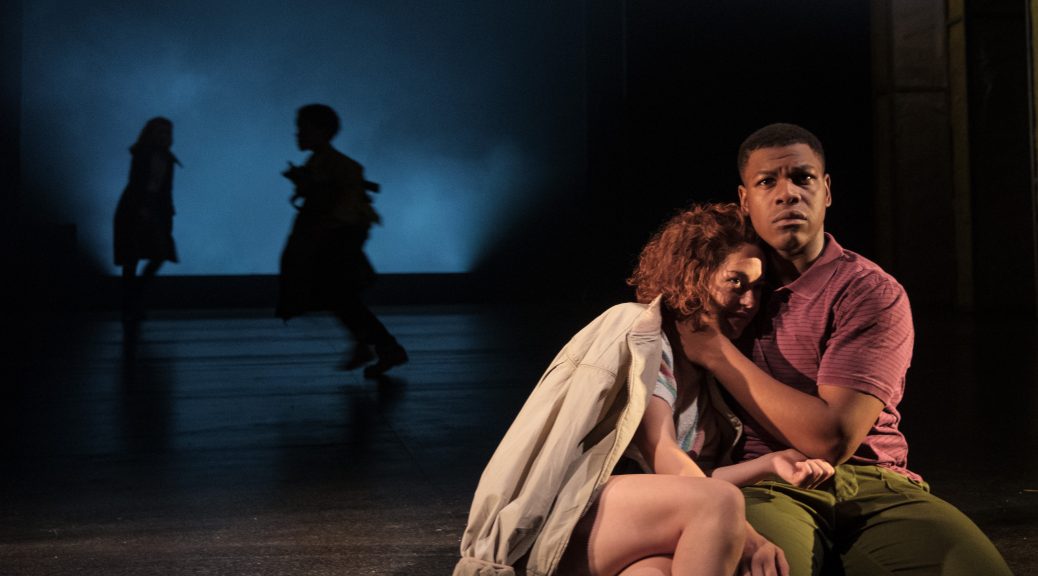
So what’s the result? The text’s main theme rings out: Nuclear War is a meditation on grief, movingly depicted. Maureen Beattie takes the lead, recounting a day like a contemporary Mrs Dalloway, but stricken by loss. Recollections of moments in hospital are the clearest and most effective. This is a woman out of her mind with mourning and loneliness.

The character Beattie so meticulously depicts is accompanied by performers Sharon Duncan-Brewster, Gerrome Miller, Beatrice Scirocchi and Andrew Sheridan. All four give committed performances but with the actions of the group they form, the evening becomes confusing. You could call this quartet a chorus, why not: revealing internal thoughts and adding a running commentary…of sorts. Mortality is linked to time, with snatches of Arthur Eddington’s ideas injected. And then come some puzzling props. Lasting only 45 minutes, Knight hasn’t allowed long enough to explore the depth of Stephens’ text.

If you’re grumpy, a sense this was all more fun to work on than to watch creeps in. However, aided by lighting guru Lee Curran, there’s some incredible imagery here. The chorus become dogs, and bizarre fetishists, before transforming into ghosts to say a goodbye to their grieving companion. It’s a peremptory departure, despite the resolution it offers, and I wished for more of these unforgettable moments from such an intrepid trial.

Until 6 May 2017

www.royalcourttheatre.com

Photo by Chloe Lamford