“Measure for Measure” from Cheek by Jowl

Such is Cheek by Jowl’s international reputation that tickets for its infrequent London appearances can be tricky to obtain. I remember trying and failing to see this show back in 1994, so generously offering it online during lockdown is especially welcome. Even better, the production lives up to expectations – this is the best Measure for Measure I’ve seen.

There are no gauche touches to make the piece contemporary. Any claims for the universality of Shakespeare benefit as a result. Director Declan Donnellan sets the story of Duke Vincentio, who dons a disguise to observe the goings on in Vienna, in a setting full of police and prisoners making the most of the play’s debates over justice, law, states and rulers.

This violent, often frightening, city can be recognised as now but could be anytime and anywhere. A sense of surveillance (without the trace of a CCTV camera) is ingrained in every curious or scared look. Obeying and resisting power struggles in each scene. Donnellan even manages the play’s considerable religious content expertly – moments of prayer become potent.

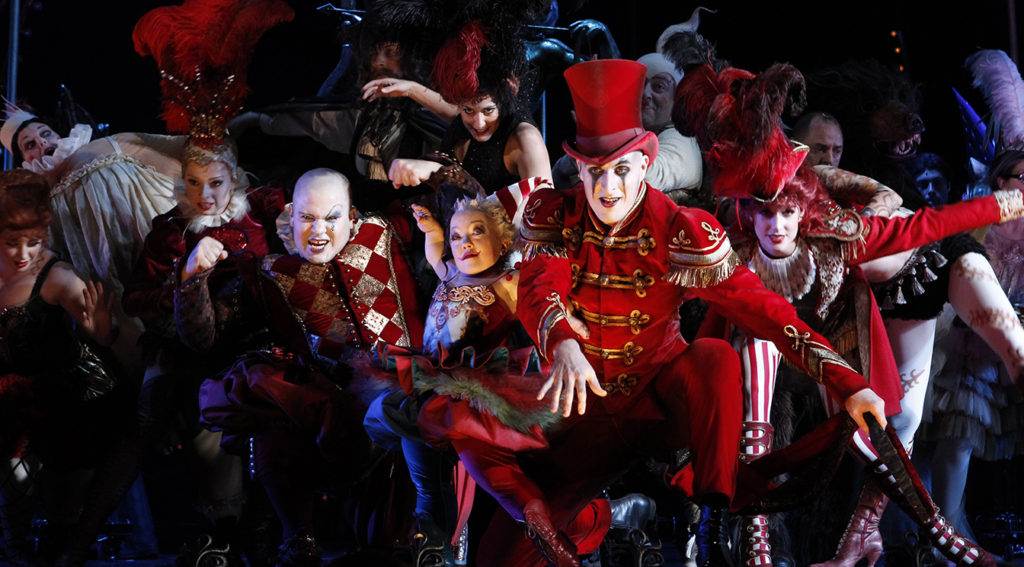
Performed in Russian, it has to be said that some of the surtitles come across as a little odd. And the recording isn’t of the highest standard. While Nick Ormerod’s design of red cubes on a bare stage still looks great, the way the cast moves around as a group – ushering in scenes, creating the sense of both chorus and mob – is clearly lost. It does makes you want to see the real thing even more.

The acting is magnificent. Donnellan utilises his ensemble to such perfection that every performance is of consequence. Without disrespect to other productions, I can’t remember being struck by the character of Barnardine before – here, Igor Teplov’s performance makes it a memorable role. The seedy side of city life is conveyed with Alexander Feklistov’s grubby Lucio and Alexey Rakhmanov’s menacing Pompey.

The siblings faced with the play’s famous dilemma are made compelling and very human heroes. As Claudio, Petr Rykov brings a passion to the affair that has landed him in jail (aided by excellent work from Anastasia Lebedeva) along with an animality that invigorates the stage. As for Anna Vardevanian’s Isabella, trying to free her brother – her performance is stupendous: full of defiance, intelligence and also horror, she makes the role intensely moving. Andrei Kuzichev plays their adversary Angelo, the merciless hypocrite left in charge, with a creepy edge – he sniffs Isabella’s chair when she leaves – that becomes all the more frightening for the character’s intelligence.

All this is great, but Donnellan’s masterstroke is to bring to the fore a role often seen as only a catalyst: this is the Duke’s Measure for Measure. Taking the role, Alexander Arsentyev’s Vincentio is nervous at first – could his problem really be life in the public eye? The Duke makes for a pretty useless disguised Friar and the show gets some humour out of this. Arsentyev seems barely off stage. The focus is his journey as a politician, and the production’s emphasis on the public during the final scene proves electric. The conclusion has a transformative power that transcends the resolution of plot. That other characters become something like pawns in a sick game, how they will recover from Vincenzio’s experiment rendered an open question that adds a troubling edge to what we’re been watching. Conversations with Shakespeare that are this confrontational, let alone performed with such excellence, are seldom seen – check this one out while you can.

www.cheekbyjowl.com

Photo by Johan Persson

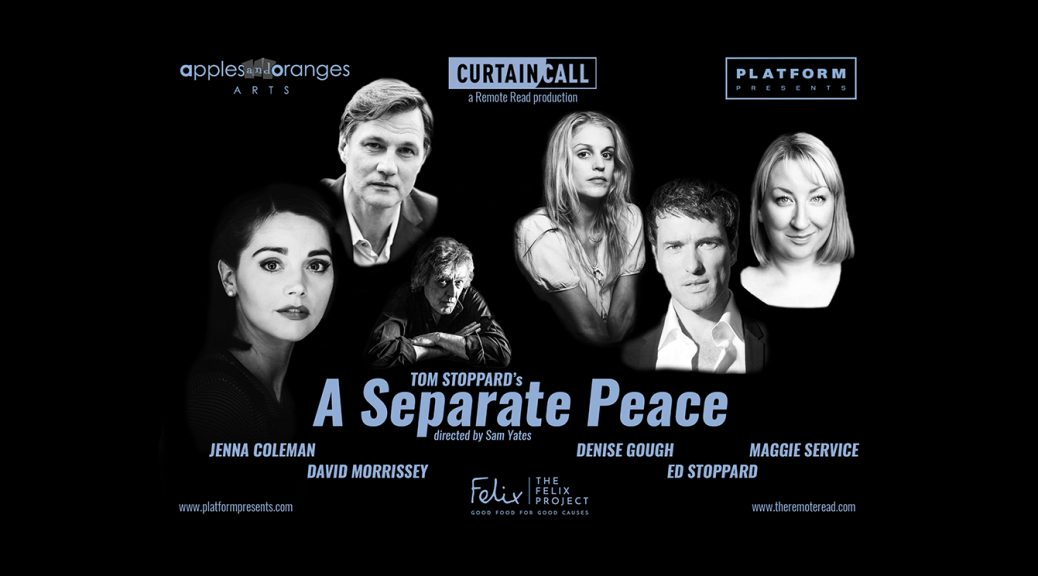
“A Separate Peace”from Remote Read

Welcome as the recorded shows helping theatre-lovers on lockdown are, a live stream is a lot closer to what we really love. It’s exciting even to wait for something to happen, let alone watch in real time.  Albeit a brief half hour show, labelled a reading rather than a performance, this offering from the Remote Read project is warmly welcome.

The choice of Tom Stoppard’s short, from 1964, shows itself as appropriate to our current situation gradually – it’s about a man who wants to do nothing. Arriving at the “A1” Beachwood Nursing Home, willing to pay to stay, Mr Brown wants “privacy and clean linen” in his search for a safe space. Stoppard develops a mystery, then a romance, and his patient with patience intrigues throughout.

There’s a lot of talent – working remotely, remember – to bring out the best in the piece. Director Sam Yates has done an excellent job with a starry cast. David Morrissey takes the lead as the “likeable” Brown, bringing out a lovely humour with suitably gnomic remarks working hard. Denise Gough introduces considerable tension as a Doctor trying to work out what is going on, with Ed Stoppard as the vaguely exasperated Matron. A subtle love interest with young nurse Maggie, played by Jenna Coleman, is made tender and touching. Coleman and Morrissey build up a great sense of togetherness – all the more remarkable when you remember they aren’t in the same room.

It is still hard to forget this is a Zoom meeting, no matter how different it is from one you’d have for work. Performing against a white background isn’t without problems, and I’d like to know if the number of screens viewers are shown can be controlled better. But these are mere technical glitches, and the storytelling in the show undoubtedly works. Behind the questions of Brown being “a crook or a lunatic”, which Yates allows to be explored so well, he is a challenging figure. Stoppard leaves open suggestions of background trauma, such that his character retains an air of enigma. Brown’s search for peace makes him something of a mystery, and hugely suited to puzzling over under imposed isolation. 

www.theremoteread.com

“Flowers for Mrs Harris” from Chichester Festival Theatre

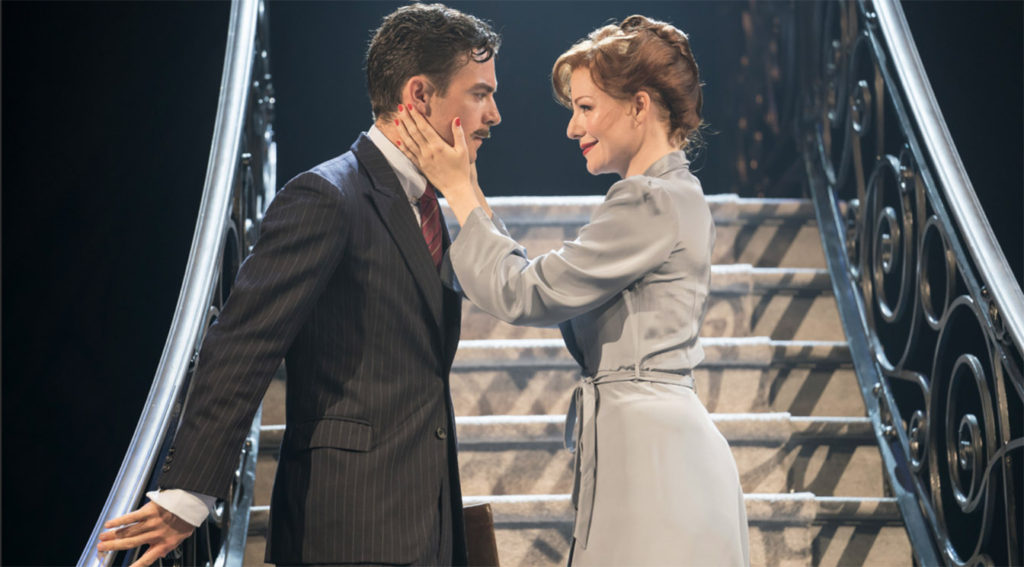
The story of a widowed char lady who saves up to buy a Christian Dior dress doesn’t sound like a winner. But I’m shocked that this show, which started at Sheffield Theatres in 2016 and is generously presented online by the Chichester Festival Theatre, wasn’t a big hit. High-quality, old-fashioned and unashamedly feelgood, Richard Taylor’s score and lyrics, with a book by Rachel Wagstaff based on Paul Gallico’s novel, is musical theatre magic.

There are risks here. The central character is naïve as well as ridiculously self-sacrificing. Her motivation, the dream behind her triumph over adversity, really shouldn’t convince. And the show is predictable – we all know where Mrs Harris will take a trip (cue dodgy accents to join already plentifully dropped consonants). But if you’re going to manipulate, emotional restraint isn’t called for, and director Daniel Evans shows he knows that. The proof is in the puddin’ – I was close to tears for most of the second act!

Much of the success is down to the mammoth title role, played by Clare Burt. At first gravelly, her voice gets stronger as the show progresses – along with a score that reflects dreams and imagination with style. The trials she faces in saving for her dress create remarkable investment with the audience. When winning the pools isn’t enough (an excellent sequence) hard work is the key, and admiration for the character, and Burt’s assured performance, are secured.

Flowers for Mrs Harris
Laura Pitt-Pulford and Louis Maskell

Mrs Harris goes around inspiring all, like a mix of Mary Poppins and Dolly Gallagher Levi. It makes for plenty of subsidiary characters, admittedly of varying success. It’s great to see some older roles, like Mrs Harris herself, but the younger parts are better and create a rush of romance that adds further escapism. Helping the French in their amours indicates a nice sense of humour underlying the show and provides great numbers for Laura Pitt-Pulford and Louis Maskell. There’s a touch here of She Loves Me – it’s a chocolate cake rather than ice cream – and that’s never a bad thing.

That there’s plenty of love for Mrs Harris is only fair. Mark Meadows’ roles – as her dead husband and then a Marquis who sees her as a fellow spirit – anchor the show. Like the gown she so covets, everything in Flowers for Mrs Harris is “made to make you feel”. Taylor doesn’t let up, and even a couple of twists at the end of the show ram home humour and heart. Nor does the finale disappoint, with each bouquet for Mrs Harris bringing a smile and a sob.

Available until 8 May 2020

To support visit www.cft.org.u

Photos by Johan Persson

“Frankenstein” from NTLive

Bringing out a blockbuster as its weekly offering to entertain and raise funds during lockdown, the National Theatre’s production of Mary Shelley’s story was a must-have ticket back in 2011. If you love the theatre, you love others getting exciting about it. So, it’s nice to relive some of the buzz about director Danny Boyle and his star casting of Benedict Cumberbatch. At the moment, it’s as exciting as things get… but to be honest, the show itself isn’t very good.

The production is impressive. Not least Bruno Poet’s lighting design, which Boyle uses so spectacularly. The massive rig of bulbs, which seems to take up the auditorium’s whole ceiling, is breath-taking. Boyle’s direction is swift and efficient (although based on the assumption that we all know the story), and the whole thing looks fantastic. Boyle isn’t scared of minimalism, revelling in the size of the stage, coming into the crowd and showing off the Olivier’s mechanics with pride.

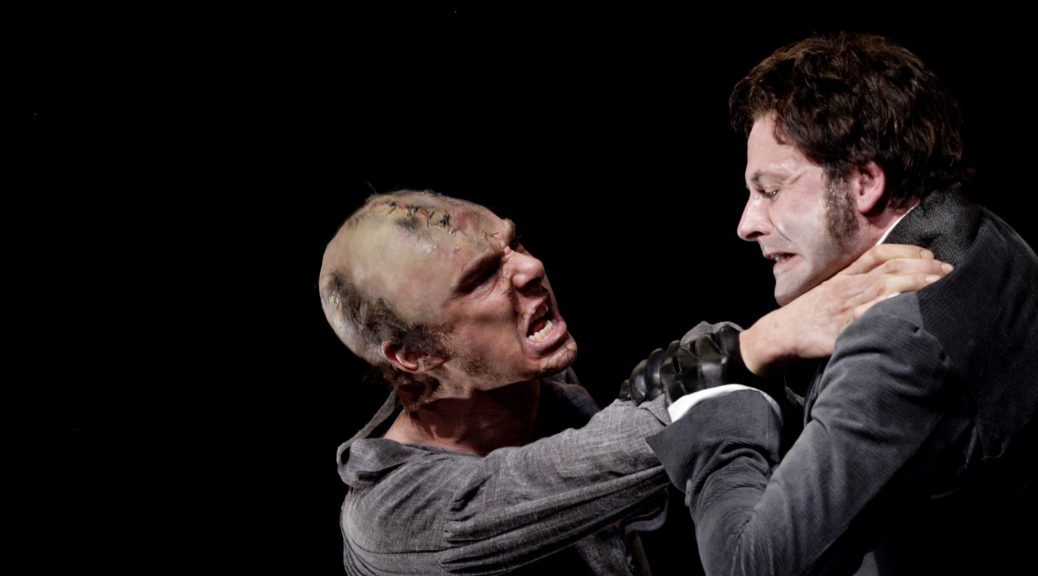
During the show’s run, the title role and that of The Creature were played in rotation with Jonny Lee Miller. For the recording, Cumberbatch is the latter and gives a performance to win respect. It’s a success yet a laboured affair. The long opening “birth” scene, with The Creature as a giant toddler, is studied, well thought out, impeccably prepared and, yes, affecting – as he literally finds his feet – but it reeks of the rehearsal room.

It’s when The Creature acquires language that real problems arise. Sad to say, you wish nobody on stage, let alone the rather pompous monster, spoke. The script from Nick Dear is leaden and (sorry) without a spark of life. Shelley’s philosophical concerns are ticked off rapidly. A bit like The Creature, you end up feeling “ideas batter me like hailstones”. The characters can’t help but suffer. Lee Miller makes Frankenstein’s arrogance believable, but the character does little apart from shout. And, while there’s strong work from Naomie Harris, as his fiancée Elizabeth, her appearances feel forced.

Boyle keeps up the pace, so much so that The Creature’s thirst for revenge arrives too suddenly. Also rushed is a thematic battle between rationality and love – which could have proved interesting. Cumberbatch manages to be frightening, Miller compelling and Harris holds her own, despite the scene of her wedding night hampered by some clumsy filming that I assume had an age guideline in mind. But the show feels like Frankenstein’s motivation for his experiment – “a puzzle to be solved”. It’s impressively tackled yet, like the man himself, lacks depth and feeling.

Available until Wednesday 7 May 2020

To support visit nationaltheatre.org.uk

Photo by Catherine Ashmore

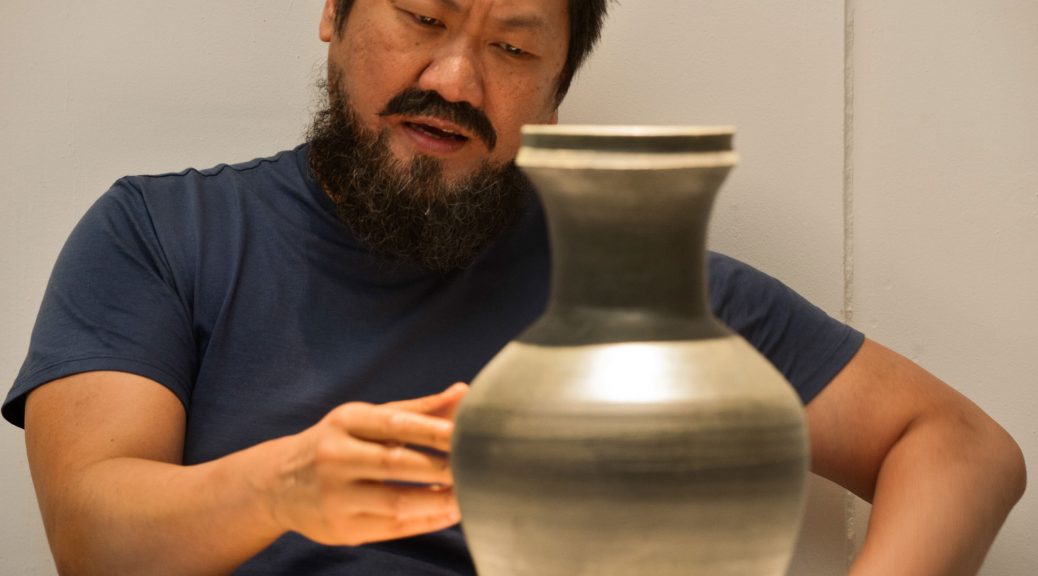
“#AIWW: The Arrest of Ai Weiwei” from #HampsteadTheatreAtHome

This collaboration with China’s most famous contemporary artist, Ai Weiwei, marked something of coup for Hampstead Theatre back in 2013. Adapting the account in Barnaby Martin’s book, Hanging Man, playwright Howard Brenton’s clearly political and cleverly dramatic account of Weiwei’s Kafkaesque detention in 2011 is surprisingly entertaining and serves its subject admirably.

Weiwei is the star of the piece – convincingly so – and the show makes a terrific role for Benedict Wong, who conveys the artist’s magnetism perfectly, while also making him an approachable figure. Aided by Christopher Goh, Andrew Koji, Orion Lee and David Lee-Jones, as those who imprison him, his captors are given an identity and humanity, while the discussions about his art are exciting.

Director James MacDonald works hard to inject energy – this is, after all, a show about a man locked in a room. But the idea behind Ashley Martin Davis’ set – a giant packing case that might hold artwork, with accompanying supernumeraries and crew acting as unconvincing galleristas – feels unnecessary. Likewise, touches of the metatheatrical are forced: the suggestion that the imprisonment becomes the artist’s “greatest work”, not lost on those in power during a rare moment of perspicacity, is too unsubtle. And scenes that show the politicians behind events, with uncomfortably sinister roles for Junix Inocian and David Tse, are low points. These scenes are a marked contrast to the authenticity Wong and the source material bring.

The surprise comes with the humour in the piece. There are plenty of laughs at how crazed Weiwei’s interrogations were. Accused of murder, immorality, but ultimately being a “swindler”, it’s almost a shame those imprisoning him aren’t given a stronger argument… for the sake of the drama rather than Weiwei, of course. The tension of his awful imprisonment is conveyed, and Wong does very well with this. And Brenton gives the interrogations an impressive poetic touch, as repeated accusations contain a rhyme if no reason. But it’s Weiwei’s cool spirit – best reflected in that wry humour – that shows him unbroken and inspirational.

www.hampsteadtheatre.com

Until 3 May 2020

Photo by Stephen Cummiskey

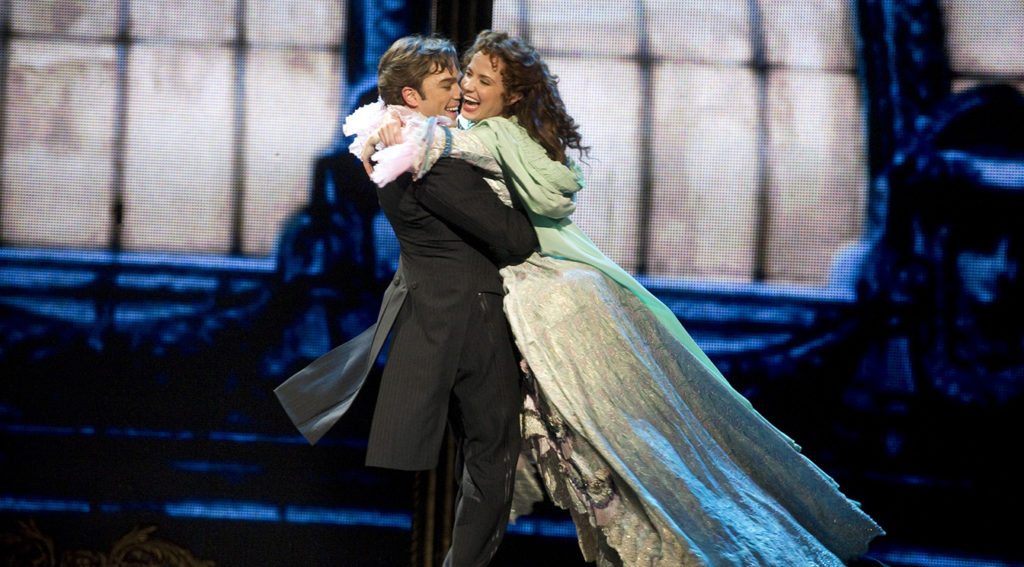
“Love Never Dies” from The Shows Must Go On!

After The Phantom of the Opera last weekend, Andrew Lloyd Webber’s next fund-raising offering was the hit show’s sequel. Ten years after the Opera Populaire burned down, The Phantom has escaped to Coney Island, become a successful producer, and is ready to try and steal his love and muse, Christine Daaé, from her husband Raoul. Excitingly, this is the 2011 production from Melbourne’s Regent Theatre. Regarded as the best version, director Simon Phillips’ bold work makes the most of a piece that, while far from a flop, failed to escape from the shadow of its progenitor.

Phillips plays to the musical’s strengths and adds an aesthetic (with designer Gabriela Tylesova) that, by loosening the historical setting a little, adds genuine spookiness with a touch of Tim Burton. His cast is strong and embraces the better written characters. The play’s meaty plot, which appropriately has a long credit line – Webber, Glenn Slater, Ben Elton and Frederick Forsyth – is delivered with verve throughout. There are still problems: correcting (perceived) shortcomings in its famous original are all very well, but they make for a show that’s crowded and self-conscious, while Slater’s lyrics end up laboured and uninspired. Yet the show is entertaining and interesting. 

Love Never Dies from the Regent's Theatre Melbourne
Ben Lewis and Anna O’Byrne

You might notice some of the characters’ recollections of the past events seem distorted! Each sleight of hand heightens drama and romance, likewise Lloyd Webber’s lush score. Filling out previous events also aids characterisation – both male leads are more complex characters. Ben Lewis’s Phantom is more human and Simon Gleeson’s Raoul more than just a Prince Charming (in fact, he’s a nasty snob and drunk). Both performers’ rich voices make them perfectly cast, and they excel in their scenes of confrontation. It’s a shame the final lead, sung beautifully by Anna O’Byrne, isn’t afforded the same treatment. Christine almost disappears between the men – very naughty. No matter how many times her name is sung (too many), she lacks agency.

Love Never Dies from the Regent's Theatre Melbourne
Paul Tabone, Dean Vince and Emma J Hawkins

Improvements predominate, though, with beefed up roles for Phantom acolytes. Madame Giry is more interesting, allowing Maria Mercedes a chance to shine, and her daughter Meg (did I miss that relationship before?) becomes a major role, delivered superbly by Sharon Millerchip. Their colleagues in Coney Island, a creepy collection with a strong presence, are well delivered by Paul Tabone, Dean Vince and Emma J Hawkins. Best of all is the role of Gustav, Christine’s son, performed here by Jack Lyall – one of the finest younger performers I’ve seen. OK, so you can guess the plot twist. But having a youngster included opens out the story marvellously. It gives Webber’s score a chance to fly, with new musical possibilities, that he grasps to explore his motif of the “pure and unearthly” with considerable sophistication.

Available on The Show Must Go On! youtube channel until 26 April 2020

Photos by Jeff Busby

“Twelfth Night” from NTLive

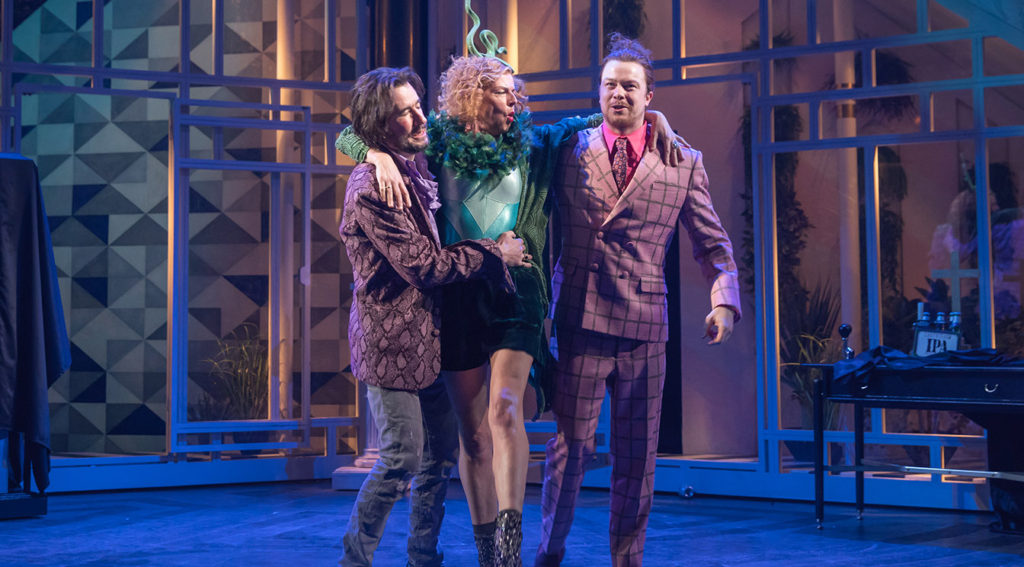
As another example of its diversity, this week’s offering from the National Theatre is Shakespeare. The interesting idea driving Simon Godwin’s production, which dates from 2017, could also be said to be diversity – challenging this most famous of gender-swapping comedies by openly acknowledging LGBTQ identities and gay marriage. The results of such a contemporary spin are mixed, but a strong cast makes the show solid.

To illustrate Godwin’s conceit, take Oliver Chris’s excellent Duke, who falls for Viola when he thinks she is a he. You expect jokes from the confusion, often pretty childish ones, but such laughs are held back. It’s a credit to Chris’s comic skills that the role is still funny. Likewise, Antonio’s feelings for Viola’s twin, Sebastian, are openly romantic… I remember that at school this was only coyly suggested.

A more eye-catching example of Godwin’s transformations comes with his star casting of Tamsin Greig and the turning of Malvolio into Malvolia. The female steward’s open adoration for her mistress Olivia (a role Phoebe Fox does very well with) doesn’t bat any eyelids. Nor is it a source of schoolboy fun. Of course, it shouldn’t be either. The joke for Shakespeare was one of status anyway, but note – this is a gag that Godwin ignores.

As with Chris, it’s down to Greig to still be funny and that she is – very. She gives a brilliant performance it is hard to praise enough, getting laughs with every line, working the audience to perfection. A nod to Mrs Danvers from Rebecca is genius. And there’s more. Grieg and Godwin don’t let us forget the religion in the play. Also, they tackle the character becoming “common recreation” exceptionally well. Let’s face it, the practical joke played on Malvolio/a ain’t funny. Greig makes sure the character retains some dignity and there’s a hard edge to her promise of revenge that is welcome.

Greig makes this Twelfth Night worth watching and it is clearly a work with intelligence behind it. Unfortunately, lots of ideas seem motivated by trying to make the show modern – and none of these are things we haven’t seen before. There’s a car on stage, a hospital monitor, a nightclub and a hot tub, while the Duke has a personal trainer and a birthday party. To all of this you can say, why not? But you can also say, why? Along with an ugly set from Soutra Gilmour, which highlights that both she and Godwin have used the auditorium poorly, and some inane music from Dan Jackson, the production does not equal its cast.

Twelfth Night at the National Theatre credit Marc Brenner
Tim Mcmullan, Doon Mackichan and Daniel Rigby

What of the play’s supposed heroes, the shipwreck-separated siblings, Viola and Sebastian? Amongst a good number of comics – Tim McMullan, Daniel Rigby and Doon Mackichan all need to be added here – the twins are, ahem, reduced to straight men. Both characters are only acted upon, robbed of agency, which you could argue is fair enough. But it’s only strong performances from Tamara Lawrance and Daniel Ezra that stop the characters from being boring and introduce any emotion into this interesting but inert production.

Available until Wednesday 29 April 2020

To support visit nationaltheatre.org.uk

Photos by Marc Brenner

“What the Butler Saw” from the Curve Leicester

While trapped in our homes due to the Covid-19 lockdown, the generosity of theatres all over the country means that we can enjoy shows from venues we might not normally visit. This production of Joe Orton’s classic 1967 madhouse comedy, from the Curve Theatre Leicester, is one of many examples of plays from places I’m afraid I’ve never been to.

A word of warning: the recording is very much for archival purposes, as the camera is static and at the back of the auditorium. It’s a long way from the broadcasts put on for cinemas by NTLive. The sound quality is poor. But, to be positive, it’s closer to your average trip to the theatre – there’s even coughing and chatting from the crowd that you can pretend to shush if you like!

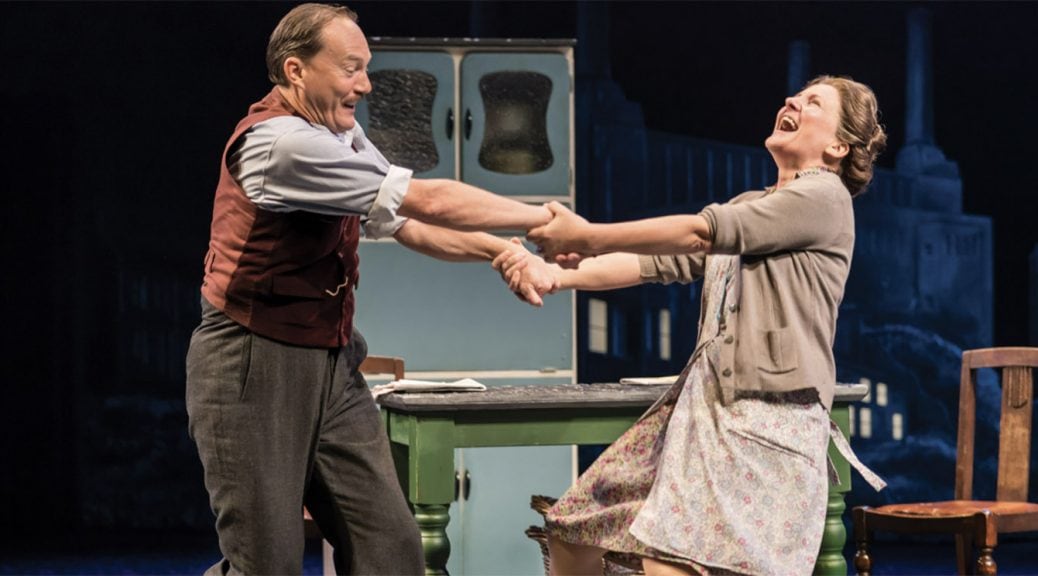
What the Butler Saw is a great play. Orton’s mix of crude farce, Wildean epigrams and just a touch of horror is extraordinary – clever as well as funny. Director Nikolai Foster gives the show the speed it needs, as outrageous characters all descend into a “democratic lunacy”, while a talented cast delivers the often complex dialogue assuredly. 

Rufus Hound and Catherine Russell both give star turns as the unhappily married Dr and Mrs Prentice, who run a madhouse and should qualify as inmates. Hound starts off nicely reserved, although not missing any chance to be saucy, and escalates the action marvellously. Russell ensures her character matches her husband for malice and has a great icy edge. Dakota Blue Richards and Jack Holden acquit themselves well as a prim secretary and a blackmailing hotel bellboy who cross-dress and change identities to great effect. Stealing the show is Jasper Britton as the visiting government inspector, Dr Rance. Britton delivers Orton’s convoluted nonsense superbly, with terrific ravings and delightfully delivered crazy theories. He is, of course, the maddest of a mad bunch.

Best of all, Orton’s play still shocks. The question of how our squeamishness might have changed since it was first written is raised: Dr Prentice as predator is surely more uncomfortable, likewise the jokes about sexual assault and rape. But Orton’s queasy incest theme and satirical highlighting of all kinds of hypocrisy haven’t faded in their power at all. The “pointless and disgusting” subject matter and increasing improbabilities, handled with Orton’s fantastic energy, pose a challenge as well as plenty of laughs.

Available for the duration of the lockdown

https://www.curveonline.co.uk/the-show-must-go-online/

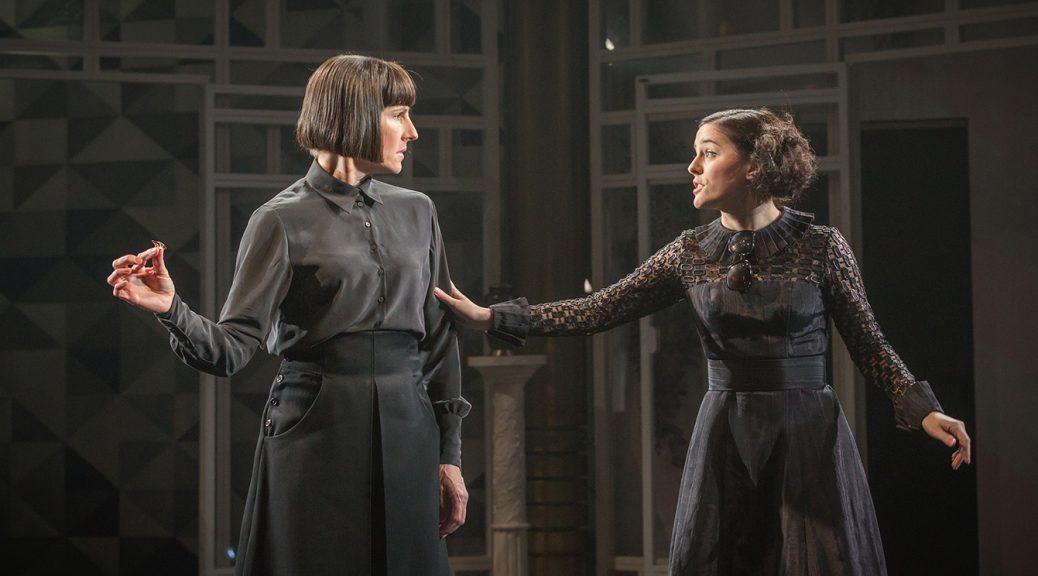
“Romeo and Juliet” from Shakespeare’s Globe

This trip to the summer of 2009, generously available during lockdown from globeplayer.tv, is a classy affair that is blissfully difficult to find fault with. Director Dominic Dromgoole’s production has plenty of traditional touches – including gorgeous period costumes from designer Simon Daw – a fresh appreciation of the text from a cracking cast, and a seemingly effortless handling that makes it easy to recommend.

Dromgoole’s skill is clear – he makes the play tight and concise without losing any nuance. There’s a dark undertone appropriate to the star-crossed lovers that shows “violent delights have violent ends”. Ian Redford’s excellent Capulet possesses a frightening anger, while his wife’s grief for their nephew Tybalt’s death makes a fine scene for Miranda Foster. Both render palpable the vendetta that exists in Verona, presided over by a bruiser of a Duke lifted from London’s East End (an excellent Andrew Vincent). A sense of excitement is aided by some of the best fight scenes I’ve seen – congratulations Malcolm Ranson on those.

Alongside this drama, Dromgoole brings out a gentle humour in Romeo and Juliet that feels distinct and is delivered without too much exaggeration. Jack Farthing’s Benvolio benefits most but there’s also a strong turn from Fergal McElherron as a crowd-pleasing servant and Tom Stuart’s hapless Paris is watchable and endearing. The wordplay that makes up so much of the text feels light and witty – something that we are welcome to enjoy rather than scratch our heads over.

Ultimately, any production of Romeo and Juliet has to rely on its leads and this one benefits from a couple who gauge the tenor of the production perfectly. Adetomiwa Edun makes a charming Romeo and does especially well in showing how bright his character is. And there’s a dangerous edge; kicking Tybalt when he is down proves a startling move. Ellie Kendrick makes sure her Juliet is a “soft subject” for “Heaven’s stratagems”. Shy and modest until tragedy strikes, she ends up shaking with grief. Enforcing the youth of the couple proves effective. Dromgoole makes sure the action escalates as we see the youngsters trapped in events beyond their control. Excellent work from tense start to tragic finish, with a confidence that ensures, along the way, we come to care for and admire them both.

Photo by John Wildgoose

Available until 3 May 2020 on globeplayer.tv

To support visit www.shakespearesglobe.com

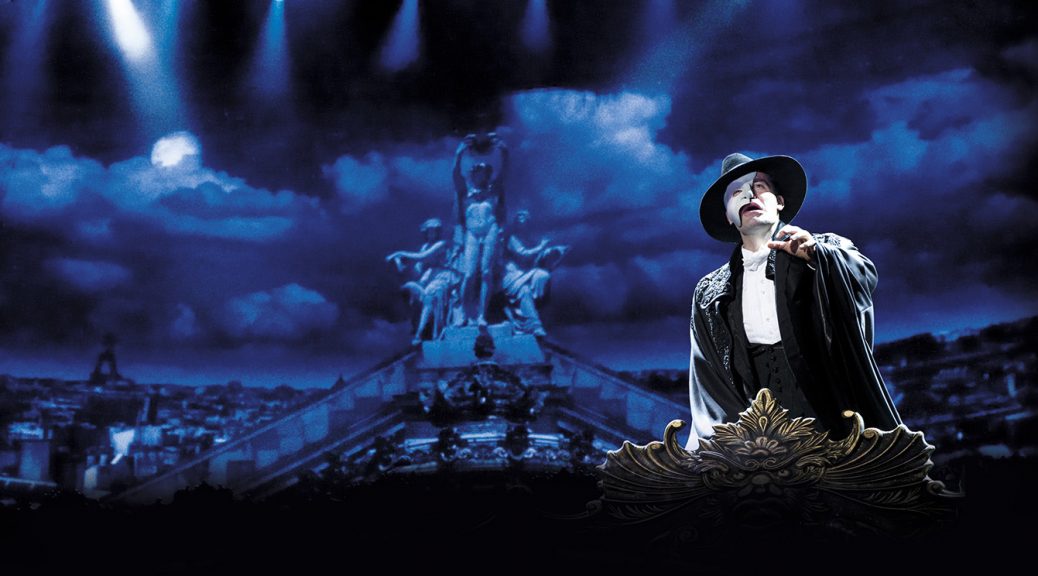
“The Phantom of the Opera” from The Shows Must Go On!

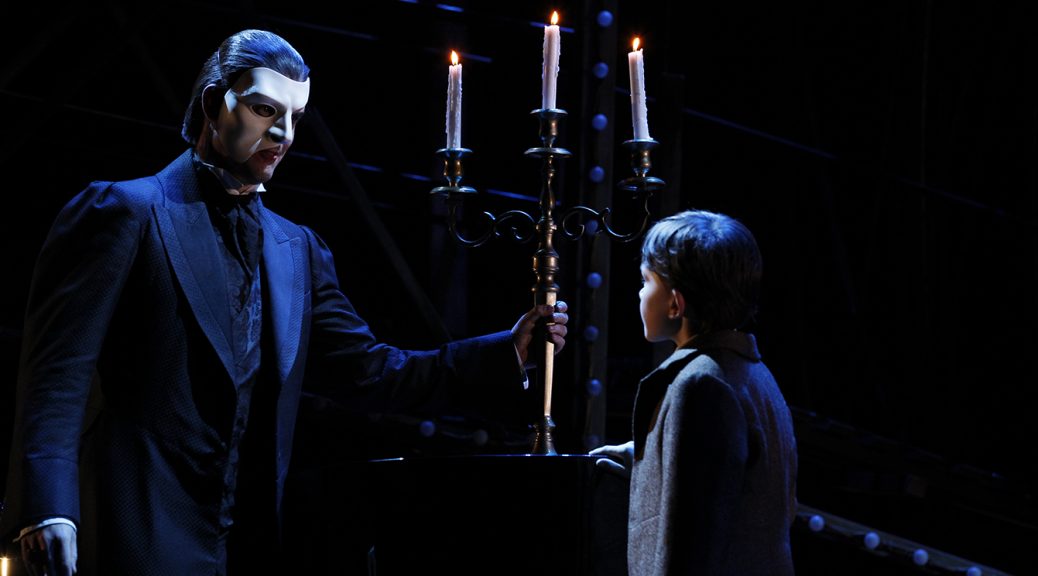
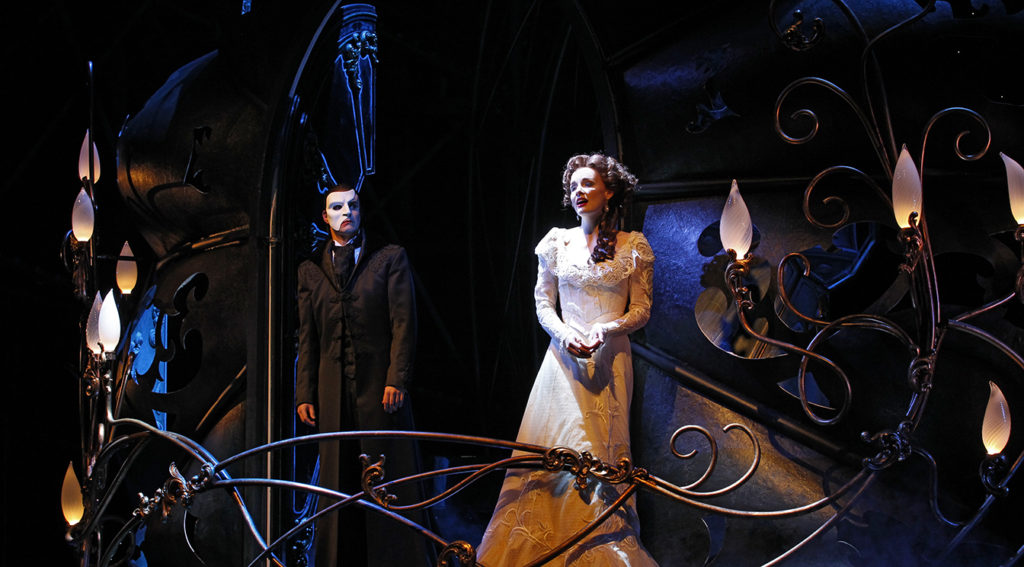
Available for only 24 hours, this concert production marking 25 years of Andrew Lloyd Webber’s musical aimed to raise funds for various charities connected with Covid-19. To celebrate such a hit show, with its potent beauty-and-the-beast love triangle, producer Cameron Macintosh didn’t scrimp. The result is tremendous.

Gorgeous costumes, fantastic video projections and, with the Royal Albert Hall standing in for the Palais Garnier that the Phantom made his home, the atmosphere is impressive throughout. The auditorium is skilfully used in the film and – wait for it – the chandelier has fireworks!

The extravagance continues with a plumped-up ensemble and full corps de ballet, including a guest appearance by Sergei Polunin. Appropriately, there’s a star-studded cast, led by Ramin Karimloo in the title role. Karimloo makes a formidable Phantom, his singing muscular and emotions raw. His is a frightened figure, scared of his love for Christine, with hatred of his rival fuelling his insanity.

'The Phantom of the Opera' anniversary concert
Hadley Fraser and Sierra Boggess

The object of his obsession, played by Sierra Boggess, sounds beautiful and is just as well acted. Boggess is great at bringing out the horror in the story and even shows that Christine herself is a good actress. Also, very few people can make a cape work so well for them. Completing the trio of leads, Raoul Vicomte de Chagny, is a poorer role, but Hadley Fraser does well to inject an edge to the character with a ruthless streak that aids the show’s action.

Both the staging and the cast, directed impeccably by Laurence Connor, are wonderful. But the biggest attraction remains Lloyd Webber’s music. Benefitting from a bigger orchestra than usual, it sounds better than ever; the overture to Act Two is gorgeous and the opera music within the show impressive.

How to end such a fantastic event? I’m pleased I kept watching, after the lengthy applause, for the encore – an appearance by the original ‘angel of music’ Sarah Brightman, backed by four former Phantoms! A very special end to a magnificent event that easily deserves donations.

Available on The Shows Must Go On! YouTube channel until 18 April 2020