Tag Archives: Doon Mackichan

‘Summerfolk’ at the National Theatre

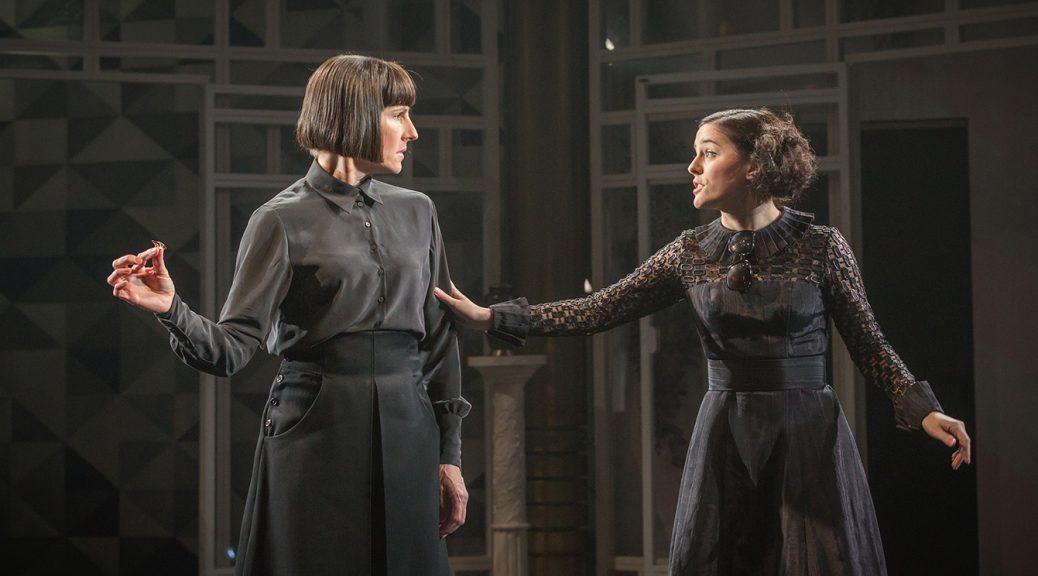
It would be a shock if this production of Maxim Gorky’s classic was traditional. This new version by Nina Raine and Moses Raine updates attitudes, if not the original time or setting. We are presented with a recognisable group of boomers, millennials and Gen Zs. Bringing contemporary attitudes to the piece is predictable. The surprise is that it works so well.

The script is full of fun — the satire even-handed — an important point aided by Robert Hastie’s direction. The ensemble cast are fantastic. It would be easy for Varvara to become the focus, but the generous performance from Sophie Rundle prevents this. Varvara’s husband and his poetess sister (the wealthy boomers) are depicted skilfully by Paul Ready and Doon Mackichan, balancing humour, understanding and disapproval. Successful, slightly seedy author Shalimov is given a tough time that Daniel Lapaine’s portrayal doesn’t hold back on. At least we have Maria Lvovna to look up to: the saintly doctor that Justine Mitchell makes believable.

Maria Lvovna’s romance with the younger Vlass Mikhailich proves a highlight; her wonder over his skin is sweet and sexy. This is an exciting role for the excellent Alex Lawther, who makes the character’s angst powerful. There are laughs from their age gap, but sensitive ones. Youth does well in Summerfolk, with another fine performance from Tamika Bennett as Maria Lvovna’s equally admirable daughter. The affairs are plentiful and often unpleasant; few might blame the dalliance by Yulia Filipovna (Adelle Leonce), as her husband (an excellent turn from Arthur Hughes) is awful. But Brandon Grace’s nuanced performance as the object of her affection provokes thought about their actions.

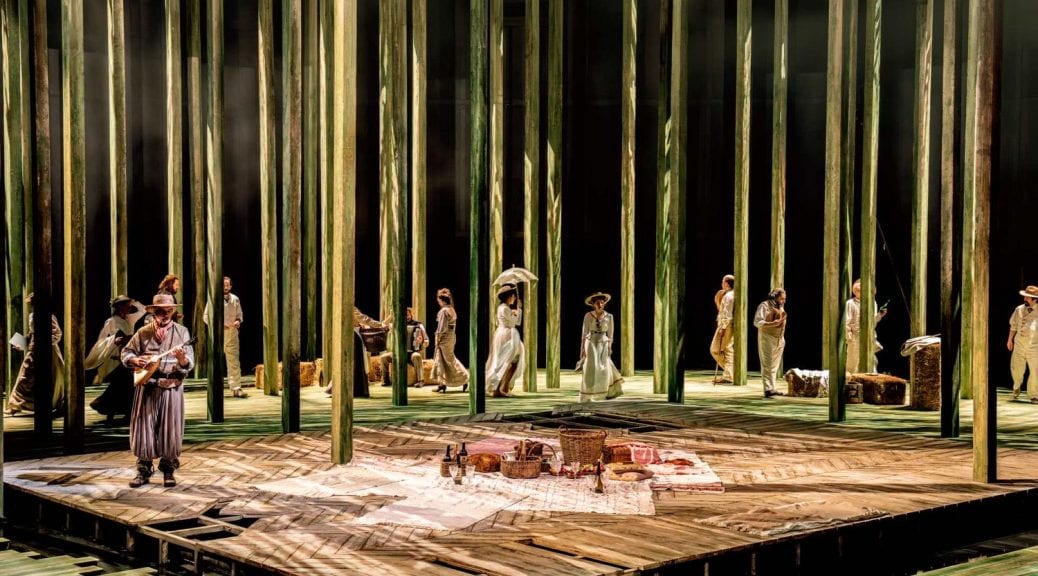
There’s a lot going on, and it is to director Robert Hastie’s credit that it never feels like a posh soap opera. Something is lost by making the characters feel so modern; Gorky’s political reflections have had to be swept away, and comments from those looking after the seasonal visitors just seem odd. But the combination of luxury, ennui, pretension and desperation are all spot on. The unhappiness isn’t overpowering — it is often performative — but sometimes that feels just as sad. Aided by Peter McKintosh’s luxurious set and costume design, the production is ravishing and easy on the eye. There’s a danger of dismissing these folk — what’s the problem with such a long holiday? But the production controls that frustration cleverly and allows you to feel for them.

Until 29 April 2026

www.nationaltheatre.org.uk

Photo by Johan Persson

“Twelfth Night” from NTLive

As another example of its diversity, this week’s offering from the National Theatre is Shakespeare. The interesting idea driving Simon Godwin’s production, which dates from 2017, could also be said to be diversity – challenging this most famous of gender-swapping comedies by openly acknowledging LGBTQ identities and gay marriage. The results of such a contemporary spin are mixed, but a strong cast makes the show solid.

To illustrate Godwin’s conceit, take Oliver Chris’s excellent Duke, who falls for Viola when he thinks she is a he. You expect jokes from the confusion, often pretty childish ones, but such laughs are held back. It’s a credit to Chris’s comic skills that the role is still funny. Likewise, Antonio’s feelings for Viola’s twin, Sebastian, are openly romantic… I remember that at school this was only coyly suggested.

A more eye-catching example of Godwin’s transformations comes with his star casting of Tamsin Greig and the turning of Malvolio into Malvolia. The female steward’s open adoration for her mistress Olivia (a role Phoebe Fox does very well with) doesn’t bat any eyelids. Nor is it a source of schoolboy fun. Of course, it shouldn’t be either. The joke for Shakespeare was one of status anyway, but note – this is a gag that Godwin ignores.

As with Chris, it’s down to Greig to still be funny and that she is – very. She gives a brilliant performance it is hard to praise enough, getting laughs with every line, working the audience to perfection. A nod to Mrs Danvers from Rebecca is genius. And there’s more. Grieg and Godwin don’t let us forget the religion in the play. Also, they tackle the character becoming “common recreation” exceptionally well. Let’s face it, the practical joke played on Malvolio/a ain’t funny. Greig makes sure the character retains some dignity and there’s a hard edge to her promise of revenge that is welcome.

Greig makes this Twelfth Night worth watching and it is clearly a work with intelligence behind it. Unfortunately, lots of ideas seem motivated by trying to make the show modern – and none of these are things we haven’t seen before. There’s a car on stage, a hospital monitor, a nightclub and a hot tub, while the Duke has a personal trainer and a birthday party. To all of this you can say, why not? But you can also say, why? Along with an ugly set from Soutra Gilmour, which highlights that both she and Godwin have used the auditorium poorly, and some inane music from Dan Jackson, the production does not equal its cast.

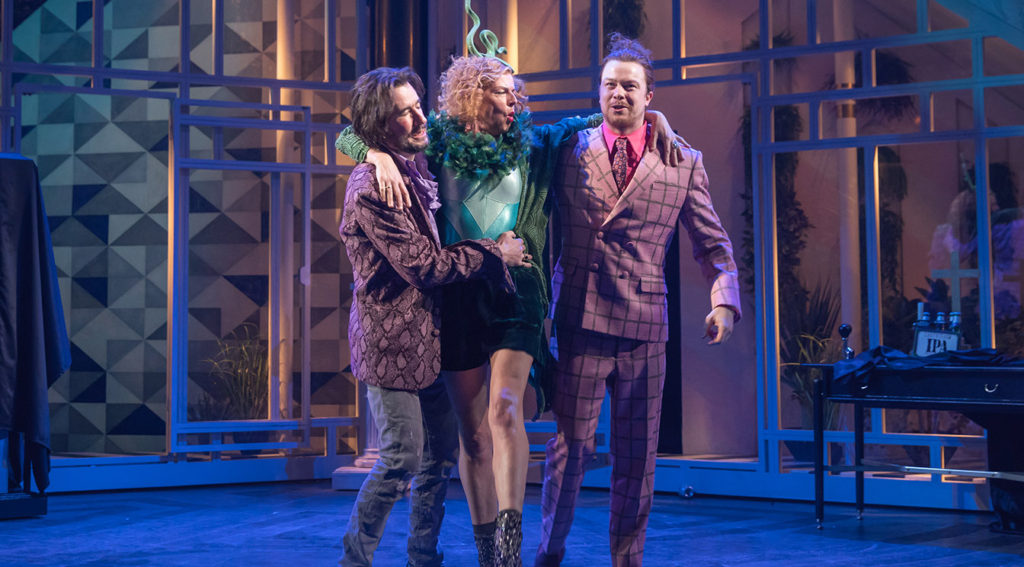
Twelfth Night at the National Theatre credit Marc Brenner
Tim Mcmullan, Doon Mackichan and Daniel Rigby

What of the play’s supposed heroes, the shipwreck-separated siblings, Viola and Sebastian? Amongst a good number of comics – Tim McMullan, Daniel Rigby and Doon Mackichan all need to be added here – the twins are, ahem, reduced to straight men. Both characters are only acted upon, robbed of agency, which you could argue is fair enough. But it’s only strong performances from Tamara Lawrance and Daniel Ezra that stop the characters from being boring and introduce any emotion into this interesting but inert production.

Available until Wednesday 29 April 2020

To support visit nationaltheatre.org.uk

Photos by Marc Brenner

“Jumpy” at the Royal Court

There’s a reason plays about generational conflict are perennial – they make great dramas. April De Angelis’ new play Jumpy is no exception. With a nod to the classics, and great observations on modern life, the focus here is on a mother and daughter relationship as funny as it is fraught.

Tilly is an odious teenager. Bel Powley plays her superbly, making the most out of her deliberately inarticulate character, full of shocking yet recognisable spite and ignorance. The Royal Court audience seems full of mothers nodding and sometimes glancing at the shame-faced teenagers they have dragged along. They deserve this sweet compensation. Surely, like Tilly’s mother Hilary, they are good parents – but still suffer. The “brand of exquisite torture” Tilly inflicts is funny, but the real joy is to laugh at the teenagers as much as the middle-aged.

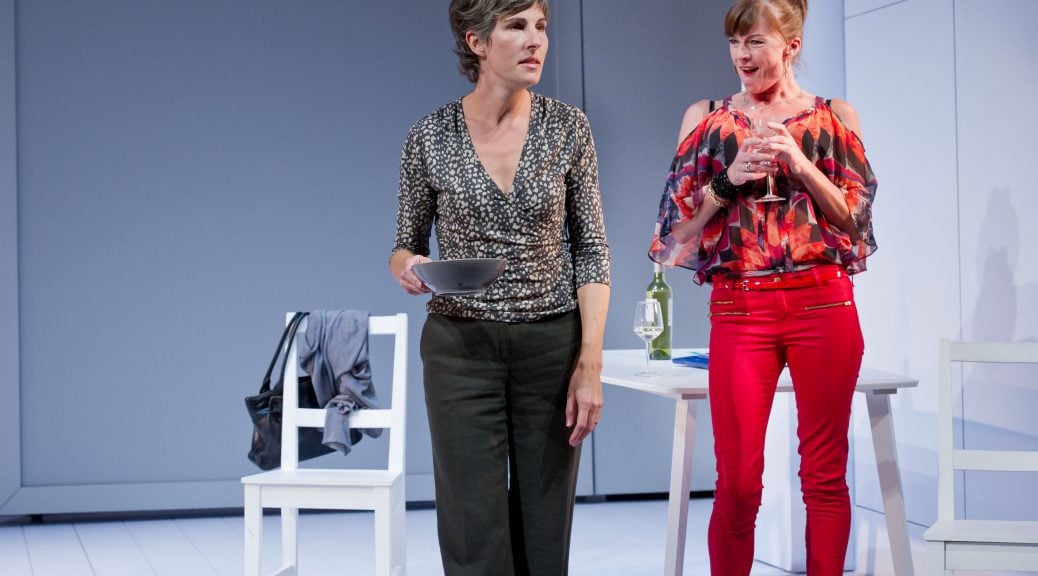
De Angelis has written some strong male characters in Jumpy. There is a fine performance from Ewan Stewart as Hilary’s husband and Richard Lintern is deliciously credible as Roland, an oily divorcee whose clichéd mid-life crisis pails in comparison with the women in the piece. Hilary’s friend Francis (Doon Mackichan) takes up burlesque dancing, with “post-feminist irony” of course, in a scene that is one of the funniest you will see on stage this year.

But Francis, who characterises being 50 as a “crisis”, can’t match our “mental-pausal” heroine Hilary. It is a role Tamsin Greig excels in – and she holds the audience whether she’s wisecracking or weeping. A former protestor at Greenham Common (kind of), still keen on good deeds and personal projects, she reads Dickens and has Great Expectations for her daughter but is full of “wobbles”. Greig is marvellous at injecting pathos into her struggle. De Angelis’ text skates over issues and leaves plot points hanging, so the play’s most poignant moments, which really are moving, are down to Greig’s performance.

It isn’t fair to extol Greig exclusively. The supporting cast are too strong for that. Powley in particular is an actress it is safe to say we will see more of, and De Angelis is a great comic writer. This is a play not to be missed – and take a teenager if you can.

Until 19 November 2012

www.royalcourttheatre.com

Photo by Robert Workman

Written 26 October 2011 for The London Magazine