Tag Archives: Paul Ready

‘Summerfolk’ at the National Theatre

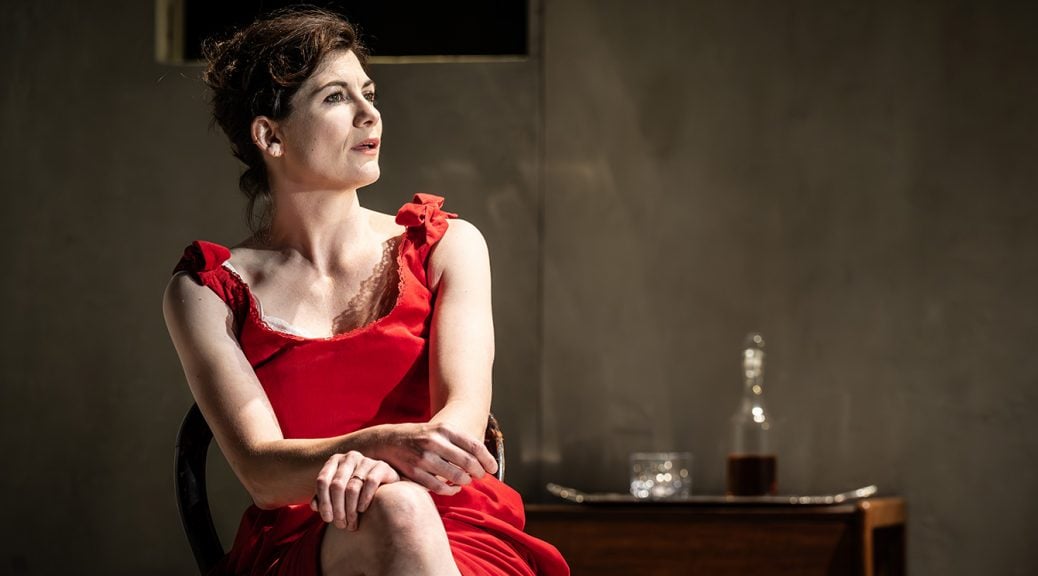
It would be a shock if this production of Maxim Gorky’s classic was traditional. This new version by Nina Raine and Moses Raine updates attitudes, if not the original time or setting. We are presented with a recognisable group of boomers, millennials and Gen Zs. Bringing contemporary attitudes to the piece is predictable. The surprise is that it works so well.

The script is full of fun — the satire even-handed — an important point aided by Robert Hastie’s direction. The ensemble cast are fantastic. It would be easy for Varvara to become the focus, but the generous performance from Sophie Rundle prevents this. Varvara’s husband and his poetess sister (the wealthy boomers) are depicted skilfully by Paul Ready and Doon Mackichan, balancing humour, understanding and disapproval. Successful, slightly seedy author Shalimov is given a tough time that Daniel Lapaine’s portrayal doesn’t hold back on. At least we have Maria Lvovna to look up to: the saintly doctor that Justine Mitchell makes believable.

Maria Lvovna’s romance with the younger Vlass Mikhailich proves a highlight; her wonder over his skin is sweet and sexy. This is an exciting role for the excellent Alex Lawther, who makes the character’s angst powerful. There are laughs from their age gap, but sensitive ones. Youth does well in Summerfolk, with another fine performance from Tamika Bennett as Maria Lvovna’s equally admirable daughter. The affairs are plentiful and often unpleasant; few might blame the dalliance by Yulia Filipovna (Adelle Leonce), as her husband (an excellent turn from Arthur Hughes) is awful. But Brandon Grace’s nuanced performance as the object of her affection provokes thought about their actions.

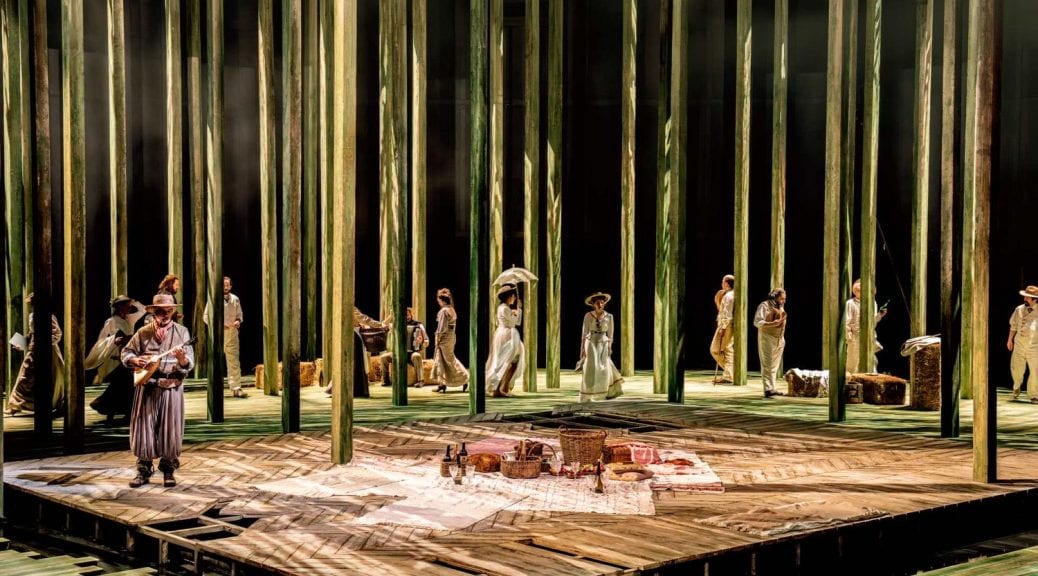
There’s a lot going on, and it is to director Robert Hastie’s credit that it never feels like a posh soap opera. Something is lost by making the characters feel so modern; Gorky’s political reflections have had to be swept away, and comments from those looking after the seasonal visitors just seem odd. But the combination of luxury, ennui, pretension and desperation are all spot on. The unhappiness isn’t overpowering — it is often performative — but sometimes that feels just as sad. Aided by Peter McKintosh’s luxurious set and costume design, the production is ravishing and easy on the eye. There’s a danger of dismissing these folk — what’s the problem with such a long holiday? But the production controls that frustration cleverly and allows you to feel for them.

Until 29 April 2026

www.nationaltheatre.org.uk

Photo by Johan Persson

“The Duchess [of Malfi]” at the Trafalgar Theatre

It’s hard to add to a Jacobean tragedy – they are already… extra. Zinnie Harris, who has adapted and directed John Webster’s revenge play, gives it a good go. There are flaws here, but also lots of ideas. It’s a blunt, brisk affair, but always interesting.

Webster took a character as his title, and the production boasts a star in the lead. Jodie Whittaker, playing the recently widowed noblewoman who falls in love with her steward, is great and clearly relishes the show’s intensity.

Harris, however, focuses on her ensemble and the result is mixed. Decisions will fascinate those that know the original play – who kills who is tweaked – but run the danger of being confusing. Harris senses the problem and projects character names on to the stage. This help is welcome, but it feels as if the action is being set up for too long. There are benefits to giving each character their due. The theme of servitude comes into focus: the hired killer, Bosola, and Cariola, the maid, are highlighted and Jude Owusu and Matti Houghton, who take these roles, really shine. Romance also does well: Joel Fry’s Antonio (another servant) is appealing and is given more to do than in the original.

The cutesy chemistry between Whittaker and Fry is odd, but effective. We feel for both when it comes to their separation. As for the punishment the Duchess suffers – for her secret marriage and children – the production is appropriately horrific, albeit effortful. Of course, scenes of torture are going to be difficult to watch. But surely discomfort needn’t come from the sound design. When the Duchess is deprived of sleep by the playing of loud noise, the production becomes – literally – painful.

Things get better. Bringing the Duchess, and other characters who suffer a similar fate, back the stage as ghosts is a great move – suitably spooky and leading to more fine moments from Whittaker. The trouble is that your ears might still be ringing.

Not all of the production’s problems down to Harris. Updating the language to use a lot of expletives is brave and forceful. It’s a shame it results in a lot of giggles from the audience. But the biggest issue is Webster’s villains – the Duchess’ brothers. Paul Ready, as the Cardinal, is effectively repulsive (and the twist on the murder of his mistress a stroke of genius). But emphasising the character’s knowing hypocrisy makes the role flat. It’s even worse for Ferdinand, who is simply a psychopath. Rory Fleck Byrne is good in the role (he is genuinely scary) but there’s too little descent into madness and the insanity is extravagant. With so many changes to the play, why keep the idea of him being a werewolf? Of course, it’s tough to take the brothers’ warped justifications and outrage over their sister seriously. But Harris doesn’t even allow us to entertain their reasoning and loses too much tension as a result.

Until 20 December 2024

www.theduchessplay.com

Photo by Marc Brenner

“Measure For Measure” at the Young Vic

It requires a director as bold as Joe Hill-Gibbins to revel in the oddness of Shakespeare’s ‘problem’ play. Taking licence with the tragi-comic text and its complex moral questioning, this production is radical in the true sense of the word: a far-reaching, thoughtful interpretation that strips it of context and relies on emotional realism.

On the Saturday matinee I attended, Ivanno Jeremiah was unable to perform as Claudio, so first a big thank-you to Raphael Sowole, who stepped up and allowed the show to go on. It’s not ideal conditions but one absence did little to detract from how forthright Hill-Gibbins’ vision is. And, besides, the supernumerary cast of sex dolls more than manages to fill the stage.

That’s right – inflatable sex dolls, which are inevitably what the production will be remembered for. This is a shame since, while irreverent fun, they are not the best thing on offer. With live video recording projected onto the stage, this show gets up close and personal. And, with some help from Hans Memling’s apocalyptic artwork, arresting imagery is everywhere, with a pulsating soundscape from Paul Arditti adding to the atmosphere.

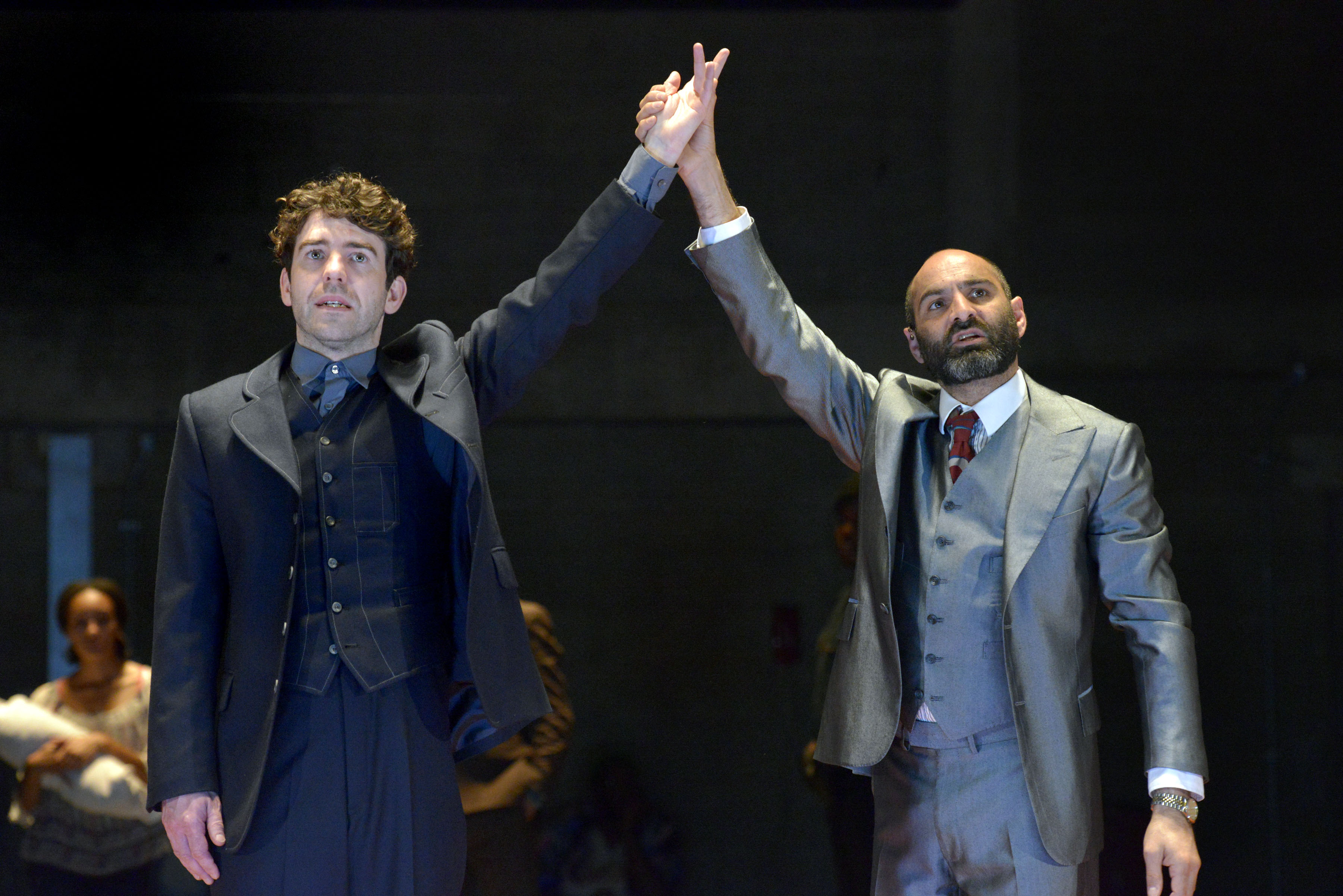
Paul_Ready_Zubin_Varla_and_Natalie_Simpson_in_Measure_for_Measure_at_the_Young_Vic._Photo_by_Keith_Pattison
Paul Ready and Zubin Varla

Best of all are the performances. The cast, like the text, is slimmed down and works hard. Romola Garai is brilliant as an indignant Isabella, as is Paul Ready as a cool Angelo – both performers root out the essentials of their characters. There are also strong roles for Cath Whitefield’s Mariana (although why she should be a fan of pop star Pink baffled me) and John Mackay’s Lucio, whose joke with the Duke has far more mileage than usual. It’s with the Duke, given a towering portrayal by Zubin Varla, that Hill-Gibbins should get most credit. This ‘power divine’ is displayed in his twisted benevolent best – a Rasputin gone right, with an injection of tension that suggests his plans could go awry. The conclusion, shuffling the cast into a deranged and confused photo opportunity, makes quite a picture for this flash-bang-wallop of a show.

Until 14 November 2015

www.youngvic.org

Photos by Keith Pattison