Tag Archives: Maxim Gorky

‘Summerfolk’ at the National Theatre

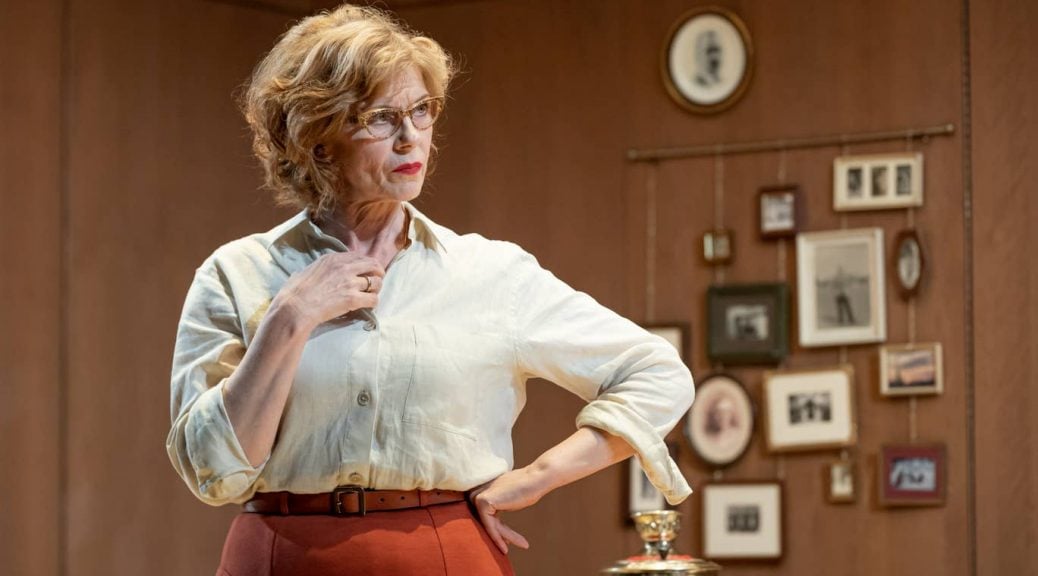
It would be a shock if this production of Maxim Gorky’s classic was traditional. This new version by Nina Raine and Moses Raine updates attitudes, if not the original time or setting. We are presented with a recognisable group of boomers, millennials and Gen Zs. Bringing contemporary attitudes to the piece is predictable. The surprise is that it works so well.

The script is full of fun — the satire even-handed — an important point aided by Robert Hastie’s direction. The ensemble cast are fantastic. It would be easy for Varvara to become the focus, but the generous performance from Sophie Rundle prevents this. Varvara’s husband and his poetess sister (the wealthy boomers) are depicted skilfully by Paul Ready and Doon Mackichan, balancing humour, understanding and disapproval. Successful, slightly seedy author Shalimov is given a tough time that Daniel Lapaine’s portrayal doesn’t hold back on. At least we have Maria Lvovna to look up to: the saintly doctor that Justine Mitchell makes believable.

Maria Lvovna’s romance with the younger Vlass Mikhailich proves a highlight; her wonder over his skin is sweet and sexy. This is an exciting role for the excellent Alex Lawther, who makes the character’s angst powerful. There are laughs from their age gap, but sensitive ones. Youth does well in Summerfolk, with another fine performance from Tamika Bennett as Maria Lvovna’s equally admirable daughter. The affairs are plentiful and often unpleasant; few might blame the dalliance by Yulia Filipovna (Adelle Leonce), as her husband (an excellent turn from Arthur Hughes) is awful. But Brandon Grace’s nuanced performance as the object of her affection provokes thought about their actions.

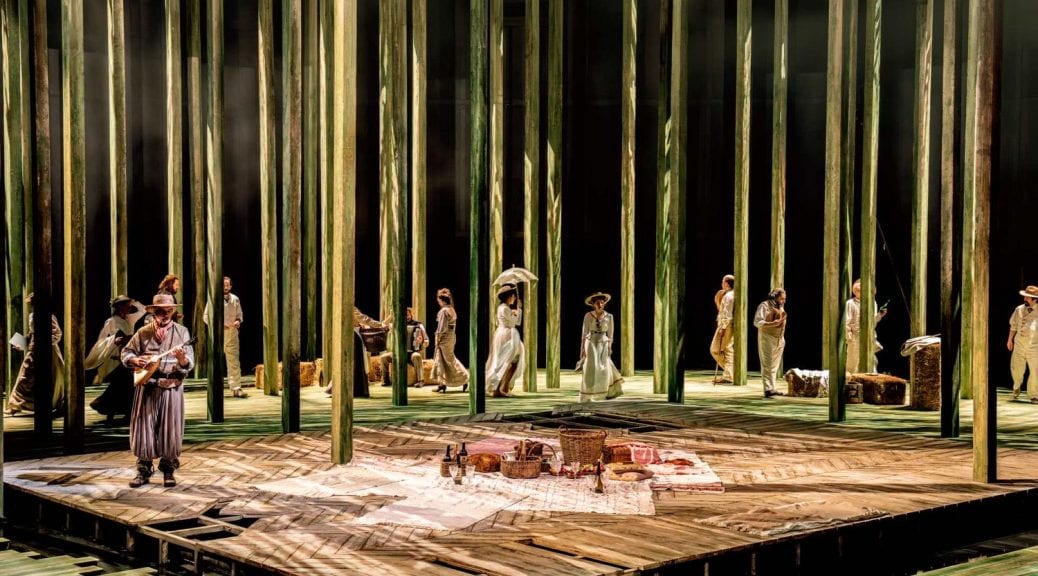
There’s a lot going on, and it is to director Robert Hastie’s credit that it never feels like a posh soap opera. Something is lost by making the characters feel so modern; Gorky’s political reflections have had to be swept away, and comments from those looking after the seasonal visitors just seem odd. But the combination of luxury, ennui, pretension and desperation are all spot on. The unhappiness isn’t overpowering — it is often performative — but sometimes that feels just as sad. Aided by Peter McKintosh’s luxurious set and costume design, the production is ravishing and easy on the eye. There’s a danger of dismissing these folk — what’s the problem with such a long holiday? But the production controls that frustration cleverly and allows you to feel for them.

Until 29 April 2026

www.nationaltheatre.org.uk

Photo by Johan Persson

"Vassa" at the Almeida Theatre

Mike Bartlett’s adaptation of Maxim Gorky’s 1910 play is a suitably irreverent and darkly funny version of a text with revolution at its heart. About capitalism as much as feminism, it provides a magnificent title role for Siobhán Redmond and a range of grotesque characters for a strong supporting cast to have fun with. Both Bartlett and director Tinuke Craig have a keen eye on entertaining their audience and, although the show is uneven, the production has enough humour to make it a success.

Vassa is as much a mogul as a matriarch. As her husband lies dying upstairs, her concern is to secure the family business by fiddling his will. She has to tackle her useless sons and mendacious brother-in-law, who each want their inheritance, along with their various romances, all of which are problematic. Herding these cats is done with a vicious tongue and a ruthlessness that beggars belief. Every acid line and heartless act is delivered to perfection by Redmond, who makes a brilliant villain.

Since it was revived this summer, you might think of Githa Sowerby’s Rutherford and Son as an English equivalent to Vassa: close in date, with another tyrannical capitalist and questioning economics. But Gorky, via Bartlett, has a more satirical edge that shows venality in many forms. Yet there’s a fussy feeling to the direction that detracts from how forceful the adaptation is. It’s interesting to see Craig play with elements of farce – notably with Fly Davis’ set full of doors – but unfortunately the comings and goings in this conspiratorial household aren’t that well-handled. Bouquets of flowers that cover the floor for the finale are another example: the idea might delight a florist but the blooms become bothersome.

It isn’t quite accurate to say Vassa only cares about money – her legacy plays a part, too. Any case for her as an arch pragmatist is weakened by this (for the better) while abuses of power for its own sake bubble underneath the text. The results allow a depth to her character that might surprise and that Redmond excels with. The relationship with her daughter, played exquisitely by Amber James, proves fascinating. Likewise her affection for her daughter-in-law Dunya, played by Daniella Isaacs, is developed well. More unhappily, the fate of her maid Lipa, superbly performed by Alexandra Dowling, brings home how high the stakes are.

It’s the men in the piece that let the production down. This isn’t quite Bartlett’s fault, or the performers’ – Vassa dominates the play so much that, when she’s off stage, interest plummets. As her sons, Arthur Hughes and Danny Kirrane have characters a touch too hysterical to deal with. And as Vassa’s potential nemesis, Michael Gould’s Prokhor just isn’t enough of a threat. Thankfully, with a lot of judiciously placed swearing, the text is fresh as well as funny. And the attention to detail is great. There’s a brilliant line about an off-stage character, described as “so drunk he fell over his own arm”. Touches like that aren’t just funny – they convey Vassa’s world so vividly that visiting it proves engrossing.

Until 23 November 2019

www.almeida.co.uk

Photo by Marc Brenner

“Children of the Sun” at the National Theatre

One of the many creative teams who have contributed to recent successes at the National Theatre, director Howard Davies and writer Andrew Upton – whose reputation rests on a series of adaptations of Russian classics – are back with Children of the Sun. Maxim Gorky’s play, adapted and directed with justified confidence, is fresh and vital. Also re-collaborating, designer Bunny Christie has created a stunning set that makes the most of the National’s Lyttelton stage.

A perceptive psychological drama about the “fools and idiots” in and around one family, there are love affairs galore in Children of the Sun. Intense Russians might be a cliché in hands less skilled then Upton’s, but here the morbid emotions and high-flown ideals engage. The diverse characters are so well drawn and developed that the actors can truly embrace their roles. From the “great nanniness” still living with this distinctly infantile family, played by Maggie McCarthy, to the man ostensibly in charge as head of the family, Protasov (Geoffrey Streatfeild), the cast is uniformly impressive.

More than a moving family drama, Children of the Sun abounds with issues as well: it questions the role of art and science and the nature of society. Gorky the commentator, very much of his time, seems relevant with Upton on board. Hindsight is used but, thankfully for the drama, it feels as if anything might happen. The privileged Protasov is a scientist so obsessed with work that his family and the whole village suffer. The intelligentsia, to which he belongs, feel they are battling superstition – but you can’t blame the locals when it turns out they are being poisoned by his experiments. The play’s bloody, depressing conclusion shocks and stirs. The characters’ fates and the broader questions Gorky raises make for an explosive mix.

Until 14 July 2013

www.nationaltheatre.org.uk

Photo by Rupert Hubert Smith

Written 20 April 2013 for The London Magazine