“The Sun, The Moon, And The Stars” at the Theatre Royal Stratford East

Strong ideas and intriguing verse make the quality of Dipo Baruwa-Etti’s new play easy to spot. Superb direction from Nadia Fall and a stunning performance from Kibong Tanji take the production close to five-star territory.

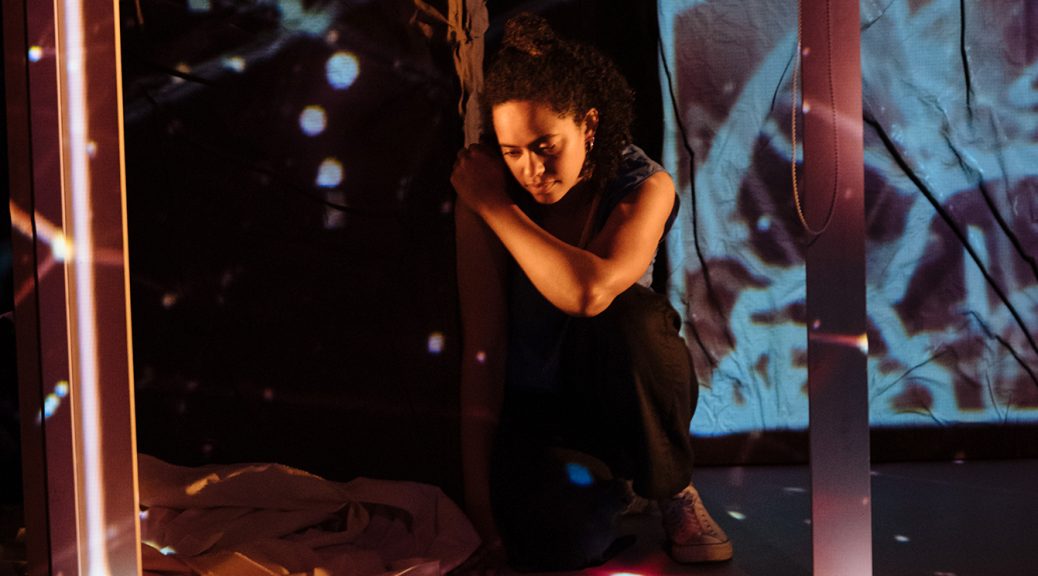
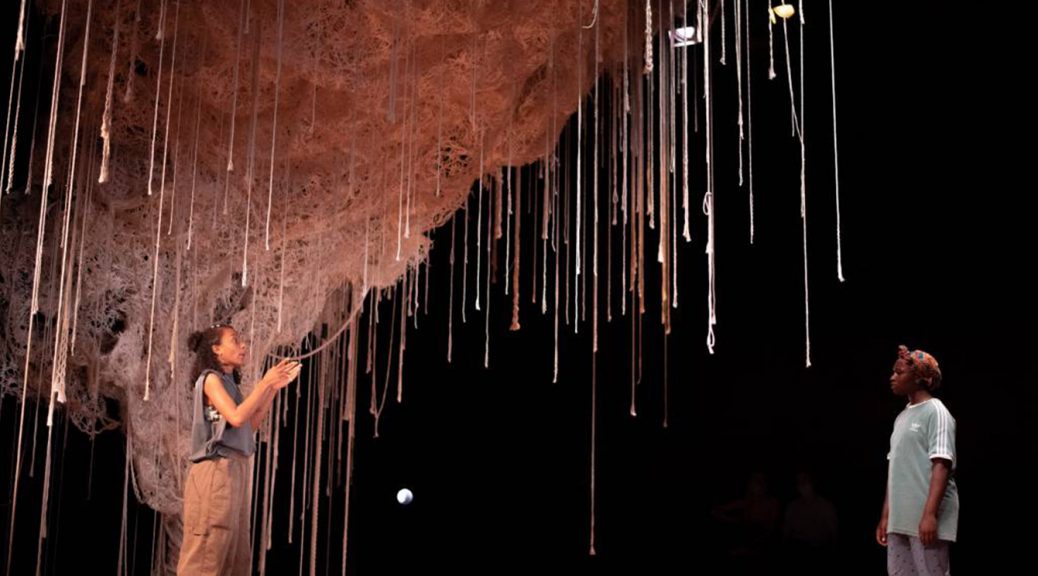
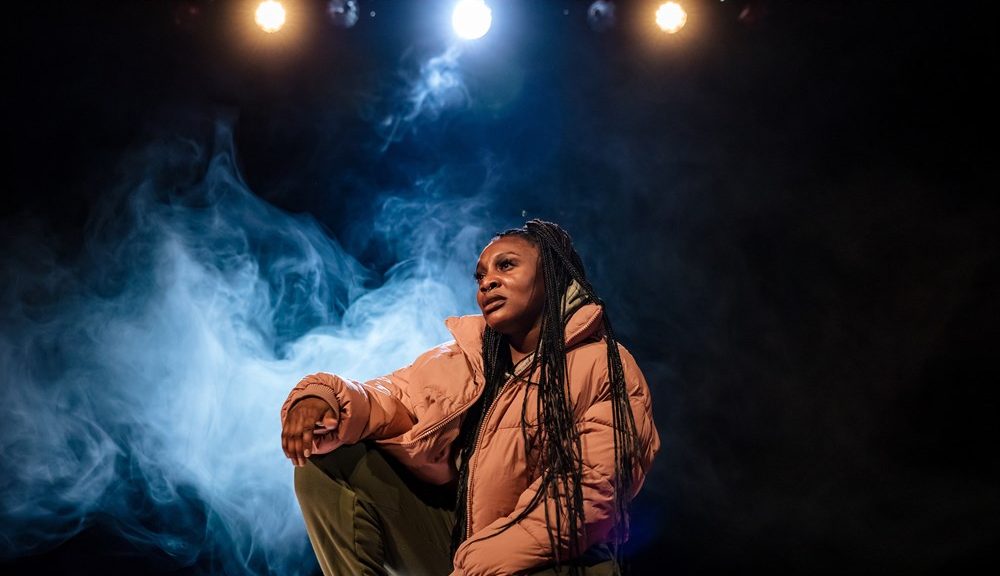
Tanji plays Femi, a young woman whose twin brother has been murdered in a racist attack. Baruwa-Etti writes viscerally about grief: it takes over the body, becoming something elemental, so big it is related to the celestial. This is powerful writing, but it’s the physicality Tanji brings to the role that is mind blowing. I’d put money on her having trained as a dancer.

The clever move is to relate how grief warps Femi’s mind. A desire for justice becomes consuming and violent fantasies isolate Femi from her friends. Achieving a balance between sympathy for the character and being afraid of her – as well as for her – is skilfully achieved.

a stage spectre to rival the best

Femi’s mental ill-health provides a further character for the play – the ghost of her brother. Here, all involved excel. Tanji depicts her character’s reactions to the ghost and slips effortlessly into embodying him as well. Fall injects fantastic tension, with the help of lighting and sound designers Oliver Fenwick and Tingying Dong respectively. And Baruwa-Etti has created a stage spectre to rival the best.

That Femi is haunted is a smart way to link the twins’ experience of racism, then Femi’s encounter with the criminal justice system, with questions of history. But her brother Sean’s ghost is individual enough to make a powerful drama about characters who are more than symbols for societal woes.  

A benevolent, often calming presence, Sean provides support that leads to tender moments recalling the siblings’ childhood. He has instructions… and they aren’t always what his sister wants to hear. The suggestion that Sean also manipulates adds to his fascination. That her ghostly companion leads to the suggestion of Femi’s salvation is a conclusion that, although arriving abruptly, is inspiring.

Until 20 June 2021

www.stratfordeast.com

Photo by The Other Richard

“Walden” at the Harold Pinter Theatre

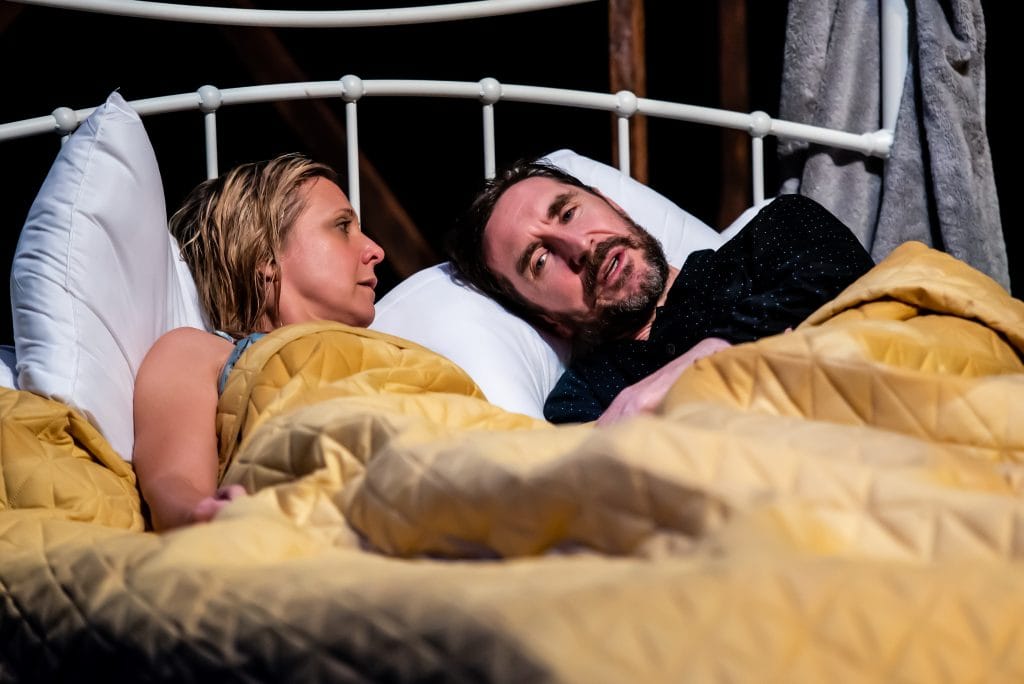
It’d be lovely to roundly cheer producer Sonia Friedman’s idea of bringing new writing to the stage as the West End reopens. And bravo to director Ian Rickson and the performers of this first show of the ‘Re:Emerge Season’. Unfortunately, Amy Berryman’s debut play only musters polite applause.

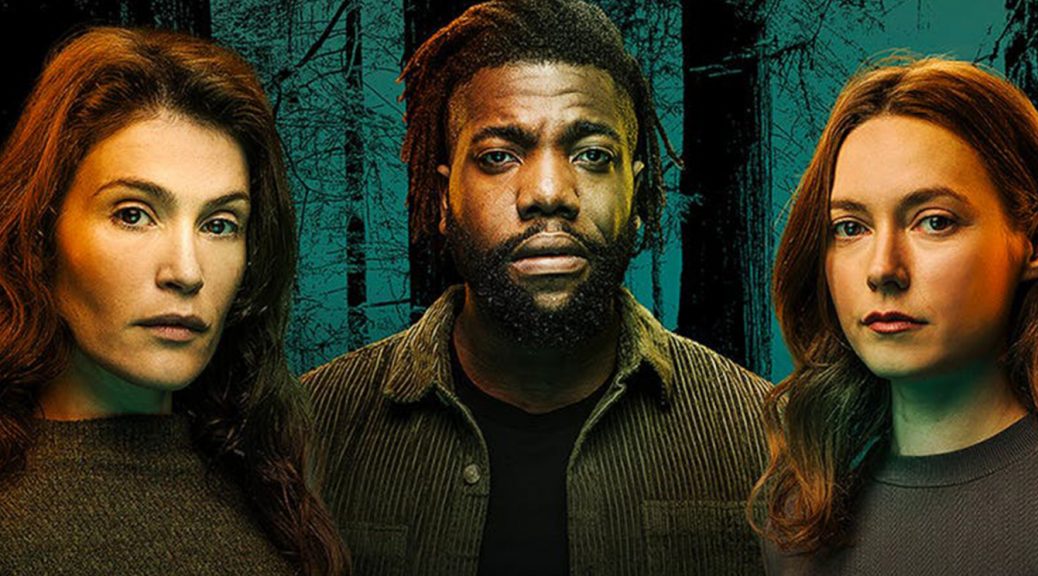
Walden is the story of estranged scientist sisters Cassie and Stella, with Stella’s fiancé Bryan thrown in. Cassie’s just got back from the moon – the job Stella wanted – and is visiting the off-grid cabin her sister has retreated to. You can’t call Berryman’s writing bad – it’s studied, careful and competent – but it is predictable, and the story is thin.

One hour, 40 minutes is a long time to spend on sibling rivalry. With the legacy of their father’s space travel adding little, and a former love interest’s sketchy presence, the conflict between the sisters isn’t firmly grounded. It’s Gemma Arterton and Lydia Wilson’s performances as the sisters that hold the interest and bring conviction to the, admittedly detailed, roles. The only tension, as moments of passion and conflict fluctuate, comes with trying to work out which sister is really the coldest or most damaged… or which is the least likeable.

The near-future sci-fi elements of the play aren’t original (the same old climate catastrophe and mass migration) and nothing new is done with them. There’s a conspiracy theory (of course), this time a nasty Nasa. And a debate over moving to the moon feels tacked on – only phraseology is discussed – Cassie doesn’t like the word ‘Colony’.

It is with the character of Bryan – which Fehinti Balogun does a brilliant job with – that the play really shows its flaws. Too obviously introduced to create discussion – he is an ‘Earth Advocate’ opposed to science – it is solely Balogun’s skill that makes watching the character bearable. Only there to serve up questions to the other characters, which are subsequently ignored, Bryan’s own backstory is tacked on in almost insulting fashion. Frustratingly, Bryan should be essential – it is his “life in the woods” that the action is set in. 

Apart from a cabin, there’s little of Henry David Thoreau in the play that takes the name of his famous retreat and book – surely a missed opportunity? There are plenty of influential ideas in Thoreau that could be explored, but any you might think connect with the play are only superficial. At best a brief discussion of Thoreau allows us to make up our mind about Cassie: describing him as a “whiney hipster” could confirm your opinion about her – I was ready to see her off the planet as soon as she said it!

It’s great to see performers on a stage again. And these are great performers, well directed. But it’s frustrating to see so little done with the stage. Waldenv could easily be a radio play. Indeed, a therapy session might be a more accurate description? More than once, characters ask one another “Tell me what you’re feeling”, before we settle down to a description. Too many scenes are duologues with forced debate.

An unresolved ending indicates how lost the script becomes. Despite the performances, it’s hard to care what happens to either sister. There’s a lot of talk of purpose in the play but too few interesting questions are raised or developed, leaving Walden itself with little point.

Until 12 June 2021

www.sfp-reemergeseason.com

“Shaw Shorts” at the Orange Tree Theatre

Two Bernard Shaw tales of topsy-turvy love affairs – smart, insightful and great fun – make a strong beginning for this Richmond venue’s exciting ‘Recovery’ season.

Directed with precision by Shaw expert Paul Miller, both half-hour pieces poke fun at moralising and pretension, taking a dig at contrarian sophisticates (Shaw even puts in a joke at his own expense). The dense dialogue – impeccably delivered – brims with intelligence and wit.

How He Lied To Her Husband

Dorothea-Myer-Bennett-and-Joe-Bolland-in-SHAW-SHORTS-at-the-Orange-Tree-Theatre
Dorothea Myer-Bennett and Joe Bolland

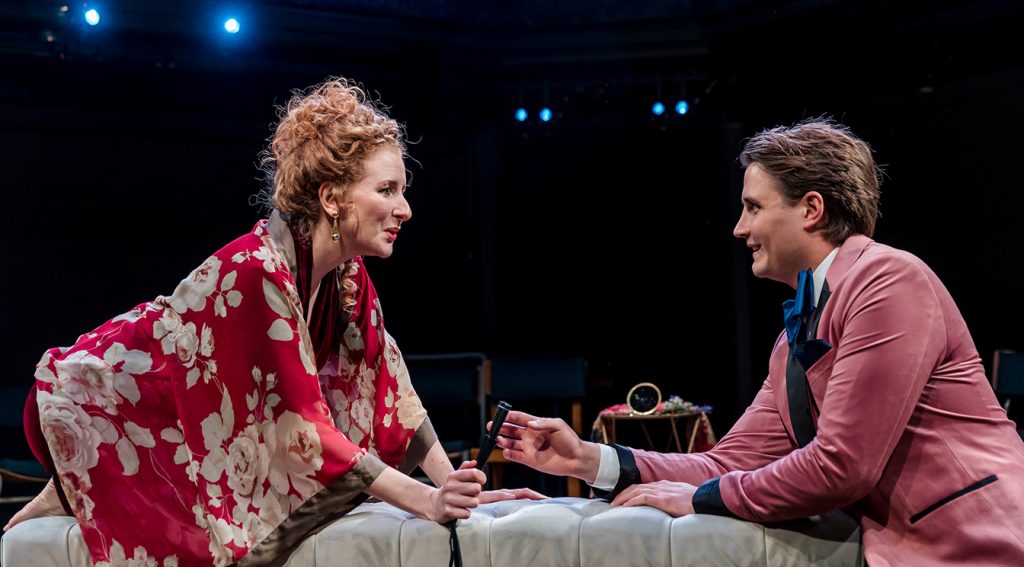
First up is an almost-affair between a married woman and a young poet that has delightful performances from Dorothea Myer-Bennett and Joe Bolland. “Nothing improper” has happened between Mrs Bompas and Mr Apjohn… and, just as it might, they start to argue.

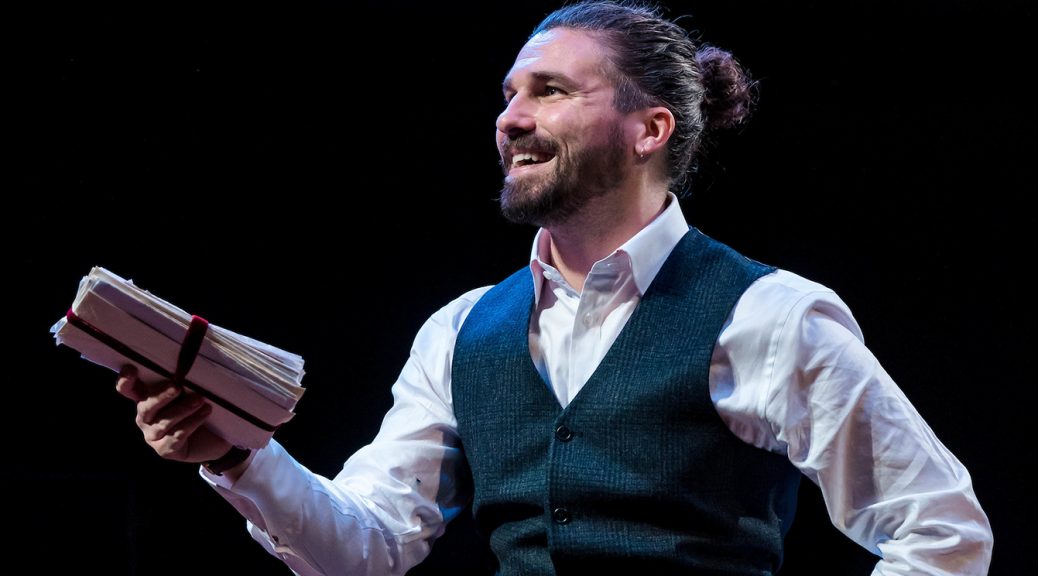
The arrival of the husband provides a neat twist that Jordan Mifsúd (pictured top), who brings considerable swagger to the “prosaic” Mr Bompas, makes the most of. The dynamic between the trio proves unexpected and builds in humour.

To the detriment of the whole, Shaw is preoccupied with the character of Apjohn, the poet, who makes silly claims to live on a “higher plane” and feels “growing pains” at his loss of Romanticism. Despite Miller’s balanced direction and Bolland’s efforts, the satire and the fin-de-siècle trope of anguished artist, hasn’t aged well.

Overruled

Alex-Bhat-and-Hara-Yannas-in-SHAW-SHORTS-at-the-Orange-Tree-Theatre
Alex Bhat and Hara Cannas

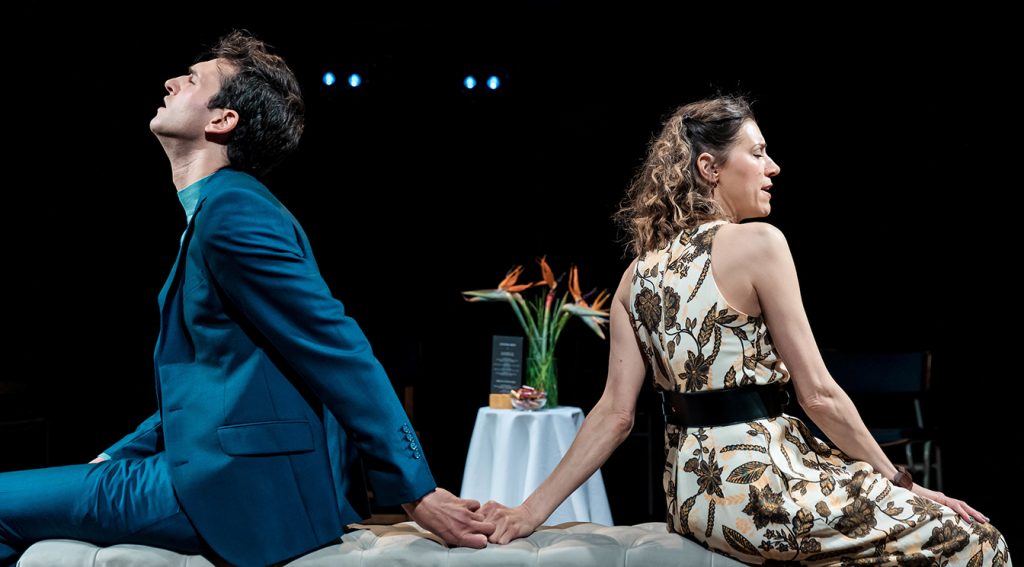
Time has been kinder to the second show, which is funnier as a result. Two couples have holiday romances with each other, then accidentally meet, and even attempt to compromise about continuing their flirtations.

The base for the comedy is strong and the women in the piece stronger. With another superb performance (in a more interesting role) Myers-Bennett is joined by Hara Yannas, who differentiates her sweeter character well.

The men – hopeless in different ways – are funnier still as we get to laugh at their neurosis and (always a hoot) a touch of mid-life crisis. Mifsúd lets his hair down (literally) as a lawyer on the loose, while Alex Bhat has a great time with tongue-twisting lines and convoluted arguments.

All the characters give the impression that the risks of an extra marital affair are more exciting than the sex involved itself… a view Shaw mocks as abstract and downright odd. The comedic tension created is, like the claims made about the danger of an affair, “delicious”. And the delivery from all, marked by a justified confidence, is a real treat. 

Enjoy the plays live or take advantage of the OT ON SCREEN programme (planned for the whole season), which broadcasts this show on 3 and 4 June.

Until 26 June 2021

www.orangetreetheatre.co.uk

Photos by The Other Richard

“Amélie” at The Criterion Theatre

This already acclaimed show is enjoying a brief run at one of London’s most beautiful theatres. If you have any doubts about musicals made from movies, then think again. Full of invention and intelligence, Amélie on stage is an escape from the screens we’ve been glued to during lockdown. And I loved it for that alone.

Craig Lucas’ book follows Jean-Pierre Jeunet and Guillaume Laurant’s film faithfully. The quirky touches around the life of the titular French waitress we follow are present. But the adaptation is far from slavish: rising to the challenge of bringing suicidal goldfish and travelling garden gnomes to the stage, Michael Fentiman’s direction embraces eccentricity.

Time is taken over Amélie’s childhood (with a “neurotic and an iceberg” for parents), then on her adventures trying to help others. Oh, and Lady Di’s death features too… leading to a number for Elton John just as brilliantly insane as it sounds. Romance comes later, by which time, thanks to Audrey Brisson’s performance in the title role, a crazy courtship with equally oddball Nino is compelling.

Amelie The Musical 2 Pamela Raith Photography

There are appropriately novel touches in the music from Daniel Messé. The songs echo the show’s obsession with the senses – highlighting sight, smell, touch and taste. A number about figs is ripe to join lists of obscure song subjects. The lyrics, by Messé and Nathan Tysen, go a long way in saving the show from too much sentimentality by being unusually morbid…well, it’s a strategy.

Amélie is not perfect. No man could be good enough for our heroine, but the character of Nino really needs some work (far too dull despite Chris Jared’s efforts). Both score and story try hard to be profound. Too hard at times. We can admire getting Zeno’s paradoxes into a musical, but the treatment is heavy handed. The show’s charm and humour are occasionally overplayed. And there’s a big problem with cod accents… understandable, but nonetheless annoying.

Focusing on Amelie’s dreams and imagination is enhanced by a talented cast that brings her world to the stage. The fact that they are all actor-musicians helps – wouldn’t it be great if everyone carried around instruments in real life? But the ensemble is especially graceful: huge credit to movement director Tom Jackson Greaves and a special mention for Kate Robson-Stuart’s performance. An awful lot gets done with pianos and ’cellos, as instruments form a part of Madeleine Girling’s wonderful full-of-surprises set. And the puppetry by Dik Downey is effective. The result is a pleasant irony – while the show talks about how hard times are for dreamers, Amélie brings dreams to the stage with ease.

Until 25 September 2021

www.ameliethemusical.com  

Photos by Pamela Raith

“Cruise” at the Duchess Theatre

Previously available on stream.theatre, I was convinced that Jack Holden’s AIDS history play would be better live. And it is. But the surprise is how much superior – a solid script becomes something special through a spectacular performance.

Of course, there’s the thrill of seeing a piece set in 1980s Soho so close to the location itself. It feels great to be back in the West End! Thoroughly researched and poetically written, the script has an extra charge on stage.

Bronagh Lagan’s direction makes the action taut – there is considerable tension as we hear the character of Michael recount what he thinks will be his last night on earth. And the play packs a punch emotionally: the scene where Michael’s partner dies is a dramatic highlight.

Best of all, the show’s music is incorporated superbly with composer John Elliott performing from the start. The live soundtrack becomes almost a character in the action and structures the show admirably.

While the previous filming was accomplished, far more is achieved with the simple scaffolded set from Nick Corrall and Stufish Entertainment Architects. The industrial feel is appropriate for the show’s club scenes while also suggesting London’s constant building work. A small revolve and judicious video projections accompany a tour of Old Compton Street and provide a stage for the great set of characters we meet. 

It is Holden’s performance that ensures success. Taking on a variety of roles is sure to impress on stage or screen, but seeing this done in the flesh is what theatre does best. There is a physicality to the show’s marvellous sections about Michael’s career in the music business – also aided by Jai Morjaria’s lighting design – that is inspired. A standing ovation made the socially distanced theatre feel full – something that Holden and his play deserve.

Until 13 June 2021

www.cruisetheplay.co.uk

Photo by Pamela Raith

“Harm” at the Bush Theatre

Leading the welcome return to theatre, this beloved West London venue is staging Phoebe Eclair-Powell’s smart monologue. After far too long away from live performances, the temptation is to be excited about almost anything…but Harm is a strong piece and it’s great to report that the show is a definite ‘Go See’.

Kelly Gough gives a brilliant performance as a disaffected estate agent which, at first, has the feel of a stand-up comedy routine. Full of witty and blunt observations, Gough has a fantastic presence, energetic despite her character’s lethargy, that wins you over right away. Both Gough and the play are funny.

As Gough’s character sets about selling a home to an Instagram influencer called Alice, there are plenty of vicious laughs: Eclair-Powell makes sure Alice is a character it’s enjoyable to dislike and from that cleverly questions a desire to hate her. Harm adventurously morphs into a thriller, as an obsession with Alice’s wonderful life develops.

As the estate agent morphs into an internet troll – ‘sadbitch11’ – the play reiterates common enough concerns about social media. Yet we become increasingly uneasy about what real life action might occur. And the text flips again, as concern for its troubled lead takes over, raising serious issues about mental health. Gough has made us laugh so much playing ‘The Woman’ that seeing her cry is heart wrenching.

Previously seen on BBC Four, director Atri Banerjee brings the show to the stage with a strong sense of theatricality. And the set from Rosanna Vize, with its giant fluffy bunny, is sure to prove memorable. Eclair-Powell’s ability to juggle genres, taking us from comedy to commentary on the edge of our seats along the way, means that her play defies the simplistic hashtags. But if we must… Harm is #fantastic.

Until 26 June 2021

www.bustheatre.co.uk

Photo by Isha Shah

“The Mousetrap” at the St Martin’s Theatre

It feels appropriate that the first big show to reopen after lockdown is the West End’s longest running. After a hiatus in its record-breaking 68-year run, Agatha Christie’s whodunit is back in fine form and with a new idea – two casts are taking turns to perform the show. I enjoyed it so much that I might see both.

The Mousetrap is one show where any plot spoiler would be unforgiveable… more on that later. And the murder mystery’s success speaks for itself – the story is excellent. But it should be stressed that the new cast I saw are superb. Under Ian Talbot’s direction, Cassidy Janson and Danny Mac take the leads as the Ralstons, steering the action and adding to the drama. Meanwhile visitors at the suitably isolated Monkswell Manor are impeccably performed by Alexander Wolfe, Susan Penhaligon, Derek Griffiths, Lizzie Muncey, David Rintoul and Paul Hilliar. 

We are used to enjoying Christie adaptations, but her biggest hit reminds us what a solid playwright she could be. We know the plotting is unparalleled and accept the characterisation falls short. But it is a pleasant surprise to be reminded that the show is, quite simply, perfect light entertainment.

The Mousetrap knows it is funny. Although maybe not written to be giggled over in quite the way a modern audience can do, there is plenty of wit here. Christie and the cast play with the stock characters setting up our suspicions. And staging the manor house genre is neatly served by the all the comings and goings. Expectations are masterfully played with – consider the joke that a post-war lack of servants means there isn’t a butler in sight.

Meanwhile, characters remind us we can take The Mousetrap seriously – should we wish. Indeed, the insistence that we could do so is the one thing that slows the show down after the interval. Glimpses into a painful motive for murder carry weight and are unveiled with care. And the final revelation still provides a shock, even if it isn’t one of Christie’s best.

Playing with its audience in a manner that might strike you as surprisingly knowing, it’s worth remembering that back in 1952 Christie and her genre were firmly established. Theatre goers then and now know the rules of this game and love it. The final address to the audience – after the curtain – calls for us all to keep the secret of the play. The confirmation of complicity with an audience is always welcome and, after such a long break, moving. It’s my favourite part of the show!

uk.the-mousetrap.co.uk

“From Me to Us” from the Battersea Arts Centre

The ‘Me’ in this sensitive, genre-defying show, is writer and performer Wayne Steven Jackson. And the ‘Us’ is him and his, so far, unborn child. What makes the address unusual is that Jackson is gay and a bachelor and only a very recent change in the law has allowed for single father surrogacy.

Jackson presents the show as a documentary – there’s plenty about the procedure of planning to have a child. But the “fragments and experiences” that make up the show are original and poetic. From Me To Us is an “unfolding mystery” – immersed in the idea that it is a story very much ongoing and, until recently, impossible.

The storytelling is good. For my taste, Chris Benstead’s music adds unnecessary sentimentality (too many swelling ‘cellos). But Jackson’s clarity about the use of his imagination – and the way he references the theatricality of what we are watching – creates a strong sense of openness. And, as a love story, the tenderness towards the future child is moving and powerful. A particular highlight of great sincerity comes when Jackson reads a letter from his own parents live on stage.

From Me To Us by Wayne Steven Jackson

It is by broadening out from his subject matter that Jackson renders From Me To Us magical. Just as fatherhood makes him “more than just me”, the show grows in appeal. There are big questions of mortality and time. Glimpses of the past and future, aided by speed, split screens and trickery from videographer Ben Horrigan, raise issues of selfhood. A claim could be made that the show is as much about memory as paternity: “echoes, remnants, and reminders” flow through the action, enforcing the fact that the big event, the birth, is yet to happen.

Most impressively, Jackson makes us consider potential afresh. Note all the “maybes” in his script – all the chances and possibilities. Not just the potential of a new life but a new relationship and the changes that parenthood brings. Thinking about such a different path in life becomes, possibly needs to be, a question of breaking the rules. And that rebellion is inspiring. In bravely embracing possibilities, Jackson should win respect and best wishes from all of us.

Until 16 May 2021

www.bac.org.uk

“The Sorrows of Satan”

Luke Bateman and Michael Conley’s musical reworking of the Faust story might not be worth selling your soul to Satan for… but it’s certainly a show to check out. It’s clever – witty and erudite – and, after a slow start, becomes devilishly good fun.

Bateman takes the role of Geoffrey Tempest, an “obscure and poor” composer looking for a serious hit show, and he does a fine job. Unlike Bateman himself, Tempest isn’t that good. As that fact dawns on him, temptations presented by the not-so-mysterious potential theatrical producer ‘Prince Lucio’ mount.

How much Tempest might sacrifice for musical theatre success is a sound joke, but it is overplayed. Similarly, the 1920s setting (the show, ably directed by Adam Lenson, is filmed in the gorgeous drawing room of Brocket Hall) and plenty of nods to melodrama, Oscar Wilde and Noel Coward become a touch laboured. It’s with the device of a show within a show – Tempest’s own “dreary little” version of Faust – that success lies.

Molly Lynch in The Sorrows of Satan
Molly Lynch

There’s an intelligent take on the role of women in musicals that backfires a little. Molly Lynch plays ‘The Woman’ well but for a good third of the show the role – deliberately stereotyped – is repetitive. The point is proved but, the humour doesn’t work. Thankfully, a nice surprising twist means Lynch shines later and might just get the best song in a score that has a good number of successes.

Luke Bateman and Michael Conley in The Sorrows of Satan
Luke Bateman and Michael Conley

We all know that the devil has the best tunes. And in The Sorrows of Satan he certainly writes the best songs! Bateman shows his skills and considerable knowledge with the help of musical director Stefan Bednarczyk, while Conley’s lyrics are often funny and always smart. Taking the role of the Prince himself, Conley gives a wicked performance that is thoroughly good value. Magnificently hammy, “foreign in a very English way” and accompanied by thunder, every moment of his performance is worth watching.

Conley’s role is so much stronger that it makes The Sorrows of Satan a little unbalanced. What price to pay for a performance so enjoyable? I’d love to see more of Bednarczyk’s character Amiel but then getting even one song from someone without a tongue is surely impressive. And it’s impossible not admire a show that can get in a mention of a lavalier and quote Mae West.

Until 9 May 2021

www.thesorrowsofsatan.com

Photos by Jane Hobson

“The Ballad of Anne & Mary”

This is fun. Lindsay Sharman’s musical audio drama, available as a podcast, is a tale of 18th-century female pirates that’s full humour and scandal. The first episode sets up plenty of plot and fantastic characters, including the titular Anne Bonny and Mary Read, with a strong sense of history viewed through modern eyes.

The songs by Laurence Owen are serviceable and add to the atmosphere. Each number is integrated well into the action and wonderfully performed. There’s variety, too, with ballads, of course, but also sea shanties and a gorgeous lullaby. The music creates a period feel that is belied by Sharman’s script, which fully embraces the women’s appeal in 2021.

It’s true that balladeers and the press had a field day with these real-life female pirates, whose story could “chill and astound”, But Sharman wants to do more than entertain. Anne, given a voice by the excellent Christina Bianco, is keen to comment on the myths surrounding her and stop the “nonsense” so many, including Bess the Ballad Singer (an excellent opening number from Carole Stennett) are keen to profit from.

Mary is more than a match for investigative journalist Nathaniel Mist – a role Karl Queensborough does well with, especially when it comes to the show’s earthy humour. Keen to add “spice”, Nathaniel could well prove just a pawn, manipulated by his boss Captain Barnet (John Henry Falle), whose character I hope we hear more from. Sharman has set up plenty of possibilities for the rest of the series.

There are four more episodes to come, released on Thursdays until the 27 May. We’ve still to meet Mary, performed by Sooz Kempner, and other stars on board for the project include Le Gateau Chocolat. Following Anne and Mary’s adventures has been of interest for centuries and Sharman’s look at the legends promises great things.

www.longcatmedia.com