Category Archives: Uncategorised

“A Chorus Line” at Sadler’s Wells

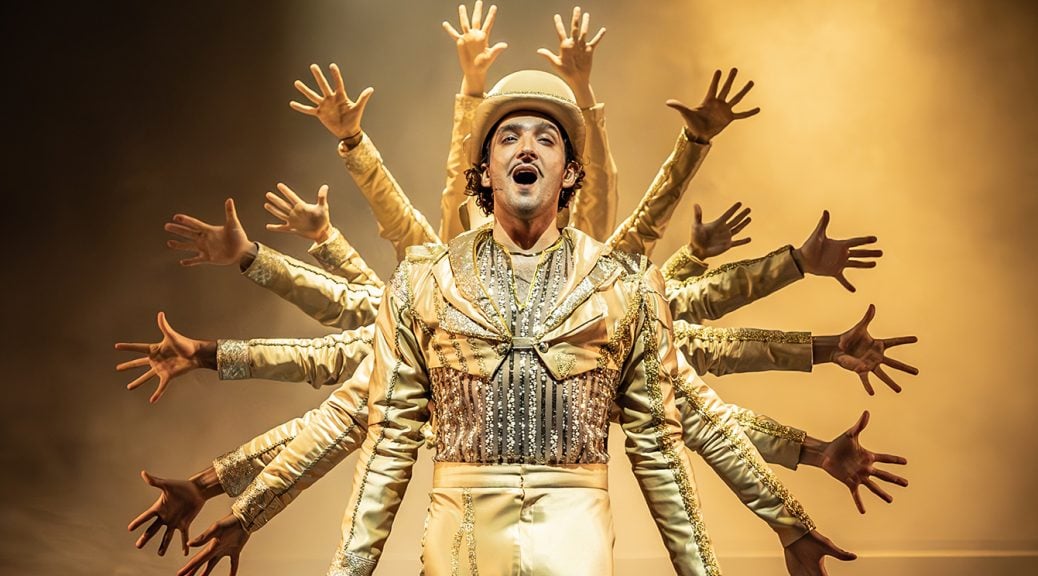
Taking the audience behind the scenes of show business is an established trope. And, of course, musical theatre nearly always combines song and dance. Both facts reach a new level in this 1975 masterpiece, in which nearly all the action is supposed to be an audition, while singing and choreography are balanced with studious care. This superb revival from Curve, directed by Nikolai Foster, appreciates how the show is rooted in tradition yet is distinctive enough to be called revolutionary.

The scenario could not be simpler. We see 17 performers being interviewed, hear stories about their lives and see them dance. But James Kirkwood Jr and Nicholas Dante’s book does a lot with the idea. There’s humour and tragedy, a mix of bliss and depression, while tension mounts towards that finale number. Foster’s decision to stage the show without an interval isn’t easy on the audience but it breathtakingly highlights every up and down.

A-Chorus-Line

Even the varying detail given to the roles proves interesting. While famous tunes like ‘I Can Do That’ or ‘Sing!’ make excellent showcases for Redmand Rance, then Katie Lee and Joshua Lay, we get to know all the characters. Many numbers are shared, like ‘At the Ballet’ (Lydia Bannister, Kate Parr and Amy Thornton) and have dancing as an integral part. It’s impossible to give enough credit to everyone. Meanwhile the show-within-the show’s director and his former protégée, who wants a job, are held back. These could be the ‘stars’, and the performances from Adam Cooper and Carly Mercedes Dyer are terrific. But, in a show of discipline, they are never allowed to become the focus. The clue is in the title – this show really is about everyone!

As you might expect after nearly 50 years, there are dated moments. The director’s god-like status becomes uncomfortable. An originally comic number about plastic surgery (performed brilliantly by Chloe Saunders) doesn’t get a lot of laughs. But Paul’s long monologue (notably not a song) about his sexuality is still powerful and delivered wonderfully by Manuel Pacific. Concerns about prejudice are, regrettably, still valid. A Chorus Line is revealed as oddly prescient.

The production does the show proud. Marvin Hamlisch and Edward Kleban’s songs are fantastic and, under the musical direction of Matthew Spalding, they sound grand. Remember how important the dancing is (Sadler’s Wells seems a suitable London venue)? The choreography from Ellen Kane is appropriately ambitious. Each character reveals themselves in the way they move, even while the final goal is to become part of a group.

The dancing covers the wild swings in mood the different stories create. And it reflects the variety of what we hear – from rock numbers and strong brass through to the more traditional sound of the number being rehearsed. And, if it isn’t too fanciful, Howard Hudson’s spot-on lighting design feels inspired by dance – with an exciting amount of movement from the conspicuously visible rig. When it comes to that finale, and its tremendous synchronisation, the show is theatre heaven. If fan kicks and jazz hands are what you want, A Chorus Line delivers. It even adds fireworks as a final treat.

Until 25 August 2024

www.sadlerswells.com

Photos by Marc Brenner

“Fangirls” at the Lyric Hammersmith Theatre

Of many exciting musicals opening in London this year – there are a lot – you might not expect this arrival from Australia to be a five-star favourite. The subject matter is the fandom surrounding a teenage boy band, and one young girl, Edna, with a plan to “save” the lead singer from his own celebrity when he tours to her town. So far, so fun. The show has its own dedicated following – there are Fangirls fan girls – because it really is for everyone: full of surprises, exceptionally smart and very funny.

The music, book, and lyrics are all by Yve Blake, which should make you ‘stan’ her. Blake is brave, not least in having the lead singer of her fictional boy band being a Brit called Harry. The show’s tone is boldly dark and downright rude. I’m not sure how suitable it is for youngsters, but that’s surely just me showing my own age! Of course, you laugh at reactions to the pop idol, the fans are “literally dead” at a concert announcement and there’s a mother character (a fantastic role for Debbie Kurup) for older audience members to relate to. 

But hold on… don’t dismiss these “silly little girls”. The twist is that Fangirlstakes them seriously.

Blake has researched it all, creating an authentic voice for the show… literally. The lyrics are original, and the teenage speech patterns have fascinating effects. The plot has shocks, not least when Edna puts her plan into action (a fantastic end of the first act that I defy you to see coming). But there’s a point behind the technique. Through exploring the impact of the internet, the writing of fan fiction and the fan community, there’s insight into the lives and (unrequited) loves of this cohort that is frequently heartbreaking.  

These girls’ self-esteem is fragile. The parasocial relationships with Harry, and their imaginary conversation with him, reveal fears and real-life difficulties in powerful lyrics. One number, ‘Disgusting’, is a highlight. As it happens, there’s an interesting parallel with another summer hit, Mean Girls, but, for my money, this packs more punch. As the group sings that “nobody loves you like me” (all of them, of course), the lyrics are shared by Edna’s mother singing to her daughter – their relationship is a big theme that gets ample attention.

“Actual philosophical poetry” 

The score is just as clever. A concert from the boy band is a lot of fun, but it is clear from the start that the fictional hits are used in a novel way. Blake can write a pop song and Thomas Grant, who performs as Harry, does very well with them. But it is genius (and, again, funny) to make them a little bit bland. They are clearly a long way from the “actual philosophical poetry” one fan claims them to be. Then, when the fans take them over, adapting them and weaving them into the wider score, they are improved!

The fans as a chorus are utilised a lot and sound great. They move brilliantly, too, with clever suggestions of awkwardness around sexual or violent movements that show the skills of choreographer Ebony Williams. The production’s strength is a credit to director Paige Rattray. There are strong parts for Edna’s friends played by Miracle Chance and Mary Malone, but smaller roles are also well realised with standout performances from Terique Jarrett and Gracie McGonigal. 

Final praise to Jasmine Elcock (a former talent-show competitor herself), who takes the lead role and is an excellent singer and actress with sure command of the show’s comedy and drama. Edna has a lot to learn and plenty of problems, so watching her struggle and grow is superb. And Elcock becomes a star along the way. What can say? I’m a fan.

Until 24 August 2024

www.lyric.co.uk

Photo by Manuel Harlan

“Wormholes” at the Omnibus Theatre

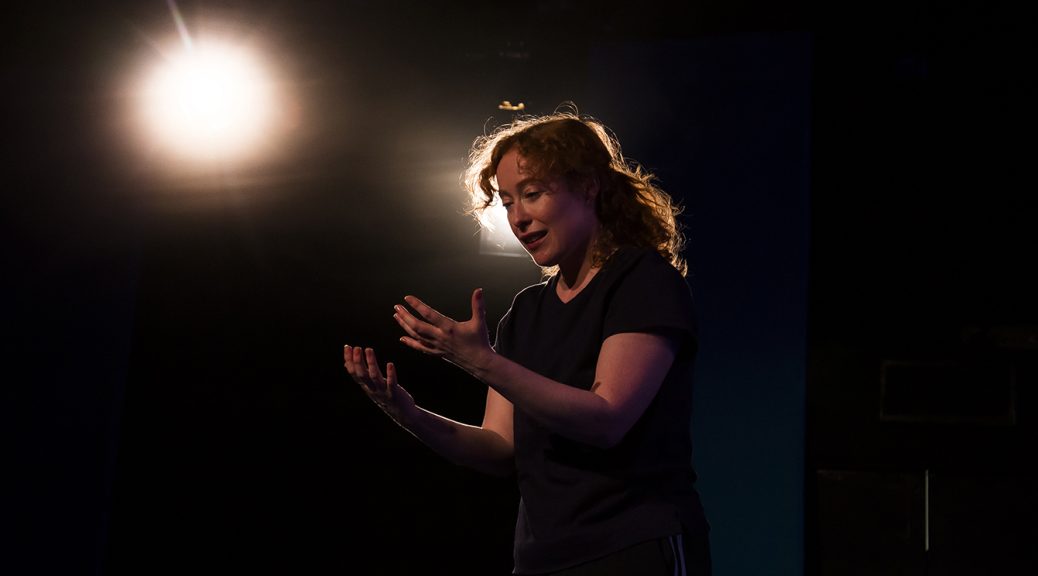
This accomplished monologue is difficult to watch, but easy to admire. The only character who appears is so traumatised that she doesn’t know her own name. And the institutional therapy session we watch details domestic abuse towards a violent outcome. It’s tough stuff, brought painfully to life by the commitment and skill of its creative team.

Written by Emily Jupp, the script is taut and well-paced – director Scott Le Crass appreciates both strengths. We are given red flags about the relationship recounted. You might wonder that the danger isn’t too clear – for the audience, the trouble doesn’t seem as “incremental” as it is said to have been. And the humour sometimes falters – again, how deliberate is this? But the way Jupp takes time to show how troubled the character is provokes powerful emotion. The drama of events escalates carefully. It sounds odd to say, given the subject matter, but Wormholes is beautifully structured.

As you might expect from listening to a troubled mind, there are plenty of tangents. Some are blunt metaphors, but they help with the rhythm of the piece and raise questions. To what extent societal expectations shaped lives and events dominates. There’s a lot about anxiety, too, that aids an oppressive atmosphere – even if these trials of modern life are too commonplace. And for a monologue, this is a populous piece: friends, family and others in the play’s unspecified setting are all vivid. Each elicits examination from the audience as they relate to one or more of the people mentioned.

This is all strong, but none of it would work without an excellent performance from Victoria Yeates. Care is taken in establishing her character as a kind of everywoman, someone to relate to, appealing in her seeming honesty. When this mask slips, sometimes suddenly, it is very sad. Or, when Yeates speaks the words of her husband, it is scary. Showing a woman locked away is an old trope, but Wormholes allows this one to say a lot for herself. And there’s more. This is not just a mad woman but a mad mother. What happened to her son – what she has done – is not revealed. It’s another taboo, one Jupp leaves open, that makes her play fairly screech with tension.

Until 10 August 2024

www.omnibus-clapham.org

Photo by Rob Greig

“Hello, Dolly!” at the London Palladium

Jerry Herman’s 1964 musical is one of the greatest ever written. The story of matchmaker Dolly Levi, finding a new life, and love, with “half-a-millionaire” Horace Vandergelder, is full of wonderful songs. But it takes a great production – and a true star – to make the most of it all. This revival brings out all the show’s fun, romance, and – a little surprise – its wisdom.

Director Dominic Cooke is known for his work with plays more than musicals. Maybe his lauded revival of Follies whetted his appetite for more – let’s hope so. Cooke makes the most of Michael Stewart’s superb book for Hello, Dolly! The dialogue, like the lyrics, is funny. But the characters aren’t just comedic, they are well developed. Dolly dominates a coherent and vivid world (credit also to designer Rae Smith), all brought together by a story that is more emotional than you might expect.

Dolly delves into many lives, changing them for the better of course. With an excellent cast, we care for those frustrated in love. Take Cornelius and Irene, wonderfully performed by Harry Hepple and Jenna Russell, who only take a moment to fall in love but manage to be convincing.  Or Barnaby and Minnie, parallels in so many ways, brought to life by Tyrone Huntley and Emily Lane with great charm. And of course there’s Horace, a role taken by Andy Nyman, whose presence as well as his voice impresses.

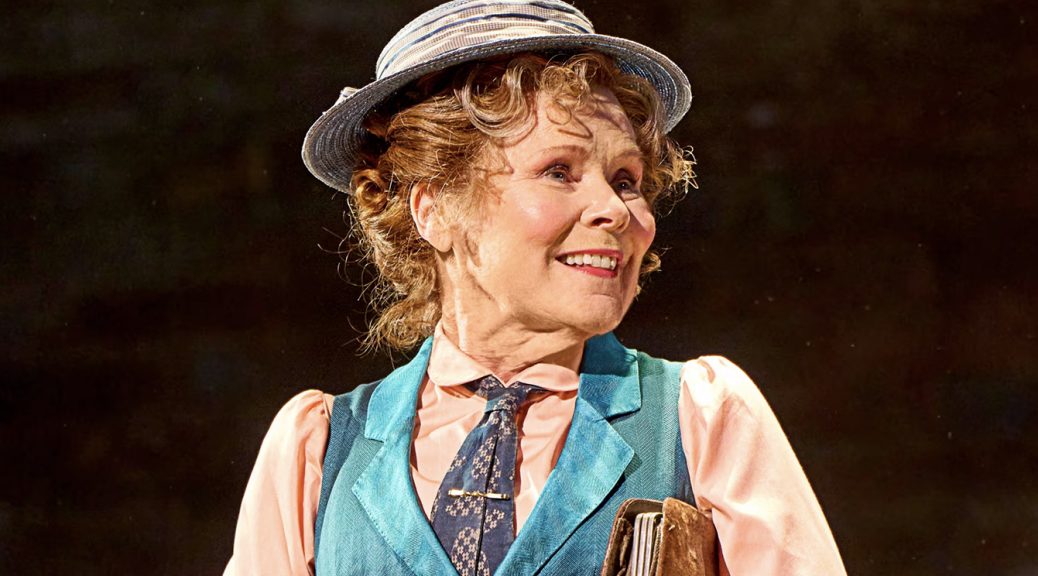
But who are we kidding? The show is about its titular star and Imelda Staunton doesn’t just fit the role perfectly – she adds to it. She is an excellent comedian – the reaction at finding herself amongst funeral directors during the parade scene is brilliant. But Staunton takes the show seriously, there are moment of melancholy that are striking. While notes can be powerful – her voice is strong – they don’t have to be belted out. Dolly may be brash, but her emotions are refined. And her view of life is worth listening too. It’s important that Staunton is a star. The audience response is rapturous, Hello, Dolly! has a great atmosphere. But note the amount of control; applause stops the moment Staunton is going to sing again. Even if we only get a moment, not an instant is to be missed – onstage and off, everyone is in love!

Until 14 September 2024

www.hollodollyldn.com

Photo by Manuel Harlan

“The Baker’s Wife” at the Menier Chocolate Factory

Merci beaucoup to David Babani’s venue and director Gordon Greenberg for staging this musical theatre curio from the legendary Stephen Schwartz.

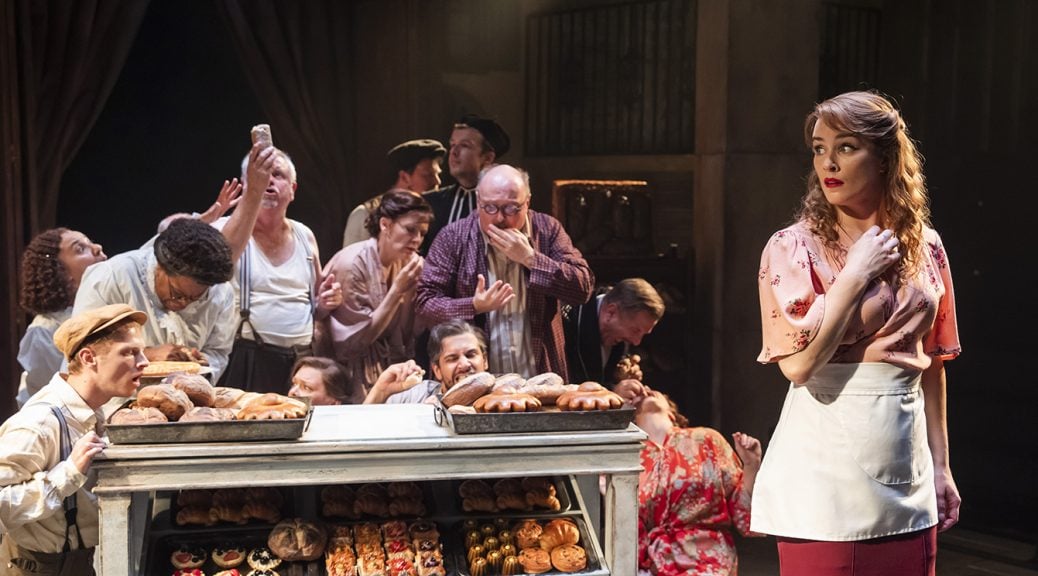
The Baker’s Wife is a sweet show with good songs and a great sense of humour. Schwartz and the book’s writer Joseph Stein are Francophiles both. There’s a clear affection for the source material – La Femme du boulanger by Marcel Pagnol and Jean Giono – that adds a warmth. And it is hard to imagine a better production for what is a deceptively complicated work.

The appeal is clear and the show unusual for Schwartz in being, very self-consciously, a chamber piece. There is an interesting tension between proclamations about small sensual moments said to encompass all our lives. And they really do mean everyone. The intimate Menier, with a superb set from Paul Farnsworth, reflects this ambition. The location might be a small village, upset by a new baker and his much younger wife arriving, but we see a lot of the locale and the cast numbers 19. It’s to Greenberg’s credit that not too many of the characters get lost. 

There are serious intentions. Genevieve, the wife in question, runs off with a younger man, leaving her devoted spouse, Aimable, devastated… and after such lovely songs, too. There are great numbers for both Lucie Jones and Clive Rowe, who take the roles, but their rather pat dilemma is not helped by the rogue she runs off with being a weak character (Joaquin Pedro Valdes, who sings wonderfully, is distinctly short changed). There’s a lot of sentiment, arguably an excess of slow numbers, and surely too many sincere looks with clasping hands between the cast. The lyrics are great, though perhaps a touch repetitious. 

Lighter moments are better – and these aren’t just comedic. There’s a powerful thread of nostalgia and melancholy to the piece, exemplified by a fine performance from café owner Denise, played by the always excellent Josefina Gabrielle, that is surprisingly airy. And the show is funny. The triumvirate of teacher, curate and mayor make great roles for Mark Extance, Matthew Seadon-Young and Michael Matus, who are all superb. There’s fun, too, for Norman Pace and Liam Tamne, playing old rivals who become friends. And a highlight is a song called ‘Bread’, which is rather brilliant.

It’s a lot, though, and, despite admirable efforts from Rowe in particular, The Baker’s Wife doesn’t quite come together. For a start, the story has too easy a solution. While an effort is made with the women in the show, including the mayor’s three “nieces” (one of whom he, ahem, offers to the baker to cheer him up) their group number, entitled ‘Romance’, feels forced and none of the female characters as vivid. Since the aim is to show us a whole community, that’s a big fault. For all the strong songs – very well performed – there isn’t enough to take away. Sketchy rather than slim, there are laughs and plenty of heart-felt moments, but the pleasure is from a fine production of a show seldom seen. 

Until 14 September 2024

www.menierchocolatefactory.com

Photos by Tristram Kenton

“Mnemonic” at the National Theatre

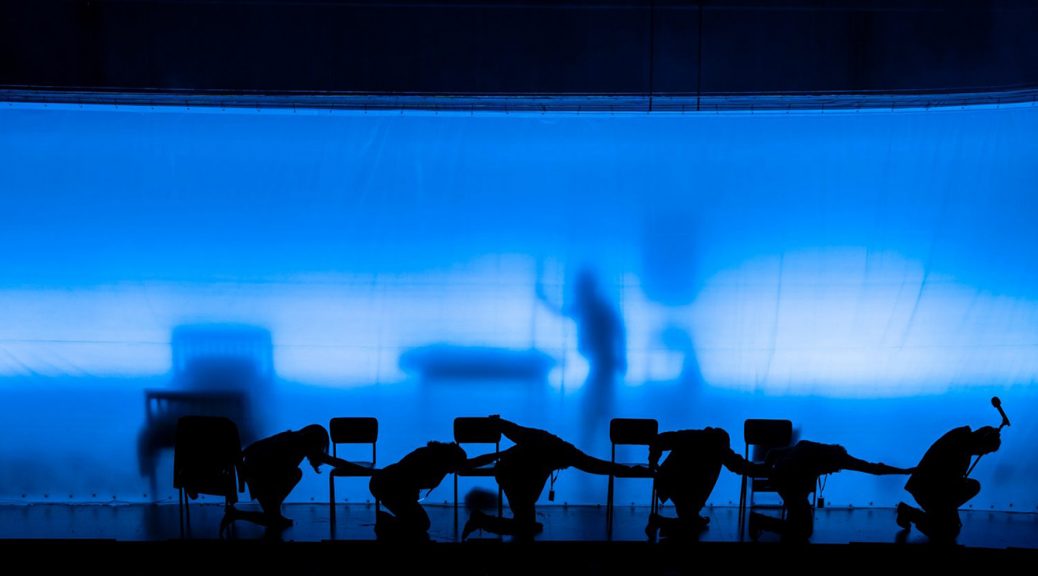
The revival of this legendary piece from Simon McBurney’s company, Complicité, seems a secure success because of its themes of memory and origin. The devised work cries out to be updated, and so it is, with references to Brexit and topical events. At the same time, concerns about where we all come from, highlighting ideas about nationality and conflict, are depressingly relevant to our fractious times.

Starting out as a kind of lecture, there are two main plots: deliberate tangents forced together for philosophical points. We learn about a neolithic man, named Ötzi, whose preserved body was discovered in the Alps. And get the story of a guy whose partner has had some kind of breakdown and disappeared. The archaeology is great, and leads to fantastic theatrical moments, the romance less so as the characters involved lack appeal… but feel free to disagree. The balance between abstract questions and emotional involvement makes the show engaging.

Mnemonic-at-the-National-Theatre-credit-Johan-Persson-hero

There’s a powerful sense of how important Mnemonic is – that this is theatre as an event – clear from the committed performances of the show’s ‘collaborators’. Khalid Abdalla takes the lead with breathtaking physicality. His multi-lingual multi-tasking colleagues are all excellent. Maybe Tim McMullan stands out for a versatility he isn’t usually credited for. And Eileen Walsh whose character’s angst makes her role especially difficult. It’s all intense but it should be mentioned that there are some good jokes alongside the serious intellectual concerns.

There are moments when Mnemonic is a victim of its own success. Neither McBurney as director, nor his cast, can do much about this. From audience participation to the brilliant sound (Christopher Shutt), lighting (Paul Anderson) and video (Roland Horvarth), much of the show has been so influential it feels you’ve seen it before. Of course, McBurney took inspiration from others as well – Complicité are rooted in international traditions we don’t get to see enough of in London. But the emphasis on physical theatre, the balance of tech and simplicity, the brave shifts in tone as well as narration, are all far more common than they would have been 25 years ago. 

You might even claim the show’s legacy makes for a further origin story… one well worth remembering through this revival. 

Until 10 August 2024

www.nationaltheatre.org.uk

Photo by Johan Persson

“Slave Play” at the Noël Coward Theatre

The anticipation surrounding the London premiere of Jeremy O Harris’ 2018 play is possibly to its detriment. As one the most Tony award-nominated works of all time, with a policy of “black out” performances that has garnered plenty of press, expectations are high. There is plenty to praise – not least excellent performances – with a script full of ideas and conviction. But there might also be a little disappointment.

slave-play-Aaron- Heffernan-and-Annie-McNamara
Aaron Heffernan and Annie McNamara

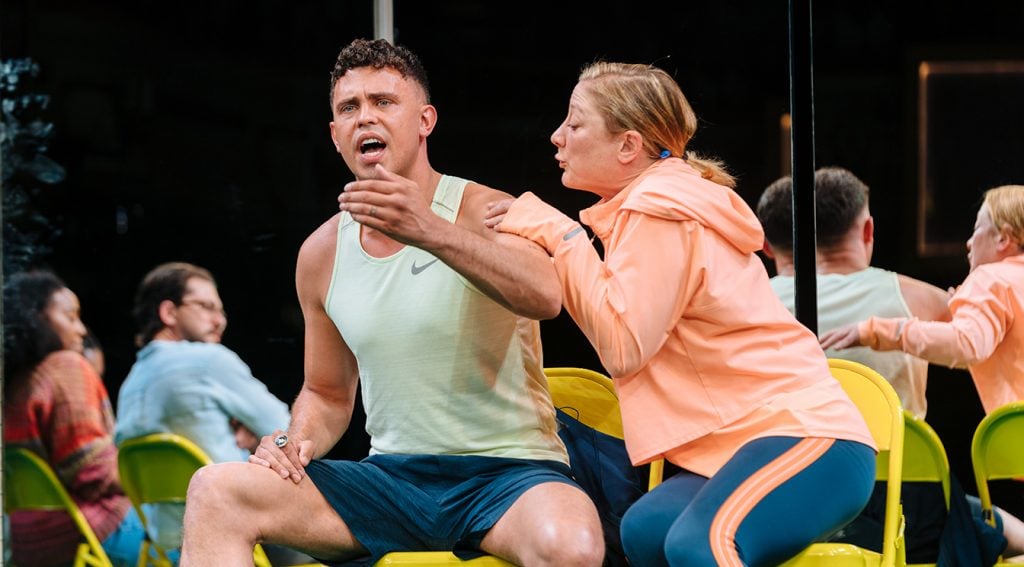
Slave Play is long and just a little slow. While Robert O’Hara’s direction is focused, and the acting riveting, the structure is laboured. There are three mixed race couples, each acting out role plays with overtly racist themes. It’s fun to see the fantasies slip (Aaron Heffernan and Annie McNamara do especially well with this), and to see how ideas about eroticism vary and move from awkward to traumatic. Trouble is, we get it in triplicate.

slave-play-Irene Sofia Lucio-Fisayo-Akinade-Chalia-La-Tour-James- Cusati-Moyer
Irene Sofia Lucio, Fisayo, Chalia La Tour and James Cusati-Moyer

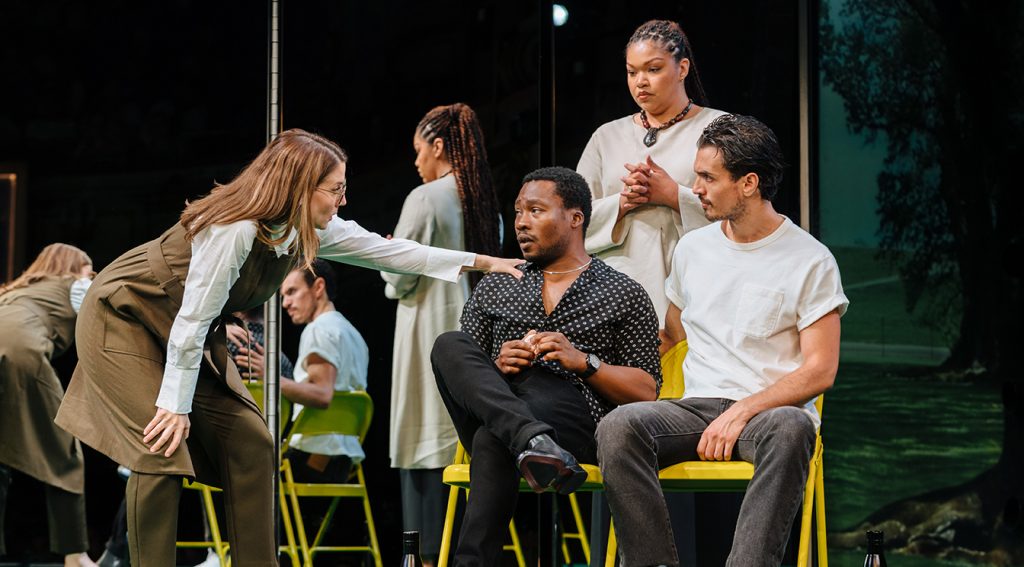
It turns out all six are enacting ‘Antebellum Sexual Performance Therapy’ and they are being supervised! It’s a great twist. But as we are introduced to a fourth couple, researching how race affects relationships, everyone has an awful lot to say. Chalia La Tour and Irene Sofia Lucio play these roles broadly and are very funny. But as all the characters fight against anhedonia and alexithymia, the satire is blunt. And it isn’t a surprise when one couple, played brilliantly by Fisayo Akinade and James Cusati-Moyer (who get tears as well as laughs), end up splitting up. Harris allows us to be sceptical with skill, but makes the audience work hard.

slave-play-kit-harrington-and-olivia-washington
Olivia Washington and Kit Harrington

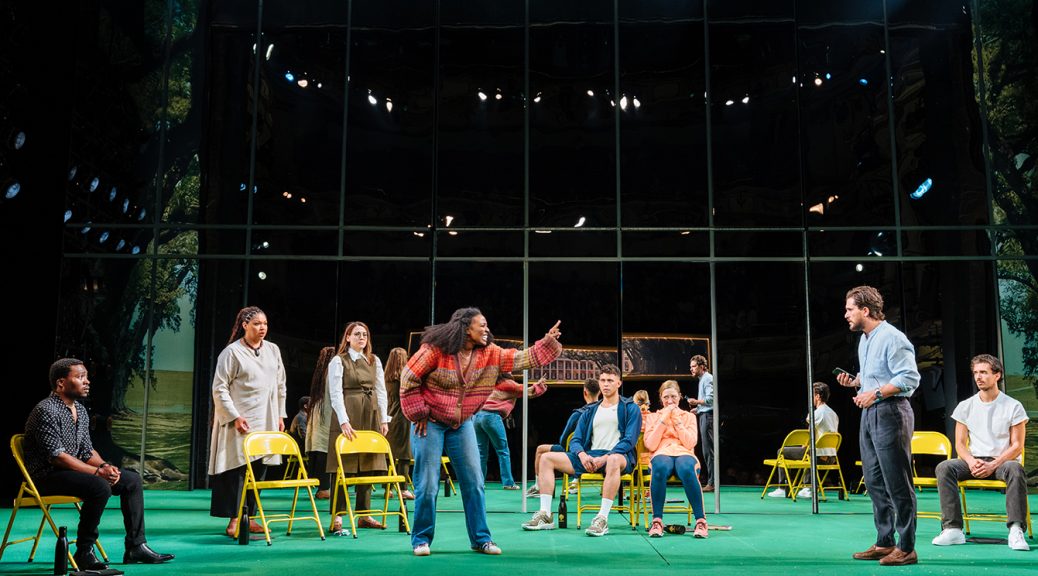
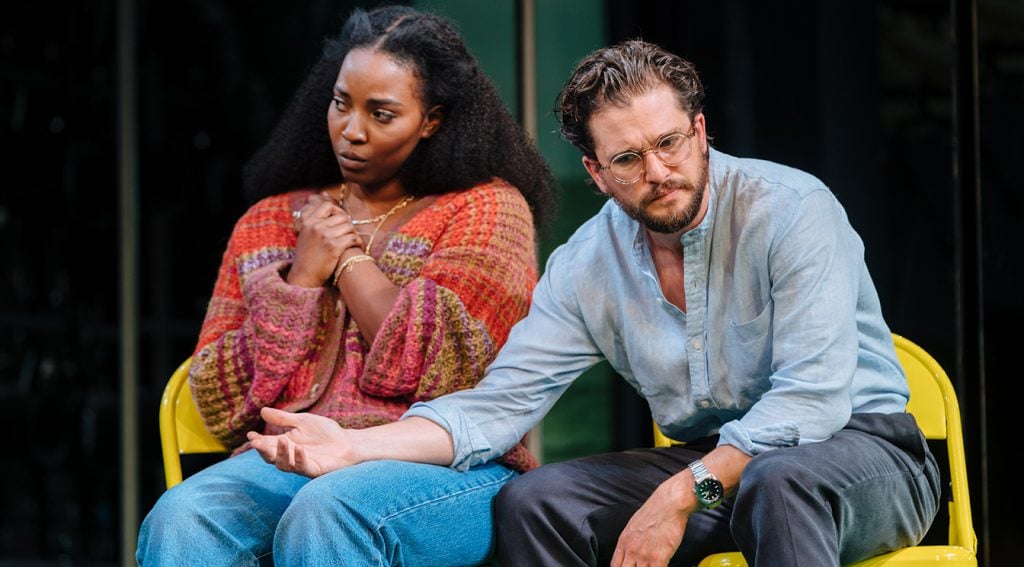
Turns out our focus is the final couple: Kaneisha and her British husband Jim, played by Olivia Washington and Kit Harington. The latter might have a little too much to do, although Harington’s performance is commendable. Jim is the most reluctant to engage in everything going on, taking particular objection to the term “process”, yet he is not quite complex enough to convince. But this final scene is extremely powerful, almost a monologue for Washington, and brilliantly delivered, with Harington nude for a long time. It brings a lot of clarity to the project – with the need to be listened to the important takeaway.

While the “raw and nasty” of this therapy is relative, and the middle-class milieu is well observed, any resolution seems slight. None of the characters is a monster, but they do all seem entitled. And there’s a lot of OCD – the fascinating idea that music triggers the characters leads to the production’s startling sound design and brilliant work from Lindsay Jones. I just wonder if they don’t all come across as a bit barmy? Maybe the potential to dismiss their pain is the play’s challenge?

While valid and important, how interesting somebody else’s therapy is might be a problem, especially if you are being served three doses of it. It seems obvious that Harris wants to make a wider point. That’ll be the reason for a cross-section of couples. What you get from such a lot of material depends on your own circumstances. It will be interesting to see how the play is received in the UK, and by people better qualified than I. But with so much to listen to, Slave Play should do well as a conversation piece… Maybe it really is the process that counts.

Until 21 September 2024

www.slaveplaylondon.com

Photos by Helen Murray

“Skeleton Crew” at the Donmar Warehouse

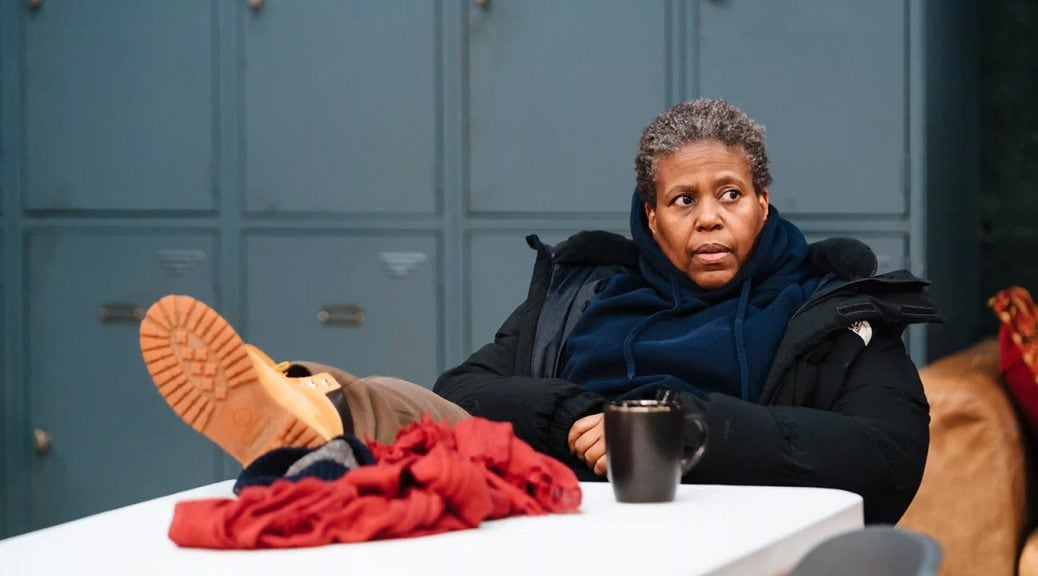
Marking the end of Michael Longhurst’s excellent tenure as artistic director, this UK première of Dominique Morisseau’s play is classy in two senses. The production is of the highest quality – director Matthew Xia is justly confident with the terrific script as well as his talented cast. And the subject matter might be said to be class – Skeleton Crew is a specific study of blue-collar workers in Detroit that is detailed, intelligent and moving.

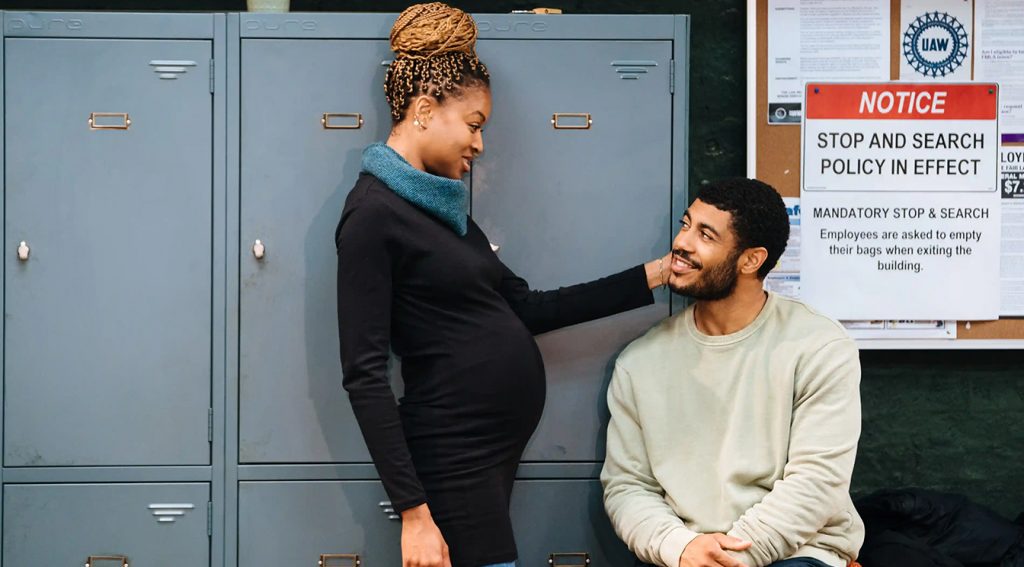
The factory breakroom setting, with dramatic lighting and sound design (from Ciarán Cunningham and Nicola T Chang respectively), is an efficient forum for debates about unionism and moral dilemmas. As redundancy approaches for the characters, with the factory downsizing to the titular staffing levels, this working world might remind you of plays by Arthur Miller or Lynn Nottage, but Morisseau has her own voice – with plenty to say.

It is with its characters that Skeleton Crew excels. There are four heroes here – Dez, Faye, Reggie and Shanita – complex figures who are all magnificent creations. Although they present different approaches, with plenty of argument, none feels like a mouthpiece.

Skeleton-Crew-at-the-Donmar-Warehouse-2-credit-Helen-Murray
Racheal Ofori and Branden Cook

Dez is struggling to set up his own business, his desperation leading to a brilliant plot point, while Shanita is pregnant, a literally growing cause for concern. In the roles, Branden Cook (an astonishing professional debut) and Racheal Ofori stand out, brilliantly revealing their characters’ complexities, making us care about them and adding wit. Reggie, the supervisor who knows first that the plant is closing, is a fantastic study in stress from Tobi Bamtefa, with a visceral performance full of fear, anger and confusion. The trio are figures of great dignity – proud about work, with a sense of purpose from productivity. And I haven’t yet mentioned Faye.

Long-serving union rep, friend and mentor to Reggie, Faye is the linchpin of the play. It is to the credit of all that she does not dominate the show. This could well be a career defining role for Pamela Nomvete, who gives a performance marked by clarity as well as power. Faye’s no-nonsense views and her care for others guide her colleagues – and the audience. But the character has problems, with a twist that brought tears to my eyes. Faye is not a victim – her insistence on this will give you goosebumps. But we are allowed to question whether that praiseworthy pride might also be damaging.

Morisseau can escalate tension with the best of them. But there’s also an interesting take on understatement that Xia is careful to preserve. Anti-climax is mentioned by Shanita, whose dreams (beautifully recounted by Ofori) add melancholic touches, while dramatic moments are curtailed for the sake of realism. And note that Faye doesn’t want Reggie to “write a happy ending” for her. There’s nothing twee in Skeleton Crew. Its power comes from how convincing it is. But how much I hope the future goes well for all its characters indicates how strong the piece is.

Until 24 August 2024

www.donmarwarehouse.com

Photos by Helen Murray

“Mean Girls” at the Savoy Theatre

Comedy great Tina Fey’s famous project is long-lived: a film in 2004, then a musical, then another film, and now the show finally arriving in London. A lot of time and care has been taken over every aspect of this polished project. And there’s a lot of praise to give, not least to Fey’s own book for the show.

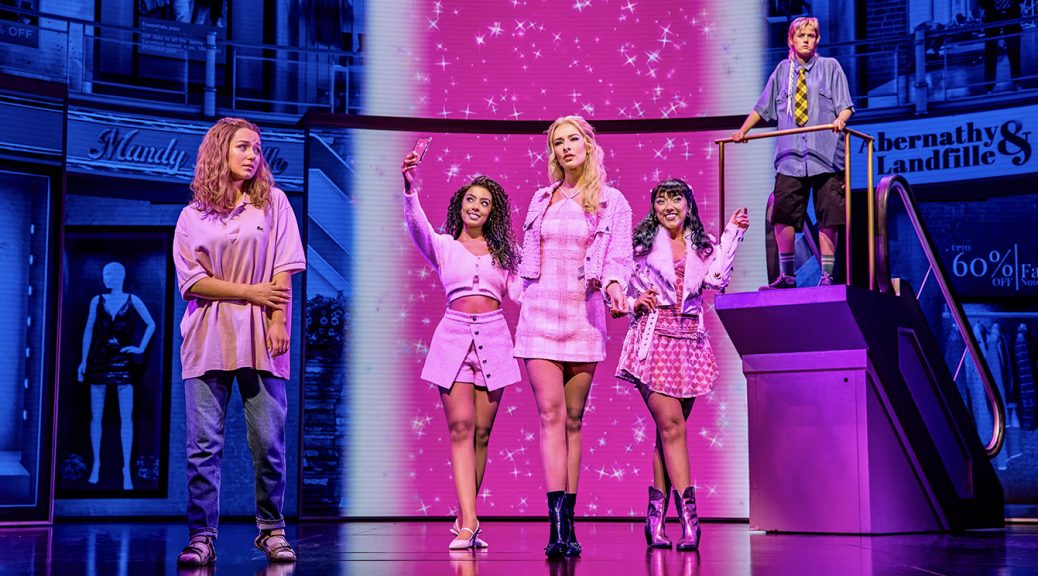
As everyone attending knows, this is the story of Cady, who moves from Africa to America, meeting then defeating the schools ‘Plastics’ clique, while secretly befriending then betraying her less popular friends. The knowing tone of Mean Girls makes the school drama funny; it’s a satire of a coming-of-age show and, after so long, kind of a satire of itself. If it’s hard to fall for how nice or how nasty everyone is, the show has lots of fun with the idea of teen troubles.

The humour is ribald, approaching edgy, but there are healthy and wholesome messages. Cady’s friends Janis and Damian have expanded roles, making charismatic narrators with plenty of good lines. They oversee the telling of this “cautionary tale” and Janis gets the show’s best song. They are great roles for Elena Skye and Tom Xander who end up, almost, stealing the show. 

Elena-Skye, Tom Xander-and Charlie Burn in Mean Girls
Elena-Skye, Tom Xander-and Charlie Burn

It isn’t quite clear if we’re in 2004 or the present day (there probably aren’t enough mobile phones) and it’s hard not to wonder if pointing out changes since the movie might have been interesting. Is it me or do Gen Z just seem… nicer? But Fey’s updating is light, a politic move, and that’s not what’s on offer. Instead, this is very much the movie on stage, albeit with catchy songs and great lyrics.

The music by Jeff Richmond is, appropriately, high drama. It’s a nice surprise that the score isn’t just pop songs – I couldn’t help thinking of James Bond themes! It’s fun and varied if maybe not particularly memorable. Nell Benjamin’s lyrics, from smart to just silly (“like a lioness with less fur” really tickled me) are consistently impressive. Extra marks for getting maths involved! Casey Nicholaw’s choreography, with school desks and benches galore, is, like his direction, full of invention and detail.

Unfortunately, the show is a little stronger than the performances on offer – some of the lyrics are hard to hear (a real shame). And while the characters are called iconic, they come across bland, despite the efforts of Georgina Castle, Elèna Gyasi, and Charlie Burn. Only Grace Mouat stands out through strong comic skills. It’s hard to say how much impact this has. We hear all the famous lines, and the show has plenty of happy customers. There’s so little to complain about with Mean Girls, it’s impossible to be nasty about it.

Booking until February 2025

www.london.meangirlsmusical.com

Photos by Brinkhoff & Moegenburg

“Your Lie in April” at the Harold Pinter Theatre

Another adaptation of a Japanese hit has arrived in London, this time based on the eponymous manga series by Naoshi Arakawa. This musical version shares the aim and, arguably, the weakness of a concert production called Death Note from much of the same creative team – the show focuses on fans. Such admirers are numerous, and good luck to them, but other audience members might struggle.

Like a lot of coming-of-age romances, Your Lie in April is unashamedly intense. The book (by Riko Sakaguchi and then Rine B.Groff) is efficient. There’s big drama, with tragedy (I heard a lot of sniffling) and love triangles; all exacerbated by the pressure that these youngsters are training as musicians. Just how repressed the kids feel, might raise eyebrows depending on your age. But there’s a lot for the cast to work with and work hard they unquestionably do.

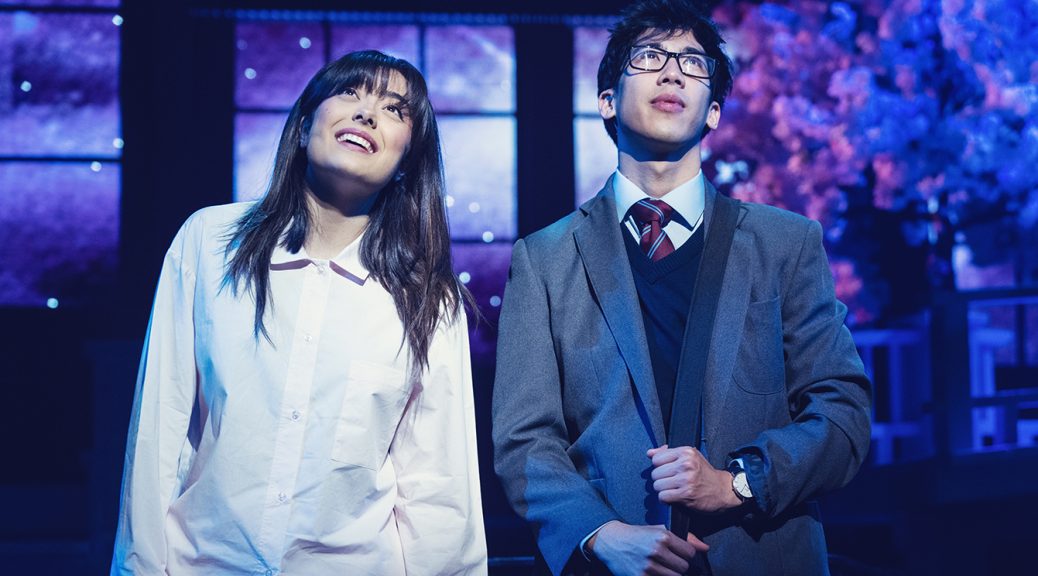
Zheng Xi Yong takes the lead as musical prodigy Kōsei, the “Piano King” grieving for his domineering mother (whose ghost pops up rather too often) and on a journey of self-discovery. Every song is given its all, the performer seemed genuinely overwhelmed by the end of the night. Kaori is the love interest, a rebellious violinist who wants to duet with Kōsei, but who has a sad secret. The character is flat but Mia Kobayashi, who takes the part, makes her feisty and even has a stab at adding humour. Best of all, Kobayashi has a beautiful voice – this is a superb professional debut. If the chemistry between Kōsei and Kaori isn’t great, that’s OK…we’re supposed to find them an odd couple. Their friends are less successful, their stories only foils, and the roles a waste of Rachel Clare Chan and Dean John-Wilson.

There’s a bigger problem though. The lyrics, from Tracy Miller and Carly Robyn Green, are not good: sometimes nonsensical, full of clichés and repetitious. Some of the issue comes from the relentless aim to inspire – it’s all lifting, climbing, flying, while pages are turned and characters “break out”. But nearly every line is predictable, and some are toe-curling: freedom is “really real” and “butterflies can fly”. The words make performances that should be a pleasure feel plodding.

The production is strong. Director Nick Winston keeps the action clear and quick, and makes a lot of effort to focus on emotion. There’s some excellent video design from Dan Light while the lighting, from Rory Beaton, adds a great deal. Musical contests, which structure the plot, make it easy to include the audience – the applause we add is deserved – but such moments are nonetheless highlights. If the classical pieces might be made more of within Frank Wildhorn’s score, the music offered is good; many of the songs are catchy, and a conscientious effort is made to bring in variety.

The music is professional more than inspiring though. There’s an irony here, as the story itself reflects a problem for the show. What Kōsei learns from Koari is that music is about connection rather than perfection. What drives her is the chance to “live in people’s hearts” while a stress on technique has led to disaster – Kōsei literally can’t hear the music anymore. Regardless of how sentimental or neat the idea is, the precision everyone sings long and loud about is ever present. Such polish is an achievement and provides enjoyment. But it lacks a spark, a quirk…something special. Your Lie in April could learn a lot from its own message.

Until 21 September 2024

www.yourlieinapril.co.uk

Photo by Craig Sugden