Category Archives: Uncategorised

“Coriolanus” at the National Theatre 

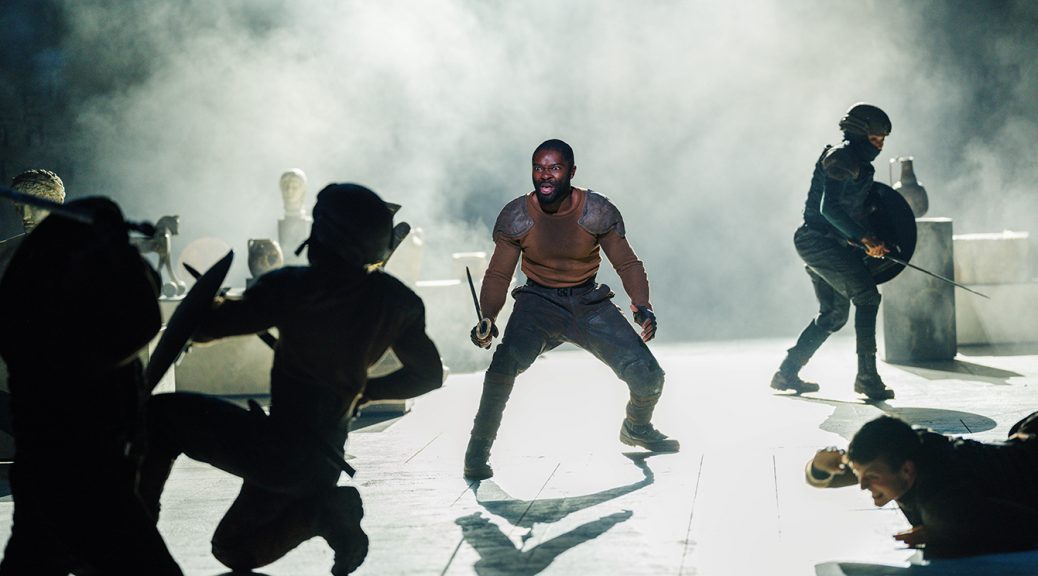
Clear, sensible ideas drive Lindsey Turner’s new production. Giving Shakespeare’s Roman history play an epic feel is natural enough and is achieved with style through impressive music (Angus MacRae) and design. Part of the latter, by Es Devlin, is a stage full of Hellenistic art, displayed as if in a museum, and through these objects the production comments on the dangers of glorifying militarism.

When it comes to the titular hero, Turner is carefully noncommittal and her leading man, David Oyelowo, keeps us guessing. We’re supposed to admire Coriolanus, yes? Plenty do, even though he is, literally, revolting. As the play moves between the military and civic spheres, Oyelowo gets as much complexity out of the role as is possible. It is a commanding performance.

Pamela-Nomvete-in-Coriolanus-at-the-National-Theatre-credit-Misan-Harriman
Pamela Nomvete

The military scenes are strongest – the fighting exciting – showing this martial culture superbly. Cominius, the general who delivers many a panegyric about his mate, becomes a major role through Sam Hazeldine’s skill. And let’s include the mum here! Pamela Nomvete, one of my favourite actors, is excellent as Volumnia. Her exaggerations about honour and glory raise a laugh nowadays, but Nomvete’s brilliant performance makes them sincere, taking us into the world of the play.

Showing us politics is less successful, although the action is swift and easy to follow. Maybe one problem is that the “many headed multitude” seems short on the ground (odd, since that isn’t the impression with battle scenes). The costumes are a bit of a puzzle, giving the plebeian Brutus and Sicinius (well performed by Jordan Metcalfe and Stephanie Street) an odd 1970s TUC air. Their political opponent also comes off badly, Peter Forbes’ Menenius is a comic-book toff whose wit tires rather than entertains. To be fair, it’s hard to get much subtlety here. The play takes its lead from Coriolanus’ own view that people are either “crows” or “eagles”. At least Turner doesn’t show favourites.

The political scenes are supposed to be uncomfortable – how the mob is manipulated is a warning. But the production is lucky it has Oyelowo to fall back on. He does a great job of balancing his character’s contempt with a dignity that comes from following his principles. We are allowed to wonder if Coriolanus is trapped in his sense of himself. Has being named after the city he conquered gone to his head? Is he one of those men said to be a victim of toxicity? That’s a tough sell, if an interesting one. But in the end, Coriolanus himself is presented as one of those statues – the kind of fallen warrior who was never a Roman and who was, ironically, usually nameless.

Until 9 November 2024

www.nationaltheatre.org.uk

Photos by Misan Harriman

“A Face in the Crowd” at the Young Vic

This new musical boasts lots of talent – that delivers – but, regrettably, fails to excite. The excellent Kwame Kwei-Armah directs an incredible cast with a book by Sarah Ruhl and music and lyrics by superstar Elvis Costello. Naturally, expectations are high, and everyone does a great job, but the show is effortful rather than inspired.

Having a film in the background might not help, although Ruhl has adapted Budd Schulberg’s book as well as the screenplay that Elia Kazan used. But that was back in 1957, and the story has dated badly. The larger-than-life character of ‘Lonesome Rhodes’, one time down-and-out, then a TV star who tries to get into politics, sounds as if it has potential, but falls flat. Truth has proved stranger than fiction and a plot that should be fantastical feels old hat.

The action is admirably swift. Although Lonesome’s rise and fall is quick, Rhul and Kwei-Armah examine his psychology thoroughly. There’s a sense of outrage as we move from folksy philosophy to sinister popularism. And the character is intriguing, if predictably hypocritical: viewed by his fans as a mix of Jesus Christ and Santa Claus, he’s big on the state of Arkansas and the state of matrimony. But if the jokes don’t make you laugh out loud, I’d suggest the same problem – none of it is as crazy as real life.

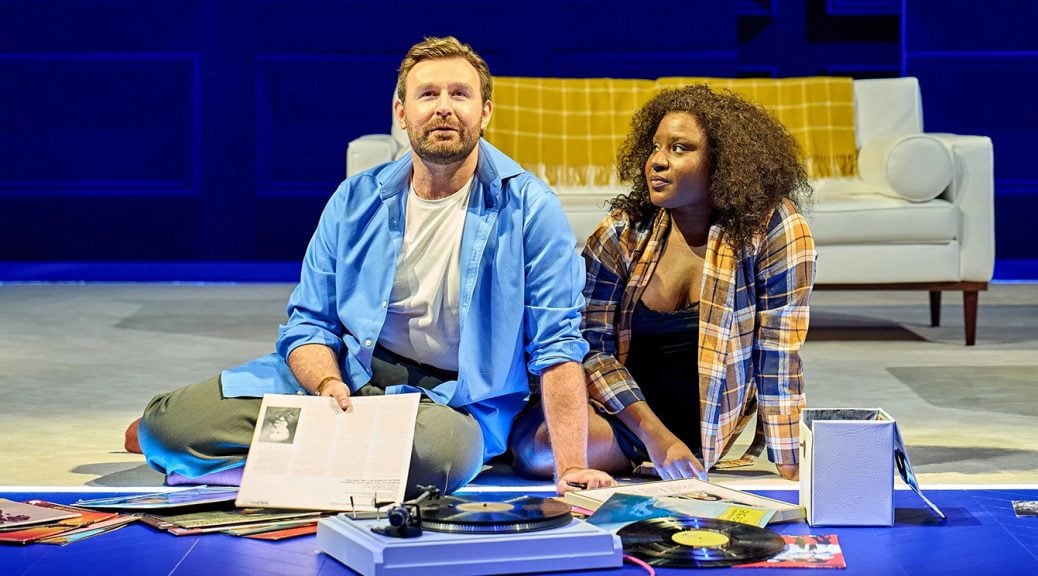
Anoushka Lucas and Olly Dobson in 'A Face In The Crowd'
Anoushka Lucas and Olly Dobson

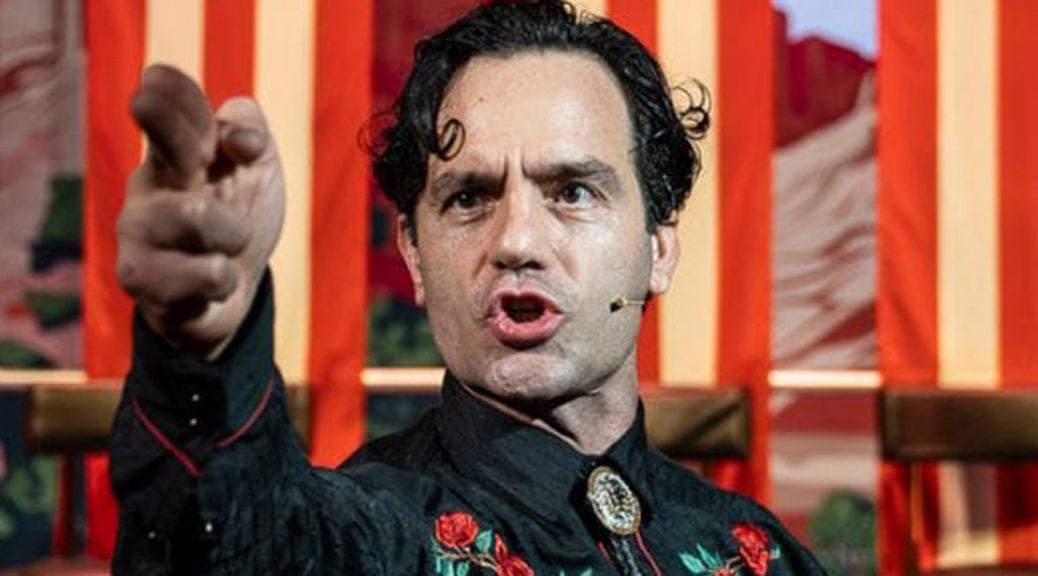
Lonesome is at least a great role for Ramin Karimloo, who sounds fantastic. There’s superb support for him, too. Firstly, from Anoushka Lucas, a radio producer called Marcia who discovers Lonesome and might, almost, steal the show. Marcia gets the best numbers, which Lucas performs beautifully. Her attraction to her protégé might be given more time but a second love interest for her character (played by Olly Dobson) does well – neither character is simply a foil.

The cast could be bigger and the choreography (Lizzi Gee) more ambitious. But Elvis Costello’s music – pure Americana – will please many. Some of the songs are superb, especially the title number, and the mix of country and jazz is intelligent. It’s a shame the ensemble doesn’t sing together more. And that the advertising jingles are such predictable interludes. If the score doesn’t work quite like a musical, it sounds different and I’m sure a soundtrack would sell.

Still, the show is hard to recommend. Even if Lonesome as a kind of early influencer interests you, the piece doesn’t situate itself well in history. It’s never quite clear what year we are in (and the costume design doesn’t help). But the biggest problem is that the satire is just too tame. And although Karimloo has charisma, his character’s popularity doesn’t convince. It is too easy to explain the confluence of politics and entertainment with ignorance. There is a danger the show becomes as contemptuous of the public as Lonesome is… and that suggestion loses my vote.

Until 9 November 2024

www.youngvic.org

Photos by Ellie Kurttz

“The Truth About Harry Beck” at London Transport Museum

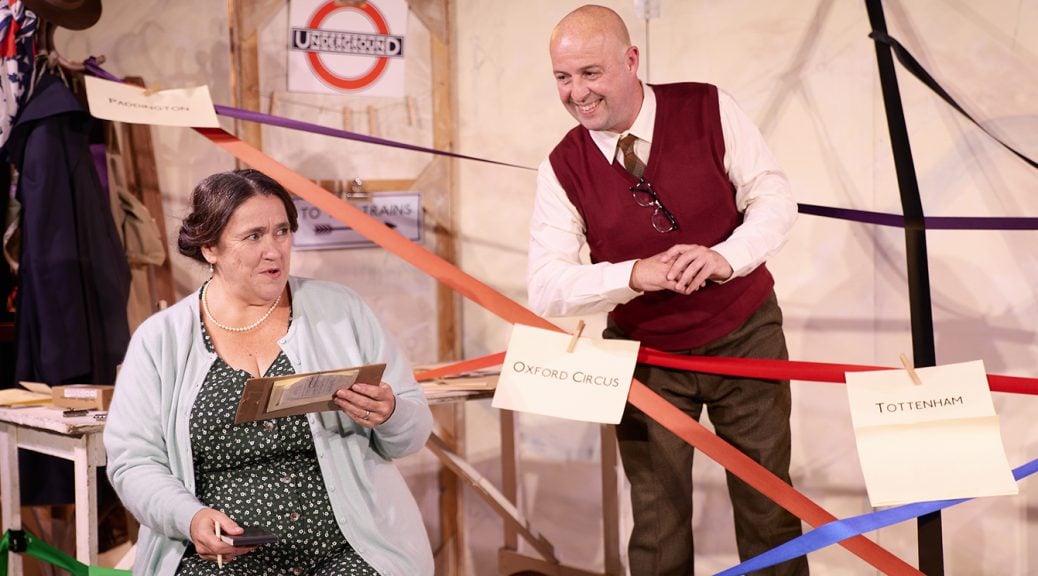
Writer and director Andy Burden is open about the lack of dramatic potential in his subject. The man who drew the London Underground map – or rather, diagram – had a “simple” life and didn’t do much. Harry and his wife, Nora, tell us this from the start and, with such charm and modesty, they are immediately appealing. Burden and his two excellent performers make sure our affection for the couple only grows.

The Becks also reveal that not much is known about their quiet life, so some artistic licence is taken (in itself showing how unsung and unrewarded Harry was). While the play has three moments of “rejection” to give it structure, this is a bit of a red herring. What’s really going on is a romance. The Truth About Harry Beck is the story of a marriage as much as a map (sorry, diagram). 

A lot of the show’s success is down to the adorable Becks. Burden knows his audience are likely to be keen on transport and design, so Harry’s obsession has a head start. Even so, Nora is a little too long-suffering to be believed. There’s a reliance on nostalgia, with everyone being very polite and restrained. And the couple’s shared love of inventions is too repetitious a method of showing the passage of time. But their marriage is so sweet that it’s a pleasure to watch, and the enthusiasm for Beck’s work is contagious.

There are jokes in the play, even if they aren’t really that good (some of the puns are terrible). But the humour is so gentle that it has its own appeal. And the whole piece is held together by accomplished performances from Ashley Christmas and Simon Snashall. Both are natural comics – Snashall makes Beck quirkily endearing with an ability to show snatches of tension that might derail (sorry) the general tone. Christmas has several accents down to perfection and has great fun taking on other roles.

Beck’s work was such a success that an audience has to be reminded how revolutionary it was, and this is a big ask. The Natural Theatre Company, which presents the show, specialises in working with educational projects and its skill shows – a scene using ribbons to explain Beck’s ideas is excellent. A lot of information is absorbed very painlessly. Best of all, though, there’s real heart here, which makes the play a surprise and a delight.

Until 10 November 2024

Click here for tickets

Photo by Mark Douet

“I Wish You Well” at the Criterion Theatre 

As an exercise in showing you really can make a musical about anything, Rick Pearson and Roger Dipper’s show excels. Taking Gwyneth Paltrow’s ski trial as a topic is one of those crazy notions that turns out to have plenty of potential (another company, Awkward Productions have their show, Gwyneth Goes Skiing, on tour until the end of the year). Pearson and Dipper’s ideas are good, their cast great, and if all the efforts end up a little thin, the show is still fun.

Of course, it’s really a show about celebrity, as Gwenny P’s presence at a small Utah Court creates a circus that Dipper’s book can exaggerate as much as he likes. The action might have been made clearer for those who didn’t follow the trial, but what goes on is swift enough – the show is only an hour – and Shiv Rabheru‘s direction effective.

The cast embrace the spirit of the show with plenty of mannered gestures and a good effort to engage the audience (predictably, we are the jury). Diana Vickers takes the role of Paltrow and is joined by Marc Antolin as her opponent in court. Tori Allen-Martin is the single lawyer (and fangirl) while Idriss Kargbo is judge and… drag queen (why not). The signing is strong and the choreography by Arlene Phillips a giggle, we even get the splits and a cartwheel.

Despite the effort from the cast, there isn’t quite enough to excite. The jokes aren’t bad, but you can see most of them coming a mile off. And there’s a lot of repetition, in particular about security on the internet and Paltrow’s lifestyle website (renamed Poop). Pearson’s music is competent but unexciting; take the riff on another courtroom musical Chicago, a good idea but one that goes on too long.

While the makeshift set and costumes have appeal, the production feels a little lost in the West End. It’s easier to imagine it as part of a big night out, with a drink or two before and after. The show is easy on celebrity, and our obsession with it, so there isn’t much satire. Being even-handed toward Paltrow and her opponent (who of course also wants fame) might be admirable but it doesn’t leave the show with far to go. Although I Wish You Well is enjoyable, there just isn’t much to it.

Until 12 October 2024

www.criterion-theatre.co.uk

“The Real Ones” at the Bush Theatre 

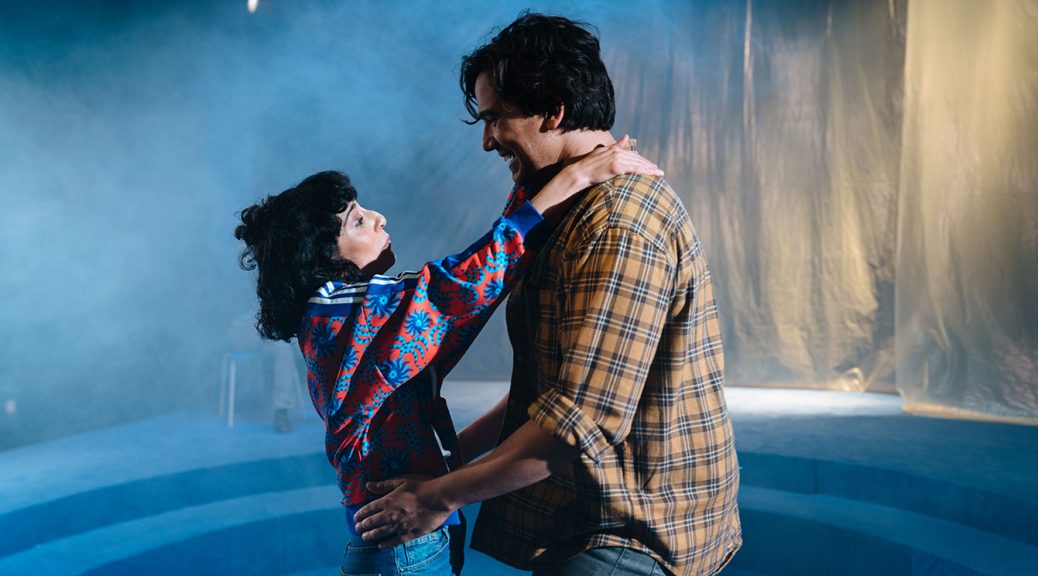
Waleed Akhtar’s carefully written and wonderfully performed play is about friendship, and its achievements come from its detail. As with this week’s new musical, Why Am I So Single?, the focus is on platonic love and the play is a coming-of-age piece… of sorts. The relationship between Zaid and Neelam, aspiring playwrights who are both Londoners with Pakistani backgrounds, is recounted in depth through teenage partying, career perils and romantic problems. If some moments feel overwrought, the play remains interesting, funny and heartfelt.

As a drug-fuelled nightclub outing for Zaid and Neelam punctuates the play (maybe a little too often) the characters age from 19 to 36. The specifics of their background, including class and location, and the pressure this puts on both their sexualities are impressively elaborated. With such rich material, Nathaniel Curtis and Mariam Haque do a superb job in the title roles. They are supported by boyfriends for both, further strong parts for Nnabiko Ejimofor and Anthony Howell.

Akhtar’s talent is clear. He writes about having young children just as well as being in an ‘open’ gay relationship. But the impression his characters leave is a little murkier. For my money, Neelam overpowers the show – her no-nonsense talking is admirable and Haque brings fantastic charisma to the role. Her story is more interesting and why she abandons her original ambition to be a writer might have been explored more. The treatment of Zaid seems harsher, his character at best immature and increasingly needy. Thankfully Curtis’ excellent comedy skills lighten matters. Director Anthony Simpson Pike’s work is strong throughout, and he is clever to allow the humour in the piece to shine.

There’s a lot of angst from Zaid, and a concomitant risk of compassion fatigue. I’ll admit it’s a pet hate of mine – writers complaining about writing don’t get a lot of sympathy from me. But even taking that into account, he’s an arrogant soul, too self-obsessed at times to be believable. Being truthful about what you write is the central point, with both young writers asked to raise “the stakes” to get their plays put on. Neelam doesn’t, but Zaid does… While Akhtar stays true to his vision, you might consider The Real Ones a small story. But therein lies its strength.

Until 19 October 2024

www.bushtheatre.co.uk

Photo by Helen Muray

“Why Am I So Single?” at the Garrick Theatre 

Given the massive success of their first musical, Six, anticipation surrounds Toby Marlow and Lucy Moss’s new show. Their story of Henry VIII’s wives performing a concert had a big concept driving it. Why Am I So Single? sounds simpler -just two friends chatting about their love lives and attempting to answer that titular question. But, as you might guess, there’s more going on with such a talented duo. The show is smart, funny and brilliant.

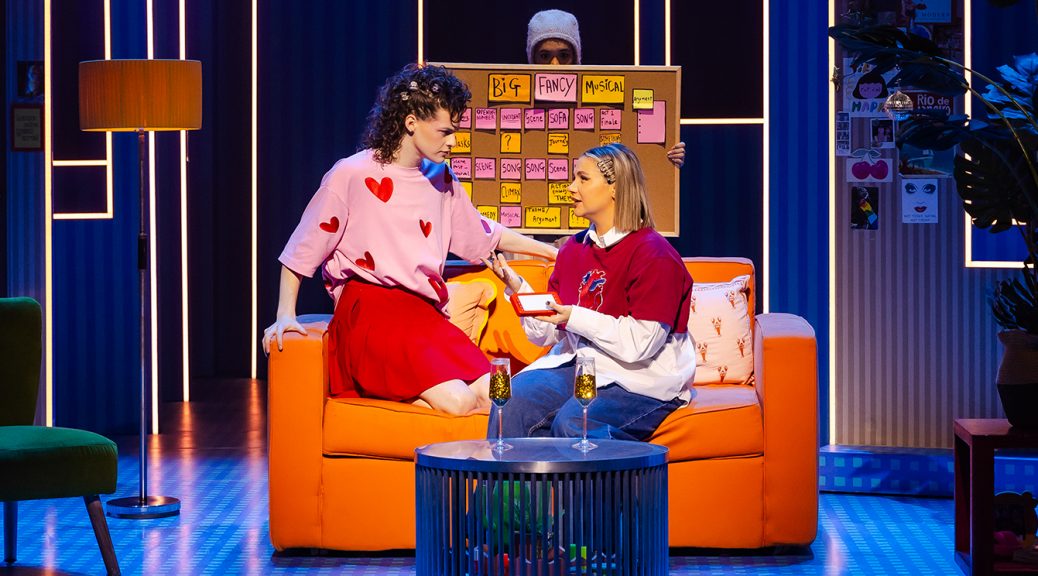
Our heroes (make no mistake, that’s what they are) Nancy and Oliver are stars. They’d concur that they might be “weird and intense”, but a combination of vulnerability, intelligence and wit makes them easy to spend time with. Excellent performances from Jo Foster and Leesa Tulley emphasise admirable qualities. It’s a safe bet most of us would want to join them, with wine, on the sofa the show is based around.

It just so happens Nancy and Oliver are musical theatre writers, working on a new show for this very theatre after a previous hit. Names have been changed to protect identities, so we’ve no idea who characters might be based on! There are a lot of in-jokes (Lionel Bart would be very happy) and they are all very funny. If the references and the metatheatricality are a turn-off, you might have a problem. But instead of the usual arty angst about writing a show, it’s clear Marlow and Moss love what they do, and that enthusiasm is exciting.

“A big fancy musical”

All this is entertaining and convivial, although it targets a youthful audience and going on dates is, dramatically, small stakes. But Why Am I So Single? aims to be “a big fancy musical”. How Marlow and Moss attempt that leap is fascinating. Most obviously, a great ensemble joins our couple, bringing ambitious choreography from Ellen Kane. Performing as household furniture (Max Johns’ costumes are a blast) as well as backing singers and dancers, there’s also a good friend, Arty (the excellent Noah Thomas), filling the stage with energy. It’s all a touch mad (including an accomplished song about a bee) but also, magically, feels grand.

WHY-AM-I-SO-SINGLE-inset-credit-Danny-Kaan

The songs are fantastic. The variety of styles show composers who know every trick in the book, and each number is a great example of writing for the theatre. All songs deserve praise, and several have twists with bite. And the lyrics are a joy, as plenty of swearing sits alongside erudition. Yes, there are bonus points for getting antihistamine and citronella into a song. But alongside laugh-out-loud lines, plenty bring a tear to the eye, stop you in your tracks and provoke thought.

It turns out the show is big and fancy because it has something important to say. We’ve seen modern dating on stage before, but seldom this funny, explored so deeply or with a non-binary character centre stage. But while Nancy and Oliver’s trials in the ‘Meet Market’ of dating apps is great… a further theme comes to the fore. Reassessing platonic relationships is the answer to the show’s question. This new focus on love – increasingly topical – is handled with a cleverness and sensitivity that makes Why Am I So Single? stand out. Marlow and Moss have done it again.

Booking until 13 February 2025

whyamisosingle.com

Photos by Danny Kaan

“The Real Thing’ at the Old Vic Theatre

This revival, from director Max Webster, of Tom Stoppard’s acclaimed 1982 play is hard to fault. The clever script is matched by a stylish production and intelligent performances. If there has to be some kind of balance between enthusing an audience and making them think, this show attains an equilibrium. It is easy to admire and enjoy The Real Thing, but perhaps harder to fall in love with it.

The play is Stoppard on love – explored through art, of course – and as you might expect the writer provides a lot that’s worth hearing. Since the characters are a playwright and a group of actors, he knows exactly how they should say it all. Webster matches the meta-theatricality in the script with stagehands joining in the action. Everything is smart and funny, entertaining and full of ideas.

That should, surely, be enough? What more could a poor playwright do? But since this is Stoppard, it is hard not to find it all a little… thin. Where’s the culture and history from plays such as Rock ’n’ Roll or Leopoldstadt? Writing so broadly is this playwright’s forte – and unusual gift. Of course, Stoppard can try something different. But – and it’s horribly unfair – The Real Thing just feels like a lot of arty poshos rambling on. 

“persuasive nonsense”

Dismissing Henry (the playwright) and his wives (Annie and Charlotte) is trebly mean as they – and Stoppard – try hard to avoid “persuasive nonsense”. They aim to be truthful, even if they hurt themselves as a result. By being aware of character flaws, the play contains its own critique (Stoppard’s preferred form of defence). But is Stoppard too unkind to his creations? Henry is particularly insufferable, almost challenging the audience to feel for him. 

One benefit from such carefully written characters is the potential they provide for performers. Webster’s exciting cast makes the most of them. Bel Powley’s Annie grows the most, from mercurial to mature, and it is a joy to watch this. Susan Wokoma is particularly funny, while maintaining a steely edge for Charlotte. Both have a lot of argument to get across and do it well. 

James McArdle and Bel Powey in The Real Thing at the Old Vic Theatre
James McArdle and Bel Powey

It is to the credit of all that James McArdle’s Henry is controlled and contained. McArdle finds the wit easy but also conveys the aloofness of the character and his genuine struggle for his art. But how pleasant is it to spend time with Henry? It is certainly hard to see why either woman bothers. We end up with three clearly blessed characters who all come too close to smug. 

The play becomes unbalanced, and secondary roles (all well performed) are lost. Younger characters suffer most but even Oliver Johnstone’s superb performance as Annie’s first husband, Max, feels a distant memory by the interval. Worse, the role of working-class writer Brodie (played by Jack Ambrose) is positively uncomfortable. Of course, it’s supposed to be – he is there to raise questions – but Stoppard doesn’t write straw men, and something has gone wrong here. Do folk talk more about privilege now than they used to? Maybe, but while this lot are aware of how lucky they are, Stoppard seems to have lacked prescience about how grating they would appear some 30 years on from when he wrote the play.

Until 26 October 2024

www.oldvictheatre.com

Photo by Manual Harlan

“Shifters” at the Duke of York’s Theatre

A lot of people are understandably excited about playwright Benedict Lombe. Shifters is only her second piece, a hit transfer from the Bush Theatre, and is a smart take on a romcom that deserves its big success. The production is a credit to director (and unerring talent spotter) Lynette Linton, as well as the two cast members – Heather Agyepong and Tosin Cole – who should get their mantlepieces ready for trophies.

It’s the story of Des and Dre and, as you might guess, the narrative… shifts: from schoolfriends to lovers to their breakup, and then meeting again after many years. But Shifters is also a memory play, so the action goes back and forth, flipping between that reunion and the couple’s history. Linton makes sure the toing and froing is clear (credit also to the excellent lighting design by Neil Austin), and Lombe uses the structure of her script thrillingly.

“Epic and easy”

The time travelling is great. And it gives rise to big questions. Lombe has things to say about the science of memory, and even first love, raising lots of issues about race, gender, psychology and communication. It helps that Des’s dad is a neuroscientist and that she is a visual artist. There is fresh thinking on tropes around romance – take the idea of soulmates or, rather, if you only have one, should that be sole mates? For each, Linton gives the audience time to think.

Both characters are thinkers, too. They met in debating class at school, and they appeal and excite as a result. That they are so well matched makes the show undeniably sweet, even if they end up apart. Their arguments are fun as well as profound. Nothing is heavy handed, although there are also serious events – Des and Dre have faced trauma. It is telling that Lombe’s skill makes deceased family members vivid characters. Overall, Shifters is marked by its optimism. It’s a relief to watch a play about two successful people! Even if their love didn’t work out, they have fulfilled big dreams.

Maybe their achievements help with the comedy in the piece – this is a very funny play. The repartee between Dre and Des is superb, Agyepong and Cole deliver every line perfectly and are a joy to watch. The swift changes in time, and mood, make the play a tough ask of its cast. Over the course of the years, their characters also shift. But that great sense of humour is the key. Even through heartache, Dre and Des can laugh together, and it proves impossible not to fall in love with them – and this play.

Until 12 October 2024

www.shifterstheplay.co.uk

Photo by Marc Brenner

“Utoya” at the Arcola Theatre

Italian writer Edoardo Erba’s play consists of three stories connected to Anders Behring Breivik’s 2011 terrorist attack in Norway. We have the parents of a child who has been sent to the titular island, police nearby who hear about the attack, and Breivik’s neighbours, who happen to be siblings. The approaches are uneven, despite clear and disciplined direction from Sarah Stacey, but the writing and performances are admirably sensitive.

A lot of ground is covered. In each case, relationships before the tragic events of 22 July impact reactions. If that sounds like an obvious point for Erba to make, it is made with conviction and insight. But the background isn’t always useful. The frustrations of a marriage are finely detailed but might try your patience. The fractious relationship between police colleagues is a touch unbelievable (although dramatically effectively). Finally, the health problems of a woman who lives with her brother fall flat. Indeed, this couple, who speculate about their new neighbour, come across as odd and confusing. 

Erba works hard to bring in bigger questions. There is discussion about the socialist nature of the camp on Utoya (which might need elaboration for an English audience). A lot about racism seems more relevant and is dropped into the scenes smartly. And there’s plenty of misogyny which, although believable, needs to be explored more. The suggestion that there is a connection between hating women and Breivik’s militarism needs elaboration. Sensationalism is avoided – an important achievement given the subject matter.

As a demanding work, even if it doesn’t quite gel, Utoya is an excellent showcase for the skills of its cast, Kate Reid and Marco Young. Taking on all six roles, along with the problems of each character, means the performances also have highs and lows. I found their depictions of the police the best, those of the siblings, not surprisingly, a little lost. But they are consistently careful, their skill and effort top notch. Along with Stacey’s direction, every moment of the play is treated with respect and the result is a credit to all.

Until 31 August 2024

www.arcolatheatre.com

Photo by Mariano Gobbi

“Northbound Boy” at the King’s Head Theatre

James Hogan’s play is, regrettably, confused and inadvertently full of inconsistencies. While there’s no reason a script can’t tackle a lot with humour or crossing genres, Northbound Boy has too much thrown into it and the result is messy. Alex Jackson’s competent direction cannot save the show, and the characters are so poor that two out of the three cast members are left floundering.

The play is some kind of romance, as Ken picks up a young hitchhiker called Rory. Their affair, at first transactional, fails to convince, and the ending is just silly. It’s a puzzle as to how provocative we are supposed to find it all. There’s an interesting question struggling to get out: is it the age gap that potentially offends us, or is it the difference in power? Possibly to counter this, efforts are made to make Ken appear weak. He is currently suspended from his job, estranged from his family, paranoid and neurotic. How much of a catch this makes him I won’t say. But his complex situation engenders little.

Back at Ken’s house, ‘themes’ come thick and fast – it seems the play is a family drama. There’s a lot about age again and fathers in general, along with legacy and even the suggestion of ghosts. Oh, and forgiveness is mentioned more than once. There’s also the homophobia Ken has suffered alongside many a modern ill. As Ken “rants” on, little time is given to what Rory, or an audience, might make of it all. A third character, an aunt, is introduced and then wasted. There’s no increase in drama or much of an alternative perspective. Sarah Moyle, who takes the part, gives it a great go, but the character is lost. Hogan gives us three generations, tries to do too much and ends up achieving little.

Given the ground covered, the pace is far too slow, which causes problems when we consider that the show is billed as a comedy. Ken is clearly supposed to be funny, but his wit is long-winded. And Neil Ashton’s delivery does not help. In fairness, there’s only so fast anyone can speak, so I’m not surprised there were stumbles. Hogan needs an editor (a puzzle given his background in publishing), and a ruthless one at that. And Ashton is hampered by Ken being so unbelievable. Despite being a police officer, he is shockingly naïve and incapable of dealing with Rory’s substance abuse (yes, that’s thrown in, too). This is the least convincing copper I’ve seen since…no, sorry… I can’t think of one. And his vocabulary is downright odd. Who googles the word “geek” and calls people a “rascal”?

Coming to the rascal in question, Northbound Boy marks a professional stage debut for Cormac Hyde-Corrin. Despite the role being no better written, Hyde-Corrin seems more comfortable on stage than his colleagues and acquits himself well. There’s a motif about Psycho and Anthony Perkins that Hyde-Corrin does well with, and he makes Rory’s flirting interesting, bringing out touches of sensitivity amid convincing bluster. You don’t feel sorry or threatened by Rory, but both are possibilities and provide much needed intrigue to a flat script full of mistaken efforts.

Until 1 September 2024

www.kingsheadtheatre.com

Photo by Charles Flint