All posts by Edward Lukes

“Jesus Hopped the ‘A’ Train” at the Young Vic

Prison dramas are pretty much a genre in their own right and this play from the year 2000 by Stephen Adly Guirgis must rank as one of the best. Tackling faith and justice, it’s a big issues piece with brains that leaves you with plenty to think about. It’s also full of compelling stories with a great plot. Entertaining and intelligent, what’s not to admire?

Guirgis writes the most wonderful roles and dialogue. Still, in presenting a debate, no matter how smart, each part could become a mere mouthpiece. With the help of a strong cast and expert direction from Kate Hewitt, every character is compelling and believable.

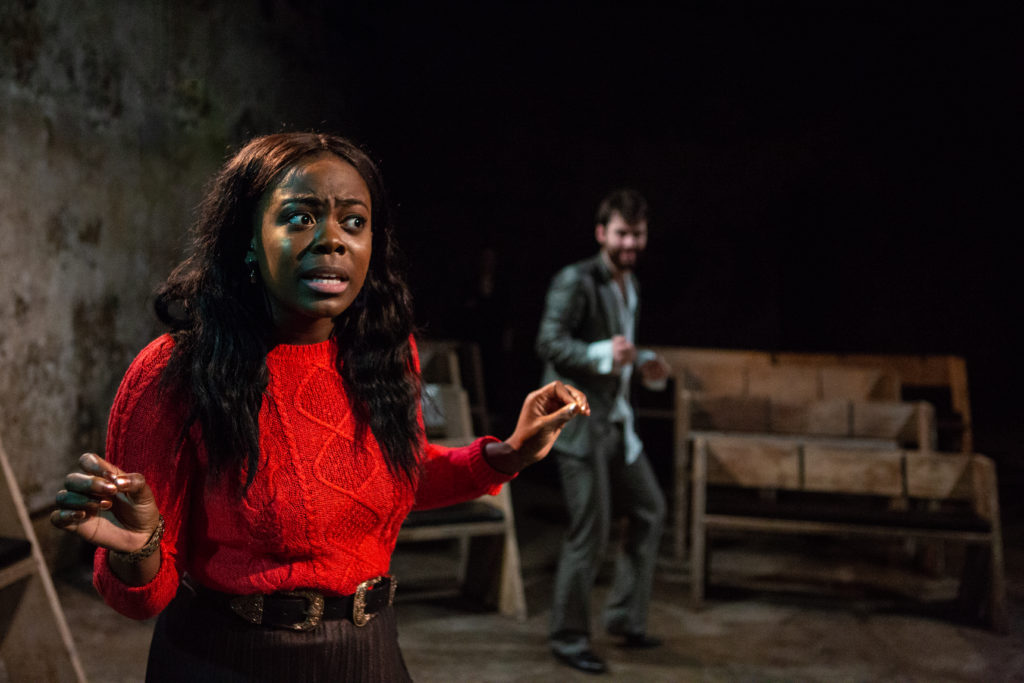
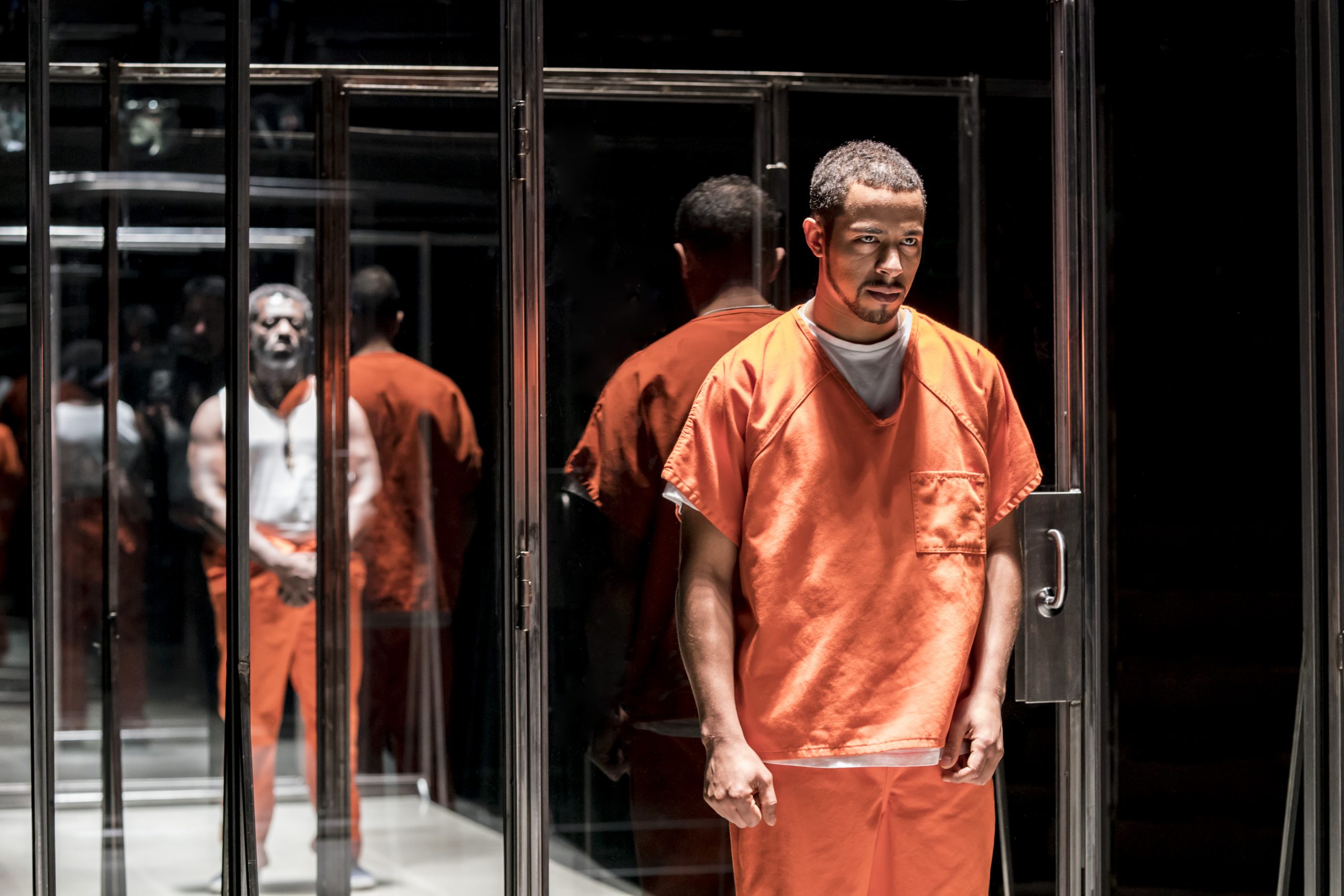
Ukweli Roach and Oberon KA Adjepong perform as two convicts thrown together during the one hour outside their cells allowed to them. It’s a simple enough device, but the detail provided by Guirgis is used to great effect by both men. Roach gives an emotional performance as the young Angel Cruz that shows the strain of incarceration gradually and wins sympathy carefully. As Lucius, you might guess that Adjepong gets the best lines, but the combination of charm and mania with which they are delivered is magnificent.
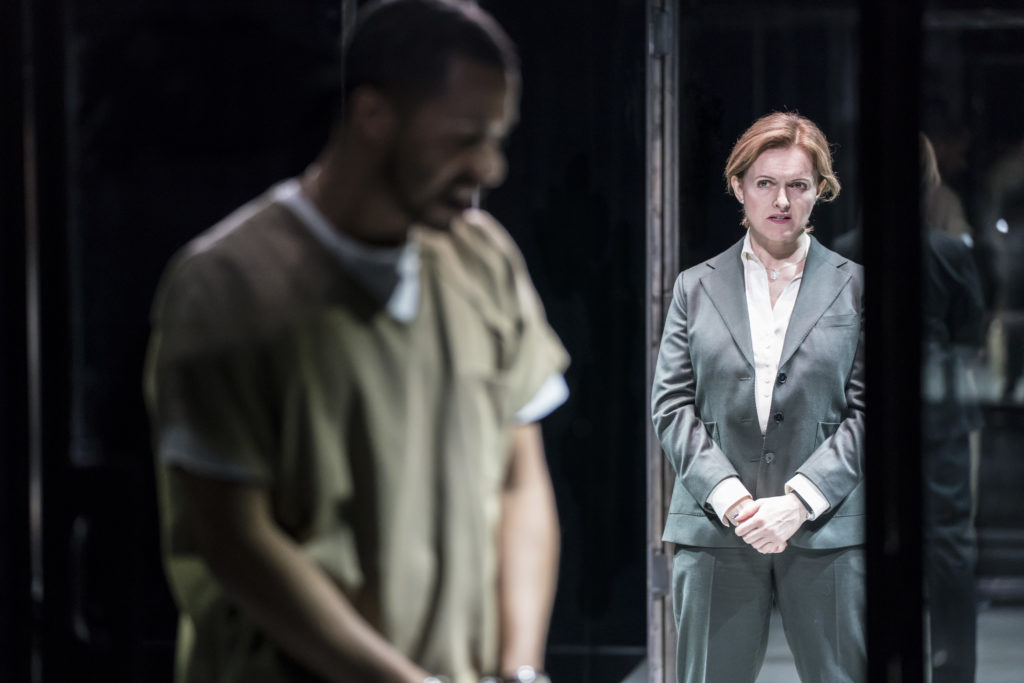
Unwell Roach and Dervla Kirwan

On the other side of the “cage”, Dervla Kirwan gives a great performance as Angel’s lawyer, driving the plot with excellent story-telling skills. The prison guards, played by Matthew Douglas and Joplin Sibtain, present moral ambiguities in a way that feels natural, respectively relating to the criminals in a personal and psychopathically macro level. These three, presumably the characters we are supposed to identify with most, pose provoking challenges to the audience.

Guirgis presents a fallible justice system and religious questions while avoiding the quagmires of moral relativism or scepticism, which means we can get some real-world thinking done! Any revival of a play this good is worth checking out. Hewitt’s production is certainly stylish. In a sense, she works harder than she has to. Using bright lights and discordant jazz in between scenes proves wearying and the set from Magda Willi, while effective, is a little showy. But the most important job, namely understanding and doing justice to the text, is precise and impeccable throughout.

Until 30 March 2019

www.youngvic.org

Photos by Johan Persson

“Berberian Sound Studio” at the Donmar Warehouse

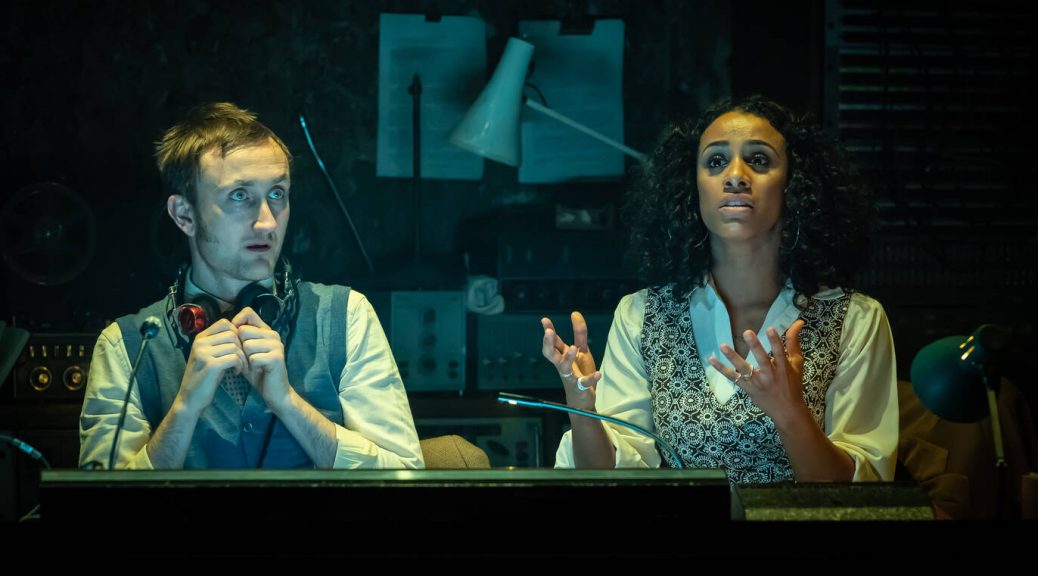
This must be the show of a lifetime for composers and sound designers Ben and Max Ringham. It follows a fictional sound engineer – the oddly named Gilderoy – who is working on an Italian horror film, and a claim might be made that sound is the subject matter for this whole show. Let’s be ringing, crystal clear that the Ringhams do a great job throughout. It is their night… but perhaps theirs alone.

A too thin plot fails to hold attention even at just over 90 minutes. As Gilderoy works behind the scenes to find a particularly horrible noise, and as his backstory is clumsily developed, there’s little tension and no surprises. Tom Brooke makes for a charismatic lead, doing well to restrain the hammy humour in the piece, but the character’s timid English manners are too caricatured, and contrasting his inhibitions with his continental colleagues becomes painful. As for the continually promised horror that’s played with, you’d have to be very timid to jump even once. While Gilderoy is searching for what frightens us most, his biggest fear is literally written above him in lights – no wonder the quest ends up dragging.

Weightier themes painfully forced into the play are the real terror here: Art and Ethics, screamed out loud. We get two sides of the debate, first from a voiceover actress offended by torture scenes. Eugenia Caruso does well and manages to craft a credible character here, but her points are pretty obvious. Then the auteur director himself comes in with a seductive defence. Credit to Luke Pasqualino, who has a good stab at making the part memorable, but the appearance is too brief and, by the time he arrives, it’s already obvious that the film being worked on is too awful to bother about.

Director Tom Scutt tries hard to raise the stakes. This show is clearly a pet project for him and writer Joel Horwood, who have brought Peter Strickland’s screenplay to the stage. As well as bells and whistles, Lee Curran’s lighting design includes complete blackouts (rarer than you’d think in the theatre). And there’s an effort at comedy with two assistants, both called Massimo (chortle), played by Tom Espiner and Hemi Yeroham, whose creation of the sound effects before our eyes proves a diversion. But restricting action to the booths that make up Scutt’s and Anna Yates’ design makes the show static, as surprisingly little of the stage is used. And placing the actresses’ booth in one corner of the stage is a big mistake – if you do bother to see the show, don’t sit stage right. Time and again it’s too clear that a film would be (and was) more effective. There’s a growing frustration that anyone bothered to stage the piece at all. Let’s hope that the Ringhams, at least, had fun.

Until 30 March 2019

www.donmarwarehouse.com

Photo by Marc Brenner

“Keith?’ at the Arcola Theatre

If there was ever a time ripe for lampooning, we’re living through it now. So thanks to Patrick Marmion for having a go with his new play. The effort isn’t an unquestionable success but there are some good jokes in this tale of a Dionysus of our day. As the god points out our problems, there’s satire and a touch of farce. You should laugh, even if it’s all too predictable to really lose yourself in.

The trouble is, if you set out to write a play that toyed with being risqué, it would probably end up like this one. There’s a startup millionaire turned hippy, his radical feminist ex-wife in trouble for transphobia and their entitled snowflake daughter who brings back a Muslim fiancé from her voluntary work. All pretty easy targets. There’s plenty of potential, of course – especially when it’s staged in North London – and some good lines. But you do know what’s coming next. And the characters are too flat even for caricatures.

Marmion’s self-consciously clever move is to subtitle the work ‘Moliere Rewired’. He says he has eviscerated the French writer although, if anything, the Puckish lead and sub plot with twins make the inspiration more Shakespearean. Still, there’s a fine Tartuffe type in our titular hero, a god disguised as a South African gun runner turned Buddhist monk. And Joseph Millson gives a strong performance in the lead: he has the charisma to give the role depth, the presence to make the incredible work and the confidence to give the jokes time to build.

Sara Powell and Natalie Klamar

Millson adds a conviction that the show lacks overall. Director Oscar Pearce rushes through the work as if speed might guarantee humour. The racing delivery, of Sara Powell and Natalie Klamar especially, is impressive but the jokes need more room. Pearce is more hampered by the script’s other shortcoming – it’s very static, more of a radio play than anything, with only one visual gag (well done to Aki Omoshaybi here). The dance at the end is a good idea.

Along with a checklist for crazy characters, Marmion’s strategy of trying to offend everyone equally is a tried and tested one. Regardless of age, gender or religion you’ll probably find a joke at your expense and I suppose that the Brazilian cleaner with a dust allergy (a nice turn from Lizzie Winkler) might cover class, too. Making light of weighty issues can be useful and I doubt Marmion would revel in really offending anyone – there’s no malice in the piece and, as it becomes sillier and funnier, there are glimpses of charm. It’s just a shame that Keith? is too calculated to really win you over and never crazy enough to really make you think anew.

Until 9 March 2019

www.arcolatheatre.com

Photos by Idil Sukan

“The American Clock” at the Old Vic

Of the current and forthcoming productions of Arthur Miller plays in London, this piece from 1980 may count as the oddest and perhaps the most personal. The play gives an outline of The Great Depression, based on the work of oral historian Studs Terkel. And with much of the action focusing on a young man, similar in age and ambition to Miller in the early 1930s – whose family loses its money just as his did – it’s hard not to see it as an autobiographical fragment. Unfortunately, as a trip into the past it’s too potted. And as analysis of events it’s too pedestrian. That American optimism is relentless is rammed home, but doing so brings monotony. And while the idea of an American political left that challenges corporations might be intriguing, it has clearly been consigned to history. It all makes for a text that’s both slim and slow.

Clare Burt, Golda Rosheuvel and Amber Aga

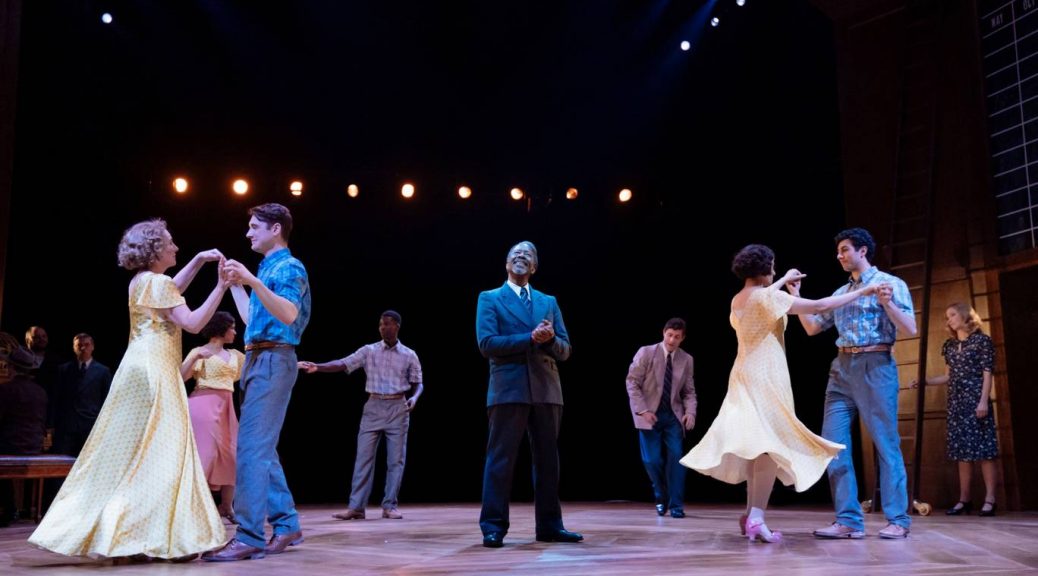
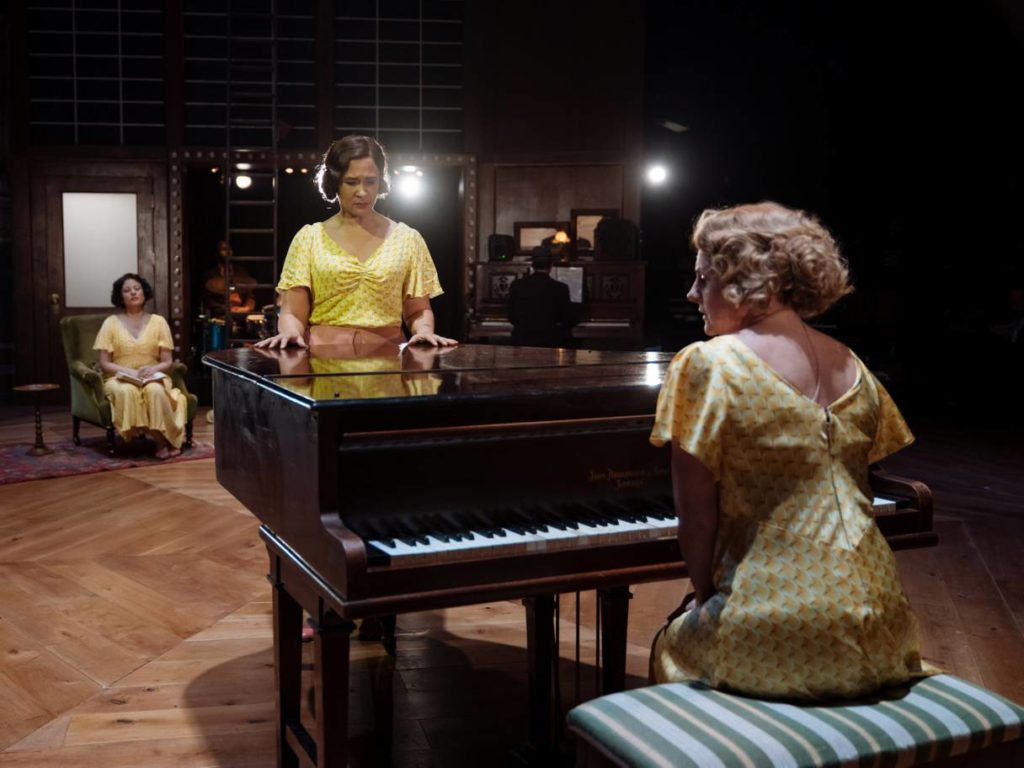
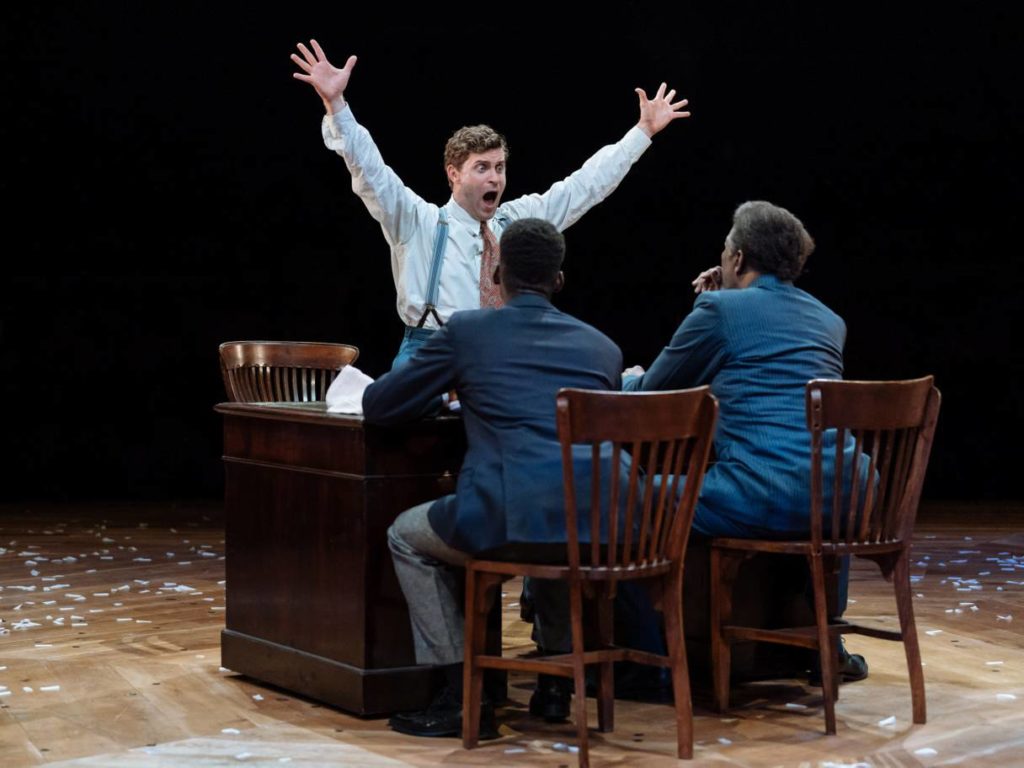
With an episodic structure and presentation that includes song and dance An American Clock still intrigues and the work of director Rachel Chavkin is strong. Making the lack of plot a virtue, the central family is played in triplicate: there are three sets of once wealthy mothers and struggling fathers, while a trio of sons grow up and start careers. It’s a neat way of showing the universalism of the economic disaster and is staged superbly – the device works to make the large ensemble cast really stand out. Clare Burt and Amber Aga both excel as the mother Rose while Golda Rosheuvel becomes the star by also punctuating scenes with a powerful singing voice. James Garnon has most time in the role of the father, and leaves the biggest impression, while three youngsters performing as the son Lee – Fred Haig, Jyuddah Jaymes and Taheen Modak – all impress. Worried about losing track? Thankfully, Clarke Peters is on board as the show’s narrator to make everything smooth. Few actors could make a story this predictable still entertaining and Peters is, as ever, superb.

Ewan Wardrop

Miller renamed the play a Vaudeville piece after its flop on Broadway. Chavkin embraces this by ensuring her production has variety, fun and also rhythm. There are songs throughout and the choreography from Ann Yee is excellent, not least in taking into account that the cast are not dancers. It’s a good way to inject much needed energy; Ewan Wardrop’s tap-dancing CEO proves a real highlight. The music makes points – a manic lust for money and then panic with the Stock Market crash – while complementing the sketch-like quality of the play itself. With the motif of marathon dancing competitions that runs throughout the play, Chavkin’s vision is clear, akin to a live Reginald Marsh painting, but the scenes themselves amount to little, feeling anecdotal or didactic. It’s Chavkin’s skill to weave them together so skilfully – and it’s easy to see why she is one to watch. Still, this play isn’t one to give time to.

Until 30 March 2019

www.oldvictheatre.com

Photos by Manuel Harlan

“Gently Down The Stream” at the Park Theatre

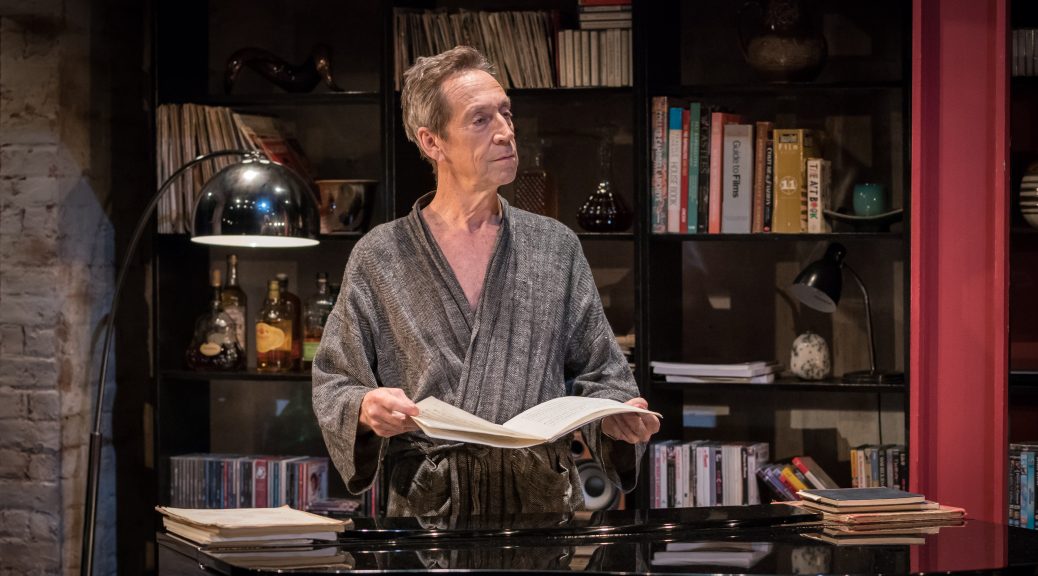
A world première from Martin Sherman, directed by Sean Mathias, counts as a coup for this North London venue. The 80-year-old playwright’s latest piece is a careful meditation on age and, through the prism of an older artist’s affair with a young man, gives us a little gay history that ripples out to touch the most profound human experiences. It is crisp, rich and wonderfully well written.

In Beau, an older gentleman from the Southern States who becomes our hero, Sherman has written a great creation. Recognisable yet full of surprises and depth, he makes a great role for Jonathan Hyde. A series of beautifully written monologues about Beau’s life make the play worth watching all on their own. In a sense, these are all ‘war stories’, as a personal history that starts before World War II follows the course of gay rights. Sherman’s skill and Mathias’ tactful handling of these scenes banish any sense of them as contrived and Hyde gives a performance of great tenderness and subtlety. Careful about exaggerating any stereotypical touches, Hyde’s is a truly great performance.

We’re on less sure ground with the play’s younger characters. Rufus, who starts an affair with Beau, suffers from bi-polar disorder so a ‘manic energy’ is called for. But discussion of his health, which should be a central concern – mental health is a major issue among young gay men – is shied away from. Rufus’ next partner is a ‘performance artist’ and even less well defined. The idea behind his occupation is clearly to form a sense of legacy between gay artists, but it ends up just being a source of humour. Ben Allen and Harry Lawtey try hard in both roles, and they make them engaging, but the idealised friendship that develops pushes credibility too far and the jokes about youth seem too carefully planned. Ultimately, the other two characters pale next to the gloriously vivid Beau.

A “thirst for the past” exhibited by both young men shouldn’t be the surprise it is to Beau. History, a form of self-narrative, can surely be added to the list of things people need and seek. Theatre testifies to and answers this search. A close, recent, parallel is Matthew Lopez’s masterpiece The Inheritance. The works make for an interesting compare-and-contrast that, for most, will focus on duration. Sherman packs almost as much into his hour and half as Lopez does in nearly seven. A sense of urgency in the writing is balanced by Mathias’ steady hand, so not a moment feels rushed. And there’s a lot less misery here – more a sense of hope that comes from experience and a wry eye. Maybe wisdom provokes brevity as much as wit? Sherman is clearly gifted with all three qualities.

Until 16 March 2019

www.parktheatre.co.uk

Photo by Marc Brenner

“Jade City” at the Vault Festival

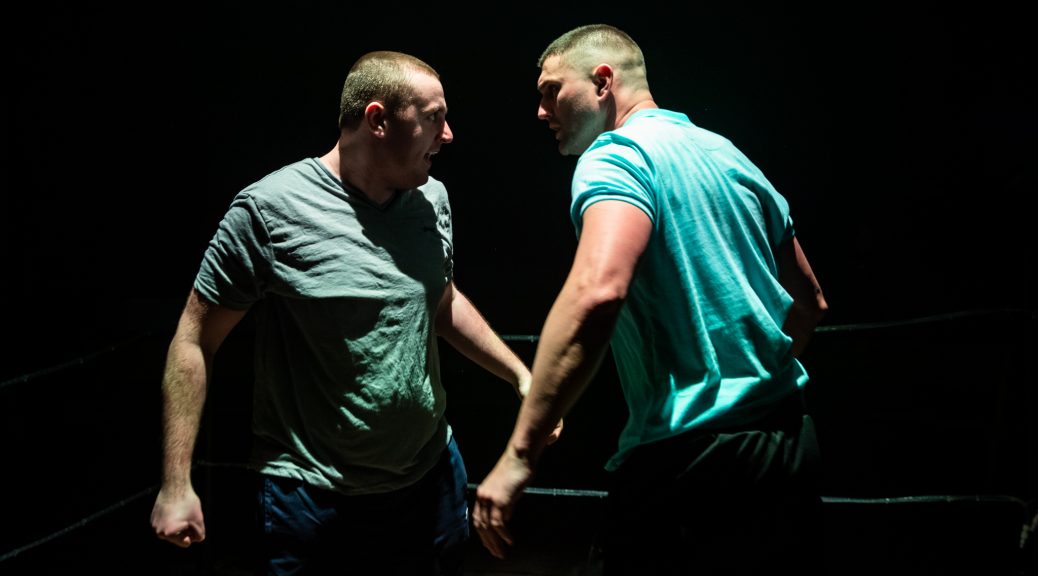
Alice Malseed’s commendable play affords a glimpse at white working-class men in Northern Ireland. It is a poetic affair that explores the dreams of two lost adults, childhood friends whose reminiscences repeatedly turn nightmarish. The games that they play, self-conscious fantasies that boredom drives them to shape together, are so obviously infantile that they add a degree of bitter humour. The neat device of role-playing enforces the prevailing tone of frustration and desperation.

These men’s lives are monotone. While lacking a mention of The Troubles, the details of poverty and boredom in a northern industrial town are checked off by rote. The men’s efforts at escapism and attitudes, particularly to drink, make for a pretty standard riff on toxic masculinity. Take the way emotions are bottled up, or that their youth is characterised by delusions of grandeur (they were once “kings”) – it’s a touch too predictable, even if depressingly accurate. And the piece lacks insight into their agency. It’s a long way into the action before accountability is raised. Thankfully, several factors elevate the slim and underexplored content. Firstly, bold imagery from Malseed, along with the structure of her play: a risky back and forth in time and reality that pays off and commands interest.

Matching an adventurous streak in the script is a strong production directed by Katherine Nesbitt. The pace is ferocious, there are moments when a pause would be welcome but the virility of the writing hardly allows this. My attendance was at a relaxed performance of the show, which makes comment on the lighting and sound design (from Timothy Kelly and Michael Mormecha) inappropriate – but intensity is never lacking. Staged around a boxing ring, a threat of violence seldom leaves the room. The two performers, Barry Calvert and Brendan Quinn, both throw themselves into the roles and grasp every moment of drama. The competitive dynamics of their relationship, the slow revelation of a tragedy that changed them both, crackles with tension. The performances, and Malseed’s poetic ear, make this a show that sounds great but perhaps says too little.

Until 10 February 2019

www.vaultfestival.com

Photo by Steve Gregson

“The Good Landlord”at the Vault Festival

Crammed to capacity with topicality, this sharp comedy full of serious concerns makes a smart debut show for Metamorph Theatre. It’s the story of two generation renters offered a cheap deal on a flat with a view of Big Ben. The catch is that their new home is full of security cameras. Hilarity and debate follow as Tom and Ed cope, in very different ways, with a live feed to the apartment’s eponymous owner.

Phoebe Batteson-Brown

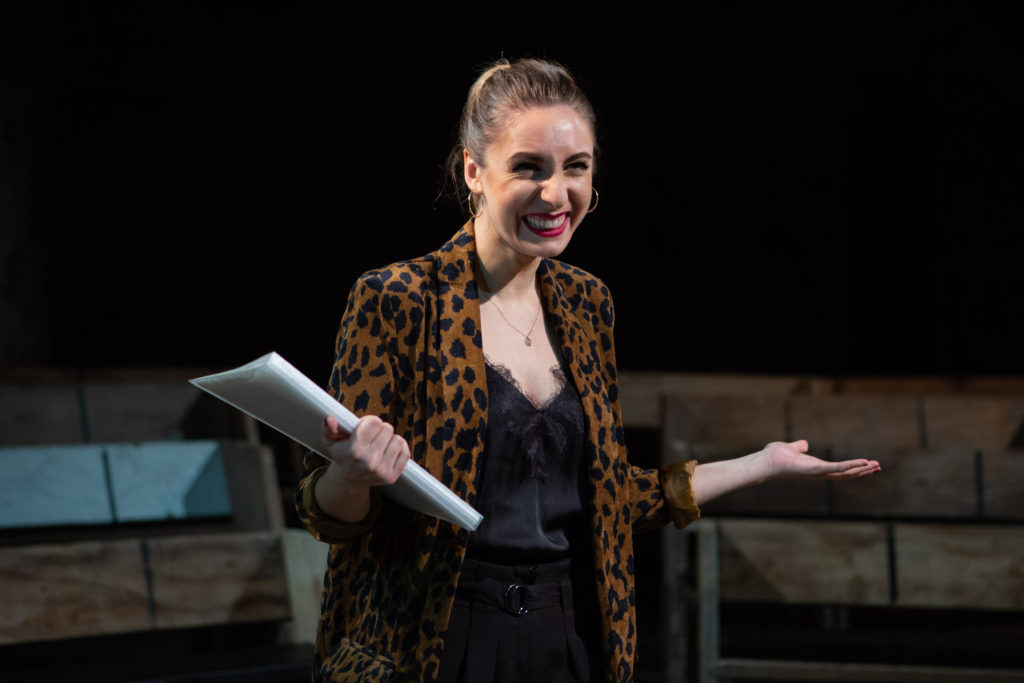
Driving the show’s comedy is a great performance by Phoebe Batteson-Brown. Playing the brilliant role of an estate agent, there’s a fantastic mix of corporate double-think that plays with being believable and is delivered with deliciously manic touches. There’s a good part, too, for Tiwalade Ibirogba-Olulode as a secretary who sneaks a look at, and falls for, one of the flat’s spied-on occupiers.  A more understated performance makes for a useful contrast and means Ibirogba-Olulode anchors the play.

Tiwalade Ibirogba Olulode

As our heroes, the carefully – and creepily – selected tenants, both Maximillian Davey and Rupert Sadler do a good job of conveying a host of big issues with a light touch. Alongside considerations of technology and privacy, which have a nifty parallel to Ed’s obsession with spies (Sadler delivers this adorably), there’s queasy voyeurism and a consideration of body issues. The hang-ups Davey’s Tom is so quickly labelled with are carefully left open in a sensitive portrayal. Sadler’s strategy is different. He goes all out for comedy with Ed’s toe-curling exhibitionism. This works – he gets the laughs – but it’s testament to the writing that Ed could clearly be a more desperate and edgy character. 

As well as effective work with her cast, director Cat Robey deserves applause for her strong staging of the show in the round, which cleverly conjures up the idea of a panopticon. It’s nobody’s fault that the venue is so far from the des-res. the action takes place in, but it does jar. Maybe some really good landlord would allow an immersive production in a penthouse development still for sale? Given the satire here, probably not! Robey’s direction shows a firm eye for detail and an admirable appreciation of the text.

The script itself is a painful one to critique as its author died so suddenly and so recently. The Good Landlord started as a devised piece that Michael Ross wrote after workshops with the company and it feels that some work remains to be done. Ross was not available for final rehearsals, and it is distressing to wonder about last-minute changes he might have made. As it stands, the play is a little too compact and bijou – scenes need unpacking and developing. But the comedy is great, the dialogue superb. And there are fascinating ideas – the guys as “products” for a voyeuristic project, or “ornaments” for the flat – that are sure to linger. Despite its many merits, there’s a sense of mortgage rather than completion with The Good Landlord. It’s with hope, best wishes, and some confidence given the clear talent here, that this new company moves up the theatre ladder to even bigger things.

Until 10 February 2019

www.vaultfestival.com

Photos by Ali Wright

“Diaries of Madmen”at the Cockpit Theatre

Xameleon Theatre works with Russian-speaking artists and specialises in bringing their distinctive performance traditions to London. If this latest piece is any indication, producer and artistic director Vlada Lemeshevska has a keen eye for talent, having brought together an admirable team whose work has a clear sense of identity and whose skills both fascinate and excite.

The idea behind Diaries of Madmen isn’t great, though. Marrying Nikolai Gogol’s novella with Pyotr Ilyich Tchaikovsky’s letters proves initially puzzling and ultimately unconvincing. The madness of Gogol’s character Poprischin is incongruously interspersed with Tchaikovsky’s decision to leave the civil service, then the critical drubbing he faced. The parallel between the two stories is forced – delusions of grandeur and ambition along with flights of the imagination are too tenuous as links. A potential theme of unrequited love is, oddly, unexplored. And the culmination is weak: while Poprischin is committed to an asylum, Tchaikovsky destroys his sixth symphony. From the story, there is little insight into mental health or creativity.

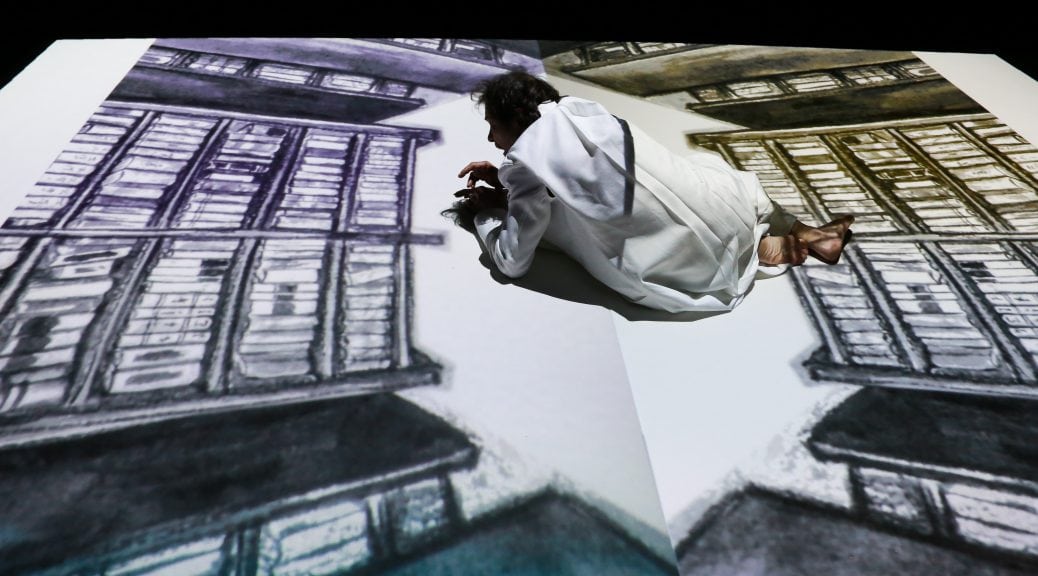
Ordinarily it would be difficult for a show to overcome such problems. But, while the idea driving director Konstantin Kamenski’s show may not inspire, his work and his performers are marvellous. It’s a fantastic save brought about with the aid or careful, inventive details, a distinct style of movement aided by Natalia Fedorova that comes close to choreography and some fantastic animation projected on to the floor from Irina Gluzman.

Kamenski’s cast is also exceptional. Irina Kara offers superb support as the mostly mute Mawra, who follows Poprischin around like a living prop. It’s not quite clear why she has to be encumbered so much by a picture frame and a rolling pin, but she manages to portray servility and belligerence simultaneously. Brief glances of her as Tchaikovsky’s sister show that she can also express a dignity and an inner turmoil that the show could easily have exploited further.

Taking both lead male roles, the performance from Oleg Sidorchik is truly bravura. Tchaikovsky has too small a part in the piece to be that well defined, but Sidorchik makes his portrayal distinctive and articulate. You don’t need to speak a word of Russian to admire his delivery, and his stage presence is frequently so magnetic that he distracts from the English surtitles. Whether gambolling around, writhing in agony, doing forward rolls or interacting with his shadow, Sidorchik is clearly a performer at the top of his game and you’d be без ума to miss the chance of seeing him.

Until 10 February 2019

www.thecockpit.org.uk

Photo by Oleg Katchinsky

“The Shy Manifesto” at the Greenwich Theatre

This wonderful monologue from Michael Ross is on a national tour. Let’s hope the play is showing near you as attendance is thoroughly recommended. It’s part-presentation, akin to a school debate, and also a tender story about youth that’s full of topical relevance. The trials – and joys – of being shy become moving, thought-provoking and funny in a brilliant script.

The production is a bitter-sweet triumph because of its author’s sudden death from cancer this year. While the show is hugely enjoyable, it’s hard not to regret future works we are now deprived of. That Ross missed seeing the show performed is cruel. That those involved have done such a good job is of some consolation.

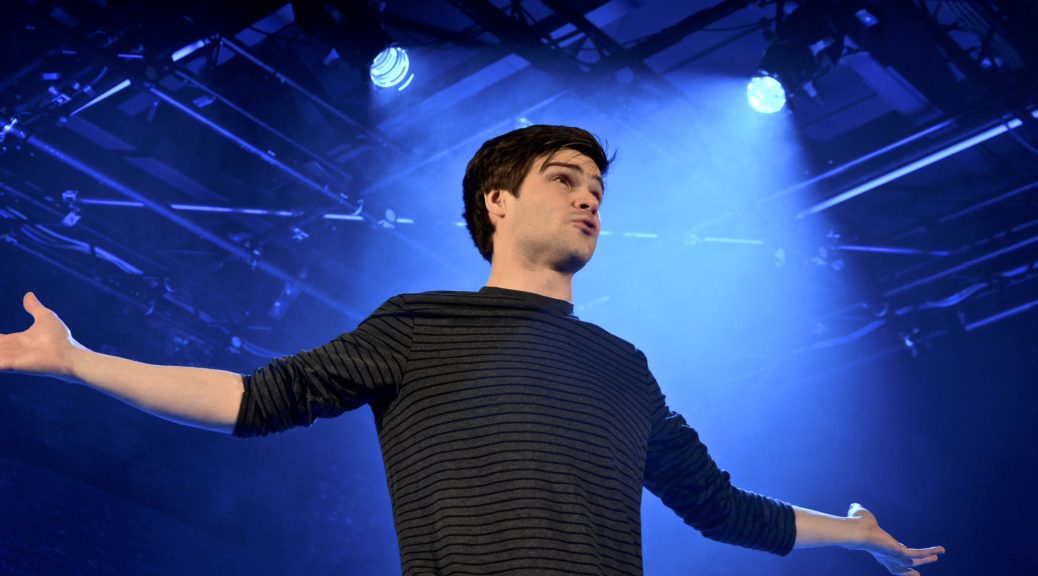
With The Shy Manifesto’s hero, Callum, Ross has written a fine creation who works well theatrically and makes a great role for Theo Ancient. It’s impossible not to warm to this keen-to-quote teen, who Ancient makes such a charming, flawed figure. Engendering complicity with the audience from the start, Callum’s world view is engrossing, his insecurities and his fate at an end-of-term party affectingly emotional. Ancient moves from cowed moments to bold exuberance, as director Cat Robey paces the show expertly. Robey does particularly well in energising the script with complementary musical accompaniment and lighting. These skills combine to take us into Callum’s Bournemouth bedroom world completely, to make his worries our own and likewise his hopes for the future, be they to stay true to himself or to live around the corner from the British Museum.

Ross hasn’t just penned an unusually good teen drama. His writing reveals facts sometimes lost on our hero, which creates a delicious subtext for the audience. His crush on new boy Gilbert is just one example. It’s fascinating to explore the theme of ‘shycons’ (brilliant term) who are idolised by the introverted. And while evoking a young voice so expertly, there’s a spirit of individualism that should give pause whatever your age. Callum’s questions may be raised in a naïve fashion – he’s 17, after all – but that doesn’t make them less important. Ross uses a young narrator to point out what should be obvious, sometimes unacceptable, to all; and to challenge, frequently in a surprising fashion, some easily accepted assumptions.

Alongside this is a great comedy. Callum’s intellectual pretentions, including his contagious love of words, remind us not to take him too seriously, and it’s a talent to make the vocabulary hilarious all by itself. And the cast of extras we meet – each performed with the help of a single prop (with one notable exception) and seen only through Callum’s eyes – are all worth a joke or three. Ross was an accomplished craftsman and a distinctive voice, his writing full of compassion, intelligence and humour. The Shy Manifesto proclaims these qualities loudly.

On tour until 4 March 2019

www.theshymanifesto.com

Photo by Anthony Hollis

“Cost of Living” at the Hampstead Theatre

Edward Hall’s venue has a strong reputation for bringing American plays to our shore. Taking directorial charge of this one is clever move, as is getting Martyna Majok’s play over here so quickly – it only won the Pulitzer Prize for Drama last year – because the piece hits the jackpot. It’s the kind of play you really want to win big.

As a story focusing on people with disabilities, Cost of Living answers an urgent need for diversity and representation on the stage. Nobody should knock that, but Hall also knows a fundamentally strong play when he sees one. Following John and Ani, who both need constant care, it is true that some issues raised about the health system and class are more relevant to an American audience… one hopes. But this is a play so full of life, of pain and of love, that it is impossible not to get caught up in.

Jack Hunter and Emily Barber

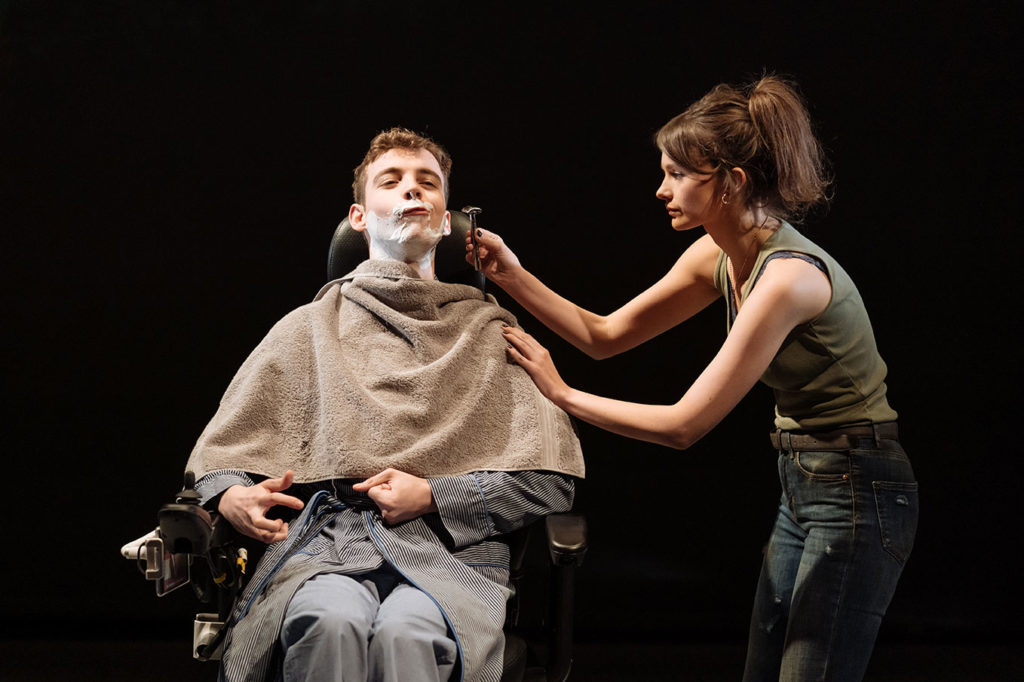
First taking John, a wealthy grad student, performed superbly by Jack Hunter, and his carer Jess, their scenes are full of wit and tension with the non-disabled Jess as the focus. Her poverty and personality are conveyed with great skill by Emily Barber, who clearly appreciates how Majok is guiding the audience.

An even more complex relationship is that between Eddie (Adrian Lester) and his ex-wife Ani, who was injured in a car crash. The story of her death prologues the play, with a moving meditation on grief that could stand alone as a brilliant monologue. The balance between “glum” events and the play’s humour shows Majok’s skills further. The dialogue throughout is stunning in its naturalism. For a conclusion, both Lester and Barber excel again as the hope that the play never ceases to include is allowed as a final note.

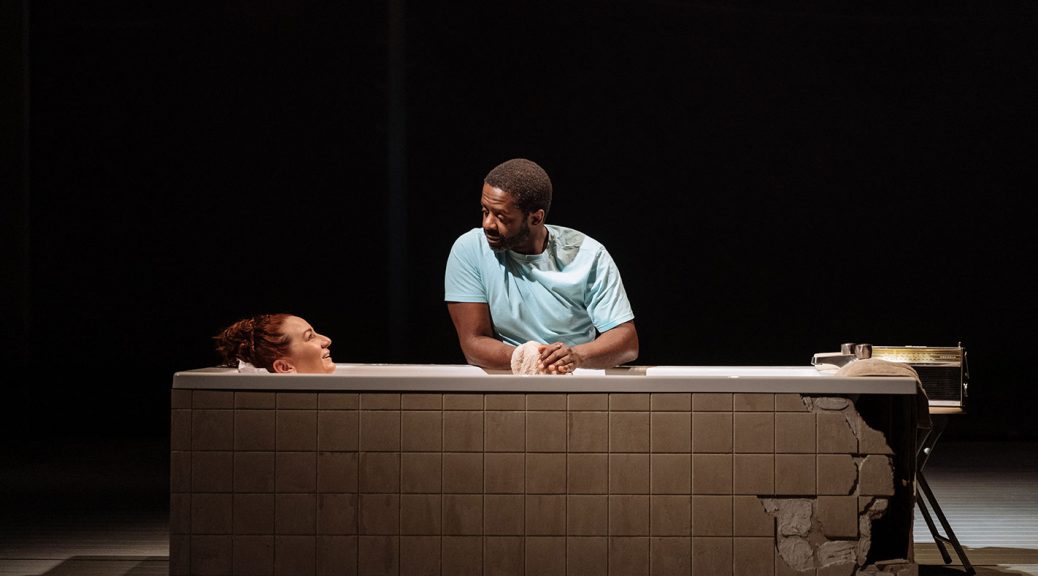
The central scene, which I’d put money on as being the germ of the piece, is something else. Ani (played marvellously by Katy Sullivan) is being bathed by Eddie. Starting with an intense intimacy, this is a sex scene the likes of which you’ve probably never witnessed before on stage. The tenderness is moving, the atmosphere electric and the insight profound. To embody her theme that the smallest mistakes can change – and end – lives, Majok then produces a shocker. Truly, I’ve never heard such gasps from an audience. An unforgettable moment of theatre is what gets you awards, and it makes Cost of Living a priceless play.

Until 9 March 2019

www.hampsteadtheatre.com

Photo by Manuel Harlan