“A Doll’s House” from the Lyric Hammersmith Theatre

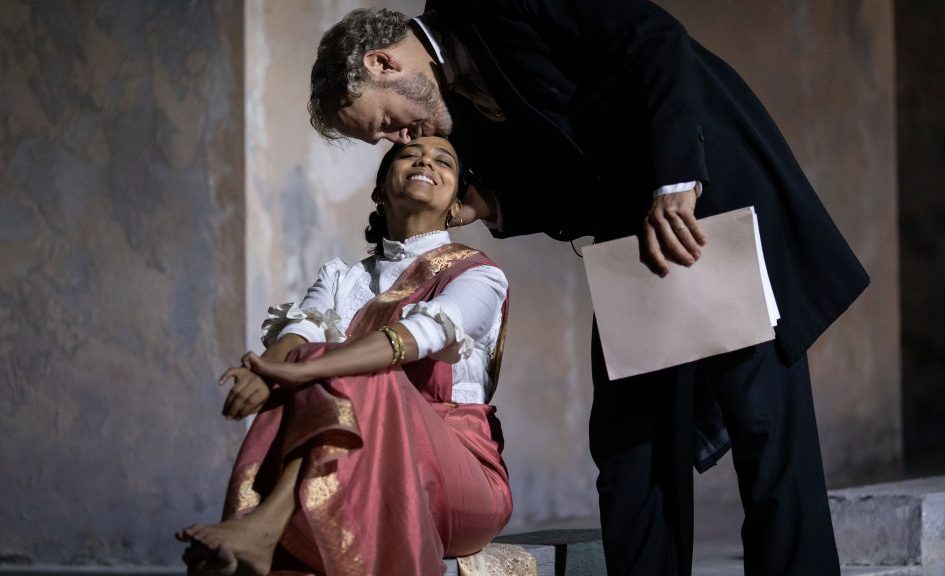
Artistic director Rachel O’Riordan’s brief introduction to this chance to see her superb work online – unfortunately only for one day – was offered with “recovery and hope for the future” in mind. There’s the important call for donations, but also a reminder of theatre’s importance as a place for diversity, inclusion and seeing stories from different perspectives. Her choice of Tanika Gupta’s acclaimed version of Ibsen’s classic illustrates her point perfectly. It’s fantastic theatre.

While O’Riordan points out that the recording was for archival purposes, as opposed to broadcast, so the action is often shot from the Gods – this doesn’t detract from a show that sounds and looks great from the start – with music from Arun Ghosh and gorgeous design by Lily Arnold. And what is on offer here is very special. Gupta takes a plot from Ibsen, an urgent objection to hypocrisy and injustice, and deep psychological insight with complex characters. But transposing Ibsen’s Norway for India ruled by the Raj adds immeasurably – it’s one of the finest ‘new versions’ I’ve seen.

While Ibsen’s period setting is preserved, the extra layer of colonial and racial concerns adds power. Nora, now Niru, is married to a British official, and the prejudice she has faced, along with Indian unrest, form a backdrop for the action. Yet Gupta handles all this with a light touch that O’Riordan appreciates throughout. That’s important – some things said may shock but this would have been the characters’ everyday lives. Nuances of complicity and acceptance as much as anger at injustice are all present. Gupta is blunt about British rule, and particularly justice, but Indians are also criticised. And the patriarchy is a target, too.

If any of this sounds a little… worthy… Gupta also impresses by how exciting she makes the play. There’s a great sense of menace as “past evils and mistakes” circle around every scene. Dr Rank, the at-death’s-door depressive becomes a serious character, the flirtation with Niru queasily upsetting as well as erotic. Niru’s old friend Mrs Lahiri, who admits her jealousy, makes a great role for Tripti Tripuraneni while Das (Krogstad in Ibsen) is just as good. Das is the play’s villain, a “thoroughly nasty specimen”, but he is also a complex character as Assad Zaman adds real fire to the role.

The lead roles share Gupta’s skill with characterisation and the result is a triumph for both Elliot Cowan as Tom Helmer and Anjana Vasan as Niru.

Cowan’s character has a little too much resting on him in this version but it is still an effective disappointment to see how far he falls. His love for his wife, however misguided, convinces. Their marriage is developed with great detail. Vasan’s performance is suitably nuanced and incredibly rich: flirty, sulky, stubborn, hopeful and despairing, the common factor is an intoxicating energy. When it comes to a scene of Niru dancing, on display for Tom’s English friends so that plenty of uncomfortable connotations come to the fore, Vasan is truly riveting.

There is a strength behind Niru that is gripping. As the plot resolves, her dream of happiness is still broken and her “stern” look at Tom is fully justified: he insultingly offers her “classes” but Niru isn’t the playful pupil anymore. Moving to freedom with more resolution than Ibsen imagined, taking what’s best from her literary predecessor, Gupta gives us the ending we really want. 

Available 20 May 2020

To support visit www.lyric.co.uk

Photo by Helen Maybanks
“Midnight Your Time” from the Donmar Warehouse

Ensuring we don’t forget one of the West End’s smallest – and enormously prestigious – venues during dangerous times for all theatres, director Michael Longhurst presents a specially commissioned film. Written by Adam Brace, and originally penned for High Tide, it’s very good indeed. And, of course, deserving of donations.

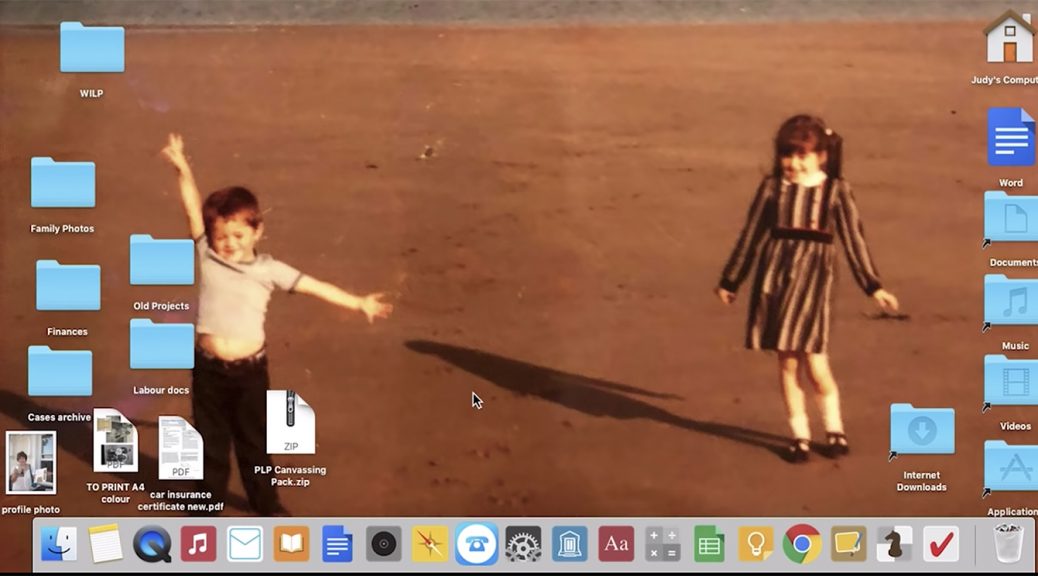
There are many monologues about at the moment and the idea of one based on Skype calls, when a lot of work has gone online, might be the last thing most of us want. But it’s a clever idea, appropriate to the times, and the one-way messages between Judy and her daughter Helen prove engrossing, moving and entertaining.

Set in 2010, as if to remind us that isolation of one kind or another is nothing new, Brace has created an easily recognisable lead that Diana Quick performs with ease. There’s a gentle humour around this upper-middle-class well-meaning Islingtonite that makes the character a touch too naïve. But it’s fun to watch as she is “gazumped” over dinner with an Afghan refugee and makes gaffs, despite her good intentions.

Produced under lockdown conditions, which only increases my admiration, Longhurst and Quick are clearly a great team. The scenes have a nice variety, not just of costumes and times of day, but also of distinct atmospheres. Quick shows her character’s moods marvellously, from being “lighter than air” to angry and upset. There are also nice touches over her hesitancy with the technology – especially when she deletes messages that have gone too far.

Judy’s relationship with her daughter is a fraught one, and Brace and Quick unveil this with great skill. How serious an argument over Christmas was becomes clear slowly and is increasing moving. Although we never get her daughter’s side of the story, Judy’s interference in the young woman’s life would surely be a problem. But, combined with Judy’s loneliness and worries for the future, this is a neat study that raises surprising sympathy and is a great half-hour watch.

Available until the 20 May 2020

www.donmarwarehouse.com

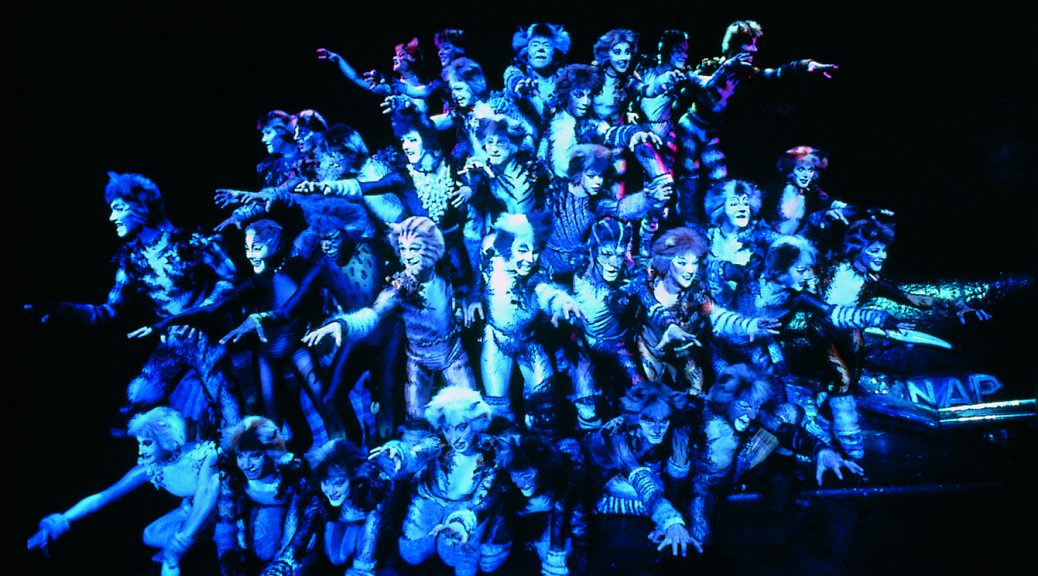
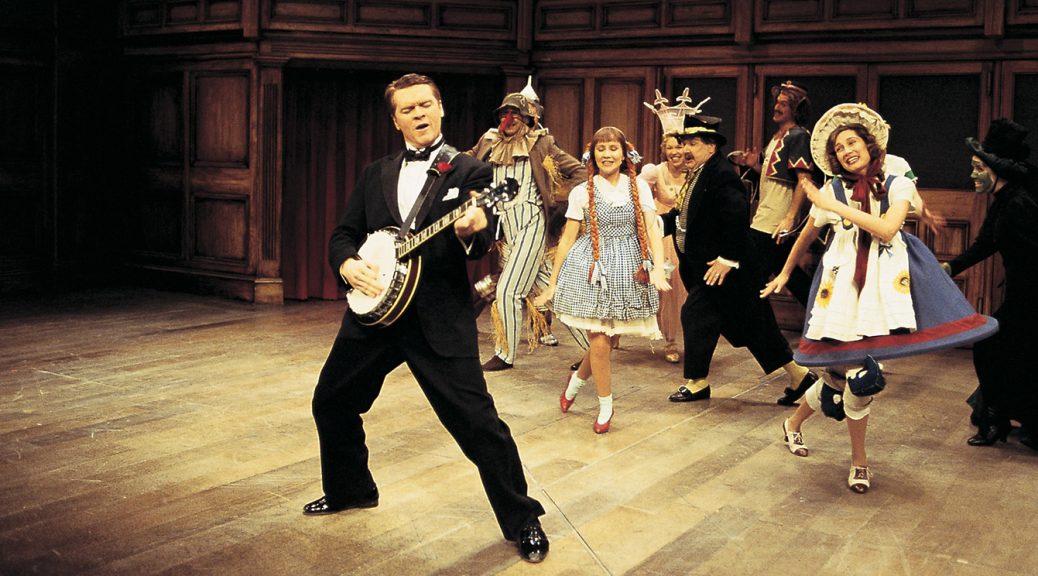
“Cats” from The Shows Must Go On!

Having been warned plenty, I’m not one of those traumatised by the recent movie version of Andrew Lloyd Webber’s musical. This recorded version, based on the stage show directed by Trevor Nunn, is a much safer bet. Along with the good causes its availability prompts donations to, it might restore the show’s once considerable reputation.

Taking the poetry of TS Eliot as his lyrics, which Lloyd Webber treats with a good deal of restrained respect, the idea of a cat reincarnation, voted for by its peers, is more than a little mad. And the synth-laden music hasn’t dated well. But, in what’s essentially a song and dance show, the score’s variety suits the “several kinds of cat” we get to meet, and it would be impossible not to like some of the songs.

Take your pick as to your favourite feline: cats curious, conjuring and glamorous, from the railway or the theatre. I liked cat burglars Mungojerrie and Rumpleteazer, enlivened by acrobatic work from Drew Varley and Jo Gibb. Performances throughout are strong, as each number provides time in the spotlight to show off talent. Special mention to Michael Gruber’s Munkustrap, who roots the action, and there are star turns from John Mills and Elaine Paige.

Cats worked so well because of the excellent work by choreographer Gillian Lynne. The fact Lloyd Webber renamed the New London Theatre after her surely indicates his debt to her. But the filming here, directed by David Mallet, is to the detriment of the dance. Too much editing adds a pace that was not Lynne’s intention, speeding up movements meant to be stately. There are some (naff) special effects, including, unforgivably, some slow motion! And there are some injudicious close-ups of performers’ bodies that are uncomfortable. Similarly, seeing performers mime licking one another’s faces is one thing from a seat in the circle but it really doesn’t work with a camera up close.

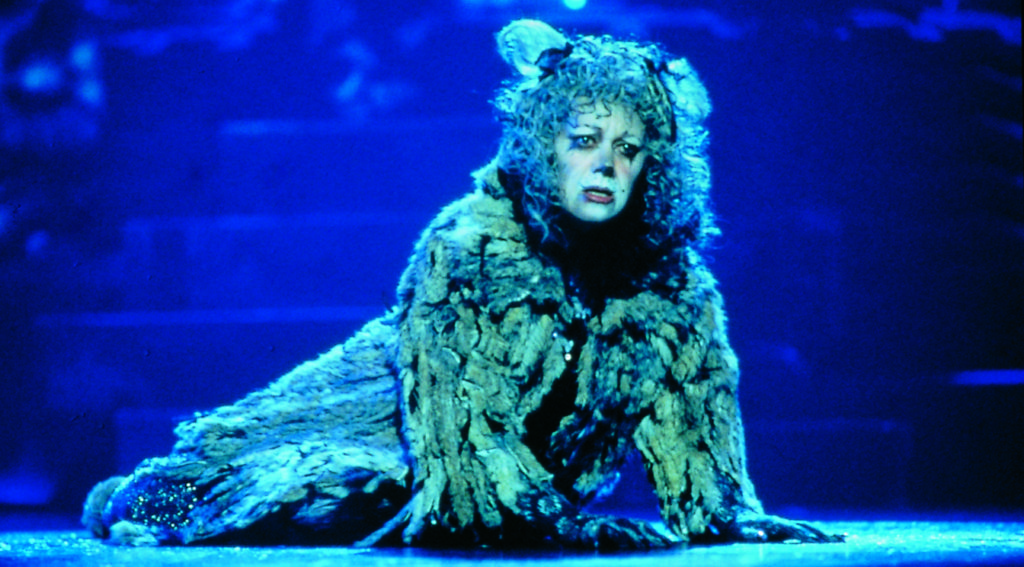
The filming also mistakes Cats’sense of humour and takes itself a little too seriously. Admittedly, Paige plays Grizabella as if she were Covent Garden’s cat. The show’s big hit, Memory, is a serious song. But part of camp is being serious (thanks, Susan Sontag) and there’s no doubt this legendary performance is effective. Along with this, by contrast, deliberately exaggerated playful touches in the staging and score go all out to entertain.

Available on The Show Must Go On! youtube channel until 17 May 2020

“Sea Wall” from the Bush Theatre

The film of Simon Stephens’ fantastic half-hour monologue is offered during lockdown and serves to remind us of its original home – the West London venue whose new writing, the playwright has observed, makes it one of the most important theatres we have. Specially written for the venue, although subsequently filmed on location, this is a piece of the highest quality. But some caution – and a plot spoiler – follow.

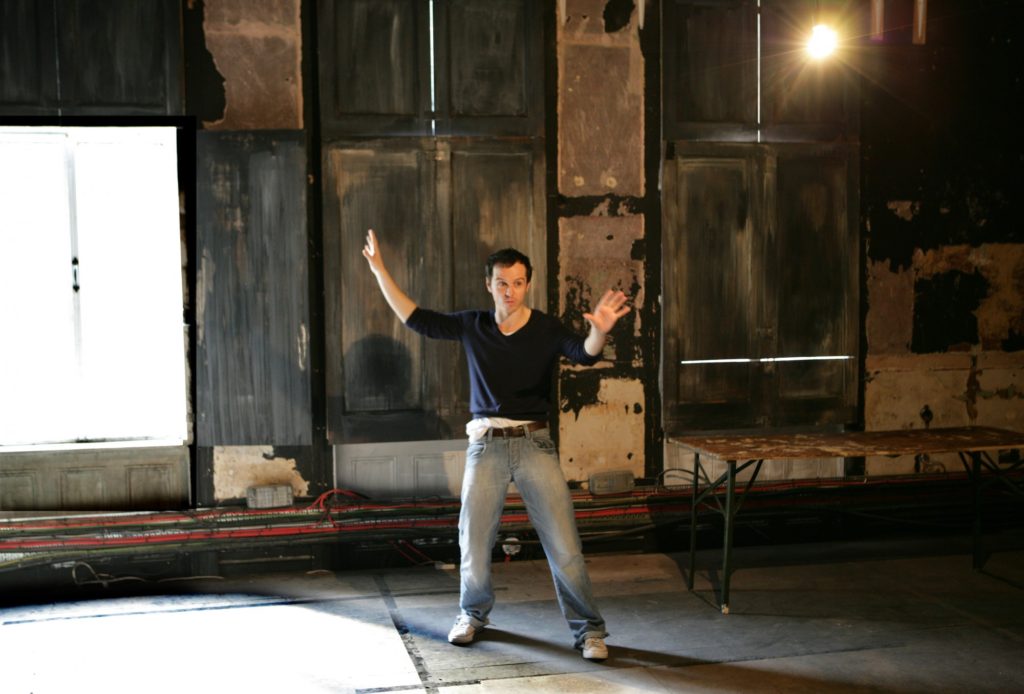
Andrews Scott in Seawall at the Bush Theatre

Given that Sea Wall is about the sudden and random death of a child, it isn’t for everyone or an easy watch. But it is a play full of love. As soon as we meet Alex, we see he is a character of enormous appeal, carefully nurtured in Andrew Scott’s magnificent performance. His adoration of his wife and daughter is entirely convincing, as is his love for his father-in-law. Stephens’ detailed descriptions of a happy life full of holidays are all the more endearing as Alex knows how lucky he is.

Or how lucky he was – as the expertly written story unfolds and Alex’s life plummets unexpectedly into the depths of despair, the piece becomes something of a confessional. His cruelty towards the “shattered” form” of his father-in-law and the “hole in the middle of him”, a visceral image of the pain he is now experiencing, show the power of Stephens’ nightmarish imagining. Questions about God are probed throughout – they are surely a natural part of an experience such as this – but Stephens handles them with considered sophistication.

The success of the piece, which Stephens directed for film with Andrew Porter, is guaranteed by Scott’s performance. Originally written for the actor, Scott is an expert on camera, and his connection to the audience is a marvel. Brief pauses and halts in the delivery ensure the illusion of spontaneity and his movement is expansive without ever seeming artificial. Scott grabs lighter touches forcefully and he makes sure we fall a little in love with his character. It makes the telling of this private tragedy all the more moving; traumatic but also strangely beautiful.

Streaming for free until 25 May 2020

www.seawallandrewscott.com

To find out about a new series of monologues commissioned during lockdown and to support the venue see www.bushtheatre.co.uk

“Barber Shop Chronicles” from NTLive

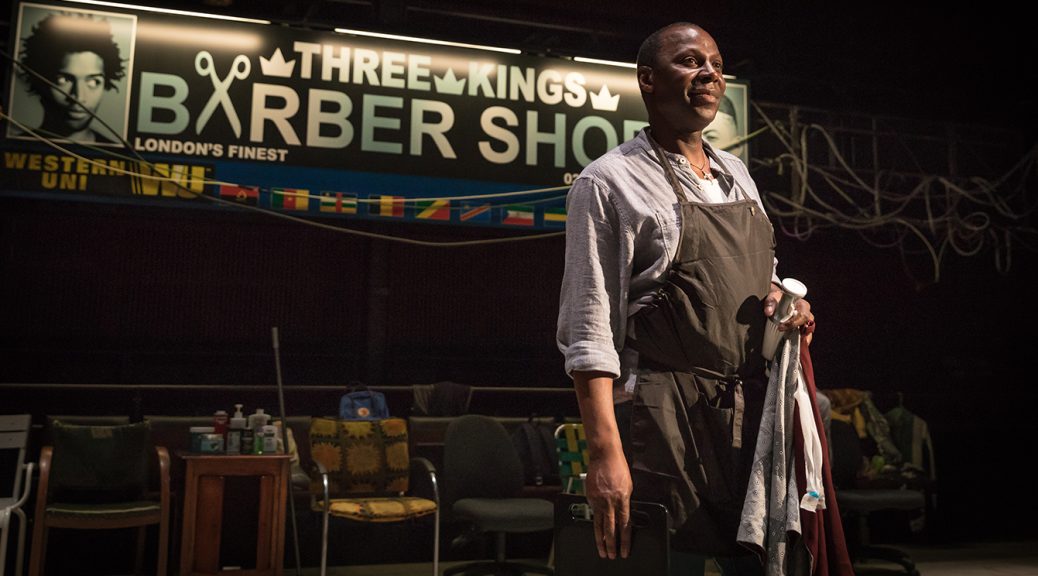
With a trio of companies behind it – and, don’t forget, links for donations – the National Theatre, Fuel and Leeds Playhouse gave us something for the weekend with Inua Ellams’ play. This recording, from the London run in 2018, reminds us why this piece – which covers vast ground geographically and brings up plenty for debate – was so warmly received.

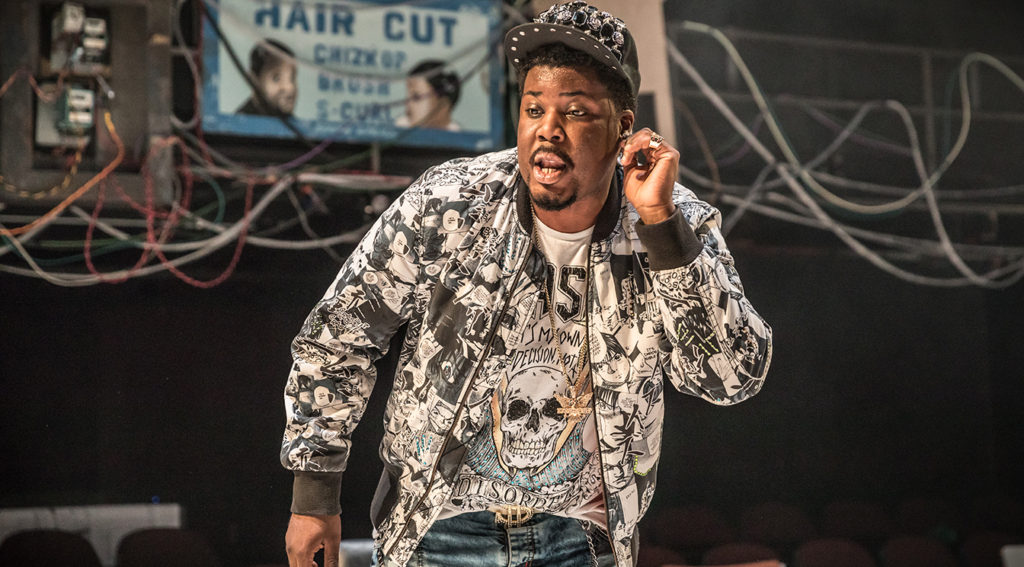
Scenes in barber shops in London, Lagos, Accra, Kampala, Johannesburg and Harare add up to a lot. And we encounter plenty of colourful characters (Patrice Naiambana’s Paul was my favourite although Hammed Animashuan’s performance was brilliantly scene stealing). Alongside a powerful drama between Emmanuel and Samuel, which make good roles for Fisayo Akinade and Cyril Nri, there are all manners of observation on language, politics, race and culture. It’s all interesting, although maybe not always subtle, but it could easily be overwhelming.

Hammed Animashau in Barber Shop Chronicles at the National Theatre (c) Marc Brenner
Hammed Animashau

Ultimately, these chronicles are a collection of small studies and intimate scenes. Director Bijan Sheibani skilfully combines the big picture with close details, and the result belies any shortcomings. Ellams’ touch is light, while segues between scenes, with singing and dancing, are excellent. What could be confusing proves energetic. And the play is funny: jokes are used pointedly and there’s plenty of wit to enjoy.

While the barber shops, as a “place for talking”, serve as an effective device for holding the play together, what really does this job is the theme of fatherhood. The stories take in violence and various ideas of legacy and inheritance, offering plenty of insight. And it’s interesting to note how much bigger than biology the theme of parenthood becomes. Connections between the characters are handled carefully (until the end, in a clumsy moment that really disappoints). Ellams’ play, with Sheibani’s help, ends up more than the sum of its parts. And, given that it has more parts than a barber shop quartet, that’s really saying something.

Available until Wednesday 20 May 2020

To support visit nationaltheatre.org.uk, fueltheatre.com, leedsplayhouse.org.uk

Photos by Marc Brenner

“Bare E-ssentials” from Encompass Productions

This live stream, hosted by affable creative producer Liam Fleming, was a new writing night scheduled for 13 May. Such occasions are an essential part of London’s fringe and it is important that they carry on despite Covid-19. That everything didn’t go to plan is no reflection on the talent or commitment… it’s just the nature of live performance.

Things got off to a good start with Teresa Espejo’s The Big 30! about a young woman preparing for a birthday night out. What the piece lacked in originality, it compensated for with a natural tone, making its recognisable character’s concerns about the future and romance moving, and leading to a strong performance by Sian Eleanor Green. Staged presumably in Green’s own living room, director Jonathan Woodhouse clearly worked out that the piece suited an online performance and it was easy to enjoy this one outside the theatre.

Another live performance of a 2017 piece by Lucy Kaufman also suited the online format. A set of telephone conversations, from a commissioner of plays, Radio Foreplay is a clever comedy sketch that Alexander Pankhurst performed well in. It’s full of good jokes and all-out innuendo and is keen to show its intelligence.

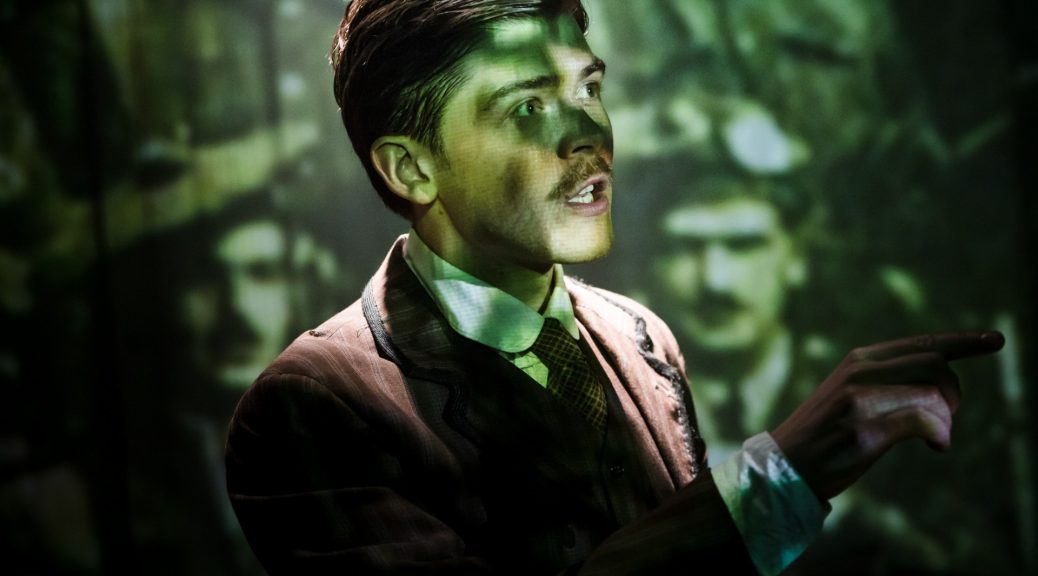
Two further, recorded, pieces fell foul of YouTube as they contained pre-recorded music. Thankfully, they have both been made available online. John Foster’s 2015 Little Boy makes a powerful monologue for James Unsworth (pictured). It is the story of Claude, one of the pilots involved in the bombing of Hiroshima who later became a pacifist. Focusing on his PTSD is probably a wise move given the brevity of the piece, but the theme lacks originality (likewise a lot of the dialogue) and the twist of Claude’s “atonement” takes too long to arrive.

Another piece connected to war was Vintage, again by Lucy Kaufman. The scenario is the marriage counselling of an unusual couple, David and Emma, who are trying to live – Home, I’m Darling style – as if the year were 1943. Directed by Rachael Owens are Josh Morter and Holli Dillon, who both sound great, enjoy the comedy and (mostly) work well with the camera. If Kaufman doesn’t seem clear how to end the piece, she has plenty of good lines. And in a culture like ours that often seems unhealthy obsessed with “British resilience” during the war, there’s a nice idea to explore here.

Nobody should expect perfection from nights like these. Professionalism, of course, but more experimentation and enthusiasm. Encompass Productions has all three qualities and, while technical hitches are a disappointment, I trust all involved are determined to make these shows go on and I look forward to more.

www.encompassproductions.co.uk

“Suzy Storck” from the Gate Theatre

It’s never comfortable to fall back on critical clichés, especially when a show is kindly offered during current circumstances, but one is applicable to this production. Although its merits are clear, Magali Mougel’s play, rendered into English by Chris Campbell, is surely lost in translation.

As the titular character struggles with her claustrophobic life – and three children she never wanted to have – there’s a strong tension between post-natal depression and, well, depression full stop. Such a bold look at the expectations and “obligations” women face is bracing. The outcome is not for the faint of heart. And, if the plot is simple, the play’s structure enlivens it enough.

The title role provides a strong part for Caoilfhionn Dunne, who grabs it for its considerable worth and doesn’t allow excuses for her character’s actions. While the role of her husband is less well written, Jonah Russell makes him intriguing. Director Jean-Pierre Baro has clearly worked hard on the scenes of the couple together and these provide highlights.

It’s with two accompanying characters that cracks start to show. Kate Duchêne gets the chance to shine when she performs as Suzy’s infuriated and vicious mother, Madame Storck. But when Duchêne also narrates, and is joined in this task by Theo Solomon, the play’s style starts to grate. Although both Duchêne and Solomon have a strong stage presence, it isn’t clear what these roles add.

Baro’s production has atmosphere (aided by some strong lighting design from Christopher Nairne) and there’s a great moment where the audience helps clear up kids’ toys. But Mougel’s obsession with routine, reflected in quantifying action and an interesting take on muscle memory, leads to too much repetition. The only scene with any humour is of a job interview (another small role that Duchêne does well with), and the constant use of the characters’ full names seems a puzzling affectation. The strange staccato delivery of some lines, presumably also linked to an obsession with repetition, is arresting but again overused and effortful. Suzie Storck ends up intense but also, painfully, self-conscious.

Until 30 June 2020

www.gatetheatre.co.uk

“The Two Noble Kinsmen” from Shakespeare’s Globe

Grateful as I am for the various shows put online during lockdown, this one made me sad! Of course, this was never the intention behind Barrie Rutter’s fine production, but it only serves the truth that filmed versions highlight how much better live theatre is and why we miss it so much.

Having seen the show ‘for real’ and being happy to watch it again indicates the strength of Rutter’s work. This is far from Shakespeare’s finest play: written with John Fletcher, the love-at-first-sight romance seems ludicrous, the characters schematic and the themes of honour silly. If it weren’t for beautiful poetic moments (and the fact he isn’t guiltless of all three problems elsewhere) you’d question whether Will had anything to do it.

There is still a grandeur behind Moyo Akandé and Jude Akuwudike, who play Hippolyta and Theseus, showing us courtly concerns with a touch of humanity. And Ellora Torchia does well as the princess who has to choose between the titular heroes – one of whom will die – showing an appropriate incredulity as well as sensitivity. Staying centre stage when the final fight goes on, this “maiden-hearted” bride-to-be proves fascinating. The kinsmen, played by Paul Stocker and Bryan Dick, are great – suitably dashing but also funny – with a similar knowing air behind the performances. But, on film, none of this talent is quite enough to make it all engaging.

The camera shows up all the text’s troubles. Stripped bare, without the atmosphere of the theatre, the play drags and all the work done to inject energy or touches of cynicism is lost. The excellent treatment of “country pastimes”, including a fantastic dance, sounded much better live and were full of details lost in the filming. One criticism stands: the unrequited love of the jailer’s daughter (Francesca Mills), which literally drives her mad, is played too much for laughs. And on a screen this poor version of Ophelia feels even colder and crueller.

The biggest problem is that, with the camera dictating what we see, a sense of momentum doesn’t come across. With characters “beyond love and beyond reason”, it’s necessary to drive the action along, which Rutter did with distractions including music and musicians. It made for an effective night out. Nobody wants our theatres open again more than those who work in them, and this show reminds us how much better it is to see plays where they belong.

Photo by John Wildgoose

Available until 17 May 2020 on globeplayer.tv

To support, visit www.shakespearesglobe.com

“It Is Easy To Be Dead” from the Finborough Theatre

One of the smallest venues in London – surely in desperate need of the donations requested while making this production available online – the Finborough’s prestigious reputation is lived up to in artistic director Neil McPherson’s play. Taking the life of World War I soldier Charles Hamilton Sorley, it makes appropriate viewing during the weekend of VE day: a moving tribute to lives lost in any war and – in particular –to one admirably independent, and therefore challenging, young man.

First seen in 2016 and justly receiving critical acclaim, including a nomination for an Olivier Award, McPherson’s play mingles the poetry and letters of his subject confidently, and director Max Key complements his careful editing. The same expert touch comes with the show’s music, directed by Elizabeth Rossiter, who performs on piano accompanying tenor Hugh Benson.

McPherson’s structuring of the play could serve as a lesson to many. Time is taken for us to get to know the subject, one so full of life before his death at the age of 20. When the war comes it is all the more powerful and Key deals well with battle scenes that contain only one man. The projections used throughout the show are frequently lost in this recording, but it is easy to imagine the mounting power as we see the faces and fates of so many of the people mentioned.

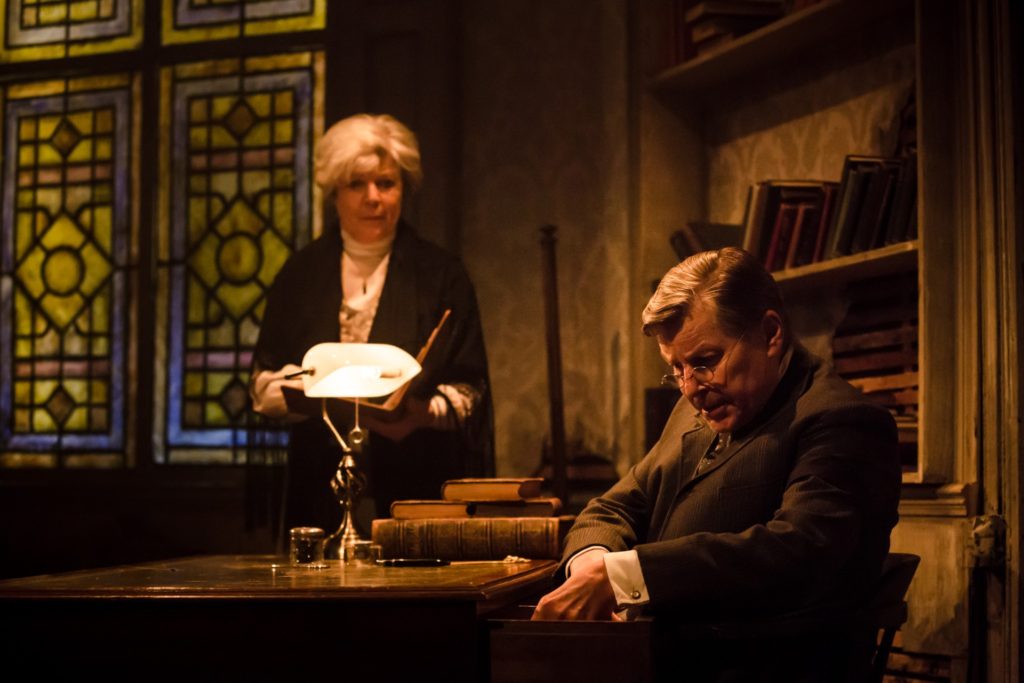
It is Easy to be Dead at the Finborough Theatre
Jenny Lee and Tom Marshall

There’s a strong sense of period, which never feels forced, shown at its best with the acting of Jenny Lee and Tom Marshall, as Sorley’s parents. Both give beautiful, restrained, performances of roles well filled out. The brief scene of their final goodbye to Charles is brilliant. And debates over whether to publish another “dead public school boy” show the cool intelligence their son inherited. Gratitude that they, and subsequently McPherson with his play, pursued their commemorative project grows.

It Is Easy To Be Dead is a major role for Alexander Knox as Sorley – its success rests on his shoulders. Winning from the start with a schoolboy wish to leave “custom on the shelf”, humour and touches of romance are all conveyed, along with plenty of additional characters. But Knox’s real skill is allowing the true star to be the play’s subject.

Sorley’s words draw us into the action and make us care for him enormously, but it is his common sense – over sentiment and even patriotism – that really impresses. Calling the conflict the “joke of the century”, claiming that of 12 million combatants only 12 really want to fight, his fury against “deliberate hypocrisy” (and critique of Rupert Brooke) are refreshing and much needed. As a final tribute, Knox’s readings of Sorley’s poems do them justice – surely a poet could wish no finer tribute.

Available until 7 July 2020

www.finboroughtheatre.co.uk

Photos by Scott Rylander

“By Jeeves” from The Shows Must Go On!

Far from Andrew Lloyd Webber’s biggest hit, with a complicated history of rewrites, you might think this week’s digital offering – as usual aiming to raise money for charity – is merely a curio. But this PG Wodehouse-inspired piece, with a lot of talent behind it, makes for diverting entertainment, and Webber’s enthusiasm convinces, even if it isn’t contagious.

The book and, even better, the lyrics come from none other than Alan Ayckbourn. Of course, success depends on how much you like Wodehouse (and I don’t). But the crazy capers of the archetypal nice-but-dim toff and his superior butler are true to the spirit of the original. The story of mixed identities and confused romances is well explicated. And those lyrics are the height of sophistication and silliness – again, the perfect reflection of its source. Let’s just say that Wittgenstein is one of many unexpected rhymes.

There are problems. Ayckbourn also directs, and he does so far too slowly. It takes an age for things to get started and the pace doesn’t pick up enough. The songs are good but there aren’t enough of them and, on a couple of occasions, their inclusion seems almost random. The jokes, too many of which revolve around on the conceit of Bertie putting on a show, are too predictable.

The recording offered is based on the production from Pittsburgh’s Goodspeed Opera House and dates from 2001. Cleverly, the show’s small scale is reflected well. And the cast is top notch. John Scherer is appropriately bumbling as Wooster and sounds great. While Jeeves, who only has a speaking role, is performed by Martin Jarvis, who makes the whole thing look so effortless, he could be filming something else when he’s off stage.

The show’s stronger scenes go to the women, in the roles of Honoria Glossop, Madeline Bassett and Stiffy Byng, resulting in strong performances for Donna Lynne Champlin, Becky Watson and Emily Loesser. The men, you see, have the “combined IQ of 42” and, while this is supposed to be increasingly funny, it ends up tiresome. Maybe the show could have been even more knowing? When Ayckbourn and Lloyd Webber let go it improves. A crazy finale provides a highlight: ‘It’s A Pig’ about, well, a housebreaking hog, is so odd I’m glad I’ve seen it… even if just the once.

Available on The Show Must Go On! YouTube channel until 10 May 2020