“Heads or Tails” from the Living Record Festival

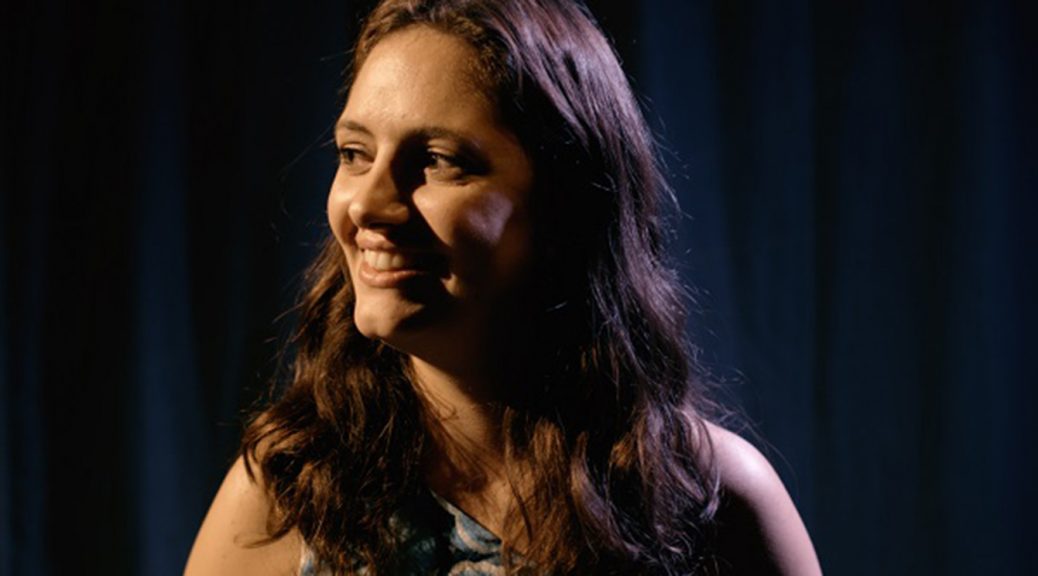
As this exciting online festival draws to a close, I’m pleased I caught this forty minute monologue written and performed by Skye Hallam. Like my other recommendationsHeads or Tails is an easy to praise four star show.

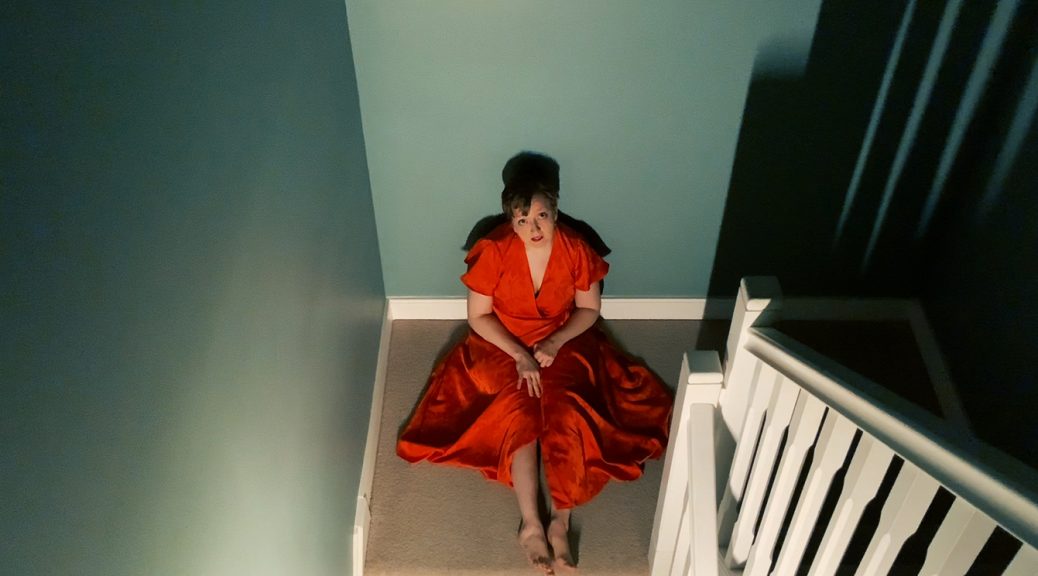
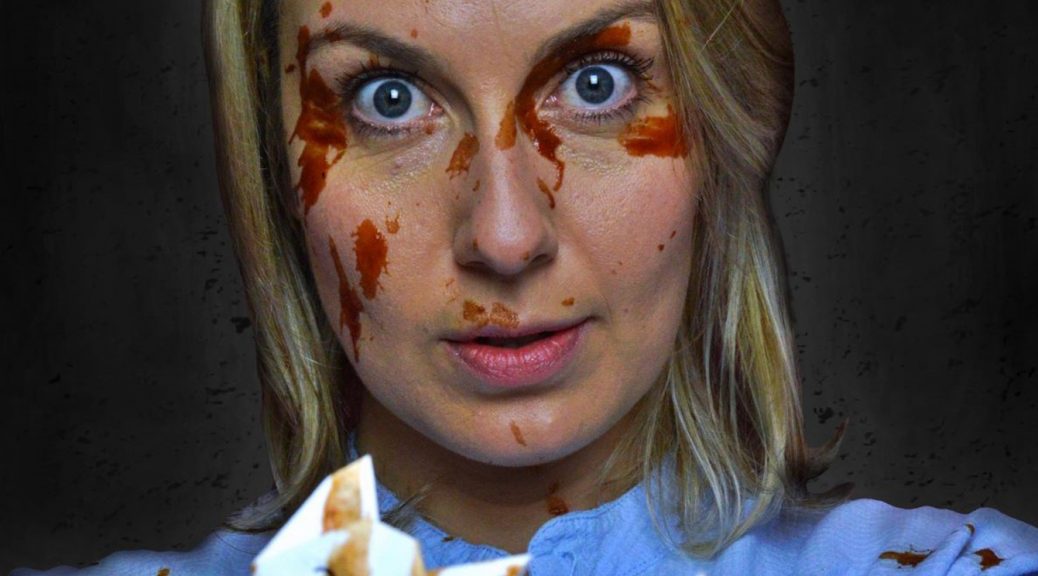
Hallam’s scenario is simple; her character Steph is a young woman visiting earth after her death. The achievement is to tackle the subject matter without being morbid. The jokes are good and the asides to camera sweet. The piece is funny and charming as well as thought-provoking.

As Steph dishes “insider knowledge” about the afterlife, plenty of topics are touched on. Idiosyncratic ideas about God (her name is Helen) and heaven are full of whimsy. Far from coherent, indeed occasionally rambling, I did wonder if Steph could be more confused about her trip back to earth. But Hallam has written a vivid character whose enthusiasm is contagious and performs her creation with endearing style.

Of course, it is what Heads or Tails tells us about life that’s really interesting. Here the effective characterisation works well. Try as we might to avoid that ‘M’(illennial) word, Hallam has sketched an interesting portrait of a demographic. Steph becomes an effective study: full of anxiety, checking her privilege, “outsourcing” her mental health and ever conscious of social media likes. 

Steph’s concerns add an edge to the show that ensures we pause for thought. She may try to reassure us about heaven but how happy was she on earth? There’s clearly plenty of scope for elaboration. It’s easy to see how Hallam could flesh out Steph (her life and her generation) further so that this show’s theatrical afterlife surely has potential.

Until 22 February 2021

www.livingrecord.co.uk

“The Color Purple” from the Curve Leicester

In his introductory remarks to this new online version of a 2019 revival staged with the Birmingham Hippodrome, the Curve’s artistic director Nikolai Foster hopes the production inspires and uplifts the audience. Taking on the task, director Tinuke Craig has achieved exactly that – 100 per cent!

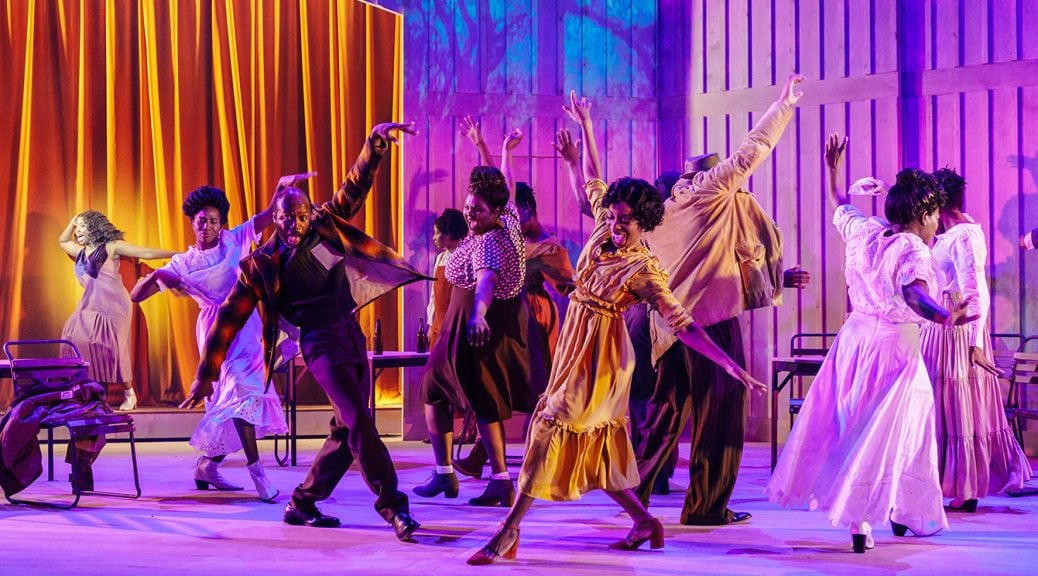
Adapted from Alice Walker’s novel, the Tony award-winning musical sounds fantastic. The singing here is superb, and the score, from Brenda Russell, Allee Willis and Stephen Bray, is interesting and intelligent. Staged in the round, the play’s sensitive filming allows us to take in strong acting and appreciate Mark Smith’s choreography. Craig combines all this to give us “a story to believe in” that won’t leave a dry eye in your house.

The lead characters, with their difficult lives, aren’t easy to portray. Celie’s self-sacrifice, as her children are taken from her and she endures horrific domestic abuse, is hard to watch. But, taking the role, T’Shan Williams expresses pain and anger through song with incredible power – the range in her singing is awe-inspiring. Celie’s whip-wielding husband, Mister, is relentlessly awful, with Ako Mitchell suitably repellent in the role. Casting vanity aside, his redemption is a strong companion to Celie’s. In the scene of Mister’s breakdown, Mitchell has a raw power that is breath-taking.

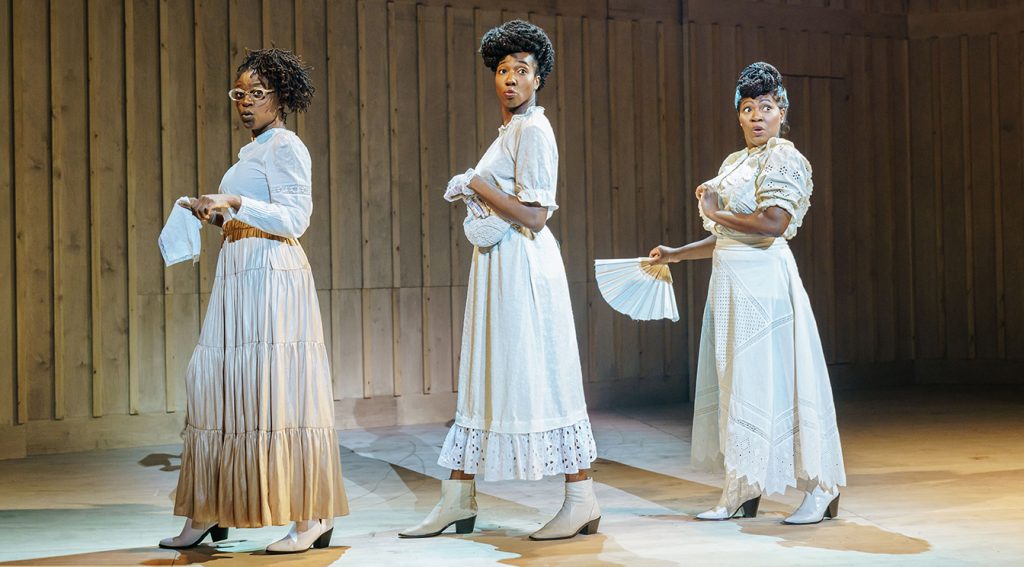
Rosemary Annabella Nkrumah, Danielle Kassarate and Landi Oshinowo

While Celie’s life is full of trauma, there’s humour in The Color Purple. Plenty comes from the gossiping church ladies, a brilliant trio performed by Rosemary Annabella Nkrumah, Danielle Kassaraté and Landi Oshinowo, who have some of the most adventurous musical moments. And while the story of Celie’s stepson and his wife Sophia is troubled, their relationship contains laughs as well as passion and is portrayed marvellously by Simon-Anthony Rhoden and Karen Mavundukure – I could have watched both all night.

Handling relief in such a powerful story is tricky. But the show needs light… and colour. This is most clearly revealed in the joy that surrounds the character of Shug Avery. With yet another magnificent performance, from Carly Mercedes Dyer, the blues singer who both Mister and Celie fall in love with becomes a sage who holds the key to Celie’s future. Dyer’s portrayal convinces, while her powerful singing commands. And Shug and Celie have one of the best love songs there is.

The finale reveals how well structured the show is, Marsha Norman’s book prepares us for emotion and T’shan Williams excels in delivering it. It is Celie’s journey of self-discovery that makes the show so powerful. I had goosebumps for the last 20 minutes. Acknowledging the beauty in herself and the world, Celie comes to accept her sexuality and her religion in an inspiring and uplifting fashion that, fittingly, ends with a prayer.

Until 7 March 2021

www.curveonline.co.uk

Photos by Manuel Harlan

“Good Grief” from Platform Presents and Finite films

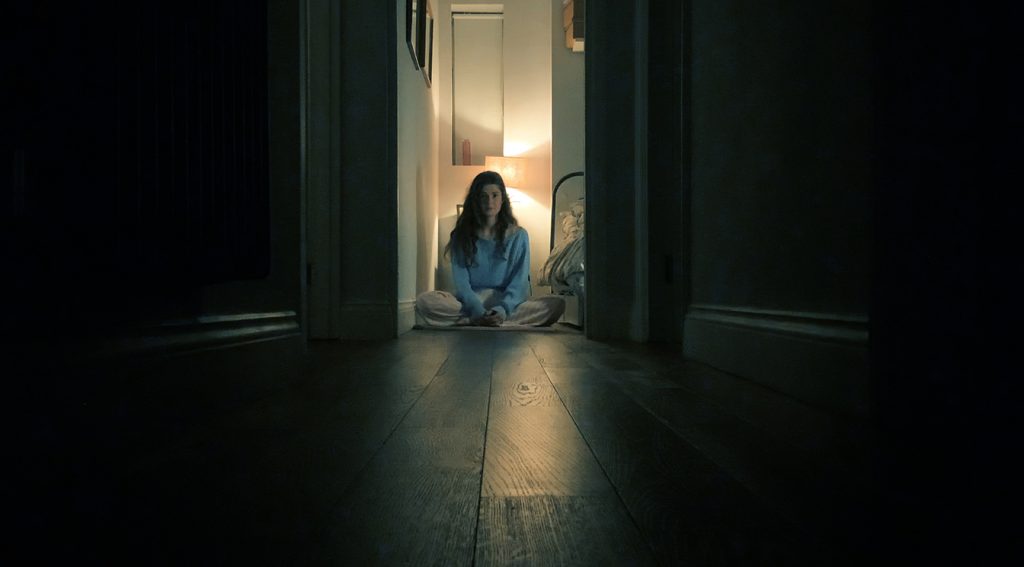
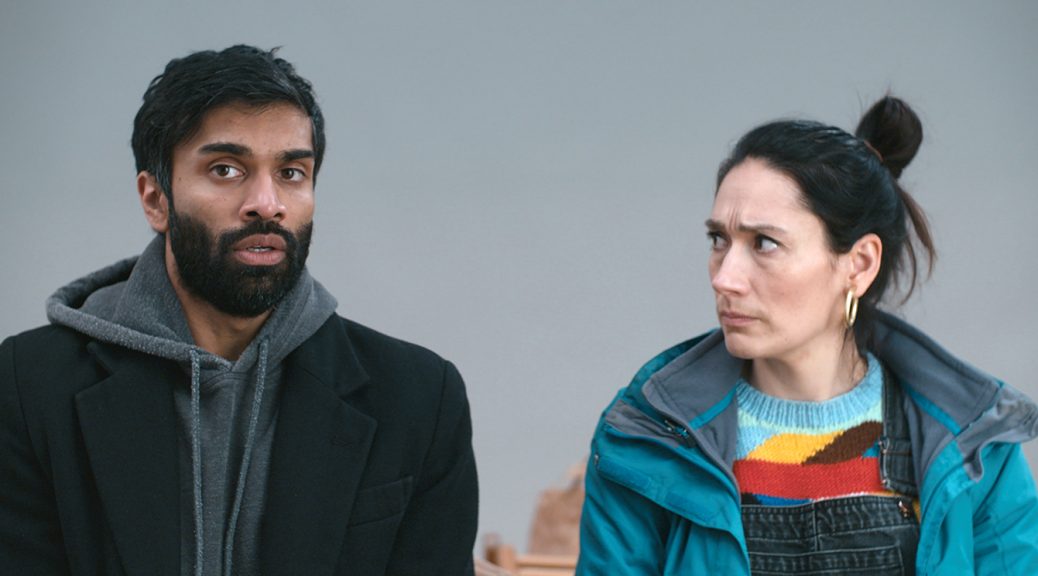
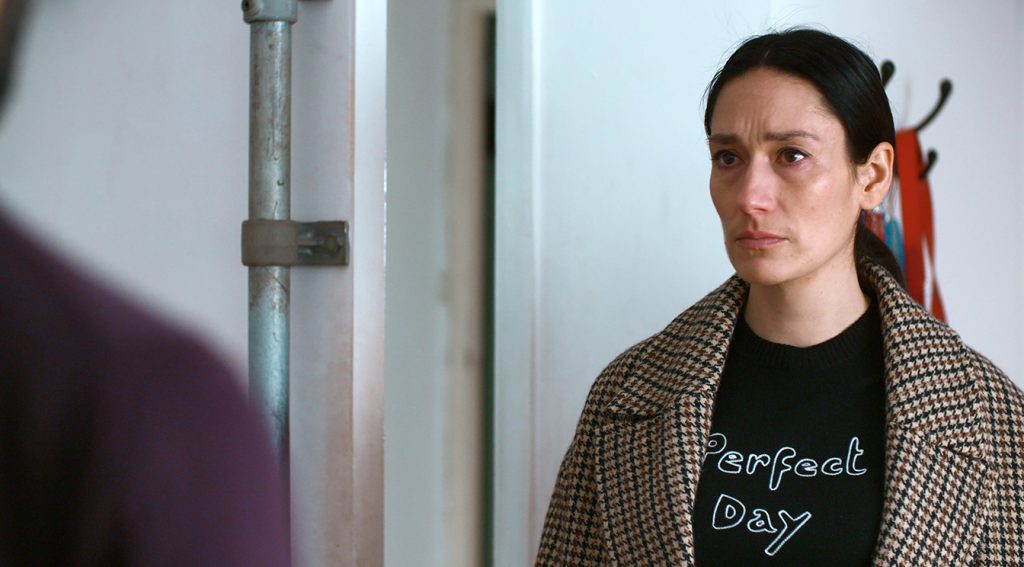
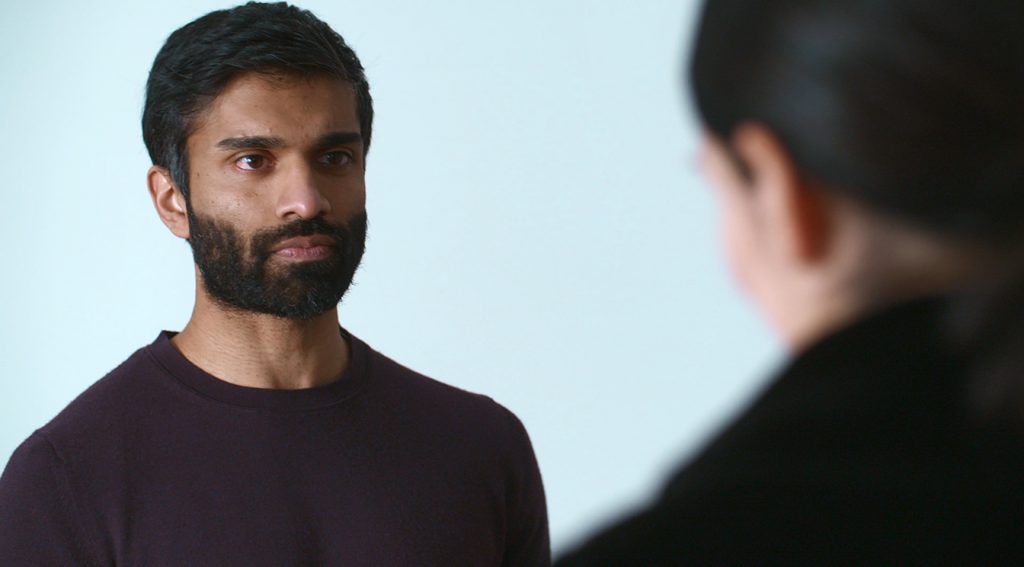
With director Natalie Abrahami on board, Lorien Haynes’ impressive new piece explores the impact of grief. With a naturalistic feel and fantastic attention to detail, there are wonderful performances, so it’s a show to enjoy despite the difficult subject matter. Nikesh Patel plays Adam, who has lost his wife Liv to cancer, and Sian Clifford takes the role of their friend Cat. Both performances complement the strong observations in the script.

Sian Clifford in Good Grief
Sian Clifford

Clifford has called the mix of play and film a “plilm”. I respectfully disagree! It’s filmed in a studio space with the simplest of props, and captions introduce the date and location of each scene, but Abrahami brings the theatre to the screen better than most. There’s an air of a successful workshop, of rehearsals freshly completed and a real feel of the theatre – just what I need right now, thank you.

Good Grief has shortcomings. Firstly, while injecting humour is a fine idea, the jokes aren’t good. The humour isn’t dark or original enough. This becomes an increasing problem as Adam is supposed to be funny. With “always a joke” to hand, some of them need to land.

The friends’ relationship is established and developed well. Aided by the performances, both characters are made appealing and they are recognisable. It’s not much of a plot spoiler…

Nikesh Patel in Good Grief
Nikesh Patel

…to say that Adam and Cat end up sleeping together. But this raises another quibble. Much of the drama comes from how shocking you find the sexual element or how convincing the subsequent guilt is. Maybe a stronger sense of their community might help? Other friends are mentioned and what other people will think is questioned a lot. But the idea of the close-knit, well-to-do clique they belong to is vague. Neither seems to like the other people in their lives, so why should they bother what they think?

Haynes gives due weight to both characters’ mourning – it feels important to note that friends grieve as well as partners. There’s real insight here. Even more impressive, while Good Grief is a tear-jerker it never feels emotionally manipulative. The temptation, for a writer, must be strong. Admittedly, there’s a posthumous letter from Liv that makes a pretty harrowing scene. But Haynes holds firm to give us a candid picture of grief that rings true with its realism, and is both moving and intelligent.

Until 15 April 2021

www.originaltheatreonline.com

“Romeo and Juliet” from Metcalfe Gordon Productions

Top marks for trying. For this filmed theatre production of Shakespeare’s tragedy, director David Evans has used technology to carry on working during Covid-19. Using green screens and CGI sets means protective social distancing is possible for a large cast. Unfortunately, the results are uneven; you end up missing live theatre more than ever.

The technology created a lot of work for editor Ryan Metcalfe – his job is mind-boggling – but the results are disheartening. Performing scenes individually, hugely difficult for actors, creates a stilted feel that is too frequently uncomfortable. The detailed planning for each moment is distractingly transparent.

Jessica Murrain as Prince in Romeo & Juliet credit Ryan Metcalfe Preevue
Jessica Murrain

Evans has a firm hand on direction. There is an air of restraint, with many performances understated, as well as physically static, that presumably aided editing. Sensible and understandable, it provides an interesting take for Vinta Morgan’s Friar and works well for Jessica Murrain’s Prince. But most of the time, the reserve becomes monotonal and sometimes downright odd.

Worse still, at a time when so many miss it, the lack of human contact between performers is painful. Moments when characters would have touched, to emphasise any kind of emotion, stand out. You can sense the instincts of performers have been denied. The production is truly of the moment. But could this lack, somehow, have been used poignantly? Instead, it’s just… sad.

Emily Redpath and Sam Tutty credit Ryan Metcalfe Preevue
Emily Redpath and Sam Tutty

The show is saved by its leads (with a little help from Derek Jacobi reading the prologue) and an impressive score from Sam Dinley. Romeo and Juliet do get to touch. Evans has secured a fine Juliet with Emily Redpath. Any struggles come from the role rather than Redpath – as a young woman Juliet’s life is more controlled, an inadvertent insight into the play. Redpath emphasises youth and makes the part moving.

The show belongs to Sam Tutty’s Romeo. The Dear Evan Hanson star is hugely impressive, bringing a natural feel to the lines, without denying their poetry, and a confidence to the part that is captivating. Frequently, his reactions are more interesting than anything else going on. This experiment with a new kind of theatre did not work for me. But fans of Tutty will not be disappointed. 

Until 27 February 2020

www.romeojuliet2021.com

Photos by credit Ryan Metcalfe / Preevue

“Shook” from Papatango

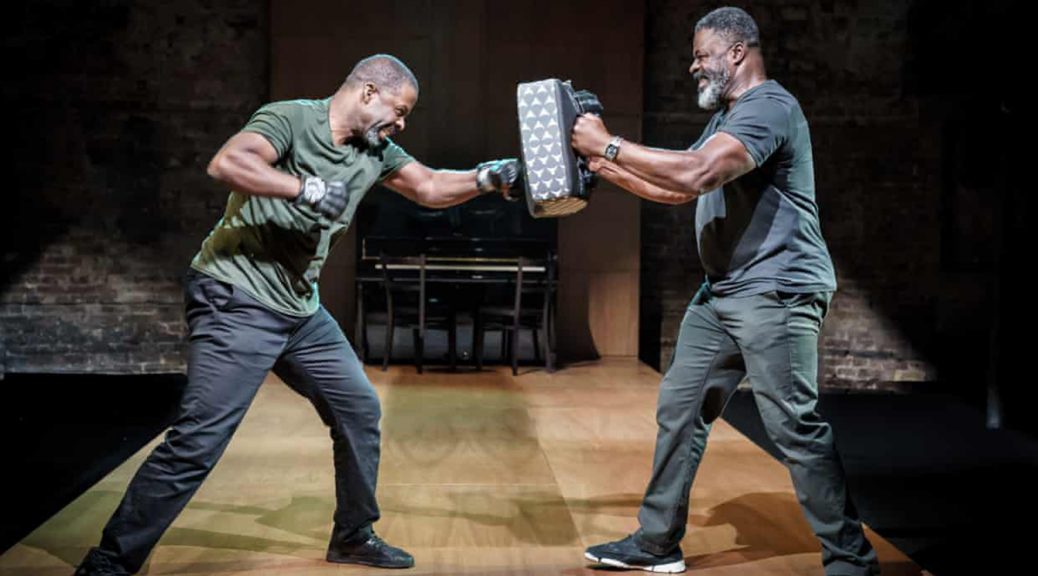
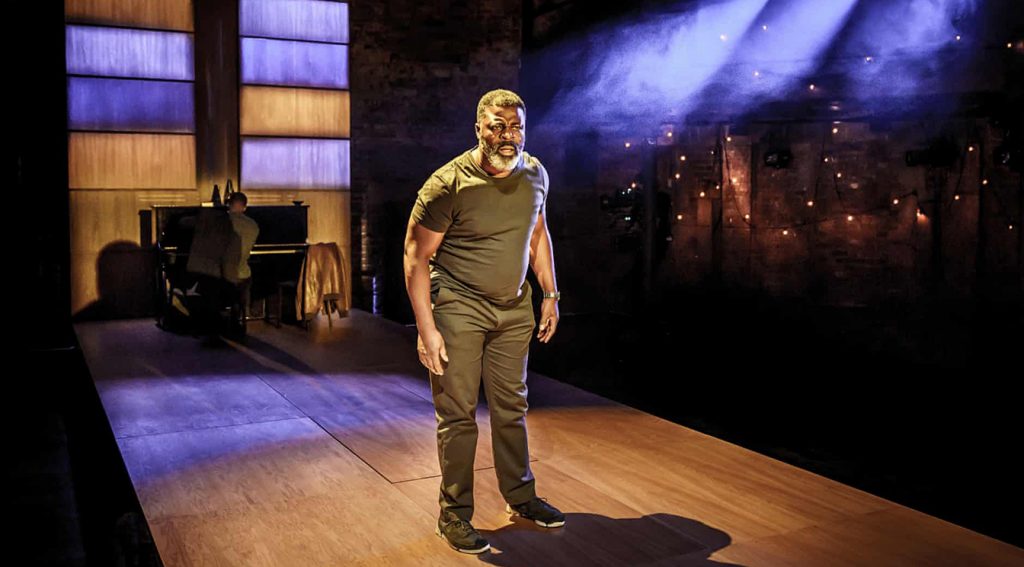
Samuel Bailey’s play is deservedly multi-award winning. Not only did Bailey receive the prestigious Papatango new writing prize for it but, in 2019, accolades followed a run at Southwark Playhouse. While Covid-19 prevented a scheduled transfer to the West End, thankfully, a filmed production is now available.

Following three young offenders due to become fathers and taking parenting classes in prison, the play is unsurprisingly bleak. Learning the histories of Riyad, Jonjo and Cain is tough. Bailey highlights how abuse, poor education, mental health and gang culture affect them. But none of these topics is imposed on the play. Flowing from the true stories that inspired Bailey, his writing does justice to painful experiences.

That all three characters are resigned to so many of their problems makes Shook strangely disturbing. As with the violence – the “biting, punching, kicking” – that we hear about, and the misogyny and homophobia we listen in to, a lack of life chances is taken for granted. Futures are pretty predetermined. The shocking ignorance that these men suffer from is relentlessly exposed. Riyad’s ambitions are simply a source of pain to him, while Cain’s remark that “nothing good comes of thinking” proves haunting.

Joshua Finan in Shook from Papatango Credit The Other Richard
Joshua Finan

Having so few choices that being institutionalised seems a viable option is truly depressing. Director George Turvey does well with moments of light relief, keeping them firmly under control. Best of all, strong characterisations involve the audience and prevent the piece descending into any kind of ‘poverty porn’. The cast are able to develop their roles magnificently. Josef Davies’ Jonjo is catatonic at first. Josh Finan’s Cain, with his fevered energy, moves from talking too much to asking powerful questions. But the play’s lynchpin is Riyad. Ivan Oyik is fantastic in the role: weaving the exercise of petty power over fellow inmates with underlying insecurities. 

Andrea Hall and Ivan Oyik

If there’s a flaw in Shook, it’s that the men’s teacher, Grace, is underwritten. As a result, Andrea Hall’s admirable performance feels wasted. Likewise, I’ve a suspicion that an oft mentioned off-stage character, Jake, is supposed to be more vivid. Or maybe it’s appropriate that those trying to help the men remain shadowy figures? There’s certainly a sense they will achieve little despite their attempts.

An effort that does pay off is to bring the audience increasingly close to the characters. All involved in Shook should be proud of this achievement. Likewise, bringing the characters themselves closer, into a circle of support and friendship, is skilfully managed. It makes learning what each misses all the more moving. Things big and small – from the details of their lives to the lives they are excluded from – run throughout the play, including, most touchingly, wanting a hug. My advice is simple: be sure not to miss Shook.

Until 28 February 2021

www.papatango.co.uk

Photos by The Other Richard

“I Love You, You’re Perfect, Now Change” from the London Coliseum

Wildly successful in the US, this musical from Joe DiPietro and Jimmy Roberts is a collection of songs and sketches about romance. There’s lots of dating: drinks, dinners and trips to the movies. The show progresses, if cursorily, to tackle marriage and love in later life. The songs are perky, the humour easy: the show is entertaining if unimpressive.

Off-Broadway origins are easy to spot, with a cast of four taking on a variety of roles. The structure is effective, making you wonder what’s coming next? I Love You, You’re Perfect, Now Change is not boring, but it is predictable. Complaints from and about the opposite sex are tried and tested. Handled lightly enough, there’s little to offend… or surprise.

Efforts to make the show contemporary result in highlights: a number about texting explicit pictures and a mock advertisement with lawyers in bedrooms. But most of the show is mild. One character’s self-description – “awkward and whiney” – could go for nearly all. There’s little variety among those looking for love and, and although there are a couple of tender moments, the pacing is flat.

For this production, director Kirk Jameson uses all manner of camera work to spice up the action and is generally successful. Jameson has a good appreciation of the dry humour and light cynicism here and showcases it admirably. It is the cast that secures success – an exciting and experienced quartet who are a pleasure to watch.

Alice Fearn has two of the best numbers, including a song about being a bridesmaid that she does exceptionally well with. Oliver Tompsett gets to show his comedy skills playing a variety of unsatisfactory male roles. The chemistry between Brenda Edwards and Simon Lipkin is fantastic in more than one number: Sex and the Married Couple might make the whole show worthwhile.

Time and again the performers make good songs sound great and poor jokes passable. They take on a variety of characters and establish each with startling speed. And they sound great. With regards to the cast – I love them, they’re perfect – but maybe change the show?

Until 30 January 2021

www.londocoliseum.org

The Living Record Festival

This online event for digital arts boasts over forty original productions. There’s poetry, music and comedy on offer. And many shows are hosted ‘on demand’, so they can be enjoyed at any time. With a focus on audio dramas and storytelling, here are four that took my fancy.

Breaking Up With Reality at the Living Record Festival

Breaking Up With Reality

This is an audio monologue, with effective percussive accompaniment, from theatre company Nod At The Fox. An “experiment” is the claim, but easy going comedy and smart reflections on life make it whimsical and charming. 

Our narrator, Eden Harbud, discusses his relationship with reality as if it were a romance! Bearing in mind the corona virus lockdown, the pressing question is whether reality has left for good or will it BRB?

It’s easy to connect to these lockdown experiences – lots of tea and tiredness. The writing shows plenty of imagination and comforting touches, even as the New Normal arrives. Any “reassuring” thoughts offered in this wise and gentle piece are gratefully received right now.

Skip Skip Skip Leanne Moden credit Tracy Gnoan
Leanne Moden photo by Tracy Gnoan

Skip, Skip, Skip

Skipped tracks on a CD player make an effective device to present a collection of poetry, written and performed by Leanne Moden. A love of music and nights out on the town are evoked in glorious detail: I won’t think about cigarette lighters in the same way again.

The poems share the theme of youth. And it’s nice to encounter coming of age vignettes that show teenage confidence. The girls here, sometimes, feel like royalty. Why shouldn’t they? 

There’s violence as well – recognisable from small town life. But with the help of some judicious humour, the energy of Moden’s verse propels us to positivity. Teenage years are described as “a rare bootleg import EP”: the argument and delivery here is brilliant.

Moden wants to “remember everything” (those details again) and since access to any show purchased is for 24 hours, you can attend this “listening party” more than once.

On Record at the Living Record Festival

On Record

Here’s a psychological thriller that’s a high quality, traditional affair. Some meta-speculation around the genre of radio drama is clever enough. Better still, the plot has a neat twist worthy of golden age detection fiction.

Ella Dorman-Gajic and Cameron Essam write and perform in the piece and impress on both counts. The script is sharp, aided by Essam’s direction, and believable characters are quickly established.

While the writers take the subject of domestic abuse seriously, and the piece is frightening, there’s a mystery within On Record that is superbly entertaining. Without spoilers, let your suspicions run wild and you should enjoy this half hour immensely.

Shifting Sands at the Living Record Festival

Shifting Sands

Tom Thornton’s drama is aptly named; it’s a fifty-minute show that wavers between examining a young man’s personal trauma and a dystopian sci-fi with a touch of mystery story too. Playing with expectations, sincerity and a surreal twist are not easy to combine, but Thornton unites them admirably.

An exciting big idea first. An “unprecedented change in human evolution” results in our internal dialogue being heard aloud! What a great idea for an audio play. It made me think about the work of psychologist Julian Jaynes. It’s a shame the notion isn’t developed and that the subsequent dystopia is less original. Touches of humour help but we still end up, predictably, with a “God like digital behemoth”.

When it comes to the telling of the story, Thornton is excellent. Our narrator is engaging and intriguing, while tragic events and an urgent desire for control generate sympathy. You might even suggest the experiences of this young man, for whom life is “twiddling its thumbs”, is a dystopia of a different kind.

Four stars for all

More audio plays are available. And there are filmed productions too: Skye Hallam’s Heads or Tails and Ram of God by Theodora van der Beek being two examples. Although this is a small selection of what’s on offer at The Living Record Festival, it seems safe to have faith in creative director Ross Drury and search out further treats.

Until 22 February 2020

www.livingrecord.co.uk/the-living-record-festival

“Public Domain” from the Southwark Playhouse

With so much of our lives spent online, a musical about the internet seems apposite to our lockdown times. The twist for this show, from Francesca Forristal and Jordan Paul Clarke, is that it is a verbatim piece. All the words spoken or sung are taken from the internet. The result is a snapshot of a recognisably confusing world, refocused and clarified with considerable talent.

Forristal and Clarke are a gifted duo. Their music is pop-inspired, electronic and generally perky. While sampled speech is not to my personal taste, it is integrated well. Blissfully, the show is streamed live. That more than makes up for some technical glitches on the first night. Forristal and Clarke’s voices are strong, their acting, taking on different characters, commendable. Adam Lenson’s direction aids clarity.

The subject matter is wildly ambitious. And there are missteps. Like plenty of online content an edit would help. Touching on Facebook’s treatment of outsourced employees makes for a great number but is an issue that needs more time. Similarly, the topic of censorship feels tacked on – it deserves a show all of its own.

Francesca Forristal in Public Domain Photo The Other Richard
Francesca Forristal

Overall though, the book for Public Domain is impressive. The words, chosen for interest and importance rather than inherent musicality, flow remarkably well. Focus comes, first, from two fictional YouTubers (SwaggyWan and Millies Fitness). Made from several sources, they are credible creations that show us the positive and negative approaches to life online. Both prove funny and moving and leave you wanting to subscribe.

There’s another ‘pairing’ in the show: those YouTubers alongside Facebook mogul Mark Zuckberg and his wife Priscilla Chan. Television interviews or congressional hearings (which might remind you of the Donmar’s show, Committee) provide insight into a very different world from the struggling influences. It’s a strong, thought-provoking, contrast that works well.

Jordan Paul Clarke in Public Domain Photo The Other Richard
Jordan Paul Clarke

When it comes to how these different sets of people are presented, Forristal and Clarke gain further respect. The music provides a sincerity and emotive power to plenty of glib comments (it’s the internet, remember). Due attention is paid to the positives of the social networking; it helps people feel “a little less alone” and an unexpected finale emphasises this important point. Yet an underlying cynicism shows an intelligent approach. No matter what happens, our YouTubers want you to follow them!

The web is worldwide but at their best, Forristal and Clarke catch most by casting a narrow net. It’s easy to imagine Public Domain as a project as much as a finished piece. The subjects covered are so topical, further versions could surely be developed. And I know I’d watch.

Until 16 January 2021

www.southwarkplayhouse.co.uk

Photos by The Other Richard

“Phèdre” from NTathome

After its generous offering of shows for donations during the first lockdown (thanks again) the National Theatre now has a streaming service. It’s a great deal: choose a monthly subscription, with exclusive content, or rent shows individually. And the broadcasts are those for cinemas, so of the highest quality. Joining up sounds like a good New Year’s Resolution to me.

The first show

There’s plenty of choice – more will be added each month – but I’ve started at the beginning, with the first NTLive broadcast dating from 2009. Nicholas Hytner’s production of Jean Racine’s version of the Phèdre myth, with Theseus’ wife in love with his son, is a show I’ve long regretted missing.

The first triumph for the production is Ted Hughes’ text. The script is packed with memorable lines. This is glorious poetry. The story is clear and the telling captivates the ear, no matter how complex the psychology.

Hytner’s direction matches Hughes’ direct appeal. There’s nothing fancy here – it’s not needed. Nothing distracts from the characters’ passion and turmoil, with their flaws and the “inexorable Gods” balanced as explanations of why tragic events unfold.

Famous faces

Helen Mirren takes the lead role and gives a performance that deserves to be described as mythic. Phèdre is “the monster in this riddle”, a “diabolical” woman, who can be truly scary. But it’s Phèdre’s agony that Mirren makes palpable. The “constellations of torment” over love for her stepson Hippolytus are various. There’s guilt aplenty and it’s plenty moving. At first, Phèdre is a “dying woman wanting only to die”, and Mirren conveys this exquisitely. But there’s also anger – an address to Venus is magnificent. As Phèdre becomes a “woman in a frenzy”, speculation escalates as to what will come next.

Ruth Negga and Chipo Chung in Phedre credit Catherine Ashmore
Ruth Negga and Chipo Chung

Phèdre is Mirren’s show. But there’s a superb supporting cast here. The play’s love triangle, with Hippolytus enamoured by enemy of the state Aricia, is not to the fore but makes a strong role for Ruth Negga. Aricia’s “thrill” at conquering the chaste Hippolytus gives her character an edge. While Dominic Cooper’s Hippolytus has presence (his chemistry with Negga is great and he’s generally good with torment!) there are some shortcomings. A description of him as “the most loveable of men” doesn’t match Cooper’s performance and even the character’s oft-repeated flaw of pride isn’t conveyed.

Back to the best bits. A trio of attendants populate the play, commenting on or contributing to psychology or action, and all three performances are fantastic. Margaret Tyzack is remarkable as Phèdre’s nurse Oenone, her complete dedication rendered utterly convincing. Both John Shrapnel and Chipo Chung, attendants of the younger lovers respectively, admire and admonish by turns. These roles are effective in making us question how much Phèdre is really “the cause of everything”.

Dominic Cooper and Stanley Townsend in Phedre credit Catherine Ashmore
Dominic Cooper and Stanley Townsend

Gods aside, there are moments when each of those in power seems easily played. And nobody appears more manipulated than the ‘hero’, in classical terms, of the piece – the legendary Theseus. Stanley Townsend manages to make the king successfully human. Cursing his son, and calling in a handy favour from Poseidon, is an electric moment that reflects the dichotomy surrounding personal motivations and divine interventions perfectly.

Up next…

Shows missed and much-loved productions that can be watched again have a place on NTathome. Olivia Williams’ play Mosquitoes was tricky to get a ticket for (it stars Olivia Colman), so is next on my list. Dara, Othello and The Cherry Orchard are all excellent shows I’m tempted to revisit. Once again, the National Theatre is going to be a huge help during lockdown.

www.ntathome.com 

Photos by Catherine Ashmore

“Sunset Boulevard” from the Curve Leicester

This is a Christmas treat for theatre lovers that, thankfully, is carrying on into the new year. Director Nikolai Foster’s production of the Andrew Lloyd Webber musical is produced especially for a lockdown audience and has the clever idea of using all areas of the theatre for filming. Foster gives us a great show and makes you want to visit his venue at the same time.

Like all good revivals, Foster reminds us of the show’s strengths – in particular, what a sturdy piece of musical theatre Sunset Boulevard is.

The strong story, based on the Billy Wilder film, makes a drama of a former movie star, Norma Desmond, in later life. Sophisticated lyrics from Don Black and Christopher Hampton take us deep into the character and motives of Norma and her new beau, Joe. Lloyd Webber’s score is both adventurous and lush, and musical motifs powerfully build while stand-out songs are plentiful.

Sunset Boulevard Photography by Marc Brenner

Them there eyes

From such a firm base, Foster benefits from a fantastic cast. Both Ria Jones as Norma and Danny Mac as Joe know these roles well, and it shows. The casting (David Grindrod) is superb: Jones looks great in a turban and them there eyes are perfect for the number With One Look. Mac’s matinee idol air fits the Hollywood scenario.

Jones is angry and serious – not easy with such a camp character. Mad, sad Norma is to be pitied for her “folly” and her “scrambled brain”, but Jones provides moments of imperiousness to confirm that Norma is a figure to be reckoned with. And she provides magic. When it comes to the power of the movies and imagination, the years slip from her face, and Norma becomes an innocent ingénue.

This is Mac’s show, though. Joe is a great role, a partial narrator (think Nick Carraway) who becomes a victim: his claim to be an observer of Norma – “watching her sunset” – raises questions from the start. Mac’s mix of his character as an “uppity hack” and “stony-hearted” is balanced by moments that show an ambition for an artistic career that hasn’t, really, disappeared. And Mac’s singing is simply wonderful.

Both leads are aided by superb foils. Molly Lynch’s Betty provides a perky love interest that is intelligent and complex for Joe. Adam Pearce’s bass voice is a knockout and his role as Max Von Mayerling is developed magnificently.

Molly Lynch and Danny Mac 'backstage' Photography by Marc Brenner
Molly Lynch and Danny Mac ‘backstage’

Ready for your close up?

There’s no way to not enjoy this show or these performances. But a reservation has to be raised about the filming.

Seeing the orchestra (performing from the stalls) and camera staff at work adds an element of theatricality – nice – but the editing is sometimes manic. Points of view syncopated to the score is fair enough. But too many cuts to different cameras make it hard to appreciate the work of choreographer Lee Proud (in my experience, that’s a shame). Split screens also confuse. Graphics overlaid on to the action are just unnecessary.

Such caveats fade when considering how Foster has used his theatre. Taking the action into the auditorium works well. Setting scenes ‘back stage’ makes for great moments. Posing Joe in a bank of seats, watching events, then joining in the action is a perfect reflection of his ambiguous role. And to have Norma alone in the circle for her entrance and finale is a stroke of genius.

For a filmed show, Sunset Boulevard makes you crave to get back into a theatre in 2021. And you’ve got to love that! There’s a sense of pride in this very smart-looking venue that makes me regret never having visited it. Given other strong work, such as My Beautiful Launderette and What the Butler Saw, that Curve has shown during lockdown, a trip to Leicester might be my resolution for a sunnier 2021.

Until 9th January 2020

www.curveonline.co.uk