“Three Sisters” at the Union Theatre

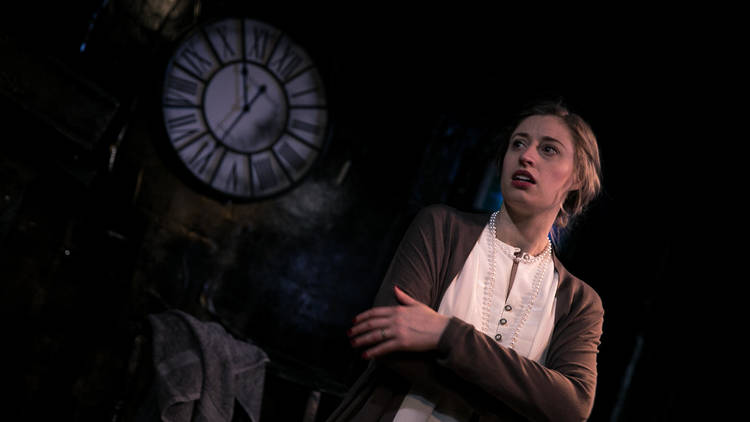
Director Phil Willmott uses award-winning American playwright Tracy Letts’ version of Chekhov’s masterpiece to deliver a fine new production with wide appeal. The adaptation, faithful to the structure and events in the original, is direct, forceful and clear – all qualities embraced and amplified by cast and creative team.

Celine Abrahams, Ivy Corbin and Molly Crookes play the eponymous siblings conscientiously. Trying to work out how to live while yearning for Moscow, each performer injects plenty of energy and angst. Joined by Benjamin Chandler as their younger brother the consistent impression is of brattish siblings suffering from “endless winter and talk”. All four performers develop their characters with precision to crisis pitch.

It’s the partners and lovers who benefit most in this production. Francesca Burgoyne, as detested sister-in-law Natasha, reveals the layers of her shrewish role well. Stephen Rodgers makes Masha’s husband more substantial than the wimp he appears on the page. And Masha’s lover, the philosophising Vershinin, becomes especially moving due to the skill of Ashley Russell. Two younger roles, soldiers in love with Irina, also stand out due to a careful performance by Tom Malmed as Tusenbach and Hugo Nicholson’s virile energy in the role of Solyony.

Willmott manoeuvres his cast expertly; it feels as if theatre-in-the-round is the only way to stage this play with debates and ideas flying around. The pace is speedy, once or twice too swift, with no fussy touches to diminish tragic events or lessen the seriousness of frustration. This is an angry show and emotions explode as often as they simmer. If there’s a fault, Chekhov’s humour is ignored. There’s little sense of the ridiculousness of situations and few attempts to raise even a smile. But the melancholy air of the play is aimed for with confidence, and that target hit with resolution.

Until 4 February 2017

www.uniontheatre.biz

Photo by Scott Rylander

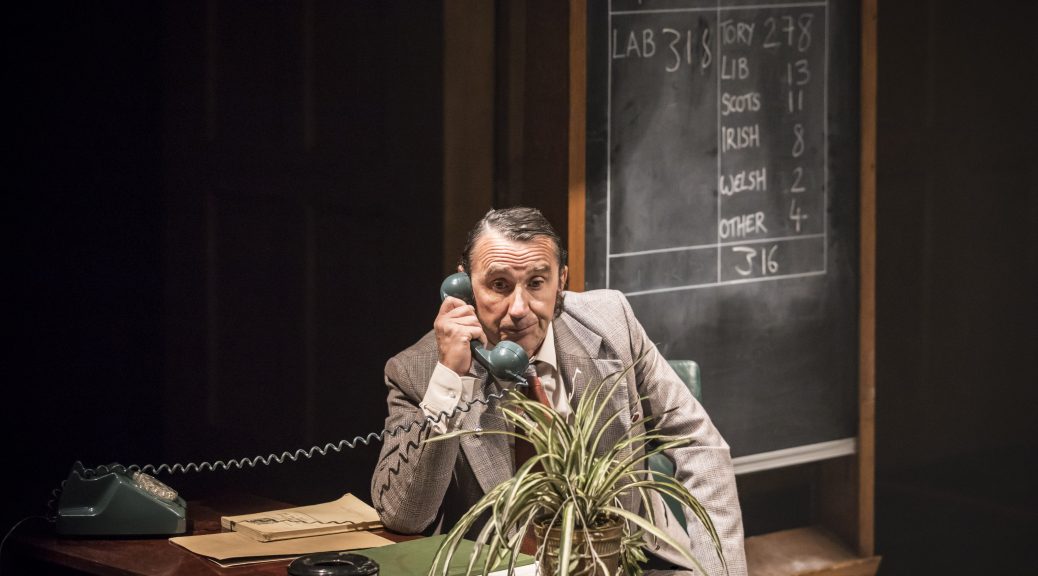
“This House” at the Garrick Theatre

James Graham’s play isn’t your regular political drama. Based on the flailing minority Labour government of the late 1970s, it looks at the mechanics of Parliament – the back-room antics of the whips, who make sure MPs vote. There are few names or issues that people will remember. And, instead of Machiavellian power brokers, the characters are misfit eccentrics, working hard in grubby anterooms. So the play’s transfer from the National Theatre’s Cottesloe, to the larger Olivier, and now, after a long wait, the West End, is a triumph for the young playwright, and his intelligent funny writing, which has warmed the critics’ hearts.

Honours are shared with director Jeremy Herrin, who handles the large cast impeccably. Nearly all the actors play more than one MP, each larger than life, and the sense of a building at work is conveyed with infectious energy. Counting the ‘ayes’ and ‘noes’ becomes nail-biting, while efforts to bribe or cajole coalitions are gripping. Add Rae Smith’s replica House of Commons set, with its onstage seating and bar, and you have a sense of fun that complements Graham’s great jokes.

Steffan Rhodri and Nathaniel Parker

This House is a brilliantly ambitious ensemble piece. Phil Daniels and Malcolm Sinclair are the chief whips, giving blissfully effortless performances. I probably don’t need to tell you they represent the Labour and Conservative parties, respectively. Praise, too, for Nathaniel Parker and Steffan Rhodri, playing their deputies, each with their own agenda and sombre moments that add humanity to the comedy. Much is made of the differences between the parties, with Labour louts calling their opponents the “aristotwats’, which seems to have struck Graham as particularly fascinating. If some jokes land heavily, relying on hindsight, they are still funny.

The research undertaken for the play is impressive, informative and conveys Parliament’s peculiar charm. Even better, Graham has a good stab at being impartial. How far he succeeds possibly depends on your own voting habits – but the stance of making a play about politics apolitical is dealt with well. That those in charge act like children is a point itself, although Graham is too good to fall for simplicity, showing passion and conviction from MPs of both parties. But the propensity to treat government like a game is clear and used to make brilliant drama.

Until 25 February 2017

www.thishouseplay.com

Photos by Johan Persson

“Benighted” at the Old Red Lion Theatre

A spooky story is fine Christmas fare. Plenty of the necessary ingredients for chilling spines are present in this J.B. Priestley story, with two sets of travellers seeking shelter in an isolated house on one of those dark and stormy nights. Economically adapted for the stage by Duncan Gates, the director is Stephen Whitson, and the two join forces to create two or three jump-in-your-seat moments – all the more admirable given that the raw material is a world away from Priestley’s strongest work.

Harrie Hayes, Tom Machell and Matt Maltby play three bright young things whose car breaks down as thunder claps overhead. All do well to flesh out their characters and control the humour that comes with those RP accents, though only Maltby’s role, as Roger Penderel, really has enough meat on it to allow him to shine. More thunder and more arrivals: a businessman and his chorus-girl fiancée, parts Ross Forder and Jessica Bay work hard on but are flatly written. The unwilling hosts for these travellers are just as clichéd, but here Forder, joined by Michael Sadler playing his brother and servant, gets to show off a strong transformation. A violent secret in the attic comes as a lightning flash – Priestley’s social commentary at last – as we meet Roger’s alter ego, like himself a damaged war veteran but, in this case, a dangerous one.

Benighted is especially interesting for fans (or students) of Priestley. Plenty of the playwright’s later preoccupations are nascent: social justice, class, the passage of time. The voice that we recognise as Priestley’s is present but says little that is coherent. Despite Gates’ and Whitson’s noble efforts, the characters are slim and the treatment of themes so peremptory that the show is never more than flawed fun.

Until 7 January 2017

www.oldredliontheatre.co.uk

Photo by Chris Gardner

“She Loves Me” at the Menier Chocolate Factory

Here’s a real treat for loyal fans of David Babani’s London Bridge venue. The ‘musical lovers’ musical’, by Sheldon Harnick and Jerry Bock, is perfect fare for the Menier, ticking every box with gorgeous songs and great lyrics. And this fine production does the musical masterpiece full justice.

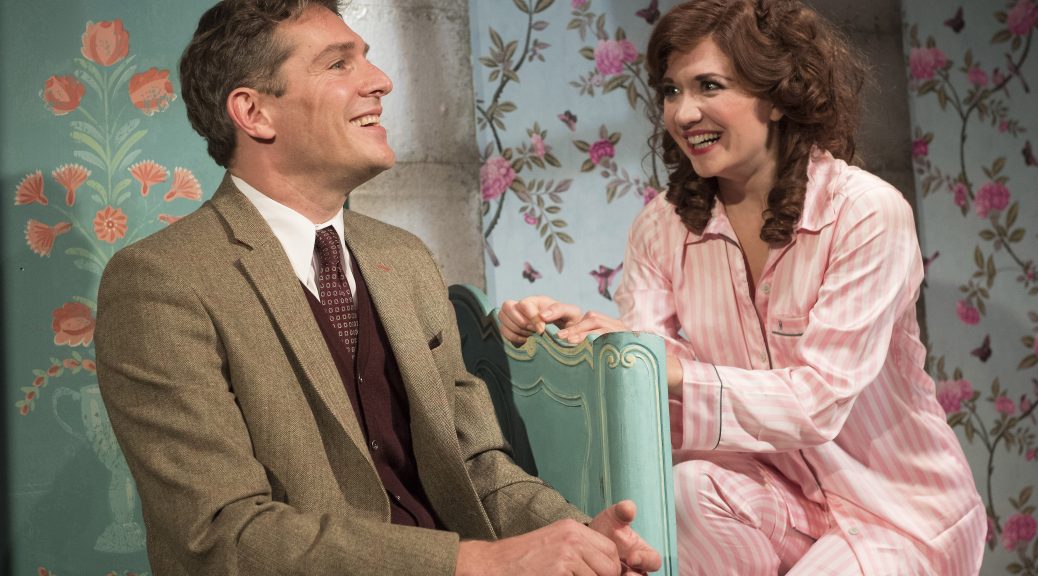
Joe Masteroff’s book is one of many adaptations of Miklós László’s play about two lonely-heart letter writers, Georg and Amalia, who are in love while unaware that they work together in a posh perfumery. It’s a delicious, fun-filled scenario, given weight by the performances of Mark Umbers and Scarlett Strallen. The couple’s delivery of each song is spot on. And each song is wonderful.

Katherine Kingsley and Dominic Tighe

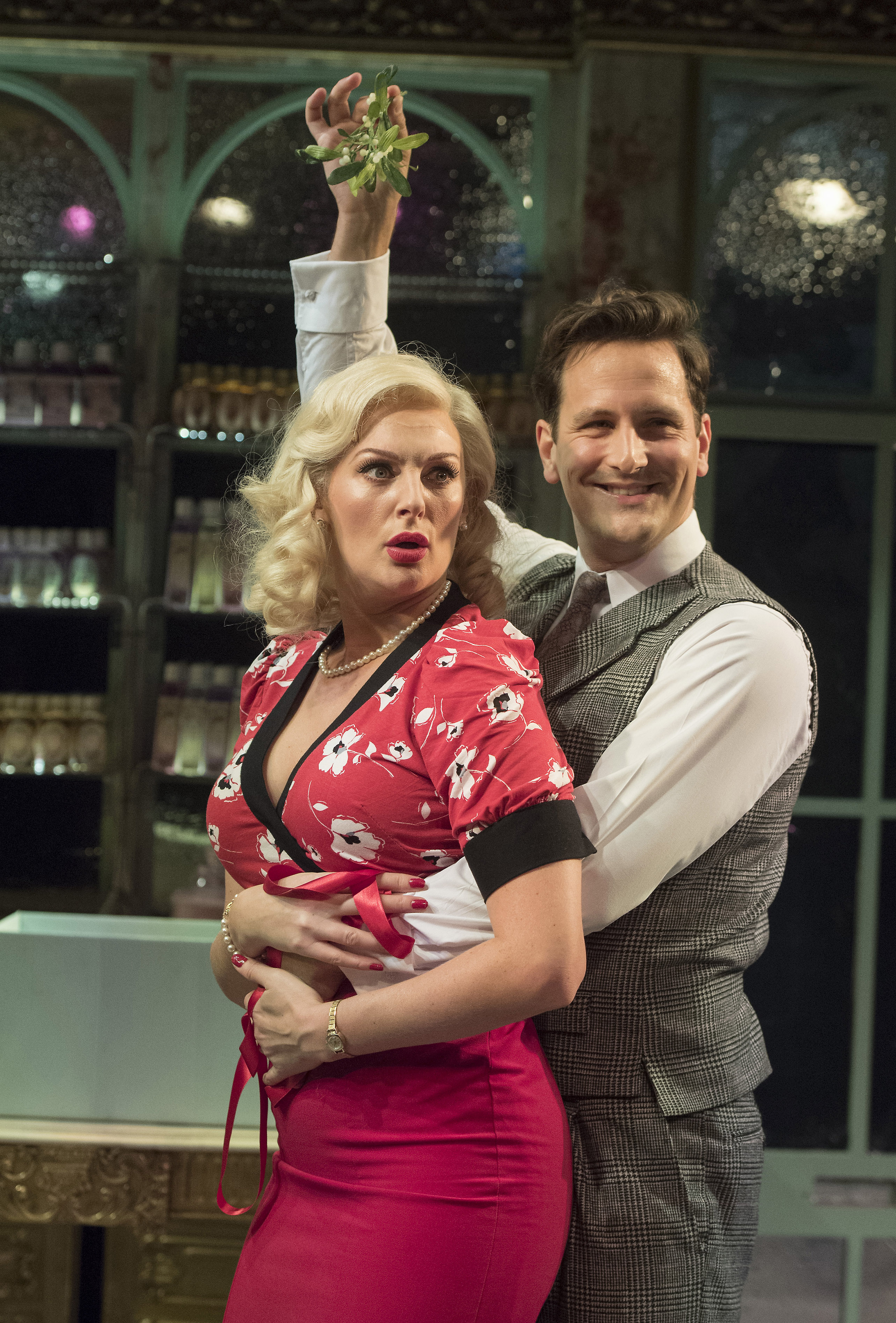
There’s a second love story, too: the romantic adventures of Ilona, betrayed by her colleague, the womanising Kodaly. What could be a sub plot stands proudly alongside the leads because of Katherine Kingsley and Dominic Tighe’s performances. And a third affair: the melancholy discovery of the shop’s owner, played by Les Dennis, that his wife is betraying him.

For every sentimental element in this musical, the trials of the characters make you feel this is a grown-up affair. The careful age distribution adds to the effect – Umbers does well to show us George as a middle-aged man. As with Amalia’s letters, everyone becomes a ‘dear friend’, their lives, loves and ambitions so perfectly encapsulated in the songs.

Director Matthew White does an impeccable job. Superb cameos from shop clerk Sipos (Alastair Brookshaw) and Cory English’s maître d’ show his level of attention and care. His decision to have strong British accents seems an unnecessary complication. There’s no reason for Georg and Amalia to sound like something from Brief Encounter. The only role that benefits is Ilona – turned into a northern blonde bombshell that makes Kingsley irresistible. A minor quibble for a production that deserves applause even for the set – brilliant work from Paul Farnsworth. And if some scenes seem cramped, it’s only more proof that the production deserves a bigger venue. She Loves Me is increasingly recognised as a major work. What a present a transfer of this great show would be.

Until 4 March 2017

www.menierchocolatefactory.com

Photos by Alastair Muir

Norman Pace will take over from Cory English between 10 January – 6 February.

“Mary Stuart” at the Almeida Theatre

Friedrich Schiller’s play, about 16th-century monarchs Mary Queen of Scots and Elizabeth I, is full of dramatic speculation about the personalities behind a continually popular historical power struggle, and it is adapted and directed by Robert Icke in rousing fashion. With Mary’s flight into England, engendering a political crisis for her sister Queen, much is made of international law and refugee status. Having two powerful women in charge begs for a study in gender politics. You can’t blame Icke for leaping on the opportunities offered – if hardly subtle, he marvellously stokes the flames within this early 19th century text.

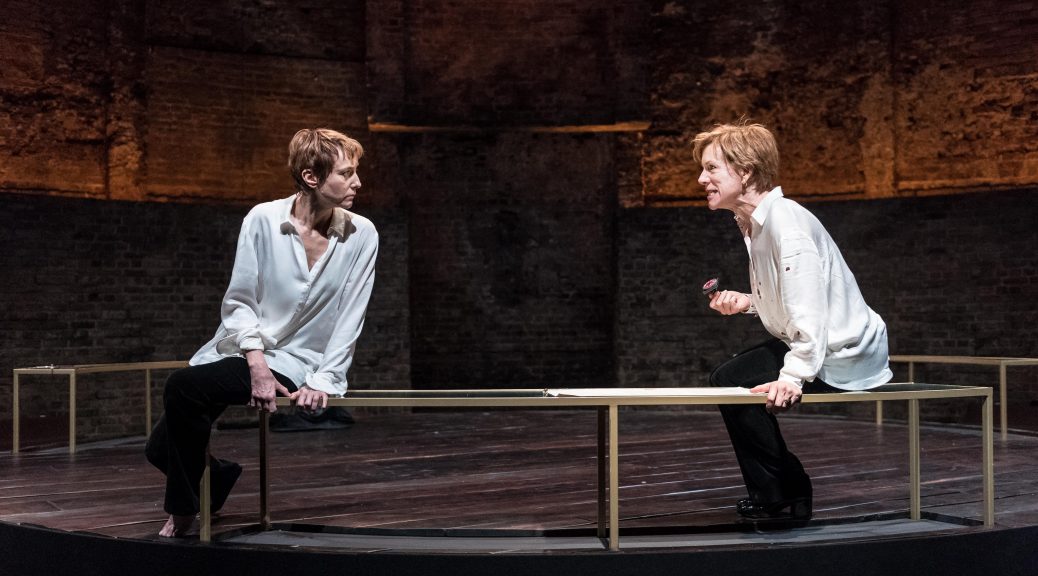
At the start of each show, a toss of a coin decides which role the two leads, Lia Williams and Juliet Stevenson, will take. That Icke emphasises one of the play’s many debates – the role of chance and fate – with such speedy excitement is indicative of his talents. As for the performances, both are impeccable. The night I attended heads and tails meant Williams played the Catholic monarch with a convincing mix of religious fervour and sensuality. Stevenson’s Virgin Queen was up there with the best – a shrewd executive struggling to hide hysterical fear about assassination plots. Physical threats to both women are highlighted by Icke, an expertly handled tactic that ramps up the drama.

Rudi Dharmalingham as Mortimer

A strong male cast joins Williams and Stevenson, with notably restrained performances. Occasionally the reserve strikes as almost odd. Rudi Dharmalingam’s double-dealing Mortimer presents a coolly controlled fanatic – his attempt to rape Mary is disturbing. Leicester is another duplicitous character who John Light makes it a pleasure to hate. Vincent Franklin and Alan Williams make their skill and experience show as Elizabeth’s loyal advisors, Burleigh and Talbot, who have to present different sides of an occasionally clunky argument about beheading Mary that are.

With brilliant performances, and some sprucing from Icke, this lengthy play, crammed with ideas and long sections of argument, races along. Success comes from the staging, with designer Hildegard Bechtler’s help. Played in the round, a rotating circular stage adds an adversarial air throughout. A climactic scene, utilising the stage’s movement is magical: accompanied by a song from Laura Marling, Elizabeth is transformed into Gloriana – face paint and all (it’s just too tempting for a story teller) – while Mary, in a simple shift, is freed from the “slavery” of the crown and worldly concerns. It’s a tough sell and, if you’re enamoured of Good Queen Bess, you won’t fall for the Marian martyrdom. But presentation of the debate about these women is brought up to date, the story shown at its gripping best, and there’s no doubt that Icke has produced stunning theatre here.

Until 21 January 2016

www.almeida.co.uk

Photos by Manuel Harlan

“King Lear” at the Barbican

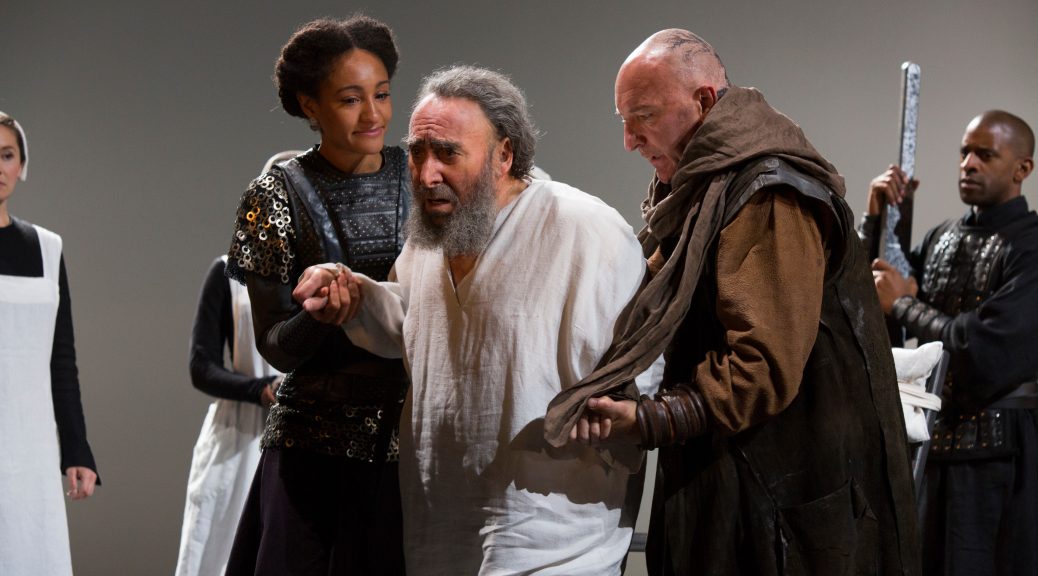
Gregory Doran and Antony Sher consistently turn out gold-standard work for the RSC. Their latest offering from Stratford is Shakespeare’s tragic monarch – a big challenge no matter how good your credentials – and they deliver in predictably impeccable style. Here, Lear is presented as a pagan priest. With Celtic touches from designerNiki Turner and an imperiousness from Sher that few could match, exhortations to the gods make a lot of sense. And there are plenty of well-used supernumeraries: Lear’s “insolent retinue” of Knights are out in force, while the unwashed masses that the king has neglected are there from the start. The additions, on top of traditional foundations, ensure interest and create a grand scale.

Despite Doran’s keen eye on the extras, Sher’s Lear has been allowed to overpower the production. The rest of the cast includes some fine performances, but other roles struggle to make a mark. One exception is Antony Byrne’s Kent, whose transformation into Caius is so fine that you almost believe he’s unrecognisable. Another is Paapa Essiedu’s Edmund. The parallel plot of the elderly Gloucester’s trials and his bastard son’s betrayal is delivered with intelligence and vigour. Essiedu joins the list of ones to watch.

As for Sher in the title role, while it has to be admitted that he takes few gambles, his delivery never fails. This is a physically frail old king, whose movements seem limited and difficult. Oddly, this fails to generate the sympathy you might expect and means tension slacks at some points when Lear should still seem capable of violent assault. But it’s a classy affair with key speeches marked out (it’s easy to imagine the pages turned down in a copy of the text), and Sher always sounds splendid. His charismatic presence further consolidates our monumental impression of this colossal production.

Until 23 December 2016

www.barbican.org.uk

Photo by Ellie Kurttz

“In The Heights” at King’s Cross Theatre

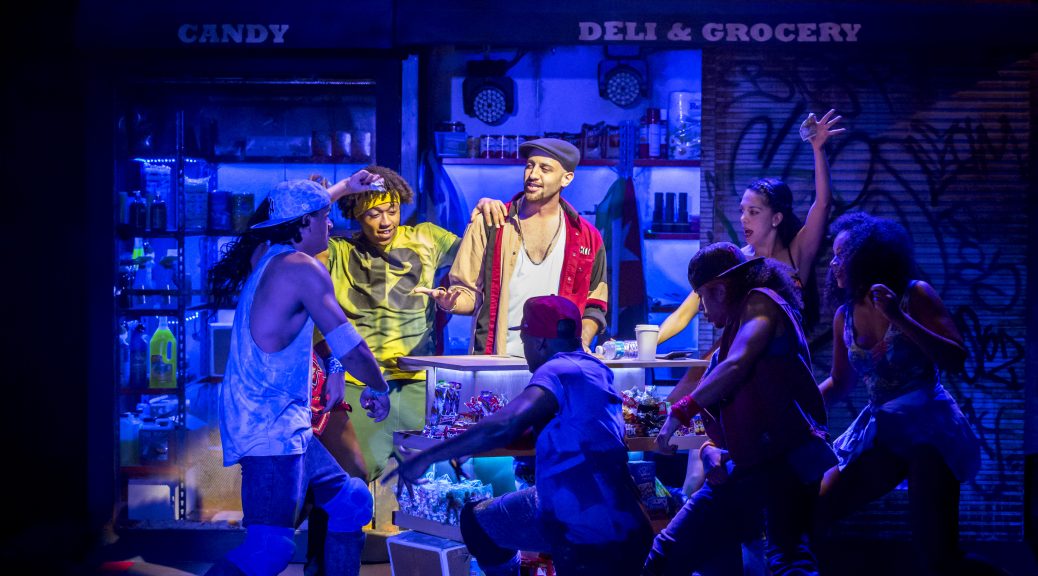
A visit to Lin-Manuel Miranda’s first show is essential preparation for his Hamilton next year. Another success story, it has had a 15-month run, after a premiere at the Southwark Playhouse, sharing a King’s Cross venue with The Railway Children. Strong enough to leave an impression wherever it finds a home, the traverse staging here, expertly handled by director Luke Sheppard and serving Drew McOnie’s energetic choreography superbly, seems especially suited for such an engaging piece.

There’s a lot of love surrounding In The Heights, not least from its dedicated young fans. Firstly, there’s love of community – namely, the area of New York that provides a setting. Two matriarchs, the elderly Abuela and the satisfyingly camp beauty salon owner Daniela, create a sense of heritage with impressive efficiency (as well as providing great roles for Norma Atallah and Aimie Atkinson). Home is the key, with nods to the problems of gentrification, and Quiara Alegría Hudes’ book works well here.

Then there’s love within the family. Most obviously with the Rosarios, who struggle with their daughter’s decision to drop out of college and start dating one of their employees. The production is lucky to have David Bedella beefing out the role of the father – he is always superb – while Juliet Gough matches him in a solo number that makes you feel she is underused. It’s a shame they couldn’t also fit in a sense of their own love affair – it seems too much time was spent on that American dream.

Which brings us to romance. Not one but two struggling couples create sweet moments. There’s Nina Rosario’s star-crossed affair with Benny (both Gabriela Garcia and Arun Blair-Mangat sing their parts deliciously). And Usnavi, with his fumbling approaches to Vanessa, another strong female character that Sarah Naudi makes the most of. Usnavi is a star role for Sam Mackay, who makes light work of his task as narrator and utilises his character’s diffidence well. Alongside great chemistry with well-meaning cousin Sonny, a sterling performance from Damian Buhagiar, it all goes to make a hero out of this everyday guy, which drives the show marvellously.

There are some stumbles from the book when it comes to rounding off stories and a sentimentality that’s hardly sophisticated. But the staging, including a brilliant scene during a power blackout, dancing and energy are all terrific. Miranda’s music is an innovative blend of rap with the Spanish heritage of Manhattan Heights, which revels in its multiculturalism. It’s complex but never alienating. Likewise, the spirit of the piece is a simple one. With a strong knowledge of musical theatre, for all its originality, this is a good old-fashioned show full of big emotions.

Until 8 January 2017

www.intheheightslondon.com

Photos by Johan Persson

“Love” at the National Theatre

Christmas theatre offerings on the South Bank are a good mix. There’s family fun from Peter Pan, a tense thriller with The Red Barn, and then there’s this new ‘think piece’ written and directed by Alexander Zeldin. A story of those living on benefits, housed by their unspecified council in emergency accommodation, it’s a timely look at Britain today. Emotional, quietly confrontational and hugely powerful, this is one of those plays you feel everyone should see.

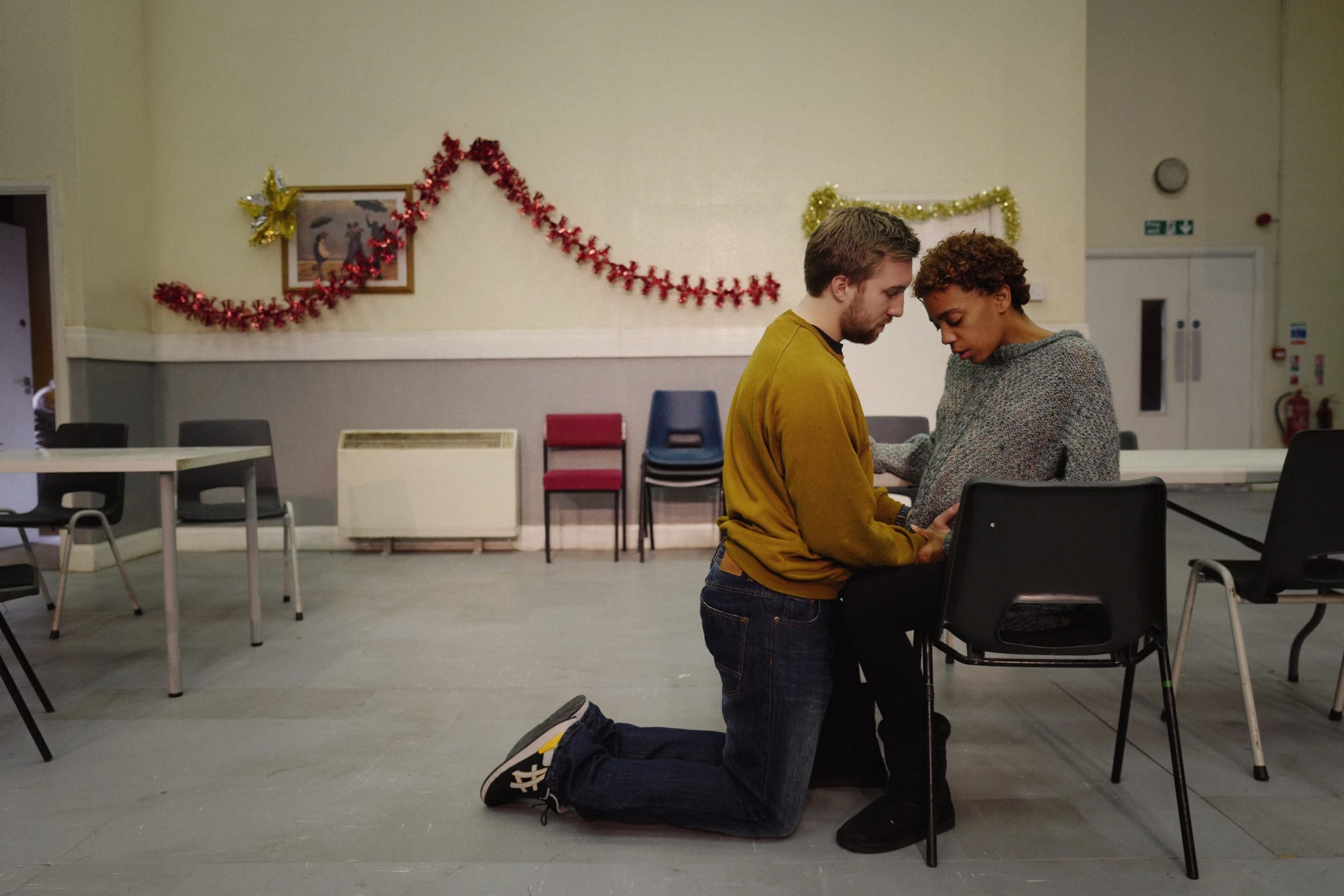
The focus is on a couple with two children, and another on the way, roles that Janet Etuk and Luke Clarke tackle commendably. The play relies heavily on performances from their character’s children and on the press night both youngsters were utterly convincing. We only glimpse the lives of some neighbours, while in the next room are a mother and son, whose vulnerability mounts to an almost unbearable degree.

Love is not for the squeamish. Anna Calder-Marshall’s brave performance as the elderly Barbara is disturbing (causing at least two audience members to break down). And, as her struggling, well meaning son, Nick Holder taps into raw emotion that comes close to overpowering. With tension all around – candidly portrayed – we still see the better sides of those in such dire situations. The title tells it all and saves the play from being entirely bleak.

Theatrically, this is a work of remarkable economy – yes, austerity even. So much has been stripped away that there’s little back story, hardly any action, and no pontificating commentary. Without sensationalism, Zeldin is not about presenting an exploration of how people end up on benefits or why the system is failing. Instead, the play is an eye- opening appeal, a stark insight that leaves judgement aside and calls for action.

Until 10 January 2017

www.nationaltheatre.org.uk

Photo by Sarah Lee

“Muted” at The Bunker Theatre

As the penultimate instalment of an excitingly diverse inaugural season this new venue, right next to the Menier Chocolate Factory, presents a musical. It’s a new, British, piece – always welcome – with strong song writing from Tim Prottey-Jones and Tori Allen-Martin that makes it easy to recommend the show to anyone interested in musical theatre.

Allen-Martin, brimming with talent, also performs as Lauren, caught in a love triangle with two old friends, former members of a promising rock band. Jake is Lauren’s current boyfriend, a role Jos Slovick expertly creates an interesting sinister edge for, while former partner Michael is suffering from depression following a traumatic event. Michael is played by David Leopold, with the character’s selective mutism leading to an admirably intense performance. He is joined in a series of flashbacks by his younger self, a role tackled impressively by Edd Campbell Bird.

Jos Slovick
Jos Slovick

Sarah Henley’s book reveals the back story too slowly, adding a sense of mystery that isn’t needed as the story contains plenty of drama. The roles of Michael’s uncle and mother (strong performances by Mark Hawkins and Helen Hobson) could easily bear elaboration. Director Jamie Jackson is keen to impress a mark on the show. Unfortunately, the super-stylish set from Sarah Beaton, a moated island for Michael that the cast paddle around in and an overused swing, along with some modish choreography, also repetitive, prove distracting.

A lot of the production is simply trying too hard – unnecessary when the basics are all present and correct. Muted has some important contemporary concerns and fresh dialogue that Jackson secures strong performances with. The neat idea of having a central character that doesn’t speak or sing until late in the show is nicely handled and twists in the story are engaging. Most importantly, the songs are good; a forceful collection of mature numbers that come together satisfactorily in an increasingly powerful second half. Muted is a musical whose praise should be loudly shouted.

Until 7 January 2017

www.bunkertheatre.com

Photos by Savannah Photographic

“The Children” at the Royal Court

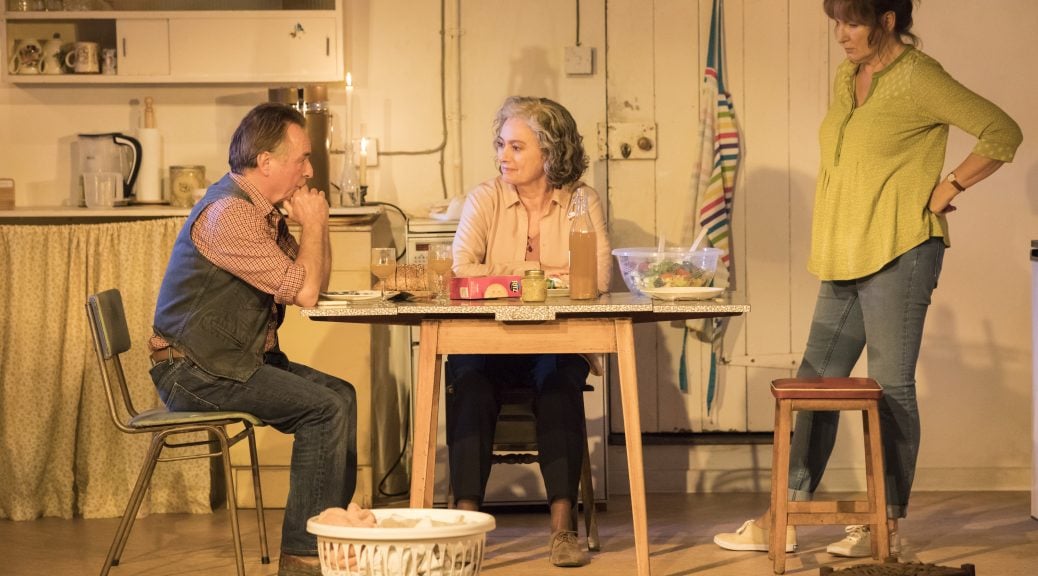
The critical consensus seems to be that Lucy Kirkwood’s new play is slow. True, it’s three talking heads: retired physicists coming to terms with a disaster at the nuclear power plant that they built and tackling personal meltdowns along the way. But Kirkwood’s wit – there are some very good jokes here – and some fantastic characterisation make her play so entertaining it grips from start to finish.

Against the dramatic backdrop of exclusion zones and power cuts, director James Macdonald allows the dynamics between three old friends (and lovers) to develop, doing justice to Kirkwood’s observations and dialogue. The carefully crafted performances are strong. Ron Cook plays Robin, who feels “eroded”, with a grumpy old man act that proves more complex than the first gags suggest. Francesca Annis performs as his one-time mistress, Rose, making the most of her character’s humour and mystery; reappearing after many years to pose the play’s dilemma – her plan to return to the toxic plant to replace younger workers who have more of their lives ahead of them.

In a year that’s seen several strong roles for mature women (there are interesting parallels here with Caryl Churchill’s Escaped Alone, which makes a welcome return early next year), Rose is joined by Ron’s wife Hazel, a brilliant part that allows Deborah Findlay to make the play her own. The atmosphere surrounding this “cautious” character crackles with tension, and the relationship with her husband is full of credible touches. Findlay even lights candles in character: carefully using only one match to suggest, ironically, eco-friendly convictions.

Hazel is appalled by Rose’s self-sacrificing suggestion – she doesn’t see her life as anywhere near over. Behind the homely touches there’s a steeliness that present the counter argument. Kirkwood isn’t simply baby-boomer-bashing, but it’s pretty clear where she thinks the moral obligation lies. Children is a less showy affair than the playwright’s biggest hit, Chimerica, or her previous work at the Royal Court, NSFW. The theme tackled, the responsibility of one generation to another, is thought provoking – this problem feels real world and ripe for exploration. But the presentation and symbolism are too blunt. Utilitarianism is a hard taskmaster and doesn’t leave a dramatist much room for manoeuvre.

Until 14 January 2016

www.royalcourttheatre.com

Photo by Johan Persson