All posts by Edward Lukes

“Present Laughter” at the Old Vic

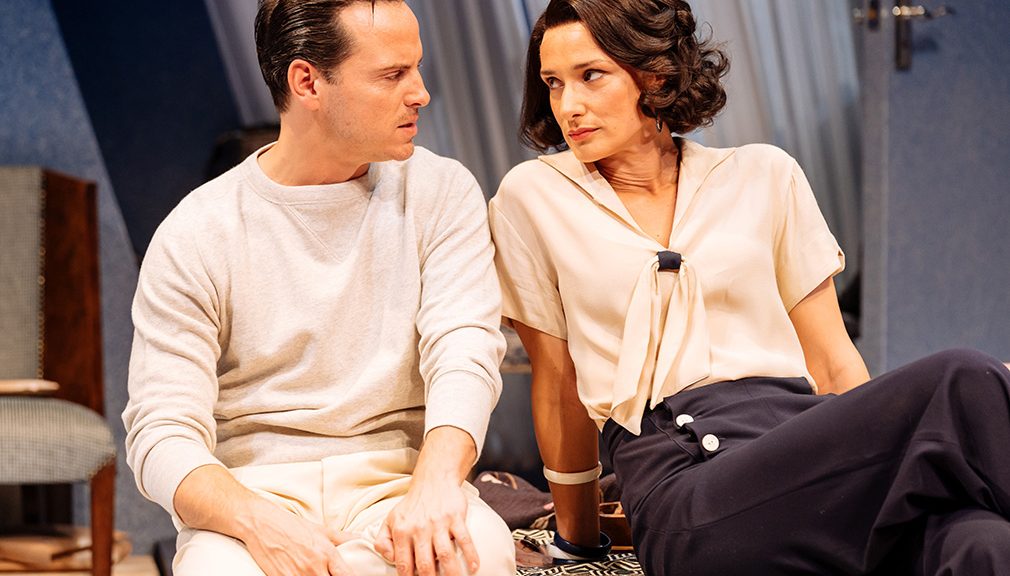
That Andrew Scott’s career is currently at such a well-deserved high adds extra piquancy to his taking the role of actor Garry Essendine in Noël Coward’s play. In a part that’s easily interpreted as the writer’s alter ego, Scott has the star quality to make this study of fame convincing. With such charm and magnetism having everyone run around after him, battling adoration from all and succumbing to temptation time and again, becomes believable and increasingly funny. The joke is on everyone – those chasing and our poor, pursued hero.

Scott doesn’t just get laughs from Coward’s studied script, which is wonderful, but has such command of the stage that every moment is made potentially comic. Showing as much incredulity as élan gives us the oft-cited childishness of the middle-aged man, as well as lot of energy. But Scott has the skill as an actor to make his character’s flaws mean something: for all Essendine’s self-obsession, this is a tender portrayal that appreciates the man’s loneliness.

The production belongs to Scott. Coward made the character – which he performed of course – a mammoth role. Few will complain, in this case. But while the variety of the author’s wit is shown with the various hangers-on around him, the play’s other characters are underdeveloped. The laughs are consistent enough, especially with Sophie Thompson’s performance, but the “adoring and obeying” entourage are mere foils. Only Essendine’s ex-wife can hold her own against him and Indira Varma’s performance benefits as a result: a truly suave figure, her delivery of the world “congealed” is worth attendance alone. Changing the gender for one of Essendine’s lovers – Joanna becomes Joe – barely raises an eyebrow. It’s nice to get the subtext shared by so many of Coward’s plays out of the way and it gives a menace to the role that Enzo Cilenti does well with.

For all the practiced superficiality of the characters and the farce within the plot, the production shows Coward’s depth as a writer. The sweet sorrow that was the text’s original title is given its due – to Scott’s credit – but also through director Matthew Warchus’ sensitivity and intelligence. Each act has a distinct tempo, as a drawing-room comedy becomes sexy before developing a mania that almost becomes grating. Meanwhile, the final act plays with the farce we have just seen before becoming somber. The ending is brave, as the quips that have proved so entertaining alter in tone to become fraught. Essendine’s rants, the overacting we’ve enjoyed so much at, pass into something sad, even dangerous. The play shows itself to be about more than present laughter as Warchus gives it the potential to linger in the mind.

Until 10 August 2019

www.oldvictheatre.com

Photo by Manuel Harlan
“Noises Off” at the Lyric Hammersmith Theatre

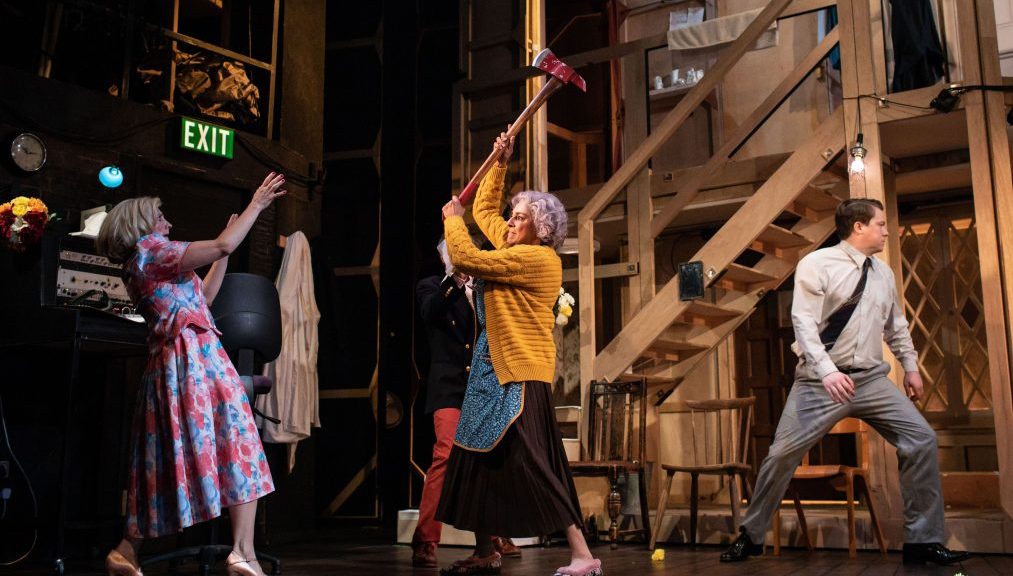
The delicious irony that lies behind Michael Frayn’s classic is as effective as ever in this new revival. Taking us behind the scenes of a farce, from disastrous rehearsals to the exhaustion of a show that’s been on the road too long, actually demands great technical skill. Every deliberately forgotten line or missed cue, each slapstick move and faulty prop needs executing to perfection. Director Jeremy Herrin and his cast have the know-how and, with that in place, the audience can sit back and laugh.

Without diminishing Herrin’s achievement – as well as the coming-and-going of the farce being performed there are the backstage shenanigans going on – Frayn’s play is so perfectly written you can’t fail to get caught up in it. It’s clear from the midnight rehearsal we start at that all is not well. In Act Two, which takes us literally behind the scenes, tensions within the company come to the fore. And by the end of the show those naughty noises we can hear, from the exasperated performers, are nearly drowned out by audience laughter.

If a trick is missed, maybe Lloyd Owen could make it clearer that his character, the exasperated director of the show, is the company lothario. Likewise, the love interests – on stage the actress Brooke (Amy Morgan) and behind the scenes the stage manager Poppy (Lois Chimimba) – could benefit from more laughs from the play’s love triangle. But all the cast are incredibly hard working. For once in the theatre it pays to show the crowd that you are breaking into a sweat, and results are fantastic.

Leading the laughs are Deborah Gillett and Meera Syal as old hands Belinda and Dotty, who are full of endearing gossip. Syal flips from formidable to vulnerable as her elderly character, who has put money into the tour, has to work increasingly hard for a return. There are fantastic turns, too, from Daniel Rigby and Jonathan Cullen as two nice but dim actors who quibble about bags and boxes or questions of motivation. Every ‘love’ or ‘darling’ gets a giggle and, as affection turns into aggression, the play gets funnier and funnier.

Showing the show deteriorate as tensions mount is beautifully done – remember we’re seeing pretty much the same thing three times here! The perspective alters, of course, quite literally when we are behind the scenes, but it’s the creation of a mood by all the cast that does the work. Each scene may be manic but the characters have different paces as exhaustion and desperation sets in. Command of the piece’s tempo means that Herrin gets the final applause. Listening to his onstage counterpart, the advice is to deliver the show with plenty of “bang”. We have that, but the action never escalates into something incomprehensible. As a final accolade for Herrin and his crew, the sense of tenderness towards the theatre in Frayn’s play is clear. The commitment that the show must go on, even if that’s just for the “small crowd at the front of the back stalls”, is unquestioned. Admiration abounds for all involved with a fantastic play that’s brilliantly delivered.

Until 3 August 2019

www.lyric.co.uk

Photo by Helen Maybanks

“The End of History” at the Royal Court

Jack Thorne’s new play is a somewhat traditional affair, and far less tricky than many seen at this venue. But the Royal Court embraces all kinds of writing and, while this family drama may seem superficially simple (low stakes, even), it’s a piece of great skill that raises interesting questions and leads to fantastic performances.

The play’s focus is Sal, a left-wing school teacher who talks too much but always means well. Thorne has created an idealised figure – for all her oversharing and eccentricity it’s surely impossible not to like her. And taking what must be a dream role, the always excellent Lesley Sharp delivers every line to perfection. With the help of John Tiffany’s direction, her scenes become very funny indeed. I don’t know who, if anyone, Sharp and Thorne had in mind when working on Sal, but the character and depiction is one of great tenderness and humanity.

Sal’s husband David is just as much the firebrand, but with a crueller edge that David Morrissey handles impeccably. He’s a mix of anger and frustration, ever keen to lecture, which creates surprising tension. All the cast impresses as the play’s three acts cover three decades, but Morrissey shows us his character ageing in a profound and moving manner. And the passage of time is a triumph for Tiffany, too, as choreographed scenes between acts highlight the mundanities of family life and emotions are glimpsed as the years pass by on a calendar.

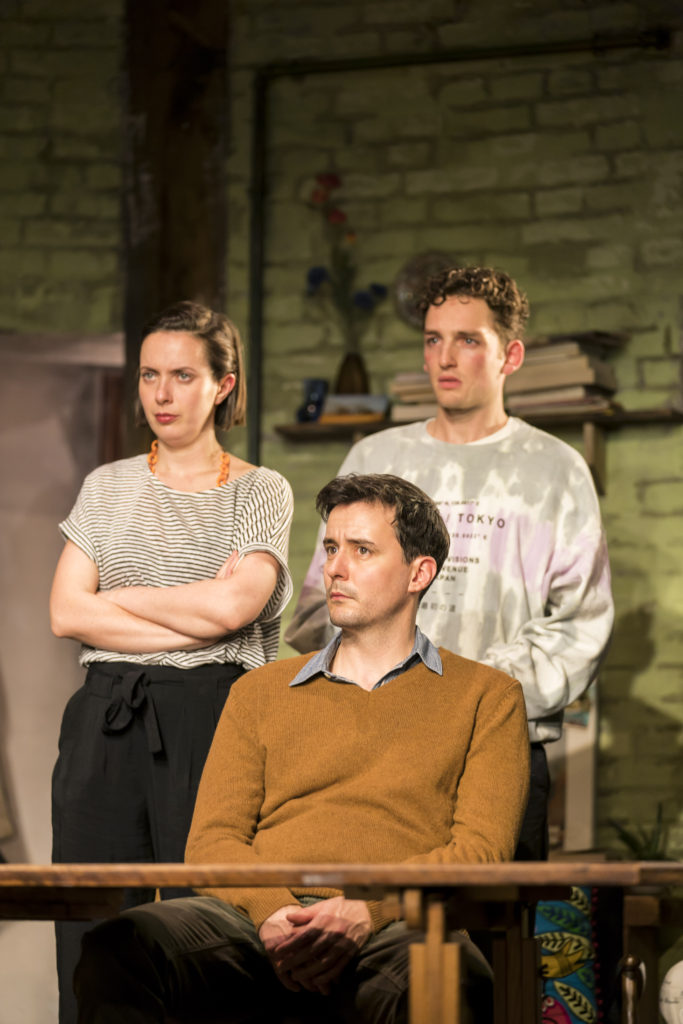
Kate O’Flynn, Sam Swainsbury and Laurie Davidson

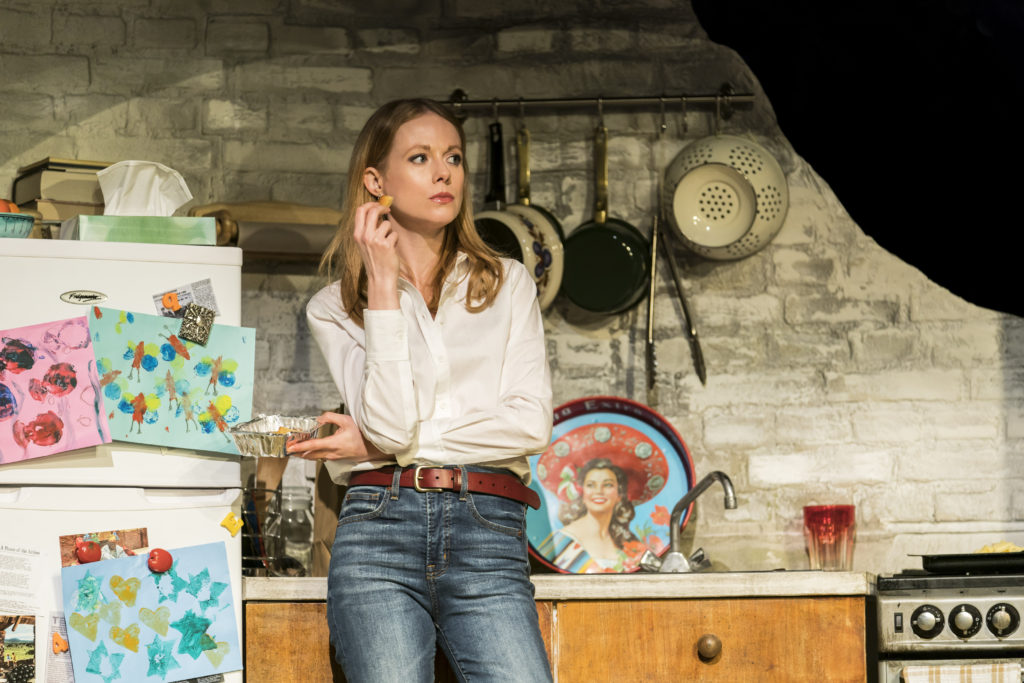
As for the couple’s children, each character and performance is wonderfully detailed. Kate O’Flynn, Sam Swainsbury and Laurie Davidson show the nuances of their characters at different ages and the complexities of sibling rivalry. The one person who marries into the family makes a final great role for Zoe Boyle, who segues from an embarrassed guest meeting her in-laws for the first time to becoming thoroughly sick of them all. It’s notable how vulnerable all the younger characters are, arguably, in some cases, a little catastrophising. But their problems convince as well as providing plenty of laughs along the way.

Zoe Boyle

The End of History isn’t all funny. Each act contains a dramatic bombshell delivered with a deceptively light touch. In its structure and intelligence, the piece is reminiscent of David Hare’s Amy’s View, carefully refocused and with Thorne’s distinctive sense of humour. Convictions here are often a source of fun – from awkwardness to incredulity – but they are also ideas put into practice. Socialists like these are literally a dying breed, hence the title reference to Francis Fukuyama’s book. And their extreme ideas about inherited wealth may say more about our society than their logic – it certainly shocked some of my fellow theatregoers. Presenting Sal and David as figures from the past, with a fragile legacy, leads to a melancholy finale. But getting to know both, which Thorne allows us to do with such skill, gives this understated play its power.

Until 10 August 2019

www.royalcourttheatre.com

Photos by to Johan Persson

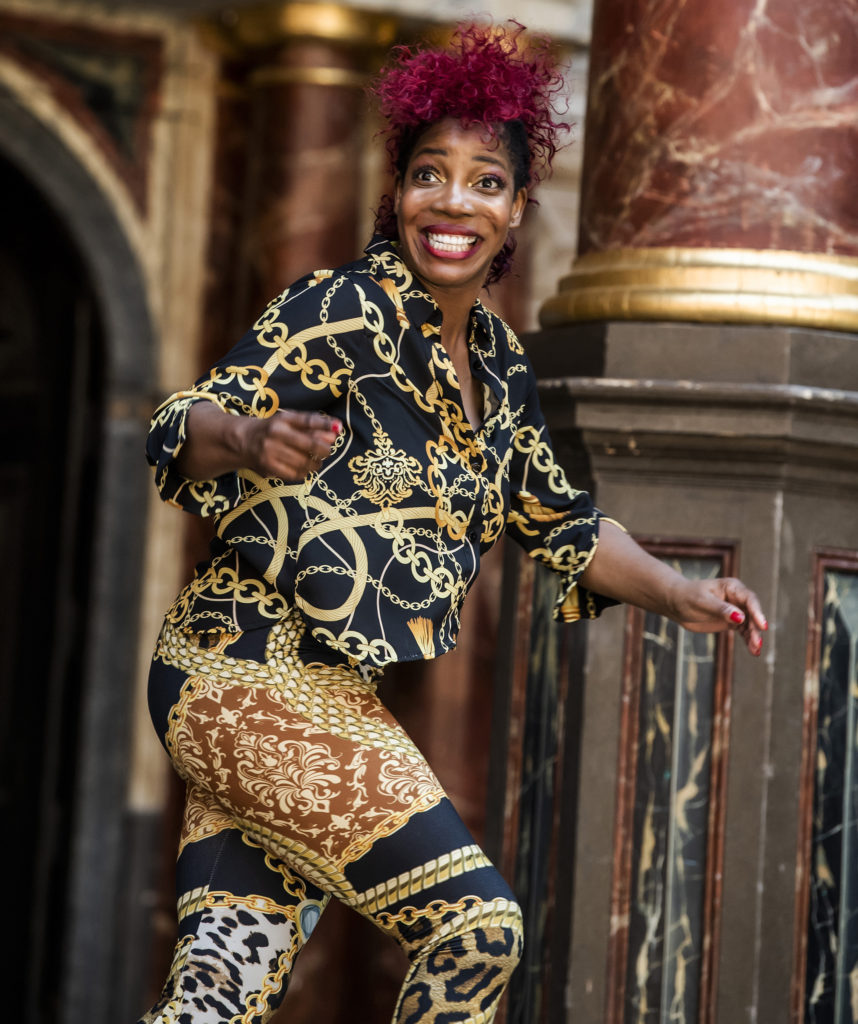
“A Midsummer Night’s Dream” at Shakespeare’s Globe

When Shakespeare makes reference to the theatre, as he regularly does in this romantic comedy favourite, then the venue that bears his name has a head start. The welcoming vibe on Bankside is enhanced by the text, and director Sean Holmes takes full advantage of that. Theatregoers are embraced at every opportunity: a ramp to the stage breaks boundaries and one audience member a night is recruited to play a part (a nightmare for some, but there are few better ways to get a crowd clapping). It’s never nice to be a party pooper but, while the atmosphere is great, the production itself is uneven.

We’re off to a stilted start with Theseus and Hippolita, with an unfruitful take on their strange courtship. Doubling as the also battling fairy King and Queen doesn’t prove much happier for Peter Bourke and Victoria Elliott, who seem hampered by Jean Chan’s costumes (they are not the only ones). Bourke and Elliott work hard but their roles – and the questions of power that surround them – could be questioned more by Holmes. The characters end up lost.

The quartet of Athenian lovers who we follow also fail to excite. Despite command of the stage, from Amanda Wilkin in particular, their adventures in the woods fall flat. There are too many thrusts of the hips to get cheap laughs and too many lines lost in song. Overall, there’s little romance, sex or chemistry among any of the couples. Compared to Emma Rice’s production at the Globe in 2016, it all feels rather tame.

Still, there are plenty of ideas to enjoy. Some touches are neat – like the blowguns that send people to sleep. Some are sweet – they have a piñata! And some ideas are quite brilliant: having Puck played by the whole cast isn’t just practical, it makes for a brilliant final speech that pokes fun at actors fighting for lines. And I trust Puck’s T-shirt will be on sale soon. But other concepts feel misguided. This theatre hardly needs to emphasise Shakespeare’s globe-to-globe appeal (by the way, check out the forthcoming Shakespeare in Poland festival). But having cast members deliver some speeches in foreign languages doesn’t work, however admirable the motivation. While it’s intriguing to wonder what tongue is being spoken and why, it fights with accessibility – what if you’ve never seen the play before?

Rachel Hannah Clarke

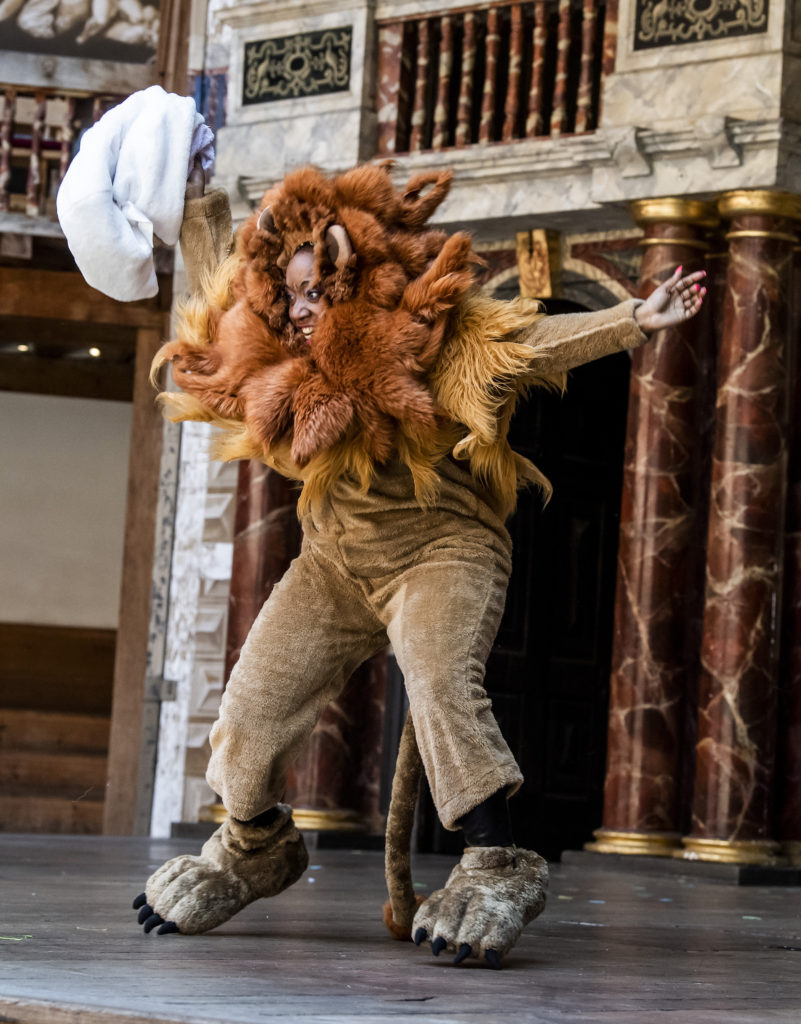
All questions are forgotten with the troop of tradesmen who put on their play-within-a-play at the finale. This is the funniest am-dram I’ve seen in a long while – full of spirit and superbly skilled at corralling the fun, including their conscript from the crowd. There’s the sweetest Snug you could wish for in Rachel Hannah Clarke – that she finds her roar is a delight. Nadine Higgin makes a Quince very much in control, to great comic effect, and her delivery of the prologue is fantastic.

Jocelyn Jee Esien

Leading the crew is Jocelyn Jee Esien as Bottom, with a performance of such confidence it comes as a relief. This is the only role allowed to calm down at all, resulting in a character who is appealing as well as funny. It’s a shame that the show is only half a success, but it’s saved by the “rude mechanicals” who add real joy to the production.

Until 13 October 2019

www.shakespearesglobe.com

Photo by Tristam Kenton

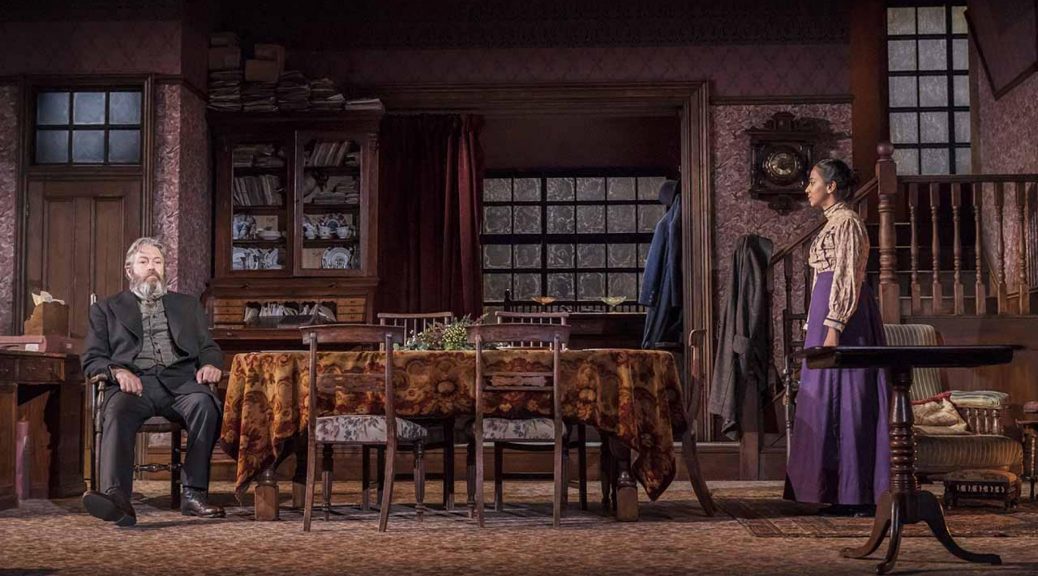
“Rutherford and Son” at the National Theatre

While Githa Sowerby’s 1912 play has long been acknowledged as an important text, Polly Findlay’s new production reveals the work to be a true masterpiece. No doubt old-fashioned, being driven by a strong plot featuring excellent characters and dripping with detail, the piece contains bigger concerns that feel remarkably contemporary. The story of a tyrannical patriarch who lives for his factory at the expense of his family, the obsession with legacy and reputation may be removed from our times, but Rutherford’s business model is easily recognisable.

At the centre of the play is Rutherford himself – a mammoth role that Roger Allam takes in his stride. Allam is so good he can allow humour into the part, which is important as the sexism, snobbery and bullying are hard to swallow. And, for all the awful things Rutherford says and does, Allam manages to inject a compelling charm. It’s easy to imagine his workforce and family being devoted to him. Rutherford’s character is revealed slowly – notably he is talked about a great deal before we meet him, which gives us a complex person rather than a caricature. Given his cultivated pretence of reasonableness, you may find yourself agreeing with him more than you’d like, even when he’s at his most outrageous.

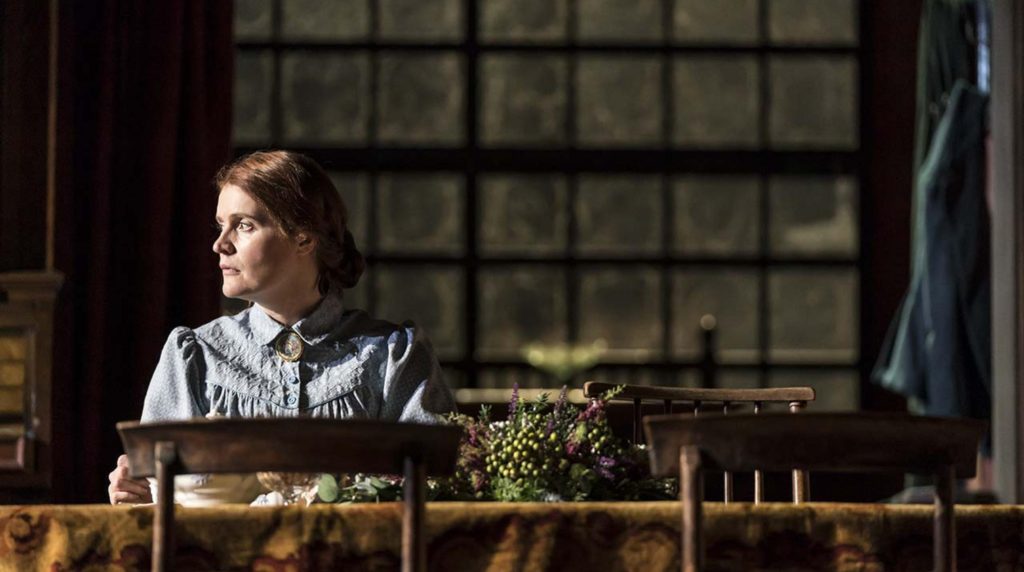
Justine Mitchell

Allum is amazing, but it’s Findlay’s triumph that, unlike Rutherford, he isn’t totally in charge. A superb supporting cast moulds the focus of the play from scene to scene. Harry Hepple and Sam Troughton play the hapless sons, a mix of timid piety and privileged bluster that’s increasingly unattractive. There’s a brilliant performance from Justine Mitchell as the daughter, Janet, who provides evidence of the cruelty brought to all the siblings’ upbringings. The outcome of her story, containing a shock and a mystery, is deeply moving. It’s in his daughter-in-law, Anjana Vasan’s Ann, quiet for so much of the play, that Rutherford meets his match, with a finale that makes ruthless bargaining a riveting drama.

Rutherford and Son could so easily be dismissed as all about repression – hence less relevant to our times. But there’s actually plenty of confrontation in the play and presenting both shows Sowerby’s genius. The characters aren’t pushovers – they wouldn’t convince if they were. Rather, quiet moments, in particular the depressing resignation the women often display, create a distinct rhythm for the piece that builds in power. Although bleak, there’s a sense of satisfaction that Rutherford is justly rewarded. Given that he’s a glass manufacturer, a profession Lizzie Clachan’s gorgeous set emphasises, the danger of throwing stones should be clear. Or maybe that’s wish fulfilment on my part? The finale has a Rutherford heir who isn’t quite the son anyone presumed. Questioning what might come next is Sowerby’s aim, highlighting motherhood makes this a play focuses on the future far more than for the past.

Until 3 August 2019

www.nationaltheatre.org.uk  

Photos by Johan Persson

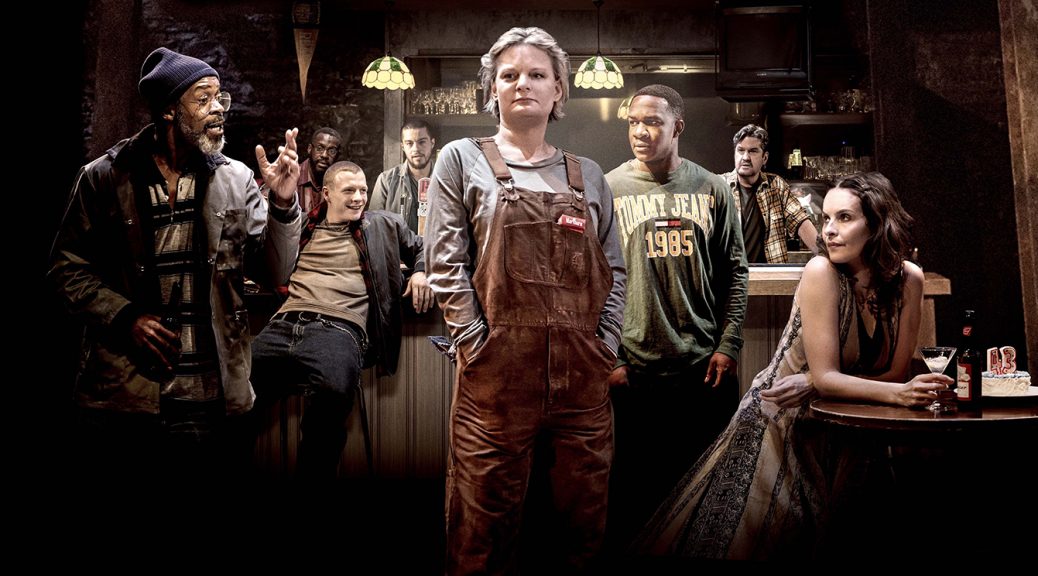
“Sweat” at the Gielgud Theatre

After rave reviews and a sell-out run at the Donmar Warehouse, the transfer of Lynn Nottage’s play is especially welcome. A political play about blue-collar America and trade unionism isn’t your average West End fare. Brilliant performances and excellent direction count for many stars awarded by the critics. But, above all, it’s the marvellous work from an exceptional writer that makes this one of the best plays I’ve seen in an age. Oh, and it won a Pulitzer Prize.

At the heart of Sweat’s success are a series of characters that we come to know so intimately. As a trio of work friends whose jobs in a steel factory and threatened and then lost, Jessie, Cynthia and Tracey make for wonderful studies that Leanne Best, Clare Perkins and Martha Plimpton all excel in. Their history established with speed, when Cynthia moves from shop floor to office door we get a moving moral dilemma brimming with conflict.

The action takes place in the women’s local bar, and the manager’s bar-room philosophy and news commentary, skilfully delivered by Stuart McQuarrie, add to the sense of a whole community, maybe the whole US. The complex picture is created with such a natural touch it seems effortless on Nottage’s part – and appreciated by director Lynette Linton – but what technique!

Let’s not be naïve. Focus on the women in the factory and ethnic minorities working in the bar could feel tokenistic. Here, it’s what it is – real life. And the characters are all the more remarkable when we come to consider how functional each role is. Each represents a response to or facet of economic meltdown. NAFTA, the rise of nationalism and anti-immigration rhetoric, even self-medication and the opioid epidemic are all issues raised. And, handled with such humanity, Nottage makes them personal.

If Sweat still sounds dry, exceptional plotting makes the delivery anything but. There’s a thrilling mystery here surrounding two of the women’s sons, Jason and Chris, and a crime that occurs. Beginning with their release from prison we’re left guessing what happened, even who the victim was. With yet more tremendous performances, from Patrick Gibson and Osy Ikhile, we see a once close friendship and the disturbed characters both men have become. During the second act, Linton ratchets up the tension: who does what to whom is unexpected, the cruelty of events ripping a community further apart.

When racism rears its head, it is especially poignant as we see a friendship destroyed. Yet understanding how violence has escalated shows the play has important insights. As well as examining the systemic in society, Nottage takes into account an element of chance. Think of the characters, to various degrees, as unlucky and it’s sure to change any moral judgements you might make. Sweat ends as a challenging piece, preventing us from condemning any of its protagonists too quickly. It creates an uneasy sense of ‘there but for the grace of God’ time after time in a way only the very best theatre can.

Until 20 July 2019

www.sweattheplay.com

“Bare: A Pop Opera” at the Vaults

It’s tough to knock this well-intentioned musical from Damon Intrabartolo and Jon Hartmere. Dating from the year 2000, it’s a coming-of-age story with real catastrophe at its heart and this new production emphasises the tragedy of youth suicides because of homophobia. As promised by the title, there’s plenty of raw emotion. The target audience is clear – it’s a teen drama with trigger warnings that will surely become a much-loved favourite for many.

Set in a Catholic boarding school, where religion makes a powerful and well-explored theme, the story revolves around a closeted gay couple, students Jason and Peter. Taking the roles, Darragh Cowley and Daniel Mack Shand deliver sincere performances, while director Julie Atherton speeds the action along nicely. But the plot is as predictable as a Christmas Day sermon. Take the end-of-year theatrical production the school puts on – with its very heavy parallels to the main story – well, I don’t need to tell you which Shakespeare play they pick do I?

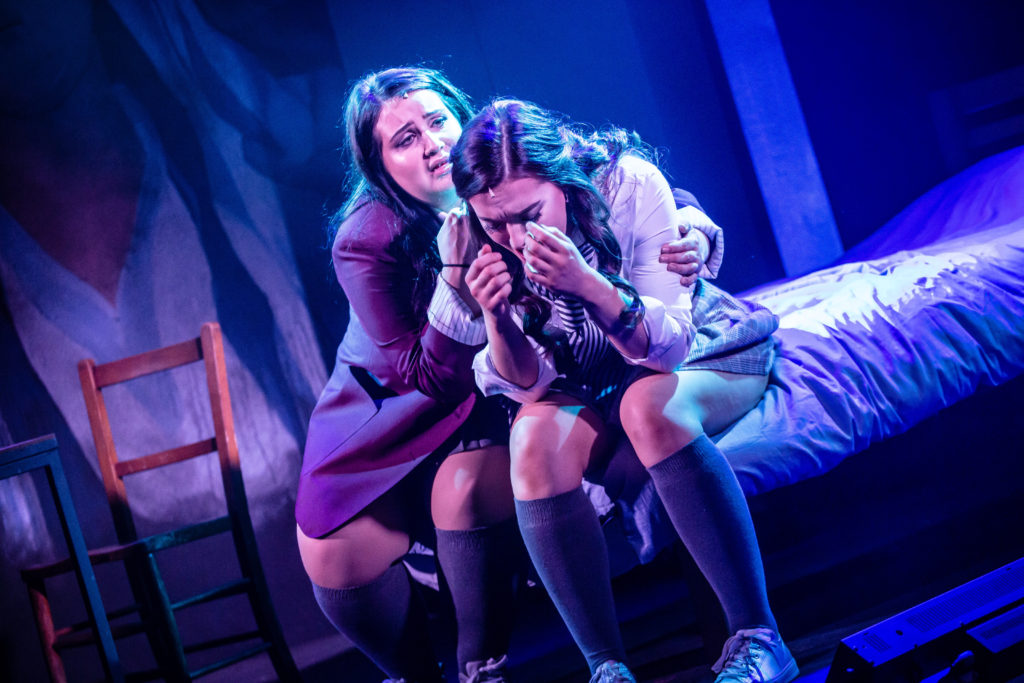
Darragh Cowley and Daniel Mack Shand

The Romeo and Romeo subtext has powerful moments and a distressing finale, as well as providing the score’s most interesting moments. But the characters we get to know are unfortunately flat and stereotyped: Peter, smart and sensitive, Jason, the school hero and heartthrob who wants to keep their love a secret. Cowley and Mack Shand work marvels with little but it is still too clichéd a combination.

Georgie Lovatt and Lizzie Emery

The women in the piece fare even worse. Georgie Lovatt takes her chance to stand out but her introductory number, ‘Plain Jane Fat Ass’, is uncomfortable. Her bête noire Ivy has a better song that Lizzie Emery shines with, but only after she’s been disgracefully used by Jason. Both women are characterised by their bodies – naughty – in a depressingly predictable manner.

Of course, we feel for these characters – but only because of their age and that isn’t quite enough. The only youngster who intrigues is the spurned Matt, who Tom Hier does well with. He may have a more hum-drum dilemma but, with less sentimentality, ends up surprisingly effective.

Jo Napthine

Thankfully, the more mature roles are better. Jo Napthine is woefully underused as Peter’s mother, but her main number is delivered superbly. As for Stacy Francis – she is the real deal. Playing the Virgin Mary in a dream sequence proves a real highlight; the show needs more lifts like this – the only other flight of fancy, the Act Two opener is also good. And, as the school’s drama teacher, Sister Chantelle, Francis can’t help but steal every scene. And prove yet again that good musicals really must include a nun.

Stacy Francis

There are quibbles with the production itself, which fans will happily ignore. Atherton has clearly done fine work in the rehearsal room – all the angsty one-on-ones are well executed. But the show comes unstuck in the venue. The auditorium (for Vault Festival regulars, usually the big bar) is poorly laid out. The choreography suffers, too. Stuart Rogers work is impressive but the sight lines here are very awkward and the stage noisy. There’s generally too much racket from moving around props, which proves distracting.

Nonetheless, success for the show would be welcome. The seriousness may be too earnest at times but the aspirations are impressive. If Intrabartolo’s score lacks stand-out numbers, the music works well dramatically and some of the duets are nice. Barman’s lyrics are dense and prove too much a bit too often – but they give voice to all manner of teenage concerns, from the trivial to the tragic. Shows like this are perennial, but Bare’s passion answers an important need with credibility.

Until 4 August 2019

www.thevaults.london/bare

Photos by Tom Grace

“Hamlet” at St Pauls Church, Covent Garden

Iris Theatre has become a welcome fixture in Covent Garden over the summer months. Even after a decade, impressively, the company is far from resting on its laurels. Director Daniel Winder is always full of ideas, but this might be his most adventurous production so far. As is the nature of experiments, not everything here works. Yet failings come from the contrast in scale between Shakespeare’s epic and the production itself. Any lack is not a question of carelessness, rather, over-ambition and the production is often fascinating.

Taking the mammoth title role is Jenet Le Lacheur, a performer who identifies as transgender. That the production follows Le Lacheur’s lead makes it feel intensely personal. Hamlet is addressed as son and also “my lady”, adding immeasurably to the character’s complexity. Of course, Shakespeare is full of gender politics but this production becomes extraordinarily layered. To note just one instance, Hamlet’s relationship with Horatio (a fine performance from Harold Addo) becomes especially moving. Le Lacheur’s delivery is admirably direct: the lines feel fresh and easy to understand, making Hamlet appealing and often funny. The performance is one to be proud of and easy to recommend.

Let’s not forget how much goes on in Hamlet. It’s to Wilder’s credit that the action is easy to follow. But the themes that he wants to explore overwhelm his production. The idea of a dystopian future is aimed at but doesn’t hit home – although credit to Madeline Berry’s costume designs, which are intelligently evocative. The idea of a dictatorship never becomes oppressive enough. There’s a lot of messing around with mobile phones and an overreliance on video work. In themselves the films are fine (that Hamlet knows he is observed during his Act III Scene i encounter with Ophelia is a very nice touch) but the outdoor screens are too small or badly positioned. Altering the rotten state in question to England adds little. The military background to events pales and the invading Fortinbras is quite lost. The play’s religious ambiguities seem little explored – ironic given the setting of a church. A definitive production of Hamlet is impossible, but there are too many loose ends here given all the ideas set out.

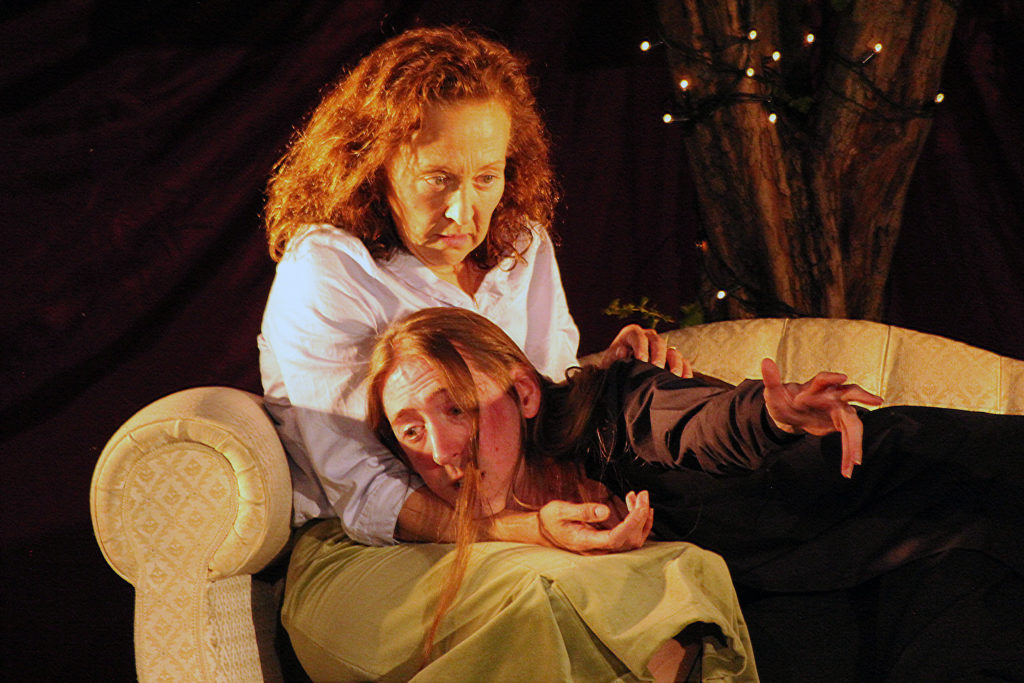
Clare Bloomer and Jenet Le Lacheur

There’s a similar problem with the tiny cast. That each have so many roles to perform is hugely impressive. Jenny Horsthuis and Joe Parker seem seldom off stage and, if Clare Bloomer and Vinta Morgan stand out, it’s because they have two great moments in their main parts as Claudius and Gertrude. Paula James also benefits from a little more focus with her deftly handled Polonius. To top it all, nearly everyone has a go at the ghost (at least, I think everyone does), showing some top-notch movement skills and wearing a mask that could give you nightmares: praise again for Berry. That the ghost doesn’t speak is one of many smart moves from Wilder, but all the chopping and changing is distracting; the mechanics of the show can’t help but be laid bare as you start wondering how certain scenes are going to be handled given that there are so few people here.

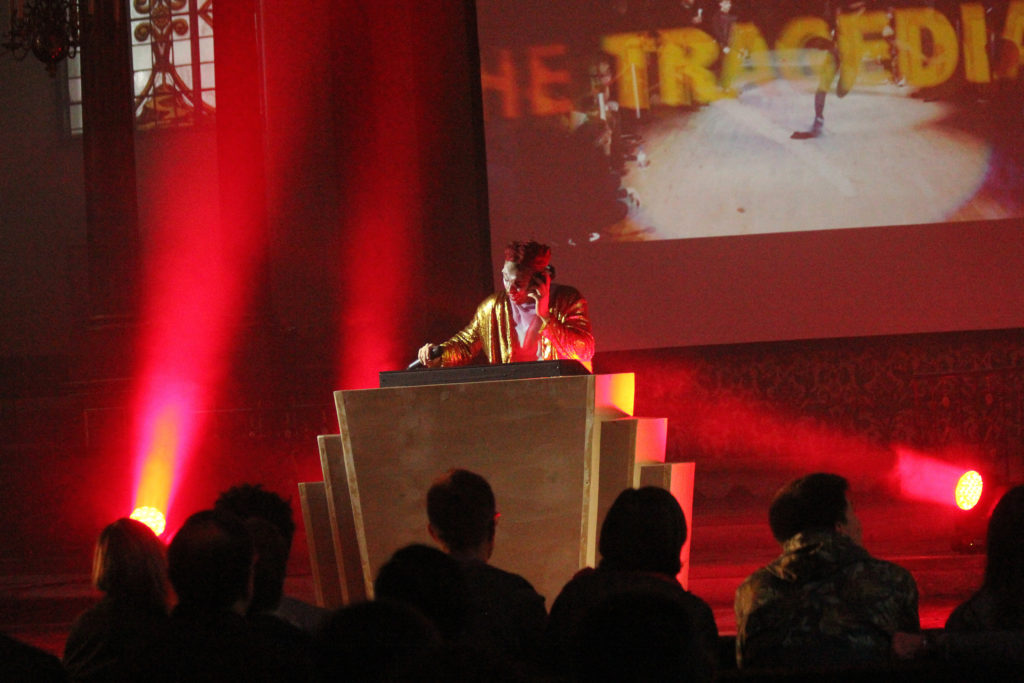
Joe Parker as one of The Tragedians

The issue comes to the fore with the travelling actors and the play within the play that they perform. Presented as twerking tragedians, Club Kids with a touch of Leigh Bowery (a third mention here for Berry), is another interesting idea. The cast really go for the avant-garde edge, vogueing away with an unsettling air. But there are just too few of them to make the party atmosphere aimed at work. As with so much here, it’s an excellent effort – and well worth checking out. It just seems that six is too small a cast for Hamlet, especially for a show with so many ideas and so much intelligence.

Until 27 July 2019

www.iristheatre.com

“Riot Act” at the Arcola Theatre

What are you doing this Sunday? If possible, make a date to celebrate the 50th anniversary of the Stonewall Riots with some superb theatre. Alexis Gregory’s hour-long verbatim show has been racking up five-star reviews since it premiered last year. It’s easy to see why: it’s full of fascinating, impeccably told stories with an inspiring sense of urgency.

Through interviews with a trio of men, Gregory garners a surprisingly detailed insight into gay life in America and the UK over three decades. From the night of the Stonewall Riots, to the life of an avant-garde drag queen, to an activist against HIV/AIDS, this is a qualitative approach that counts as oral history as much as theatrical entertainment. You may learn a lot – or take comfort in having a story similar to your own heard. Either way, there is a fitting sense of pride taken in what these men have overcome and achieved.

It isn’t that unusual to see gay history on the London stage, certainly not the fringe. But Gregory’s skill, ably backed by Rikki Beadle-Blair’s direction, gets us close to the real deal here. The duo’s respect for the men is contagious and illustrated in the confident candour on offer. Each man’s own words are given their due, focused by the experience of collaborating on the project and honed into a text by Gregory.

There’s a lot of wisdom here, as well as a good few laughs along the way. But it’s also a salutary reminder of a generation lost because of the AIDS crisis that makes preserving the lessons from survivors all the more important. While the overall tone to Riot Act is suitably celebratory – noting progress – there’s agitation, too. How fragile those fought-for rights really are is highlighted. The show acts as a warning and a blueprint for action as much as a walk down memory lane.

Until 30 June 2019

www.arcolatheatre.com

“Three Sisters” at the Vaudeville Theatre

The world-renowned Maly Drama Theatre of St Petersburg and its director Lev Dodin have a phenomenal reputation. The company’s visits to London are anticipated events for theatre aficionados and, with only ten performances this time around, you should hurry to get a ticket. Maly’s work is an example of high expectations fulfilled, and this production of Chekhov’s classic does not disappoint.

Dodin and his talented cast of performers (embedded in the company in a fashion that’s rare in the UK nowadays), create the perfect mix of melancholy and humour. Initially it is the comedy that stands out – a combination of looks that are laugh-out-loud funny and a subtle appreciation of the play’s more ridiculous moments. It feels surprisingly light at times, confident and relaxed, despite the surtitles ruining some of the jokes.

This Three Sisters is very much Irina’s play and not just because of the masterful performance from Ekaterina Tarasova, who takes the role. Irina is full of energy and promise, Tarasova appropriately captivating and funny. The younger sibling has all the men from the local regiment courting her and is amusingly contemptuous. Her despair at rural life is allowed to grow convincingly – it starts off almost sweet, so that it becomes a real tragedy rather than just a trope.

This play of unfulfilled dreams and desires has plenty of painful moments. Masha’s adultery with the philosophising Vershinin is made into a passionate affair, with Ksenia Rappoport revealing a palpable mania within the character that makes her performance exciting. As for the eldest of the trio, Olga’s career as a school teacher develops into a case of genuine despair (often a tough ask) with a brilliant performance from Irina Tychinina. Her metamorphosis into a formidable figure by the finale – where she seems frozen, rigid with disappointment – is truly commanding.

That the characters change so much during the play is one of Dodin’s key insights, illustrated by the skilled performances he has nurtured (special note has to be made of Stanislav Nikolskiy’s Soleni, whose transformation by the final scene is stunning). The action takes place over four years, after all, and highlighting this gives the piece great momentum. In this potentially static play (there’s an awful lot of looking out of windows), Dodin carefully adds a sense of action. Even Alexander Borovsky’s set – an outline of the Prozorov home – moves, advancing towards us as tension mounts. Action creeps into the audience with steps leading into the stalls.

Dodin’s appreciation of Chekhov’s rhythm is clear, the balance he injects precise and controlled without feeling forced. There’s no doubt that there is a master in our midst. The production is a fantastic chance to see a superb director at work.

Until 29 June 2019

www.nimaxtheatre.com

Photo (c) MDT