All posts by Edward Lukes

"Anna Bella Eema" at the Arcola Theatre

While firmly rooted in the tradition of fairy tales, this 2007 piece, from experimental theatre maker Lisa D’Amour, balances magic and madness with startling originality. It will not be to all tastes, but the complexity and ambition of the text demand respect.

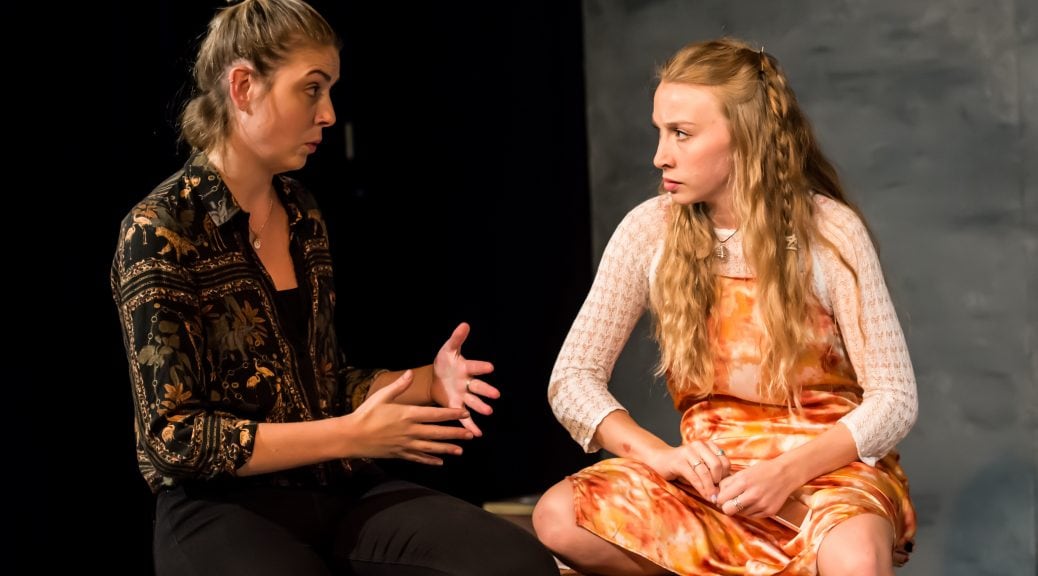
In a trailer park facing demolition, the housebound Irene and her daughter Annabella are joined by the title character, a golem that the youngster creates as she begins puberty. Both of the human characters tell stories that start out whacky and become truly insane. Their small world is crowded with monsters and metamorphosis. Mental illness is a topic the audience is challenged into addressing: someone should help this family… shouldn’t they? And there’s another ‘M’ – motherhood – packing the play’s emotional punch and, for my money, producing its finest moments. Many of the tales told are funny, a few provide insight into the real world and some are frustratingly opaque.

Adding to the bizarre feel, there’s a cappella singing, and percussion from kitchen equipment, with a score by Chris Sidorfsky that matches D’Amour’s otherworldly interests. You don’t often get a lullaby for a lycanthrope, after all. 
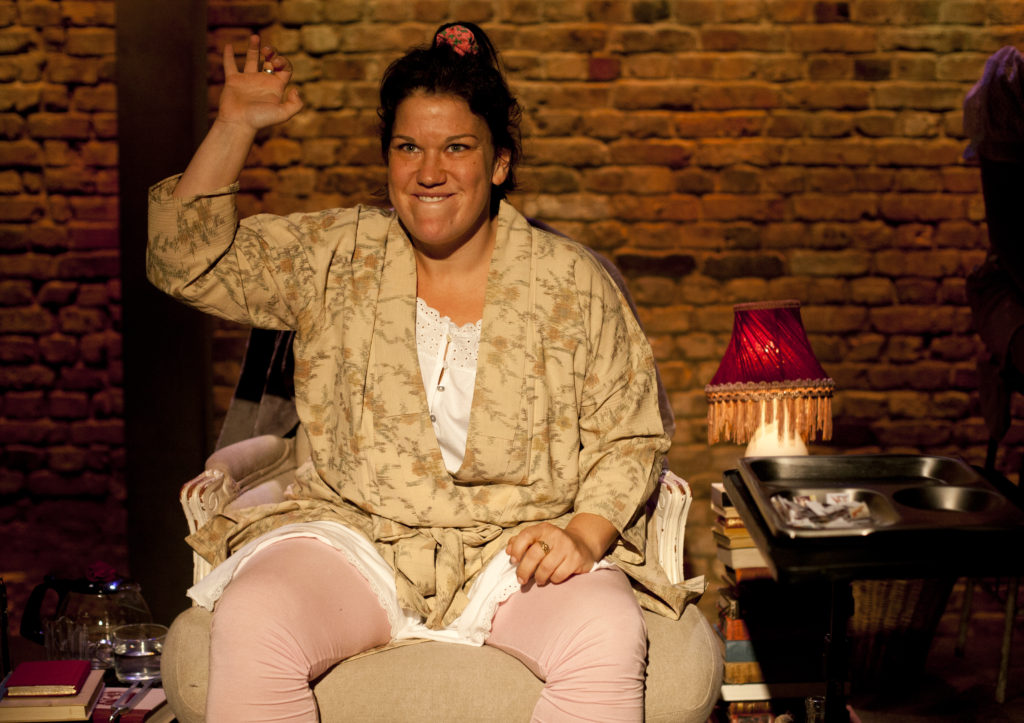
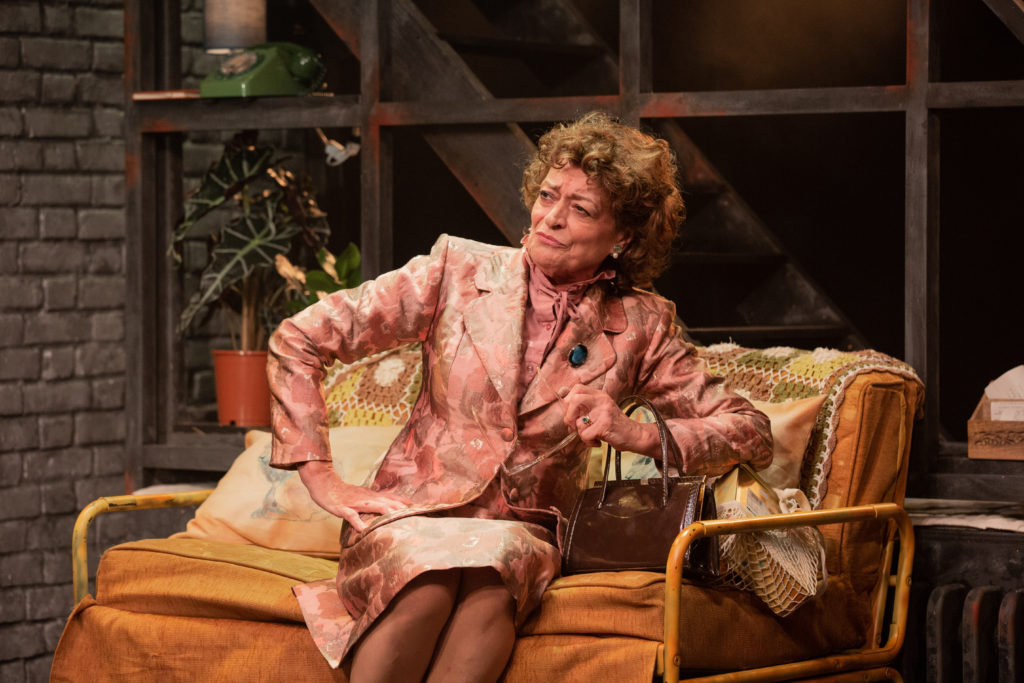
Beverly Rudd as Irene in Anna Bella Eema at the Arcola Theatre
Beverly Rudd

As you can guess, nothing here is easy for the talented trio performing. The wonderful Beverly Rudd leads the way, grounding the show as a charismatic agoraphobic. The daughter is played by Gabrielle Brooks, who gives a tremendous performance as a young girl old before her time. Brooks’ suggestions of the wild, that D’Amour becomes fixated with, are superb. By no means least, Natasha Cottriall performs as the mythic creation, along with many smaller roles, bringing grace as well as ethereal vocals to the show.

Performing actions as they narrate them makes the demands on all the actors heavier – a lot of what occurs is supernatural – which is where director Jessica Lazar really shines. With a text that’s as much a poem as a play, it takes a close study to aid the audience and I, for one, am grateful that Lazar allows us time to absorb some of what is on offer.

Because Anna Bella Eemareally does have a lot going on, and not just in terms of topics: the imagery is wonderfully rich, the ground covered metaphorically immense and D’Amour’s imagination awe-inspiring. The perspectives that the author describes as “prismatic” in her introduction make the play a mind boggler from the beginning. And we’re warned by Irene that time and reality merge in her trailer – there’s a lot of this. 

By the time we get to a dream sequence for Annabella – with racoons, foxes and wolves – the show is in danger of becoming repetitive and exhausting. In the finale, the impact of reality is little explored, making the ending for Annabella unclear. Asking a lot from an audience is an author’s prerogative. But there’s surely an irony that, unlike the fairy tales that are such an inspiration, regrettably, this show lacks universal appeal.

Until 12 October 2019

www.arcolatheatre.com

Photos by Holly Revell
"Conspiracy" at the New Diorama Theatre

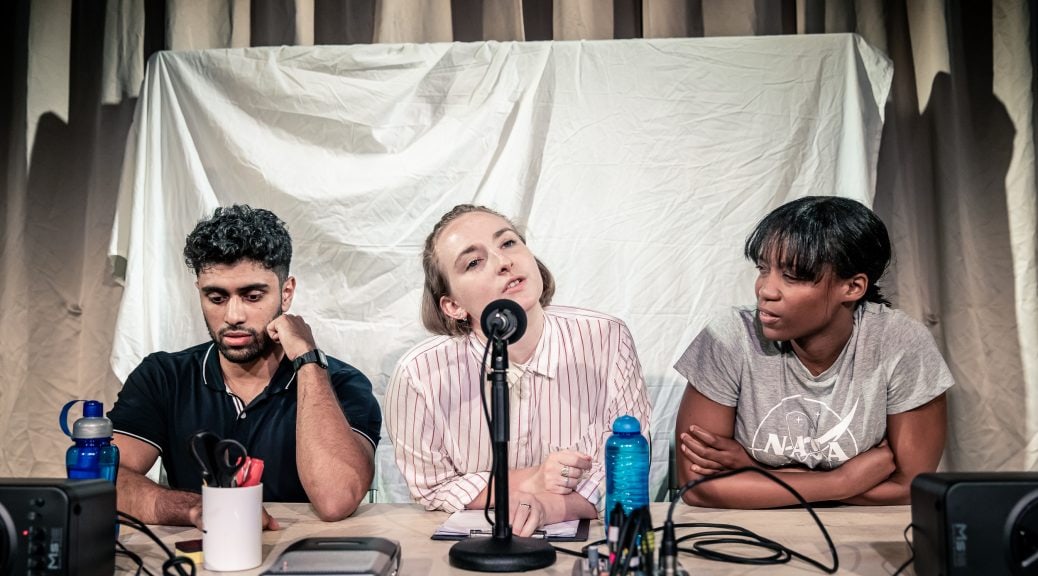
A hit at the Edinburgh Festival and the winner of an Untapped Award, Barrel Organ’s new piece is a comedy gem. With three fantastic performers, a topic ripe for satire is handled with wit and intelligence in a show full of surprises.

Rose Wardlaw takes the lead. As the audience sits in on a presentation about a famous photograph, she’s brilliant at muttering asides, her character too uptight for her own good. The picture hides a conspiracy that just keeps on growing – to Wardlaw’s exasperation. As the project gets more ridiculous, ignoring efforts at serious research, she gets funnier and funnier.

Azan Ahmed is the first to elaborate a further conspiracy. With a penchant for movie quotes, his character is downright sweet, and it seems cruel to laugh at his enthusiasm. The gullible energy and sheer joy at thinking he has discovered something new is utterly convincing and Ahmet manages to convert these qualities into something more serious as the action develops.

By the time we get to Shannon Hayes, we are in spoof territory. It isn’t a plot spoiler to say that the moon landings make an appearance. Best of all is the Elvis impersonation from Hayes, who gradually increases the mania in her performance with skilful calculation. It turns out she’s been playing a different game, the precursor for which is a streak of mischief that has added to the fun all along.

Devised by the company, with a text from Jack Perrin, pretending the trio are amateurs is a great idea to get a lot of laughs. Of course, delivering such fumbling around is tricky stuff and Dan Hutton’s direction is really as pin sharp as you could wish. The only problem – clearly indicated – is that conspiracy theories don’t finish, they just get bigger.

Trying to be serious too close to the end of the show seems a mistake. And a final tableau, where the characters inhabit their fantasy (well, that’s my guess anyway), proves too strange a change of key. Both give rise to the suspicion that the team didn’t quite know how to end things. I’ve no proof of that, of course – maybe photos or recordings of rehearsals will surface? Maybe someone overhead something? There must be a reason… Still, nothing can detract from a whole-hearted recommendation for a show that shouldn’t be kept a secret.

Until 5 October 2019

www.newdiorama.com

“What Girls Are Made Of” at the Soho Theatre

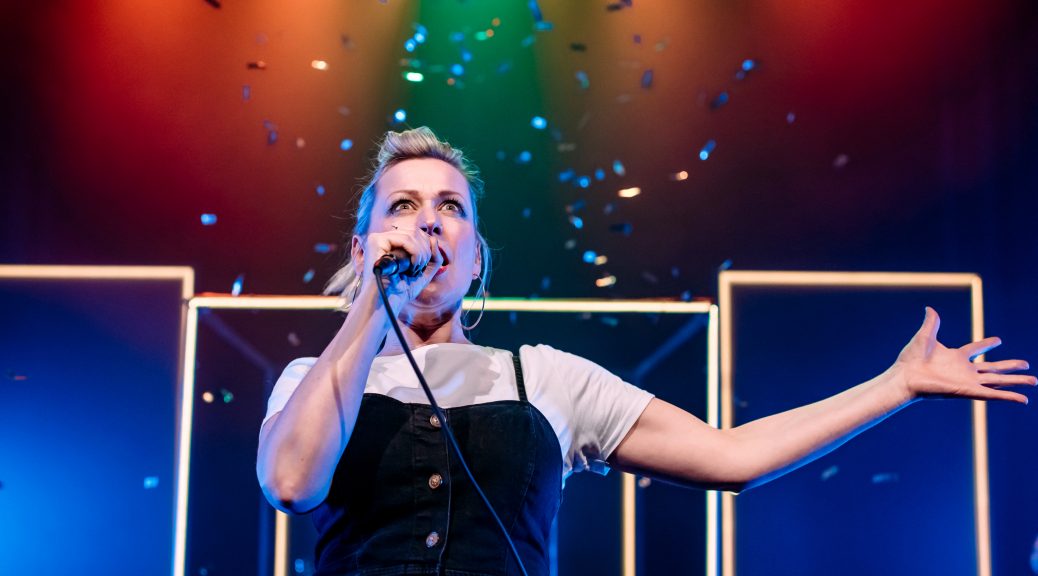
Many dream of being a rock star at some point in their youth but for Cora Bissett, when just out of school in Fife, it actually happened. Her band, Darlingheart, had a contract and backed big Britpop names…for a short time at least. This play looks back at that success, and its consequences, using Bissett’s diaries. With the help of musicians Emma Smith, Simon Donaldson and Harry Ward, who brilliantly take on cameo roles as well as accompanying her, Bissett sings and narrates her biography like a true star.

It turns out that the big break came at a high cost. And since this is real life on stage, the price is prosaic and predictable; the band work hard and are ripped off. They split up and attempts at a new direction for Bissett fail; she ends up broke and busking, feeling a failure twice over. This is not a new tale for creative folk. And Bissett’s own editing, alighting on moments of personal significance, leads to a disjointed feel to the action that could be fine tuned. Thankfully, Bissett’s telling saves the show. With some neat theatrical touches from director Orlan O’Loughlin, and strong sound design from Michael John McCarthy, the winning tone throughout is of warmth and honesty; mistakes so freely admitted are easy to forgive.

While Bissett’s aim to is explain what made her the woman she is today – her family as much as her career, a task achieved with moving integrity – we could do with seeing more of her in the present. The more recent story of her finding love and being a mother as well as taking control of her creativity could be elaborated on. For the truth is that Bissett gets more interesting as she grows up. Less of the nostalgia and more of what she she wants for her and her child’s future would be welcome. The success of the show at the Edinburgh Festival and a world tour show that Bissett has enormous appeal as a performer. As the rousing final number proves, forget young dreams;  it’s right now that Bissett is really cool.

Until 28 September 2019

www.sohotheatre.com

Photo by Mihaela Bodlovic

"Eigengrau" at Waterloo East Theatre

This welcome revival of an early work by Penelope Skinner, which premiered in 2010 at The Bush, boasts an excellent cast and strong direction from Georgie Staight. It’s a text that’s difficult to pin down – playing with the audience while making serious points – and Staight appreciates the piece’s changes of tempo. There are laughs, handled well by the cast, as well as plenty of ideas and gruesome moments that require a strong stomach. All in all, Eigengrau ends up a challenge, but the play and this production are a definite go-see.

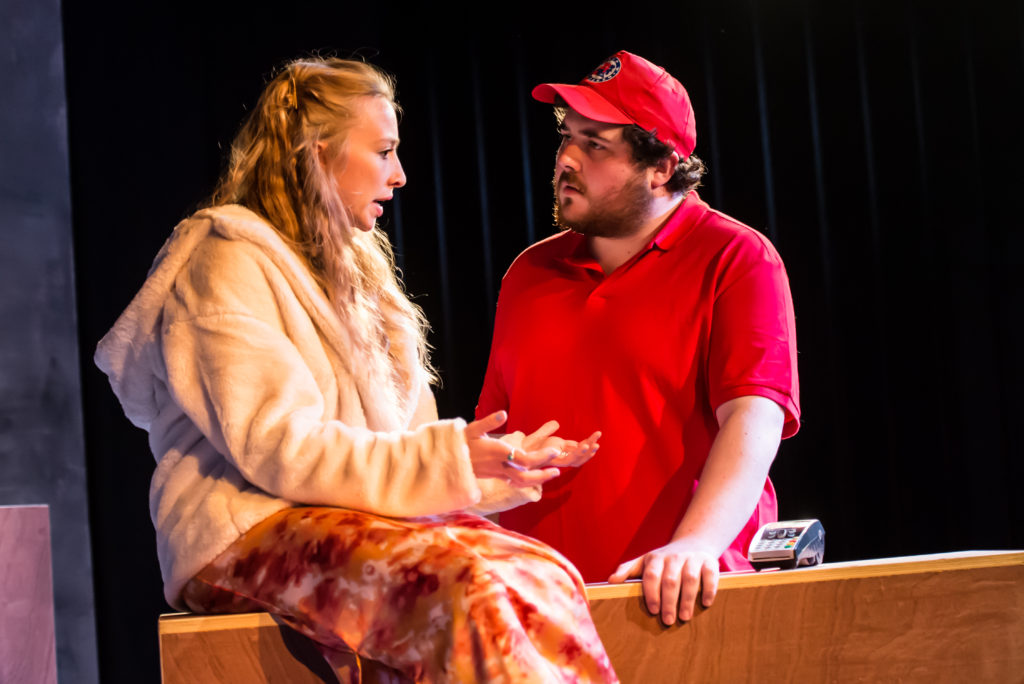
Skinner sets up some straw men and women for us to meet. It’s pretty easy to get a laugh out of them… but it’s still funny. There’s feminist Cassie and her new flatmate “off Gumtree” Rose, the latter’s one-night stand, smarmy successful Mark, and his school chum Tim, who isn’t doing so well. The cast take it all in their stride, with Staight controlling some of the exaggerations. Isabella Della-Porta makes a believable activist, you admire her convictions, while George Fletcher’s marketing man Mark is suitably revolting! The satire is almost genial, a kind of comedy of matters, with points about modern life to debate during after-show drinks. Given the seriousness of some topics, it’s more fun than it should be.

Katie Buchholz and Callum Sharp in Eigengrau at the Waterloo East Theatre
Katie Buchholz and Callum Sharp

As the play’s title, which refers to the colours seen when the eyes are closed, indicates, there’s darkness, too. It comes from the unexpected source of hippyish Rose, superbly performed by Katie Buchholz, who has even painted her toe nails in character. At first, Rose is enormous fun, Skinner makes you laugh at her even if it is cruel. But Cassie’s observation that Rose “scares me” brings forward the text’s mental health issues. Romantic obsession is only part of Rose’s fantasy life; her lack of vision, endearing at times, becomes dangerous. By the end of the play, it’s an open question as to how much the seemingly sweet Tim – with a professional debut in the role that Callum Sharp should be proud of – succumbs to Rose’s flights of fancy.

Eigengrau gets bleak quickly in the second act. There are loose threads: Skinner is heavy handed at times, the “happy ending” too double-edged. Above all, the sexual submission from both female characters is not for the faint-hearted. Be warned. Without spoilers, Cassie’s disappointments in life are painful (and well delivered by Della-Porta). As for Rose, who becomes a twisted Cinderella stand-in for her own fairy tale; never mind the shoe she loses, what she does with the one left is awful. Intrigued? I hope so – this is a play and production that should be seen by many.

Until 22 September 2019

www.waterlooeast.co.uk

Photos by Lidia Crisafulli

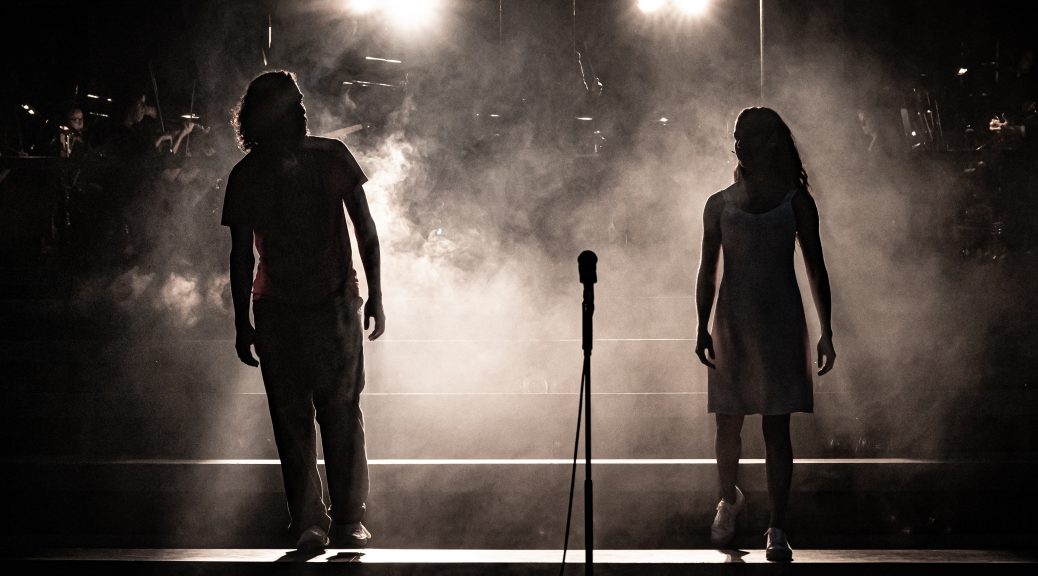
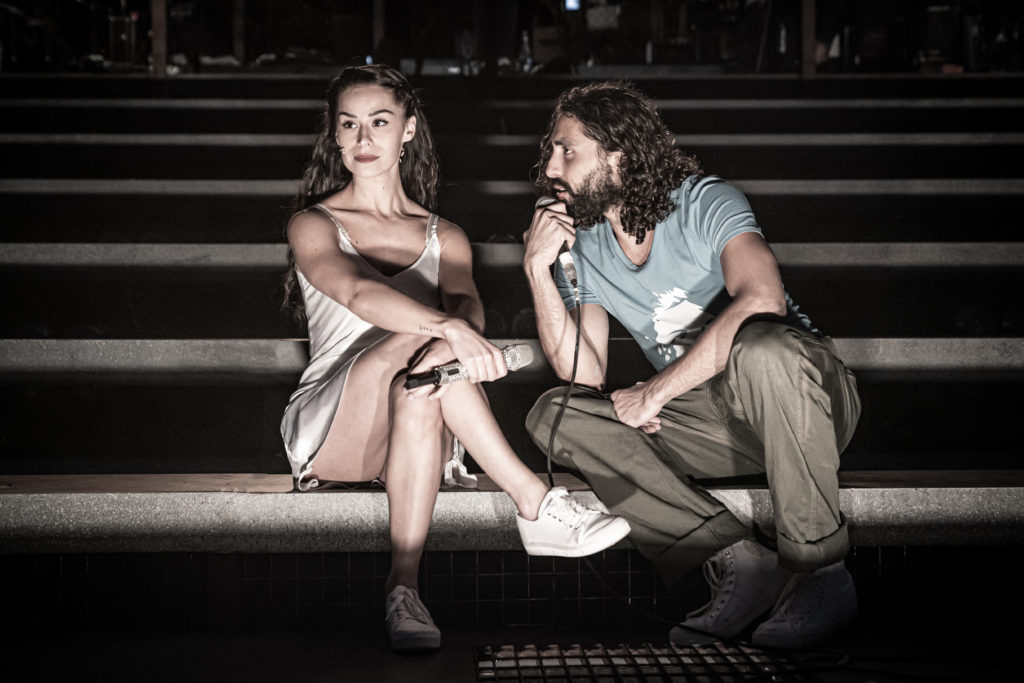
"Evita" at Regent’s Park Open Air Theatre

This production of the Andrew Lloyd Webber and Tim Rice classic must surely be the musical revival of the year. Recruiting director Jamie Lloyd has resulted in the biggest ever box-office success for Timothy Sheader’s open-air venue.

Lloyd’s irreverent streak suits early Rice/Lloyd Webber surprisingly well. It’s useful to remember that Evita started out as a concept album – free from the constraints of staging. Lloyd presents a stripped back version, akin to a concert, where the paraphernalia of politics relies on Soutra Gilmour’s costume design along with balloons, cheerleaders and confetti cannons galore. There isn’t much sense of place or period – instead we get a naked examination of power that feels it could be set any time or place… including now.

While ostensibly a biography of Eva Perón, néeDuarte, the controversial First Lady of Argentina between 1946 and 1952, Evita is really the story of two people – or should that be two approaches to government? The titular lead’s relationship with the show’s narrator, Che Guevara, is symbiotic as much as adversarial and Lloyd brings this out fearlessly. There’s a creepy scene suggesting a ménage with President Perón and the characters are made to share physical discomfort. At other moments, their intimacy suggests a twinning and is heartfelt. The duo proves fascinating.

Samantha Pauly as Eva Perón and Trent Saunders as Che in 'Evita' at Regent's Park Open Air Theatre
Samantha Pauly as Eva Perón and Trent Saunders as Che

Lloyd’s appreciation of Evita and Che is brought out wonderfully by his leads Samantha Pauly and Trent Saunders. Saunders is a magnetic presence who commands the stage; never mind the character, you could have him on a poster quite easily. With Pauly, at first, freshness is the key; she presents a young girl who is quick to laugh, even giggle. It’s only when the middle-classes are mentioned that Eva gets mad, frightening, in fact. She’s a political animal, which highlights the misogyny she experiences to great effect. As her health declines, Eva’s even angry with God. The contrast, if this isn’t insulting shorthand, is that Che is Rock while Eva is inspired by Pop; both are stars but the differences raise interesting questions. You may have heard the roles sung with more nuance, maybe with more beauty, but these are intelligent performances delivering Lloyd’s requirements.

The show’s dream sequence (the Waltz for Eva and Che) has everyone at their very best – it is amazing theatre. While Che is beaten, tarred and feathered with paint and confetti, Evita narrates her illness as under her control – “the choice was mine and mine completely”. Recall that Lloyd Webber and Rice’s previous work was Jesus Christ Superstar and the mind starts to boggle. Note that Che strips himself, while Eva’s saintly status has been played with all along. Lloyd brings out messianic tones of political cults with devastating force.

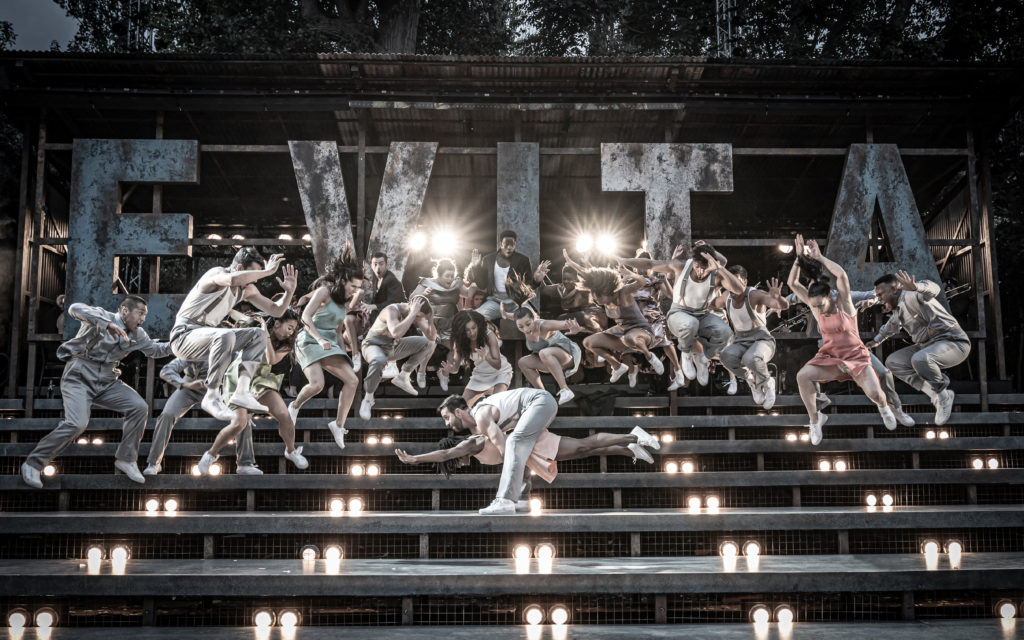
Samantha Pauly as Eva Perón and Company in 'Evita' at Regent's Park Open Air Theatre
Samantha Pauly as Eva Perón and Company

In reminding us how political a story Evita is, Lloyd focuses on protest. Filling the production with menace raises questions about populist regimes that are regrettably pertinent. Lloyd’s greatest ally is choreographer Fabian Aloise, who should surely be looking forward to awards season given his fantastic work here. A crack ensemble of dancers, integral to the action, power the show. Performing as the aristocracy and military one moment and then the descamisados the next, they fight for and against Evita with the most exquisite movements. Aloise deserves full praise for contributing to Lloyd’s astounding vision.

Until 21 September 2019

www.openairtheatre.com

Photos by Marc Brenner

"Torch Song" at the Turbine Theatre

This is a five star start for Paul Taylor-Mills’ new venue next to Battersea Power Station. Opening with an iconic play is clever. Even better is giving us the chance to see this new version of Harvey Fierstein’s classic, which the author revised for its 2017 New York revival. The much loved wit and wisdom of drag queen Arnold is still here but the piece is now sharper and more serious. Recruiting hot talent Drew McOnie to direct, and top notch performers too, The Turbine Theatre has made a precocious debut on the London theatre scene.

A mammoth role, Arnold is surely as attractive to a performer as he is to an audience. But it’s still a coup to get an actor of Matthew Needham’s stature to take the role. Needham has the charisma needed but brings a rawness to the part that makes Arnold’s trials in love, and trauma in life, especially moving. Arnold is always self aware, it can become grating. But Needham gives the role maturity and provides a wild streak to the character that destabilises the self control and creates an energy that balances all the brilliant wisecracks. None of this diminishes Arnold but it makes him more human. The role is still inspirational; Needham gives us a man truly “filled with possibilities” as he searches for love and respect.

Bernice Stegers in Torch Song at the Turbine Theatre
Bernice Stegers

The clear danger in the play’s previous incarnation, Torch Song Trilogy, is that Arnold overpowers the play. Fierstein has corrected this by beefing up other roles and making them more than foils. Arnold’s mother seems more forceful than ever. Taking the part, Bernice Stegers can land a Jewish joke as well as anyone, but there’s also such pain, anger and confusion in her depiction that it is breathtaking. It’s Fierstein’s triumph as a writer that he can present an alternative view, even if offensive, so well. Arnold’s lover and his son provide two professional debuts in the production – Rish Shah and Jay Lycurgo. Both should be proud that they give these roles their due; both are written and performed as feisty and smart independent men.

Matthew Needham & Rish Shah in Torch Song at the Turbine Theatre
Matthew Needham & Rish Shah

Daisy Bolton makes her role, Arnold’s ex’s ex, intriguing – you want to know what happens to her next. As for the ex, the love of Arnold’s life Ed, the character is made more of a constant and Dino Fetscher rises to the challenge of a substantial role. Ed’s opening encounter with Arnold is a monologue, impeccably delivered, and Fetscher makes the character’s shame about his homosexuality moving. Ed’s arguments about staying in the closet are respected and given space, essential for the drama and challenging to the audience.

Matthew Needham & Dino Fetscher in Torch Song at the Turbine Theatre
Matthew Needham & Dino Fetscher

All the performances do justice to Fierstein’s skills, as does McOnie’s direction. Famous first as a choreographer, it isn’t too fanciful to suggest those skills show. McOnie understands the rhythm of the arguments as the characters dance around their positions. The staging is never fussy and for the second act, Fugue in a Nursery, putting most of the action in a giant bed proves wonderfully clever. Moments when the actors step off the small stage become charged but are never over-used. The direction adds a stylishness that enhances the script, making this production of a strong play, exceptionally powerful.

Until 13 October 2019

www.theturbinetheatre.com

Photos by Mark Senior

"Falsettos" at The Other Palace

William Finn’s 1992 musical has two Tony Awards to its credit and for its long delayed British premiere a strong cast. To add to the excitement, the book is from none other than James Lapine. But Finn’s music and lyrics make this story of a modern Jewish family ramble. Even sterling performances from Laura Pitt-Pulford and Daniel Boys, as divorcees Trina and Marvin, cannot save what descends into a frantic scramble for “tears and schmaltz”.

Director Tara Overfield-Wilkinson deploys a sensible strategy in trying to keep the show simple. And Finn’s off-beat wit, focusing on neurosis, is given its due. But Falsettos’ off-Broadway history, a merger of two single act shows that form a trilogy, makes the show unwieldy. Finn gets bogged down in the minutiae of how Marvin left his wife for a no-good-guy, who turns out OK, while Trina starts an affair with the family shrink, and their son Jason acts with more maturity than all of them. Oh, we’ll get detail…but not depth.

Laura Pitt-Pulford (Laura Pitt-Pulford in Falsettos at The Other Palace
Laura Pitt-Pulford

The opening number sets the tone. ‘Four Jews In A Room Bitching’ is sharp and quirky but predictable and lacking charm. Ultimately, none of the characters rise above caricature. Pitt-Pulford gets the chance to shine with a number about a mental breakdown. And Marvin’s affair with the promiscuous Whizzer (what kind of name is that?) is filled with passion by Boys. But like their new partners – successfully performed with strong vocals from Joel Montague and Oliver Savile – the characters are too thinly written to care about.

Daniel Boys & Oliver Savile in Falsettos at The Other Palace
Daniel Boys & Oliver Savile

Things don’t get better. The second act focuses on the characters ageing and on mortality – a message hammered home. The combination of Jason’s bar mitzvah and Whizzer contracting AIDS is painfully forced. Shockingly, despite Boys’ forceful singing, the finale arrives too quickly and is dealt with too briefly to carry much emotional impact.

Gemma Knight-Jones & Natasha J Barnes in Falsettos at The Other Palace
Gemma Knight-Jones & Natasha J Barnes

All the way through, too many questions arise. Why should Trina and Marvin care so much about each other’s new sex lives? What’s the real motivation for either starting a new affair? The close family that Marvin still wants – the depiction of which guarantees the show has a place in the history of LGBT theatre – isn’t really shown to us. And why are the lesbian neighbours – a shameful waste of the talents of Gemma Knight-Jones and Natasha J Barnes  – only introduced in the second act! Even the title theme, introduced in a dream, is a puzzle; too much in Falsettos is ill conceived and under explained.

You can forgive a musical many failings if the score is up to scratch. It’s clear why Finn’s compositions have admirers – he can write a tune and some of the harmonising is beautiful. But the musical references are obvious and the variety in the structure of each number repetitive:  a staccato opening includes a gag, there’s a pause for the thought then a manic finale. Worse still, Finn’s lyrics come close to sounding lazy. The dazzling delivery here can’t hide how much repetition is used (although credit for getting canasta in a song). The words, like the characters’ confused motivation, sometimes don’t even make sense. Despite fine performances, the truth is that Falsettos ends up a disappointing mess.

Until 23 November 2019

www.lwtheatres.co.uk/theatres/the-other-palace/

Photos by The Standout Company

"Hamilton" at the Palace Theatre Victoria

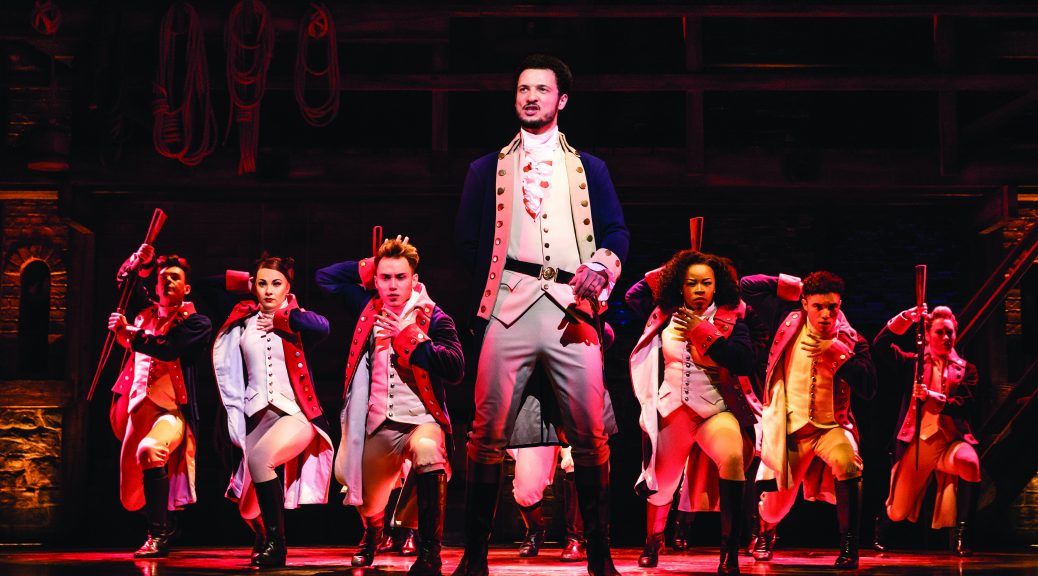
Coming up to its second year in London and with five other productions all over the world, Lin-Manuel Miranda’s blockbuster show is a true theatrical phenomenon. It’s nice to agree with the hype – everything you’ve heard about how good it is is true. But originality is only half the story behind how great the show is – a mastery of technique and a thorough knowledge of musical theatre combine to make it an instant classic.

Yes, Hamilton is ground breaking. The decision to cast African-American performers as the founding fathers whose story we are told (apparently more startling to theatregoers in the States) is bold. Alongside the clear and powerful advocacy of immigration, the show makes important statements for our times. Miranda’s engagement with history – the way that he uses the past – powers the show. Not forgetting, of course, the fact that his historical characters rap.

Yet behind the new, it is traditional storytelling that Miranda excels at. It’s a skill shared by director Thomas Kail, who aids clarity without compromising subtlety. There’s a good deal going on in Hamilton – the birth of a nation as much as the eponymous character’s biography – and you’ll learn a lot. But quite simply this is a tale exquisitely told: a mix of the personal and political, with a complex plot and big ideas perfectly balanced.

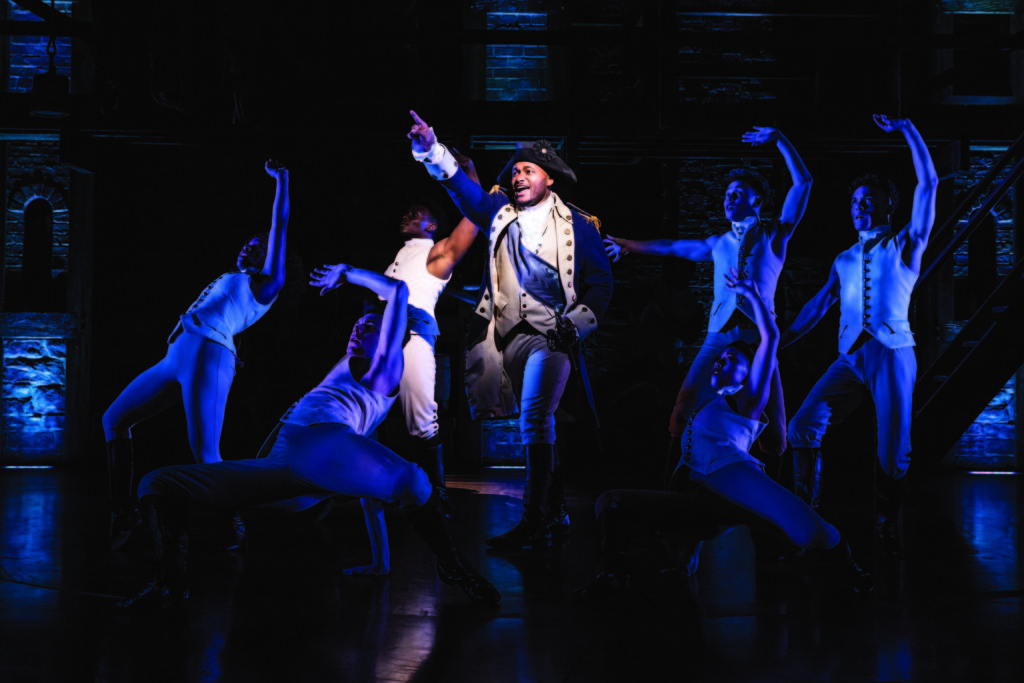
Dom Hartley-Harris as George Washington

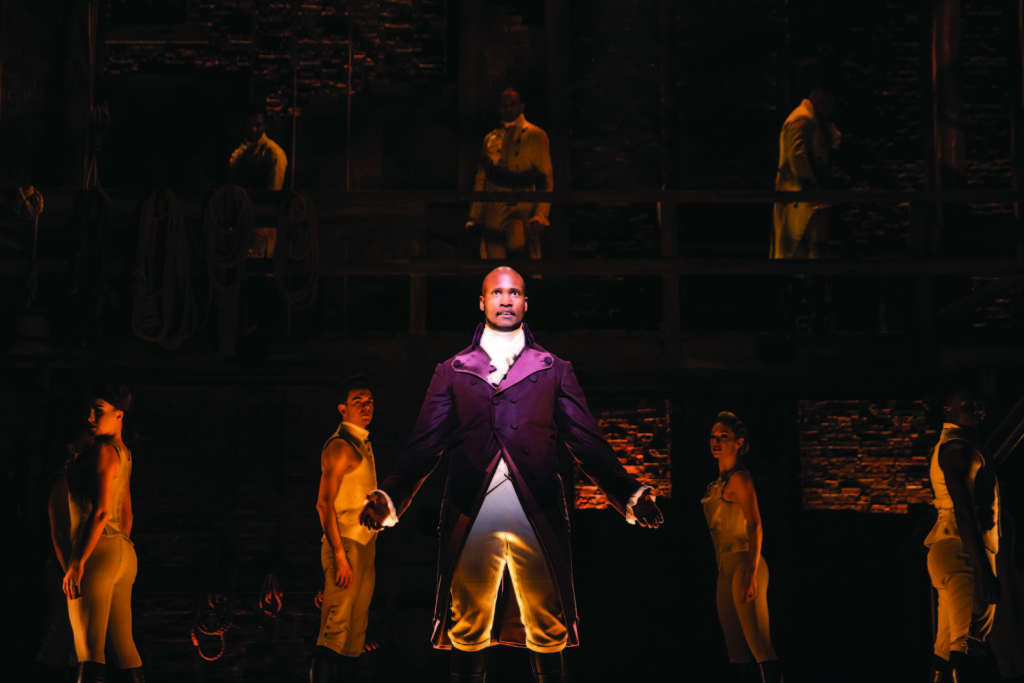
Miranda makes his historical characters live and the cast excels as a result. The singing is excellent throughout but it is in fulfilling such rich depictions that the performers really impress. There’s a magnificent George Washington in Dom Hartley-Harris while Jason Pennycooke gives two rousing performances, first as Marquis de Lafayette and then Thomas Jefferson. Hamilton himself seems not just “young, scrappy and hungry” but a little callow – at first. The character’s development is a journey marvellously depicted by Jamael Westman, who takes the part. Like Gore Vidal, who wrote of the same events in his Narratives of Empire series, Miranda knows that Hamilton’s nemesis Aaron Burr is really the more interesting figure. Here is another life story that makes yet more political points, and a character who also narrates much of the show – the result is a breathtaking performance from Sifiso Mazibuko.

Sifiso Mazibuko as Aaron Burr in "Hamilton"
Sifiso Mazibuko as Aaron Burr

Miranda shares his talent for characterisation generously. This is a story about men but the women in the piece get their say. Even the most ardent fan of musicals has to admit this isn’t always the case and here it adds immeasurably to two love stories: Hamilton’s marriage and his unrequited romance with his sister-in-law. In the later role, Allyson Ava-Brown is stunning as she depicts a forceful woman very much of her time that we can still relate to. The role of Hamilton’s wife, Eliza, goes to Rachelle Ann Go and, as with the title role, carefully matures to reveal a steely will and independence.

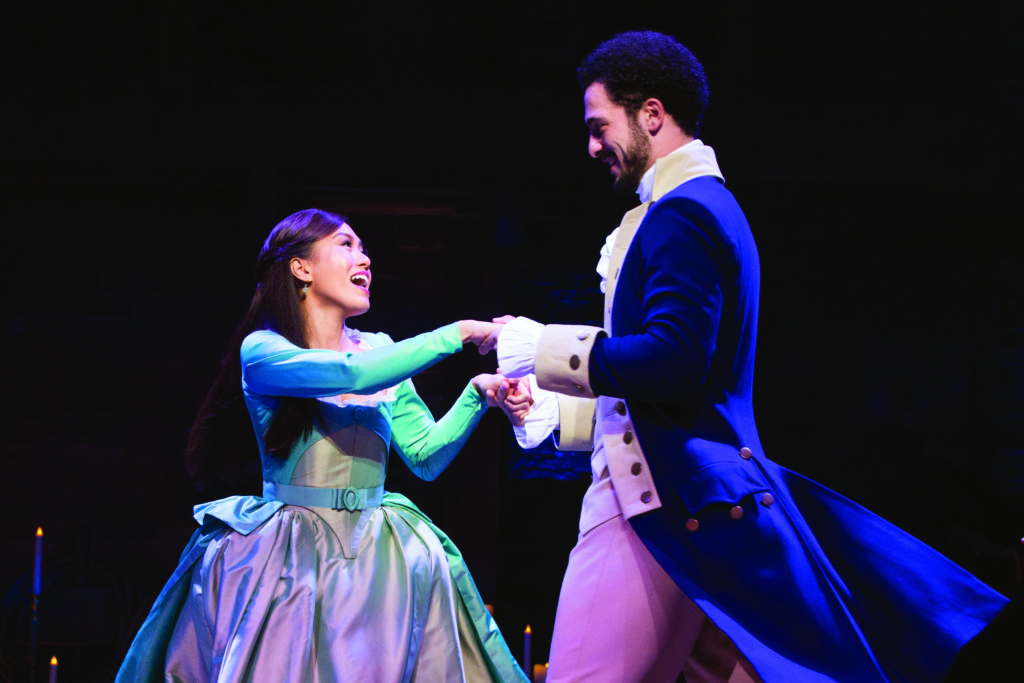
Rachelle Ann Go and Jamael Westman in the London production of "Hamilton"
Rachelle Ann Go and Jamael Westman

Eliza has the most wonderful love theme, a tune that really melts the heart. Which illustrates how varied the music in Hamilton is. While the rapping hit the headlines – and is superb – Miranda’s score contains a dizzying variety of styles that continually excite. Again, it is the traditional skills of writing for musical theatre that form the foundation for the show. Each character has a strong leitmotif and how well each number tells a story is remarkable. Like the show as whole, the information and emotions in each number are prodigious: there isn’t a single song that isn’t superb, adding up to a show that’s close to perfection.

www.hamiltonmusical.com

Photos by Matthew Murphy

"The Son" at the Duke of York’s Theatre

Playwright Florian Zeller has had phenomenal success bringing his brand of smart French panache to the British stage. But this new work, another hit and this time a transfer from the Kiln Theatre, is different. With plays like The Father, Zeller experimented with perceptions of reality, while his comedy about adultery, The Truth, used twisting perspectives and audience expectations to get grown-up laughs. For The Son, Zeller abandons any tricksy touches: he presents a stripped back, almost simple, play that is a harrowing story of mental health.

The acting is irreproachable. Taking the title role, Laurie Kynaston gives a career defining portrayal as troubled teen Nicholas. Like the text, and Michael Longhurst’s direction, Kynaston shows great control. There are outbursts of anger but bad behaviour is in the background. Nicholas’ problem is an inexplicable unhappiness he simply can’t articulate and that makes it all the more frustrating and moving.

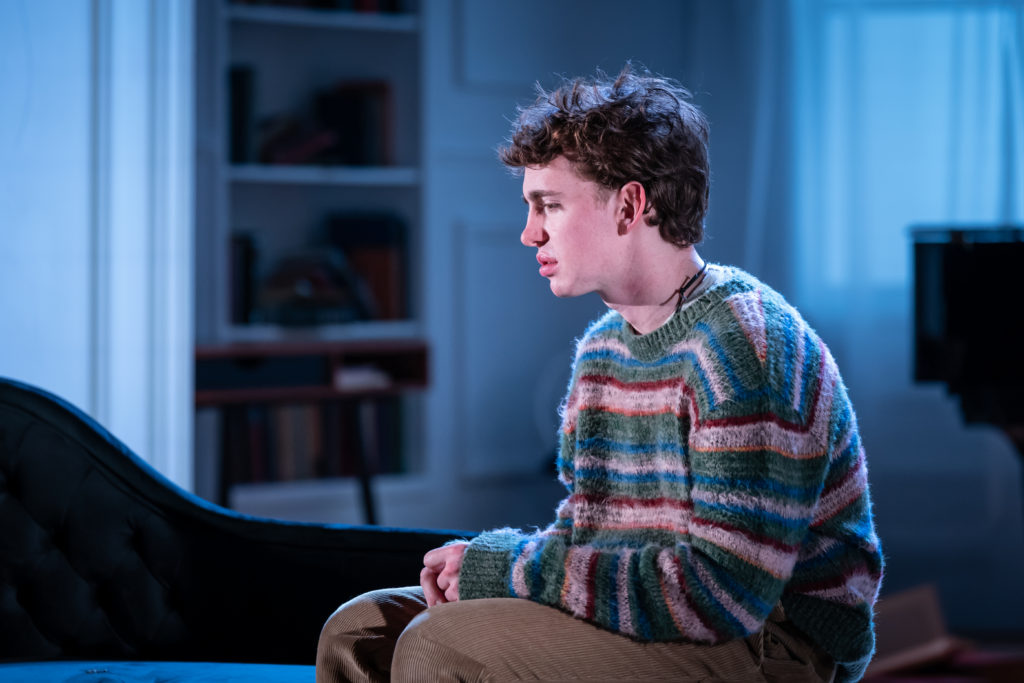
Laurie Kinston in 'The Son'
Laurie Kynaston

The adults dealing with his illness suffer too. If Zeller hadn’t already used the title previously, this piece could easily be named after Nicholas’ father, a major role that John Light excels with. As with the mother, played by Amanda Abbington, there’s a sense of panic and fear that adds tension to the play. Both parental roles, complicated by their recent divorce, are depicted with care and attention. 

Arguably the pivotal character, who has, like the audience, a little more distance from Nicholas, is his step-mother Sofia. It’s a fantastic part for Amaka Okafor who shows a woman trying to warm to the youngster, who unexpectedly ends up living with her, but who is also scared of him. The awful moment when Nicholas overhears what she thinks of him is balanced by her steely resolve not to let him babysit his new born step-brother. 

Sofia shows how Zeller has mined the psychological complexity in his scenario. The characters’ reactions aid an uncanny ability to make the most mundane questions fraught. Longhurst’s direction compliments the technique and the tension is frequently uncomfortable. If ever a play needed a trigger warning this is it, and I suppose a plot spoiling alert is needed too…

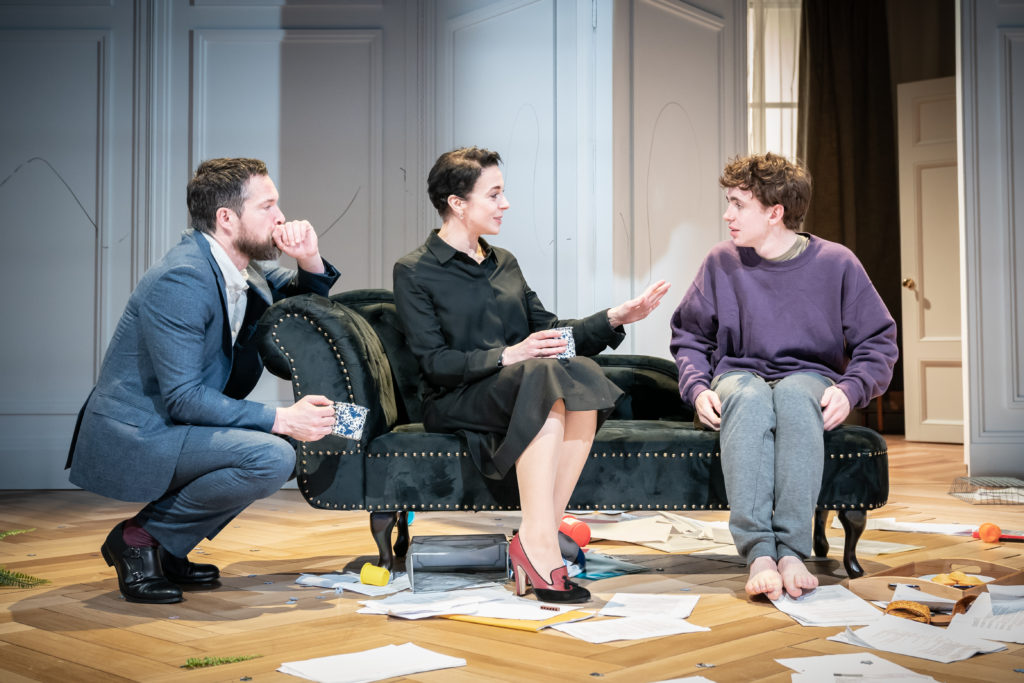
John Light, Amanda Abbington and Laurie Kynaston

This is a tale of teenage suicide and in the play the outcome comes as no surprise. Given that Zeller can cover the tracks in a plot better than most this must be deliberate. That the play is so predictable adds a sense of doom from very early on. But while it seems a trivial point in this context, that doesn’t help the play dramatically. The outcome is particularly grim and some key decisions made by the adults in Nicholas’ life are, let us hope, unrealistic. Nicholas only becomes increasingly inexplicable – a fair point but one that is truly dismal. Of course Zeller doesn’t have to sugar any pill, but he also raises hope to dash it in a final scene which comes across as cruel. There’s no doubting the power of Zeller’s writing here – all the five star reviews have recognised it – but in abandoning his usual brilliance for the sake of a brutal power, a warning about the play does need to be issued.

Until 2 November 2019

www.thesonwestend.com

Photos by  Marc Brenner

“My One True Friend” at the Tristan Bates Theatre

Set in the 1970s, in what was then Rhodesia, Alexander Matthews’ play is both a family drama and a piece about racism. The style of writing is interesting, and the performances are good. Unfortunately, My One True Friend falls short dramatically.

There isn’t enough tension in the play. It’s understandable that director Antony Law uses voiceovers in scenes about the country’s dangerous curfews. But while this action may work on the page it fails on stage. Instead we’ve a warring family, led by a matriarch called Lady L, whose problems aren’t clear. And a dilemma, of sorts, for long-suffering servant Kapenie. In both cases, the characters are too poorly developed. Kapenie is a saintly figure, described as “serene”, which is exactly what Mensah Bediako, who takes the role, delivers. Meanwhile, Lady L’s lament that she has become “just an old woman with a sharp tongue”, ignoring her awful racism, is painfully close to the truth. Like Bediako, Suzanna Hamilton makes the part watchable. Both performers add some dynamism, but neither is given much to work with.

Lucy Lowe, Theo Bamber and Suzanna Hamilton

Instead of plot or character, it is language that interests Matthews and here he offers plenty. That’s not just a reference to how verbose the text is. Alongside plenty of philosophical buzzwords, characters speak about the structure of their argument as they go, explaining their rhetorical strategy with a mix of logic and psychology. The result is engaging, if a little odd.

It must be stressed that the delivery of this sometimes overwhelming verbiage is good. Theo Bamber and Lucy Lowe, as Lady L’s children, have a petulant edge and turn their arguments into dangerous games. More seriously, in outlining his persuasive techniques to get his grandfather to emigrate to America with him, Joseph Rowe makes his role feel urgent and his character inspiring.

The text is wonderfully detailed and clear to a fault; Matthews fights against nuance with a compulsion. And the technique provides genuine insight. But the tone is dry and demands a lot from an audience. It doesn’t have to be like this: the scene of Lady L’s birthday party, with the help of a little punch, is potentially funny (a PoMo take on a drawing room comedy?). It’s a shame Law didn’t pursue this variety. Ironically for a piece with so much talk, Matthews needs to give us more: in back stories for characters and historic information about what’s going on outside the house. Epitomising the problem is a horribly truncated finale – almost a bad joke, with no sense of resolution. We end up learning and feeling too little, with the sense of a play that needs to be a lot longer and say much more

Until 14 September 2019

www.actorscentre.co.uk/theatre

Photos by Mark Senior