All posts by Edward Lukes

“Solaris” at the Lyric Hammersmith Theatre

Reading Stanisław Lem’s science-fiction classic as preparation for this theatre trip, the book struck me as full of brilliant ideas but impossible to stage. The titular planet is as much the subject of the novel as the scientists who investigate it. Lem’s description of a global organism that (somehow) thinks, and creates giant structures from its ocean waters, has to be left to our imaginations. Adapter David Greig’s clever move is to refocus the book towards the emotional drama (incidentally, not Lem’s forte) that arises when the investigators make contact with this alien life-form.
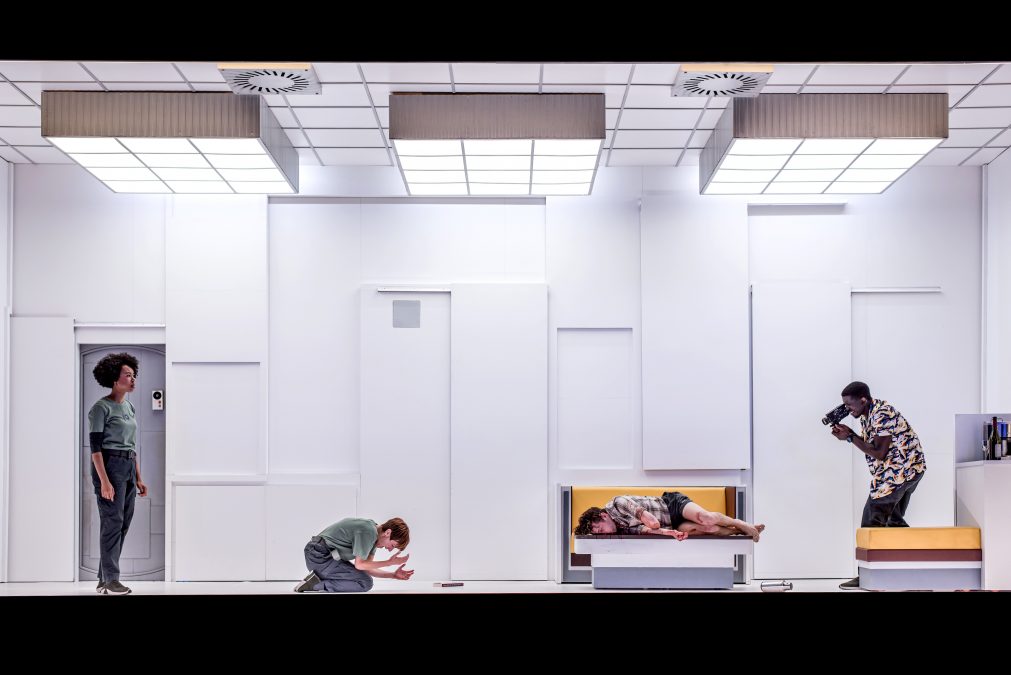
Jade Ogugua, Polly Frame, Keegan Joyce and Fode Simbo in "Solaris"
Jade Ogugua, Polly Frame, Keegan Joyce and Fode Simbo

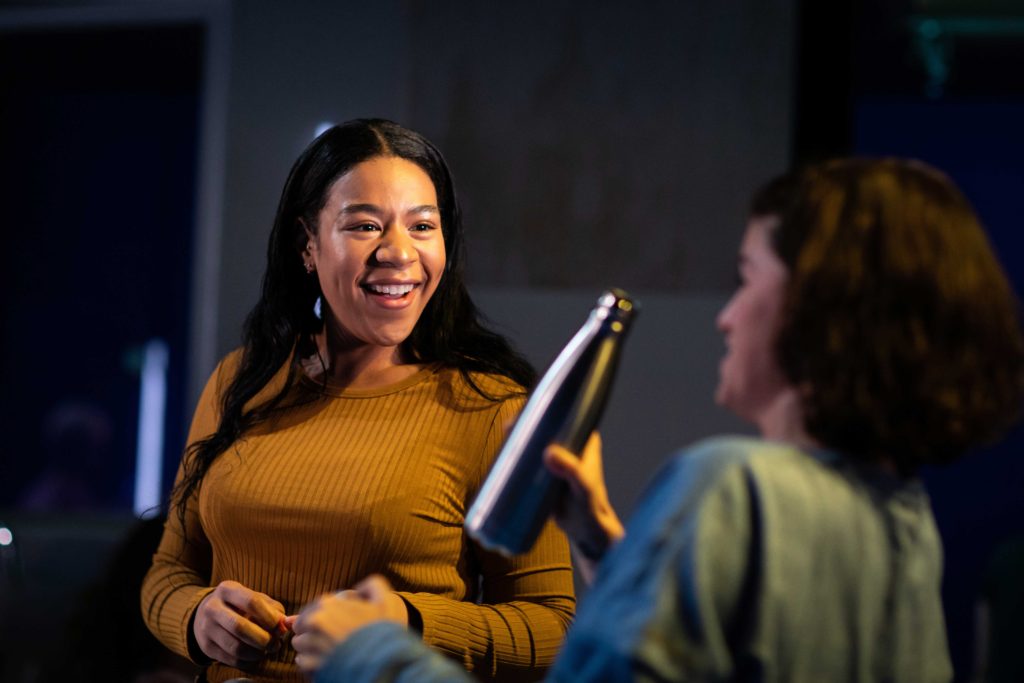
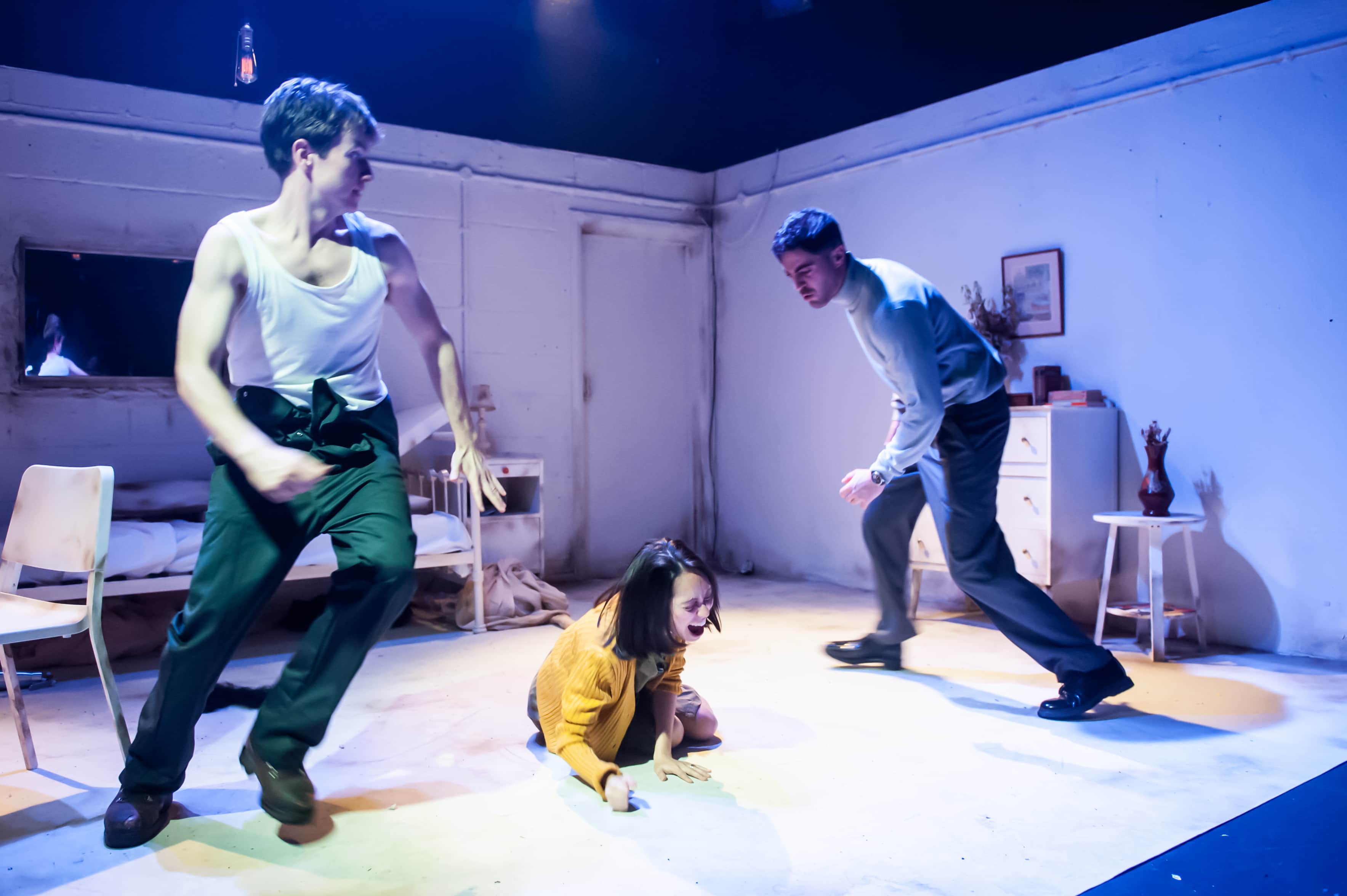
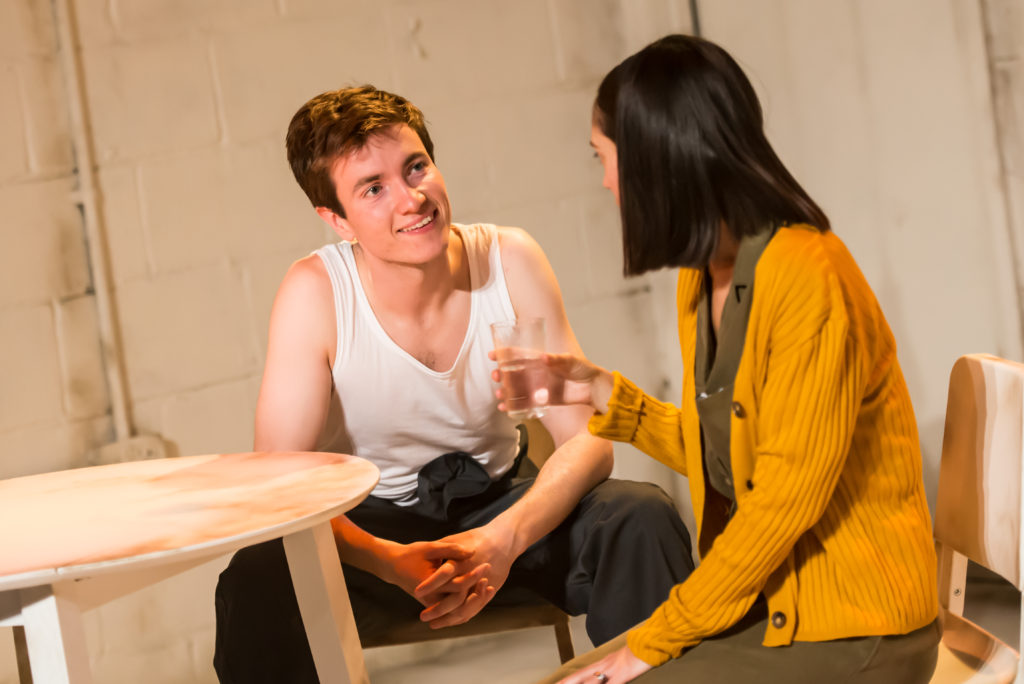
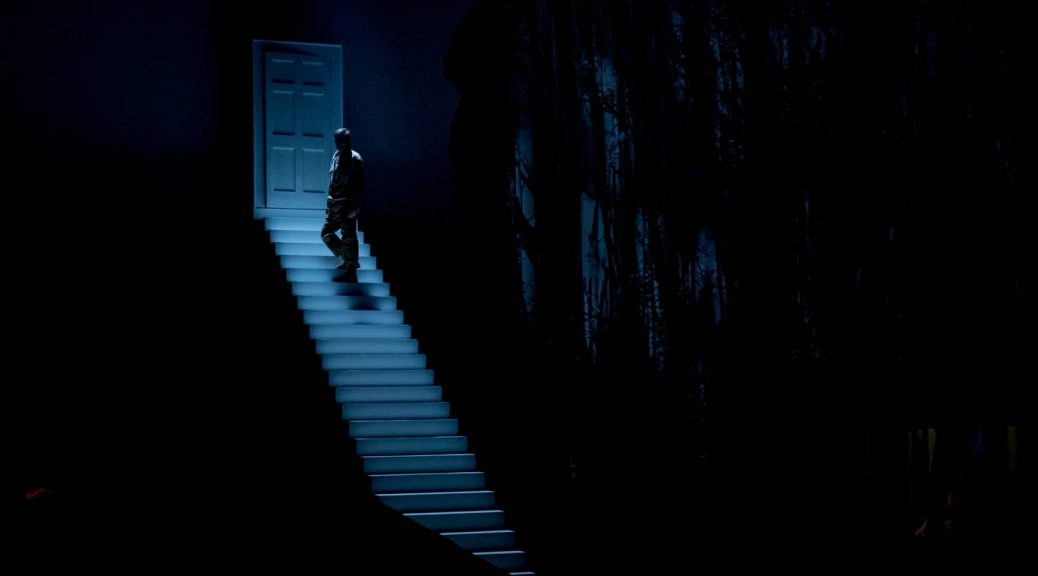
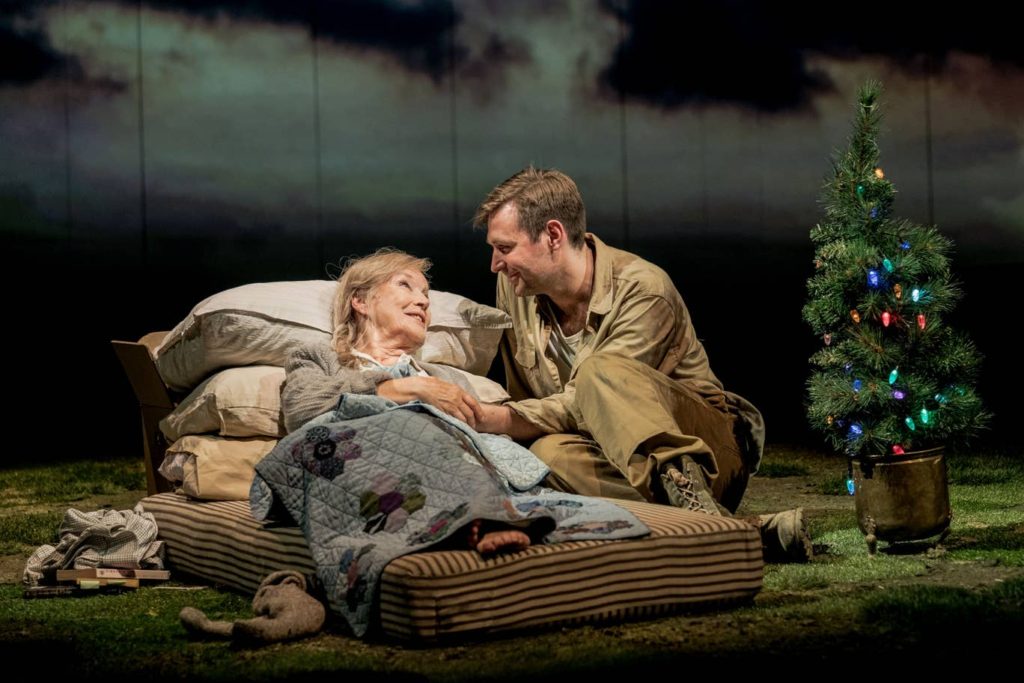
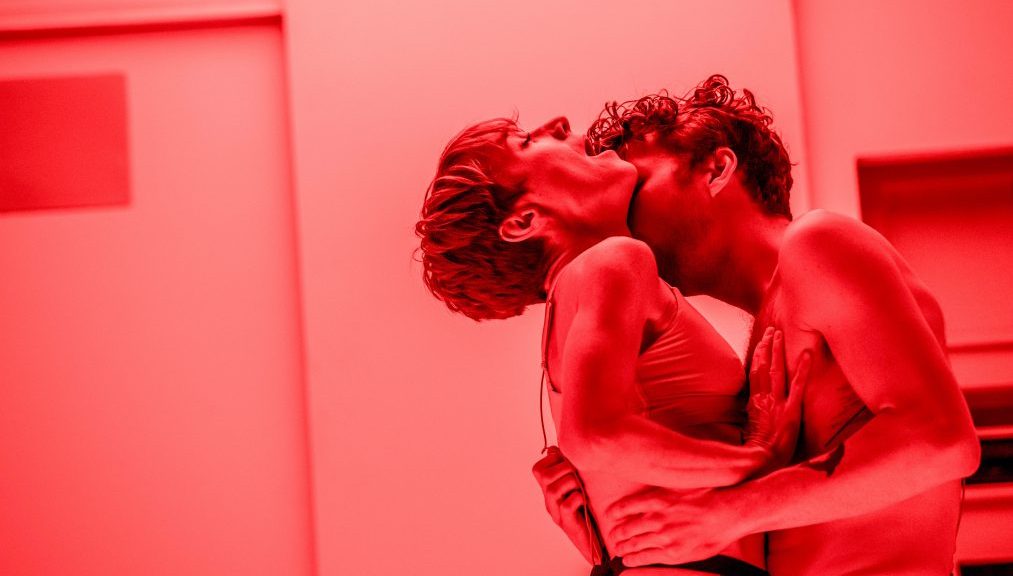
What goes on has plenty of dramatic potential. The scientists have “visitors”, recreations from their memories, who are loved ones long dead: the lead, Kris, is united with an old flame, Ray, while her colleagues are haunted by their mother and daughter. Greig fills out Lem’s scenario nicely but the structure he opts for feels too cinematic – Solaris has been filmed twice – and director Matthew Lutton embraces just that with too much vigour. It’s technically impressive, and Paul Jackson’s lighting design is excellent, but it isn’t just a question of taste that makes me question this filmic quality. Compare the frequent short scenes, which at first provide drama but become tiresome, with that of a drinks party for Ray (pictured above) – a fantastic addition, given time to develop, and far better suited to the stage.

Kris is the narrator in the novel, which leads to a major role performed by Polly Frame. But opening out the story means that Greig does not give her quite enough to work with. Frame shows terror and joy well but there’s little in between and she fails as any kind of sceptic. Jade Ogugua and Fode Simbo play her colleagues: as deep thinkers, the characters bring out Lem’s ideas, but the performances fail to create an emotional resonance. Kris’s visitor Rey has a much meatier role that Keegan Joyce tackles with gusto. The strange state of his almost-human character becomes as moving as it is fascinating. The best performance comes on film as Hugo Weaving establishes his character’s excitement at the scientific discovery being made.
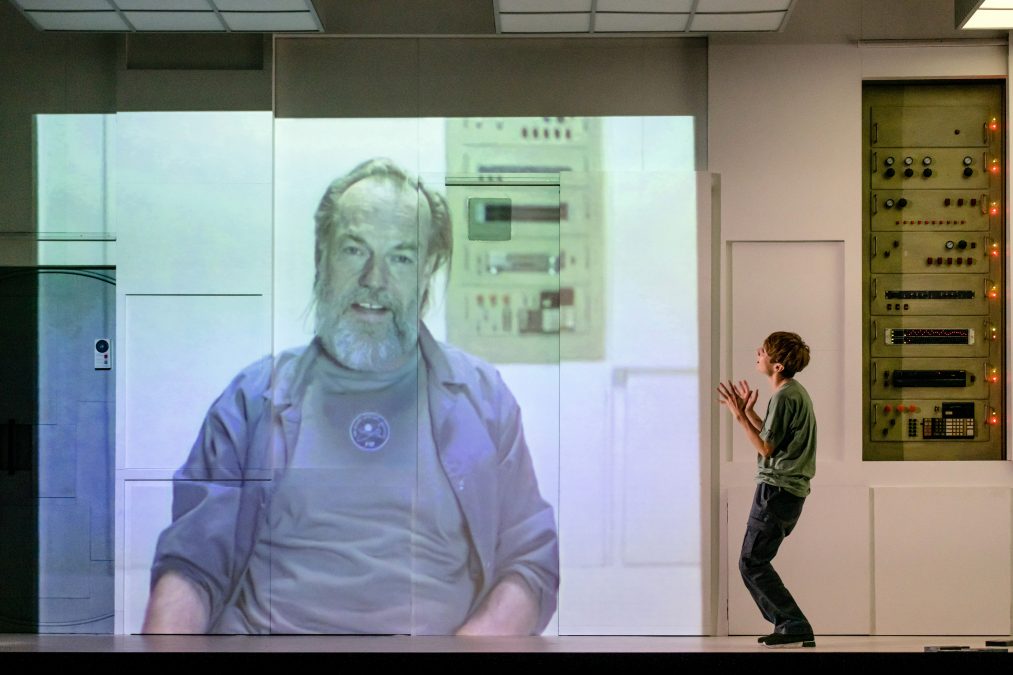
Hugo Weaver and Polly Frame in "Solaris"
Hugo Weaver and Polly Frame

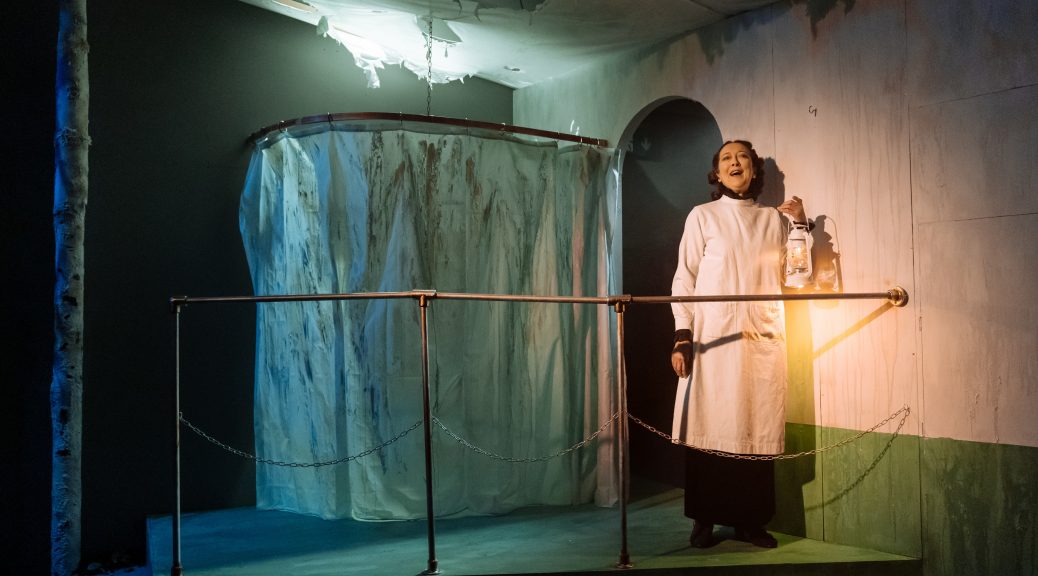
Designer Hyemi Shin keeps the novel’s 1960s sci-fi aesthetic. It’s appealing enough, although all that video tape might puzzle younger audience members, and enforces the production’s stylish appeal. But the show doesn’t engage with science quite enough. No matter how rattled by events, the characters on stage aren’t given the chance to convince us that they’re professionals. One key scene has liquid oxygen kept at the kitchen sink. I’m not sure who, apart from Heston Blumenthal, would risk that.

More seriously, the production unravels towards the end. Like the scientists who study Solaris, the book’s cult following attracts interpretations. It’s all part of the fun and Greig’s input comes with ecological fears and a touch of the Pre-Socratic Thales that highlights the theme of water. Both are interesting enough but arrive too late in the show for satisfactory exploration. The ideas form part of a truncated finale that ignores the adaptation’s strength – its emotional impact. Despite some rich investment from its whole creative team, the abbreviated conclusion means this Solaris ends up as short-change sci-fi.

Until 2 November 2019

lyric.co.uk

Photo by Mihaela Bodlovic
"Last Orders" at the Old Red Lion

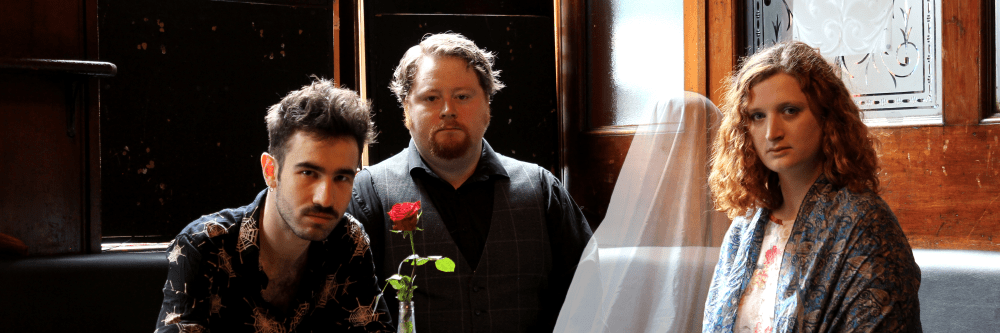
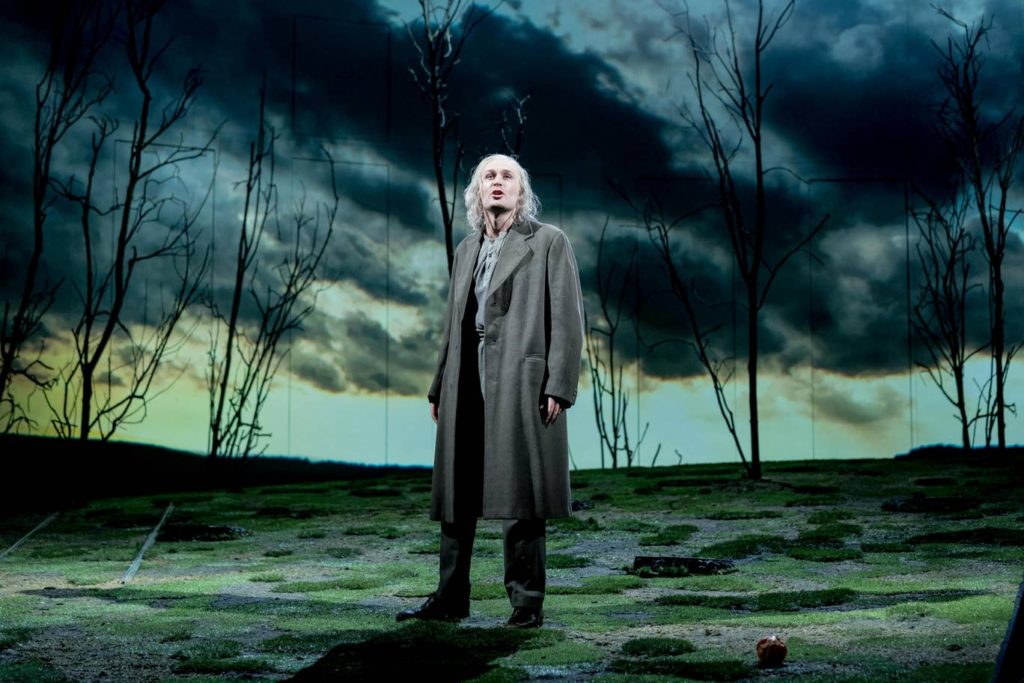
This show starts with a good old-fashioned ghost story. It’s a monologue, impeccably delivered by Reece Connolly, about a meeting with the supernatural that fits nicely into the genre’s venerable traditions. I could listen to this kind of quality story-telling all night. But although there is a similar scene later, where the past is dramatised for us, this project expands the theme of encounters in a different direction by showing experiments into the paranormal by new company The Knock Knock Club. The mix might make for a show more hotchpotch than haunting, but Last Orders is great entertainment.

The experimentation is literal – the company spent an after-hours night in the Old Red Lion pub with a ghost hunter, visiting the theatre we sit in (known for props mysteriously disappearing), the bar (where furniture has apparently moved of its own accord) and cellar (once used as a morgue). Their findings are presented in an appealing, open fashion with nice theatrical flair – never underestimate how effective candles and torches can be. Or billiard balls. Caroline Buckley and Christopher Keegan complete the trio and build up a great rapport with the audience.

As a thorough unbeliever, I wasn’t convinced by what unfolded but I made sure to take along a friend who’s more credulous, (sorry, open-minded). He’s even been to a séance. I giggled and he gasped, so there’s something to please everyone. More prosaically, the company could have spent more time explaining their Ghost Hunter’s equipment, would benefit from better presentation of photographs and could detail their evening more (including theories that debunk ghosts). The material is too good for just 70 minutes and the atmosphere too convivial to end so quickly.

If the docu-theatre angle is a little thin, a good night out is the bigger aim. The comedy here is super. From an effort to interview Rolo, the pub dog, to Connolly tackling his fear of the Ouija board – willing to sacrifice himself for fringe theatre, Knock Knock’s crew don’t take themselves too seriously and the result is a lot of laughs. Basing the show at a much-loved venue is sure to pique interest and the company is wise to give us a rundown of historical drinkers and lots of great stories. Of course, there are no ghosts, let alone the crowd of spectres expected. The brilliant line, “We’re going to need a bigger planchette”, proves unfounded. But it is a great line! Last Orders may be more funny than frightening, but it’s the best closing time in a pub I’ve ever been to.

Until 26 October 2019

www.oldredliontheatre.co.uk

“[Blank]” at the Donmar Warehouse

This collection of 100 scenes, with the instruction that they can be selected at will and performed in any order, is “a challenge and an invitation” to theatre companies. It’s a startling idea that makes for a big book and shows playwright Alice Birch’s prodigious ability. It is also a suitable celebration of co-producer Clean Break Theatre’s 40 years of working alongside women involved with the criminal justice system. The treatment for the many situations they must have encountered is, by turns, heart-wrenching and thought-provoking. So what has this production, directed by Maria Aberg, created in response?

First, some brilliant performances. From names this theatregoer loves – such as Jackie Clune, Jemima Rooper, Zainab Hasan and Thusitha Jayasundera – to performers I’ve not had the privilege of seeing before, the acting is stunning. Tackling characters who all have a connection to crime, from the most serious to unnamed incidents, undoubtedly makes the show grim. But what’s important is how far-reaching and detailed repercussions are shown to be. Highlighting the children and relatives affected, as well as the women convicted, makes every character encountered a figure to be accounted for. As the 16-strong team moves from role to role, in scenes that are often very short, their achievements are breath-taking.

Much of [Blank]’s power come from its variety. Thirty scenes are delivered here, so we get to see many different women and hear multiple stories, from foster care, including one from the many scenes written for children (the young performers are fantastic), to an adult reunited with a mother freed from prison (providing stand-out moments for Kate O’Flynn and Lucy Edkins).

Shona Babayemi and Jemima Rooper in BLANK
Shona Babayemi and Jemima Rooper

Remember, teasing themes or coherence out of the texts is a choice Birch offers. Part of her point is to challenge conventional narratives about women ‘like this’. Aberg’s response is a light one; a couple of scenes share characters, but this feels like a coincidence. Rosie Elnile’s design and projections of the performers bind the play visually (although I am agnostic about the need for them). And there’s a nod to our specific location in the boldest scene that roots us in Covent Garden with the Donmar’s particular clientele: in a dinner party that turns into a disaster, Birch shows ruthless skills as a satirist and Shona Babayemi gives an unforgettable performance.

Aberg is wise to have faith in Birch’s short sketches – they are packed with emotion and drama. It can be frustrating to leave the action so quickly, and dizzying to think of how many scenes could be developed into full plays. That’s not the aim, and the writing is too precise for it to be the case – each scene stands fully formed. Rather, being overwhelmed by this breadth of – frankly awful – experience is a statement. This feels like a whole other kind of theatre. The play could be mounted anywhere, with any cast, making it a real treasure – full of possibilities and lives that we don’t normally see. While these women maybe invisible to some, [Blank] goes some way to filling that void.

Until 30 November 2019

www.donmarwarehouse.com

Photos by Helen Maybanks

"Fast" at the Park Theatre

Kate Barton’s play is a thriller with serious ideas behind it. A fasting ‘cure’ for all diseases, practised by ‘Dr’ Linda Hazzard – did the name warn nobody? – illustrates the historical popularity of dangerous diets and our continued fascination with true crime. Both factors make this story from 1910 resonate with a contemporary audience. And just as pleasingly, Barton skilfully highlights the sinister to present an effective, even camp, frightener that is thoroughly entertaining.

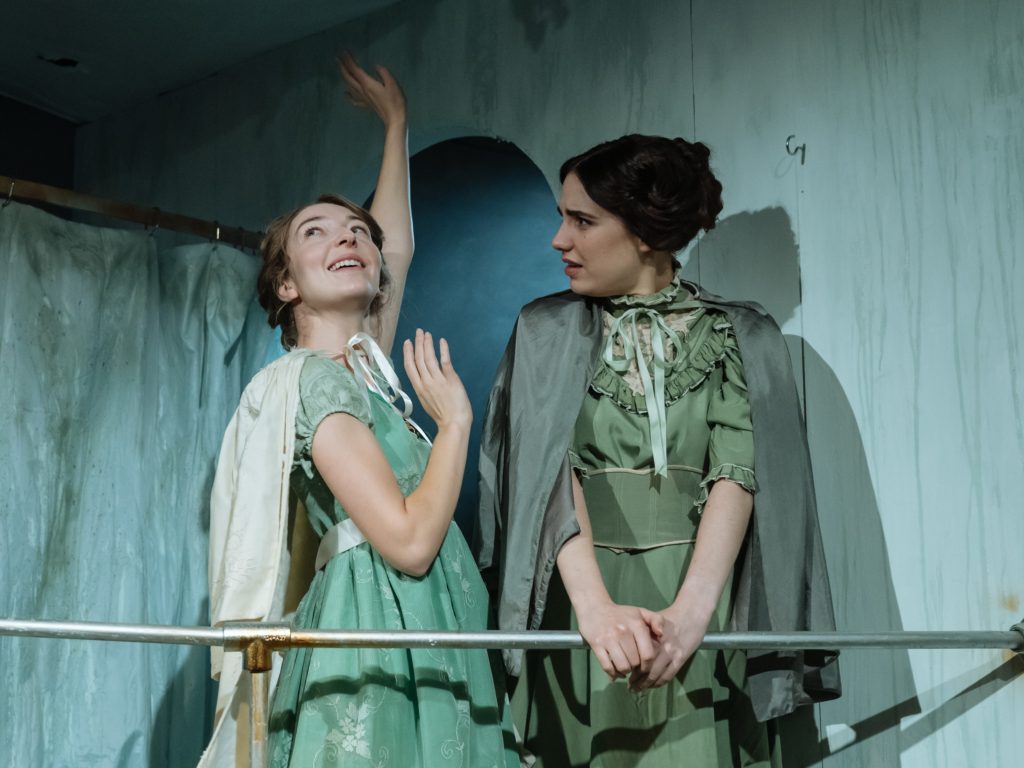
Jordon Stevens & Natasha Cowley in "Fast" at the Park Theatre
Jordon Stevens & Natasha Cowley

There is a problem with the doctor’s victims, two English sisters who come across as too gullible. While Natasha Cowley and Jordon Stevens do a good job, especially as their characters succumb to lunatic Linda’s “beautiful treatment”, these well-off walking well aren’t credible. That they really existed, and went off on a whim to be starved, doesn’t help the drama (the phrase “you couldn’t make it up” springs to mind). I suspect Barton knows this; she tries hard to add colour to the roles but mentions of suffrage and Picasso ring hollow and attempts at humour fall flat. It’s only the horror of the situation that grips.

Daniel Norford in "Fast" at the Park Theatre
Daniel Norford in “Fast” at the Park Theatre

Thankfully, Fast has plenty going for its other protagonists. Daniel Norford has a lovely role as a reporter determined to expose what’s going on. Barton juggles the “muck-raking” hack’s – and the media’s – mixed motives when it comes to sensationalism and misogyny. The introduction of court room scenes is expertly handled. Eventually, Norford makes a convincingly heroic figure – and it’s nice to see a press man cast as such.

The play’s success comes down to its villain. Barton maintains an element of eccentricity to Hazzard that works well in the hands of Caroline Lawrie, who isn’t scared of exaggerating. A flair for the theatrical is delivered as impressively as Lawrie’s scary stare. She even manages to make moving the set around spooky and stage manages the action by being in charge of the lights!

As well as Ben Bull and Dan Bywater’s excellent lighting design, director Kate Valentine’s production boasts a great soundtrack (well done David Chilton) and plenty of tension. Maybe, given its subject matter, Fast shouldn’t be quite so much fun. But just how delicious a story this horrible can be, a fact lost on neither the newspapers of the day or Barton, is food for thought in its own right. 

Until 9 November 2019

www.parktheatre.co.uk

Photos by Manuel Harlan

"Out of Sorts" at Theatre 503

As winner of the International Playwriting Award, the figures surrounding Danusia Samal’s new work are impressive – it was selected out of 2,055 scripts from 49 countries. While judging so many plays must be hard, it’s easy to see why the panel chose this one. A firmly rooted story of modern London life, with drama from the dilemmas facing a young Muslim woman caught between “two worlds that do not mix”, Samal balances humour and pathos with skill and assurance.

It’s clever that our heroine Zara, impeccably performed by Nalân Burgess, isn’t entirely sympathetic. Zara’s parents, from whom she hides her Westernised life, deserve more from her. They are, at best, a source of fun for Zara and her flatmate, Alice, another satisfying part that’s developed well by Emma Denly. Samal presents Millennials that are easily recognised, maybe a little too harshly judged and good fun. There are scene-stealing lines, too, from younger sister Fatima, a role that Oznur Cifci makes her own, confirming Samal’s comedy skills.

The writing often shows an impressively light touch that director Tanuja Amarasuriya handles well and uses to counterpoise the play’s big themes. For, alongside considerations of race, immigration and class, it becomes clear that Zara’s problems aren’t just a clash of cultures. Some home truths from Alice’s boyfriend (a role that, like Zara’s father, falters compared to the women, despite the actors’ commendable efforts) leads to a homecoming that brings a focus on mental health issues. The plotting may not be sophisticated, the action is possibly rushed, but Samal’s leading characters are beautifully crafted and utterly engrossing.

Out of Sorts comes back to the conventional family – a traditionalism that Samal brings to sympathetic fruition in a detailed two-hander finale. Here’s a moving scene that gets the best out of Myriam Acharki as Zara’s mother, who shows hidden depths. It’s no surprise Samal is a performer herself – she’s written enviable roles that really sing. If the conclusion shows a cautious streak (and as a choice of competition winner the play itself is a conservative choice), Samal’s skills are clear. Remember that safe bets pay off.

Until 2 November 2019

www.theatre503.com

Photo by Helen Murray

"Dutchman" at the Tristan Bates Theatre

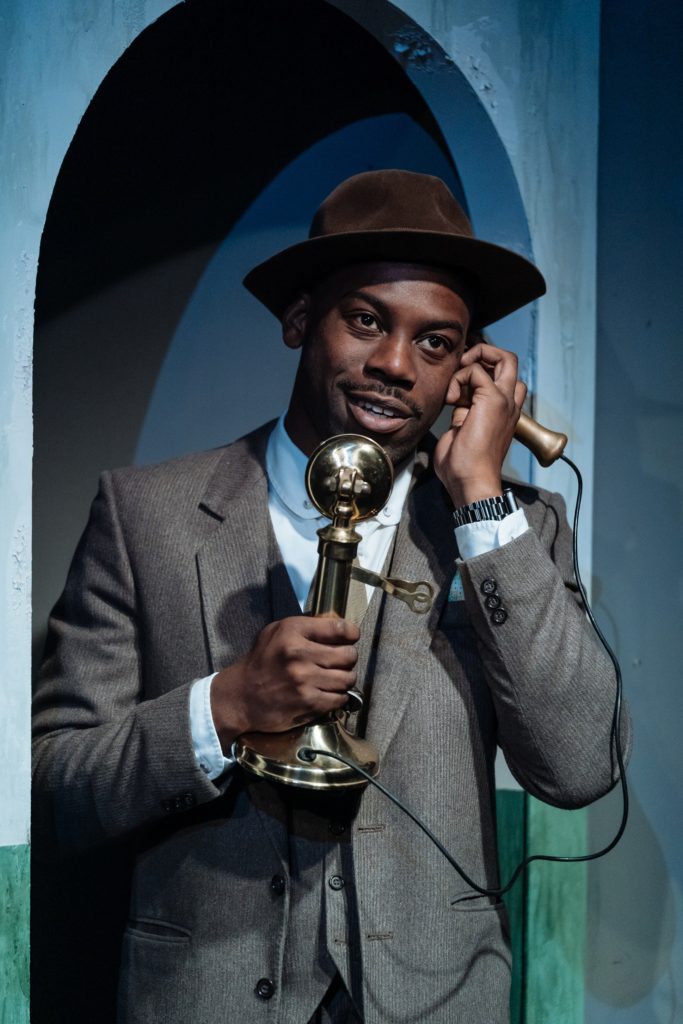
An encounter between a white woman and black man on a subway train is the simple scenario for this short play by Amiri Baraka. But from this, the writer previously known as LeRoi Jones, an important and controversial figure in African American literature, creates a dizzyingly complex text. Race, class and gender are all addressed in a piece that overflows with eroticism, polemic and violence.

As much a poem as a play, the figure of Lula, the woman who starts chatting up a random stranger, is a puzzle from the start. The contradictions don’t let up as the danger in the play increases. You could see Lula as an allegory, complete with an appetite for apples, as she moves from “party talk” to interrogating “manhood”. Truly repulsive – she’s insulting, self-aggrandising and morbid – she is purposefully difficult to watch. It is a mammoth role and taking the part Cheska Hill-Wood does well to keep up to speed with this most mercurial of figures. Most of what she says is so awful (the play is from 1964 and the vocabulary used is of that time), it can’t be easy to deliver and it is difficult to listen to.

As her “prey” Clay, James Barnes has just as tough a job and is similarly exemplary. Barnes has to move from being intrigued to provoked – his arousal at this oddest of women rising and falling – to a finale of explosive rage that is frightening. And all this in under an hour. Barnes carefully reveals his character’s depth as Clay’s own poetry unfolds. The suggestion that the character is a black Baudelaire, cruelly dismissed by Lula, comes to reverberate through the text in a fascinating manner that Barnes always factors in. 

Kaitlin Argeaux, working with associate director Sheila Nortley, aids the central performers with a tightly controlled ensemble who make up other passengers. There are moments when you just pity them for being in the same carriage. And the role played by these fellow travellers in the shocking conclusion is, at least to me, a step too far. Dutchman is a piece crammed with argument and fuelled by an anger that doesn’t make it clear or easy. It’s so dense it becomes a text to read as much as a play to see. It’s only the strong performances that ensure this is a production worth watching.

Until 26 October 2019

www.actorscentre.co.uk/theatre

Photo by Diana Patient

"Mites" at the Tristan Bates Theatre

James Mannion’s neat new play succeeds on two fronts. As the story of Ruth and her mental breakdown, it’s a boldly irreverent take on psychosis that, with trippy touches, takes the audience up close to paranoia. Abandoned by her husband, and living in designer Cecilia Trono’s creepily dirty set, Ruth’s treatment by the men in her life provides a sub text with risqué humour. Secondly, Mites is a dark, absurdist comedy: as Ruth chats with her (talking) cat and mistakes a murderous pest control officer for her husband, the plot is full of impossibilities, with jokes that entertain as much as raise questions. The play is crazy all around and mightily good for just that reason. 

There’s a recklessness to the humour here that belies Mannion’s skill and the precision of his director Marcus Marsh. It’s a joy to hear how cleverly the oddly antiquated language is used (one of my favourites is the neglected word hullabaloo), while Marsh’s control over the action, quite literally in terms of keeping movement in check, is superb. For all the antics, there’s restraint. It would be too easy to run around shouting, but Mites isn’t a farce – the humour is original and bold with its own distinct pace.

George Howard and Claire Marie Hall in "Mites"
George Howard and Claire Marie Hall

You can see this control in the performances, too. Take George Howard’s Ken – the true psychopath here. He’s an opportunist at first and his rambling lies (yes, they do include a rhinoceros) are delivered with such charm as to make him almost appealing. In the play’s central, and craziest, scene – I won’t spoil the surprise – we see Howard take on another bonkers role with great skill.

Richard Henderson and Claire Marie Hall in "Mites"
Richard Henderson and Claire Marie Hall

With the other two roles, a query nags over the casting. Although I should stress that the performers do a great job, there’s a suspicion that both characters should be played much older. Richard Henderson is brilliantly dead pan as Bartholomew ‘the cat’ and is equally skilled in a second identity. And Claire Marie Hall is excellent in the lead role: good at creating sympathy for Ruth and fantastic when it comes to suggesting a darker edge to the part. But, with more than a few references to age, bolstered by a morbid streak in the piece, it seems a missed opportunity not to have senior performers on board. It’s easy to see how several scenes, especially Mannion’s pointed notes on misogyny (so frequently linked to age), could benefit. You may think that a performer’s date of birth is a moot point. But it’s exciting to note how an already strong play could have easily been made even more provocative. Mites has legs – lots of them – and I urge you to catch it.

Until 26 October 2019

www.actorscentre.co.uk

Photos by Lidia Crisafulli

"Peter Gynt" at the National Theatre

Maybe it’s Ibsen’s status as a playwright, or the position of this work in theatre history, but Peer Gynt has a special place in the canon. This is the play’s third outing on the South Bank – and it even has its own sculpture park in Oslo! Based on a folk tale (surely a take on the Everyman story), this life story over 40 scenes cares little about the practicalities of staging. Taking in tall tales and the supernatural, much of what happens is downright crazy. While Ibsen’s ambition is clearly inspiring, and it can be interesting to see how theatre makers deal with it, the vision itself is not. The relentlessly imparted messages mix wisdom with humour and anger in a manic fashion. It’s a bit like being shouted at. And, over three-and-a-half hours, being shouted at for a long time.

Everything in Peer Gynt has a meaning, with its symbols and metaphors continually highlighted. This becomes draining. David Hare’s version works hard to tackle the didactic style with self-conscious awareness and injects a considerable energy. Setting the action in Scotland (the show is co-produced by the Edinburgh International Festival) is used to good effect. Updating the play to the present day leads to even more laughs. But the satire, while a good way of handling Ibsen’s misanthropy, doesn’t contain any surprises. Perhaps real politics are too crazy to keep up with, but casting Peter as a Donald Trump figure or calling the World Economic Forum hypocritical seem too tame.

Ann Louise Ross and James McArdle in "Peter Gynt" at the National Theatre
Ann Louise Ross and James McArdle

Director Jonathan Kent also does an excellent job of making the action interesting. There are even a few songs thrown in to keep us on our toes. Richard Hudson’s design is full of appropriately quirky touches and video work from Dick Straker is strong (especially in a shipwreck scene). The massive cast is handled expertly and there are some great performances: Tamsin Carroll stands out as the Troll Princess, while Guy Henry and Oliver Ford Davies, whose roles as The Weird Passenger and The Button Moulder rank as similarly bizarre, bring a sense of ease to the stage. Yet it’s really only Ann Louise Ross as Peter’s mother who has a substantial character and leaves an impression – which goes to show how much the play relies on its central performer.

James McArdle in "Peter Gynt" at the National Theatre
James McArdle

James McArdle steps into the well-travelled shoes as Peter/Peer. He is excellent. Technically, he can hold the massive Olivier auditorium and his physical fitness, running around all the time and barely off stage, is impressive. He handles his character’s ageing with a light touch that indicates his justified confidence. Best of all, he injects a warmth into Peter that keeps you watching. From the start, driven by anger and ego, McArdle brings out the character’s humanity, distracting from the many abstractions in the play. Peter is a unique hero, who we follow despite his many unattractive qualities. This production is as entertaining as you could wish for, and it really is a star performance from McArdle. But it’s still difficult to understand the play’s strange hold over the theatre.

Until 8 October 2019

www.nationaltheatre.org.uk

Photos by Manuel Harlan

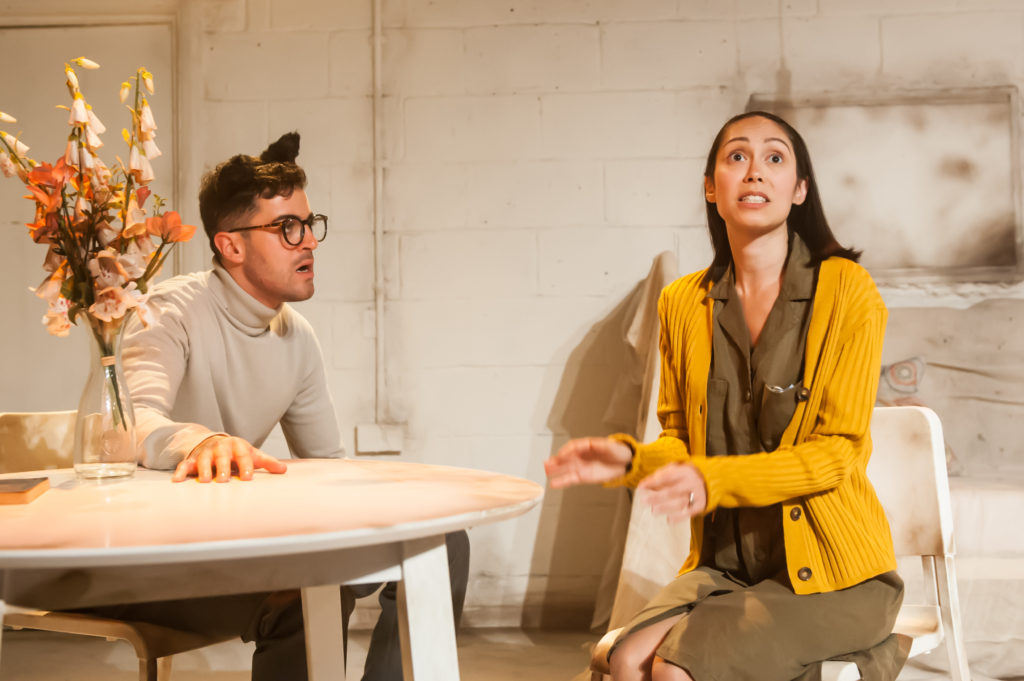
"Black Chiffon" at the Park Theatre

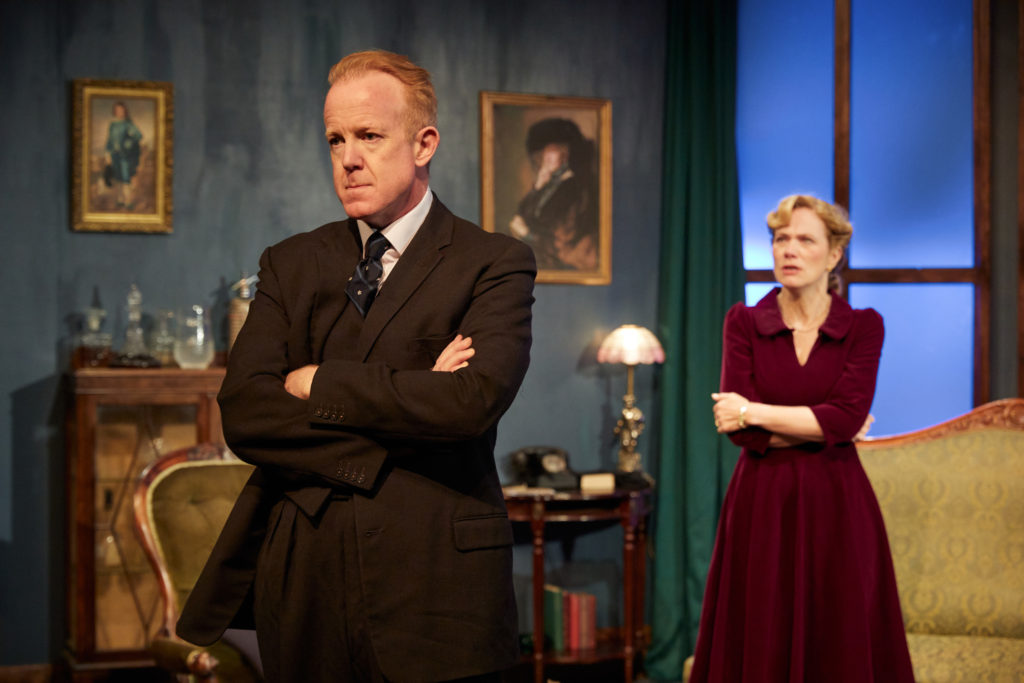
A big hit back in 1949, this psychological drama by Lesley Storm has been revived by director Clive Brill. It’s a quality production and the writing of a high standard. But there’s no escaping that this is a period piece with ideas trapped in their own time.

When a well-off housewife becomes a petty thief a “mind specialist” is called in to help with her legal defence. As a whydunit, it’s an effective premise, if a little simple, and Sharp gives us a close study of family friction that’s nicely delivered by Jack Staddon and Eva Feiler as the son and daughter. It turns out the former is “locked together emotionally” with his mother, a position both were driven to by a jealous patriarch. As the wicked father figure, Ian Kelly has a good go, but the “frightening presence” he is supposed to have cast over wife and son isn’t convincing – he is too sorry a figure to have caused much tension.

Ian Kelly and Abigail Cruttenden in "Black Chiffon" at the Park Theatre
Ian Kelly and Abigail Cruttenden

There’s a lot of RP accents and stiff upper lips (all delivered well) that raise smiles surely not intended by Storm. But that isn’t the big problem. The encounters between our nouveau klepto Alicia and her doctor, handled spryly enough by Nicholas Murchie, are focal points that prove myopic. A diagnosis of empty-nest syndrome is arrived at ridiculously quickly. Psychiatrists as all-seeing saviours may have been novel for Storm’s audience, but the idea just seems odd nowadays. A further twist, motivated by Alicia’s will to sacrifice herself for her family, comes as no surprise. It’s not so much an upper-middle-class obsession with privacy as the doctor’s admiration of such that seems silly.

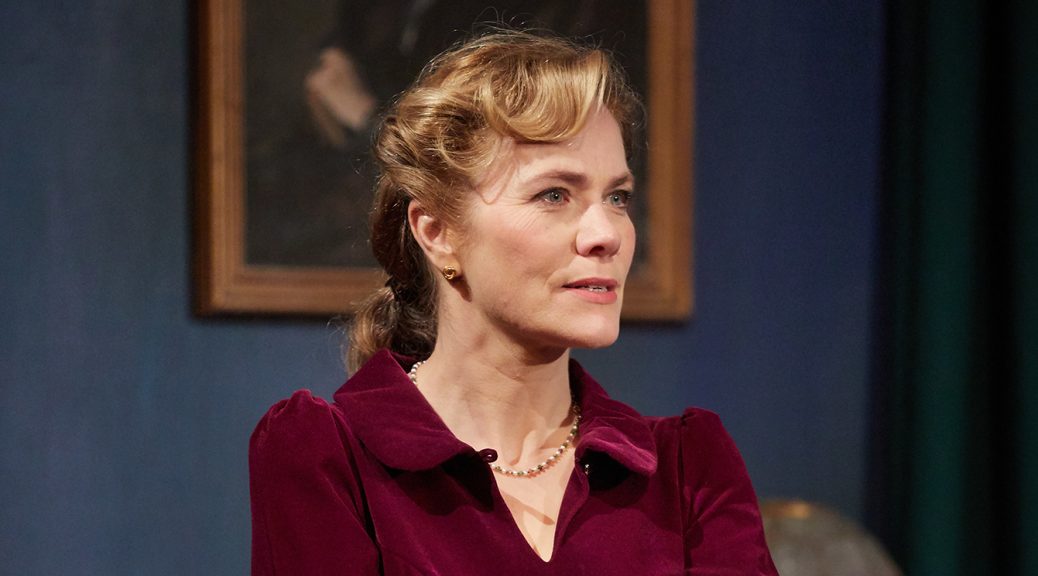
Unless you’re particularly interested in post-war theatre Black Chiffon only has one big attraction: a star turn from Abigail Cruttenden in the lead role. She gives Alicia a dignity that’s believable and makes you care about the character. Better still, she is wonderfully natural; understated yet emotionally intense, with period touches kept under control. There are tricks here that many a performer in an historical drama could learn from and, although it’s a close call, Cruttenden makes the show worth seeing.

Until 12 October 2019

www.ParkTheatre.co.uk

Photos by Mark Douet

"Faith, Hope and Charity" at the National Theatre

Faith is missing. She’s a four-year old girl taken from her unstable mother and desperate older brother, brilliantly portrayed by Susan Lynch and Bobby Stallwood, in Alexander Zeldin’s new play. The heavy irony – that Faith never appears – sets the tone for this bleak piece, and there’s a sinking feeling throughout this painful look at the most vulnerable in our society.

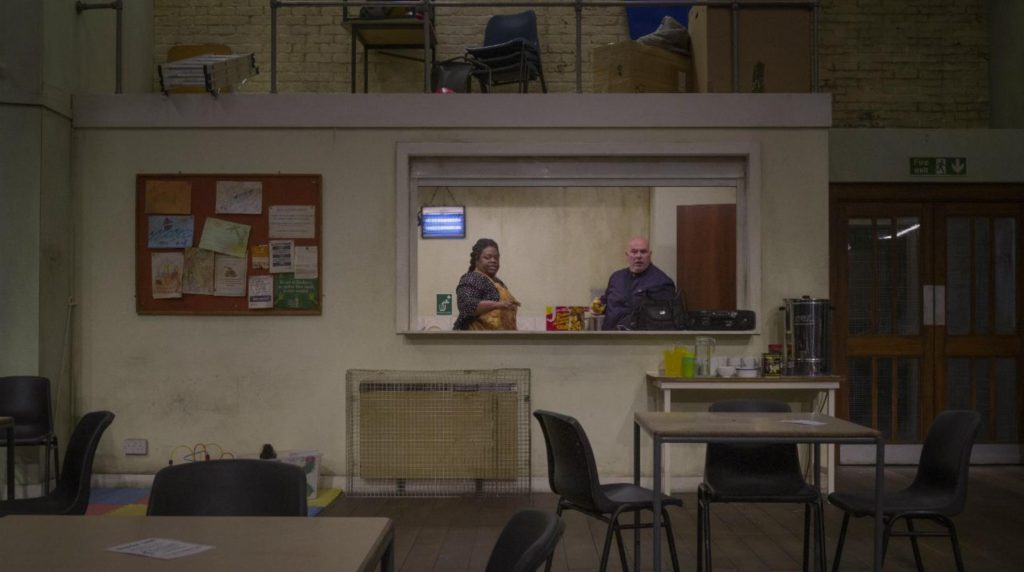
Faith is present in one sense, as Zeldin places a lot of it in his audience’s patience. Directing his own work, the pace here is glacial: there’s little action, plenty of random conversations and, since the setting is a soup kitchen, lots of cooking and eating. I attended just after the press night and, regrettably, more than a few people left at the interval. But the verisimilitude achieved by all the detail here is remarkable. With the aid of Natasha Jenkins’ design and some marvellous lighting from Marc Williams, many of the short lines and tiny actions bring a tear to the eye. It isn’t easy viewing, but Zeldin’s bravery at demanding such patience creates powerful theatre.

Cecilia Noble and Nick Holder in 'Faith, Hope and Charity' at the National Theatre
Cecilia Noble and Nick Holder

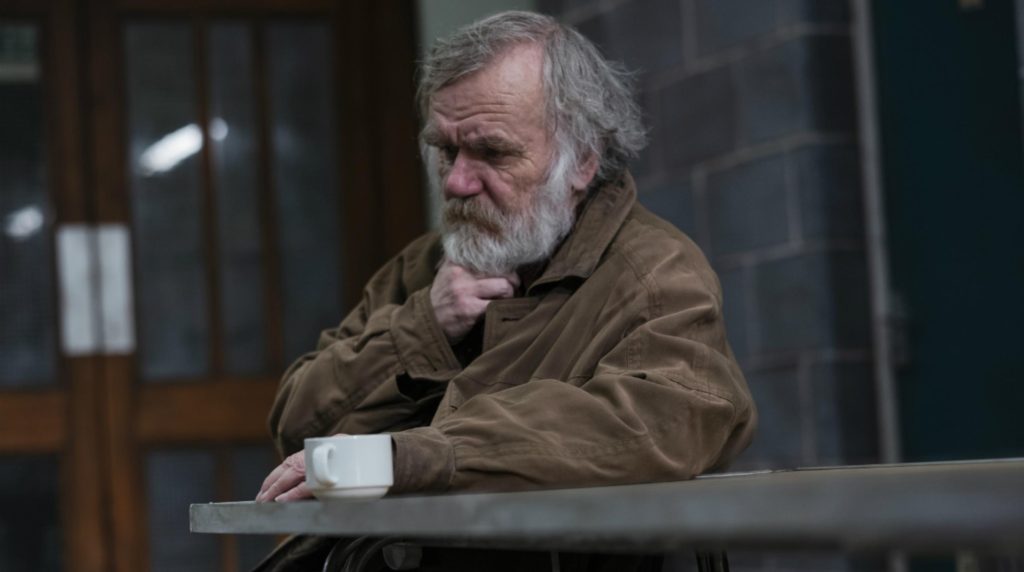
Hope comes in the form of Mason, a role that Nick Holder makes his own. A volunteer with the choir at the community centre, he talks of “growth” and tries so hard to help it’s impossible not to adore him. Holder carefully hints at his character’s vulnerability from the start and, when we learn how damaged he really is (in a scene where both Holder and Lynch shine), the pain is raw. Although a leader for the group, Mason has as many problems as any of them and, as we see each of ensemble try so desperately to help – when they are so ill-equipped to do so – the play becomes heart-wrenching. The tiny gestures of concern and all the courtesy (I’ve never heard the word “sorry” spoken so many times in one play) are overwhelming as the problems each person faces are revealed. Alan Williams’ performance, as the eccentric Bernard, has to be highlighted: as the character sinks (there’s that word again) into dementia it becomes clearer how alone and helpless he is. The truth is that these people, each depicted so carefully by the ensemble, don’t have a chance in our society.

Alan Williams in 'Faith, Hope and Charity' at the National Theatre
Alan Williams

The neglect in Austerity Britain is all the crueller when it comes to what Zeldin sees as the greatest of these virtues. Charity defines the role of Hazel (Cecilia Noble), the manager and chef at the centre. It’s clear that she is an ideal for all these people, but the character is grounded by Noble, who makes no end of self-sacrifice believable. As the pressure mounts, in her personal life and over the future of the crumbling building, Noble’s performance goes from strength to strength. The achievements of Hazel and Mason, keeping people fed and arranging a small singing concert, aren’t small. But it’s no plot spoiler to say that Zeldin can’t give us a happy ending. Hazel hasn’t sung for years and, when she joins the ‘choir’, the result is a painful cry for help that confirms the play as a damning indictment of our times.

Until 12 October 2019

nationaltheatre.org.uk

Photos by Sarah Lee