All posts by Edward Lukes

“Drifting” at the Southwark Playhouse

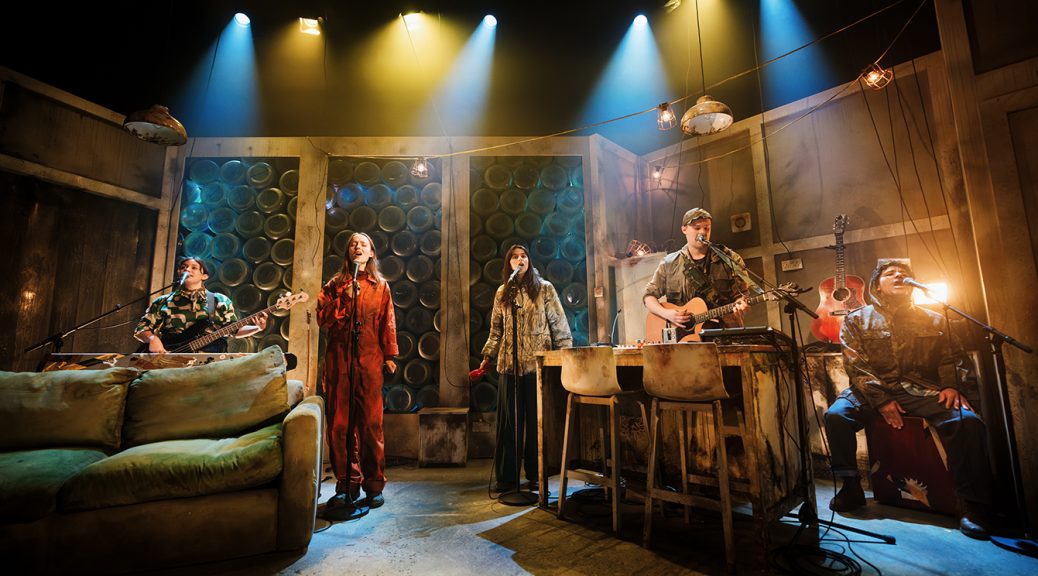
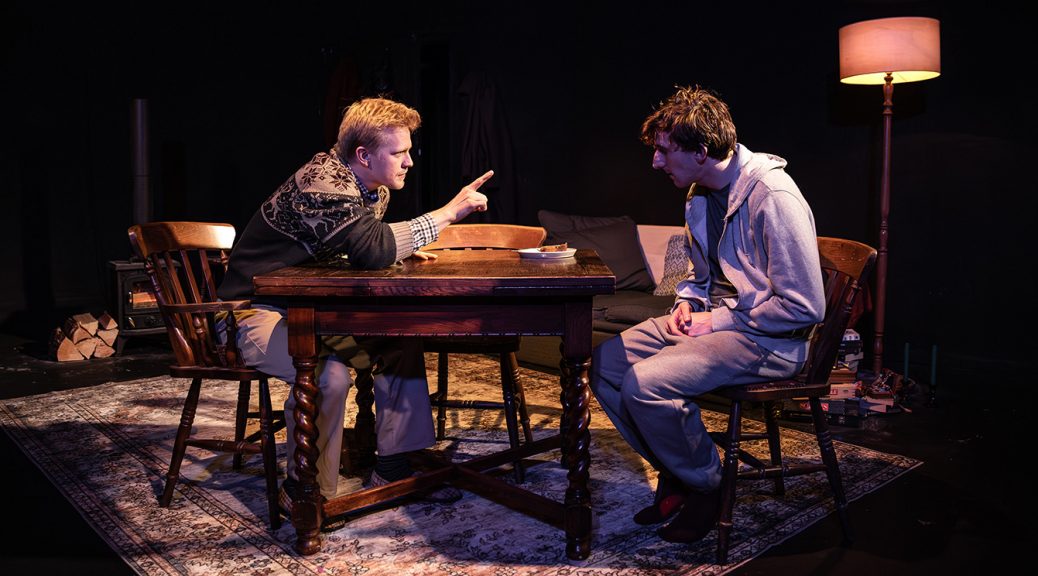
Andrew Muir’s bizarre short play is puzzle. It deserves credit for looking at twenty-somethings in such a novel manner, although I’m not convinced it tells us all that much. As one of the many characters states about the ‘Young Man’ the play follows, the piece is cute but odd. Too odd, probably, to really work. But Drifting intrigues and has an impressive, quiet confidence.

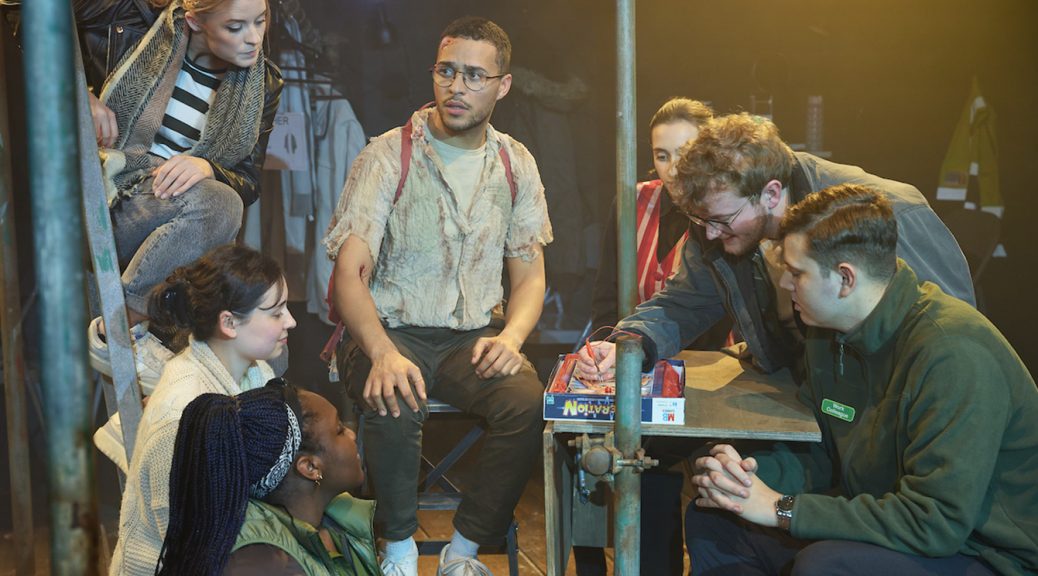
Influences buzz around the play, which has the air of a fable, with a bit of Beckett and Kafka thrown in. Our hero, like many other characters he meets, is 26 and stuck in a small coastal town, prevented from leaving, possibly by a mist or fog. A series of contrived encounters – with a stranger, his kind-of-girlfriend, a colleague and a worker from an arcade – baffle. Each entertains, too, but the scenes are slightly too long and overplayed. The Young Man’s dream of making it to the city faces a lot of frankly silly obstacles. At least it’s clear, quickly, that the world of the play is different to one most of us recongnise. It jars with talk of zero-hour contracts and house buying, but the disconnect is different and adds originality on top of the whacky touches.

The execution is not quite even enough. Muir’s direction is good, although the speed could pick up. The playground-style set is highly effective and the lighting design proficient. Taking the lead, Trae Walsh gives a strong performance, balancing the frustration and hope that are clearly Muir’s preoccupations. But some of the other actors struggle a little. Olivia McGrath goes big on mysterious, Yarrow May Spillane channels manic, while Amirah Abimbola Alabere does well at showing someone who has given up on their dream. It would be easy to argue about which strategy works best. And I don’t think I know! But mashed together it makes a confusing, sometimes chaotic play. If the aim was to provide changes in pace, it has failed.

Everyone is on firmer ground when it comes to the comedy in Drifted. Walsh takes a back seat, while his mum, dad and manager – Phoebe Woodbridge, Toby Batt and Lewis Allen respectively – add some lovely comic touches. It isn’t a matter of rolling in the aisles, but it is enough to reassure us that the play, while being about serious stuff, doesn’t take itself too seriously. It’s a fine line and, if Muir loses balance, the effort is admirable.

Until 22 November 2025

www.southwarkplayhouse.com

Photo by Mark Douet

“The Meat Kings! (Inc.) of Brooklyn Heights” at the Park Theatre

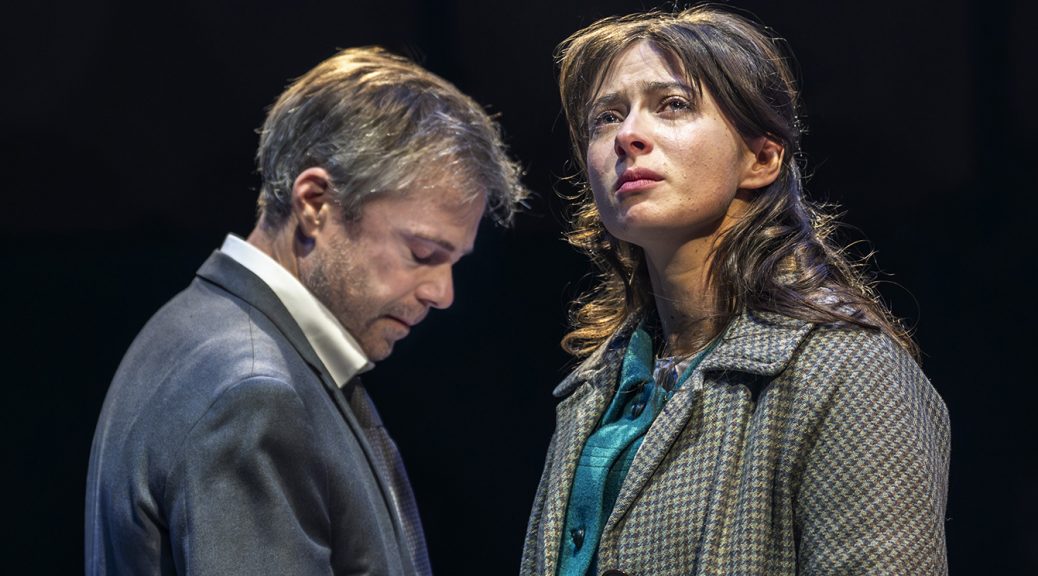
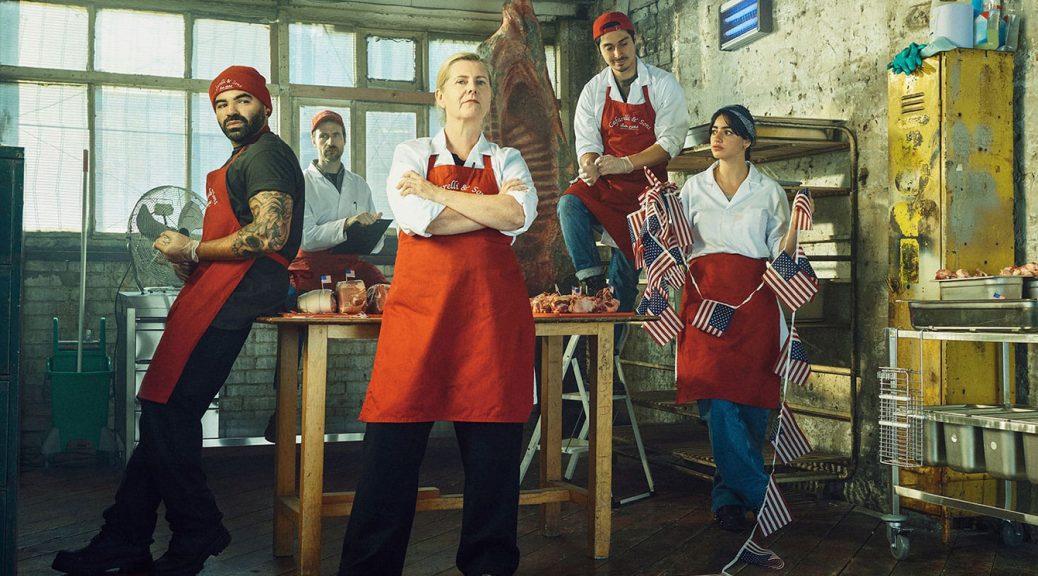
It was surely a dream come true for Hannah Doran to win the prestigious Papatango New Writing Prize for her debut play. The piece is a sure and sound choice that benefits from direction by Papatango’s own George Turvey. Set in the cutting room of a butcher’s shop, looking at the lives, loves and hopes of the staff, the story is simple but strong and delivered well.

With the business under pressure (cue nods to gentrification) two apprentices – JD and Billy – end up competing for one job. The lengths they will go to are complicated by an expired visa and a sick mother. The stakes are engaging and there’s a romance with new arrival, T, who is also (ex-convict) Billy’s cousin. So there’s lots of meaty drama to enjoy.

The work-place play is well-trodden ground, sure to remind many of pieces by Lynn Nottage (which is no bad thing). If there are touches of soap opera, it’s all good stuff.  Doran has a talent for filling in back stories and making us care about her characters, who she handles evenly – each of the roles interests and the performers respond accordingly.

If the older characters are slightly less convincing, strong performances ensure their success. It is easy to admire the struggling no-nonsense boss Paula (performed by Jackie Clune) and senior cutter David is an interesting, partly devilish creation that Eugene McCoy makes a lot of. David’s bromance with Billy is full of convincing touches. As for the main lovers, the couple are adorable. Marcello Cruz is a charming JD, while Mithra Malek makes an angry – and deliciously unexpected speech – that’s a highlight for T. The object of her ire is cousin Billy, a role Ash Hunter excels in. The audience when I attended had him marked as the villain… I’m not so sure and my hesitation is a good sign.

Billy’s desperate actions are a fine talking point – linking to the American Dream, of course. The play’s politics arrive relatively late and, if there aren’t surprises, the events are satisfyingly explored and staged well. There’s enough complexity in the emotions we see even to excuse a clunky speech from Paula. The whole play is neat, well-presented and served to perfection.

Until 29 November 2025

www.parktheatre.co.uk

“Othello” at the Theatre Royal Haymarket

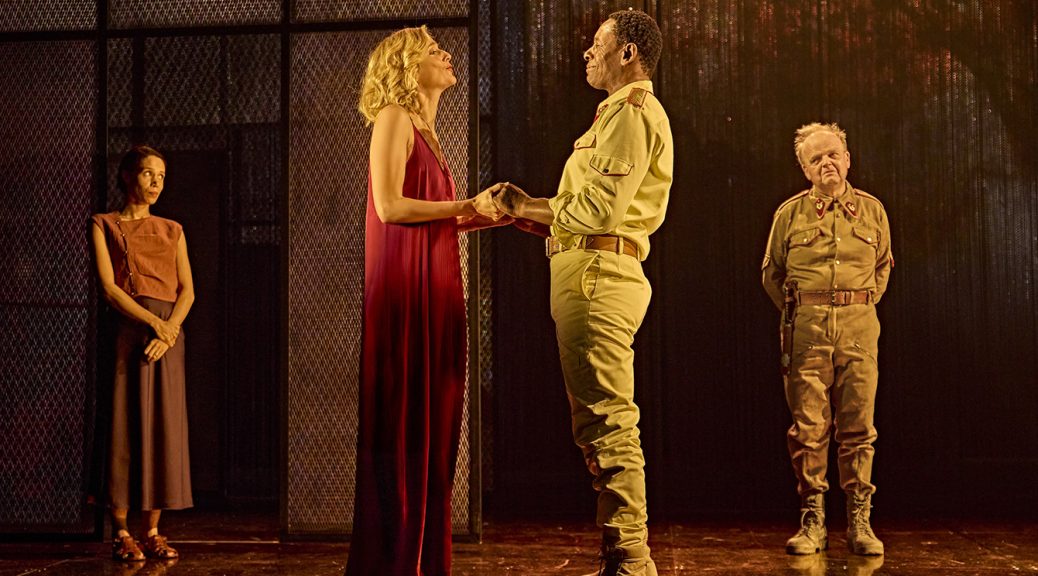
David Harewood as Shakespeare’s jealous general proves reason enough to see this new production from director Tom Morris. Having first played the part in 1997, Harewood has a special kind of experience. He is an imposing figure, presenting a dignified leader whose downfall increases in tragedy because of how inexplicable it is. Harewood is flawless. And Morris doesn’t exactly make mistakes. But this production is a strangely tepid affair and, overall, underwhelming.

Continuing the star casting, having Toby Jones as Iago is exciting and his performance is interesting. Leaning into a comic edge for the character is unusual. Iago’s wickedness can be funny (Tom Burn benefits as the dupe Roderigo). And the jokes suit Jones, who also uses an affable persona to good effect – you can see why people trust “honest Iago”. The laughter is too contagious though; there isn’t enough evil or fear around this “demi-devil”. Morris might want to emphasise chance and opportunism – Iago’s sexual jealousy is left out – but this aim is not clear enough.

There are more problems. While none of the acting is disastrous, too much is lukewarm. Caitlin Fitzgerald tries hard to focus on Desdemona’s independence which is, arguably, at odds with much of the text. This Desdemona is far too confident and worldly-wise. It becomes hard to imagine her putting up with much from a husband so the chemistry is lacking. Luke Treadaway’s Cassio is more a plot point than a person and Peter Guinness’ strange sounding Brabantio difficult to understand.

Morris keeps the action quick and that doesn’t leave much room for tension to build. There is help from PJ Harvey with the music, some swanky projections from Nina Dunn and admirable lighting design from Rich Howell. But none of it is used quite enough to make it memorable. More specifically, while the production does pick up, the starting point is timid so impact lacking. 

The death bed scene is strong – Harwood and Fitzgerald are both excellent. And Vinette Robinson’s barnstorming Emilia, an impassioned performance, comes close to stealing the show. It seems appropriate that at the end, her face is projected the same size as Desdemona. But these stylish touches don’t add up to a production that is more than the sum of its parts. It is Harewood’s justified confidence in the role, his beautiful delivery of the verse, that towers above all else.

Until 17 January 2026

www.othelloonstage.com/

Photo by Brinkhoff/Moegenburg

“The Maids” at the Donmar Warehouse

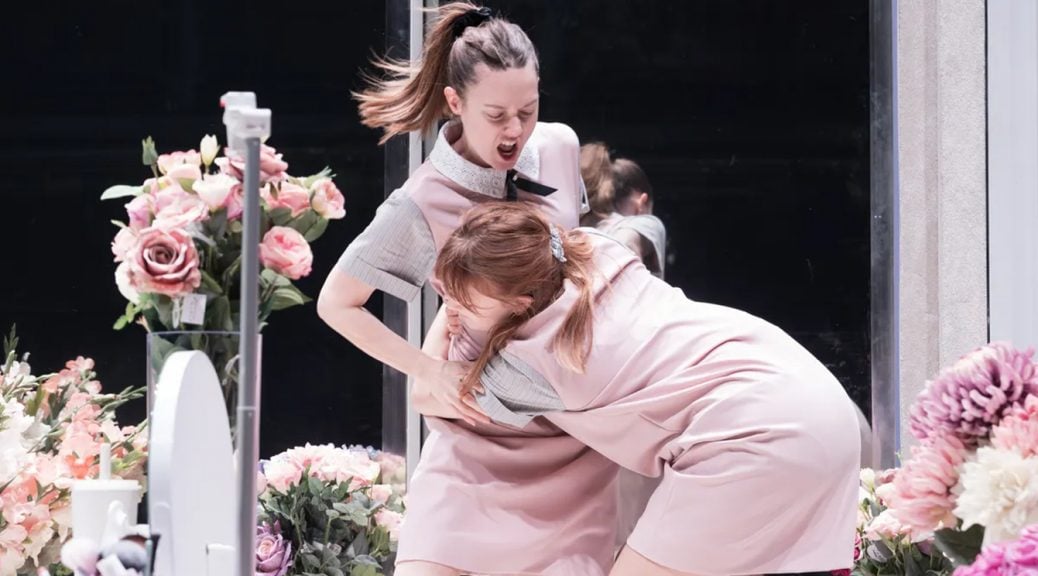
As any of the characters in his new production might say, director Kip Williams is having a moment… and I’m here for it. Following a thrilling go at Oscar Wilde (and aren’t we all excited about Dracula next year?), this is his new version of Jean Genet’s 1947 play. There are problems – maybe concessions would be a fairer description – but The Maids is stylish, intense and intelligent.

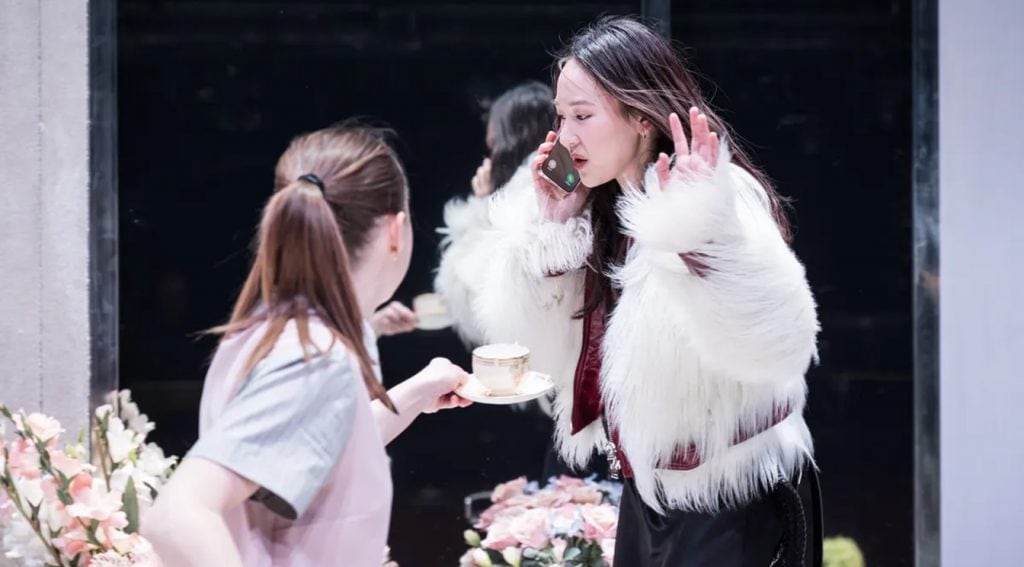
That moment Williams is having is very now. Achingly so. The play is frequently changed (Jamie Lloyd’s version also “updated” the action), but here the Madame from Genet’s play could have walked in off the streets outside the venue. She is transformed into a social media fashionista influencer. Her titular staff are still poor sisters and they still want her life, but it’s a life online that they crave. So, a lot of Genet’s interest in power, particularly class, takes a different direction and is, perhaps, even lost. The religious overtones in the “rituals” the maids perform struggle for potency.

Yerin Ha as Madame in The Maids at the Donmar Warehouse
Yerin Ha as Madame

Instead, Williams goes for satire. And, of course, he has plenty to aim at with his new Madame and her followers. This is a strong performance from Yerin Ha as a spoilt rich kid who is breathtakingly solipsistic and easy to hate. It is to Ha’s credit that we sense the pressure her character is under (even if we think it is silly). There’s a similar doubt about the sisters. How serious or dangerous are they? Their bond to Madame is hard to explain and a plot to murder her (Genet’s initial inspiration) almost disappears. 

Williams focuses his efforts on the language that Phia Saban and Lydia Wilson, who take the titular roles, handle marvellously. Mixing Genet’s flowery, morbid, somewhat suffocating vocabulary with a lot of swearing and contemporary slang is a bravura achievement. The script creates a vivid alternate reality that’s far more intoxicating than anything online. It is here where we see how crazed the sisters are, trapped in their imaginations as much as their employment.

This is a script I really wanted to read. And it is frequently funny. The humour throughout is great (Saban is particularly strong) and, if tension is lacking, despite excellent music from DJ Walde, it is still compulsive viewing. Williams’ direction is sure. Despite the one-room setting, the play is never static. There’s a lot of looking at phones and filters, but projecting these on to the mirrored doors of Madame’s wardrobe is a brilliant move from set designer Rosanna Vize. Darker moments are lost, and it seems fair to question this decision. But it is surely a knowing sacrifice in a play that is executed superbly.

Until 29 November 2025

www.donmarwarehouse.com

Photos by Marc Brenner

“The Unbelievers” at the Royal Court

It’s been a long wait for a new work from Nick Payne, one of the most exciting playwrights around. Thankfully, The Unbelievers lives up to expectations; insightful, humane, dramatic and surprisingly funny, this story of a missing child is so admirably crafted, it has it all.

The mother, Miriam, played with intensity by Nicola Walker, is the focus. The action moves back and forth in time – from one week, to a year, then seven years – from the disappearance of her fifteen-year-old son. 

It’s a similar treatment to Payne’s hit Constellations with a recognizably discombobulating effect. Here it is less flashy but still serves an important point. Time changes little for the mother: her fears and hopes are raw despite duration.

Different perspectives come not just from chronology but other characters, each superbly written. The diversity of reactions provokes thought and each response is credible and interesting. There are strong roles for two daughters and two ex-partners, performed by Alby Baldwin, Ella Lily Hyland, Paul Higgins and Martin Marquez. It is to director Marianne Elliott’s credit that each gets their due. And in this populous play, there are also superb cameos for Jaz Singh Deol, Harry Kershaw, Lucy Thackeray and Isabel Adomakoh Young. Each role adds, often bringing strong snatches of comedy.

It’s brave to include so much humour in a play about such a serious subject. Especially when mental health becomes a focus and grief dangerous. There are many moments when we fear for Miriam, including a brilliant scene when the time periods collapse and phrases from each weave with one another – stunning! But Payne manages to make awkward moments contain a comic edge gently. It doesn’t always work (Walker isn’t a natural comedian) but it is always clear, tames sentimentality, and makes events relatable.

With so much detail, we can see how the family, friends and the police have done everything they can, though the kid remains missing. It’s not a spoiler to say we don’t find out what happens; remember, we see events seven years after the disappearance at the beginning. Instead, Payne’s concern is to open up the topic of belief, and religion, an interesting move for a writer who has frequently explored science. Miriam alone believes her son is still alive. Is she crazy? Maybe. While those that love her focus on her, on moving on, or on the spiritual, Payne gives her credit for her belief, making the play deeply moving.

Until 29 November 2025

www.royalcourttheatre.com

Photo by Brinkhoff & Moegenburg 

“The Ebony Frame” at the Baron’s Court Theatre

It’s the perfect time of year for a ghost story and GrimFest, at several venues this month, offers plenty. Erstwhile Media tick a lot of boxes with their short piece. There’s a graveyard, a spooky house, lanterns and pacts with the devil. Regrettably, it’s hard to consider the production a success. But The Ebony Frame interests and entertains.

The writer, Oliver Giggins has picked great source material. Like a series of monologues from Claire Louise Amias that I enjoyed last year, his work is inspired by a short story by E. Nesbit. A very short story, that, unfortunately, Giggins elaborates more with plot than atmosphere. Even worse, the production does not match his ambition.

A new heir, a dead wife and a gay ghost in a – literally – flammable love triangle can’t fail to hold attention. But the action and exploration of ideas is rushed. There’s just too much for lead character Arthur, valiantly performed by Alexander Donaldson, to handle.

The Victorian neurosis on offer is interesting but how it’s dealt with is half-hearted. A nurse, performed Beth Eltringham, who Arthur tells his story to, becomes monotonous in her chiding. Two comedy servants are uncomfortably unamusing. Adding a mother-in-law into the mix is also unsuccessful: Finlay Allan, who takes the part, has little to do but posture. Everyone gets carried away, including Eltringham who, as the show’s director, should be restraining herself and others.

The incidental characters take us away from the main story, which is a lot more twisted than anyone here suggests. But appearances from Arthur’s partners are brief and unconvincing. His wife (Cosette Bolt) is bland, which everyone involved should have questioned. Making the ghost a man isn’t explored enough and there is no chemistry between Donaldson and Pedro Branco, who takes the role.

We are told Branco’s spectral character, Raoul, was a sailor, a scholar, burned at the stake for being a witch and damned himself to hell. All of this needs unpacking. If plenty could be jettisoned to make room, it would still take a lot of work to sort out. The potential of The Ebony Frame is clear but far more control is needed.

Until 18 October 2025

www.baronscourtheatre.com

“Troilus and Cressida” at Shakespeare’s Globe

The times are ripe for a new production of Shakespeare’s play set during the Trojan war. With so much conflict in the world, and too many posturing leaders, a lot of the piece seems sadly pertinent. Maybe it’s appropriate that the play also confuses – motives and actions are hard to fathom – and director Owen Horsley, who takes the helm here, doesn’t help us figure much out. You might regard that as frustrating. The production is full of flashy touches clearly intending to provoke thought, but they mostly just puzzle. Thankfully, Horsley gets at least one thing very right. 

This is the director’s Globe debut, but his work fits happily here. Like it or not, shows on this stage demand broad performances. Popular approaches include crude physicality, a lot of music and audience participation – all present here. Maybe that’s why so much of this Troilus and Cressida comes across as jolly. Horsley goes all out for jokes, with every character made fun of, not unjustly. But of course, while there is a love affair going on, there’s also violence. Treating so much of the play as a satire isn’t nonsensical, but it does limit it. Neither the romance nor the drama quite works.

The casting has flaws. Kasper Hilton-Hille and Charlotte O’Leary give passionate performances in the title roles but there’s little chemistry between them and the former is unconvincing as a vengeful warrior. The Greeks and the Trojans are hard to distinguish – which might be deliberate – and those who stand out do not do so for good reasons. Changing the gender of several characters works well, though: Jodie McNee’s Ulysses is strong, while the show’s star is Samantha Spiro as ‘Auntie’ Pandarus, a truly grotesque creation with crazy overtones of a Carry Onfilm that the audience gets behind.

Lucy-McCormick-as-Helen-in-Troilus-and-Cressida-credit-Helen-Murray)
Lucy McCormick as Helen

Spiro is excellent, but Horsley’s decision to give us a rather sweet version of the character brings complications. When the sinister arises it confuses(right from Cressida’s departure to the Greek camp, which Troilus seems far too OK with). Thankfully, this is offset with brilliant ideas about Thersites, a role Lucy McCormick combines with a powerful cameo as Helen. McCormick’s performance is unhinged and uncomfortable but brilliant. As a despairing cynic, losing her mind over all the sex and death she is among, Thersites knows that there are no heroes here and nobody to admire. All the cynicism in Shakespeare’s play lets rip and Horsley hits the mark.

Until 26 October 2025

www.shakespearesglobe.com

Photos by Helen Murray

“Salomé” at the Theatre Royal Haymarket

It is a strong idea, although not an original one, to bring music to Oscar Wilde’s 1892 play. Itamar Peres’s powerful singing about Salomé beauty makes the start of this production from Gesher Theatre intriguing. The ethereal voice of Shir Sayag, who plays Jokanaan (John the Baptist), punctuates the show to further effect. Unfortunately, the rest of director Maxim Didenko’s production is misguided and, too frequently, poorly executed.

Wilde’s text is difficult – it was originally written in French, very much of its symbolist moment and, frankly, a bit mad. But we can all agree it is poetry. And ignoring this, as Didenko seems to, is disastrous. The cast members race through the text. To their credit, they are not breathless… but I was. It doesn’t help that several of this international group have strong accents, or that the sound design isn’t the best quality. What you can catch is often unpleasant on the ear.

The only time the action slows is when Jokanaan sings. But the prophet is mostly above the action, in a small space, and removing him like this becomes a problem – it feels as if he is in a different play. This isn’t the worst move from set designer Galya Solodovnikova. While there’s no reason the terrace of Herod’s palace can’t be given a bar and a piano, the space shouldn’t feel so cramped. The idea of a fountain – and not curbing the desire for the cast to get into it – proves messy. Subsequent mopping up proves farcical when it includes ignoring a dead body and blood (that Herod slips in). Of course, it would be awful if any of the cast were injured. But health and safety isn’t sexy and this whole production is so devoid of eroticism – and Wilde’s warnings about its dangers – that there really doesn’t seem much point to it.

It isn’t silly to inject insanity into Salomé – what’s going on is crazy. And, as we all know the story, tension needs to come from somewhere. But the cast is too prone to equate instability with over-acting (and odd attempts at humour). The result becomes tiresome and, strangely, bland. A notable exception is Neta Roth, who tries hard in the title role. She delivers her lines better, while interpreting Salomé as a spoilt child works well enough. But there’s too much against Roth, not least making her wear one of the ugliest dresses I’ve ever seen. Her dance starts with some kind of dragon or fish mask – I’m sorry I don’t understand this – and ends up with her topless. Such a gratuitous gesture is indicative of how much has gone wrong here.

Until 11 October 2025

www.trh.co.uk

Photos by Sasha Gusov

“Hamlet” at the National Theatre

Believe it or not, there are people who aren’t sure if they like Shakespeare. This new production – boasting exceptional clarity – goes a long way to help them out. For his debut as deputy artistic director at the National, Robert Hastie makes Shakespeare action packed and accessible. Strong performances, with a lot of direct addresses, make every effort to bring the audience close to the performance.

Taking the title role, Hiran Abeysekera leads the way. This is a nimble Hamlet, clearly clever and confident enough in his intelligence to show when he doesn’t know something. But he’s still the philosopher prince. He wants to discuss with us, to share confusion about parts of the play that puzzle him (and, of course, us). This isn’t always subtle – eyes roll and make contact with the crowd rather a lot. But it does make this one of the most likeable Hamlets I can remember.

Hamlet-Tom-Glenister-Geoffrey-Streatfeild-and-Francesca-Mills-credit-Sam-Taylor
Tom Glenister Geoffrey Streatfeild and Francesca Mills

Indeed, most of the characters are more appealing than usual. Polonius (Geoffrey Streatfeild) isn’t quite the old bore we are used to – his kids joke with him and their warm family dynamic is a nice contrast with the rotten royals. Francesca Mills has a fine time as Ophelia, bringing fun and energy to her early scenes. The chemistry between the siblings is strong and Tom Glenister’s Laertes comes close to heroic (he literally has a hand in killing the King). Joe Bolland and Hari Mackinnon play Rosencrantz and Guildenstern as foppish public schoolboys… you might even feel sorry for them. Getrude’s change of heart is as rapid as her remarriage and Ayesha Dharker in the role also adds to how easy the whole production is to follow. Even Alistair Petrie’s Claudius, the clear villain of the piece, is more remorseful than usual and it’s hard to shake the impression that he’d be quite a good king.

The question will be asked – is Shakespeare being dumbed down? I don’t think so. It is true that there are few startling revelations and departures for those that know the play. But the edits are judicious and, with the exception of the music, there’s nothing silly or salacious here. Hastie has clear ideas that are executed well, with a wish to entertain his audience. There are no gimmicks – itself, a novelty – just a lot of good work.

Until 22 November 2025

www.nationaltheatre.org.uk

Photos Sam Taylor

“Lee” at the Park Theatre

Cian Griffin joins a long list of playwrights tackling painters’ lives. Such fictions, mixing history, biography and theories about art, can be fruitful but not easy, as injecting drama often proves problematic. At the risk of damning with faint praise, this play about Lee Krasner holds its own in a crowded field. Red by John Logan and Stanley by Pam Gems spring to mind, while more recent efforts include Rebecca Lenkiewicz’s The Painter and this year’s Who is Claude Cahun? by DR Hill.

Griffin has picked a great artist to explore – abstract expressionist Krasner had a fascinating life and career. And he’s done his homework, aided by a Barbican exhibition six years ago that allowed a London audience to see many of the paintings discussed. There are times when Griffin seems burdened by this knowledge, briefing the audience in a clunky manner, but it is interesting stuff.

A little against the odds, this is an affectionate portrait. Krasner is shown as irascible, but her touchiness is made a virtue of by Helen Goldwyn, who injects humour. The writing shows Krasner’s intelligence and imperiousness, but Goldwyn aids nuance and skilfully suggests a vulnerable undertow. I’m not quite sure Krasner’s resignation about sexism and celebrity in the art  is realistic (she appears sage-like a little too often), but Goldwyn makes it work. 

Griffin adds a neat device in the form of Hank, a local boy who seeks advice about art. Director Jason Moore keeps the action swift, which covers up a few problems here. Yes, Hank is young but is he a bit too dim? He’s certainly very naïve –and a plot twist is predictable. Still, this is a great role for Will Bagnall – who deals well with his character’s grief for his dead father – and an important attempt to open up the play.

You probably still need to have an interest in the artist to bother with Lee. But that’s OK and connects to bigger praise. Krasner had a famous husband. And my favourite part of the piece is how little he appears! No offence to Tom Andrews, who plays the part of Jackson Pollock very well, but it is great to see him in just a few flashbacks, where he appears as a ghost. These are strong scenes made all the more effective by being by underplayed. Pollock did haunt Krasner, certainly her reputation, and you couldn’t ignore him in a play about her. But helping her to step out of her husband’s shadow, even just a little, is a big achievement.

Until 18 October 2025

www.parktheatre.co.uk

Photo by Giacomo Giannelli