"I and You" at the Hampstead Theatre via Instagram

While not being able to visit the theatre, or blog about it, is low on the list of most people’s problems right now, any glimpse at a big part of my normal life is welcome. I’m grateful to Hampstead Theatre for streaming this play, first seen on its stage last October, and a chance to get as close to theatre as is currently possible.

Lauren Gunderson’s two-hander has its teenage characters occupied with death and art. Caroline is waiting for a liver transplant, trapped in her room for health reasons, while Anthony from her school is assigned to work on a poetry project with her. It’s serious stuff, but not as heavy as it sounds. Gunderson has a nice way of lightening the themes with some surprisingly gentle comedy. 

The performers, Maisie Williams and Zach Wyatt, are good with the jokes and Gunderson’s strong characters are a gift to them. Williams makes Caroline’s self-definition as “small and mighty” believable – the character is abrasive and obnoxious, but above all appealingly honest. It’s no small achievement to see past the illness to get a well-rounded role: her hatred of the “kittens and winky faces” people send her on social media, as well as her obvious intelligence, come through. And surely you have to admire someone who names their cat Bitter. Wyatt has a harder job but also does well: Anthony’s enthusiasm for the poetry of Walt Whitman feels forced, but it’s easy to see how it would have worked better on a stage than on a screen. For a lot of the piece, there’s too much of the teacher about him for someone who is supposed to be Caroline’s peer.

There are other problems, although all are mitigated by Edward Hall’s skilful direction. Claiming I and You is too shouty might be subjective, but there are clunky touches around sudden love and pain. We can pass over Caroline’s knowledge of a poem she supposedly hasn’t read, but her enthusiasm waxes and wanes too abruptly. And, while the budding friendship between the two youngsters is mostly touching, a potential romance feels superfluous. The play’s twist, which has potential, arrives a little too late and feels underexplored.

Nonetheless, this is a work of focus and skill. Gunderson has a strong ear for speech. The kids’ project is on pronouns, and proves thought-provoking, while Caroline’s dialogue, with its “prefaces” and “postscripts”, is fascinating. While there’s plenty of talk of collages, and how strange they can be, Gunderson’s work is far from bricolage and all the better for it. Caroline’s artwork focuses on close-up photography – the beauty that most of us miss – a quality shared with detailed moments in the text. I look forward to seeing Gunderson’s work live at some point and promise I’ll attend whatever show she, or Hampstead Theatre, has on as soon as I can.

Available @hampstead_theatre on Instagram until Sunday 20 March 2020

Photo by Manual Harlan

“Women Beware Women” at the Sam Wanamaker Playhouse

Like Thomas Middleton’s Jacobean play itself, this production has its bumpy moments. The exaggerated characters, plot twists and sexual politics all have to be negotiated in any revival. And director Amy Hodge does well, making the play entertaining, fast paced and full of drama.

Hodge focuses on the three female leads and makes the all the talk of honour and virtue convincing – Thalissa Teixeira and Olivia Vinall give captivating performances as two very different young women in love. Meanwhile, Tara Fitzgerald has the great role of arch-villain Livia and deals well with the camper moments of her truly wicked “shop of cunning”.

Women Beware Women at the Sam Wanamaker Playhouse
Tara Fitzgerald

Make no mistake, a lot of what happens in Women Beware Women is awful. The sexual violence and coercion aren’t shied away from and Teixeira in particular handles this bravely. But the production also deserves praise for connecting this with the sexism that pervades the play, for example, the ‘advice’ about what kind of woman should be wed is delivered as a song (James Fortune’s music for the show is consistently strong). There’s a creeping nausea about the confined lives of all the female characters.

Simon Kunz

Sinister performances from the play’s powerful male characters add to the tension. Simon Kunz makes the most of a relatively small part as the Duke of Florence. Daon Broni is truly creepy as Hippolito, who tricks his niece into an incestuous relationship. Best of all is the mercantile Guardiano, a consistently strong performance by Gloria Onitiri, who brings out scheming, snobbishness and wrath by turns.

Despite all this praise, the production has glitches. Joanna Scotcher’s design is confusing (the aim was the 1980s, but you’d struggle to work that out). Comedy in Women Beware Women is a tricky affair, full stop, and the character of the hapless Ward, played by Helen Cripps, is an unhappy one. And there’s the decision to stage the Masque within the play with tongues in cheek. I happen to disagree and think this scene should escalate the drama, instead of comically diffusing it. But I understand the thinking – the genre is tricky to get your head around – and the decision is well executed, indeed so many bodies on such a small stage is handled superbly. Yet the Masque remains the most obvious moment when Hodge doesn’t smooth over the play’s faults as might be wished. Arguably, it’s not her job to. But the resulting production is a staccato affair that has plenty to praise but also too many stops and starts.

Until 18 April 2020

www.shakespearesglobe.com

Photos by Johan Persson

“Bin Juice” at the Vault Festival

Cat Kolubayev’s comedy thriller is a little treat. A neat if queasy scenario, about a sinister waste disposal business and its new recruit, has great characters and a wicked sense of humour.

Firmly directed by Anastasia Bruce-Jones, Bin Juice benefits from three strong performers making the most of solid roles.

Adeline Waby and Madison Clare – both superb comedians – play the firm’s psychopathically quirky employees. There’s a great sense of their offbeat relationship being long established. Waby’s character is steely and smart, Clare’s deadpan and whacky, and both get great laughs from lines both blunt and surreal – a mix of nonchalance and concern is nicely handled. Into the mix comes Belinda, another strong showing from Helena Antoniou, who tackles the distinct humour just as well and adds a touch of mysterious tension.

Exciting as the Vault Festival is, it has to be mentioned (again) how poor the acoustics are. The venue does not serve this piece well. It’s clear that the talented cast have to shout more often than the script needs, a fair call on Bruce-Jones’ part but I’d love to hear a quieter menace in some lines.

The short running times at the festival also prove a drawback. Kolubayev plots well, playing with predictable genre elements, I really wanted to know more about the “someone” in charge who communicates only by phone. But the show feels truncated. More, please – let’s hope this piece can be expanded. A sense of shock at the abrupt end shows Bin Juice is as engrossing as it is gross!

Until 15 March 2020

www.vaultfestival.com

Photo by Lidia Crisfulli

“The Time Machine” at The London Library

Inspired by the HG Wells novel, this immersive show has the huge benefit of being staged in The London Library. Playwright Jonathan Holloway’s new story unfolds in the gorgeous reading rooms and wonderful bookstacks. Admittedly, it’s a slight on the show that its main attraction is a bibliophile’s dream locale, but director Natasha Rickman and her team at Creation Theatre really do showcase the building magnificently.

Small groups are led around by an individual time traveller and mine – performed by Paul (PK) Taylor – was excellent, being good at engaging those who wanted interaction and leaving alone those who did not. Injecting a sense of urgency, even spookiness, he even managed to cover up a technical hitch for a good while. Joined for a couple of scenes by Graeme Rose as a computer who reminded me of a Gilbert and George artwork, the two did well with an anarchic streak that is the best of Holloway’s script.

The Time Machine at The London Library
Graeme Rose

There’s a cheeky humour to the show that I felt growing on me. With the idea that things are being changed constantly – including our socks – by illegal time travellers, there are plenty of smart lines. Playing with the past, especially with famous authors, should appeal to the audience, while claiming that the first instance of time travel was in New York nightclub Studio 54 (and playing Donna Summer in the library) is a great idea. It’s a shame it all gets more serious.

The Time Machine has a lot of important things to say. Wells would no doubt approve. But doom and gloom about the future mean this machine stalls. A “torrent of information” we’re exposed to is delivered well and bite-sized gobbets of science and philosophy are digestible enough. But too many scenarios of Armageddon arrive – each a cliché and fuelled, you guessed it, by conspiracies. Maybe we just don’t need more talk of epidemics right now but, rather than feeling topical, the show feels tired.

The Time Machine at The London Library
Funlola Olufunwa

Taylor keeps up the energy (joined by Sarah Edwardson and Funlola Olufunwa with two underwritten roles that they try hard with), and there’s a real effort to introduce passion and urgency. But a lot of what’s said becomes silly and the show’s originality evaporates. When it comes to imagining the future, this feels like old news. The only safe prediction should be an increase in membership for The London Library.

Until 5 April 2020

Photos by Richard Budd

www.creationtheatre.co.uk

“Nuclear War/Buried/Graceland” at the Old Red Lion Theatre

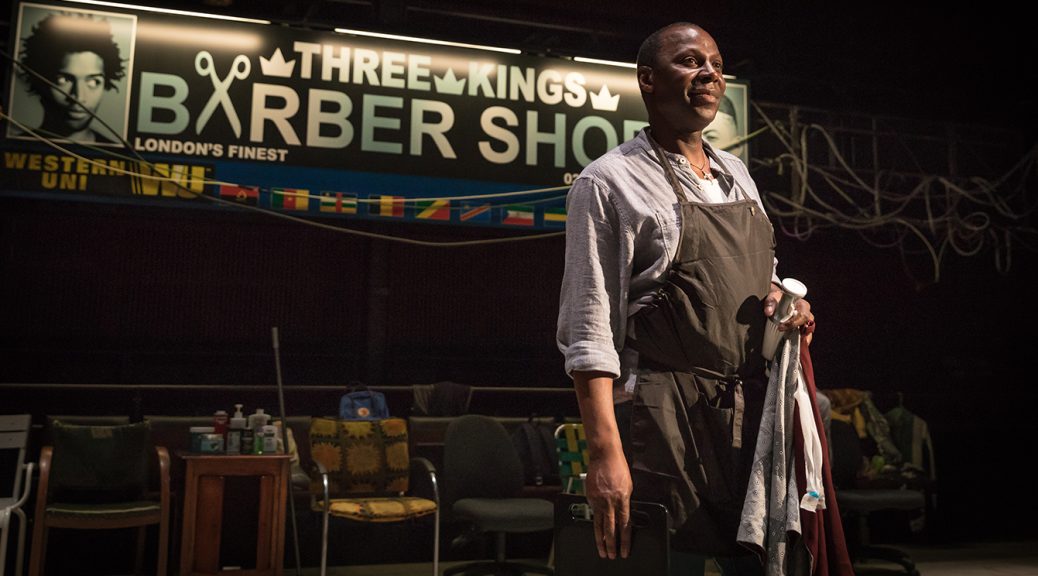
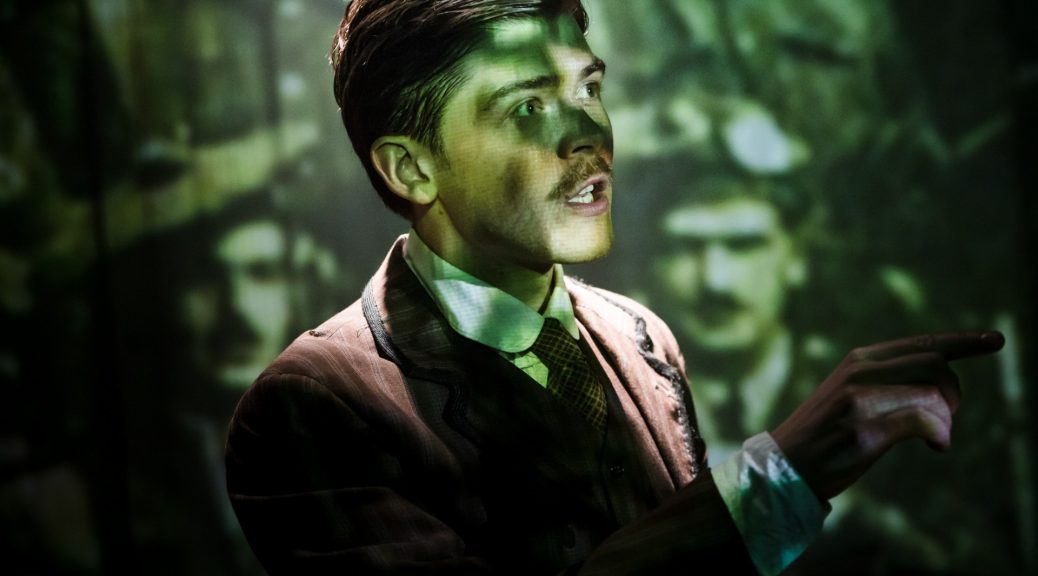
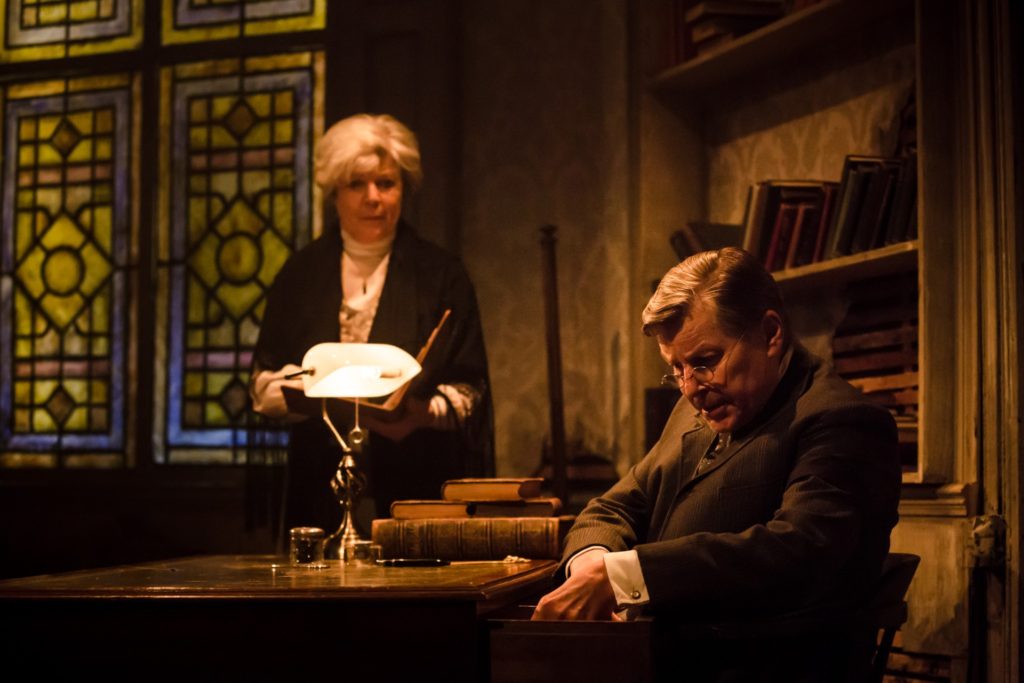
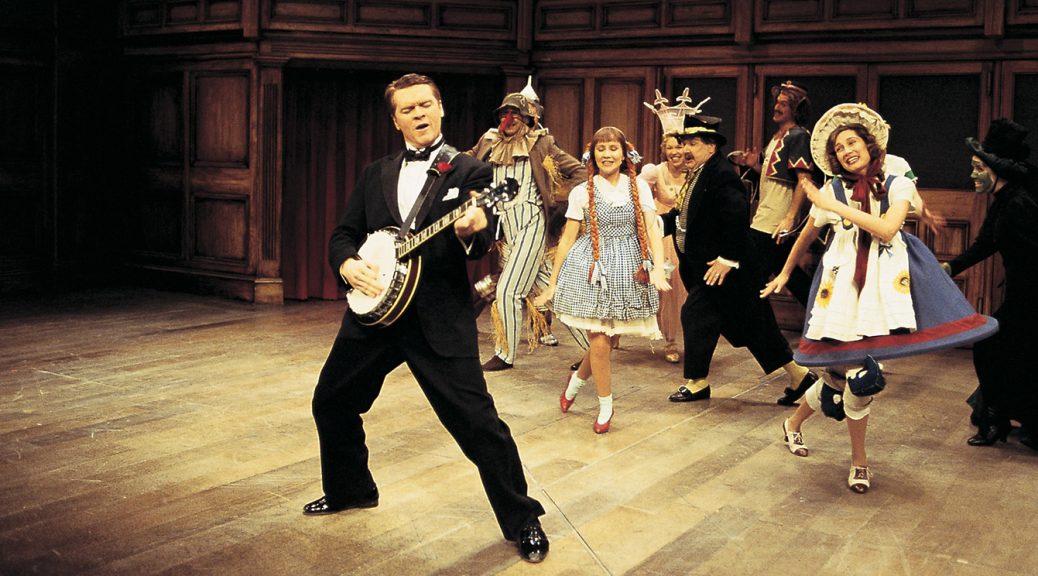
This trilogy of plays, marked by diversity and connected by a morbid streak, is an uneven but bold effort at very serious theatre for this Islington venue and its artistic director, Alexander Knott.

First up, Buried is the true story of the playwright David Spencer’s father, who was buried alive during World War II. And you do need to know that before you sit down. Presenting a stream of consciousness, recounting a tough life in horrific circumstances, the monologue ends up more confusing than powerful. The performance, by the subject’s grandson James Demaine, is impressive. With quick changes of accents and emotions, the skill is clear. Directors Knott and Ryan Hutton show considerable resourcefulness. But there’s an air of a talent showcase that creates a barrier to being involved in this powerful story.

James Demaine in "Buried" (Credit Charles Flint Photography)
James Demaine in “Buried”

Next is a short sketch, with a mention of war, by Max Saunders-Singer, that shows a teacher having a suicidal breakdown in his classroom. Anthony Cozens takes the role and does well with the audience participation that proves essential to the piece. But relying on the crowd to feed lines proves painful. Despite a firm hand from director Sonnie Beckett, the piece is unclear as to how serious it wants to be. And it’s in questionable taste. Some people don’t want to see a pornographic film projected in the theatre – no matter how blurred.

Anthony Cozens in Graceland (credit Charles Flint Photography)
Anthony Cozens in “Graceland”

The lead attraction, thankfully, makes a superb finale. The first revival of Simon Stephens’ Nuclear War since its premiere at the Royal Court in 2017 reminds us of this exceptional piece. A meditation on grief and mindfulness, it takes in ideas theoretical, astronomical and balletic! Equally cerebral and earthy, it’s mind blowing and moving. Marked by experimentation and abstraction – in stark contrast to the others, which have plenty of biography – the emotion it engenders is remarkable. And the biggest praise is that I liked this production more than the original!

Knott’s decision to present a two-hander (Stephens doesn’t specify the number of performers) makes the action clearer, while retaining a fluid rhythm. Assisted by Lewie Watson, and with movement direction by Georgia Richardson, the precision and musicality of the text is brought out – a tap dancing section is quite brilliant. The performances, from Zoë Grain and Freya Sharp, are flawless. Often speaking in tandem and using the venue’s intimacy to great effect, this is expert work. It’s not a case of saving the show – the play makes up the bulk of the production – but Nuclear War is more than enough all on its own.

Until 21 March 2020

www.oldredliontheatre.co.uk

Photos by Charles Flint

“All Quiet on the Western Front” at the Vault Festival

Incognito Theatre’s adaptation of Erich Maria Remarque’s book deserves the acclaim it has already received for bringing a text to the stage in such fine style. The physical theatre the company specialises in is impressive. But a focus on Remarque’s reportage is preserved: there’s a sense of shock about the events of World War I – a trauma the writer lived through – that is carefully retained. Remarque’s often cold presentation of facts, combined with a passion to let the world know what he experienced, prove a powerful driving force.

Directed by Roberta Zuric, with that all-important choreography from Zac Nemorin, the style of movement sees the five performers frequently mirroring one another or creating short-hand gestures to evoke characters or actions. The idea of the soldiers as animalistic or as automatons is conveyed with marvellous efficiency. The scenes of battle are impressive, and the athletic prowess of the performers is fantastic. But the technique proves just as effective with quieter moments, revealing an intimacy between these brothers-in-arms. Shared glimpses of care and attention prove especially moving.

Taking the lead role as the narrator, Paul, gives Charlie MacVicar the chance to shine – his delivery of the pain, boredom and camaraderie experienced are all good, while the moments when Remarque challenges his audience (or at least those who stayed at home) really stand out. Special mention too for Angus Castle-Doughty, Incognito’s artistic director, playing the young Albert and the company’s older mess man Kat. But All Quiet on the Western Front is the definition of an ensemble show. Success comes from these troops working together; sharing not just the precisely directed movements but a sense of conviction about the story that they are telling.

Until 8 March 2020

www.vaultfestival.com

“V & V” at the Vault Festival

While historical dramas aren’t to all tastes, Virginia Woolf and Vita Sackville-West make good subjects. The genius writer and her poetess-garden-designing lover are a biographer’s dream. Yet mixing their story with a tale of modern dating sounds tricky to me, a clear case of taking on too much and trying too hard to be relevant. Which goes to show you how wrong I can be… V & V proves to be a double treat that’s not to be missed.

The show is a quadruple achievement as two actors perform four roles flawlessly. EM Williams and Heather Wilkins are superb as the famous Bloomsbury couple and, in the present day, Lottie and Mia. Switches in time and parallels in the stories are dealt with impeccably by Misha Pinnington whose direction, like her writing of the play, is clear, concise and entertaining.

Heather Wilkins and EM Williams in V & V at the Vault Festival
Heather Wilkins and EM Williams

The epistolary form reveals the course of the two relationships with intensity, creating an intimate complicity with the audience. The beautiful letters between Woolf and Sackville-West are compared to online courting to great effect. Williams and Wilkins smoulder with Edwardian sexual repression one minute and show themselves superb comedians the next. Pinnington’s use of the letters shows her skill at editing – the material is wonderful. Meanwhile, the texted conversations turn into great crowd pleasers: from sexting and ghosting to deliberation over kisses and exclamation marks. The energy, and jokes, are great, while it’s fascinating to see how communication, and romance, has both changed and stayed the same.

V & V isn’t all light. Everybody knows how Virginia’s story ended (she must be one of the famous of suicides), while Lottie and Mia face problems, too. If I’d have liked Pinnington to provide a more overtly optimistic end for her contemporary character it only goes to show how attached I became to them; the restraint (OK, maybe realism) shown provides an emotional conclusion that packs a punch.

Pinnington’s skill is to show both differences and similarities between the couples so effortlessly. There’s no trace of period kitsch (zero trug count) or modern stereotypes. Four different women, all well delineated, and two very different periods in time are depicted with a light touch, while the common theme of love is explored with both humour and sensitivity. It all adds up to one great show.

Until 8 March 2020

www.vaultfestival.com

Photos by Ali Wright

“Look back in anger” at the White Bear Theatre

Given its fame, John Osborne’s 1956 play is performed less than might be expected. This chance to see the show that became synonymous with the “angry young men” who changed British theatre is, therefore, welcome. Director Sebastian Palka’s production is unflinching in its commitment to the piece.

The young married couple and their friends, from conflicting backgrounds, whose flat share is a “battleground”, allowed Osborne to interrogate the hypocrisy and injustice of his time. The anger and passion here are clear – credit to Palka and his team. And special mention to Marta Anna Licwnko and Tina Torbey, whose set design conveys a sense of off-kilter claustrophobia and poverty. But whether you find all this – and how dated it feels – interesting becomes an important question.

The lead role of Jimmy Porter is a massive part for recently graduated James D Fawcett and he tackles it with a bold directness. For Jimmy is, frankly, odious and tedious. Unbelievably selfish and cruel to all, this character still shocks. His misogyny, presumably based on class, is extremely uncomfortable to watch, his arrogance is repulsive.

While the challenge from the play is clear – its “bite, edge, drive” are all present – the production lacks humour and steadfastly denies any empathy for its lead character. The latter is understandable, as Jimmy says some truly awful things. But his pain only becomes real in the final moments, robbing the text of nuance. Surely Jimmy should come across as a lot smarter, or at least wittier? The key might be his wicked irreverence, with tongue-in-cheek talk of his “sensibilities”, but all this is too seldom foregrounded.

Thankfully, strong supporting performances help out. Another professional debut, Aaron Bennett, gets a great deal from his part as Cliff, who is slowly alienated from his friends. And the two female performers are very good indeed: Rowan Douglas brings plenty of layers to the role of Jimmy’s wife, pinned behind an ironing board for too long, while, as steely and snobbish Helena, Holly Hinton manages the play’s faintly ridiculous conclusion well. In Helena’s eyes Jimmy is “horrifying and oddly exciting”. It’s clear the production shares her fascination with the character and the play. But despite some sound work here, I found little to enthuse about in this famous piece.

Until 14 March 2020

www.whitebeartheatre.co.uk

Photo by Nicolas Chinardet

“Father’s Son” at the Vault Festival

James Morton’s helpful title prepares us for the topic of his nicely focused piece. The playwright achieves an impressive amount in three entertaining scenes, less than an hour in length.

Spaced between 1974 and 2018, we see three fathers and sons having difficult conversations. The set-up serves as a fine showcase for the talents of its two performers. Mark Newsome plays the fathers with gruff touches along with plenty of confusion and fear that make the roles frequently touching. In truth, Newsome isn’t quite old enough for the parts, but he rises to the challenge. Kenny Fullwood plays the teenage sons and is better cast, bringing truth to a similar range of emotions.

Father's Son at The Vault Festival photo by Ali Wright

There’s no doubt Morton agrees with the perennially discussed crisis of masculinity. But, blissfully, there’s little trace of therapy groups or theories behind his writing so that the dramatic situations he presents have an authentic feel. The dialogue could be worked on, the script being too quick to give the characters’ speeches, so a sense of conversation suffers. Maybe director Carla Kingham, who has done a good job overall, could help here?

It’s Morton’s plotting that is his forte. The trio of scenarios reveal themselves well – you want to know what’s going on – showing variety, particularly for Fullwood, and plenty of tension. Connections between the scenes provide another level to ponder on but are understated – shadows rather than statements – showing impressive restraint on Morton’s part. There’s an evocative air to the show that is questioning rather than proscriptive, indicating an exciting maturity to the writing.

Until 28 February 2020

www.vaultfestival.com

Photo by Ali Wright

“The Prince of Egypt” at the Dominion Theatre

There’s plenty of theatre aimed at younger audiences that everyone can enjoy. This musical about Moses is not one of them. It’s a right royal disaster.

The show succeeds in its painfully clear aim of being big and bold. And, while running with the alliteration would be fun, it isn’t boring – Scott Schwartz’s swift direction prevents that. Actually, it’s just bad.

Problems come from a dependence on the show’s origin as an animated film. Projections, from Jon Driscoll, are impressive but overused and only reinforce how everything about The Prince of Egypt is two-dimensional.

Luke Brady is instructed to give us a modern Moses and he delivers. But the character is flat and his development paper thin. The focus on his adoptive family, the Egyptian Pharaohs, isn’t a bad move. But, accompanied by a pantomime High Priest and some confusing costumes (Ann Hould-Ward), what should be a major role for Liam Tamne, as Ramses, is simply a sketch.

Luke Brady and Christine Allado in The Prince Of Egypt
Luke Brady and Christine Allado

It’s good that women are brought to the forefront of the story. But Moses’ sister Miriam and his wife Tzipporah are further missed opportunities – another shame as Christine Allado and Alexia Khadime are exciting performers. The former just acts delighted every time she bumps into her brother and starts singing about deliverance without any preamble. Mrs Moses bangs on about freedom in a cartoonish costume.

Composer Stephen Schwartz has an impressive back catalogue and is the show’s big selling point, but his work here is lacklustre. These are songs you forget before they’ve even finished. And the score is horribly repetitive: anthems and ballads merge, dripping with sentiment and cliché. Every number has an unfailingly loud end. It’s enough to make you wonder if the Jews went into desert for a bit of peace and quiet.

The only thing worse than the lyrics, which ram home predictable rhymes relentlessly, is when people speak. The dialogue by Philip LaZebnik is awful. Take: “If you don’t choose your own path, you’re lost wherever you go.” Who knew self-help books were popular in Ancient Egypt?

The Prince Of Egypt, credit Tristram Kenton ©DWA LLC
The burning bush appears to Moses

Possibly to distract from all this, The Prince of Egypt is very much a dance show. Burning bushes and bloody rivers keep a crack squad of athletes impressively busy. But choreographer Sean Cheesman isn’t the miracle this show badly needs. Right from the start, with a bunch of very healthy-looking Hebrew slaves, the execution is excellent. But each trick is repeated too often. I guess there’s only so many ways you can move around fake stones artistically, but I’m pretty sure I’ve now seen them all.

The few attempts to inject humour are dire. And the tone overall is portentous and grates quickly. Having a Moses for a modern age fails. That the prophet has a crisis of faith and is confused about his identity is interesting. But the show hasn’t the depth to explore either. Moses even refers to God’s “magic” at one point. Bizarrely, religion is pushed to the side. The oft repeated hit number for the show, ‘(There can be miracles) when you believe’ – those self-help books again – becomes a nonsense. It’s never really clear what Moses, of all people, believes in.

Until 31 October 2020

www.theprinceofegyptmusical.com

Photos by Tristram Kenton and Matt Crockett