Tag Archives: Simon Kunz

“Iphigenia” at the Arcola Theatre

If you ever feel the need to question the power of Greek tragedy, this strong production from Serdar Biliş might help you make up your mind. It is common enough to update Euripides’ story of Agamemnon sacrificing his daughter to start the Trojan War. For a London audience, Robert Icke’s great Oresteia springs to mind, but Biliş achieves a lot with a quieter strategy that is just as profound.

Between scenes, Biliş inserts videos of ordinary women telling us about their fathers and sons in relation to love, violence and sacrifice. It might have been nice for these to be recounted live, but their brief statements resonate with the play and impact on it. It is a brilliant take on the Greek chorus – simple and sincere. The performers have similar tales to tell (their breaks in character are impressive). What may seem a long way from the events in the play becomes related to real lives. The idea is sound and memorable.

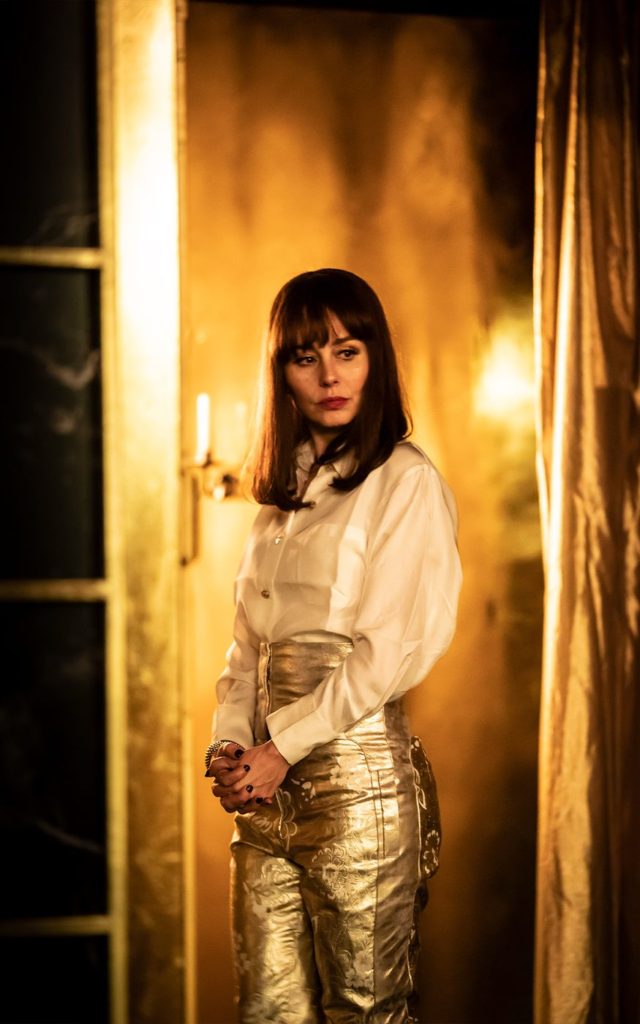
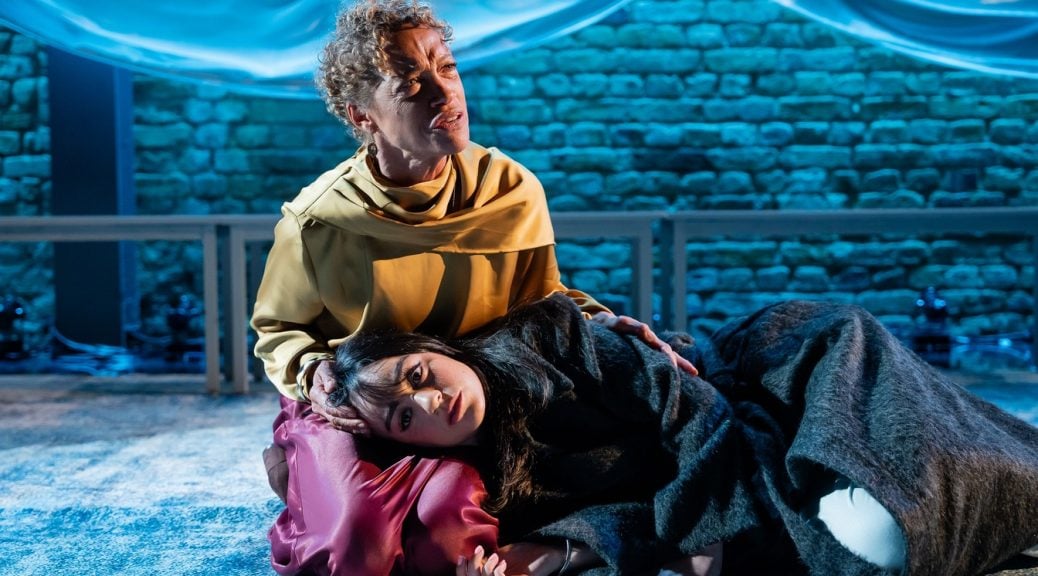
Make no mistake – the key to success here is a solid appreciation of the original piece, with a clear and controlled version from Stephen Sharkey and superb performances from an excellent cast. Quick to emote, and just as good at setting forth arguments, the actors complement the script perfectly. Simon Kunz’s Agamemnon is frightening and persuasive. He conveys his character’s dilemma as very real, and that should be impossible. Indra Ové’s Clytemnestra and her daughter, played by Mithra Malek, are both moving. Ové made the hair on the back of my neck stand up as she argues, so coherently, against her husband. Iphigenia’s final acceptance of her fate, framed as martyrdom, is depicted by Malek with breathtaking skill.

The production explicates the ancient themes and expands the play. The sense of the “war machine” that Agamemnon cannot control is a highlight – the man with all the power is not really in charge. Meanwhile, one of the videos refers to conflict affecting “small people”: those we don’t always hear from in plays about gods and kings. As final praise, I left the Arcola thinking that there are plenty of people who need to see this production and remember both these points.

Until 2 May 2026

www.arcolatheatre.com

Photo by Ikin Yum
“Women Beware Women” at the Sam Wanamaker Playhouse

Like Thomas Middleton’s Jacobean play itself, this production has its bumpy moments. The exaggerated characters, plot twists and sexual politics all have to be negotiated in any revival. And director Amy Hodge does well, making the play entertaining, fast paced and full of drama.

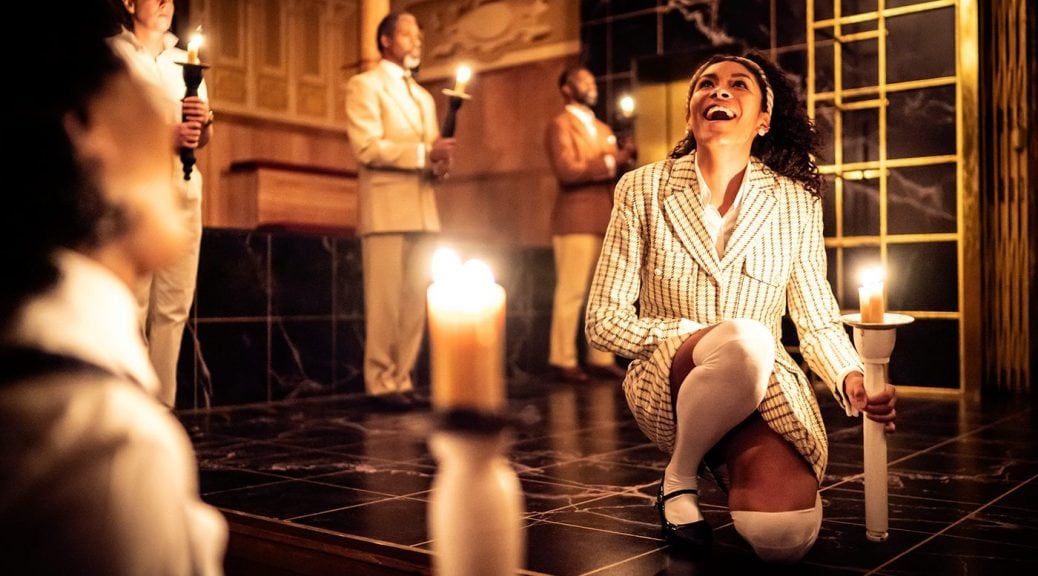
Hodge focuses on the three female leads and makes the all the talk of honour and virtue convincing – Thalissa Teixeira and Olivia Vinall give captivating performances as two very different young women in love. Meanwhile, Tara Fitzgerald has the great role of arch-villain Livia and deals well with the camper moments of her truly wicked “shop of cunning”.

Women Beware Women at the Sam Wanamaker Playhouse
Tara Fitzgerald

Make no mistake, a lot of what happens in Women Beware Women is awful. The sexual violence and coercion aren’t shied away from and Teixeira in particular handles this bravely. But the production also deserves praise for connecting this with the sexism that pervades the play, for example, the ‘advice’ about what kind of woman should be wed is delivered as a song (James Fortune’s music for the show is consistently strong). There’s a creeping nausea about the confined lives of all the female characters.

Simon Kunz

Sinister performances from the play’s powerful male characters add to the tension. Simon Kunz makes the most of a relatively small part as the Duke of Florence. Daon Broni is truly creepy as Hippolito, who tricks his niece into an incestuous relationship. Best of all is the mercantile Guardiano, a consistently strong performance by Gloria Onitiri, who brings out scheming, snobbishness and wrath by turns.

Despite all this praise, the production has glitches. Joanna Scotcher’s design is confusing (the aim was the 1980s, but you’d struggle to work that out). Comedy in Women Beware Women is a tricky affair, full stop, and the character of the hapless Ward, played by Helen Cripps, is an unhappy one. And there’s the decision to stage the Masque within the play with tongues in cheek. I happen to disagree and think this scene should escalate the drama, instead of comically diffusing it. But I understand the thinking – the genre is tricky to get your head around – and the decision is well executed, indeed so many bodies on such a small stage is handled superbly. Yet the Masque remains the most obvious moment when Hodge doesn’t smooth over the play’s faults as might be wished. Arguably, it’s not her job to. But the resulting production is a staccato affair that has plenty to praise but also too many stops and starts.

Until 18 April 2020

www.shakespearesglobe.com

Photos by Johan Persson