“The Lehman Trilogy” at the Gillian Lynne Theatre

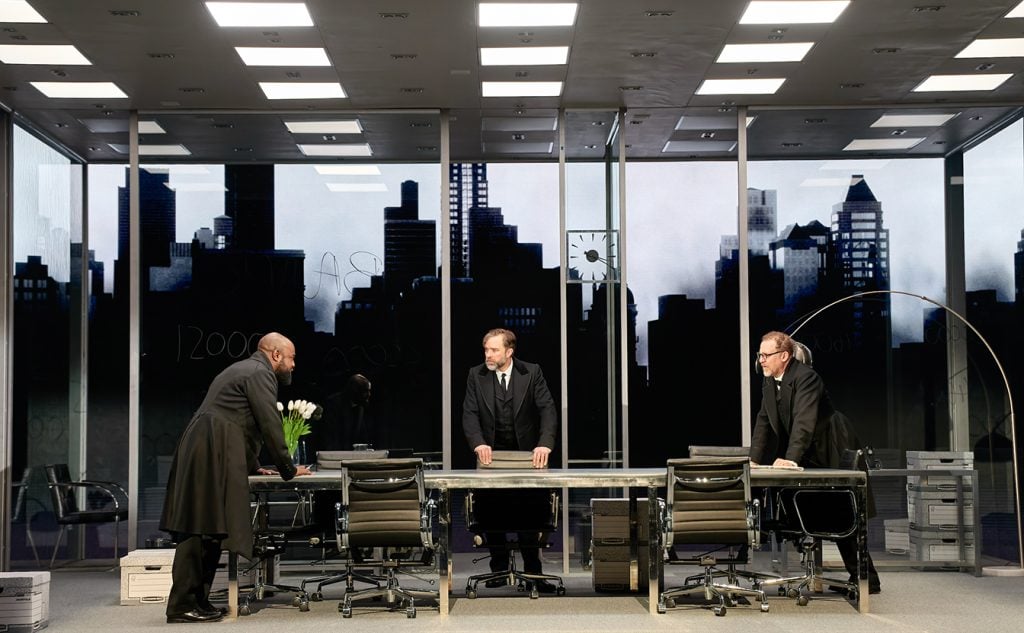
Returning to London after a successful Broadway run, this hit show has a sense of confidence – fully deserved – that infuses the whole piece. Telling a story that starts in 1844, with only three performers, has its own kind of grandeur. Director Sam Mendes shows his skill as a brilliant storyteller.

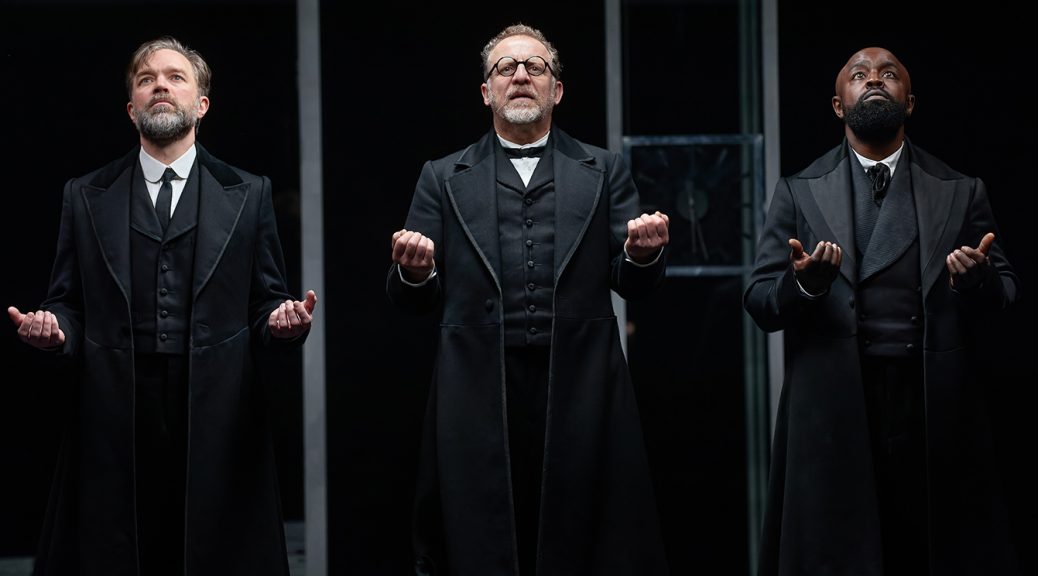
Michael Balogun, Hadley Fraser and Nigel Lindsay perform as narrators as well as taking the roles of the Lehman brothers, their sons and grandsons. They also fill in for a variety of secondary characters, which means a lot of accents that, naturally, impresses. They never leave the stage – three hours and 20 minutes in total – and never lose focus.

It all seems simple. There’s some strong video and sound design from Luke Halls and Nick Powell. And Es Devlin’s set doesn’t change, although it does revolve. But it’s the impeccable manner with which Mendes paces the action in Ben Power’s adaption of Stefano Massini’s book that is the real success: key events build in momentum balanced by quiet moments of great stillness.
The-Lehman-Trilogy-West-End-2023-credit-Mark-Douet

All the style and intelligence the show can boast is needed, given an odd script filled with poor humour. On the page, the dialogue must be horribly portentous. It’s not that the story isn’t interesting – rags to riches plus a potted history of America through the lens of finance. But there are more facts than ideas here. Oh, and frustratingly, the play explains little about the collapse of the Lehman bank.

The script and the action are clear, but there are a lot of recurrent lines, weighty metaphors and an odd mythic vibe that clunks along with tragedy, fire and flood – I was expecting horsemen at one point but guess that would have needed a fourth member of the cast. Epics often contain a good deal about gods: here there are self-consciously supernatural suggestions – the breath of inspiration – while the prodigious use of hindsight is, you might argue, unbelievable.

The emotional drivers are family and mortality, as we see the men age and die. The play is often moving. And the family proves inspirational… after a fashion. From selling cloth to cotton, and from selling the idea of reconstructing a community to the idea of consumption itself, their progress is spectacular. It seems there was always a dash of showmanship in the business. As with this production, the Lehmans’ achievements had confidence as the key.

Until 20 May 2023

www.thelehmantrilogy.com

Photos by Mark Douet

“Borders” at the Vault Festival

Nimrod Danishman’s play has the tricky framework of two protagonists communicating solely by a dating app. Aside from the fact that the set-up isn’t that clear (starting the play with them on phones might help?) director Neta Gracewell handles the lack of action well. Restlessness reflects the characters frustration, and Ethan Cheek’s neat design serves as a set to lounge on while also separating the men – Boaz in Israel and George in Lebanon- who cannot meet in real life.

The cultural and political divide is where the play has most potential. But while Danishman isn’t obliged to educate his audience, and is providing a different take on conflict in the Middle East by giving voices to gay characters, there is less about the events than you might expect. It is interesting that we see how Boaz and George’s everyday lives are affected but there is little discussion about what’s going on and what we do hear, seems naive. The men seem so reluctant to argue they end up not saying much.

The characters themselves are intriguing. And there are strong performances from Yanic Yafe and Tarik Badwan who hold the stage effortlessly. The roles aren’t balanced; George’s poetical streak means Yafe has most chance to stand out. But Badwan makes the more reserved George endearing and is deeply moving at a moment of high emotion.

Given that the couple experience an escalation in conflict at the border, emotions are remarkably restrained. But it is their relationship itself that is too much of a surprise. While the flirting is sweet, the connection they form doesn’t convince. When their affection starts to get serious, including making plans to travel together, it’s too much of a strain. The motivations and conflicts for both men need elaborating. It’s clear that their future isn’t together. But that I cared about what happens next for both characters, shows the strength of Danishman’s writing.

Until 12 February 2023

www.vaultfestival.com

“The Silver Bell” at the Vault Festival

Alan Flanagan’s hour-long two-hander is easy to recommend. The play is funny and heartfelt, while the polished direction from Dan Hutton leads to enjoyable performances from Brendan O’Rourke and Flanagan himself.

A love affair between Mico and James gets a lot of laughs. From the start, Flanagan and O’Rouke make this pleasingly unlikely couple endearing. One is an actor, the other a scientist, and their squabbles are sweet. There is impressive detail in the writing and an air of frank, disarming honesty.

That what we see is the re-enactment of their romance adds charm and intrigue (Mico’s nerves and notebook are lovely touches). As things become serious, with James’ death from motor neurone disease, the play tugs at heartstrings in an effective but impressively unsentimental fashion. Flanagan’s understated performance is excellent.

Next comes some sci-fi. Mico’s research becomes real as he jumps to different universes to find his partner again. There are light touches along the way and O’Rourke gets to shine as different versions of his character. The action is tight, and Amy Hill’s lighting design is, like the script, nice and neat.

The James from another universe (who has an offstage Mico of his own) can see what’s really going on. But Mico needs to work out that telling – rather than trying to repeat – his story is the important thing. Against the odds, the play becomes celebration of love, however painful, and a thought-provoking piece about grief that lingers in the memory.

Until 12 February 2023

www.vaultfestival.com

“Linck & Mülhahn” at the Hampstead Theatre

A true story about a gender-nonconforming couple in 18th-century Germany has been rescued from history by playwright Ruby Thomas. The source material – predictably, records of a trial – is scant but has served as the inspiration for a fulsome and rewarding script.

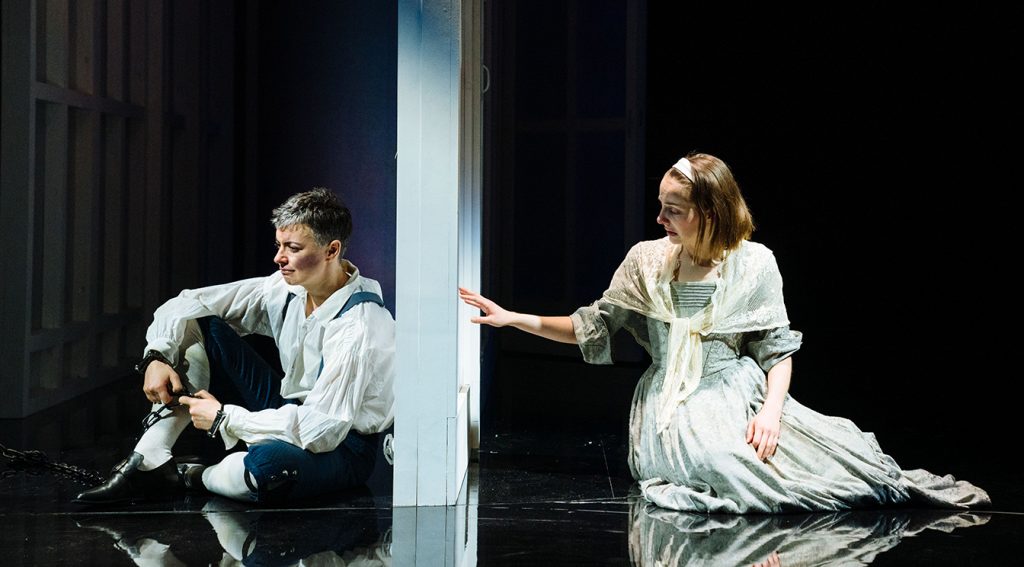
Anastasius Linck was born female but lived as a man and had a military career before marriage to Catharina Mülhahn in 1720. The subsequent trial of both offered Thomas what must have been tempting opportunities (Linck spent time as a prophet!) that have been condensed to present a focused show with epic qualities of romance and history.

If it crosses your mind that Linck & Mülhahn sounds sentimental or worthy, the sparkling script corrects this quickly. There is a wicked balance of old and new idioms that is a delight. Some of the metaphors are heavy, but plenty have charm. And the dialogue is fun!

The serious subject and often playful tone make great titular roles for Maggie Bain and Helena Wilson, who are both excellent. There’s a strong part, too, for Mülhahn’s mother, where Lucy Black gets to show off comedy skills before revealing her character’s spite and becoming an interesting villain.

Director Owen Horsley gives us romance but stops the lovers becoming too sweet by emphasising their wit. It’s a shame that contemporary music breaks up the scenes – it feels a lazy way to make the show feel modern – but Simon Wells’ deceptively simple set is highly effective.

There are a lot of philosophers mentioned in the play (although, interestingly, not Kierkegaard, who I suspect is closest to Thomas’ heart), which is an easy way to get big questions aired. All the talk of “essences” might be explored more. And the intellectual atmosphere of the age is evoked a little loudly. But the play’s attempts to respect history, avoiding modern labels for its protagonists, while making contemporary concerns clear and moving, is impressive. There’s an excellent sense of balance and directness throughout Linck & Mülhahn that shows intelligence.

Maggie-Bain-and-Helena-Wilson-in-Linck-&-Mülhahn-final-credit-Helen-Murray

It’s no plot spoiler to reveal that in real life the story ends sadly. So, getting the Queer Joy that’s topical (and so welcome that I’ve capitalised it) is hard. Fear not, as Thomas makes every effort and is aided by Marty Cruickshank, who plays Mülhahn’s older self. This is not a big role, but Cruickshank might just end up the star of the show – recounting the sheer bliss of her marriage provides the “light” the play is explicit about wanting.

The trial scene is uncomfortable but is tackled as an odd blend of humour and inspiration. Stock judges and lawyers – pompous, sharp or asleep – are there to be laughed at. We can applaud those who testify for Linck – and both concluding speeches. But the final cheers are for the writer, Thomas. The parting between the couple is wonderfully romantic and a fanciful touch that brings us into the present provides a heart-stopping ending.

Until 14 March 2023

www.hampsteadtheatre.com

Photos by Helen Murray

“Buff” at the Vault Festival

There is solid work both behind and on stage with this impressive monologue. The script by Ben Fensome is well crafted and the performance from David O’Reilly is bold and dynamic. Director and dramaturge Scott Le Crass makes the most of both writer and actor with a sympathetic and intelligent approach to their talents.

Buff starts as a comedy – quite a light one, even if the character tells us he gets “crude when I’m nervous”. The jokes are sound and O’Reilly clearly has a gift for getting laughs. His role is amiable and irrepressible, despite being dumped by a long-term love and facing fat-shaming from potential partners. A GSOH doesn’t seem to mean much on dating apps. Best of all, his job as a primary school teacher leads to lovely Joyce Grenfell moments.

The real skill comes with changing the tone of the piece to become sad and serious. Fensome gets to show his ability to address issues around the impact of prejudice. Other characters – a flatmate, that ex and a sister – are admirably vivid as they take the brunt of our hero becoming, well, not very nice. Bravely, those depressing dates aren’t played for laughs (that must have been tempting) and with some effective, if simple, ironies we see that superficiality isn’t the preserve of those who go to the gym.

Le Crass handles the alteration in tone expertly, emphasising the show’s careful structure and making the humour sharp. Even those moments in a classroom end up with bite. It all makes great material for O’Reilly, who gives a real star turn. While we never lose sympathy, there are moving moments when we see how unreasonable a character we once liked has become. Buff is highly polished and a credit to all.

Until 19 February 2023

www.vaultfestival.com

“Walking Cats” at the Vault Festival

Zhaolin Zhou’s one-man show is adorable. Although tackling serious subjects, including the homesickness experienced by migrants and mental health issues exacerbated by the Covid-19 lockdown, there’s so much charm here you leave this show with a warm glow.

Walking Cats is inventive. Drawings and models, by Rimu Kwok, displayed via a live video feed (the closest thing I’ve seen is a company called The Paper Cinema) make the creativity behind the show clear. The pictures on cards are arranged and replaced with mesmerising care that builds a sense of delight. There are technical hitches – we are told the show is “messy” – but any drawbacks are handled with endearing appeal.

A kind of magic comes from how personal the show feels, and Zhaolin Zhou’s performance is the key. From greeting the audience as they arrive to some lovely adlibs he is, mostly, enjoying himself. The audience are on his side. And it’s nice to be reminded of how important being polite can prove! Any mistakes or difficulties become engaging. Moments talking about his mother are clearly difficult, but the sincerity on the stage is powerful.

As for the story itself…it is understandably slight. While this lockdown was clearly more creative, as well as more difficult, than most, we all remember how boring that time was. At first, it’s about walks around Kilburn. Then, as agoraphobia sets in, there’s a lot about recreating recipes from back home. It is mundane (supermarket shopping plays a big part), but the detail is evocative and the drawings a treat.

The minutiae become fantastical as memory and imagination interact. Sound and music (strong work from Tingying Dong) as well as descriptions of food vividly conjure Zhaolin Zhou’s home. The conceit of a toy cat as a proxy is a final whimsy to praise. The show becomes so quirky you can’t quite believe what you’re watching – like someone remembering daydreams they had – and this is a stroll down a memory lane that is worth taking.

Until 5 February 2023

www.vaultfestival.com

“Othello” at the Lyric Hammersmith Theatre

Frantic Assembly’s inimitable style gets great results in their acclaimed version of Shakespeare’s tragedy. Director Scott Graham’s production manages to please those who love the text and those new to it. A brisk, clear edit makes the play approachable, while the company’s dedication to physical theatre offers insight for those who have seen the play many times.

Famous moments are, mostly, present and correct. Omissions are interesting (Othello’s fit doesn’t happen) while the military setting is loosely applied. But themes of jealousy and revenge are presented with startling clarity. The brisk action creates momentum, while the poetry is still delivered with satisfying technique.

Michael-Akinsulire-in-Frantic-Assemblys-Othello-Photo-Tristram-Kenton
Michael Akinsulire

Michael Akinsulire takes the title role and gives a magnetic performance with plenty of threat that is careful to preserve the character’s intelligence. You believe Othello is a good leader and strategist despite the way he is manipulated. Akinsulire’s is a generous performance that benefits from the show highlighting other roles to great effect.

The three female roles of Bianca, Emilia and Desdemona are strengthened by strong performances from Hannah Sinclair Robinson, Kirsty Stuart and Chanel Waddock. Desdemona’s final scenes are distressing to watch but it seems preferable that all three women put up a fight (quite literally in Waddock’s case). Graham’s detailed work with Joe Layton’s laddish Iago is insightful – there’s less sense than usual that he enjoys his plotting, which makes him all the more frightening. As for the dupes Iago uses: Felipe Pacheco’s Rogrigo adds humour while Tom Gill’s scene as the drunken Cassio is brilliant.

Frantic-Assemblys-Othello-Photo-Tristram-Kenton

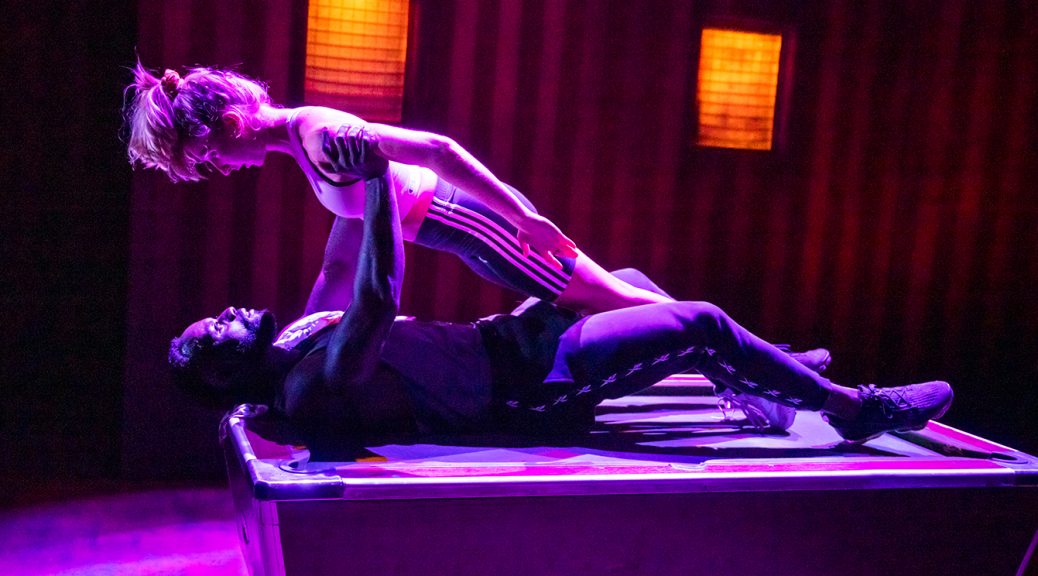
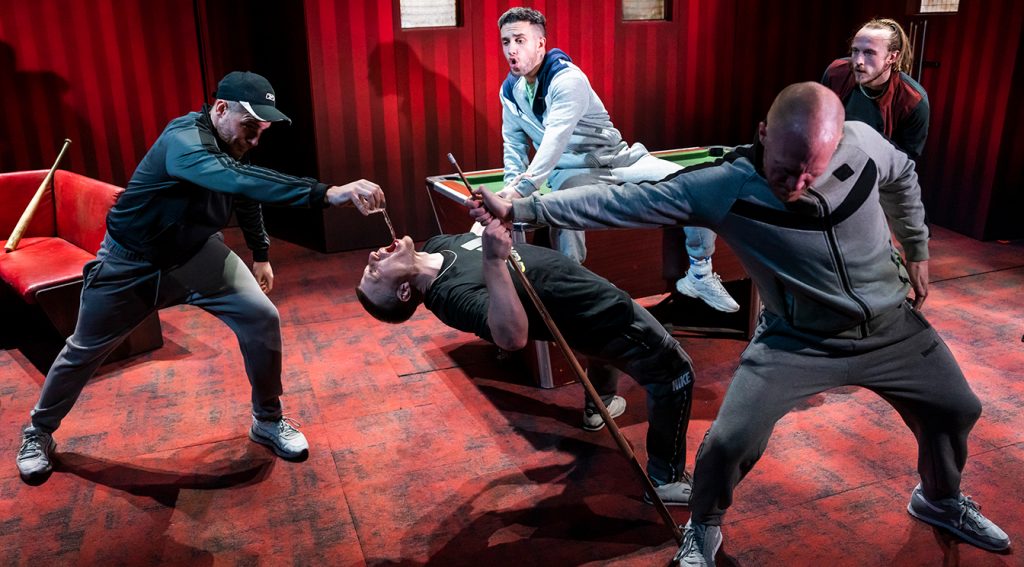
The key to the success of Gill’s tricky Act Two Scene Three is movement. It isn’t just that the extended acrobatic dancing makes more sense of his inebriation than a glass or two of wine – who wouldn’t get dizzy – the machismo enacted creates the air of intoxication. The technique works superbly in scenes of violence as performers pose aggressively or weave around and over each other. And the choreography is also excellent for scenes of romance – this Othello is sexy.

For all this praise for those working hard on stage, the star of the show might be designer Laura Hopkins. Setting nearly all the action in a bar (you can almost feel the sticky floor) leads to the production’s memorable pool table, more leapt on and over than played upon. The walls, which concertina in and out, creating corners perfect for plotters, are used to fantastic effect. The combination of style with substance makes this production a winner.

Until 11 February 2023

www.lyric.co.uk

Photos by Tristram Kenton

“Heroes” at the Vault Festival

Unusually for a fringe production, Chakira Alin’s play has the large number of ten performers. A slice-of-life East End drama, with high stakes and plenty of important topics, the play overreaches itself. But the ambition is exciting, and Heroes is undoubtably entertaining.

While the plot might be suited to a soap opera the play tries hard to be profound. There’s a lot of quick judgements and homespun wisdom, which makes some of the dialogue clunky and, occasionally, pushes credibility. But the young characters are heartfelt, earnest and anxious (which seems on trend) and carry the show.

The football-mad friends from an estate (they have plenty of problems as well as aspirations) are an appealing set. The roles are established with skill and hold interest. Best mates Sol and Jonno makes good parts for Jacob Benhayoun and Reuben Rogers who are impressive. and there are charismatic performances from Tirza Sey and Xander Pang. Older characters are less successful, in particular a poetic eccentric called The Wizard, whose role is baffling.

There are problems with the production, most of which (particularly the abrupt lighting cues) would surely settle given a longer run. Director Dixie McDevitt might focus on group scenes to avoid the feeling of characters waiting patiently for the next person to speak. And while this space at the festival is especially demanding (it’s actually just horrible), several performers speak too quietly too often. Also, some more confident delivery would bring out the script’s humour.

The strongest scenes show Alin’s originality. A focus on the theme of fatherhood is a highlight. The articulate youngsters present a version of masculinity that isn’t toxic… that makes a change. This isn’t a quest for role models (interesting in itself) – fathers are “dead, disinterested or detained” – but for a better life.

The youthful autarky makes the ending jar. The conclusion involves knife crime. That this is unexpected is an important point. Things seem to be going well until a devastating violent moment. It’s undoubtedly an important topic, and Alin is bold to tackle it. But events occur to far into the play and a rushed conclusion doesn’t do justice to the hard work or talent here.

Until 27 January 2023

www.vaultfestival.com

“Bloody Mary: Live!” at the Vault Festival

After a valiant effort to get back to normal last year, London’s biggest theatre extravaganza has finally returned, and I am very excited. Never mind the smell of the greasepaint, it’s street artists’ aerosol spray at the Leake Street Arches that herald a two-month long programme of exciting and varied events.

First up is a one-woman show, written and performed by Olivia Miller. And very good it is too. Ostensibly a stand-up comedy act, with Mary Tudor presented as an angsty teenager, there are smart ideas and the performance is strong. We know these re-evaluations of history are clever as well as fun… but Mary warns us that she isn’t a fan of the musical Six. Is it, after all, full of her wicked stepmothers!

There is a lot of audience participation in Bloody Mary: Live! The venue suits it and Olivia Munk’s direction makes the most of this. I’m not a fan but, even objectively, there’s too much “raise your hand if…”, as the technique is used to structure the show. That said, Miller deals with the audience superbly. You do know where a lot of the jokes are going to end (not just because of history) but they are always well delivered.

The highlight of all the participation is very clever indeed. It involves volunteers doing nothing – just like the powerful men who could have helped Mary and her mother. The scene has real bite as we get to see the character as a frightened young girl. Read as a conceit that the comedy show is therapy for Mary, formats slip and trauma start to feel real.

Miller has done her homework and wants to present complexity. As well as tackling that bloody reputation, there’s a feminist perspective, highlighting that Mary’s romantic life was not her own and bringing out lots details that kids would call icky. A nice balance is provided by an infatuation with her childhood tutor.

When it comes to that nickname, the persecution of Protestants shows how damaged Mary was. The line between teenage dirtbag and young psychopath blurs to dramatic effect. Laughs stop and start suddenly. Miller manages to create a chill in the air and that is to her credit.

Until 29 January 2023

www.vaultfestival.com

Photo by Graeme Braidwood

“Hamlet” at the Southwark Playhouse

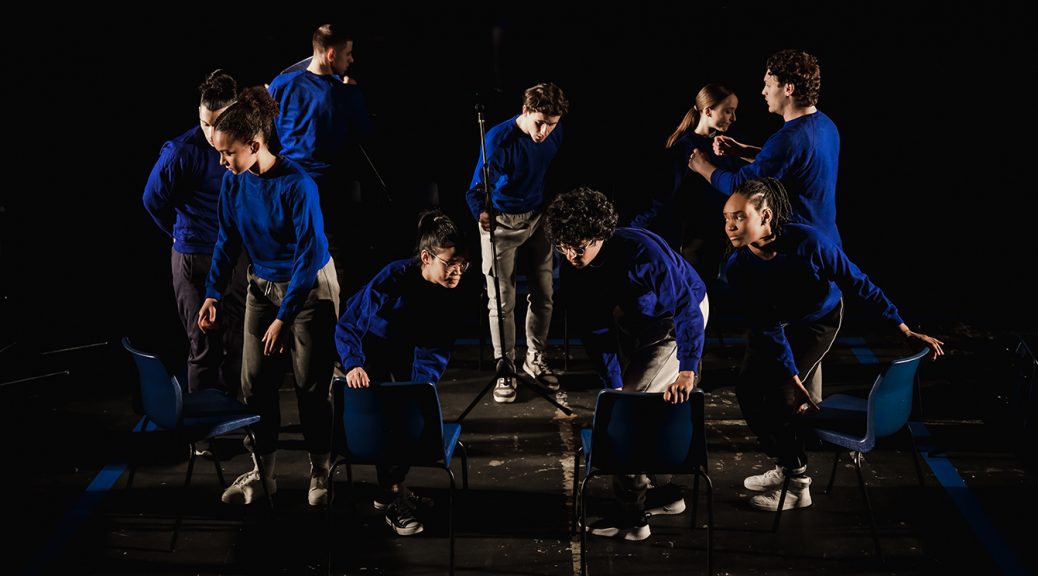
Ricky Dukes and the excellent Lazarus Theatre Company have taken inspiration for their new Shakespearean adaptation from work with acting students. The much-edited play (95 minutes long) is seen only from the perspective of younger characters. The result is surprising, shocking and exciting.

Elsinore becomes a mix of rehearsal room and therapy session. Sorcha Corcoran’s design is constantly rewarding. Alongside Stuart Glover’s lighting, the set is the key to investing such a well-known play with a fresh feel. Given the stripped-back props, and costumes that are sports gear or made of paper, the imagery is fantastic. Lazarus has a knack of creating scenes that burn themselves into the memory. As for including incense, I want some in every production of Hamlet from now on, please.

Remember, the ‘adults’ don’t appear in the flesh. While roles that are of indeterminate age are included (leading to a lovely performance from Kalifa Taylor as one of the players), authority figures are a disembodied voice from above. It’s creepy. Having Micha Colombo issuing sinister instructions and doing such a great job as both Claudius and Gertrude adds a dystopian atmosphere that’s in keeping with Jovana Backovic’s strong sound design.

So, what does this focus result in? The clear generational divide in the source material is highlighted. You need to know the idea and the play well before you go, something I’d normally criticise. But it is evident that the kids are not all right. Mental health – in particular suicide – is the main concern. This might be predictable, but you can’t say it isn’t present in the original. An effort is made to highlight all nine cast members in turn – we sense each deliberating over every action. You are left wanting more (from Alex Zur’s beautifully voiced Horatio, for instance), but the ensemble-led approach brings many thought-provoking moments.

Michael-Hawkey-as-Hamlet-with-Yorick-credit-Charles-Flint.
Michael Hawkey

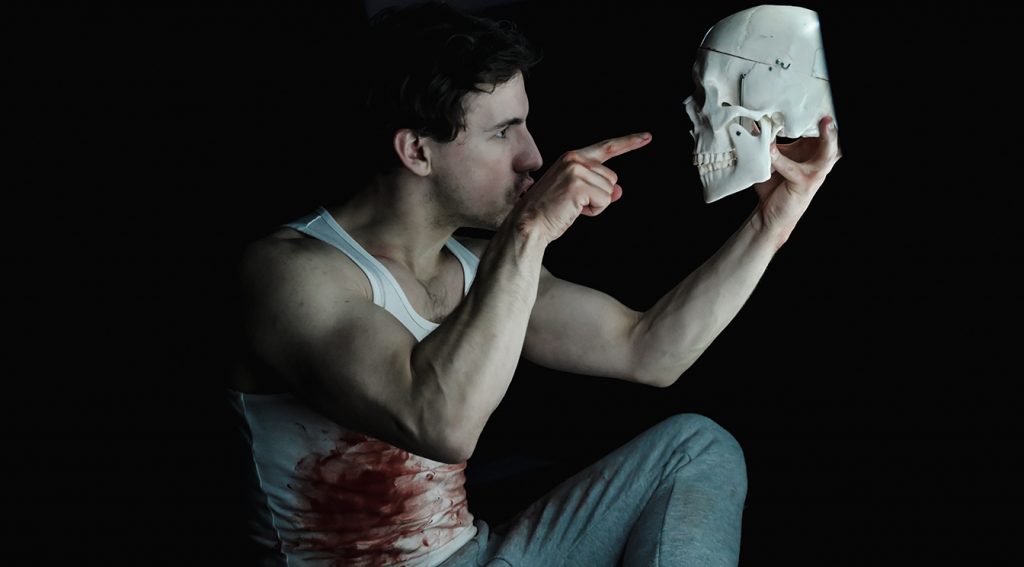
Appropriately, Michael Hawkey, who takes the title role, embodies the production’s fresh approach and gives a remarkable professional debut. An angry young man who is also petulant, Hawkey’s delivery of the lines is confident and fluid. As a strong foil. Lexine Lee’s restrained Ophelia (I’ll admit this is to my taste) grounds the show. Director Dukes has firm ideas about her death that add to the production’s determined, confrontational approach.

This is radical stuff and, of course, it doesn’t all work. The Mousetrap scene tries too hard to inject humour (although Juan Hernandez and Kiera Murray do a brilliant job). I’m not sure why Yorick’s skull is taken from a fridge? To fit with the clinical feel? The duel is disappointing. Maybe Hamlet’s final action is a touch too far? And it’s a puzzle why Fortinbras isn’t mentioned. But the show raises questions in a prodigious fashion.

It turns out that the “safe space” promised is not delivered. This is Hamlet on a loop – like the circle performers sit in, we can go around again. It’s a chilling nod to the play’s versatility and reinvention. That Lazarus has given us a Hamlet unlike any other is an achievement. That the piece raises so many questions about the play and playmaking itself is astounding.

Until 4 February 2023

www.southwarkplayhouse.co.uk

Photos by Charles Flint