“Next to Normal” at the Donmar Warehouse

Fifteen years after success in New York, this hard-hitting musical from Brian Yorkey and Tom Kitt has a London première to be proud of. Under the musical direction of Nick Barstow, the show sounds great while director Michael Longhurst excels in sensitivity. The performances are superb, among the best I’ve seen in a long time. In fact, the production is so strong that it might be better than the show itself.

Next to Normal’s subject matter is mental illness. The lead protagonist, Diana, suffers from bipolar disorder; we see her treatment with drugs, therapy and even ECT. As if that weren’t emotive enough, Diana’s problems are connected to the death of her baby son Gabe who, imagined grown, haunts her as a psychotic hallucination.

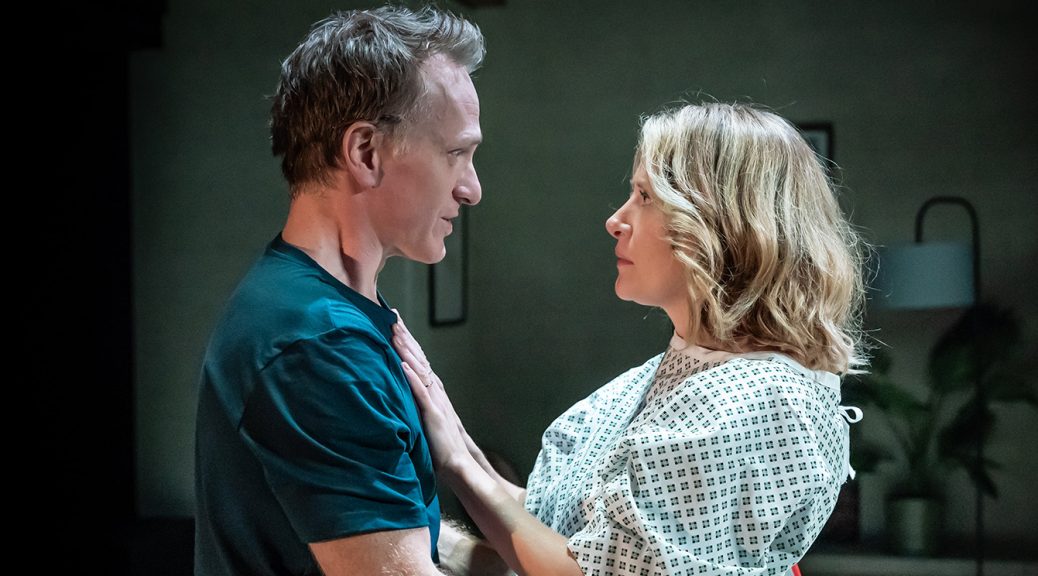
It’s an important topic, although obviously not one that is easy to watch, let alone perform – Caissie Levy, who takes this lead role, is a marvel and her voice is excellent. Of course, there’s plenty of angst in her songs, but the score also has variety and Levy manages to inject surprisingly light touches. This is a woman living with her illness, who – making sandwiches and looking after the family – has to carry on… somehow. The detail in the performance, as with the care in Yorkey’s book, feels authentic and engaging.

The show only gets more impressive because the focus is almost as much on Diana’s family as her. More detail – a lot of it distressing – comes with the always-excellent Jamie Parker, who plays the husband. And there’s Diana’s daughter, Natalie, who ironically feels like an “invisible girl” and has plenty of problems of her own.
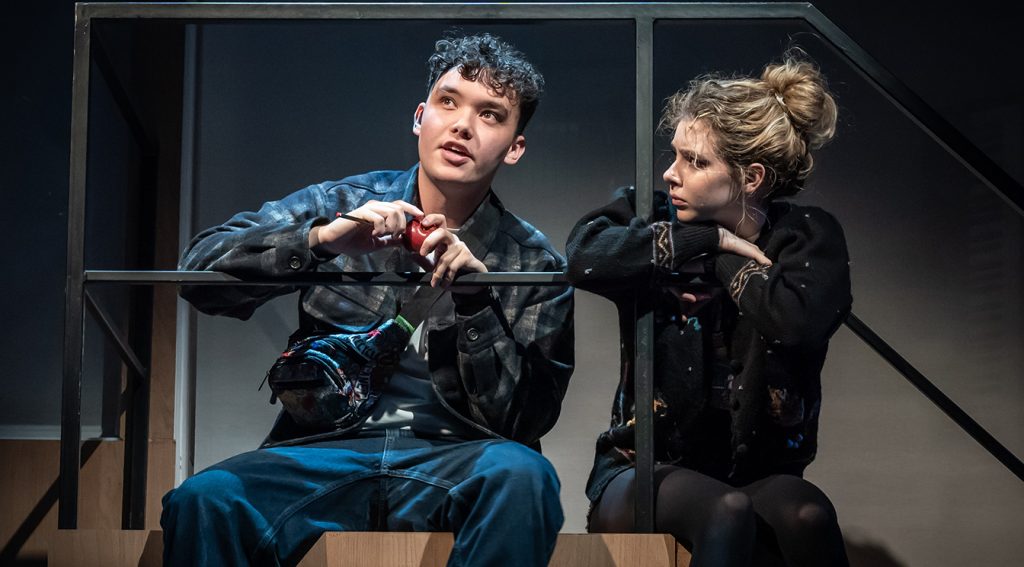
Next-To-Normal-at-the-Donmar-Warehouse-Jack-Ofrecio-and-Eleanor-Worthington-Cox-photo-by-Marc-Brenner
Jack Ofrecio and Eleanor Worthington-Cox

Eleanor Worthington-Cox takes the role of Natalie and is joined by Jack Wolfe as her deceased brother. It is a huge testament to both, that, despite how fraught the piece is, they show their roles as, somehow, regular teenagers. Given that one isn’t real, that really is remarkable! Completing a trio of younger performers is Jack Ofrecio, who plays Natalie’s boyfriend and is also excellent. The level of sophistication in both music and lyrics is consistent for these roles and the performances just as good.
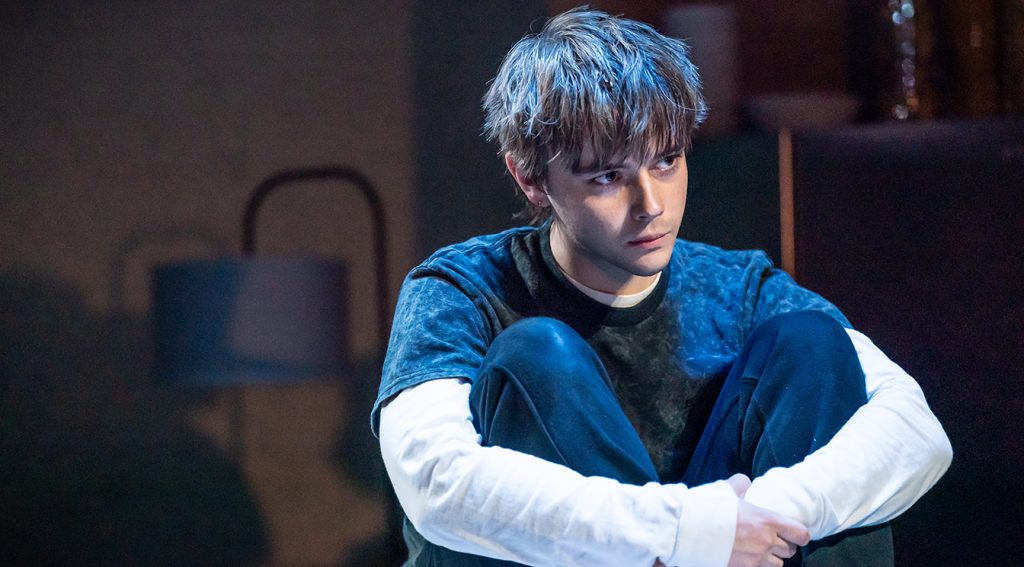
Next-To-Normal-at-the-Donmar-Warehouse-Jack-Wolfe-photo-by-Marc-Brenner
Jack Wolfe

Next to Normal is far from a teen drama, but the depictions of youth are extraordinary. The pressures on all three younger characters, particularly interesting when we consider one as a figment of an older person’s imagination (who even gets the best number), raise questions about nature and nurture. While showing the impact of long-term illness, Natalie and her beau have regular problems, too. It all adds up to great drama.

Up until the end, it is all pretty much faultless – if hard-going. And resolving a story like this is always going to be a problem, especially given how in-depth and intense the show is. Maybe we should be grateful the end isn’t tragic… but Diana’s decision to abandon treatment is a shock. While she considers giving up medication more than once, the final decision to reject help seems reckless to the point of being disturbing. Maybe it is best to point out that it doesn’t quite make sense dramatically. It’s an odd end to a fantastic show.

www.donmarwarehouse.com

Until 7 October 2023

Photos by Marc Brenner

“Dumbledore is So Gay” at the Southwark Playhouse

Robert Holtom’s short play is, undeniably, niche – the audience demographic is specific. It looks at the youthful experiences of three friends who are Harry Potter fans, so it helps to know the franchise. And the show’s origins on the fringe, at the excellent Vault Festival, are clear, with fun had at the limited cast numbers. But within what some might see as constraints, the piece is strong: focused, solidly written, well-performed and with original touches.

Jack, who is gay, deals with bullying and a girlfriend while having a crush on his best friend. The focus is homophobia (the title comes from schoolyard slurs). Holtom writes insightfully about prejudice, highlighting small insults as well as big threats. An older offstage character called Norman is particularly well thought out. The outcome of the aggression experienced is moving. And, impressively, there is a focus into the damage that internalising hatred can cause.

In case this sounds worthy, it should be stressed that Dumbledore is So Gay is funny (particularly if you’re part of the fandom). The cast are strong comics and director Tom Wright knows this is one of the show’s strengths. There are the “drunken kisses” you might expect, which are sweet. When the actors double up as parents or teachers there’s even more fun. Close observations lead to lots of nodding in the audience.

Now for the twist… Jack can travel back in time (again, something from Harry Potter), so Holtom offers different versions of a coming out and coming-of-age story. Taking the lead, Alex Britt shows subtlety in the variations of this – a smart move. The conceit also means that Jack’s friends Gemma and Oli have characters fuller than might be expected, making strong roles for Charlotte Dowding and Martin Sarreal, who are also superb.

The different scenarios are increasingly positive without feeling forced. The fact that all three characters “deserve to be happy” is plenty – rather than prescribing what that happiness should be. Holtom makes a point of being positive, so you’re sure to leave feeling good. It’s a big achievement for a small show.

Until 23 September 2023

www.southwarkplayhouse.co.uk

Photo by David Jenson

“Death Note: The Musical” in Concert

There a strong fan base for this project based on Tsugumi Ohba and Takeshi Obata’s manga series. Three shows at the London Palladium sold out quickly – a transfer has been announced – leading to a sense of excitement for the European première of something that promises to be different.

Coming in cold… it’s a mixed bag. The story is good – it’s sold 30 million copies – and the book for the show, from Ivan Menchell, is accomplished. There are strong characters who are admittedly vehicles to raise issues but nonetheless intriguing. A schoolboy called Light, accompanied by a Shinto Kami, can kill people by writing their names in a book. It’s a neat way to raise moral dilemmas. And there’s a detective, the enigmatic ‘L’, tracking down Light for his vigilantism. But the show isn’t as bold as it might be: strong performances and a good atmosphere are its best points.

Concert is a stingy description. The set doesn’t move and there isn’t much choreography, but the lighting design (Ben Cracknell) is advanced, the costumes (Kimie Nakano) good and the characters well developed. Director Nick Winston has focused on his performers and, as a result, the roles are impressively realised by a strong cast.

Joaquin Pedro Valdes sounds great in the lead and shows Light’s arrogance – this hero starts with good intentions, but power goes to his head. Dean John Wilson plays the detective whose motivation seems more intellectual stimulation than justice and is, as usual, excellent. In the middle, often literally, is Ryuk, a supernatural figure who fascinates. This is a great role (performed brilliantly at the Palladium by Adam Pascal) – a real crowd pleaser with an element of danger and humour whose big problem is his sense of boredom!

Frances-Mayli-McCann-and-Aimie-Atkinson-in-Death-Note-credit-Mark-Senior
Frances Mayli McCann and Aimie Atkinson

There is less success with two female roles: a pop star called Misa (who falls in love with Light) and another Kami parallel the main story but they do not complement it. Both Frances Mayli McCann and Aimie Atkinson have strong voices, but their songs aren’t as good and their characters are less well written. The scene of Misa’s interrogation is ridiculous – let’s hope that was the intention.

Jack Murphy’s lyrics deserve praise if only for their efficiency – it’s all very clear. And, as for the songs, Frank Wildhorn can write a tune. If sometimes unimaginative, they are often catchy. There is an effortful mix of styles in Death Note so the show overall shouldn’t tire.

A lot of the music is earnest, which works well with the story. But the score sounds American through and through. Maybe that’s better than some kind of appropriation. But it lessens the show’s USP compared to your average musical… and that seems a shame.

Transferring to the Lyric Theatre for six performances, 7-11 September 2023

Photos by Mark Senior

www.deathnotethemusical.co.uk

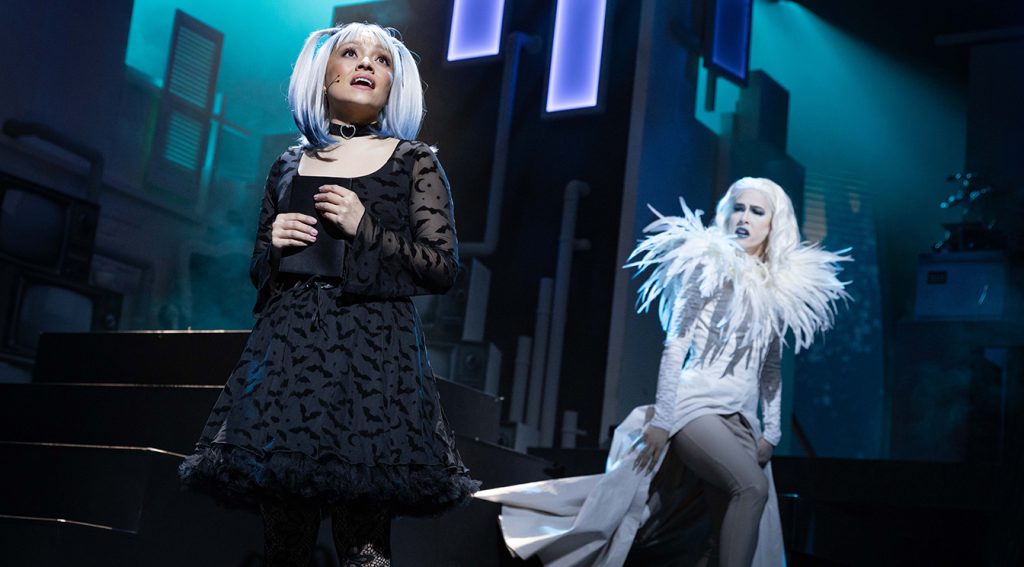
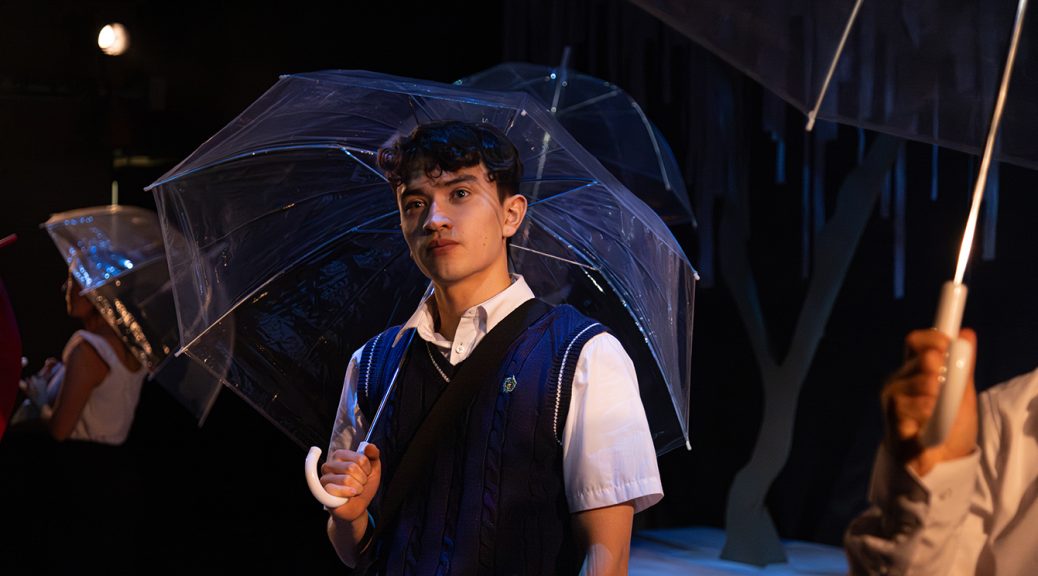
“The Garden of Words” at the Park Theatre

At a guess, Susan Momoko Hingley and Alexandra Rutter’s adaptation of Makoto Shinkai’s anime suffers from being too enamoured of its source. If you don’t know the original novel or film, then the story, structure and characters are confusing on stage. While bringing the genre to the theatre is an interesting project, I fear this production is for fans only.

We follow two school pupils through snatched scenes. Takao wants to design shoes and plays truant to talk to an older woman in the park when it rains. Meanwhile, Shōko has an abusive relationship with a basketball player conducted entirely over the phone. It’s intriguing, if slow, and looks at plenty of teenage troubles. But the disjointed telling means too much time is taken working out the basics.

It’s impressive that two young leads manage to make the show watchable. Shoko Ito and Hiroki Berrecloth are engaging and ably supported by James Bradwell and Susan Momoko Hingley herself, who play the latter’s brother and mother respectively. All bring out a good deal of tenderness and humour when addressing their characters’ various insecurities and problems – but issues arrive out of the blue and lack subtlety.

The twist, that the women Takao is talking to, Yukari, turns out to be a teacher, is tough to believe. And Yukari’s actions seem oddest of all – drinking in the park while she’s supposed to be at work. The chronology means problems in the school are a puzzle. Aki Nakagawa’s beatific portrayal of her makes her problems pale. The theme of intergenerational friendship is lost.

Maybe it’s better to think about the show in terms of atmosphere. Here, Rutter’s work as a director is better. There are attempts to create a poetic air that reflects the characters’ isolation. The movement is good and the music from Mark Choi is excellent. But problems persist. Cindy Lin’s set ends up fussy, with benches moved around interminably. And the show does not sit well with venue’s thrust stage – in particular, projections of poetry are too brief and too small.

The tone of the piece changes after the interval – what’s going on becomes clearer. But there are still those questions about motivation. We’re told that “all humans are weird” more than once and we can see that’s true. But it isn’t obvious where the observation leads. Such puzzles about Takao’s and Shōko’s feelings might be fine if the production was engrossing, but it all feels pruned rather than profound.

Until 9 September 2023

www.parktheatre.co.uk

Photos by Piers Foley

“The Effect” at the National Theatre

The well-publicised premise behind Lucy Prebble’s hit play is shrewd: when two people on a medical trial fall in love, is it real, or is it because of the drug they are taking?  The story is an easy sell… you want to know, don’t you?

Watching Tristan and Connie, who have volunteered for the experiment, falling for one another is great. It’s funny at times, as well as intense, and it provides big roles for Paapa Eddiedu and Taylor Russell. A strong couple, the performances are eye-catching and confident, a shoo-in for awards.

Yet it is the way The Effect opens and develops that impresses most. And the director of this revival, the estimable Jamie Lloyd, reaps tension from every idea and emotion in the play. Like the script, the production fizzes – and so will your mind.

For Dr Sealy, the proselytising scientist behind the experiment, falling in love is part of fighting depression, a way of dealing with ageing and even resolving philosophical questions of mind and body. Modesty is not his forte.

While Sealy is in charge, he doesn’t run the show – that’s down to Dr James, who is the voice of reason (you might guess that becomes an irony), reminding us of how complicated people are and thereby questioning the experiment and even the science itself. 

Michele-Austin-The-Effect-credit-Marc-Brenner
Michele Austin

These are two more fantastic roles, brilliantly performed. Sealey is too much the villain and his faults serve the play too neatly, so more credit to Kobna Holdbrook-Smith, who makes the role plausible. But the play really belongs to Michele Austin, whose caring Dr James has personal problems exacerbated by the job. While Eddiedu and Russell are moving, Austin and her character pack the most emotional punch.

The strength of The Effect comes with Prebble’s brilliant plotting. Questions of placebo and bias land like bombs. Lloyd reflects this with dramatic lighting and music from Jon Clark and Michael ‘Mikey J’ Asante – both are strong, if not strictly necessary.

Prebble also considers the audiences’ own psychology, expectations and prejudices in our reactions to her characters. It proves difficult to watch someone take a Stoop test (dramatically projected onto the stage) without responding yourself, and impossible not to have bias when information is revealed. A mirroring and layering between action on stage and in our own heads builds – and the effect is profound.

Until 7 October 2023

www.nationaltheatre.org.uk

Photos by Marc Brenner

“Spiral” at the Jermyn Street Theatre

Big ambitions and bold moments provide enough intrigue for Abigail Hood’s new play to hold attention. Regrettably, strangely, the play suffers from an excess of imagination. From the strong scenario of a couple whose child has gone missing, Spiral engages, but too often tests.

From the top, Tom and Gill, whose daughter has been missing for six months, are written with care. Hood has provided strong roles that Jasper Jacob and Rebecca Crankshaw make the most of. Examining the details of how their marriage has suffered is done well – these are the play’s best scenes and show strong work from director Kevin Tomlinson.

We first meet Tom as he has hired an escort, Leah, to impersonate his daughter (school uniform and all). The scene is every bit as uncomfortable as it sounds. A challenge is fine – Tom’s protestations that the role-play helps him is interesting. But while the writer Hood, who also takes the part of Leah, acts well, the script is clunky and the dialogue hollow.

The action continues to be outlandish, with the arrival of Leah’s boyfriend and pimp Mark (a role director Tomlinson takes). Again, Hood’s performance is strong – that her character feels she is “a nothing person” is moving. But the wish to be confrontational – and efforts at a dark eroticism – fall flat. Neither Mark nor his gaslighting are convincing or detailed enough.

Further interactions between characters stay odd and, even worse, oddly static. Hood wants to ask how people react in extreme conditions, but ends up baffling. Leaving aside what has happened to Tom and Gill’s girl is a mature move. But plot is piled on relentlessly: an alleged assault by Tom, Leah’s pregnancy, Gill’s alcoholism and Mark’s stalking.

There is no shortage of action or puzzle here, and the work put into the play is clear. Could Tom’s interaction with Leah really be innocent? Could his wife ever understand this? And is Leah acting altruistically? (Note that there are no questions surrounding Mark, except would the piece be better as a three-hander?) Questions are good, but it is possible for a play to have too many of them, and Spiral ends up suffering as a result.

Until 19 August 2023

www.jermynstreetheatre.co.uk

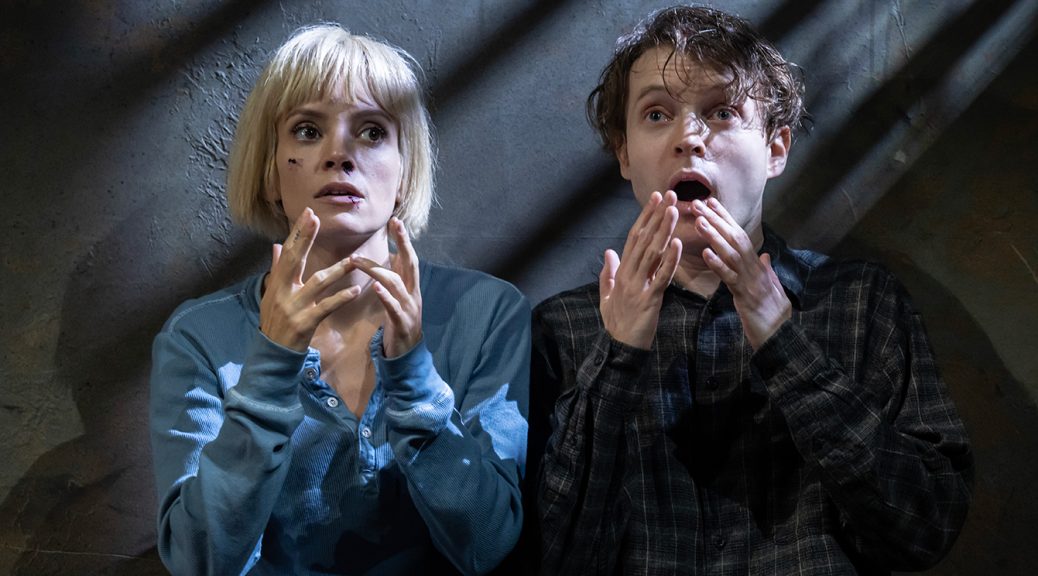
Photo by Ben Wilkin

“The Pillowman” at the Duke of York’s Theatre

It’s surprising that this is the first London revival and West End debut for Martin McDonagh’s 2003 play. Given its author’s fame and the work’s reputation, you might have expected to see the piece more often. It’s worth the wait. The Pillowman is every bit as puzzling and disturbing as I recalled from its National Theatre debut. And if you don’t know the play, then prepare to scratch and shake your head in equal measure.

The reputation isn’t hard to fathom. McDonagh always challenges his audiences intelligently and there’s plenty to think about, while pushing the bounds of good taste makes us laugh a lot. The language is blue (less shocking even since 2003) but, given how much child torture and murder features in The Pillowman, it should still be a hard sell. Even those who like the blackest of humour might blanch at the stories told here.

The teller of said stories is one Katurian, who we meet being interrogated my police in a nameless totalitarian state. The questioning is odd, but just as unsettling are Katurian’s morbid tales, which are quoted to her by the police and told in asides. And that isn’t quite right, is it? All our support should surely be with the writer. But the power of these stories, riffs on fairy tales that even Hans Christian Andersen would think go too far, is the focus. Because someone has been acting them out!

It seems a bit mean to say who the perpetrator is – it’s a good twist. But McDonagh plays with expectations marvellously. Firstly, Katurian’s brother, Michal, who is mentally challenged, loses our sympathy. Then those awful cops start to look… maybe not so bad? They have a story to tell, too. What Katurian gets up to made me gasp. The price this writer is willing to pay for posterity is another shocker.

Such strong material isn’t automatically easy to bring to the stage – McDonagh is demanding of performers. Director Matthew Dunster has engendered fine acting while showing commendable respect for the script. The policemen, Paul Kaye and Steve Pemberton, aren’t strangers to dark humour. If their performances lack surprises, they are still accomplished. Matthew Tennyson makes Michal suitably spooky, and his chemistry with his onstage sister is unnerving. But the star of the night is Lily Allen, who is revelatory in the lead role. Allen shows huge control as her character faces constant violence and horror, indicating how smart Katurian is, yet never going for cheap laughs. Above all, the importance of the work to Katurian is convincing, providing a sense of reality in a play that has so much fantasy and from which nightmares ensue.

Until 2 September 2023

www.pillowmanplay.com

Photo by Johan Persson

“Dr Semmelweis” at the Harold Pinter Theatre

Medical history is the subject of this new play written by Stephen Brown and Mark Rylance, the play’s star. While the story is important, it isn’t that dramatic – we’re in the realms of research, after all, conducting experiments the audience knows the outcome of. The many successful strategies employed by director Tom Morris to add emotion are impressive. But regrettably, none quite overcomes the poor script.

The titular 19th-century Viennese doctor was one of the first to speculate about contagion and propose cleanliness as essential through his work as an obstetrician. Brown and Rylance understandably focus on women’s health. Again important, but the script relies on the role of a midwife (for some reason Irish) that’s full of clichés. Pauline McLynn, who takes the part, has an awful lot to do; not just dealing with the sexism the character encounters, but providing too many pointers to the audience about how we’re supposed to be reacting. Meanwhile, the basics are lacking: the scene could be better set, especially since rejection by the establishment is a plot point. And there might be a little more background about the state of medicine to highlight Semmelweis’ achievement.

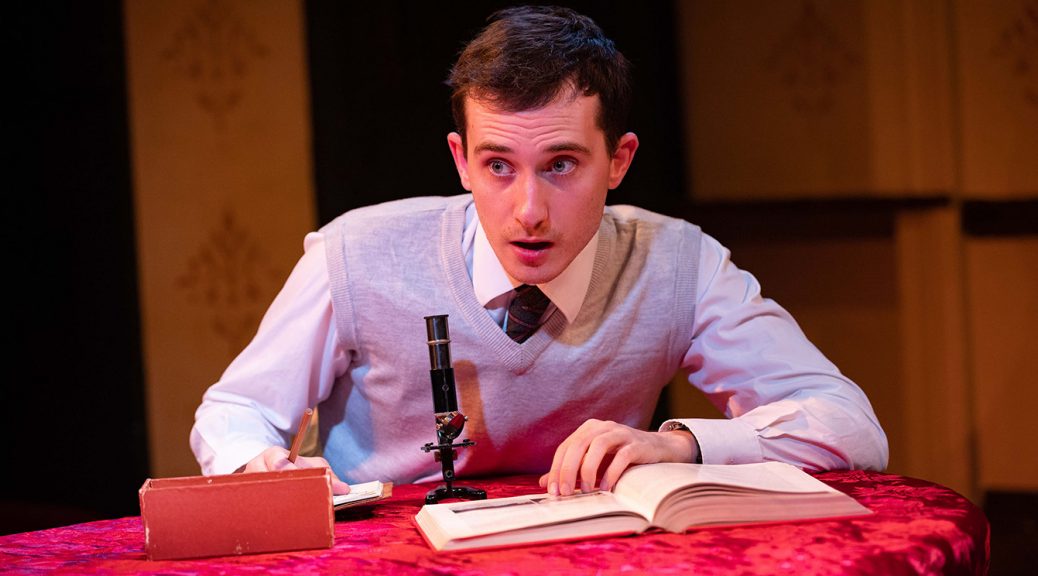
Rylance has written a mammoth role for himself – the delivery of which is sure to impress and has secured strong reviews. Semmelweis was a troubled character: brilliant and intolerant, he ended his life in a mental institution. Intelligently, the character fits well with Rylance’s performance style, which has plenty of admirers, but is often fraught. And much of the script is verbose and predictable, clunky and declaratory. Does the portrayal convince, or is it a matter of the energy Rylance undoubtedly brings to the role? I suspect the answer depends on how much of a fan of him you are.

Rylance does power the show. But the play’s other characters suffer as a result. There are strong performances as friends and colleagues from Ewan Black, Felix Hayes and Jude Owusu, but they are simply foils – and the latter’s death seems particularly wasted. The poor wife, who spends most of the first act asking why what we are all watching was kept a secret from her, means that Amanda Wilkin’s considerable talent is wasted. Perhaps the biggest missed opportunity is Semmelweis’ nemesis at the Vienna Hospital, Johann Klein. Alan Williams’ performance in the part is good – but the play would be better if the role weren’t such a straw man.

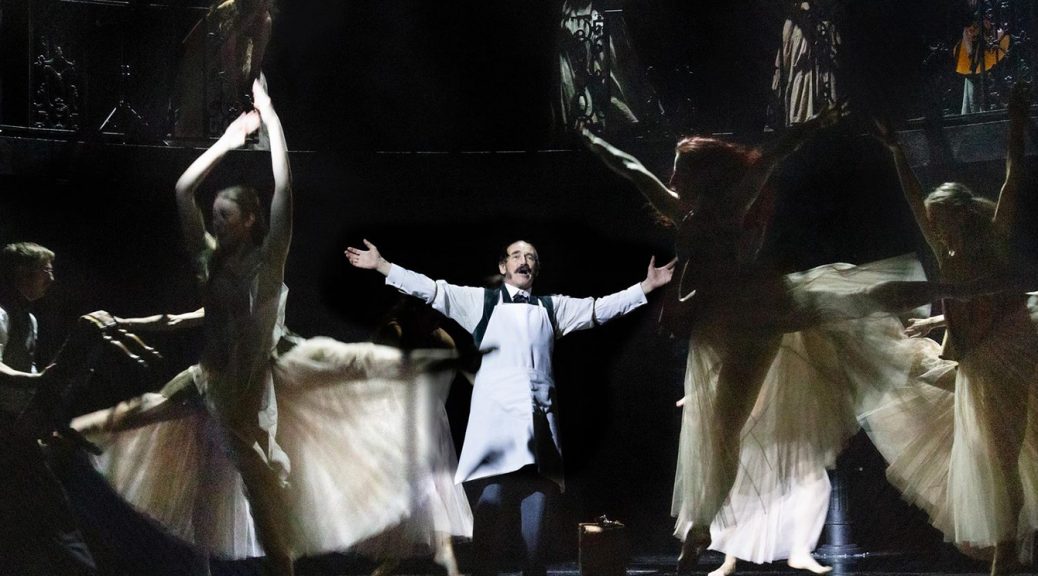
There’s an antidote to a lot of these problems, though. The use of dance, with choreography by Antonia Franceschi and music from Adrian Sutton, comes to the rescue. Both beautiful and frightening, the show’s movement brings out mortality and violence. A quartet accompanies the action on stage and the supporting cast of patients bring the focus on to the mothers that Semmelweis saved far more effectively than his many speeches.

Until 7 October 2023

www.nationaltheatre.org.uk

Photos by

“The Wind and the Rain” at the Finborough Theatre

It’s hard to go wrong with the revivals that make up part of the exciting programming at Neil McPherson’s west London venue. The chance to see moments of theatrical history, always produced to the highest standard, is a great opportunity. This first London revival in 80 years of a smash hit from 1933 fits the bill perfectly.

Following our sensitive hero, Charles Tritton, through his time at medical school, the piece might be considered a coming of age drama. How this bright young thing deals with the world through the men he meets, students of different ages, is a neat exploration of socialization. Sophisticated older figure Paul, the lazy and libidinous Gilbert, or nice but dim Harvey are all potential models for Charles. These characters work in relation to Tritton, but are thought-provoking in their own right.

What Charles takes from these other men with regards his relationships to women isn’t much of a plot. The play’s focus becomes a love triangle between the girl Charles’ mother wants him to marry and another, Anne, he meets while studying. That his intended fiancée, Jill, is described as a “proxy sister” makes the drama falter for a contemporary crowd. Overall, it’s hard to appreciate the pressure here. Thankfully, Hodge doesn’t want it to be hard work; the dialogue is rich and director Geoffrey Beevers impeccable work provides time to explore its humour.

Although the roles are uneven, it is with characters that The Wind and the Rain is at its best. Charles is a strong central figure and the performance from Joe Pitts is enjoyable. Pitts has confused anxiety down pat (no small achievement) but also follows the character’s growth skilfully. The performance claims sympathy for Charles and his vaguely Bohemian views, even though efforts to consider others end up oddly selfish! Privileged and moody, spoilt even – Pitts does a great job showing it all.

While outnumbered on stage, the women in the show do well. There’s a neat comic part for the excellent Jenny Lee as the land lady. But it’s the love interests that excite. It would be easy to roll eyes at some of this writing: Jill is giggling and giddy, Anne far too self-sacrificing. But wait a moment. Two brilliant performances from Helen Reuben and Naomi Preston-Low respectively elevate these characters. Reuben brings out some of the show’s best humour and a steely edge that shows what a careful study her work is. Preston-Lowe secures the independence of her character while adding the romance the piece demands. 

The Wind and the Rain ran in the West End for over a thousand performances; this revival is a glance at the theatrical mainstream, rather than the avant-garde, of the past. If the play strikes contemporary audiences as quaintly old-fashioned, maybe too slow with a thin plot, its dialogue and characters intrigue. As a guess, the excellent performances in this conscientious revival are the key to understanding the play’s success both then and now.

Until 5 August 2023

www.finboroughtheatre.co.uk

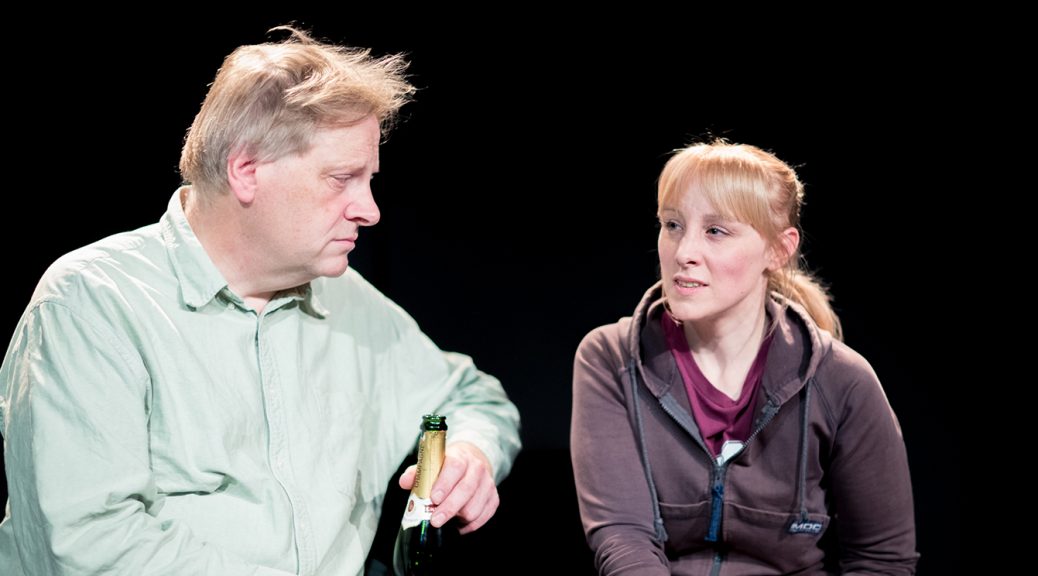
Photo by Mark Senior

“Bones” at the Park Theatre

Lewis Aaron Wood’s well-intentioned play is elevated by the work of director Daniel Blake. If this examination of the mental health problems of a rugby player – Ed – is not as insightful as might be hoped, Blake’s staging is strong, and his cast’s performances are impressive.

Aaron Wood has focus, and Bones is neatly written. While the dialogue is occasionally stilted, this reflects the play’s characters, who are believable, if not compelling. Ed says surprisingly little about his depression and anxiety, or even his recently dead mother. Of course, reticence is part of the point. But interactions with family and friends show his problems are a poorly kept secret, so tension in the piece doesn’t work dramatically.

Ed cannot manage an “injury that doesn’t heal”, and the connection between physical and mental health, highlighted through sport, shouldn’t be a revelation to anyone. Moreover, the machismo of the rugby team is well-trodden ground. Instead, it is when Aaron Wood writes about the game itself that the script takes off. Presenting rugby as a “safe space” is a smart irony.

Ronan-Cullen-as-Ed-in-Bones-Park-Theatre-credit-Charles-Flint
Ronan Cullen

While the play is better on sport than on mental health, there are plenty of secure performances to be proud of, especially in Ronan Cullen, who takes the lead and complements the script. Cullen does not stress his character’s pain – Ed wouldn’t do that – but he brings an intensity to the role that is commanding. Ed’s friends make strong roles for Ainsley Fannen and Samuel Hoult. Fannen brings out some laddish humour well (another strong point of the script), while showing us a silly but sensitive young man. Hoult’s character also convinces, but it’s a shame the dynamic of his being slightly older isn’t explored more. Last but by no means least is the hardworking James Mackay, who takes on multiple roles including Ed’s father, another character who could easily be developed.

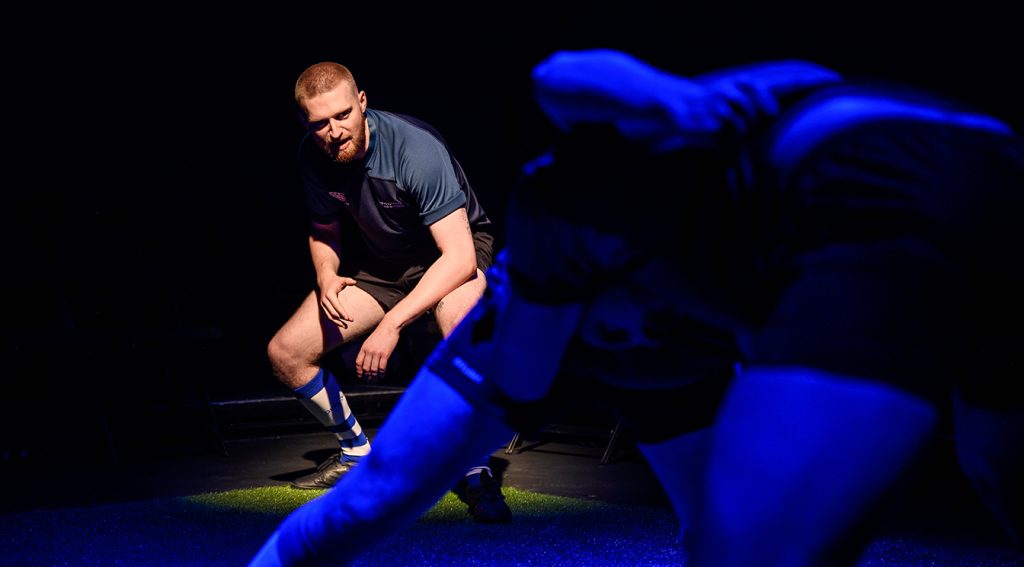
The talented cast excels when it comes to Blake’s ambitious direction of scenes on the rugby pitch. The physicality is hugely impressive, with everyone throwing, catching, forming scrums and tackling one another. These scenes, enhanced by Eliza Willmott’s sound design, are hugely effective and almost frightening in such a small theatre! While this is an uneven show, the games and training are brilliantly depicted and match Aaron Wood’s most inspired moments.

Until 22 July 2023

www.parktheatre.co.uk

Photo by Charles Flint