“The Standard Short Long Drop” at The Vanguard, Camden

Rachel Garnet’s historical prison drama is a tidy play that offers a prism to look at crime and capital punishment. Set in 19th-century York, a man on death row is offered a reprieve if he will act as hangman for his cell mate. The dilemma arrives swiftly and the debate is an interesting exercise. 

Garnet’s skill as a writer along with strong performances and precise direction from Natasha Rickman ensure success. The key is taking gallows humour in a surprising direction – Garnet takes wit seriously. The funny remarks come from the characters’ deepest fears and beliefs. Ultimately, it is the humour that engenders the play’s humanity and makes it moving.

Prisoner Alistair’s dry logic, his apparent resignation, is contrasted with the naivety of his younger companion, Ludley. But we know one can’t be as calm as he seems and the other can’t be as stupid! Kevin Wathen gives a carefully layered performance as Alistair, making the character suitably imposing. Per Carminger is passionate and convincing as the “tender soul” Ludley. There’s tension in getting to know the men’s crimes and Garnet makes what they have done so satisfyingly complex, the play doesn’t deserve spoilers.

As for the history, without giving too much away, Garnet has a brilliantly light touch. One small query – the play might look more at religion, especially given the suggestion of Catholicism. A concern with class has suitably Victorian overtones but is given impressive urgency. There’s a passion in discussing factory conditions I don’t remember from my social and economic history classes – a real achievement.

We get to know the men as they get to know each other, Rickman complements the script while the performers relish the roles. Of course, it all makes Ludley’s task harder. That the victim tries to help might seem improbable but both characters see the play’s point – they are trapped in an evil system. Alistair becomes a teacher, but also counsellor, maybe even confessor, to his own executioner. There’s a sting in the piece that is planned, effective, and builds marvellously.

Until 22 October 2023

For tickets click here

“Beautiful Thing” at the Theatre Royal Stratford East

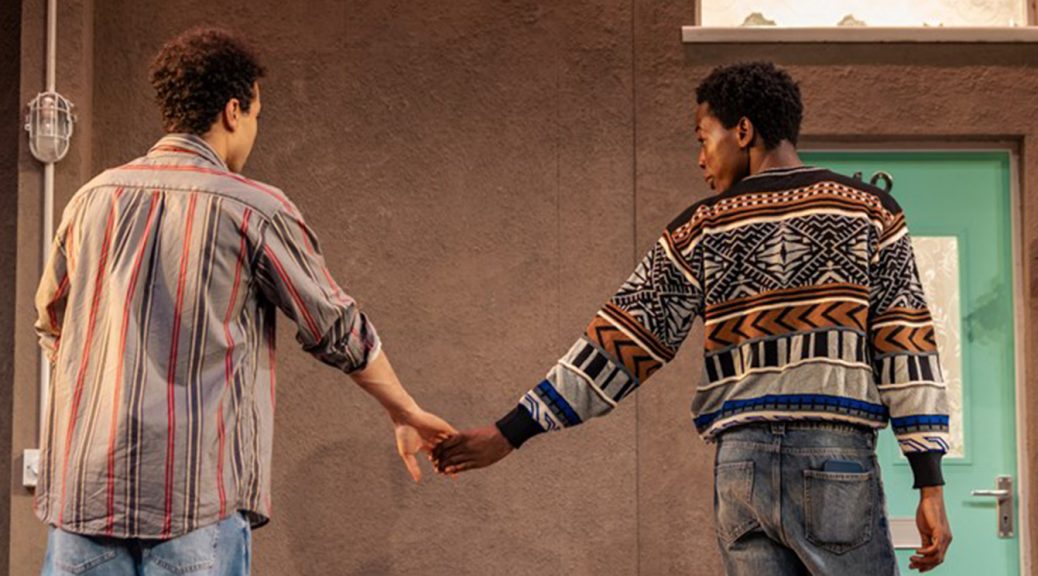
There is a reverential air to Anthony Simpson-Pike’s revival of Jonathan Harvey’s coming-of-age story. As a celebration of the play’s 30th anniversary, this much-loved piece is determined to please fans… and it succeeds. The romance between young neighbours Ste and Jamie has more optimism and fun than ever, so relax and enjoy.

Simpson-Pike and his cast provide studied performances that are carefully restrained. Raphael Akuwudike and Rilwan Abiola Owokoniran take the lead roles and make a suitably sweet on-stage couple. That both boys are bullied is in the background, with little time taken over potential trauma. Ste’s home life, in particular, seems glossed over, with little sense of threat from how his violent father might react to his sexuality.

Other roles come close to stealing the show. Shvorne Marks plays Jamie’s mother, Trieve Blackwood-Cambridge her boyfriend, and Scarlett Rayner is Leah, who lives next door. All three have excellent comic skills and appreciate that, while Harvey’s characters are larger than life they are not caricatures. The women, both well-written roles, make every eye roll or insult count. It’s all hugely entertaining.

Since most audience members know most of the jokes, the evening has a nostalgic feel. Of course, it is nice that people are no longer shocked by two schoolboys in love (they are all over Netflix, nowadays). But it is tempting to wonder whether updates might have been made. The characters are normally cast as white, and Simpson-Pike has changed this, but I only spotted one reference to the alteration and surely more might have been done?

Instead, there’s an air of celebration and an admirable emphasis on openness that is cleverly brought to life by Rosie Elnile’s fine design. The communal nature of the housing estate setting would warm a 1960s architect’s heart. Having the boys’ bed come out onto the flat’s balcony is a nice, suggestive, touch. And the production’s finale, where Elnile delivers a neat surprise, reminds us how stirring Beautiful Thing is and ensures everyone leaves the theatre happy.

Until 7 October 2023

www.stratfordeast.com

Photo by The Other Richard

“Vanya” at the Duke of York’s Theatre

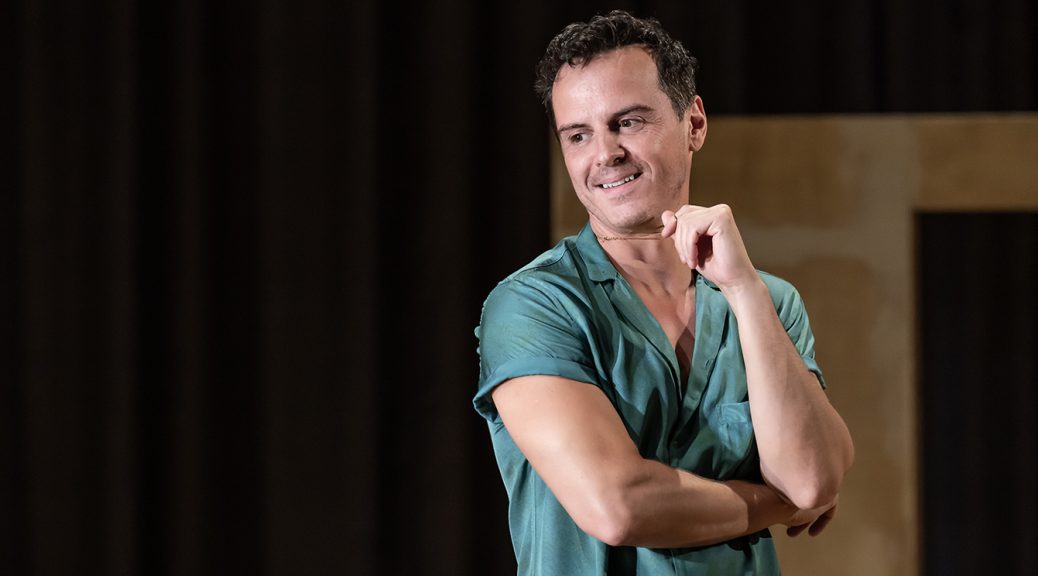
The idea behind this new work, described as ‘after’ Chekhov’s masterpiece, is to have one performer take all the roles. If your first response is to ask why, trust me, there is a point. An important point. Vanya simultaneously distils and expands its source material: showing the original as never before, while exposing the power of creativity itself in a way that is inspirational. This show is magical.

Director Sam Yates, designer Rosanna Vize, playwright Simon Stephens and the solo performer, Andrew Scott, are credited as co-creators. And what they have created is very special indeed. The project might seem foolhardy, that it works so well is a continual delight. Vanya is funny – the limitations of having one performer are playfully acknowledged. But – quickly – we start to really see all the characters; each role becomes fully – literally – realised.

Yates, a versatile director, is clearly hard to intimidate; he paces the production, close to two hours with no interval, gracefully. There’s nothing showy, no distractions, and he has the confidence to let us enjoy the text and the star. Vize’s design cleverly combines theatricality, there are grand curtains and plywood, with the domestic. There is a playful balance of artifice and the everyday.

Stephens is a bold writer of ferocious intelligence. It certainly helps to know Uncle Vanya, but pointers as to what is going on come with skill as well as providing jokes. Importantly, humour runs through the script and scenario too so that Chekhov’s comedy becomes clear. There’s a lot of insight into the original; the presence of Anna, Vanya’s deceased sister, is revelatory. Chekhov’s themes of boredom and happiness – with all the dramatic permutations around love, age, and ambition – are vivid and alive.

As for the performer… it must be odd to be as talented as Scott! Expectations might even detract from his achievement, as everyone just knows he’ll be great. But swapping roles of such different ages and genders so brilliantly, for such an extended duration, is breath-taking.

Technically, distinguishing each character by carefully using small props or gestures is fascinating. But Scott makes the show uncannily emotional (he always expresses vulnerability marvellously). There are a lot of unhappy people here and you feel for them all in turn. Even the intellectual Serebryakov, usually so unsympathetic and recast a pretentious film director, is heart-wrenching. And Scott is a stong comedian, the cackles he gets from talking about cartography show this. All amazing, but when it comes to scenes of physical intimacy between the characters… what to do? Scott subtly wrestles with himself. Stroking or grabbing a hand, or pushing himself against a wall. Somehow, and I cannot explain it – the show is sexy. And, I can’t help repeat myself, such moments in the theatre are magical.

The idea of art that, like Serebryakov’s films, “defines”, is mocked by Vanya. The character makes his point forcefully. But this is theatre that will be remembered and talked about for a long time. The only problem is running out of superlatives to describe it.

Until 21 October 2023

www.thedukeofyorks.com/vanya

Photo by Marc Brenner

“anthropology” at the Hampstead Theatre

Playwright Lauren Gunderson takes an impressively calm approach to artificial intelligence. The technology is here, the question is what we do with it. So rather than examine existential threats, anthropology is a thriller – a neat one, if flawed – that has AI solving a crime.

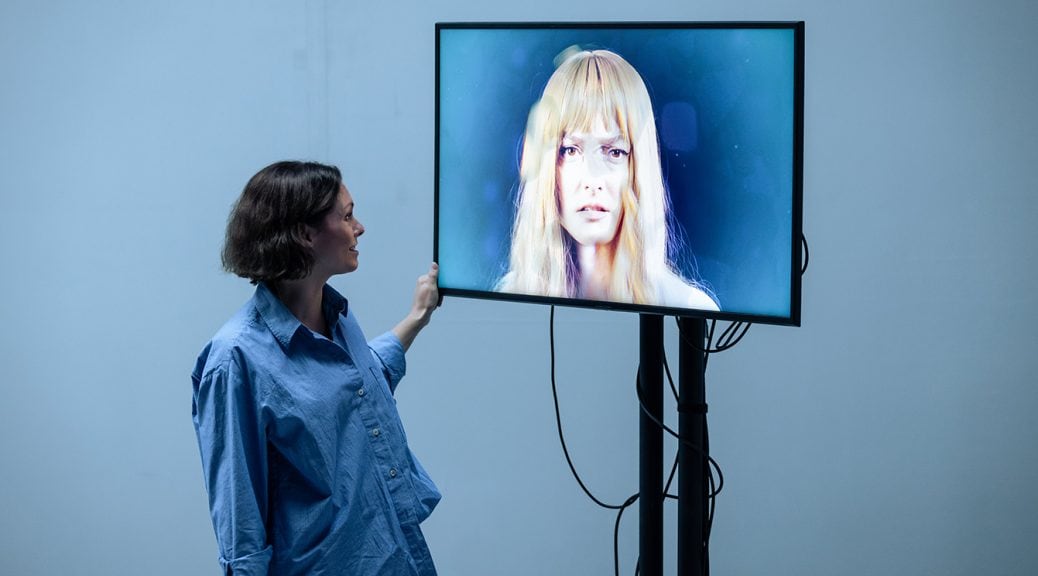
Gunderson takes many already established ideas about AI – which means we don’t learn much that is new – but our suspicions and fears are used effectively. Like Jordan Harrison’s play, Marjorie Prime, the technology helps someone grieving: a programmer called Merril creates an algorithm based on her missing sister, Angie. What happens next is a good twist and the plot is firm.

anthropology is smart and entertaining, with nice turns of phrase and well-handled light touches. But it is also cold. Despite Merril’s mental health, the breakdown of her relationship, and her troubled mother making an appearance, she is a distant figure. Indeed, all the characters are strangely rarefied. Given a title that indicates a study of people and societies characterisation is a struggle and the quartet of people we meet too small a cross-section.

Emotion is led by the strong cast, carefully guided by director Anna Ledwich. Taking the lead as Merril, a bravura performance means MyAnna Buring impresses – she can command Georgia’s Lowe’s bare stage and isn’t overpowered by Daniel Denton’s impressive video designs. Dakota Blue Richards has the tough role of Angie, (mostly) a disembodied voice or video, and excels at both sinister hints and comic touches.

The sisters are bravely unlikeable. It’s interesting to watch how the AI programme changes – as it gets better, Angie becomes worse! Or question how much Merril forces her unhealthy ideas on those around her. But loosely sketched back stories need to be clearer. All the characters seem trapped in their trauma and there’s little sense of them existing outside the scenario of the play. The roles of mother and girlfriend suffer most – while Yolanda Kettle and Abigail Thaw do a good job – their characters are flat and it is hard to care about them.

Unless…there is a deeper irony to anthropology? AI is based on patterns and both the play, and its characters, could be said to follow models. Gunderson uses ideas from science fiction, from thrillers and even the film Casablanca. Having a sense of what comes next – how much you can predict or, maybe, what we expect from a genre – runs through the piece. If that is the idea then it is a playfully intriguing one…but maybe better as a concept than as a drama.

Until 14 October 2023

www.hampsteadtheatre.com

Photo by The Other Richard

“The Little Big Things” at the Soho Place Theatre

This new musical is based on an inspirational memoir by Henry Fraser. A promising rugby player, Fraser had a life-changing accident that left him tetraplegic at only 17.  His brave acceptance of his condition and subsequent success as a mouth artist is a heart-warming story that’s hard to criticise. Yes, you will cry. But that doesn’t automatically make a show based on his life a hit.

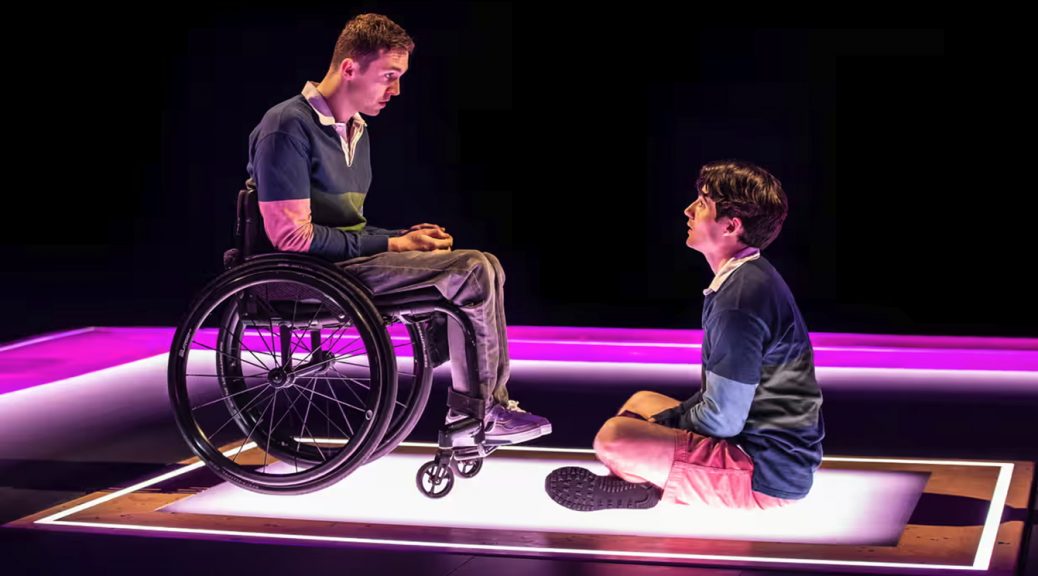
Following Fraser’s positive outlook, there is a lot to be upbeat about here. The book for the show, by Joe White, is solid. The idea of having Fraser portrayed by two performers (Jonny Amies and Ed Larkin, who are both good) is great. One is Fraser’s ‘pre-accident’ self who stays with the other, haunts him you might say. The two need to say goodbye so that life can move on.

The show’s structure allows plenty of time for Fraser’s family. There is detail about how his three brothers (played by Jordan Benjamin, Jamie Chatterton and Cleve September) cope. And, of course, his parents, played by Alasdair Harvey and Linzi Hateley. Everyone does good job. That so much care is taken over how everyone feels is admirable.

Luke Sheppard’s direction also gets plus points. Sheppard gets a lot out of his mostly young cast and fills the stage with energy. There’s colour, too (remember, Fraser is a visual artist), with Howard Hudson’s lighting and Luke Halls’ video designs making the most of the new venue’s swanky facilities. It’s all aided by strong choreography from Mark Smith, which includes the super touch of using sign language. The show’s inclusivity is smart: making sure anything the able-bodied Amies does is followed by Larkin in his wheelchair is a powerful point and a dramatic highlight of the whole show.

For all the professionalism in the production, and a very hard-working cast, problems with The Little Big Things are too large to be ignored. The humour can most generously be described as plucky. Only Amy Trigg, as Fraser’s physiotherapist, really manages to land jokes. A lot of dialogue, which may well be authentic, comes across as obvious or even touching on manipulative when played out on stage.

Worse is still to come. The music, by Nick Butcher, is unimaginative. There’s an appreciation that different characters get different sounds. But none of the numbers interests and too many sound like bad boy band songs. The singing is good, but it is painfully obvious when strong voices (especially Gracie McGonigal and Malinda Parris) bulk out poor tunes. The lyrics, co-written by Tom Ling and Butcher, are horrid. One number is even based on get well cards. Far too many are inspiration quotes, the kind you find on social media. If you want to put them in a frame, that’s your choice, but please leave them out of songs.

Until 25 November 2023

www.sohoplace.org

Photos by Pamela Raith

“That Face” at the Orange Tree Theatre

It’s hard to believe Polly Stenham was just 19 when she wrote her award-winning play. Fifteen years after its première at the Royal Court, this solid, focused writing feels just as fresh, while its harsh yet humorous look at mental health is as urgent as ever.

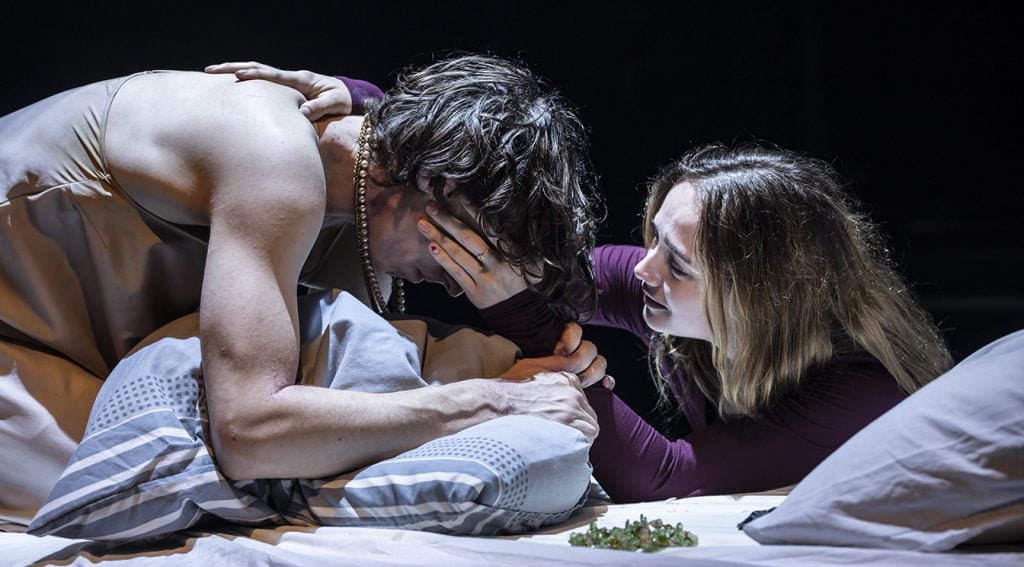
Parentification is the theme (that’s from the programme) as mother Martha is looked after by young son Henry. These are tremendous roles for Niamh Cusack and Kasper Hilton-Hille. Cusack’s experience means she can make her character magnetic. While her actions are upsetting, even inexcusable, traces of the woman she was before illness are clear. Martha’s own trauma makes her sympathetic and her love for Henry is twisted but indisputable. Hilton-Hille makes a professional stage debut whose precociousness mirrors Stenham’s back in 2007. It is heart-wrenching to see how the youth has tried to save his mother and the impact it has had. Henry is “a good boy with bad parents” but there is a frightening rage to the writing and performance that Hilton-Hille conveys brilliantly.


Youth is what we’re about – which makes sense – but also makes Martha a mystery. And the only other adult role suffers. Dominic Mafham does an excellent job as the absent father, arriving from Hong Kong late in the day. But while the character deserves the blame he gets, such finger pointing comes close to simplistic and his inclusion in the play feels rushed.

That-Face-Kasper-Hilton-Hille-and-Ruby-Stokes-credit-Johan-Perrson
Kasper Hilton-Hille and Ruby Stokes

On firmer ground, the play tries hard to be more than a shocker, and director Josh Seymour does well to bring out ambivalence – Martha and her boy aren’t allowed to steal the show. A daughter provides an excellent role for Ruby Stokes, a second fantastic stage debut, who impresses with precious moments of restraint. She’s a foil, for sure, but still a full character – and funny. A schoolfriend is also successfully written and gives us another performance to praise, this time from Sarita Gabony. Both girls could be dismissed as spoiled brats – Stenham has a keen eye for privilege in many forms -until you see what they are going through.

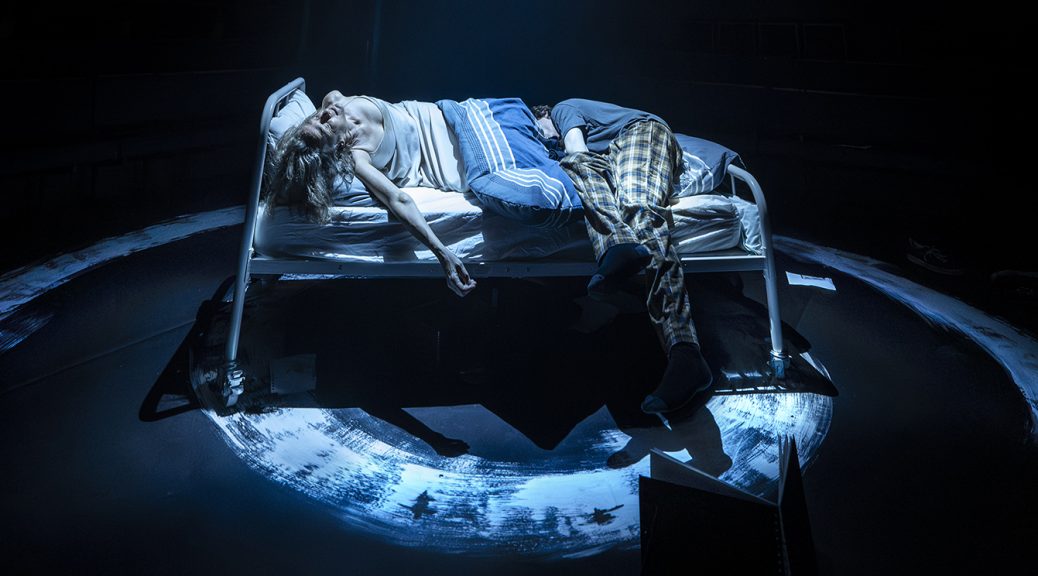
There’s no doubt that That Face is fraught, possibly too much so for all tastes. But, importantly, much of the drama and self-indulgence is not just because of the teenagers. Martha’s “upside down world” is too obvious at times. And the “nightmarish quality” (cleverly reflected in Eleanor Bull’s design, which includes an excellent revolving bed) referred to is far from subtle. There are lots of uncomfortable moments that Seymour handles bravely. If some of decisions might be better suited to a less intimate venue, that might bode well for the show’s future. I could see a transfer for this one – the play and production deserve it.

Until 7 October 2023

www.orangetreetheatre.co.uk


Photos by Johan Perrson

“God of Carnage” at the Lyric Hammersmith Theatre

Yasmina Reza’s 2008 play was a huge hit in Paris, London, and New York. The story of parents who meet to discuss their sons fighting – and end up at odds themselves – is neat and entertaining. This production, from Nicholai La Barrie, makes it easy to see why the play was such a success.

The show is funny and thought-provoking – two big ticks. The way the adults become “infantile themselves” might not be subtle but it is amusing. Moving from questions of parenting to a battle of the sexes – as neither marriage is happy – ensures tension mounts. Regrettably, the production doesn’t add much to appreciating the piece. The cast are competent, everything runs slickly…but there no surprises.

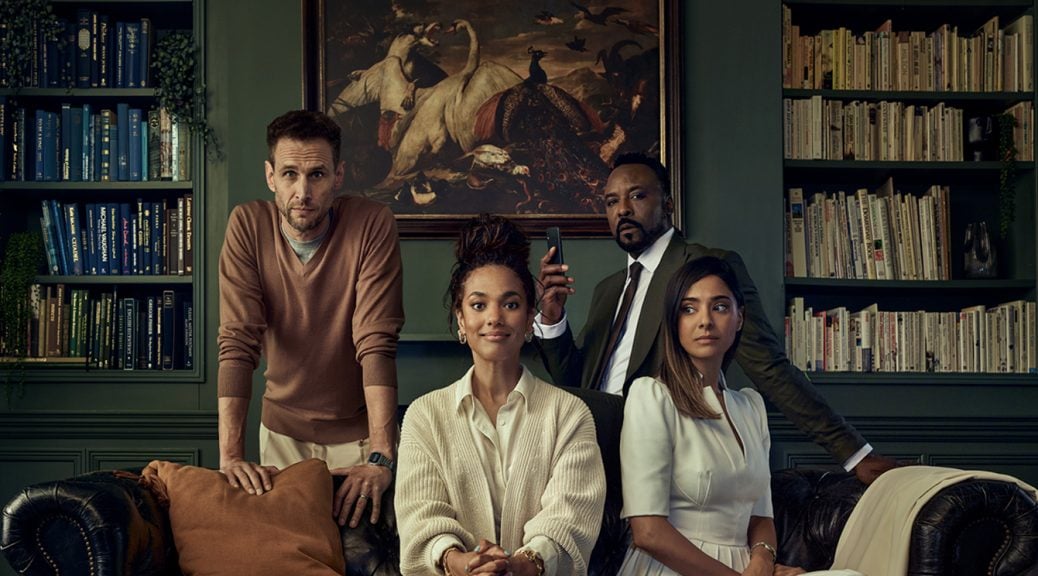
There’s plenty of closely studied work to enjoy though. Freema Agyeman and Martin Hutson play the parents of the child who has been injured. From “people of good will” to an admission of being only “moderate on the surface”, the performers inject humour if, possibly, a little too much energy. Ariyon Bakare and Dinita Gohil play opposite them, their more financially successful characters are also played for laughs from the start. The result comes too close to flat, especially Alain who, even given that he is a lawyer, we dislike too easily!

If too much is overplayed, especially some unconvincing machismo and onstage drinking (only Gohil really manages here), there can be no doubt about the privilege with a capital P in the play. Each of the performers comes over as entitled in slightly different ways. As the characters start to argue and say that the day is the worst of their lives, there is less and less sympathy for any of them. Some bold moments come with Alain’s claim they are all making too much of boys fighting. La Barrie, and his cast, do well when focusing attention on this aspect of the script.

Despite being only 15 years old, the play hasn’t aged well. It’s possible a stronger sense of place and time might be needed. Lily Arnold’s gorgeous design doesn’t do much to help here (although the revolve is handled exceptionally well by La Barrie). Time has blunted some of Reza’s satirical edge. It’s not just talk about mobile phones and man bags; of course, Alain’s phone calls are supposed to be annoying, but anger about them arrives too quickly.

More seriously, it’s easier nowadays to see the confrontation that is going to arise between all four characters. It’s a shame to say it, but it’s almost hard to believe they wait so long before fighting. With less tension, there is little sense of danger in the production. While Reza’s work is often described as a comedy of manners, there are serious moments. The questions around human nature are clear; is it going too far to entertain the idea of a clash of cultures? The piece could get far darker. With the drama diluted, this God of Carnage ends up too down to earth.

Until 30 September 2023

www.lyric.co.uk

“Operation Mincemeat” at the Fortune Theatre

Having started at the New Diorama Theatre, and developed at Southwark Playhouse, this show’s success in the West End is sure to warm the hearts of theatre lovers. A small show that has taken the town by storm is always fantastic. Apparently, Operation Mincemeat has a record number of stars from reviewers… and I’m happy to add another five.

With book, music and lyrics by David Cumming, Felix Hagan, Natasha Hodgson and Zoë Roberts, the first key to success is surely the great story. Operation Mincemeat was a military intelligence plan to misdirect Hitler during World War II that, although based on real events, is truly unbelievable. The show is action-packed and exciting but told with humour: there are some damn good jokes here.

The music and lyrics are, mostly, funny, and very, very, smart. There’s a mix of styles for fun, but the score is overall nostalgic – and cleverly so. Not that it is a period piece (if there’s a gag to be had, they go for it). While it is particularly British, the music doesn’t just remind you of the 1940s. There are nods to music hall tradition and G&S. Many of the numbers are ambitious, and I don’t think there’s a bad one here.

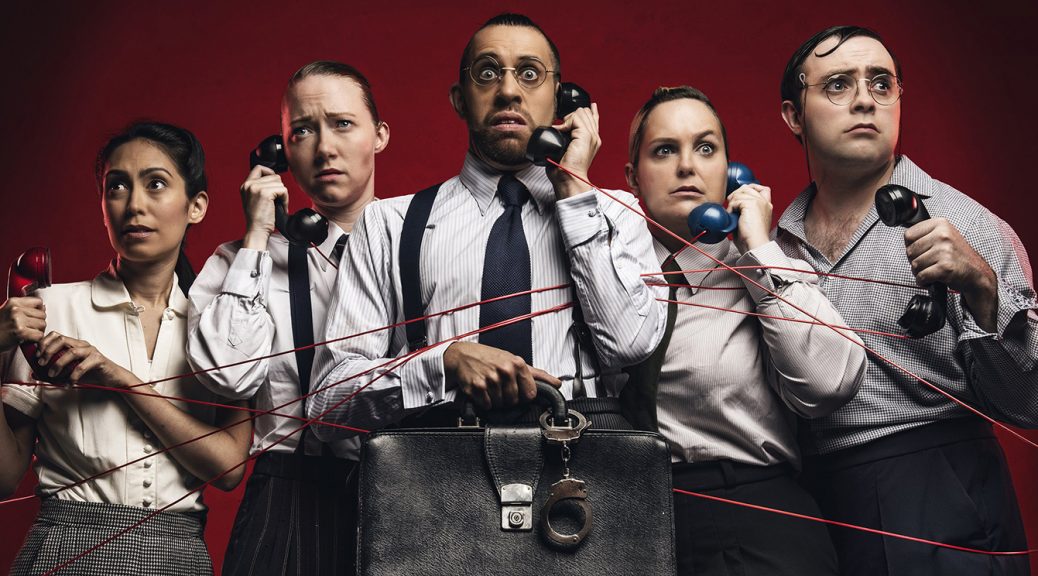
As to the cast, the production only has five members including Cumming, Hodgson and Roberts. Performing as the intelligence officers and their secretaries, as well as everyone else they meet, they cannot fail to impress. While the roles of Ewen Montague and Charles Cholmondley (who came up with the plan) feature most, every member of the quintet is fantastic.

There are, also, a lot of ideas. Gently at first, with many sweet jokes about Britishness – the subject of national identity comes into focus. Themes about manhood, that have been cleverly laid, come to the fore. The gags don’t stop, but a meta theatricality is used to give the show weight.

Which points towards what I like best. Yes: the score is fantastic, it’s one you want to hear again as soon as it’s over. But Operation Mincemeat still feels like a fringe show – and is all the better for it. Full of invention, wit and raw talent, its low-fi approach is hugely winning. It is a valuable addition to the West End, highlighting what’s important in theatre. Mission accomplished.

Until 15 June 2024

www.operationmincemeat.com

“As You Like It” at Shakespeare’s Globe

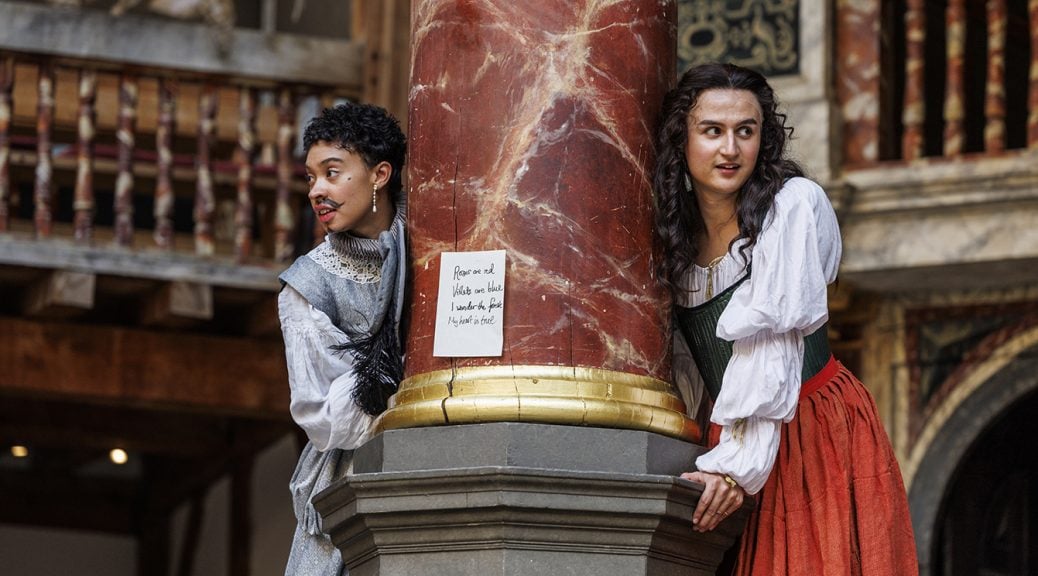
The potential for Queer interpretations when it comes to this Shakespeare romance is clear. Putting a spin on our heroine Rosalind’s role-playing isn’t new (Cheek By Jowl’s 1991 production is still my favourite example). But director Ellen McDougall’s production, which embraces all kinds of identities, is full of ideas and a hell of a lot of fun.

McDougall and her cast enjoy the venue. As well as the gender-fluid casting, there are plenty of touches, like the audience participation, that feel characteristic of Shakespeare’s Globe. The energy is high, especially from our lead lovers Rosalind and Orlando, played by Nina Bowers and Isabel Adomakoh Young respectively, who both bound around the stage. There’s strong comedy from Macy-Jacob Seelochan’s Celia (a very neat performance) and Alex Austin’s Jaques. Ambiguity is emphasised and difference played with to raise questions.

Transformation is the key: this forest of Arden is a place full of potential. The Queer politics are as broad as possible – the approach might be called holistic. Ideas about nature run through the show (lavender and apples are handed out to the audience). Much is made of Orlando’s servant Adam dying, with an effort not to throw “unregarded age” into a corner but see it as part of cycle of life. It’s a shame that, despite a strong performance from Stephanie Jacob, the moment isn’t moving. But the ideas are interesting and have a firm base in Shakespeare.

The music, which features heavily, isn’t a successful as it could be. Using pop songs in Shakespeare is common enough, but mashing up well-known tunes is complicated. Composer Michael Henry’s work is accomplished but proves too much for a cast who are not, primarily, singers. Max Johns’ costumes, though, are excellent, embodying the show’s intelligence and sense of rebellion. Johns transforms elements of historic clothing to play with gender and sexuality. Each outfit is bright, fun and smart in every sense of the word.

As You Like It isn’t as enlightened as most of us would like. There’s no ignoring misogyny or class and, in the end, order is (quickly) re-established. But if anywhere kicks against preserving Shakespeare just for the sake of it, it’s here. The production has additional text from Travis Alabanza to boost ideas about family and friendship. Efforts are made to emphasise joy and jokes. And, if things get too tricky, we’re told we are going to skip to the next scene! This is the night’s finest, winning moment. McDougall bring a sense of honesty – of working things out – that is exciting.

Until 29 October 2023

www.shakespearesglobe.com

Photos by Ellie Kurttz

“La Cage Aux Folles” at Regent’s Park Open Air Theatre

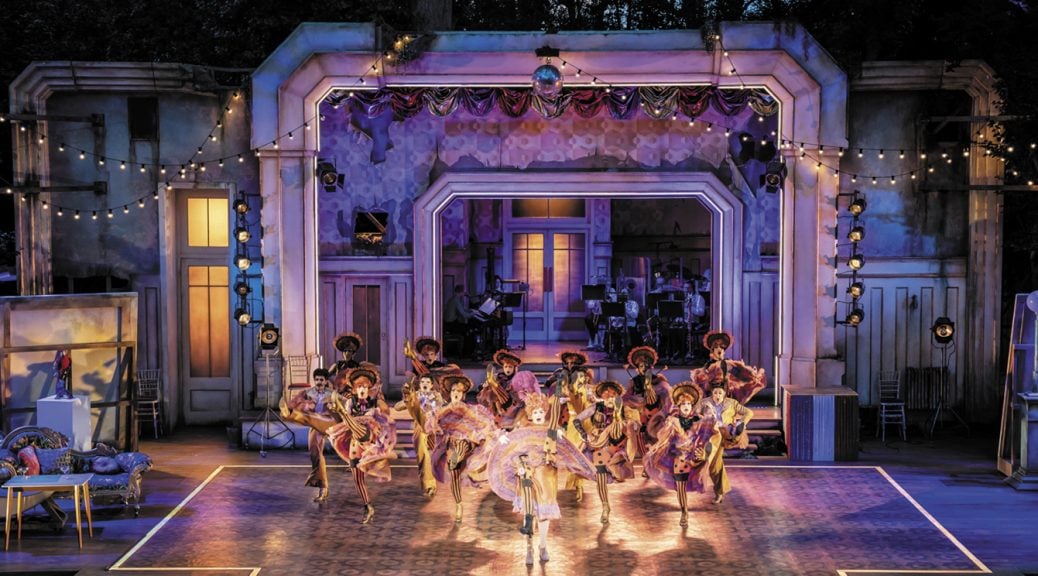
After so many fantastic musicals during his time as director at the venue, Tim Sheader’s final revival at Regent’s Park Open Air Theatre deserves acclaim. The much-loved 1983 piece is produced with, well, lots of love. Clearly close to many hearts, the staging is carefully crafted, Sheader’s work impeccable and the audience reaction euphoric.

La Cage Aux Folles is undoubtedly effective – but it is simple. The book by Harvey Fierstein is a model of clarity. Yet the story of drag queen Albin and his partner Georges’ child getting married doesn’t take much time. And although each of Jerry Herman’s songs are hits (not just I Am What I Am), there really aren’t that many tunes.

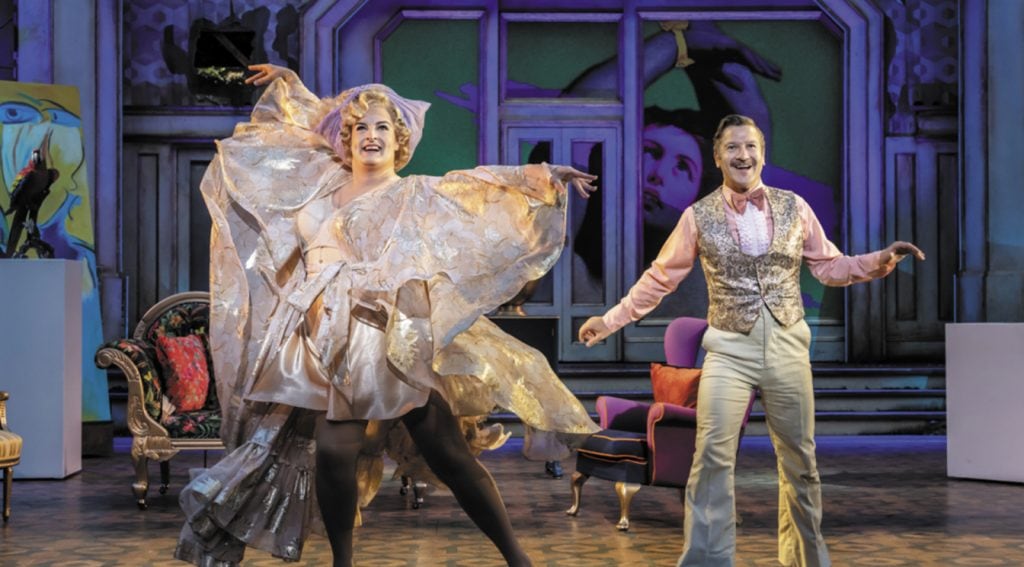
So, the strength of the production comes with the performances at the eponymous cabaret. Stephen Mear’s choreography is fantastic, the performers acrobatic, and Ryan Dawson Laight’s costumes accomplished (with some lovely nods to the 1970s setting). It wouldn’t be surprising if members of this chorus – or ‘Cagelles’ – each had a show.

Carl-Mullaney-and-Billy-Carter-in-La-Cage-aux-Folles-credit-Johan-Persson
Carl Mullaney and Billy Carter

This is not to detract from the leads, from whom Sheader has secured strong comic performances. Billy Carter plays Georges and has the night club host patter down well. Carl Mullaney’s experience as a cabaret host also shows with his confident Albin. Whenever either has a microphone in hand (nice touch) there is fun. Mention should also be made of Ben Culleton, as their son Jean-Michel, who impresses with a fine voice and great dancing (with Sophie Pourret).

Behind-the-scenes action sometimes feels a little lost in the space. Seeing the Cagelles from the other side of the curtain is a nice idea (and it gives Hemi Yeroham a chance to shine as a stage manager), but you can’t help wondering if it’s all to help with costume changes. That said, the changes of outfits are worth it, and the stage needs to be big to accommodate dance scenes that release a real sense of euphoria.

Private moments suffer from a similar problem – it sometimes feels that the show might be better in a more intimate location. Georges and Albin’s romance convinces but seems small next to the big numbers. Maybe the change of scale is a sweet observation of its own? Along with their son, there is a palpable sense of care and closeness that is touching. La Cage Aux Folles has a simple message about family (hopefully one we’ve all now learned) and it makes it powerfully enough to get the audience up on its feet.

Until 23 September 2023

www.openairtheatre.com

Photos by Johan Persson