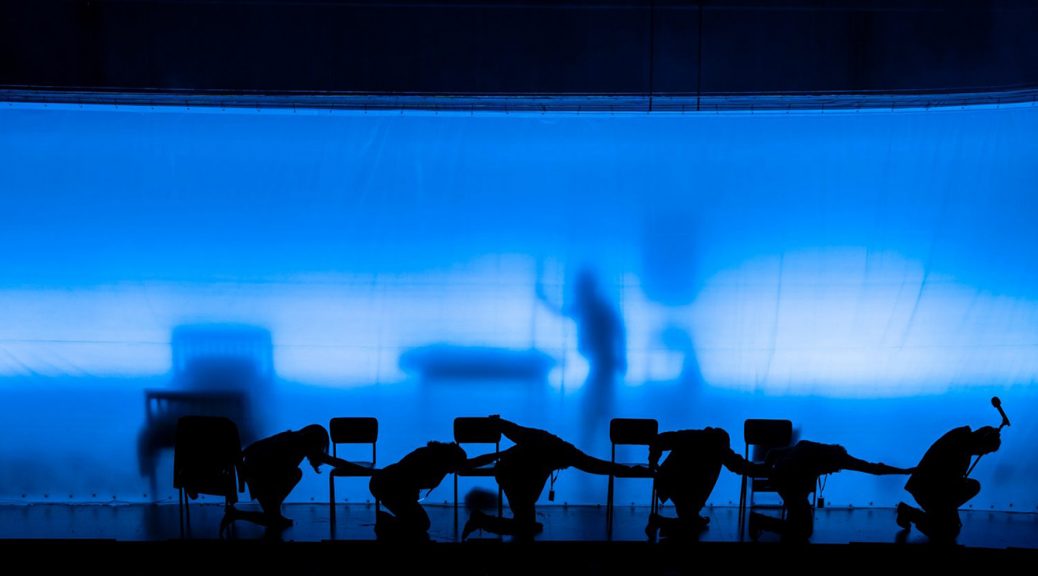
“Spirited Away” at the London Coliseum

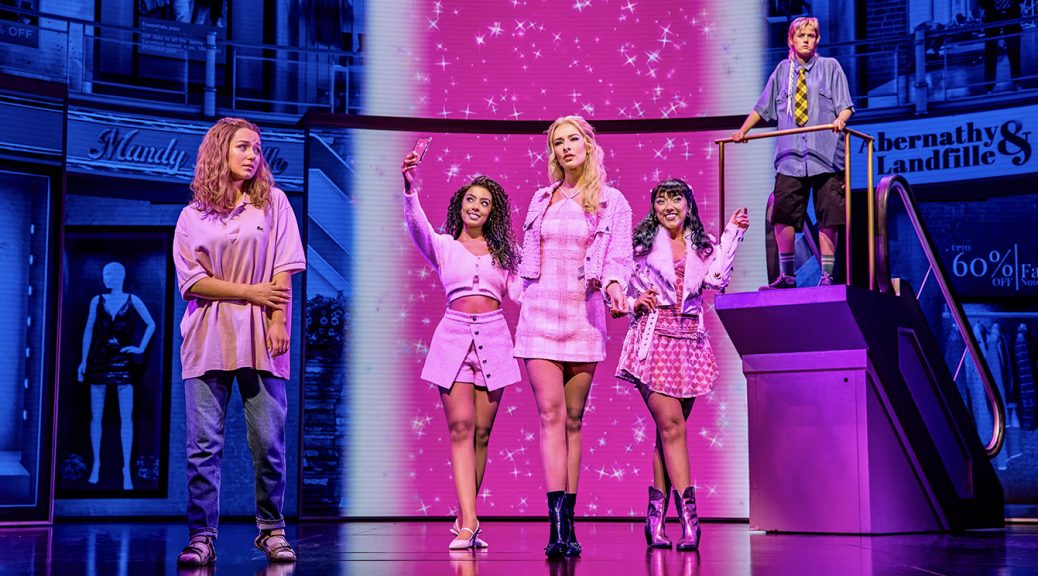
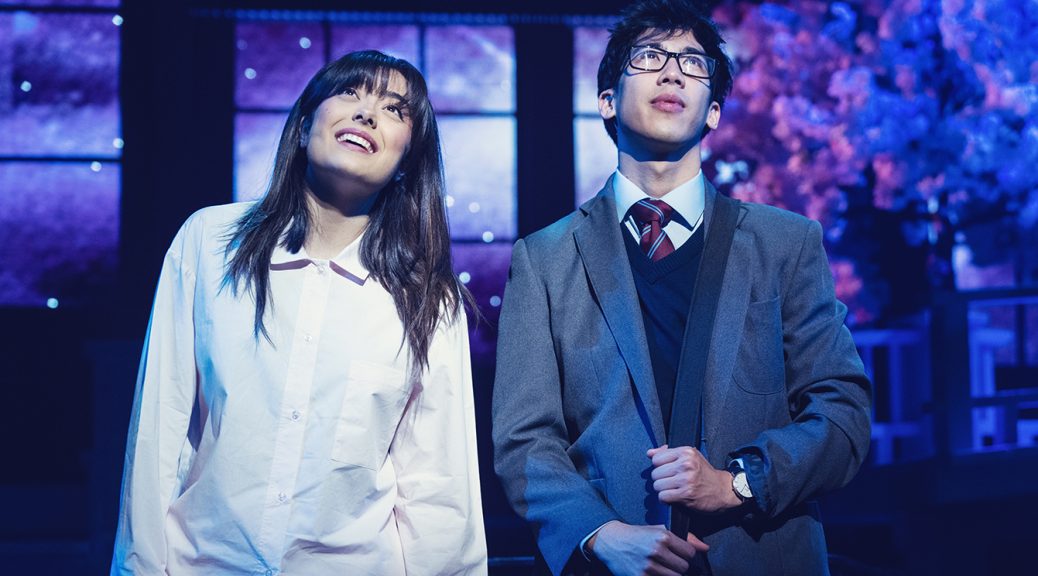
Based on the phenomenally successful Oscar-winning Studio Ghibli film, London audiences now have the chance to see this stage adaptation, direct from Japan. The show has the air of an event and Fans are sure to love it.

The production looks and sounds fantastic. Jon Bausor’s constantly moving set design is superb, likewise the lighting from Jiro Katsushiba. The costumes by Sachiko Nakahara could be on display in a museum. With every aspect of design, details thrill.

There’s a big orchestra for Joe Hisaishi’s score – a soundtrack I’m sure many would listen to at home. And a lot of dance: the choreography by Shigehiro Ide (also credited with staging) is both ambitious and otherworldly. Most notable is a brilliant performance from Hikaru Yamano as ‘No-Face’. What the cast achieve, given how many of them are covered and wearing masks, is impressive.

Spirited Away is vast and technically ambitious. The puppetry (Toby Olié) runs through nearly every scene and is strong.  The result is that every movement is planned (including some witty plays with the music) and John Caird’s direction has to have the utmost precision. The use of projections is, thankfully, limited; the show works as a live event – but that level of control does mean little sense of spontaneity.

Caird is also the show’s adapter and has, again, done well. This is a simple story of a young girl called Chihiro who finds herself trapped in a magical world. Events are fast paced. There is some urgency about the fate of her parents, transformed into pigs by a witch called Yubaba. But this journey is one of discovery rather than a quest: Chihiro follows instructions rather than working things out. She is a passive heroine. Ironically, the role is high energy, barely off stage and running around all the time (four performers are listed – Kanna Hashimoto, Mone Kamishiraishi, Rina Kawaei and Momoko Fukuchi – giving an idea of how demanding the role is).

While the story is entertaining, with little sense of peril, it is hard to see much drama. Likewise, the romance fails to convince and is underexplored – Chihiro’s potential boyfriend being a magical figure who can turn into a dragon doesn’t help. These may be memorable characters but they lack psychological insight. And the humour is limited. 

If the style has shortcomings, they all reflect Studio Ghibli’s popular and acclaimed work. The show has wider appeal than another hit from the same source, My Neighbour Totoro. But there’s still a sense Spirited Away is primarily for kids. Clearly it crosses over – box office figures tell you that. But it is the world created, rather than what goes on it that interests.

Until 24 August 2024

www.londoncoliseum.org

Photo by Johan Persson

“Long Day’s Journey into Night” at Wyndham’s Theatre

In the satirical novel Cold Comfort Farm there’s a quip that Eugene O’Neill’s plays get in trouble with the RSPCAudiences for being so long. It’s true, you won’t get out of the theatre until quarter past ten if you see Long Day’s Journey into Night. And depending on your seat, you might well be in pain. But this revival from director Jeremy Herrin is a reminder of what a masterpiece the play is. Hard work but worth it.

The piece is remarkably static; as the family Tyrone struggle with their problems, we get a collection of talking heads. Despite drug addiction, drinking and a terminal illness discovered, nobody moves very much. Herrin holds his nerve and keeps the action controlled. Jack Knowles’ lighting is dark and even Tom Gibbons’ excellent music and sound design is minimal. The result is engrossing in a distinctive manner.

Focus is needed because O’Neill’s play is big. There are so many ‘themes’. As a family drama you expect parenthood and home to figure. The “shabby place” Lizzie Clachan’s set makes so sparse offers no distractions. Meanwhile the marriage between James and Mary, and the sibling relationship between James Jr. and Edmund, are all examined with forensic detail. And don’t forget that Long Day’s Journey into Night can be considered a kind of ‘memory play’. Characters are stuck in, or looking to, the past. Is this starting to sound like CliffsNotes? It’s been mentioned already… there’s a lot to think about.

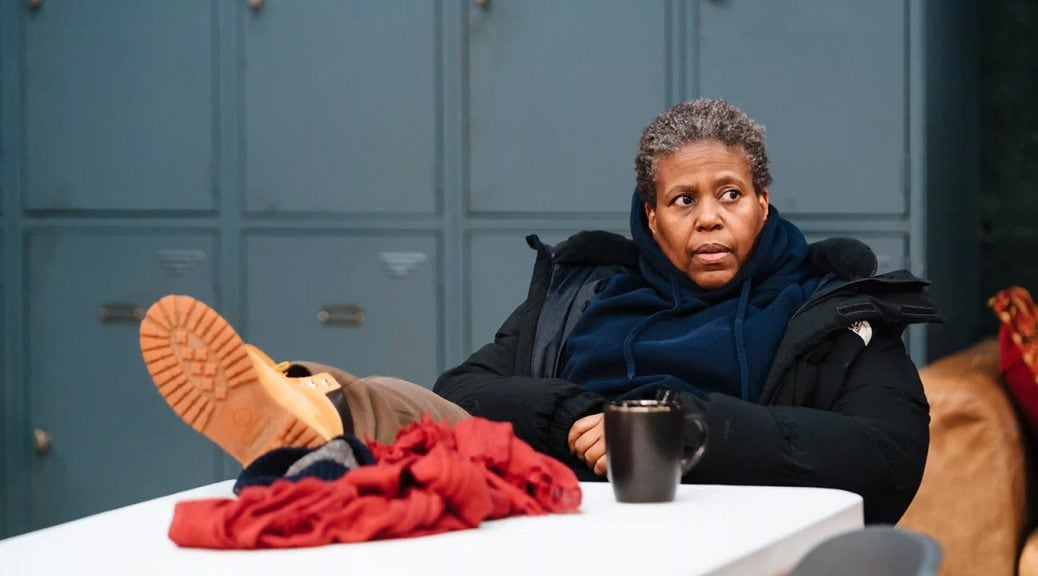
mother’s boy and daddy’s pet

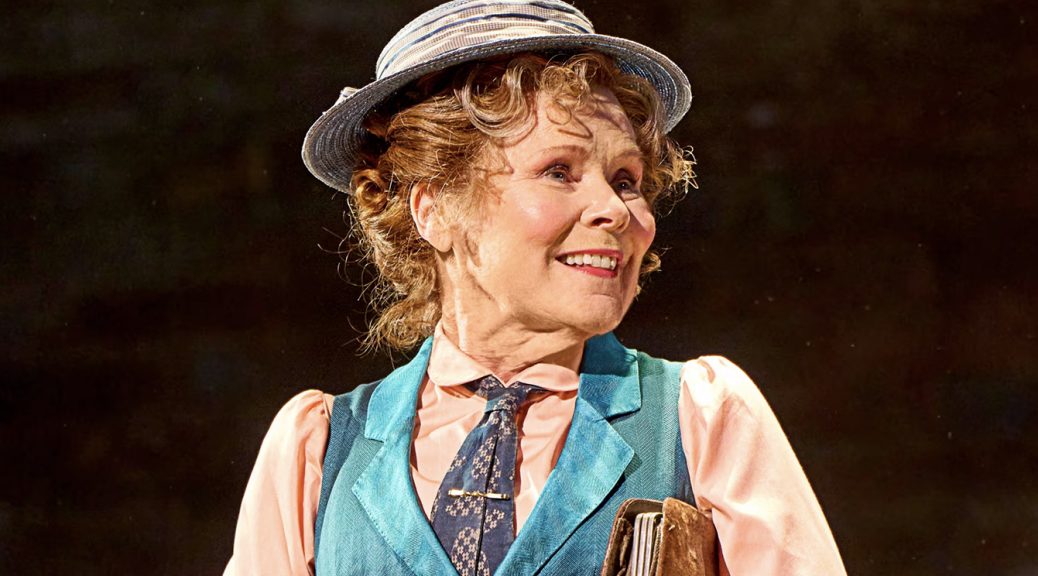
Such material makes fantastic roles for a star-studded cast. Brian Cox takes the lead as patriarch James and is suitably commanding. This is a generous performance; even the fact that James was an actor is underplayed. Cox is the lynchpin of the play but never steals the limelight. The production is an exciting opportunity to see Patricia Clarkson on the London stage and her performance as Mary is terrific. The “constant suspicion” her character suffers from is clear and, as the play goes on, develops a nuance Clarkson’s colleagues feed off. Mary’s drug addiction is never sensationalised, like her son in the play, a role admirably performed by Daryl McCormack; these are characters living with their substance abuse. O’Neill was ahead of his time in seeing addiction as an illness.

long-days-journey-into-night-inset
Laurie Kynaston

Still, it’s Laurie Kynaston who, in making so much in his role as “mother’s boy and daddy’s pet” Edmund, makes the biggest mark. The character is surely closest to O’Neill himself and is written with a ferocious edge, but Kynaston brings a vulnerability to the role that strips away much of his posturing.

As if all the personal drama were not enough, there’s a discussion of pessimism verses optimism hardwired into the text that Herrin brings out brilliantly. James may be a miser but he also looks on the bright side, in conflict with the younger generation’s admiration of Schopenhauer or Nietzsche. Yet even Edmund (so “degenerate” he likes French poetry!) gives us a magnificent philosophical passage about becoming one with nature that provides a highlight.

These characters have big problems and existential angst, there’s so much about thwarted ambition and loneliness, it is easy to see the piece as depressing. But there’s as much affection as pain in the play. From the opening you can sense how the arguments contain love, something gentler. Behind the quips about snoring is the fact that nobody in this house sleeps. They have too much on their minds. But note, everyone is worrying about everyone else being awake.

Until 8 June 2024

www.longdaysjourneylondon.com

Photos by Johan Persson

“The Cord” at the Bush Theatre

Parenting, with a focus on fatherhood, is the subject of this new play written and directed by Bijan Sheibani. Intense and poetic, it sees a trio of brilliant actors examine emotions and experiences around having a child.

Ash and Anya are new parents. Overwhelmed by their love for little Louie, the everyday dramas – around grandparents or restarting a sex life – are overshadowed by bigger issues. Sheibani handles tension with subtlety, as do Irfan Shamji and Eileen O’Higgins, who take the roles and are convincing as being sleep deprived and on the edge. There’s a continual refrain that problems are not a big deal. So when arguments escalate, the atmosphere is especially fraught.

Ash’s status as a new father – indeed his whole life – seems overshadowed by his mother, Jane, who suffered from post-natal depression. Again, there is a surface calm, brilliantly portrayed by Lucy Black. But any pretended ease – over not seeing her grandchild or worrying for her own son – is effortful. When the arguments really start, there are painful home truths. Black’s performance is controlled and powerful.

All the emotion is emphasised by the composer and cellist Colin Alexander, who joins the actors, his harmonics echoing the action brilliantly. Oliver Fenwick’s lighting design is also strong, with a huge light box overhead subtly shifting colours. The whole production is stylish, with a heightened air, but it’s a shame some of the miming isn’t better.

Jane doesn’t have a lot of time for the possibility that Ash might be suffering. Does the audience? It’s a further tribute to Shamji’s performance that his character has appeal (although I wonder how much responses to the role depend on whether or not you’ve given birth). Ash does seem to want the focus of the women to return to him. And that’s hard to get past.

There’s another problem that might prove increasingly annoying… Ash’s Dad is around – he is mentioned several times and the two talk. It seems odd that Ash doesn’t speak to his own father about fatherhood. At least, there might be an explanation as to why this conversation doesn’t happen. It’s a stumble in such a detailed, focused work. The script is so skilful, I’ve no doubt the decision is deliberate, but it seems such a glaring omission that it skewers the whole play.

Until 25 May 2024

www.bushtheatre.co.uk

Photos by Manuel Harlan

“The Glass Menagerie” at the Rose Theatre Kingston

Director Atri Banerjee’s excellent 2022 revival of the Tennessee Williams’ classic benefits from a strong focus on the text and a sensual creative vision. Both are aided by Rosanna Vize’s brilliantly sparse design: the set is a neon sign of one word – Paradise. The hopes and wishes of the characters are contrasted with the bare space before us.

There are a few small props. And the pole the sign is on rotates. But the stage is used to tremendous effect by movement director Anthony Missen. The cast hovers or runs around a circular platform – stepping on to it becomes a statement – and frequently walks backwards. Every moment is considered, every move worth watching.

Light and sound become especially important, showing brilliant work by designers Lee Curran and Giles Thomas. The latter’s music for the show is fantastic, full of romance and melancholy, while the use of microphones (when characters argue, whisper or make telephone calls) is smart. And what you hear is surprising, too (let’s just from say from now on a particular Whitney Houston song will make me think of this show). Curran’s lighting includes golden glows and candlelight, suggesting love or nostalgia, or harsh shadows and a shocking flash for stark realisations.

All this before a collection of impressive performances – a further commendation for Banerjee – is addressed. The production is spacious – literally – but also in terms of the room given to develop characters. Consequently, the dreamlike quality Williams tells us about builds.

Kasper Hilton-Hille in The Glass Menagerie
Kasper Hilton-Hille

Kasper Hilton-Hille takes the role of Tom. He’s perfect casting as an angry “selfish dreamer” with just the right balance of quirk, cruelty and regret (by the end, he has tears in his eyes). Although Tom leads the show as narrator with easy command, Banerjee makes sure this is a particularly even production, with time for every character.

There are strong, intelligent performances from Geraldine Somerville and Natalie Kimmerling as mother and daughter, Amanda and hypersensitive Laura. At first, Amanda may seem a cold scold, but she shows a genuine affection for her children that is moving and steers us away from Williams’ exaggerations. Laura might seem not “peculiar” enough… at least until she wears a neon dress for gentleman caller Jim’s arrival. And it is with this scene that Kimmerling comes into her own.

The conversation between Laura and Jim has some of their dialogue repeated and includes a dance that Laura imagines. It illustrates how special Laura is. Her vivid imagination becomes a thing to cherish, her dance a parallel with her brother Tom’s poetic ambitions. The extended scene also means a larger role for Zacchaeus Kayode, who makes Jim vulnerable as well as charming, an admirable figure. While the production is superb throughout, I suspect this scene was key for Banerjee. It really is brilliant and makes for a particularly moving menagerie.

Until 4 May 2024 then on tour

www.rosetheatre.org

Photos by Marc Brenner

“Machinal” at the Old Vic Theatre

After an acclaimed run in Bath, this revival of Sophie Treadwell’s 1928 play comes to London. It’s a confrontational piece based on the execution of Ruth Snyder, who killed her husband in his sleep. The stylised script, described as Expressionist, is matched by Richard Jones’ direction and is unquestionably memorable. But a word of warning: the play is a challenge and at times downright unpleasant.

Treadwell’s version of Snyder is called Helen and is quite a puzzle. She’s super-sensitive to touch and noise and mentions smells more than once. She reacts violently to stimuli with physical spasms. Taking the lead, Rosie Sheehy gives a suitably intense performance that is easy to admire. It’s a mammoth, exhausting role that will surely, deservedly, earn award nominations. The depiction is visceral, but it is also oppressive.

Through a series of (literally titled) scenes, we see Helen’s desperation at home and her unhappy marriage. Then there’s a one-night stand that she reacts to with unexpected passion but characteristic ferocity. The character is clearly ill, but it’s left to the audience to try to work out how – and to question how much sympathy to have for her. Treadwell’s career as a journalist might help here. Is she somehow trying to present events objectively?

Tim Francis and Rosie Sheehy in Machinal at the Old Vic
Tim Francis and Rosie Sheehy

Other roles are small, but strong performances make them memorable. Helen’s lover and husband, Pierro Niel-Mee and Tim Francis respectively, are excellent. They don’t quite know what to make of Helen either! The performance from Buffy Davis, as Helen’s mother, is more complex. As with those Helen meets at work or within the legal system, characters have a deliberate flatness and are occasionally comic, which makes you wonder: are we seeing the world all through Helen’s eyes?

The large cast works in a small space, Hyemi Shin’s set makes the stage tiny, so that Jones’ staging is hugely accomplished. All the movement (credited to Sarah Fahie) is controlled – mannered and alienated – while Adam Silverman’s superb lighting design creates yet more claustrophobia through spooky shadows and a lot of strobes.

It all grates. Of course, that’s the point. And theatre doesn’t just entertain. Jones and his committed cast take tremendous efforts to discomfit us (and nearly two hours without a break makes sure of this). Sheehy really is remarkable, and there are moments in Machinal that made my skin crawl. It’s an achievement, of sorts, but not one for all tastes.

Until 1 June 2024

www.oldvictheatre.com

Photos by Manuel Harlan

“Boys on the Verge of Tears” at the Soho Theatre

For lovers of new writing, the Verity Bargate award is a big deal. Selected from 1500 entries by prestigious judges, this year’s winner from Sam Grabiner is fantastic piece full of ambition and a sense of adventure.

Set entirely in a gents toilet (Ashley Martin-Davis’s set could win another award) the piece is made up of “movements” – pun surely intended – that show the ages of men: from childhood, as teens at school, out on the town, and through to old age.

The conceit is even more audacious than it sounds. Themes and ideas recur and reflect on one another. A dad waiting for his boy finds a parallel to a sick man being helped by his new stepson. Scenarios are in flow, pretty much untethered by specific date or place.

There are 39 characters, most of them substantial, and only five performers so the number of roles they take is incredible. There are stumbles, but impressively few. Discrepancies in age or contrasts with scenes we’ve just watched are used to great effect. 

It’s interesting to pick out favourite roles from such a great selection.

Boys-on-the-Verge-of-Tears-photo-Marc-Brenner

Tom Espiner is stunning in the penultimate scene as a dying man, giving a hugely sensitive performance. Matthew Beard is great as leery teen, Jack, who despite being pretty disgusting is oddly endearing. Maanuv Thiara and David Carlyle have a smashing scene as characters who name themselves Maureen Lipman and Vanessa Feltz, delivering brilliant lines worthy of stand-up comedy. Finally, Calvin Demba might well steal the show as a young man who has been attacked: his concussion is convincing and the character’s fate dramatic.

In truth, all the performers balance humour and a sense of concern brilliantly.

The dialogue is a huge achievement, with different ages, classes, and various degrees of intoxication, all written assuredly. Grabiner gets considerable tension out of variety and director James Macdonald draws this out with skill. Be it offensive jokes or violence, even the shocking lack of hand washing, there’s a tension between sympathy and anxiety time and time again.

There are effortful moments. There are self-conscious tries to shock, obvious attempts to be experimental, and scenes that shout a message. But note: the piece succeeds in shocking, the experiments are interesting (two cleaners working in silence proves strangely fascinating), and Grabiner’s ideas about the body and our relationships to it are worth hearing.

While many of the circumstances or issues raised could be ticked off a list, Boys on the Verge of Tears is full of unpredictable moments. There are touches of whimsy, the surreal, and even horror. It seems Grabiner could write for any genre. And let’s not forget costume supervisor Zoe Thomas-Webb, who is kept very busy. All the scenes are strong and if some might not be missed, that’s interesting too, making me think of Alice Birch’s [Blank], with 100 scenes that can be selected for each production. It’s easy to see a bright future for both play and writer. This one is a five-star winner.

Until 18 May 2024

www.sohotheatre.com

Photos by Marc Brenner

“Ushers: The Front of House Musical” at The Other Palace

Director Max Reynolds has a great venue for his tenth anniversary revival of this funny show. With the scenario taking us behind the scenes of a fictional West End hit, downstairs at The Other Palace has a clubby feel that’s perfect for a piece full of insider jokes sure to appeal to a theatre crowd.

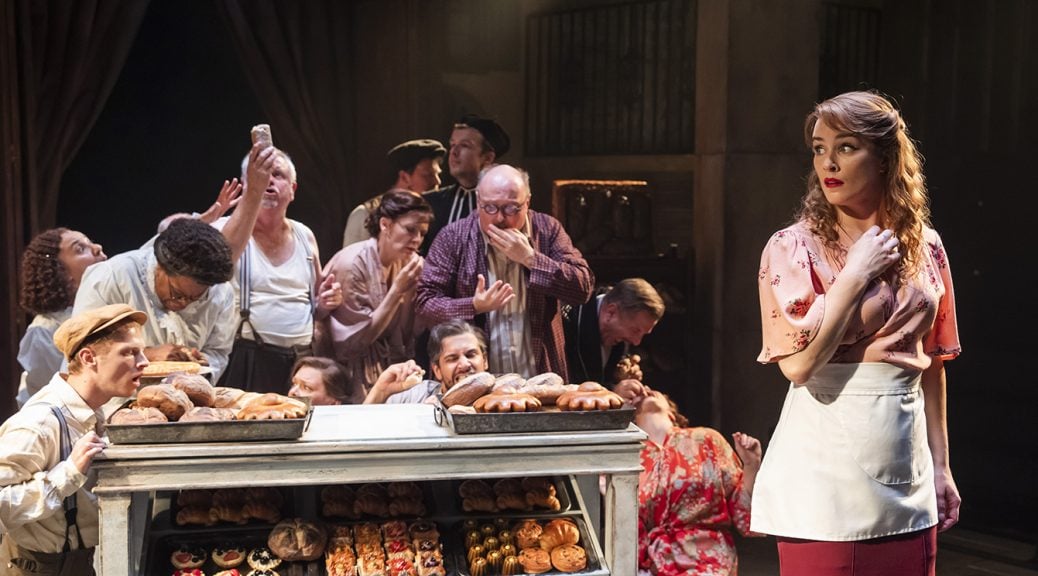
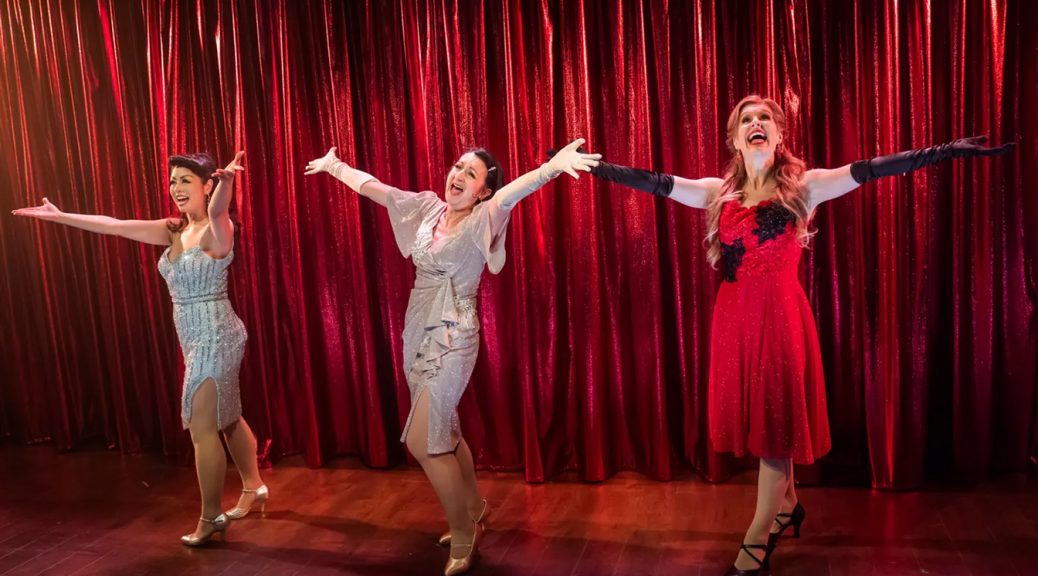
We see the romances and dreams of strong characters as they work with confectionary and merchandise, answering the same questions repeatedly, and clean up the audience mess. Two struggle with their relationship, another two fall in love, and a fifth is a fangirl searching for the leading man of her dreams (look out Michael Ball). It’s all tongue in cheek, and sweet, with neat roles for Bethany Amber Perrins (pictured top), Luke Bayer, Christopher Foley, Cleve September and Danielle Rose.

Daniel Page in "Ushers" at The Other Palace
Daniel Page

This is a strong cast, it’s great to have the chance to see them up close, and they all have strong voices and excellent comedy skills. Credit to Reynolds for getting the most out of them and the material. But the star of the show is Daniel Page who brings his pantomime skills to the role of villainous theatre manager Robin. He’s the one behind all the upselling, robbing the punters you might say, obsessed with sales figures and spend per head. It’s a joy to see a performer having so much fun in a role, making every line work and getting so many laughs.

In truth, the cast are funnier than the jokes. In particular, Amber Perrins makes the cooky Rosie hilarious when the character could be annoying. And the singing is better than the songs. While the music by Yiannis Koutsakos is solid enough, his lyrics (also credited to James Oban and James Rottger) are clumsy. Rottger’s book is strangely loose given how clear the structure is. These are problems. But what’s going on has such charm, they matter less than usual.

For full disclosure, I’ve worked front of house myself. I suspect many in the audience, let alone the cast and creatives here, have too. There’s a lot that is recognizable although, cleverly, the show is harsher about the theatre owners than it is about the public (it could be a lot meaner). But all the industry jokes and contemporary references are a hoot. While the show might not have the widest appeal, it knows its audience and serves its customers well. Don’t just see it once, go twice. And buy a t-shirt.

Until 19 May 2024

www.theotherpalace.co.uk

“A Midsummer Night’s Dream” at Wilton’s Music Hall

If you saw Flabbergast Theatre’s production of Macbeth last year, its new show should interest. The company has plenty of energy and ambition. And seeing how its emphasis on movement works with a Shakespearean comedy, rather than a tragedy, is intriguing. Regrettably, the result is disappointing.

Nearly everything about the show is exaggerated. There’s no doubting the commitment this entails. Every movement, each gesture, all the lines, are deliberately stylised. The cast of eight dance and clown around the stage. It looks exhausting. Declamatory all of the time, they shout most of the lines, or lean into odd pronunciation. The effort is incredible. But what is the outcome?

The first to suffer are the play’s quartet of Athenian lovers, whose story is robbed of romance and becomes unbalanced. Elliot Pritchard and Nadav Burstein, as Lysander and Demetrius, dominate Helena and Hermia, played by Vyte Garriga and Paulina Krzeczkowska. At times, their fighting drowns out all dialogue. Director Henry Maynard presumably wants to emphasise comedy – and there are laughs – but the jokes are limited and repetitious, a fault that runs through the whole production.

Next, the fairies. We can at least hear Titania clearly, as Reanne Black delivers her lines well. There’s also puppetry – a collection of skulls used to good effect. Krystian Godlewski’s Oberon has his moments; presenting a majestic figure as part-animal part-child is interesting (I’m less keen on the mankini and the stilts). Meanwhile, Lennie Longworth makes an appealing Puck. Both performers have a physicality and vocal skills that impress. But all the aggrandisement distracts, grates and, finally, becomes monotonous.

Of course, everyone takes multiple roles – they really do work hard. And when it comes to the amateur actors staging their own play (wearing masks throughout), the transformations are remarkable. Taking the lead and giving it his all is Simon Gleave as Bottom. But while it’s clear that the style of the show suits the character, you might guess the problem coming. We’ve already seen so many wild gestures and heard so many strange noises that it is hard not to get tired of them by the time Bottom is in the (literal) spotlight.

Gleave also performs as a grotesque Egeus. With Theseus and Hippolyta ditched, he is the sole authority figure. Maybe…the idea is that there isn’t a contrast between the characters. That all the roles – lovers, fathers, kings and queens, are performative. This might also account for how much miming and mimicking goes on. It’s not just the mortals who are fools here. But that’s just a guess. The overall impression is confusing, as if a technique has been pursued regardless of how funny or engaging it really is, or what it might add to the play.

Until 20 April 2024

www.wiltons.org.uk

Photo by Michael Lynch

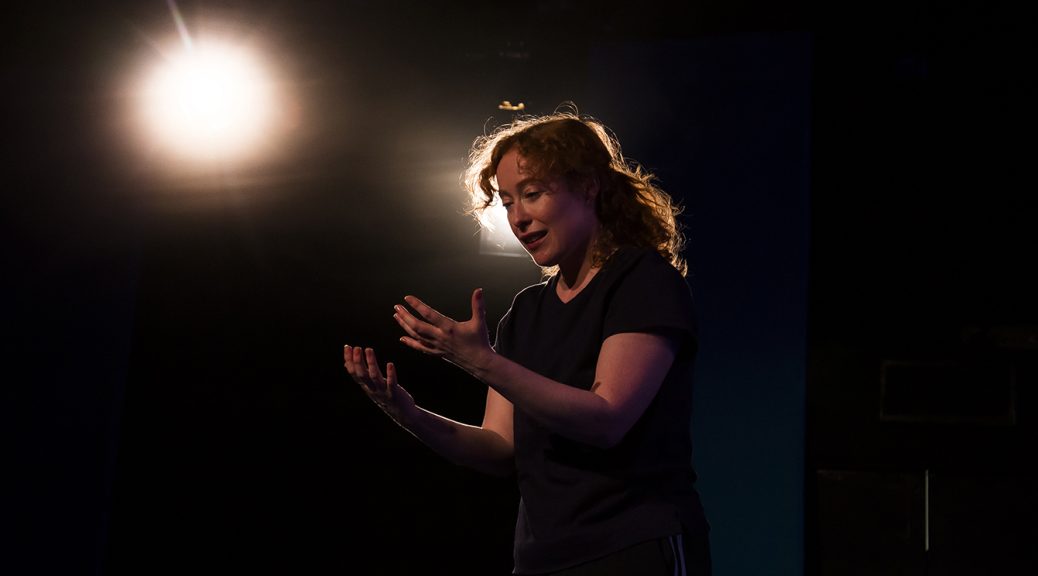
“Gunter” at the Royal Court Theatre

Dirty Hare Productions presents a new and different kind of historical story. As with, say, Underdog: The Other Other Brontë, currently showing at the National Theatre, Emilia by Morgan Lloyd Malcolm, or even the musical Six, the aim is to focus on the neglected stories of women. It might be hard to see these shows as a genre – they are all so different – but they do share an honesty about the difficulty of such a project that is exciting and appealing.

Co-created by Lydia Higman, Julia Grogan and Rachel Lemon, the titular subject is a young girl from the Oxfordshire countryside who was “bewitched” and whose case was brought to trial in 1605. But the facts are scant and, predictably, focus on her father. So, what to do? Of course, theatre is great for bringing such stories to life. And the telling here is innovative and experimental… because it has to be.

"Gunter' at the Royal Court Theatre credit Alex Brenner
Lydia Higman

Higman is an historian and appears as such, acting as a kind of narrator who amiably guides the audience. Then she takes to the guitar! As a composer, her music is a big part of the show, with a variety of genres cleverly utilised. Grogan also performs, joined by Hannah Jarrett-Scott and Norah Lopez Holden, who all have fantastic singing voices and tackle an impressive variety of roles.

"Gunter' at the Royal Court Theatre credit Alex Brenner
Hannah Jarrett-Scott as James I

Lopez Holden takes the part of Anne Gunter, showing a youngster who’s confused as well as frightened. Jarrett-Scott plays ‘the other’ Gunter – the father – with a suitably bluff aggression. It’s clear he takes advantage of his daughter, but how much he believes her to be a genuine victim must be an open question. Jarrett-Scott also has a star turn as a paranoid James I (a fantastic interpretation of the monarch). Alongside other characters, Grogan appears as one of the accused, Elizabeth Gregory, whose story is powerful. The acting is strong, but the show is all about its approach: a little crazy, always energetic and inspiringly experimental.

You never quite know what’s coming next. Or how anyone will speak: the script moves from early modern details to contemporary speech, with a lot of swearing. Or how anyone will move. Aline David’s choreography is punk-inspired one moment and then suitably otherworldly. As well as singing, there are plenty of props, many very simple, such as balloons, on an increasingly messy stage. And some strong puppetry is aided by Amy Daniels’ excellent lighting design.

At times the wild changes in mood or incongruities are disconcerting. That’s the point, of course. And some touches might annoy or even confuse (the variety of accents puzzled me). But there is a twist to the story that makes this fragmentary approach especially appropriate… we don’t know what happened to Anne. Although frustrating, it proves the show’s point: she is lost to history. A final poetic touch acts as a powerful tribute to Gunter that feels fully appropriate. 

Until 25 April 2024

www.royalcourt.com

Photos by Alex Brenner

“The Power of Sail” at the Menier Chocolate Factory

Paul Grellong’s strong play works well as both a think piece and a thriller. Set in Harvard, a professor who invites a right-wing speaker to a prestigious symposium causes predictable trouble that escalates into tragedy. With the help of director Dominic Dromgoole, and a crack cast, this quality affair is a success.

First the debate, and top marks for topicality. Arguments for and against the invitation are set out well. Free speech versus the feelings of students is only one angle. Our professor, Charles Nichols, wants to defeat the Neo-Nazi believing that the answer to hate speech is more speech. But Nichols is a narcissist, full of pride and privilege, even if we don’t doubt he’s one of the good guys. Julian Ovenden is perfectly cast in the lead and does a great job. The arguments are clear, presented with a cool passion, while there are just enough hints that something else is going on.

The-Power-of-Sail-at-the-Menier-Chocolate-Factory-Julian-Ovenden-and-Giles-Terera-by-Manuel-Harlan
Julian Ovenden and Giles Terera

Students past and present argue with him, providing neat roles for Michael Benz, Katie Bernstein and Giles Terera. There is more to each than meets the eye. Meanwhile the Dean, played by Tanya Franks, isn’t happy either as her friend Nichols is turning into her biggest problem. Franks is perfect at showing underlying tension, making us wonder if her problems are personal or political. It turns out everyone here has other agendas.

The-Power-of-Sail-at-the-Menier-Chocolate-Factory-Katie-Bernstein-and-Tanya-Franks-by-Manuel-Harlan
Katie Bernstein and Tanya Franks

As motives come to light, the play contains twists. OK, there aren’t any gasp out loud moments. And moving the action back and forth in time might be a bit clearer. But the sense of disappointment over some characters or a wish to cheer others on is real and shows how smart the writing is. Plus, all those extras complicate the debate in an intelligent way.

Campus dramas can be rarefied. The Power of Sail doesn’t quite escape that problem and, although Dromgoole keeps the pace quick, in general the characters are too naïve. How caught up everyone is in their own world might be explored, how their actions have wider consequences emphasised, instead everyone just seems a little out of touch. Nonetheless, what could be a dry subject, although important, is made dramatic and the production impresses.

Until 12 May 2024

www.menierchocolatefactory.com

Photos by Manuel Harlan