Category Archives: 2026

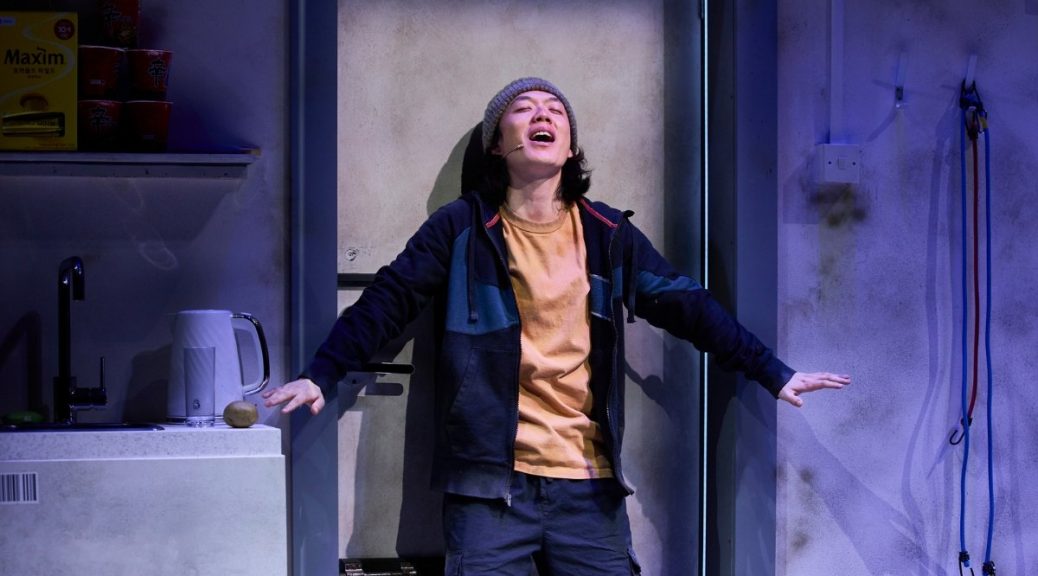
“Safe Haven” at the Arcola Theatre

Documentary dramas are a challenging genre and this valiant effort from Chris Bowers cannot be considered a full success. Let’s start with what works. Bowers provides a history of the invasion of Kuwait, Saddam Hussein’s persecution of the Kurdish people and the international intervention to aid them. As well as being an important subject, the events are described in detail and from several perspectives. All good. 

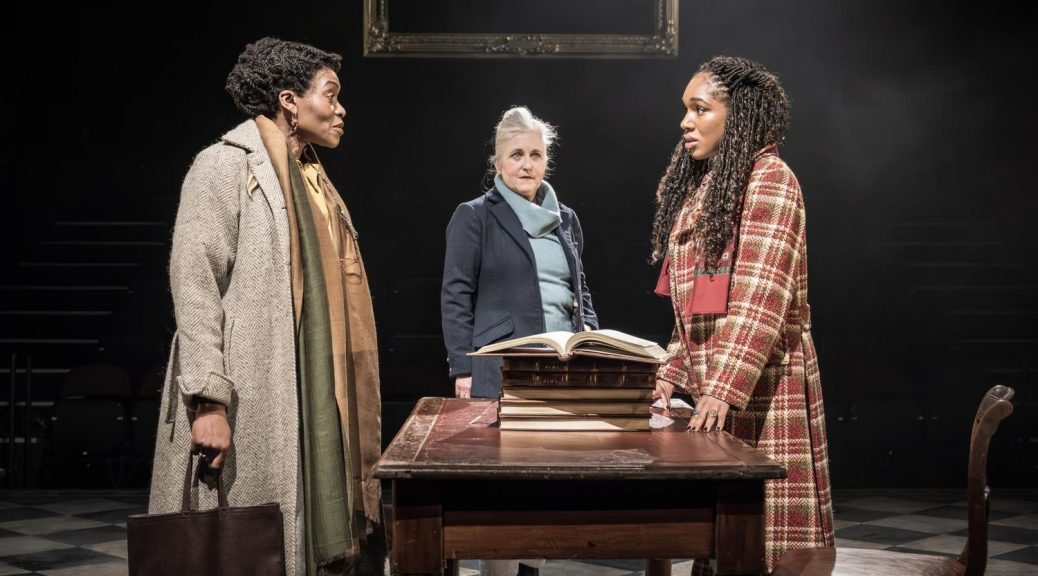
The credentials behind the show are impressive. Bowers is a former diplomat and Consul General in Iraqi Kurdistan. And he used the memoir of one of his characters alongside his considerable knowledge. It is a lot to condense and, to the script’s credit, a sense of individual voices is preserved. The action is clear – a big achievement – aided by the capable direction of Mark Giesser, who makes the most of designer Jida Akil’s split stage. 

It is when we get to the drama that we encounter problems. There’s so much exposition that the dialogue is clunky and characterisation suffers. The frightfully posh chap from the British Foreign Office, beautifully spoken by Richard Lynson, ends up looking stupid. And that can’t be fair. Surely he would appreciate the problems of dispatching aid by air (I’m not sure even the audience needs it explained)? It’s the same for the American General (again, great accent work from Stephen Cavanagh) who you can almost hear thinking. The play’s heroine, Catherine, suffers too and that’s a real shame for Beth Burrows, who has a great go at expressing how awful events were. Trouble is that the disappointment with everyone around her comes across like reading a poor prep school report. When she gets to lay down the law, she does so like an Eton Dame. Maybe that’s accurate and a good way to deal with these fellows, but it doesn’t work on stage. And when it comes to a scene explaining the play’s title it’s just too much like the characters are doing a crossword. 

Thankfully, the Kurds in the piece are more engaging. They have a more emotive story, of course, but it is handled sensitively and without sensationalism. Eugenie Bouda and Lisa Zahra make an inspiring pair as they cross the mountains searching for safety. Similarly, a second heroic figure, Dlawer, who campaigned for his people while a doctor in London and then searched for his sister back in Iraq, is thoroughly admirable. The performance from Mazlum Gül (who also impresses with a second role as UN Ambassador Al-Tikriti) is a highlight. There’s a strong blend of reserve, determination and passion in the character that reflects the piece’s strengths. Safe Haven is admirably even-handed and well-intentioned, but it doesn’t quite work as drama.

Until 7 February 2026

www.arcolatheatre.com 

Photo by Ikin Yum 

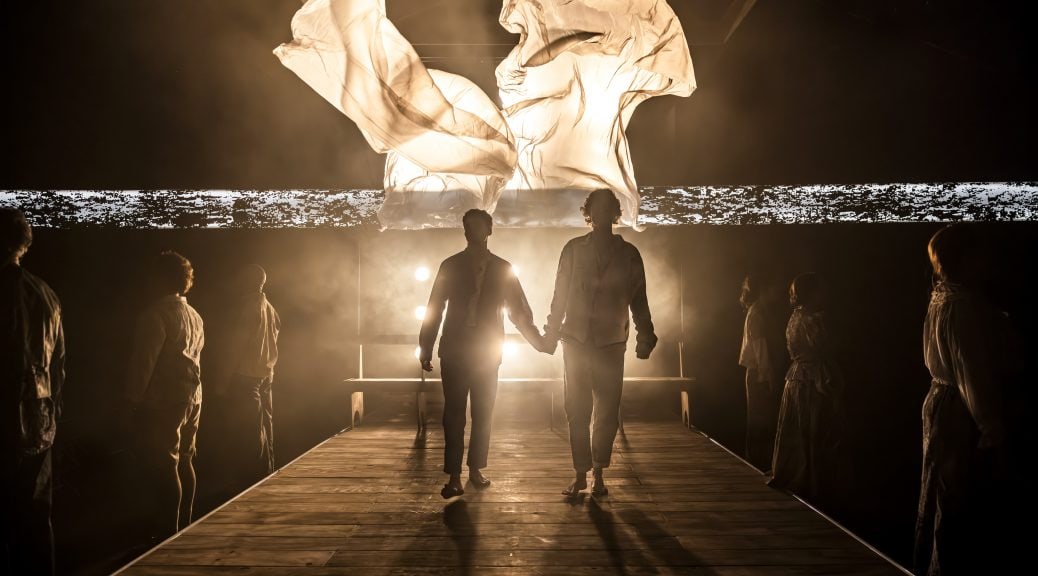
“Our American Queen” at the Bridewell Theatre

This sophisticated historical drama by Thomas Klingenstein examines Kate Chase, daughter of a presidential wannabe hoping to depose Lincoln during the American Civil War. The history is fascinating and the view of politics as “the art of ‘it depends’” insightful. The show balances romance and political ambitions well, showing how they connect without too much judgement. You might want more or less of the love stories, but the script, and direction from Christopher McElroen, are both admirably controlled.

The Chases, father and daughter, are great roles for Darrell Brockis and Wallis Currie-Wood. Both performers generate sympathy for characters who aren’t particularly likeable, taking the audience on a detailed and enjoyable emotional journey. It is easy to view Kate as “regal but cold”, yet Currie-Wood shows a lot of repressed emotion and gives the character’s self-sacrifice a certain dignity. Brockis has a good line in gravitas, too. I spent a lot of the play admiring this Secretary to the Treasury, persuaded by his humour and humility. But he is also ruthless figure. How much Kate becomes an “indispensable nag” to her father for his own sake, to progress his career, becomes an increasingly open question. And how much she is allowed to make this sacrifice adds further debate. Father and daughter have a lot to work out – if Klingenstein veers a little close to a therapy session at times, their relationship is always layered, intriguing and well performed.

Supporting roles are slightly less successful. Christy Meyer and Haydn Hoskins both do well as Mrs Eastman and General McClellan. But they are too obviously foils for the main characters and don’t convince as romantic interests for father and daughter. That’s partly deliberate – neither couple gets together. Kate’s heart is taken not by the General (an old flame) or her off-stage fiancé, but by Lincoln’s secretary John Hay, admirably performed by Tom Victor. Hay is a poet, and the love of literature he shares with Kate is the sweet basis of their relationship (Klingenstein gets a lot of mileage out of Whitman and Dickens – discussions of Great Expectations are a nice touch until they become laboured.) The wish for a happy ending works well, though, and is touching and thought provoking.

Although the piece is a static affair, the staging is strong. A video screen is made good use of, and McElroen does a great job injecting tension into staging a dinner party. The event is part of Kate’s strategy for her father’s campaign and leads to a fine theatrical moment – a great surprise – when tension explodes. A piece so wordy and cerebral isn’t to all tastes but Our American Queen is a quality affair: an interesting take on Great Men in history providing a valuable perspective with a clear intelligence. Does Kate get her happy ending? Well, it’s a truism that political careers always end in failure. But Klingenstein and Currie-Wood did raise my hopes, and that’s an achievement.

Until 7 February 2026

www.sbf.org.uk

Photo by Lidia Crisafulli

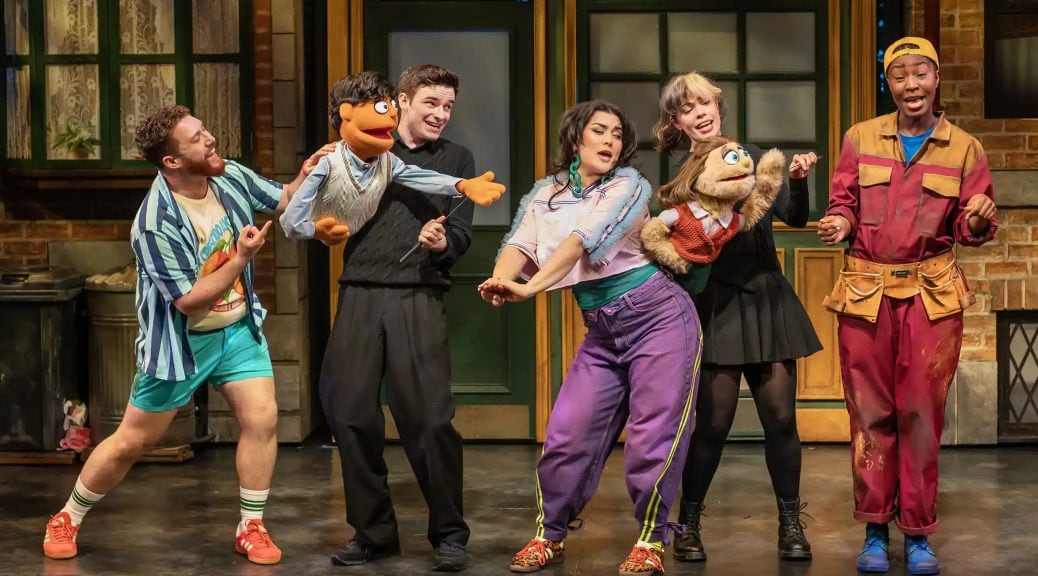
“High Noon” at the Harold Pinter Theatre

It might seem a little odd to hold the world premiere of a Western, set in sun-drenched New Mexico, in wintry London. This new play by Eric Roth, based on the Oscar-winning 1952 film, feels like a labour of love that has questionable appeal. But it manages to entertain and, pretty much, convince.

The creative teams’ credentials are impeccable. Roth is no stranger to Academy Awards himself. This foray on to the stage is competent, if unimaginative, with strong characters and clear themes. It helps that the story is good, with recently retired Marshall Will Kane rejected by the town he served when he needs help the most. Thea Sharrock’s direction is tight, making the most of the idea that the action is in ‘real time’ and giving the impression that the cast is much larger than it actually is. Tim Hatley’s unfussy set also deserves praise, aiding some pretty clunky scene changes.

The casting is great, too. Movie star Billy Crudup takes the lead role and is suitably inspiring, making an asset of his character’s vulnerability. West End favourite Denise Gough is his love interest and benefits from the slightly more interesting role of Amy. Gough, always good with angst, gets the most out of her character’s religious questions and there’s a powerful chemistry between the leads. Their age makes the story slightly different, and both performers lean into this commendably. There is strong support from a hard-working James Doherty, who takes on three roles, including the show’s villain out for revenge. And there’s another nicely written role for Rosa Salazar as no-nonsense local businesswoman Helen Ramirez – she even manages to inject some much-needed humour into the show. You wait a long time for a scene between her and Gough. Thankfully, when it arrives it is a highlight.

Reservations arise, though. Having some singing in the show isn’t a bad idea. Gough’s voice is impressive. But her character’s refrain isn’t memorable and there are also recorded tracks that jar. It’s hard to avoid the notion that someone at some point wanted this to be a musical and then gave up on the idea. Some nods to the immorality of leaders lack subtlety and the need to make the piece ‘relevant’ doesn’t convince. But the moral of the tale isn’t as simple as it might be. Twists with Amy’s conscience are neat moves and the overall message of standing up for what you believe is suitably rousing, but also complex. To that end, the elevated story makes this show worth watching.


Until 6 March 2026


www.highnoontheplay.com

Photos by Johan Persson

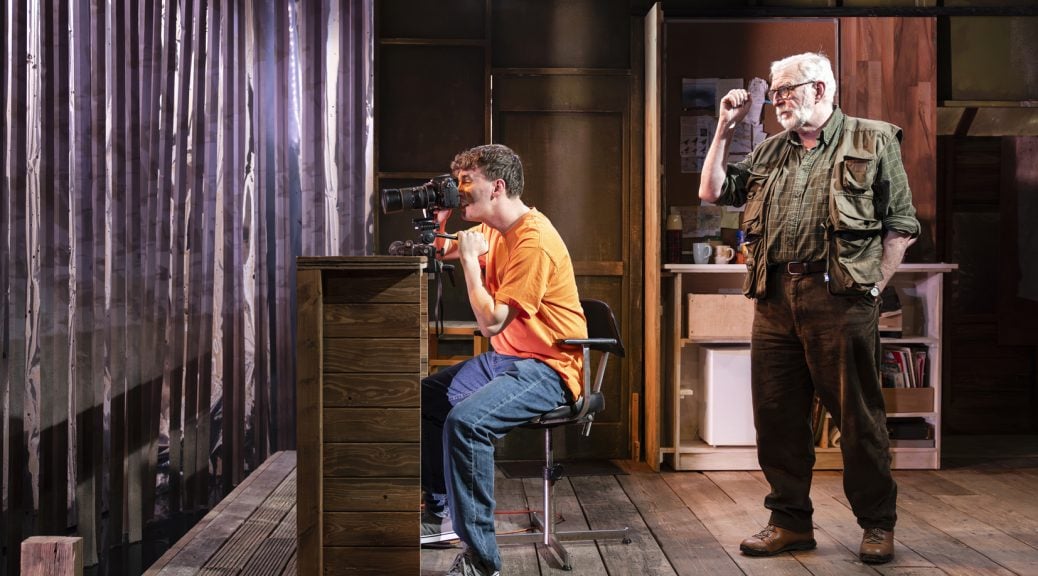
“Dressing Gown” at the Union Theatre

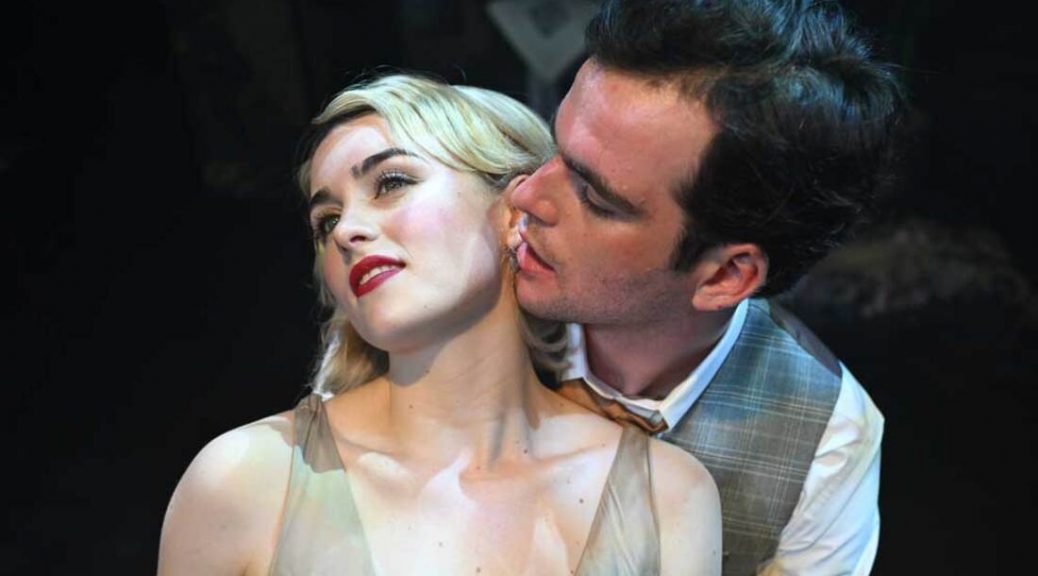
After a successful run at the Tabard Theatre, Andrew Cartmel’s farce has relocated to Southwark to provide more laughs and light relief. The suitable silly premise has a theatre director who can’t get dressed because his producer, writer and leading lady won’t leave him alone. Each interrupts his precious Sunday morning: accusing him of having an affair, gossiping about him having an affair, or trying to start an affair with him. And the poor man has a play to put on!


Of course it’s predictable (that’s part of the comedy), and it pushes credulity to the limit, which some people really don’t like. But Cartmel’s script is well written and he has some good lines. The physical comedy is minimal – there are no slamming doors and only one race around a sofa (which is a bit disappointing), so you can imagine the show as a radio play a little too easily. Nonetheless, director Jenny Eastop has done a great job injecting energy into the piece and keeping the action swift.


A top-notch cast makes the most of it all. Leading man Jamie Hutchins allows exasperation to get the better of him, but only a couple of times. And he is great at showing the too-smooth director’s conniving edge. Ryan Woodcock is credible as his nice but dim producing chum – it’s a sweet touch to make him so believably in love. Even theatre producers have hearts you know. Freya Alderson, as the temperamental writer with a hearing difficulty, does ditzy well, so it’s a shame this is the weakest role. In my opinion, Rosie Edwards takes the gold as a needy actor with some very odd ideas about revenge as she made me laugh the most. But you’re welcome to disagree and speculate about which character you identify with the most.


There’s a lot of fun around these theatrical types and the play they are struggling with. The conceit adds a neat layer to the drama. Yes, of course they are stereotypes, and rather retro ones at that. Some of the views expressed seem a little, well, 1970s. It’s part of an old-fashioned feel to the whole piece that is a little puzzling. I’m not sure if this is a knowing nod to the tradition of sex comedies or an endearing oddity. Not that it matters, Dressing Gown is entertaining and well executed.


Until 23 January 2026

www.uniontheatre.biz