Tag Archives: Arinzé Kene

“Bengal Tiger at the Baghdad Zoo” at the Young Vic Theatre

It is to playwright Rajiv Joseph’s credit that his absurdist war drama packs a punch. Set just after the Gulf War, with Saddam Hussein and his sons dead, the piece focuses on the aftermath of bombing and is filled with ghosts. There is plenty that is powerful but, regrettably, not quite enough that is credible. While the mayhem and the murder around the conflict is clear, not enough time is spent on anyone’s motivation for the piece to convince.

Ammar Haj Ahmad plays a gardener turned translator for the army, troubled by the ghosts of his sister and Uday Hussein, who he used to work for. Patrick Gibson plays a soldier who comes to be haunted by his comrade, played by Arinzé Kene, after the latter has a nervous breakdown because he, in turn, is haunted by the tiger of the title. Director Omar Elerian manages to make the story clear, which is no small achievement, and the supernatural elements are staged well. But there are too many actions and responses from characters that don’t quite make sense.

The stories are interesting and the elements of horror intriguing. Lots of people lose a hand. There’s no need to go into details. It is fair to say that the play deals with extremes but, at times, the cast struggle with this intensity. In their respective roles, Haj Ahmad can show little more than anguish and Gibson only has anger to offer. Kene has a happier time of it as his character changes after death to become a polyglot intellectual – the alteration is handled with confidence but, again, it leaves too many questions.

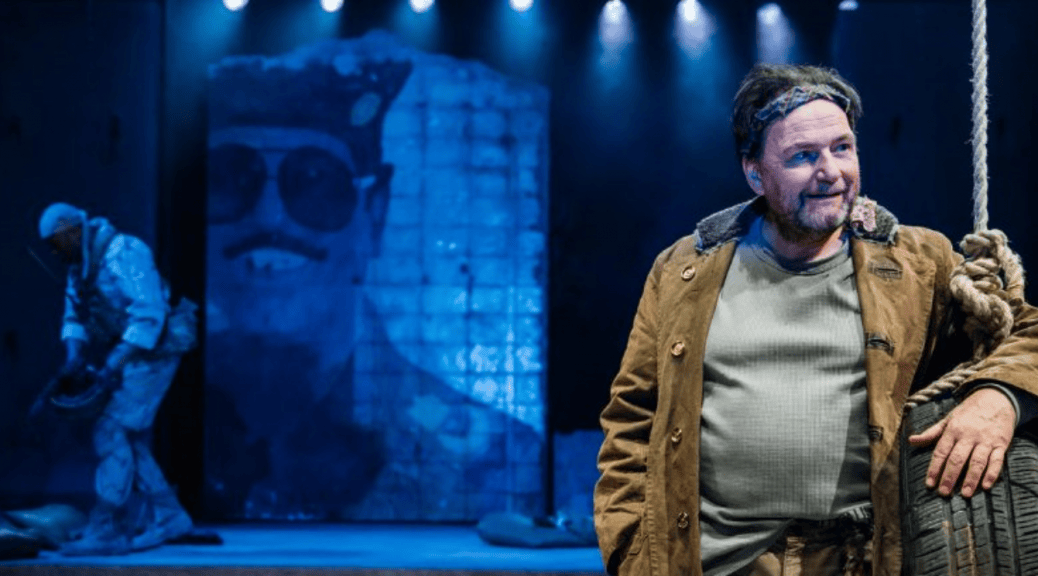
The most notable spectre is the tiger himself, the most interesting character by far, and the play lags too much when he isn’t around. In the afterlife, the tiger becomes philosophical and brings a lot of discussion about nature and religion to life. Peter Forbes is fantastic in the role, his achievement all the more impressive given that he took on the part at the last moment (due to the indisposition of David Threlfall and after Kathryn Hunter filled in on press night).

Forbes gets laughs too but, overall, there are problems with the play’s humour. Not that it is too dark, which is to be expected, but that it is repetitious. Sayyid Aki has a good go at Uday, his caricature bringing a welcome break in the pace. But too much time is taken up with crudity and poor jokes about language differences. The problem is in keeping with a script that is too laboured, even if Elerian does a great job of injecting speed.

It isn’t that the metaphors here are bad, more that they are overused. I guess it’s easy to counter that there is nothing subtle about war. But Joseph struggles to tell us anything new. That war is bad and trauma has an impact are important lessons, but ones few can say they haven’t heard before. The frustration is that nobody seems to listen. I think the tiger would agree – but Joseph doesn’t explore this.

Until 31 January 2026

www.youngvic.org.uk

Photo by Helen Murray

“Alterations” at the National Theatre

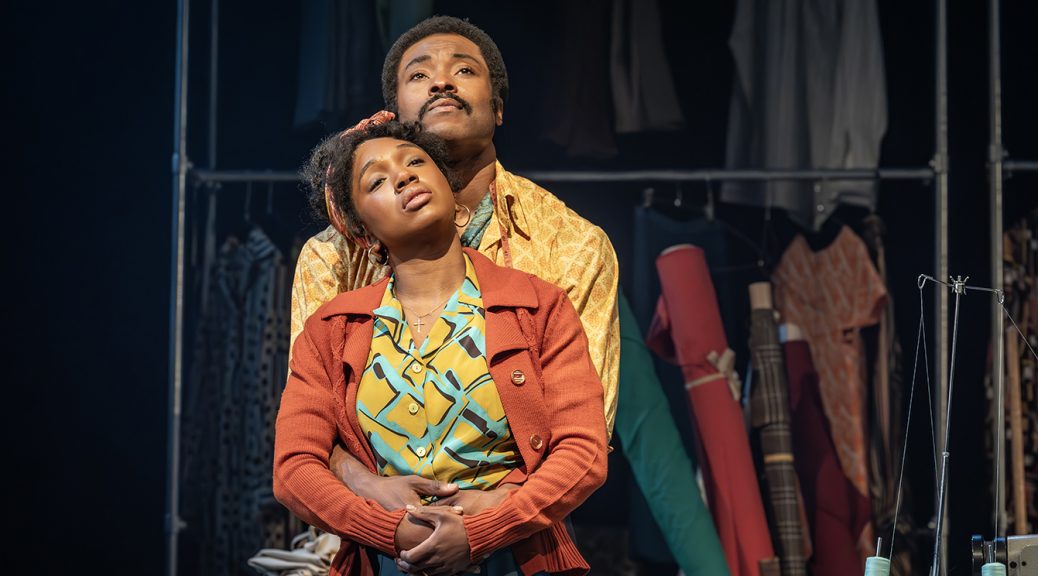
Michael Abbensetts’ play, revived via the Black Plays Archive project for the first time since its 1978 premiere, is easy to commend. The script, with additional material by Trish Cooke, is neat. Abbensetts has important things to say and says them well. The action is tight, following West Indian immigrant Walker Holt over the course of his “make or break day” as he works to secure his own tailoring business.  

This is an ‘issues’ play, reportedly inspired by the Kitchen Sink school, with plenty of detail about the racism that Holt and his friends face. Abbensetts’writing is nuanced, with a love triangle subplot that provides an impressively strong female perspective. Its thorough, well-rounded characters are impossible not to care about. 

With such a strong base, it’s no surprise, yet still an achievement, that the acting is superb: sure-footed, impassioned and enjoyable. Led by Arinzé Kene as Holt, who is a commanding presence, his character’s employees, played by Gershwyn Eustache Jnr and Karl Collins, are superb as they tackle their difficult boss and reveal complex dynamics. Cherrelle Skeete is excellent as Holt’s long-suffering wife, a powerful role that manages to challenge his dominance. All the cast bring out the considerable humour in the piece.

Gershwyn-Eustache-Jnr-Raphel-Famotibe-and-Karl-Collins-in-Alterations-at-the-National-Theatre-credit-Marc-Brenner
Gershwyn Eustache Jnr, Raphel Famotibe and Karl Collins

There’s plenty to like and caveats are small. Some movement (credited to Shelley Maxwell) could be sharper and – take your pick – more naturalistic or more stylised. Here, we have an in-between that’s occasionally messy. The set and costume design from Frankie Bradshaw is undoubtedly accomplished. But I wasn’t sure if the garments rising and falling were connected to Holt’s daydreams and working it out was distracting. And the revolving stage feels unnecessary as the action is set solely in a Carnaby Street workshop. Too much time is taken trying expand the play. This includes a contemporary figure who makes random appearances and feels a forced effort to give the work relevance since Abbensetts already provides a youthful perspective with the character of Courtney, depicted skilfully by Raphel Famotibe. 

There is a sense that Lynette Linton’s usually excellent direction is effortful, excessive. The script doesn’t need the help the production thinks it does as the play opens up by itself. As well as racism, Abbensetts targets capitalism. The price to pay for Holt’s hard work is the loss of love. His happiness is sacrificed in a search for security. That Holt is warned off his ambitions (by another immigrant, Mr Nat, played by Colin Mace) and seems to recognise his mistakes makes the play a tragedy. The changes referenced in the title must start with the personal – a strong idea that doesn’t need overplaying.

Until 5 April 2025

www.nationaltheatre.org.uk

Photos by Marc Brenner

“Misty” at the Trafalgar Studios

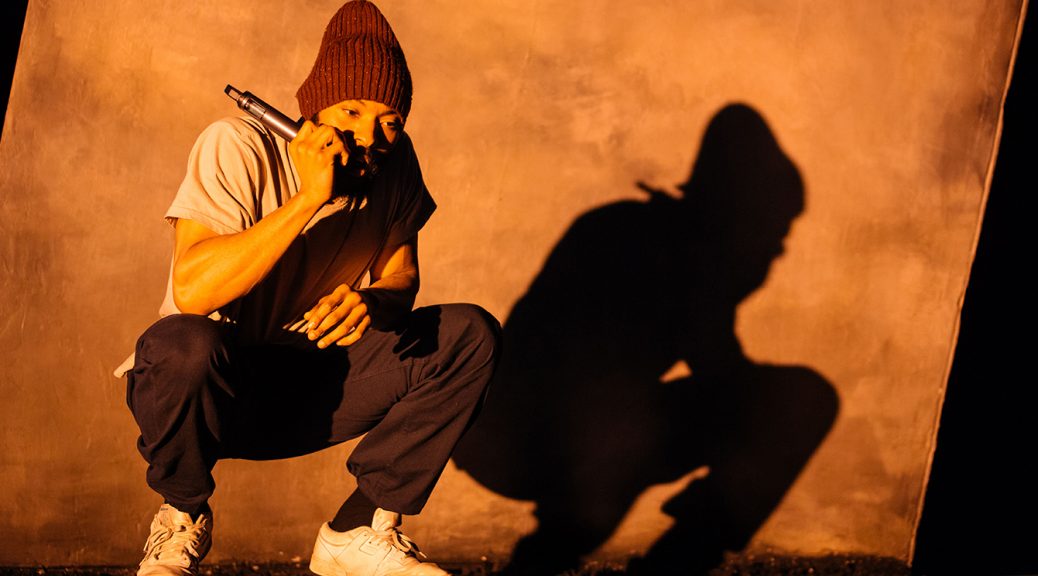
There are two sides to Arinzé Kene’s hit transfer from the Bush Theatre. It’s the story of a young criminal who attacks someone on a night bus. And it’s the story of Kene himself, writing the show and defending his art. While one character is on the run from the police and ruminating about the home he may be forced to leave, our author is questioning whether his story perpetuates stereotypes and angry at the responsibility writers of colour are burdened with. Mixing the stories together makes for an original work whose rave reviews testify to its popularity.

The show’s novelty, all the more impressive now that it’s in the West End, is to combine songs, poetry and spoken word. It’s called ‘gig theatre’, and director Omar Elerian deserves praise here, as it would be easy to feel lost. And designer Rajha Shakiry, working with lighting and video from Jackie Shemesh and Daniel Denton respectively, produces visuals worthy of any art gallery. Along with the singing and acting skills of Kene himself, there’s a suspicion that performance and production are slightly better than the play. No matter, as the show works superbly.

Misty is unmissable for its central performance: Kene has real star quality. This isn’t a one-man show, and there’s strong support from musicians Adrian McLeod and Shiloh Coke, who also appear as friends of the playwright. And a superb role for a child actor as Kene’s older sister (not sure why). But all eyes are on Kene and there’s seemingly nothing he can’t do, whether cry or laugh. His physicality is remarkable and his singing voice unique.

Back to that parallel narrative – the making of the play and the story itself. My preference was for the simpler. The tale of Kene’s intriguing friend is moving, in particular scenes imagined with his sister. When it comes to the process of making the play, the issues raised are valid and important. But that this introspection becomes anguished and intrusive – which is part of the point – is nonetheless frustrating. The traditional narrative could be developed so easily – omitted details are much needed – and it would have been great to see more. But that’s another demand on the writer, hopefully sincerely motivated on my part. Kene’s point is about artistic freedom and, given the achievement here, it’s difficult to argue with him.

Until 20 October 2018

www.bushtheatre.co.uk

Photo by Helen Murray.

“One Night In Miami…” at the Donmar Warehouse

Kemp Powers’ play touches on the depressingly topical struggle against racism with calm sophistication. Placing four iconic African-Americans of the 1960s in one hotel room – each of them at a pivotal moment in their lives and with the US on the brink of change – it’s a brilliantly simple and effective device to examine individual legacies and question how much progress has been made regarding civil rights.

Francois Battiste as Malcolm X.

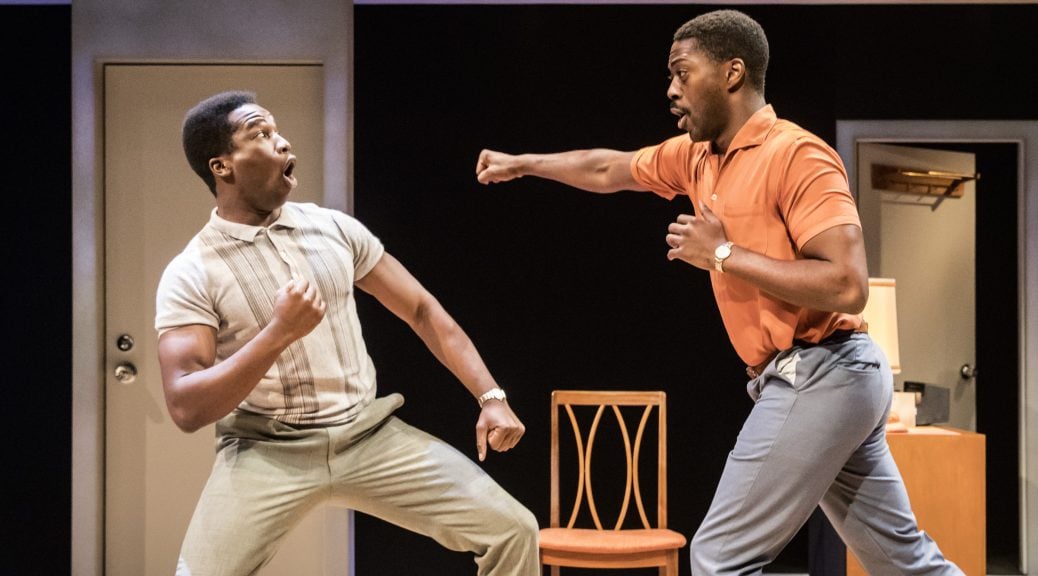
Fresh from winning his fight against Sonny Liston, Cassius Clay is about to become Muhammad Ali. Sope Dirisu gives a show-stealing peformance conveying the young man’s charm and naiveté. Clay is meeting with his mentor Malcolm X, performed by Francois Battiste with control and precision. The activist is keen on claiming prize conversions to Islam but political troubles are the tense undertone, as the bodyguards outside the door remind us.

The two are joined by football star Jim Brown and legendary musician Sam Cooke. Both are secular, independent thinkers, about to branch out into acting and political song writing, respectively. David Ajala plays Brown, easily carrying complex arguments with a deft touch of down-to-earth humour. Arinzé Kene takes the part of Cooke, conveying a fierce articulacy and with a few snatches of singing that display an exceptional voice.

Director Kwame Kwei-Armah knows what a treasure this script is and paces it judiciously, treating it with respect. The relationships are woven like an intricate dance. Tempers flare but the friendship here is firm, providing a realistically casual tone with plenty of banter. Ideas come to the fore, with a streak of melancholy around “self destructive dreams” that endanger all four. With race, politics and religion all linked with questions of celebrity and influence, this is an articulate, intelligent and educative night to remember.

Until 3 December 2016

www.donmawarehouse.com

Photos by Johan Persson