Tag Archives: Pete Malkin

“It Walks Around The House At Night” at the Southwark Playhouse

If you like a good ghost story, then this is for you. Tim Foley’s play uses traditional elements, such as a haunted house and creepy strangers, but brings them smartly up to date and provides plenty of unexpected turns. Neil Bettles’ direction is tight and the production – with lighting, video and sound design from Joshua Pharo and Pete Malkin – first class. Best of all, It Walks Around The House At Night embraces the stage and live performance, proving there’s nowhere better than the theatre to get a good scare.

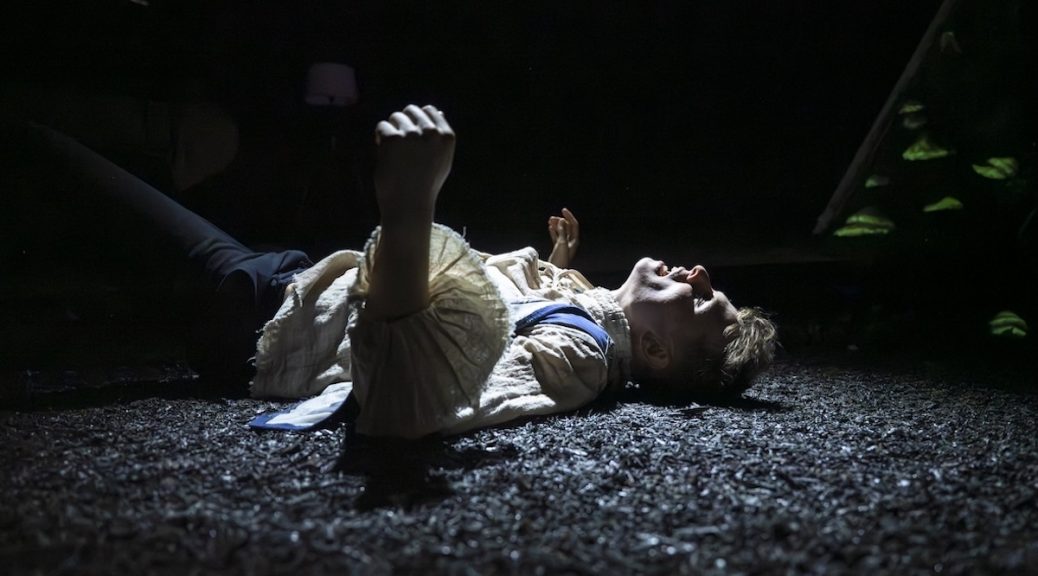
Foley gives us a very contemporary narrator called Joe and George Naylor makes the most of the role. At first, he brings out a lot of humour, some of it surprisingly gentle (Naylor is hugely endearing). But there are depths here that provide shocks and make the character fulsome. An out-of-work actor and writer, Joe is hired to perform as a ghost at a haunted house. The neat scenario turns sinister quickly and in every way you might imagine, including a potential romance between actor and producer. The steps to increase tension are piled on and add excitement as the ‘ghost’ walks night after night.

Foley’s structure is strict, with a firm knowledge of the genre – a creepy painting and picnic, as well as hallucinations, are always good. But he appreciates the importance of clever twists. So, the jump scares are grand and the spooky details effective, but it’s the addition of dance that is most welcome. I’m not quite sure about an obsession with class, although it’s a clever observation that “those bastards in their mansions” do feature large in supernatural stories. But the chip on Joe’s shoulder, while understandable, isn’t as eloquent as the rest of the play.

That shouldn’t stop anyone from enjoying such strong writing. Foley builds momentum deliciously and Bettles controls the action while Pharo and Malkin rise to the clear ambition. The action gets more physical and Naylor, joined by dancer Oliver Baines, pull off some very neat moves. Concern about the fate of Joe’s ex-boyfriend and the vivid inclusion of his friends, none of whom we see, indicate how wrapped up in the story I became. By the end, there are fewer effects. The team knows the need for them subsides – a storyteller on a stage is enough.

Until 28 March 2026


www.southwarkplayhouse.co.uk

Photo by Tommy Ga-Ken Wan

“The Death of England: Delroy” at the National Theatre

While its back catalogue of broadcasts from NTLive was a blessing during lockdown, being back on the South Bank for a show in real life is the real deal. For those lucky enough to have caught the brief window of performances, before a second closure, this new play by Clint Dyer and Roy Williams was a very special occasion.

An introduction from creative director Rufus Norris, justifiably proud of his theatre getting back into action, added to the atmosphere. The caution shown around protecting customers is clear: there are allocated tables before being taken to seats and – beware – last orders for pre-show drinks is in the afternoon.

What of the play selected to welcome theatre devotees back? As well as the important subject matter of racism, Death of England: Delroy is topical. After seeing shows years old, it’s good to be reminded of how quickly theatre can respond to current concerns.

A sort of sequel to their show last year, Dyer and Williams develop a character mentioned in their previous monologue, Death of England. Recounting a “very bad day” Delroy has had – quite randomly – this likeable character runs into trouble with the police. Serious consequences include estranging him from partner and new-born child.

The show provides a starring role for Michael Balogun who is superb. It’s amazing to learn he was drafted into the project last minute. A rapid-fire delivery shows remarkable confidence with the script. And his level of energy over 90 minutes is astounding.

Welcome as the show is, it would be wrong to say it’s perfect. The Olivier is an unforgiving space at the best of times and the Covid-reduced seating feels particularly detrimental. All the more credit to Balogun for creating an atmosphere that ranges from convivial to confrontational.

The unusual conditions can’t be avoided. But Dyer’s direction creates problems too. It’s understandable that all aspects of design (the set by Ultz, lighting by Jackie Shemesh and sound by Pete Malkin) want to show off what the National is capable off. Like us, the team is thrilled to be back in the theatre. But does this show need any extras? Loud, dazzling, effects and some pretty naff props (including an explosion of confetti) are not needed with such a strong script.

Because the text itself really is excellent. The bravura language, which Delroy aptly describes as a “riot in my mouth” is provocative and funny. The ease with which ideas are raised is impressive, including arguments both enlightening and far-fetched (a motivation for voting to leave Europe is worth a raised eyebrow). There’s anger alongside a cool recognition of “colour class bullshit” that pervades all aspects of Delroy’s life. Putting the spotlight on privilege couldn’t be more timely; Dyer and Williams are experts at it.

www.nationaltheatre.org.uk

Photo by Normski Photography