
Tag Archives: Francesca Mills

“Hamlet” at the National Theatre

Believe it or not, there are people who aren’t sure if they like Shakespeare. This new production – boasting exceptional clarity – goes a long way to help them out. For his debut as deputy artistic director at the National, Robert Hastie makes Shakespeare action packed and accessible. Strong performances, with a lot of direct addresses, make every effort to bring the audience close to the performance.

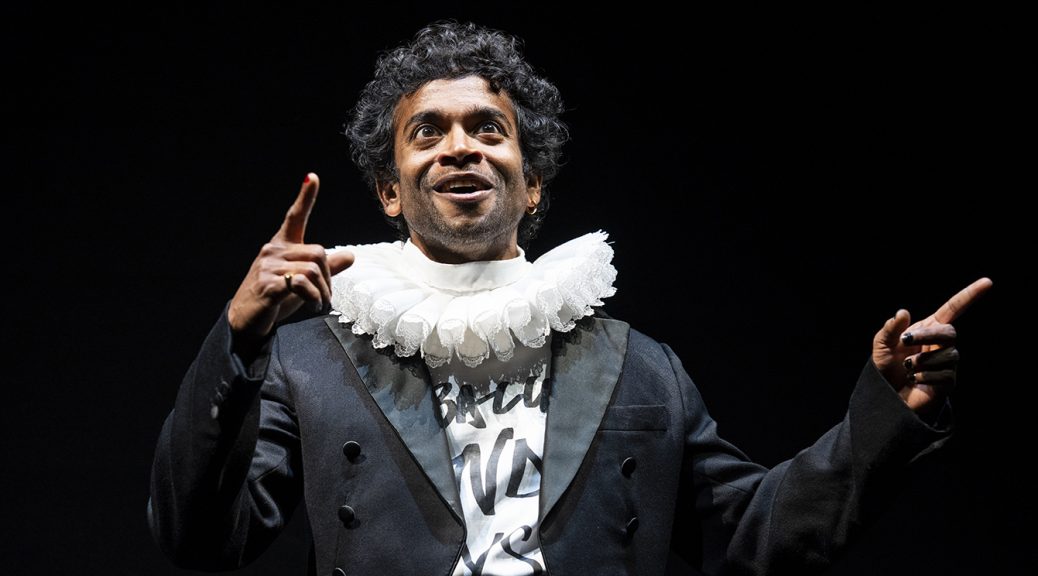
Taking the title role, Hiran Abeysekera leads the way. This is a nimble Hamlet, clearly clever and confident enough in his intelligence to show when he doesn’t know something. But he’s still the philosopher prince. He wants to discuss with us, to share confusion about parts of the play that puzzle him (and, of course, us). This isn’t always subtle – eyes roll and make contact with the crowd rather a lot. But it does make this one of the most likeable Hamlets I can remember.
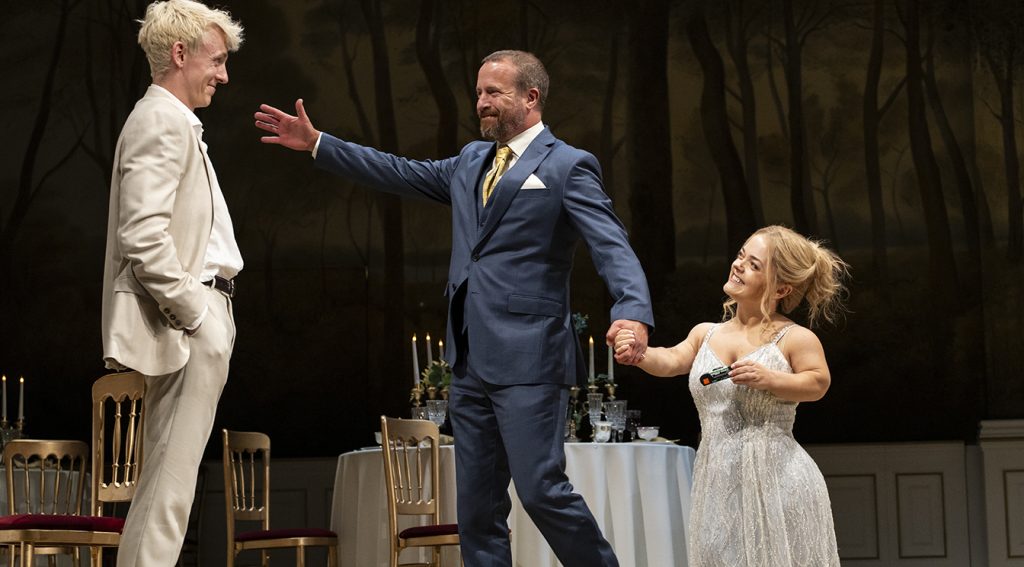
Hamlet-Tom-Glenister-Geoffrey-Streatfeild-and-Francesca-Mills-credit-Sam-Taylor
Tom Glenister Geoffrey Streatfeild and Francesca Mills

Indeed, most of the characters are more appealing than usual. Polonius (Geoffrey Streatfeild) isn’t quite the old bore we are used to – his kids joke with him and their warm family dynamic is a nice contrast with the rotten royals. Francesca Mills has a fine time as Ophelia, bringing fun and energy to her early scenes. The chemistry between the siblings is strong and Tom Glenister’s Laertes comes close to heroic (he literally has a hand in killing the King). Joe Bolland and Hari Mackinnon play Rosencrantz and Guildenstern as foppish public schoolboys… you might even feel sorry for them. Getrude’s change of heart is as rapid as her remarriage and Ayesha Dharker in the role also adds to how easy the whole production is to follow. Even Alistair Petrie’s Claudius, the clear villain of the piece, is more remorseful than usual and it’s hard to shake the impression that he’d be quite a good king.

The question will be asked – is Shakespeare being dumbed down? I don’t think so. It is true that there are few startling revelations and departures for those that know the play. But the edits are judicious and, with the exception of the music, there’s nothing silly or salacious here. Hastie has clear ideas that are executed well, with a wish to entertain his audience. There are no gimmicks – itself, a novelty – just a lot of good work.

Until 22 November 2025

www.nationaltheatre.org.uk

Photos Sam Taylor

“The Two Noble Kinsmen” from Shakespeare’s Globe

Grateful as I am for the various shows put online during lockdown, this one made me sad! Of course, this was never the intention behind Barrie Rutter’s fine production, but it only serves the truth that filmed versions highlight how much better live theatre is and why we miss it so much.

Having seen the show ‘for real’ and being happy to watch it again indicates the strength of Rutter’s work. This is far from Shakespeare’s finest play: written with John Fletcher, the love-at-first-sight romance seems ludicrous, the characters schematic and the themes of honour silly. If it weren’t for beautiful poetic moments (and the fact he isn’t guiltless of all three problems elsewhere) you’d question whether Will had anything to do it.

There is still a grandeur behind Moyo Akandé and Jude Akuwudike, who play Hippolyta and Theseus, showing us courtly concerns with a touch of humanity. And Ellora Torchia does well as the princess who has to choose between the titular heroes – one of whom will die – showing an appropriate incredulity as well as sensitivity. Staying centre stage when the final fight goes on, this “maiden-hearted” bride-to-be proves fascinating. The kinsmen, played by Paul Stocker and Bryan Dick, are great – suitably dashing but also funny – with a similar knowing air behind the performances. But, on film, none of this talent is quite enough to make it all engaging.

The camera shows up all the text’s troubles. Stripped bare, without the atmosphere of the theatre, the play drags and all the work done to inject energy or touches of cynicism is lost. The excellent treatment of “country pastimes”, including a fantastic dance, sounded much better live and were full of details lost in the filming. One criticism stands: the unrequited love of the jailer’s daughter (Francesca Mills), which literally drives her mad, is played too much for laughs. And on a screen this poor version of Ophelia feels even colder and crueller.

The biggest problem is that, with the camera dictating what we see, a sense of momentum doesn’t come across. With characters “beyond love and beyond reason”, it’s necessary to drive the action along, which Rutter did with distractions including music and musicians. It made for an effective night out. Nobody wants our theatres open again more than those who work in them, and this show reminds us how much better it is to see plays where they belong.

Photo by John Wildgoose

Available until 17 May 2020 on globeplayer.tv

To support, visit www.shakespearesglobe.com