All posts by Edward Lukes

“Titanique” at the Criterion Theatre

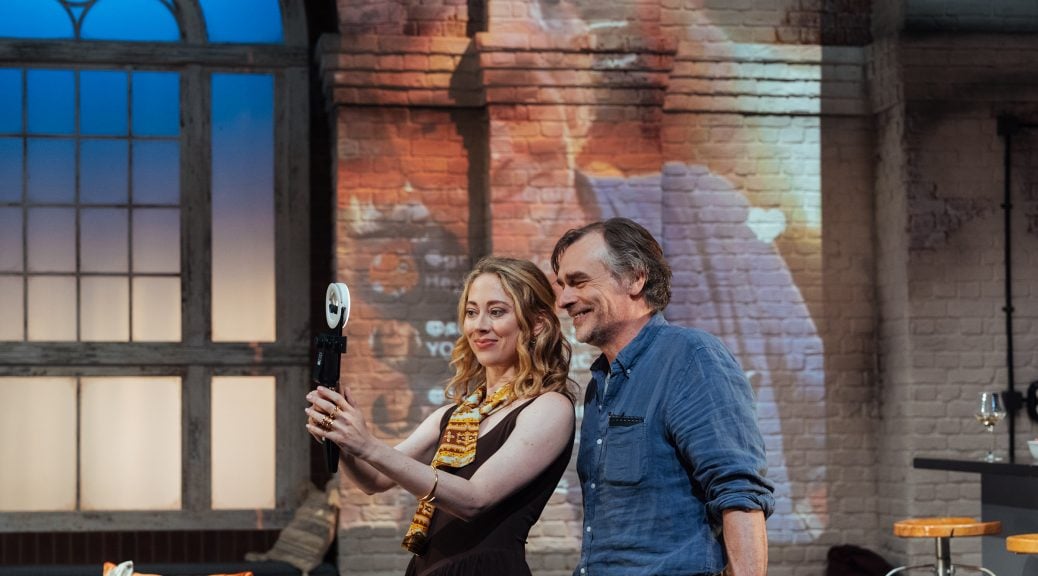
Tye Blue, Marla Mindelle and Constantine Rousouli’s hit show has a new cast. With Olivier Awards on board and booking until January, any scepticism about a show that sends up Celine Dion and the movie Titanic should be swiftly sunk. And, anyway, if you scoff at silliness, this one isn’t really for you – Titanique is one of the most absurd things you can see, and very funny indeed.

Presenting two stories of what happened on board the doomed ocean liner, including reenacting the romance between Jack and Rose from the film, all with songs by Dion is, frankly, a lot. There’s so much scope for jokes that it all feels, er, a little choppy. Blue’s direction enhances the energy and more gags are added that are sometimes tasteless and often rude, encompassing news events, pop culture and, for this UK version of the Broadway show, quite a lot of EastEnders. While some jokes are so old they hum, the sense of surprise is great, with moments where you check yourself at how mad it all is. 

This much foolishness is actually hard work. The musical adaptation of Dion’s hits, by Nicholas James Connell, is smart. And the strong cast makes light work of a demanding routine. While Luke Bayer and Hiba Elchikhe, as Jack and Rose, feature heavily, all get plenty of moments to (over)act including Tosh Wanogho-Maud as a seaman (yes) and Tina Turner-as-an-iceberg (there’s hyphenation I never thought I’d need). Surely, it’s hard to sound this good with your tongue so firmly in your cheek? Let alone all the eyerolls and Ellenore Scott’s choreography. 

The show is buoyed by the performance of Astrid Harris as Dion herself. An exaggeration as much as an impression, she gets laughs at every moment. And the show is neatly coy about Dion’s appeal – she’s made fun of, sometimes a little cruelly. But the acerbic propels the show. And such humour is leaned into by Carl Mullaney, who plays Rose’s mother with a fantastic rant and highly effective slips into a British accent. A lot of Titanique is reminiscent of a (very good) drag act – there are enough references to RuPaul, after all – giving it a neat niche that should keep it afloat for a long time.

Until January 2026

www.london.titaniquemusical.com

Photo by Mark Senior

“Brigadoon” at Regent’s Park Open Air Theatre

“Brigadoon” at Regent’s Park Open Air Theatre

Lerner and Loewe’s show is the kind that people who don’t care for musicals dislike. From the Golden Age of the genre, even with adaptation by playwright Rona Munro, it feels old-fashioned. There are people bursting into song and dance, of course, and all in a mystical village that only appears every century. And there’s little plot to the tear-jerking romance. But director Drew McOnie leans into the hopeless romanticism with abandon. This rare revival is a quality one.

Even if you can let the twee setting – that Munro tries to make interesting – go, the characters are a struggle. It’s hard to claim anyone in the story has depth. But the cast sound good (if a little too keen to bring out accents) and give it their all. The humour is so dated it is dire. The role of Meg shows the problem, despite a spirited performance from Nic Myers, with her flirtation coming across as unhinged.

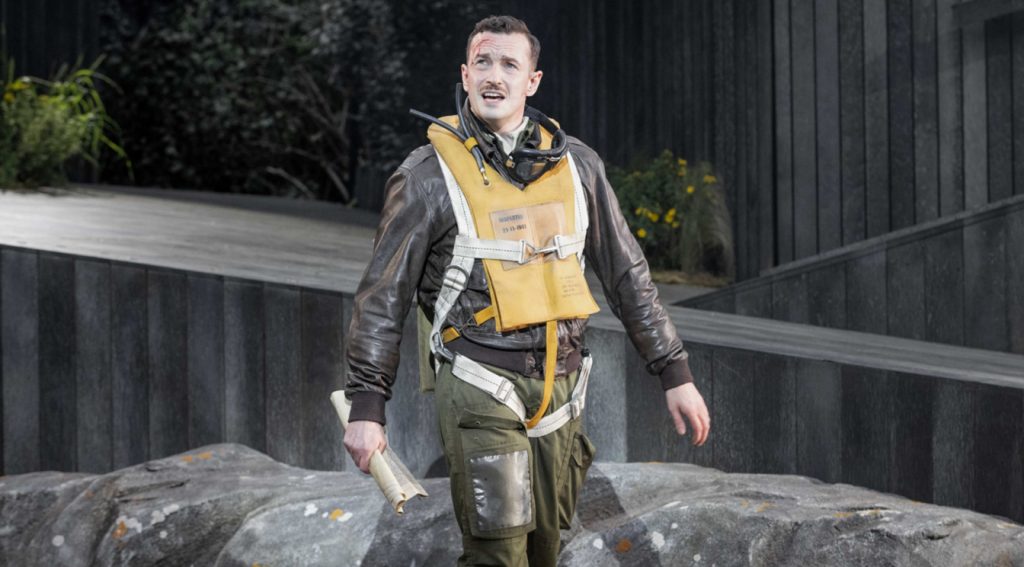
You’d have a hard heart, though, not to be swayed by the pairs of lovers on offer. Louis Gaunt portrays GI Tommy with suitable machismo. Opposite him, Georgina Onuorah makes Flora (a role she will alternate with Danielle Fiamanya during the run) falling in love at first sight convincing. The chemistry is great. As the younger couple, Charlie and Jean, Gilli Jones and Jasmine Jules Andrews hold their own and it’s all very sweet. Both are exciting performers, the former making a tremendous professional debut.

Cavan Clarke at GI Jeff in Brigadoon
Cavan Clarke

To be fair to Lerner’s book, and Munro’s updating, there’s a lot of love lost in the show, including a tragic ending. It’s a shame this disappointment doesn’t make it more moving. Still, there’s a stronger than most role for Cavan Clarke, as the more cynical GI Jeff. And the lovelorn Harry means that Danny Nattrass can shine. Both could be viewed as villains – it is creditable that this doesn’t happen.

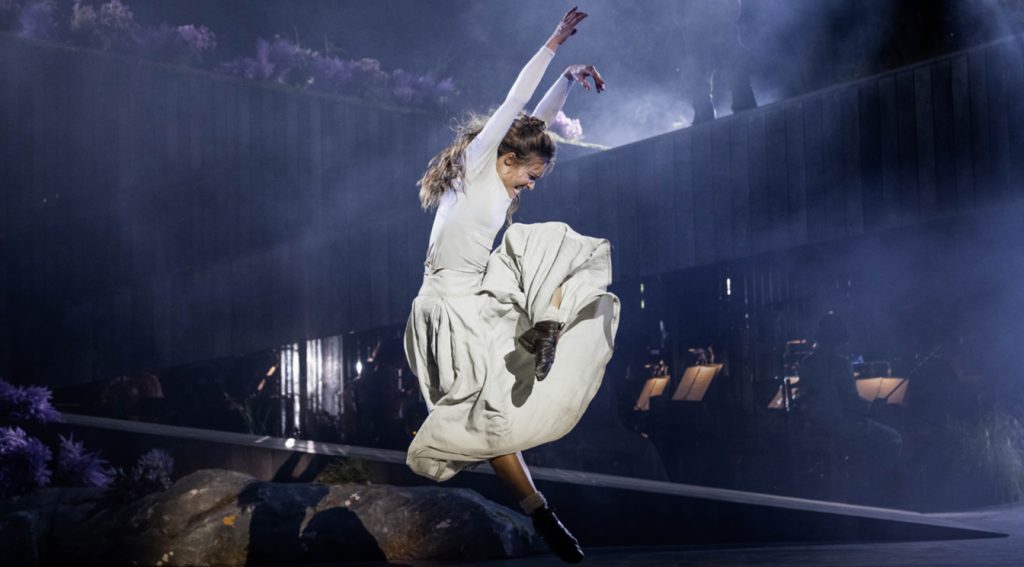
The songs are lovely, if also old-fashioned. The lyrics take a back seat. Musical director Laura Bangay ensures a big sound (well done on the bagpipes and drums). As Nattrass illustrates, the strongest part of the production is the choreography. Given the show’s original date, the amount of dancing isn’t a surprise and, of course, this is McOnie’s forte. 

Chrissie Brooke in Brigadoon at Regent's Park Open Air Theatre
Chrissie Brooke

On a surprisingly constrained stage (Basia Bińkowska’s set has ramps, used to great effect) wonders are worked. And lyrical gestures look stylish, aided by Sami Fendall’s costumes. But scenes of violence are even more impressive. Harry breaking up a wedding, the chase scene and a Ghillie Callum (I looked that one up) are all superb. And time is taken over subsequent grief – praise for Chrissy Brooke here.

There are breathtaking moments, although probably not enough to make any converts, but Brigadoon is certainly worth a visit.

Until 20 September 2025

www.openairtheatre.com

Photos by Mark Senior

“A Man For All Seasons” at the Harold Pinter Theatre

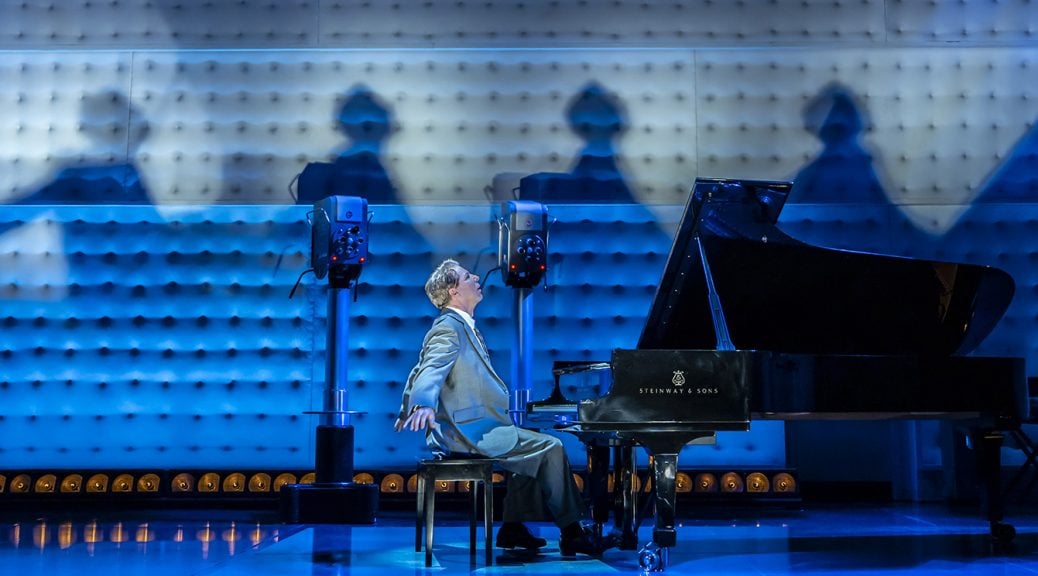
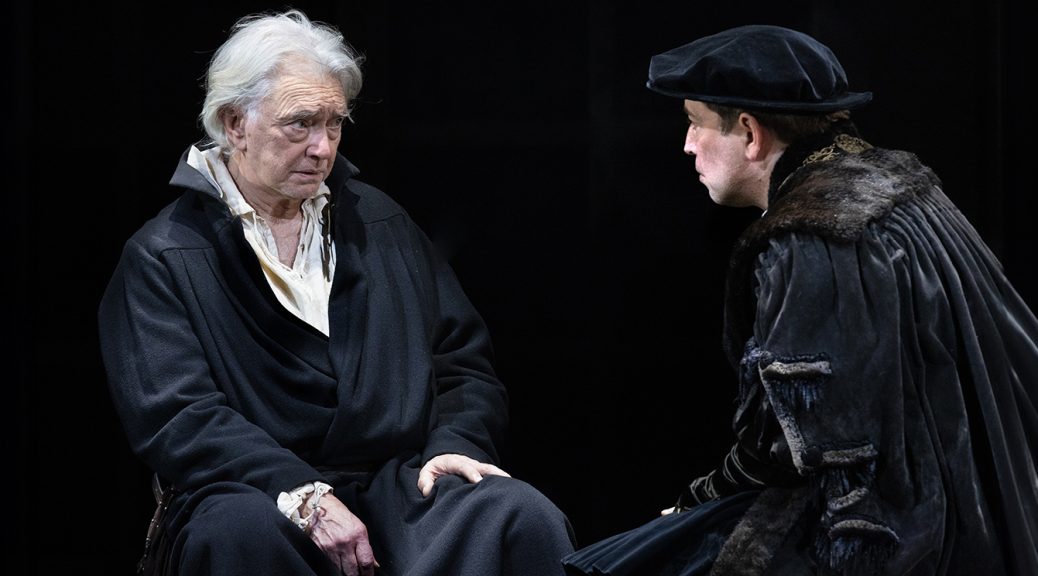
Casting Martin Shaw as Thomas More for this revival of Robert Bolt’s play is a sound move. As the lawyer-turned-politician, struggling against Henry VIII’s Reformation, the character possesses personal conviction and precise argument. Shaw can deliver both integrity and clarity very well, aided by great stage presence. And he brings a sense of the outsider, with a wry eye and cool common sense, that is perfect for the role.

Famous faces from the Tudor court are present, with a large, competent, supporting cast. I liked Orlando James’ brief appearance as Henry VIII; a figure to fear making fun of. And Edward Bennett’s Thomas Cromwell has a mix of cynical humour and, again, fear, that adds to the role. 

With Jonathan Church’s smooth direction, and a stylish set from Simon Higlett, the production is a quality affair. But Bolt’s 1960 script hasn’t aged well, and cracks show. 

Most of More’s family fail to rise above being foils for the great man. It’s understandable, as there’s a lot of exposition and explanation to get through. More’s recalcitrance is a puzzle for most of us; what does he achieve from his silence? Wife, daughter and son-in-law are only there to put forward different arguments. At least they convince with regards to the affection among the family.

The role of the ‘Common Man’, arguably innovative in Bolt’s time, proves a further problem. While Gary Wilmot has a good go at the role, injecting plenty of energy, the jokes are poor and the insights weak. And is the play’s baddie, the dastardly Richard Rich, who Calum Finlay does well with, too bland?

Rewriting history isn’t new. More participated himself, with regards to Richard III, as Josephine Tey’s detective in The Daughter of Time points out. It’s often fun and right now its trendy. But this effort to look at the past feels old-fashioned itself. Bolt’s efforts are sensible and considered but also dry. And he comes too close to canonising More a second time. We may admire the saintly sangfroid, but it doesn’t add tension. The history lacks bite – it’s too calm. Which you might respect but ends up surprisingly lacking in drama.

Until 6 September 2025

https://www.haroldpintertheatre.co.uk

Photo by Simon Annand

“Lost Watches” at the Park Theatre

There are plenty of ideas and nice touches of absurdity in Lorenzo Allchurch’s new play. Overall, both cast and crew have bitten off more than they can chew – there are too many scenes that need to be expanded or abandoned, too many themes thrown in and not elaborated. But if the play seems a little lost at times, it is one that wins for its efforts and a production I felt warm towards.

Our hero, Allen, is in mourning for his mother. Allchurch, who takes the part, doesn’t ground his play enough in this grief nor, despite his appealing stage presence, establish the central character sufficiently. Allen’s family relationships are complicated (and dramatically interesting) but we only get to see his brother and father briefly, and that they are both played by Gabriella Moran does not help. It’s all directed just a little too fast by Alex Helfrecht.

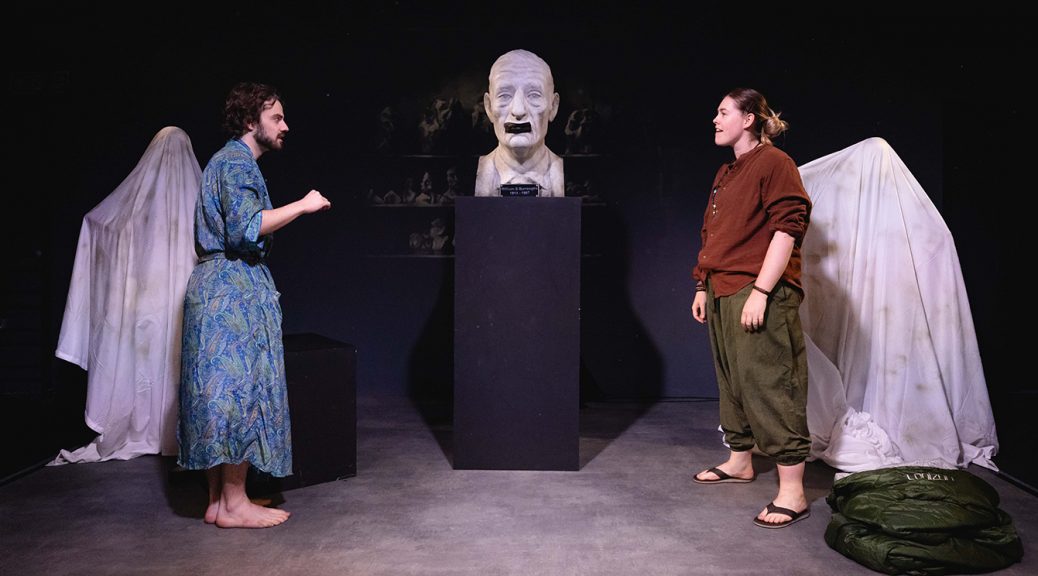
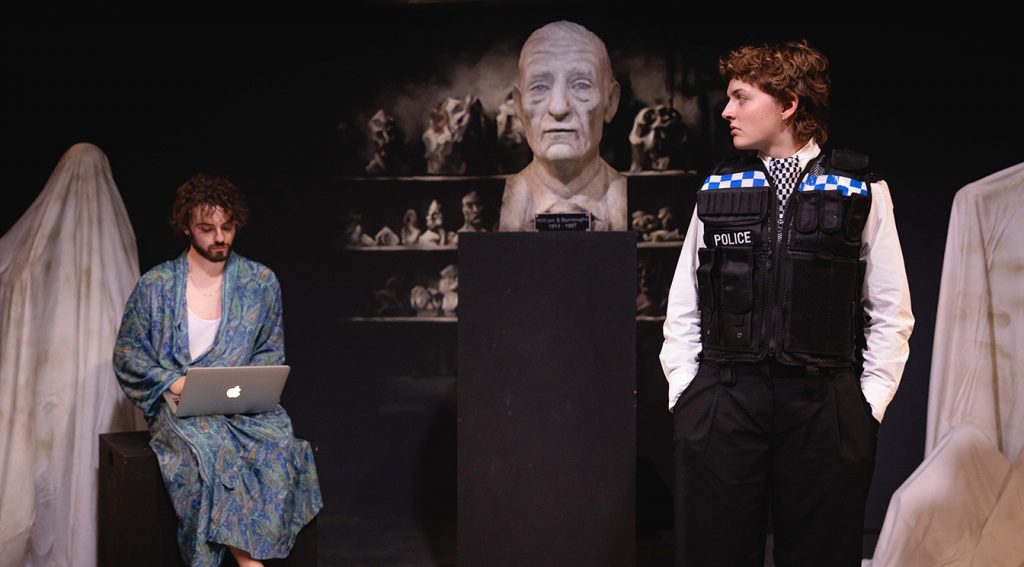
The play’s crazy twist is good, though. Allen’s mother was a sculptor, her favourite piece a portrait of Beat icon William S Burroughs. And the artwork, voiced by Jason Isaacs, starts to talk! Allchurch pulls off the tricky interaction with a recording very well. Borough’s sense of mischief and anarchy is convincing, though I wonder if it could have been taken further, made darker? Exactly how much of his sanity Allen has lost is left nicely open.

Lost-Watches-at-the-Park-Theatre
Lorenzo Allchurch and Leah Aspden

Moran, who is a busy woman, also appears as the mother, a stronger role with a nice line in enigmatic and glitter in her pockets that proves effective. And there’s a neat comic part for Leah Aspden as a policewoman who meets, but doesn’t quite help, our hero. It’s too easy to speculate that the show might have focused on this duo more – suggesting Alan’s past and, perhaps, his future.

Not everything needs to be tied down, but it is annoying that so little is made of the watch that gives the play its title. It’s another loose end that leaves a sense of having missed something. Lost Watches aims at balancing a sense of magic with the absurd. It’s a task that’s harder than it sounds and, regrettably, not accomplished despite moments of potential along the way.

Until 23 August 2025

www.parktheatre.co.uk

Photos by Mark Senior

“Inter Alia” at the National Theatre

Following the huge success of the play Prima Facie, the pressure must have been on for writer Suzie Miller and director Justin Martin. So, what does the audience want next? More of the same is tempting – a contemporary, character-driven drama, with a star lead, and lots of after-show conversation. But something different, too, right? What might be called development? Much to Inter Alia’s credit, and new leading lady Rosamund Pike, both demands are delivered.

Inter Alia is – another – legal drama. And a fine one. This time our heroine, Jessica Parks, is a judge. She’s good at her job, too, compassionate and skilled at listening. She is aware of her privilege, appalled by rape myths, in charge and inspirational. The commitment Pike brings to the role is tremendous. Parks is a kind of rock star at work, microphone in hand, music backing her up. And there’s just as much energy at home and at play. She bounds around the stage and over the furniture. 

Inter-Alia-credit-Manuel-Harlan

If what happens next is a little too obvious, the character is strong enough to forgive it. Because the other thing Parks is very much amongst is being a wife and a mother. Miller has a keen, often amusing, take on the problems of juggling a career and parenting. Parks is, by default, the “primary carer” (groans of recognition from the audience). Despite her fears and funny blunders, she’s a good mum, too. Flashback scenes to her boy’s early years are highlights.

Unlike Prima Facie, this isn’t a solo show. We get to meet father and son, capably played by Jamie Glover and Jasper Talbot, respectively, and well-written, although the point is very much how Parks has to juggle these men’s egos. When it comes to multi-tasking, Pyke excels. Parks runs an internal dialogue and addresses the audience at the same time as playing against other characters. The delivery must be exhausting – it’s intense enough for a viewer – but the rewards are huge as we observe her getting close to the character and the complexity of her problems.

With Martin’s strong direction, the action and Miller’s insights are clear. The dilemma worked towards is a painful one. If exploration around what happens feels rushed, let’s call it a mark of how involved we’ve become with all the characters. To watch Park’s perfect – if frantic – life collapse isn’t easy. Any hope Miller allows is, I fear, too close to wish fulfilment. But that’s something to discuss after the show. In all, it’s an elaborate, nuanced and powerful play. 

Until 13 September 2025

www.nationaltheatre.org.uk

Photos by Manuel Harlan

“The Daughter of Time” at the Charing Cross Theatre

Imprisoned in a hospital bed, the detective in Josephine Tey’s 1951 novel decides to investigate the ultimate cold case – Richard III’s murder of his nephews in 1483. The history is fascinating. Tay, and this stage version adapted by M Kilburg Reedy, present the case in detail with a sense of excitement. But while the book was groundbreaking, its stage version is an unhappy affair. 

Thanks in part to Tay’s success, the idea of Shakespeare as a Tudor apologist is well established. We know Will did Rich dirty. So, it’s not a bad idea to add something new and Kilburg Reedy’s idea seems, roughly, to be a rom-com. It’s not a terrible notion, as it allows excuses for old-fashioned attitudes, leaning into a sweet spot of nostalgia. But for it to work, the love story needs to convince and the comedy make you laugh. The script and Jenny Eastop’s direction deliver neither.

With our hero, Inspector Grant, in bed for most of the show there’s an understandable concern about how to deal with such a static scenario – but it becomes an obsession for Eastop that has dire consequences. While Bob Sterrett’s set helps (and the idea of seeing some Shakespeare is good), the show has nurses and visitors coming and going for little reason and nobody arrives or leaves quickly enough. It all becomes tiresome. 

Daughter-of-Time-at-Charing-Cross-Harrison-Sharpe
Harrison Sharpe

A lot of effort is taken to plump out secondary characters but the results, and some of the performances, are poor. The three nurses are a case in point, being sketchy roles that only Janna Fox comes close to making work. The researcher Grant enlists to help him is lamentable, and the efforts to inject humour from notes on scraps of paper is poor from the start. As Harrison Sharpe, who takes the role, repeats the gag, I just felt sorry for him. There’s another poor effort that Noah Huntley has to deal with as the third in a faux love triangle (it’s a plot to make Grant announce his feelings), burdened by the unnecessary and heavy-handed suggestion that his character is gay.

A lot of this might be excused if the love story worked. While the casting of Rob Pomfret in the lead is sound, and his performance suggesting Grant’s depression has subtlety, Grant’s affection for actress Marta does not convince. Taking this role, Rachel Pickup has glamour – and her character’s hopes for respect as well as romance are a nice touch – but the chemistry and tension are weak. With the adaptation adding so little, you might as well stay home and read the book.

Until 13 September 2025

www.charingcrosstheatre.co.uk

Photo by Manuel Harlan

“Sing Street” at the Lyric Hammersmith Theatre

Given the pedigree behind this new musical, the result is, regrettably, disappointing. The idea isn’t a bad one. As with the smash hit show Once, it is based on a film by John Carney and the book is by Enda Walsh. Schoolboy Conor forming a band to impress a girl provides a sweet enough coming-of-age story with plenty of 1980s pop music that introduces new songs and has nostalgic appeal. But the show is slow, and director Rebecca Taichman does the energy on stage a disservice.

The new songs, by Carney with Gary Clark, are good and the format brings some coherence. Indeed, favourable comparisons can be made with ones from the period, which are interspersed in a tiresome fashion that slows down the action. Maybe some of the best sound a little like those from Once with the same sincere lyrics and homespun wisdom, but that’s OK. The bold move of making the schoolboy band’s first effort deliberately poor – and plenty of appealing humour (the influence of The Cure is very funny) – is all winning.

The romance between the lead singer Conor and his muse, Raphina, is good. Performed by Sheridan Townsley and Grace Collender with a sense of excitement, they both bring charm and energy using Bob Crowley’s minimal set well. Townsley and Collender sound like stars already and it’s impossible not to wish them the best. So, why my reservations about the show as a whole?

Sing-Street-Lyric-Hammersmith-Adam-Hunter-credit-Manuel-Harlan
Adam Hunter

There are big problems for the rest of the cast. The other schoolboys don’t stand out – a pity as that clearly wasn’t the intention and a shame as there’s plenty of talent (note Jack James Ryan’s bully Barry). Even worse, Conor’s parents, who are divorcing, his agoraphobic brother and under-pressure sister are too easy to forget and hard to care about. And it isn’t for lack of time spent on the additional storylines, which are drawn out. Brother Brendan’s song is a tiresome case in point, despite a powerful effort from Adam Hunter in delivering it. 

The time spent away from the kids’ story gets messy, culminating in another brother, Brother Baxter, Conor’s school teacher at his religious school. Lloyd Hutchinson, who takes the part, must shoulder any resentment towards the Catholic Church solo. And, not surprisingly, it’s too much for one man. The effort to make his character complicated is so tokenistic that it is close to insulting.

Staying close to the original film is important in a project like this – it’s what a lot of the audience wants. And plenty of the movie’s charm is preserved through the sounds and the central characters. But the result here is bloated and delivers far less than the considerable effort on offer might have produced.

Until 23 August 2025

www.lyric.co.uk

Photos by Manuel Harlan

“That Bastard, Puccini!” at the Park Theatre

A music critic as well as a playwright, James Inverne’s knowledge benefits his new play. The story of ‘the battle of the Bohèmes’ – rival operas by Giacomo Puccini and Ruggerio Leoncavallo – that captivated Italy in 1893 is full of facts and insight into the music of the time. Inverne packs the story with juicy anecdotes, making it entertaining throughout.

The clever move theatrically is to have the three main characters (Leoncavallo is joined by his wife Berthe) all fully aware they are on stage and telling the story. The idea is tackled well by director Daniel Slater, adding humour and enabling the cast to shine. As Berthe accuses Puccini of “taking advantage of the mise-en-scène” it’s clear what a great device this is to show how close the rivals were.

That-Bastard-Puccini-Sebastien-Torkia-credit-to-David-Monteith-Hodge
Sebastien Torkia

Puccini takes the lead in narration. He’s the one saying which scenes they should show the audience, morphing into different characters (his Mahler is a hoot) if needed. In the role, Alasdair Buchan has the maestro’s confidence down pat, alongside an unattractive wish for the next “rush” that propels the show. Sebastien Torkia is just as strong as Leoncavallo, with comic skills bringing out the character’s dramatic side – he could be in an opera let alone write one.

That-Bastard-Puccini-Alasdair-Buchan-credit-to-David-Monteith-Hodge
Alasdair Buchan

In a nice touch, Inverne allows Lisa-Anne Wood to steal the show. She also appears as Puccini’s long-suffering wife, and other characters if corralled – but always with an eye on her primary role as Berthe, creating a fine layered effect. And to top it all, she sings!

That Bastard Puccini! gets more emotional as we come to focus on the price paid in pursuit of fame and art. A composer’s lot is not a happy one. A melancholy conclusion could be pacier, but Inverne succeeds in making us care about all his characters. It’s all enjoyable and well done, but you might want it to grow a little more. Some plays about artists manage to appeal to the broadest of audiences. (Amadeus, a play ‘about’ much more than Mozart, is the obvious example.) Creativity may be the theme here, but this story still feels like a footnote in history. Inverne gives his characters some lovely passages about music and his own passion for opera is clear, but sadly it is not quite contagious.

Until 9 August 2025

www.parktheatre.co.uk

Photos by David Monteith-Hodge

“Till The Stars Come Down” at the Theatre Royal Haymarket

If you put three sisters at the heart of your play, as Beth Steel does, then your audience is likely to think of Chekhov. Add a community in some kind of decline (in this case, a former mining town) and a new group on the rise (here, Polish immigrants) and more bells ring. The comparisons prove interesting but might not be complimentary. Steel’s play is funny, but its humour isn’t subtle. There’s a lot of drama, but it often approaches soap opera. What impresses, though, is that the trio of siblings prove strong enough to stand on their own – powerful characterisation and excellent performances make the show.

We join Hazel, Maggie and Sylvia on the latter’s wedding day. There’s a lot of stress as well as fun, and it’s clear from the start these are fine roles for Lucy Black, Aisling Loftus and Sinéad Matthews, who all do a great job. Tensions in the family are skilfully revealed, with the women’s father, a cheating husband and a frustrated groom providing more strong turns from Alan Williams, Adrian Bower and Julian Kostov. The men aren’t as well written but, with trouble brewing because of the new groom being Polish and Hazel’s marriage breaking down, the play is action packed.

Steel has a lot of interests. It’s a shame that a sense of community, and its problems, aren’t conveyed in more depth. The sisters’ grief for their recently deceased mother is hazy, too, although Williams helps here. Much better is a concern for time and memory, highlighting the joys that make life worth living – a child playing with a toy, a recollection of shopping as a family or a moment in the rain. Director Bijan Sheibani stages these impeccably (with help from lighting designer Paule Constable), creating theatrical moments that lead to goosebumps.

Dorothy-Atkinson-in-'Till-the-Stars-Come-Down'-credit-Manuel-Harlan
Dorothy Atkinson

Steel has further success with another character, the sisters’ aunt, a terrific comic creation that Dorothy Atkinson excels in – full of wit, wisdom and convincing depth. This wedding day is not a happy one as the final moment shows the family breaking up. If the plot here isn’t exactly a surprise, it’s handled with sensitivity and an impressively even hand. There are sensational touches including, perhaps, too many shouting matches. Yet Steel and Atkinson manage to get laughs in the darkest moments, balance excesses and shows the skill of all involved in a play that is interesting and entertaining.

Until 27 September 2025

www.nationaltheatre.org.uk

Photos by Manuel Harlan

“Hercules” at the Theatre Royal Drury Lane

This stage adaptation from Disney, of their 1997 movie, is a surprising disappointment. While The Lion King continues as a perennial favourite, and Aladin and Frozen were credible successes, this latest effort is not of the same standard.

Yes, people want the film replicated – there’s no use complaining about that. But the book, from Robert Horn and Kwame Kwei-Armah, makes little effort to introduce any theatricality and director Casey Nicholaw follows suit.

Showing special effects, including super-strength, on stage, is hard. But there aren’t any new ideas about how to do it here. The result is a feeling of being a bit cheated. The puppetry and video are OK… but nothing special. The set is too minimal, with lots of Greek columns coming and going. Except for excellent costumes, from Gregg Barnes and Sky Switser, it all looks a bit cheap. 

The cast is professional and clearly working hard (Zeus is very athletic). Luke Brady, who takes the title role, sounds lovely and his romantic interest Meg, played by Mae Ann Jorolan, has a super voice. There isn’t quite enough of the music, from Alan Menken and David Zippel, to make them shine or the show substantial. It’s clear someone knew this was a problem, but additional numbers are sub-standard.

The highlight of Hercules is the quintet of fabulously dressed Muses recast as Gospel singers. Candace Furbert, Sharlene Hector, Brianna Ogunbawo, Malinda Parris and Robyn Rose-Li sound stunning… even if what they are singing is no big shakes. Credit to Stephen Carlile as well, in his role as Hades, who has thought seriously about his character’s physicality and as a result makes the most successful move (literally) from a cartoon to real life. But Carlile also points out the production’s biggest problem. He is the only character who is funny.

The conspicuous lack of humour in the show must be considered a flaw. The film was funny, no? But the effort not to take itself, or its characters, too seriously, isn’t consistent or successful. There isn’t a funny song either. And it really needs one. The lack of laughs is noticeable for all the roles but three suffer most. The excellent Trevor Dion Nicholas, as trainer Phil, has a tough time; the effort to give him some backstory is pitiful. Even worse, Craig Gallivan and Lee Zarrett, who play Hades’ helpers, get seriously shortchanged with a number shoe-horned too close to the end of the show. 

Hercules is a long way from awful; there’s a lot of professionalism after all. But what few ideas the show has, are made to go too far, making the whole thing stretched and thin.

Booking until March 2025

www.herculesmusical.co.uk

Photo by Johan Persson