Tag Archives: Stephen Beresford

“Pride” at the National Theatre

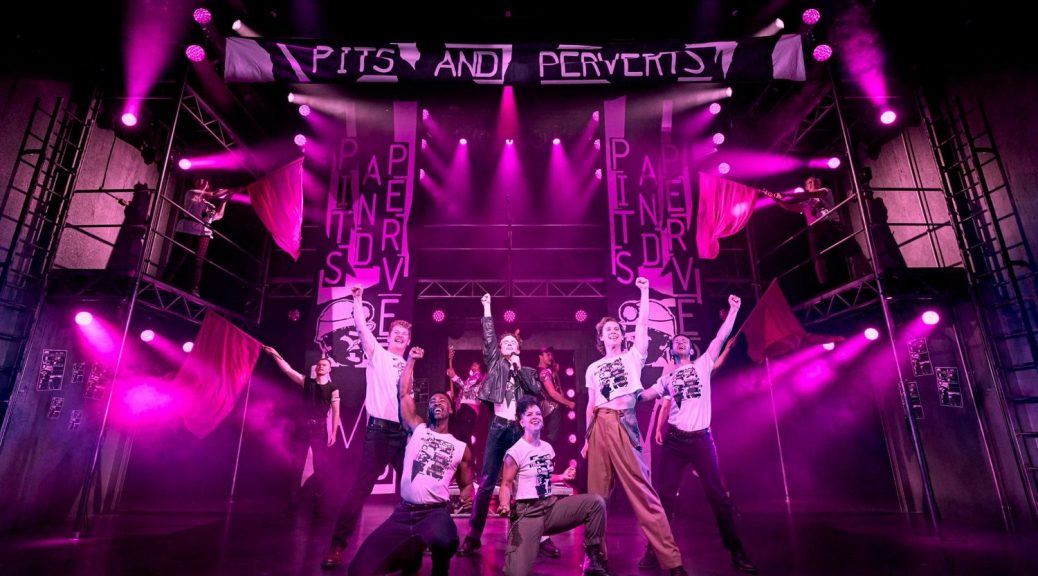
Director Matthew Warchus’ project to turn his 2014 film into a musical makes sense. The true story of the Lesbians and Gays Support the Miners group, which raised funds during the 1984 miners’ strike, has protests and parades, strong characters and political changes. Even better, bringing Pride to the stage adds something special: the music and lyrics by Christopher Nightingale and Stephen Beresford highlight passion and the potential for change in a way only musicals can. After all, shows about revolutions can work remarkably well.

There’s no doubt Warchus gets it. His handling of the action is superb: clear, energetic and capable of delivering both laughter and tears. His staging balances the nostalgia that threatens to overwhelm Beresford’s book, reminding us that these were not easy times for either the LGBT community or the miners on strike. There is less success with the sentimentality that can also be laid at Beresford’s door. Some moments are simply too sickly sweet and pass by too quickly to earn their emotional weight. Overall, Pride is far from perfect, but its characters power it through to deliver impressive results.

The show is slow to get started. The exposition that introduces the period, while necessary, is sure to depress anyone of a certain age and plods along terribly. The piece also drags towards the end, becoming hagiographic in its treatment of its lead, the inspiring activist Mark Ashton. Despite the nuance Beresford tries to introduce, Jhon Lumsden struggles to convey the character’s charisma. There is also a moment when Pride focuses on personal identity to the exclusion of broader politics. It’s nice that the character of Bromley, whose coming-out story provides an effective subplot, gets a strong song, and Lewis Cornay is excellent in the role, but this shift in focus feels uncomfortable and anachronistic.

Other characters fare better. Matthew Durkan has a fine time as the group’s administrator, Mike, giving a strong and effective performance. Courtney Stapleton stands out as Steph, getting a lot of laughs out of her lines. Ensuring plenty of attention is given to the mining community is a smart move and leads to excellent performances from Matthew Woodyatt and, particularly, Sarah Pugh as Siân James. Her vocals are superb and her solo number is one of the show’s strongest moments. Samuel Barnett also has a great time as Jonathan, a role that showcases his considerable talents. Jonathan’s flamboyance has a clear political purpose – he gets the first truly memorable musical number (although the wait for it is too long), and Barnett’s performance is fantastic.

The lyrics have a humour that could be encouraged; the jokes are the best moments. There’s a pleasing variety to the score, helped by the subject matter, and while ‘Bread and Roses’ is always going to steal the show, the arrangement demonstrates real skill. It’s a shame that the biggest numbers rely so heavily on their performers, as the songs themselves are not quite memorable enough. Lizzie Gee’s choreography disappoints, while Bunny Christie’s set may be too simple. Many audiences will want more from a musical, and it’s easy to spot where a few banners could have been added. At least we get flags.

Warchus brings an energy to the show that is contagious. Pleasing the crowd is an aim, but so is doing justice to the source material. Reaching a wide audience without compromise is tough and occasionally results in clunky storytelling and a few cheap jokes. But the real-life material remains compelling and, although the score never quite makes the show as inspiring as it aspires to be, there is enough humour and passion here for all involved to have a lot to be proud of.

Until 12 September 2026

www.nationaltheatre.org.uk

Photo by Manuel Harlan

“The Southbury Child” at the Bridge Theatre

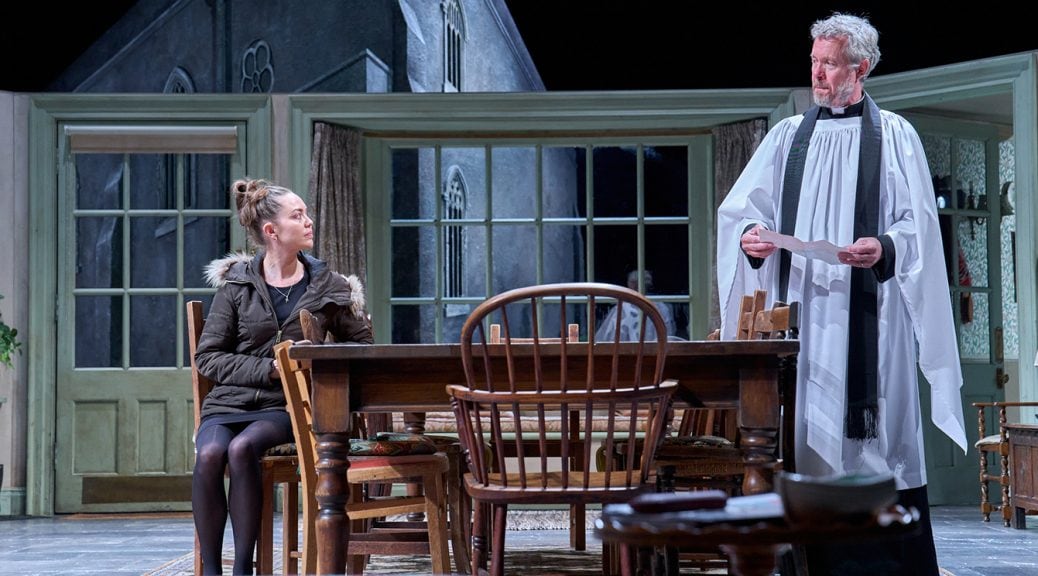
The nice surprise in Stephen Beresford’s new play is that it isn’t just a vehicle for Alex Jennings. Taking the lead as wayward vicar David Highland, Jennings is – as always – excellent. But the show boasts a superb ensemble, impeccably directed by Nicholas Hytner, who all make the most of a play that tries very hard.

The scenario comes (deliberately?) close to silly: the vicar puts his foot down about balloons in his church for the titular child’s funeral. All the fuss (about hot air) becomes serious because of social media. Threats are made and Beresford does well with menace. It turns out the real issue is “integrity” – unfortunately, it’s Jennings and not the script that makes this convincing.

It’s a neat enough central dilemma to work a drama around, in the style of Ibsen. Highland is a flawed character but still wants to take a stand. His long-suffering family, the church and the wider community are quick to accuse him of hypocrisy. Of course, that doesn’t change the strength of his argument. I’m just not sure the argument is that good in the first place.

Beresford looks at balance, questioning and compromise – or at least his characters say they want all this. These aims shouldn’t be a surprise… this is the Church of England. But too much time is taken over disgruntled views of the modern world and ‘woke’ culture. To be generous, it seems the motivation is comedy. But that humour is a problem.

There are laughs in The Southbury Child. Quite a few, actually. But the jokes are painfully effortful. The treatment of Londoners, the politically correct or class differences are all clichéd. You can see every punchline a mile off. And, when in doubt, Beresford just makes the vicar swear. Jokes are forced on characters and into a script that so wants to be funny it feels desperate.

Phoebe-Nicholls-in-The-Southbury-Child-credit-Manuel-Harlan
Phoebe Nicholls

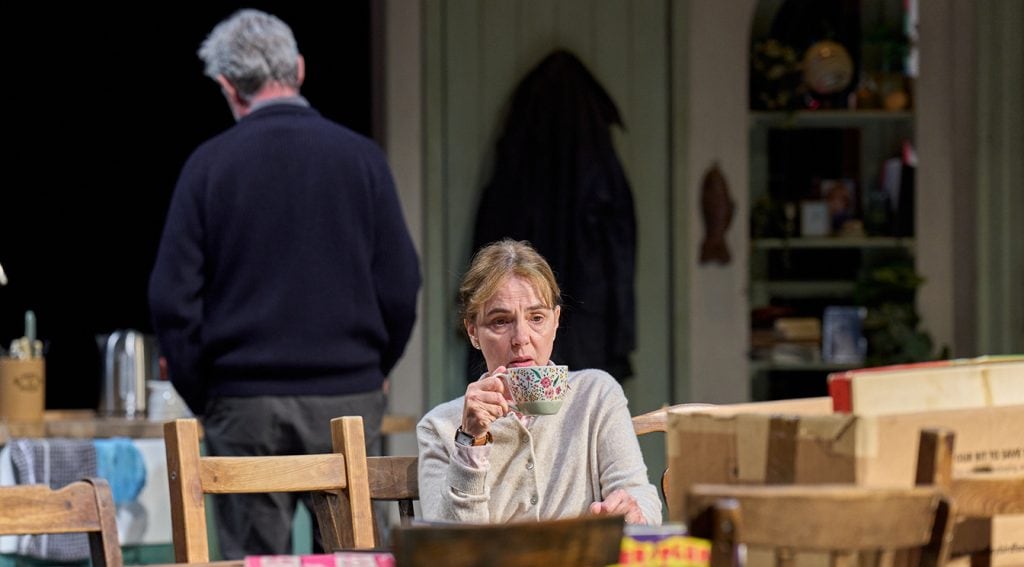
Beresford tackles plenty of issues. All the characters are given a chance as adoption, adultery, alcoholism and gay marriage are mentioned. These lead to strong performances from Racheal Ofori and Jo Herbert as Highland’s daughters, while his wife, played by Phoebe Nicholls, is stunning. There are stumbles with the working-class characters (the family whose child is to be buried) but further excellent work from Josh Finan and Sarah Twomey, who take the parts. The acting is five-star quality.

Yet it feels as if characters are assigned problems to represent – so that we come close to ticking off a plan of action. It’s not that any of the scenes are bad, more that they add up to something both confused and rigidly planned. The play loses focus and spends a long time looking for topicality and offering cheap gags. There’s a point made – that life is messy. But the vicar wants to make a claim not for mess but – nuance – and The Southbury Child lacks that very quality.

Until 27 August 2022

www.bridgetheatre.co.uk

Photos by Manuel Harlan

“The Last of the Haussmans” at the National Theatre

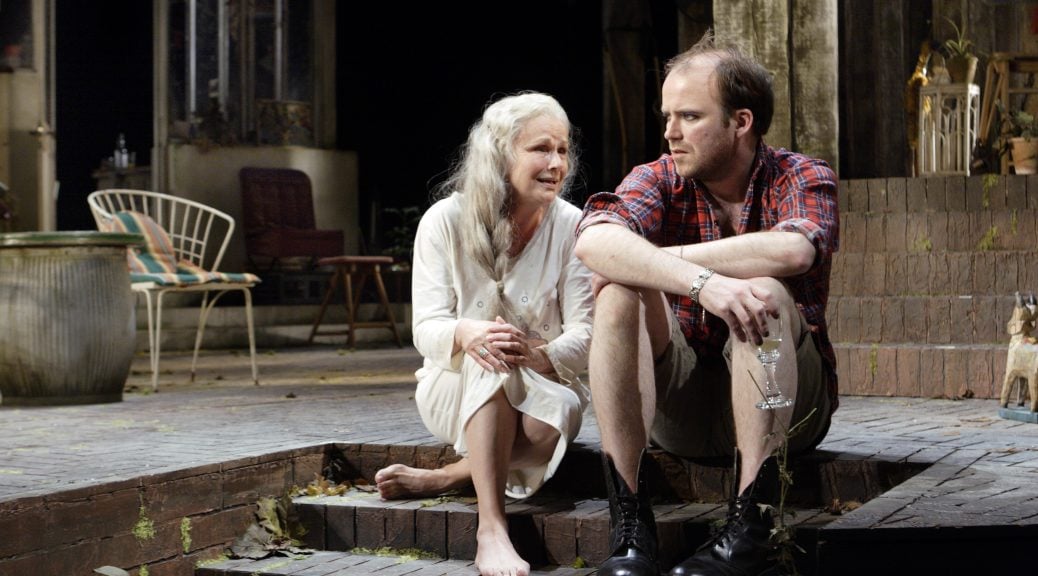
What a cast: making a return to the stage after over a decade, national treasure Julie Walters is joined at the National Theatre by the equally superb Helen McCrory and Rory Kinnear. You might think their presence in any play should be enough, but even these performers can’t hide the problems in new playwright Stephen Beresford’s debut, The Last of the Haussmans.

The story of an old hippy, Judy – played by Walters with great energy – and her discontented family, starts well: it’s a gentle comedy, with Chekhovian spirit and naughtiness on the right side of rude. Kinnear is captivating and McCrory wonderfully deadpan, while her long-suffering daughter, played by Isabella Laughland, does remarkably well to hold her own against the more experienced thespians.

But after the interval Beresford’s attempts to add a serious edge fall flat. It seems we have another play about the baby boomer generation, and the disgruntled offspring’s desperation for property, but this now familiar theme feels tacked on and unconvincing. There is little exploration of what Judy’s politics were – surely more than just something to laugh at – and the sheer self-centeredness of her children beggars belief.

Director Howard Davies and the cast’s comic skills fail to hide the one-dimensionality of Beresford’s characters. Following her script, Walter’s portrayal becomes slightly too broad and the fate of the children a touch sordid. Ultimately, the family’s demise fails to move or hold real interest. At the risk of sounding uncharitable, it’s probably no bad thing that they are, indeed, the last of the Haussmans.

Until 10 October 2012

www.nationaltheatre.org

Photo by Catherine Ashmore

Written 22 June 2012 for The London Magazine