Tag Archives: Rebecca McKinnis

“Trainspotting” at the Theatre Royal Haymarket

The misadventures of heroin addict Renton and his friends from Irvine Welsh’s 1994 novel can fairly be called a phenomenon. Trainspotting is no stranger to film or stage. The idea of turning the piece into a musical presumably came from the integral role that songs have played in its popularity. Yet, despite Welsh clearly giving his approval to director and developer Caroline Jay Ranger, and working with Stephen McGuinness on the music and lyrics, the result here does not replicate that success.

For a start, there is the misguided marketing appeal to nostalgia: the boast that the show will “transport you back to the Nineties”. But what is being looked back on is pretty grim and, to his credit, Welsh has never tried to hide that. Unfortunately, in this iteration, the political point connecting poverty, crime and drug addiction feels thrown in. Time and again, characters simply comment on how awful life is in Leith. With little added beyond a string of tragic events, the show generates a bizarre lack of sympathy.

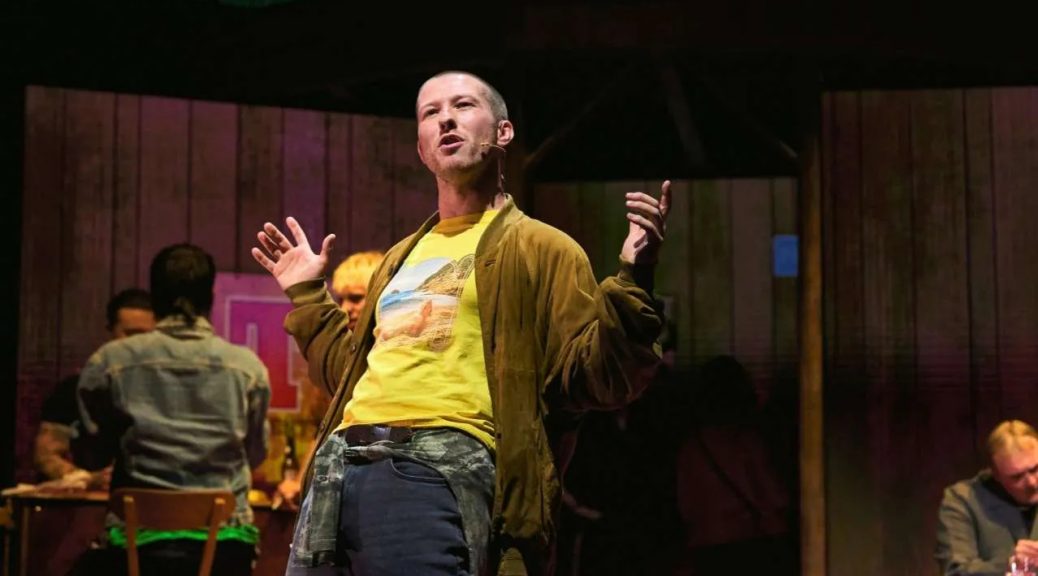
Welsh’s characters, with whom so many people seem intoxicated, are flattened. While Lewis Kidd brings great energy to the stage as Renton, he is far stronger as a narrator than when required to embody the horrors of drug withdrawal, creating an uncomfortable imbalance. Sheridan Townsley seems wasted as an underwritten Sick Boy – we are never given enough sense of where his contempt for other people comes from. And it is a major mistake in Ranger’s direction to allow performances to come so close to screen versions. Kieran Andrew and Frankie O’Connor both seem to be impersonating other actors rather than creating characters of their own.

It is welcome that the women in the piece are more prominent. But nothing can hide the fact that they live their lives through their relationships with boyfriends or sons. Yana Harris and Sophie Hutchinson find this too much of a demand to generate powerful performances, while Rosie Dignan is fortunate to have a more substantial role. The strongest acting comes from Rebecca McKinnis and Ashley J Russell, who play parents of the wayward youths, but their roles are written generically: their characters largely just bicker and moan. Frankly, everyone is a bit of a bore.

It is possible that the attempt to make the action more even-handed is intended to provide greater space for female voices – in the most literal sense. But here lies the production’s biggest problem: what is sung, and how it sounds, is simply not good enough. Although there isn’t much music in the show, what there is is mostly bad. The original compositions are generic or poor pastiches, the lyrics simple and crass. The pop songs everyone associates with Trainspotting are included, but they feel obligatory, making little sense within the action. Everyone knows the words, so when performers become lost in them it is painful and the show comes dangerously close to karaoke. But less fun.

Until 5 September 2026

www.trainspottingthemusical.co.uk

Photo by Matt Crockett

“Dear Evan Hansen” at the Noël Coward Theatre

Theatrical responses to young adult mental health hit the big time with this highly anticipated tear-jerking transfer from Broadway. Teen suicide and all manner of problems for millennials make the target audience sometimes painfully clear. But there’s an intelligence behind Steven Levenson’s excellent book that raises Dear Evan Hansen well above many coming-of-age dramas.

The action revolves around social media (these kids are more online than at school). Tension mounts as Evan’s deceit, about his friendship with deceased class mate Connor, entangles him in the world wide web. A campaign, including Kickstarter, and the inevitable empowering vocabulary that follows, is treated with a mature, sometimes sceptical, touch. 

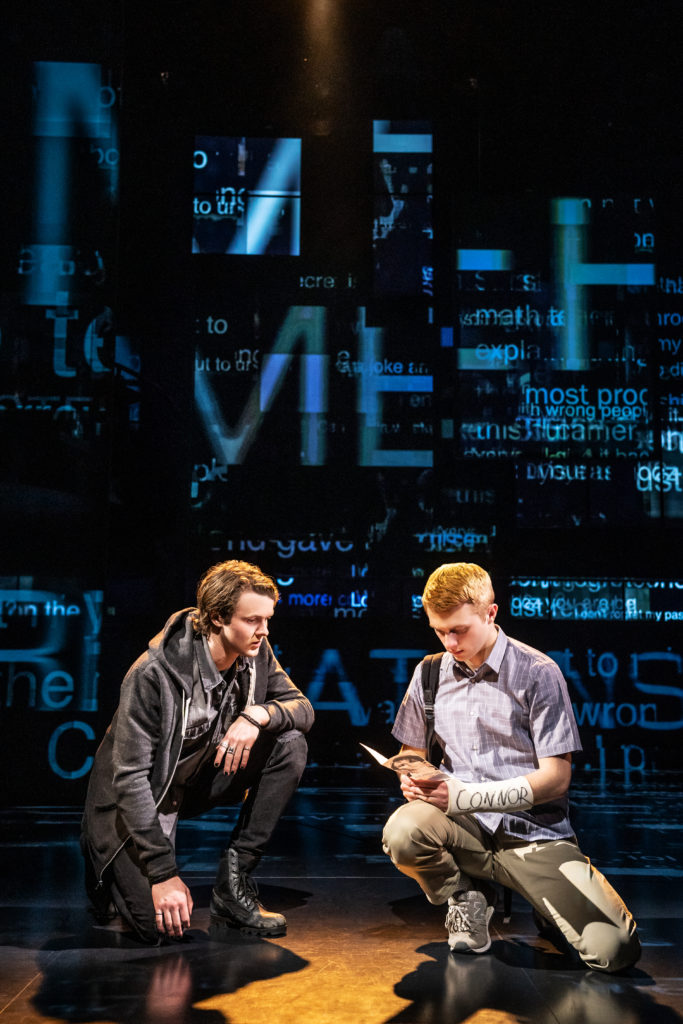
Doug Colling and Sam Tutty in the London production of "Dear Evan Hansen"
Doug Colling and Sam Tutty

Connor’s death is the best thing that’s happened to Evan; he finally has a profile at school. But the friendship it engenders is an imaginary one with the dead boy. Meanwhile, contact with Connor’s sister results in a clever twist on Cyrano de Bergerac that’s heartbreaking. Along the way, the roles provide strong parts for Doug Colling and Lucy Anderson, who contribute to the uneasy atmosphere that Michael Greif’s direction explicates. As Evan promises his lost and lonely cohorts “You Will Be Found” – becoming an internet hit himself – the drama that he will be found out is considerable.

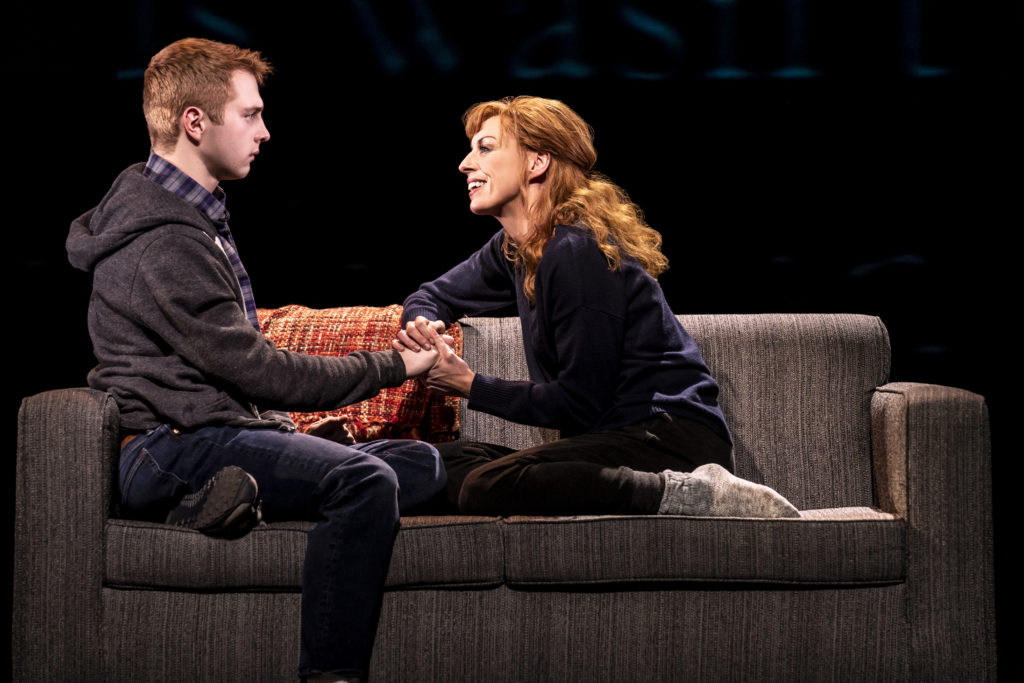
Sam Tutty and Rebecca McKinnis in the London production of 'Dear Evan Hansen'
Sam Tutty and Rebecca McKinnis

The story may be simple, even predictable, but it broadens gracefully. Becoming a show that concerns mourning and parenthood, there are well-drawn roles for the adults in the piece. Unashamedly, rather than learning from themselves or their peers, they are the characters for their children to learn from. Rebecca McKinnis is superb as Evan’s struggling mum, while Lauren Ward and Rupert Young play Connor’s grieving parents with believable intensity. All three are included in scenes of psychological complexity that ensure depth.

Scenes of extended dialogue mean that Dear Evan Hansen is – almost – as much a play with songs as a musical. The show has its own pace, handled boldly by Greif, that is distinctive. The numbers by Benj Pasek and Justin Paul are already hits, so whatever formula they have for bringing on the tears is clearly effective. The music is good, although more of it, as well as more variety, would be welcome. And the lyrics are superb – not a word jars. 

These numbers are not easy to perform. As well as demanding considerable acting skills, the score acts symbiotically with the performances to make the show increasingly impressive. The same pressure makes the title role especially exciting, as you need a superb singer and a strong actor. Ticking both boxes, the part of Evan is sure to make a star of Sam Tutty. While the show is more of an ensemble piece than you might expect, the role of Evan is crucial. Again, Levenson allows a considerable complexity that Tutty can develop: this isn’t your average hero, or even your everyday misfit. The balance to retain sympathy for Evan proves fascinating.

If the conclusion of Dear Evan Hansen is a little pat, it is also impressively understated; any positivity isn’t cloying. Hope for the future is the best that can be offered, maintaining a distinctly melancholy air. Seclusion is the prevailing theme; which is especially sad as you never forget this is a show for young people. Thankfully, support and a sense of perspective are present – they give the piece an underlying wisdom. And the show’s success provides inspiration; the audience response, amidst much sniffling, is contagious. Deservedly, lonely Evan Hansen should prove to be a long runner.

Until 30 May 2020

www.dearevanhansen.com

Photos by Matthew Murphy