Tag Archives: Hen and Chickens Theatre

“Conflict of Interest” at the Hen and Chickens Theatre

There’s a good idea behind Thomas Carruthers’ play: a legal drama that focuses on the lawyers’ office rather than the courtroom. Professional rivalry, sordid secrets and three glamorous women give it a strangely old-fashioned feel. Overall, it’s an entertaining piece of work.

Carruthers packs in an excess of detail, but his effort reaps rewards. The slow build adds charisma to his part in the piece as successful criminal defence lawyer Art Carmichael. We hear plenty about his colleague and his neuroses, and William Leggetter makes this role interesting. As for the women, three strong performances from Maeve-Anne Allen, Amy Cash and Rhian Holmes help to disguise weaker characterisation. Allen’s chemistry is great, Holmes’ Southern belle is effective and Cash brings a pleasing subtlety to her role.

Art’s wife is a former client who may have killed her father; his new client admits she murdered her husband; and we are left to wonder whether men’s ambitious intern really be as sweet as she seems. The women aren’t far from femme fatales. Carruthers attempts to solve this by bringing in modern considerations about abuse, which raises the stakes considerably. The performances become passionate, but the dialogue isn’t always convincing.

The mix of hard-boiled drama and sleaze is a touch too much. It’s as if the 1950s got very rude – interesting, if odd. Although the play is set in the 1980s, Carruthers clearly doesn’t care much for the decade (I don’t blame him), and some of his ideas about the period’s social mores are surely off. That said, there’s plenty of atmosphere, some humour, and a cast that clearly enjoys its roles.

A bigger problem is the lack of intrigue. The show is too much of a slow burn. The script needs cuts, and director Jazz Sewsanker needs to speed things up. The added music also needs dropping, especially when characters are speaking. As the men in the show grow increasingly paranoid, Conflict of Interest becomes a competition for victimhood. Who you are meant to feel for might be a little obvious – and sympathy for Art is a bit too hard to find. But as a study in delusion and victimisation, the play offers interesting twists, capably handled.

Until 3 October 2026
For tickets click here

“There is a Light and a Whistle for Attracting Attention” at the Hen and Chickens Theatre

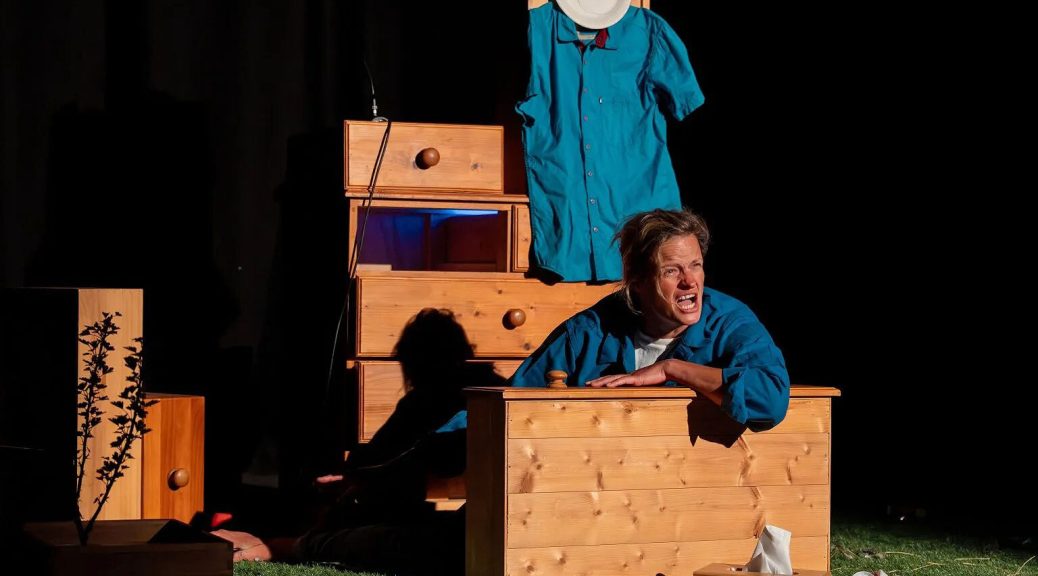
This thought-provoking monologue, written and performed by Henri Merriam, is impressive throughout. The story of one woman’s search for love – and a troubled relationship – is sincere, insightful and full of ideas.

The pacing, impeccably handled by director Sophia Capasso, is skilful. The woman looks back on her childish ideas of Love with a florid L, inspired by Disney and Celine Dion (they’ve both got a lot to answer for). The tone is observational, the character is appealing, and Merriam has a knack for comedy, despite dark moments.

Tension mounts as a relationship progresses (some of this is not for the faint-hearted). From dating and marriage to lockdown, therapy and divorce, each period gets attention. There are fascinating links to how women are viewed by society, the pressures placed on them and how they subsequently judge themselves. But, throughout, Capasso keeps the action swift so that the show never feels like a lecture. The production is aided by fine sound design from Frazer Merrick and Shahaf Beer’s set – a chest of drawers full of surprises.

If there’s a problem, it’s that the story is not new. The guy, whose voice we hear through recordings, is awful. The gaslighting and abuse are clear and predictable. It isn’t Merriam’s fault, but the piece becomes depressingly familiar. The show is saved by strong acting and, in a satisfying twist, by the woman herself.

Calling on religion and mythology, embracing the darker side of her nature, seems to be the way out. From chats with the serpent in the Garden of Eden to imagining herself as a vengeful Medusa, there’s a playful edge that might be further explored. The conclusion leaves the audience wanting more for itself and, more importantly, more for the protagonist.

Until 13 September 2026

www.playnicelytheatre.com

Photo credit Scott Godding

“Abducting Diana” at the Hen and Chickens Theatre

The works of recently deceased Italian playwright Dario Fo are seldom performed in London these days, so a chance to see his bizarre blend of farce and politics should usually be seized upon. This mid-80s story of a kidnapped media mogul shows off his distinctive writing and indicates his work’s influence. The adaptation by Stephen Stenning is credible, if light on satire, with some nice touches to relocate the play to the UK. Stenning captures a crazy spirit that plays with an audience, which should lead to an invigorating anarchy. Unfortunately, the production itself is not a success.

Po’s work referenced commedia dell’arte, a tradition admittedly difficult to translate. But the bungling criminals here come too close to Punch and Judy. There’s no grace, no finesse that might lead you to relax and laugh – instead the show becomes difficult to watch. The role of a clergyman is similarly tricky. In Italy it might pack a punch, but Jake William Francis’s depiction is too timid. Having a man play Diana’s mother is smart, putting him in a twin set and pearls OK but in the role – and in heels – Brian Eastty looks so uncomfortable it is painful.

This is an ambitious play, with electrocutions and an exorcism. Ironically for a piece that sets the rich and the poor against each other, plenty of cash might have helped. Without strong technical backup, any production is going to struggle. But making excuses is patronising. A lot of the comic timing is off, and the physical comedy poor. The jokes aren’t bad… but I didn’t laugh once. Elena Clements does well as the lead – she’s a confident performer who suits the role – and Nicholas Bright impresses as his part in the plot twists and turns. There are dark, sexy, undertones that could challenge and disturb, but director Michael Ward seems happy to leave the play as a comfy comedy. And the biggest problem is that the pace is too slow, waiting for laughs that don’t arrive. The audience shouldn’t pause for incredulity to set in – here gaps are plentiful and the result awkward.

Until 17 March 2018

www.unrestrictedview.co.uk